Ifrane National Park Cedar forest, mountain lakes and highland light in Morocco's Middle Atlas
Ifrane National Park gives Morocco a different visual language: Atlas cedar, springs, high plateaus, winter snow, clear water and forest shade instead of desert heat or city stone.
Begin by reading the landscape whole. The park is not one viewpoint; it is a protected highland system where forest, water, altitude and seasonal light shape the visitor experience.
A highland ecosystem before it is a scenic escape.
Ifrane National Park matters because it shifts the way many visitors imagine Morocco. Here the essential elements are not medina lanes, dunes or Atlantic surf, but altitude, cedar forest, mountain water, cold winters and the quiet geometry of the Middle Atlas.
The Moroccan CHM profile for the Convention on Biological Diversity describes the park as created in 2004 over 51,800 hectares, extending across the western part of the Central Middle Atlas in the provinces of Ifrane and Boulmane. That scale matters: the park is a landscape system, not a single stop.
Its identity is strongly tied to Atlas cedar. The same official profile presents the park as one of Morocco's key forest areas, marked by the presence of this emblematic species and by permanent lakes, springs and rivers that make the area feel like a highland water reserve.
The park is also important for wildlife observation, especially because visitors often associate the Ifrane and Azrou cedar forests with Barbary macaques. The right way to see them is with distance and restraint: no feeding, no chasing, no noise, no treating wild animals as entertainment.
For travellers, Ifrane National Park offers a slower lesson in looking. Water reflection, cedar shade, snow on red roofs, open plateau and forest paths all ask for attention without spectacle. Its beauty is calm, but the ecology behind it is serious.
Use the map to understand the park as a broad Middle Atlas landscape between forest, lakes, plateau routes and the Ifrane-Azrou highland context.
Editorial reading
Its beauty is ecological, not decorative.
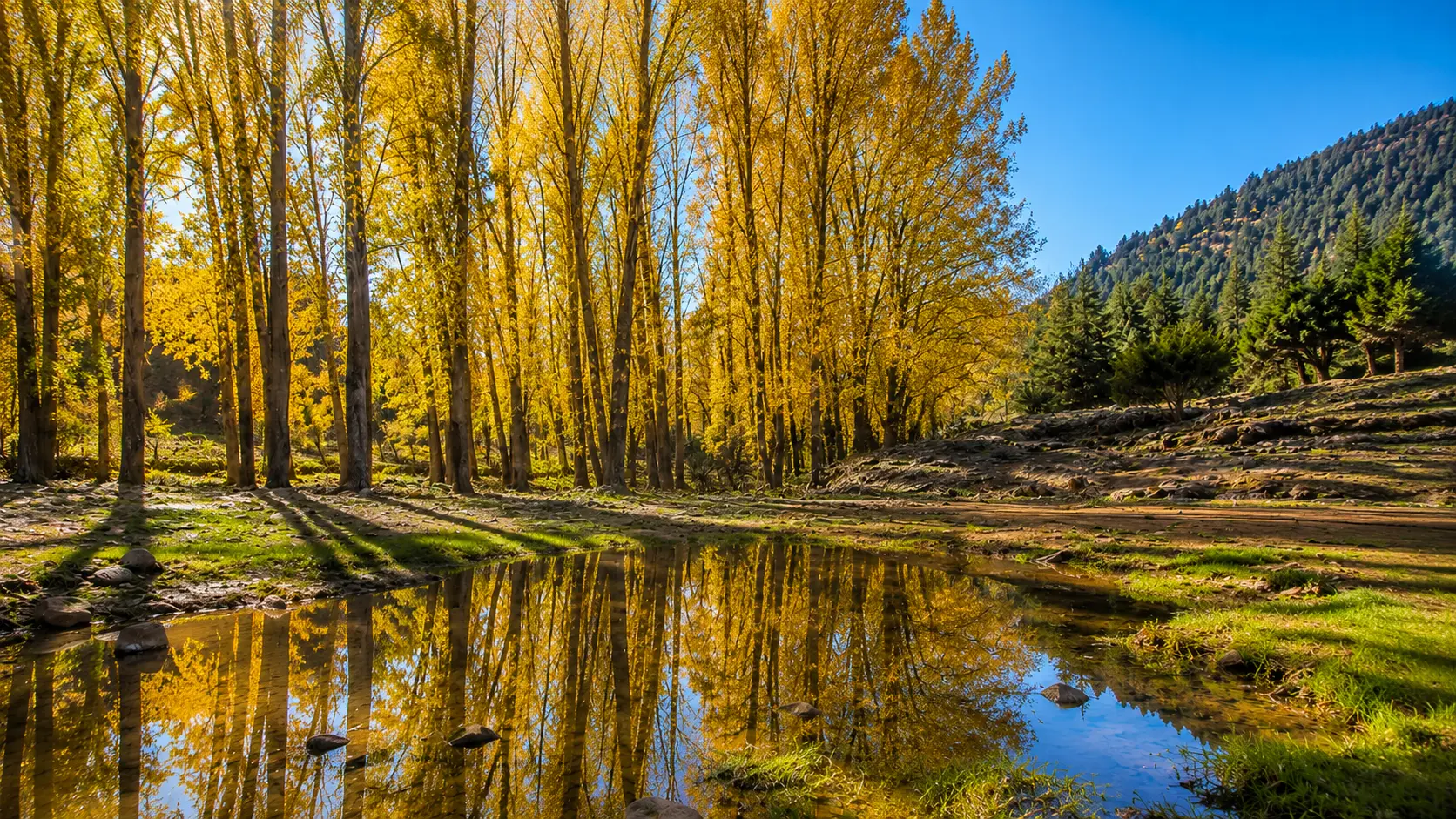
The first impression can be simple: trees, water, snow, sky. Look longer and the park becomes more precise. Cedar shade changes the temperature of the walk. Open meadows reveal altitude. Still lakes hold the sky while also reminding visitors that water is one of the park's central values.
That is why Ifrane National Park should not be reduced to a quick macaque stop or a winter postcard. The strongest visit reads the whole setting: forest cover, springs, lake edges, plateau roads, local movement and the pressure placed on popular natural sites.
The visual language is quiet but layered. Autumn gold, winter white, summer green and blue sky each change the same landscape. A visitor who slows down begins to understand why the park feels different from lower Moroccan cities and why careful behaviour matters here.
Read the park from distance to detail. From distance, it is a cool highland zone in the Middle Atlas. Close up, it becomes bark texture, animal tracks, wind in branches, wet ground near lake margins and the changing sound of walking under cedar.
The best reading also includes restraint. Some areas may be sensitive, seasonally affected or locally managed. A respectful visitor keeps to appropriate routes, avoids litter and noise, and lets wildlife remain wild.
From Ifrane or Azrou, return mentally to the wider map. The park helps connect urban highland architecture, cedar forest, rural movement, water systems and mountain weather into one coherent Middle Atlas experience.
Historical and ecological orientation
Read the park through protection, water and cedar forest.
Ifrane National Park is best understood as a protected highland landscape. Its importance comes from the relationship between Atlas cedar, mountain wetlands, springs, wildlife habitat, local use and visitor pressure in Morocco's Central Middle Atlas.
01Protected area
National park status
The Moroccan CHM profile identifies Ifrane National Park as created in 2004, with a protected-area role connected to the biological and ecological value of this Middle Atlas landscape.
02Forest identity
Atlas cedar country
The park is strongly associated with Atlas cedar, one of the species that gives the landscape its scale, shade, scent and ecological character.
03Water systems
Lakes, springs and rivers
Dayet Aoua, Aguelmam Afennourir, springs and rivers are part of the official landscape description. They make water central to the way the park should be read.
04Wildlife care
Macaques and birds
The park is known for macaques and bird life, but wildlife should be watched quietly and never fed. A good visit protects the animals from becoming dependent on visitors.
A visual bridge
Three readings between forest, water and altitude
Before Ifrane National Park becomes a photograph, it is a relationship between cedar canopy, highland water and seasonal mountain light. These readings help visitors slow down and see the park as a protected system.
01
Forest
Cedar as structure
The cedar forest gives the park its height, shade and rhythm. Tree trunks, open ground and filtered light create a natural architecture that changes with season and weather.
Notice the shift between dense shade and open clearings.
Read bark, roots and canopy before chasing a viewpoint.
Treat old trees as living structure, not decoration.
02
Water
Lakes and springs
Water gives the landscape its quiet power. Lake edges, reflected sky, wet ground and springs make the park feel cooler, slower and more fragile than a simple mountain drive.
Watch how still water changes the scale of trees.
Keep lake margins clean and undisturbed.
Understand wetlands as habitat, not empty scenery.
03
Altitude
Seasonal highland light
Altitude changes everything: the air, the sound of walking, the winter snow, the brightness of the sky and the way autumn leaves turn water into a mirror.
Read the park differently in snow, spring and autumn.
Use weather as part of the landscape story.
Move slowly enough for quiet changes to register.
Quick orientation
Type of place
A Middle Atlas national park and protected landscape, best understood through cedar forest, inland water systems, wildlife habitat and highland climate.
Landscape context
The park extends through the western Central Middle Atlas in the Ifrane and Boulmane provincial context, with Ifrane and Azrou as practical orientation points.
Best for
Cedar forest walks, lake reflections, autumn colour, winter atmosphere, wildlife observation from a respectful distance and quieter mountain photography.
Closest city context
Ifrane and Azrou frame the immediate park experience; Fez gives many travellers the wider urban gateway into the Middle Atlas route.
What visitors experience here
A park that changes with light, season and pace.
Ifrane National Park works in transitions. Forest becomes meadow, road becomes path, water becomes reflection, and the crisp highland air makes the place feel far from Morocco's lower plains even when the route remains accessible.
Arrival
The cedar belt
The first strong impression is vertical: tree trunks, shade and a cooler rhythm under the canopy. The park announces itself through forest scale rather than monumentality.
Light
Gold, snow and blue sky
Autumn brings warm leaves and reflection; winter can bring snow; clearer days bring a blue highland brightness. The same landscape can feel completely different across the year.
Movement
Slow paths and open ground
The best walking rhythm is unhurried. Instead of rushing from one named point to another, notice how the ground changes underfoot and how sound softens inside the forest.
Water
Lake edges and springs
Water is not background here. Lakes, springs and rivers help explain the park's ecological value, its bird life and its role as a cool highland landscape.
Wildlife
Seeing without disturbing
Macaques may be part of the visitor memory, but the responsible experience is quiet observation from distance. Feeding turns wildlife into a problem for both animals and people.
Pace
A calmer Morocco
The park rewards visitors who accept its low volume. The beauty is not loud: it is reflection, shade, snow, air, bark, water and the feeling of a protected mountain landscape.
Place details and orientation
Read Ifrane National Park through six defining elements
No single viewpoint explains the park. Its meaning comes from the relationship between Atlas cedar, water, highland weather, wildlife habitat, nearby towns and respectful access.
1
Atlas cedar stands
Cedar gives the park its most recognisable forest character, shaping shade, scale and the feeling of walking through the Middle Atlas.
2
Dayet Aoua context
Dayet Aoua is part of the official landscape description and helps visitors understand the park through water, reflection and bird habitat.
3
Aguelmam Afennourir
Aguelmam Afennourir is noted in official protected-area context and gives the park an important wetland reading within the highland landscape.
4
Springs and rivers
The park's springs and rivers make water part of the visitor's orientation, not just a scenic detail beside the forest.
5
Macaque habitat
Barbary macaques are associated with the cedar forests, but visitors should keep distance and avoid feeding so behaviour remains wild.
6
Ifrane-Azrou gateway
The town and forest-edge context helps travellers connect city architecture, mountain roads, cedar stands and lake visits into one route.
Protected landscape, not scenery
The park asks for a careful eye.
Stand still before moving on. The first lesson is spatial: highland forest, open ground and water all belong together. The park is not a backdrop but a living mountain landscape with ecological pressure and seasonal change.
Then move closer. Bark, needles, snowmelt, lake margins and soft forest paths make the place human in scale without making it domestic. The better visit keeps a quiet boundary between observation and intrusion.
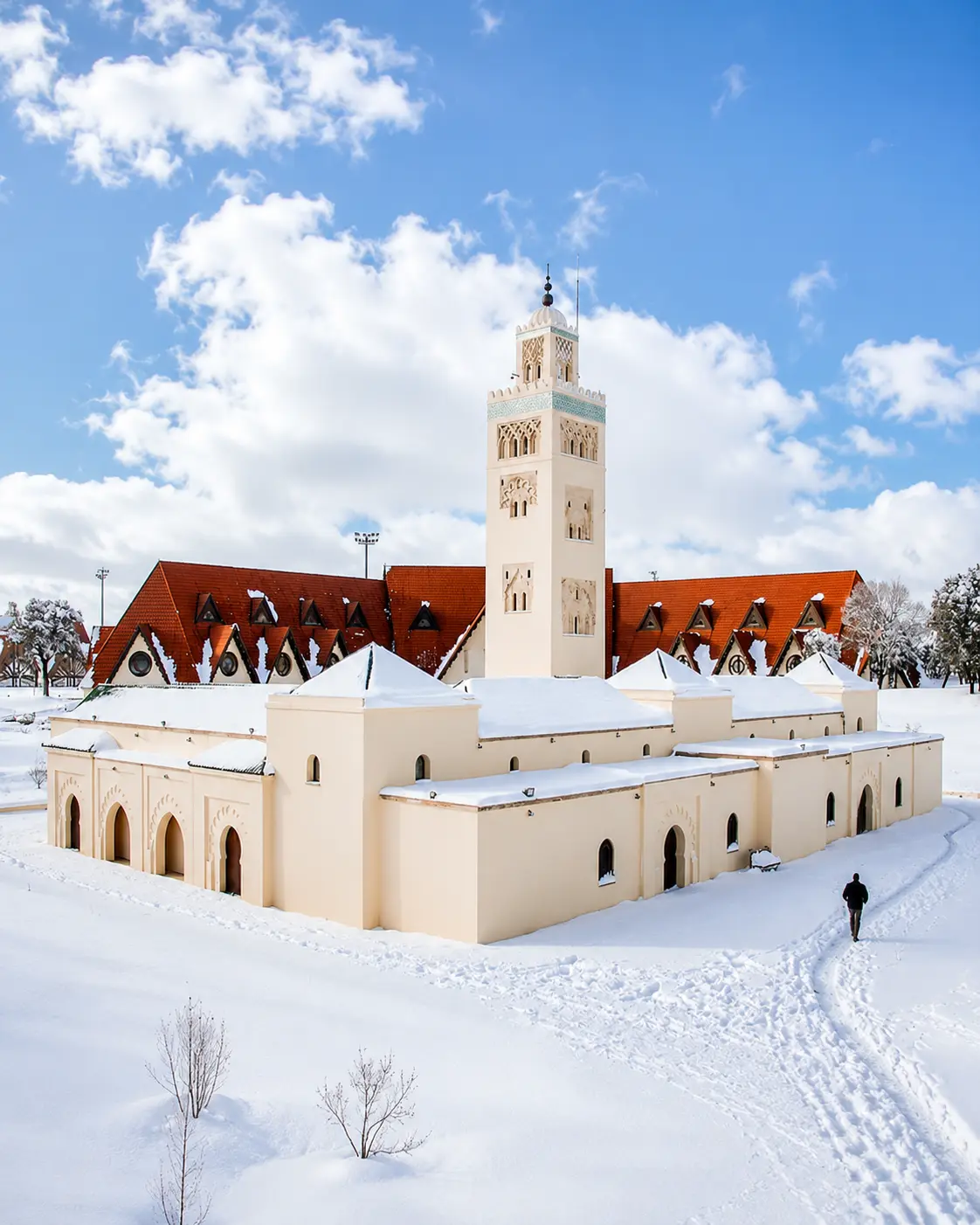
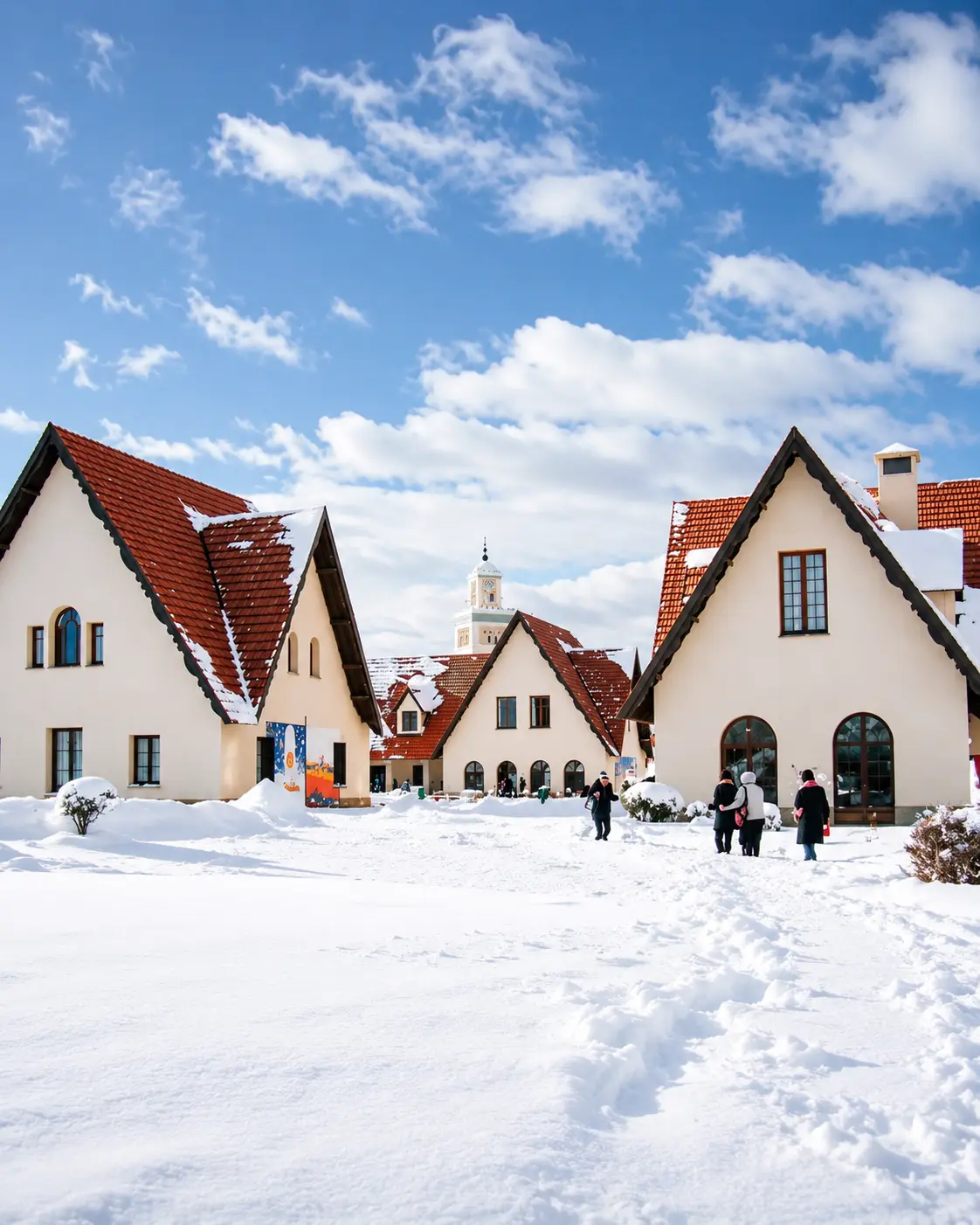
Look for the relationship between Ifrane's winter identity and the forest beyond town. The red roofs and snow scenes are memorable, but the deeper story is the park's cedar, water and altitude.
Landscape and ecological intelligence
Water, cedar and altitude shape the experience.
The character of Ifrane National Park is not just visual atmosphere. Atlas cedar, mountain water and highland climate work together, giving the park shade, seasonal snow, lake reflections, wildlife habitat and a different rhythm from Morocco's warmer lowland landscapes.
The Moroccan CHM profile calls attention to the park's biological and ecological value, forest wealth and landscape beauty. That combination is important: a beautiful visit should also understand why the place needs careful use.
What to notice slowly
Look at the transition between town edge, road, forest and open plateau.
Notice where cedar shade changes light, sound and walking temperature.
Read lakes and springs as ecological features, not decorative photo props.
Observe wildlife from distance and never feed macaques or other animals.
Respect wet ground, lake margins and fragile vegetation near water.
Let season shape the visit: snow, autumn colour and clear summer air each reveal a different park.
Visual reading
Three landscape languages to notice
Cedar and altitude
The forest is the park's vertical grammar. Tall trunks, open understory and cool air make altitude visible before the visitor reads it on a map.
Water and meadow
Lakes, springs and damp margins soften the landscape. They also remind visitors that the park's beauty depends on hydrology, bird life and clean edges.
Town edge and wild edge
Ifrane's architecture gives a memorable gateway, but the park begins to speak fully when the built edge gives way to cedar, open ground and quiet routes.
Visual atmosphere
Reflection, snow and forest quiet
From canopy to reflection
Start with the height of the trees, then let the eye drop to water. Reflections reveal a second landscape under the first: trunks, leaves, sky and shadow held in a still surface.
From snow to sunlight
Winter snow gives Ifrane its famous crisp image, but the park should not be read only in winter. Clear sun, autumn colour and soft forest shade each offer a different kind of clarity.
From photo to memory
The image is powerful, but the deeper memory comes from quiet attention: wind in cedar branches, changing ground, clean water, cold air and the sense that the landscape deserves protection.
Nearby places and onward links
Connect the park to the wider Middle Atlas map
Ifrane National Park belongs to a broader highland journey. Ifrane and Azrou frame the immediate forest experience, while Fez gives many travellers the wider city gateway into the Middle Atlas.
Fez
A strong urban gateway for travellers connecting imperial-city depth with Middle Atlas forest, lake and mountain routes.
Ifrane National Park can feel gentle, but natural places are easily damaged by careless habits. Keep routes clean, avoid loud behaviour, watch where you step near water, and give wildlife enough distance to remain wild.
Respect also means understanding local use. Forest landscapes are shared by residents, visitors, guides, drivers and people whose everyday movement is not part of a visitor performance. Courtesy keeps the place calm.
Do not feed macaques or encourage close contact for photographs.
Keep lake margins, picnic areas and forest paths free of litter.
Stay on appropriate routes, especially near wet ground or fragile vegetation.
Check weather and road conditions in winter or after heavy rain.
Ask before photographing people, local activity or private spaces near villages.
A strong first visit
Begin with the landscape, not the checklist. Let the first view establish the park's grammar: cedar canopy, open ground, clear water and highland air. This gives the visit structure before individual stops compete for attention.
Move from Ifrane or Azrou toward the forest with enough time to pause. The best route rhythm allows for slow observation, short walks, careful photography and silence near lakes or shaded areas.
If macaques appear, keep the visit calm. Watch from distance, put food away and do not invite contact. The most respectful wildlife encounter is the one that changes the animal's behaviour least.
Afterward, connect the park back to Fez, the Middle Atlas and Morocco's wider landscape map. Ifrane National Park makes the country feel larger because it reveals a cool, wooded and water-rich Morocco many visitors do not expect.
Start with a wide reading of forest, water and altitude.
Walk slowly enough to notice sound, ground texture and shade.
Use lake views with care, leaving edges clean and undisturbed.
Keep wildlife observation quiet and food-free.
Finish by connecting the park to Ifrane, Azrou, Fez and the Middle Atlas.
Careful planning note: access, weather, snow conditions and local guidance can change. Verify practical arrangements locally before travelling.
Go deeper through the nearest city context
Fez, Ifrane and Azrou - the gateway to the Middle Atlas
Ifrane National Park is easiest to understand when it is linked to its surrounding towns and the wider Fez route. Ifrane gives the winter and highland image; Azrou gives cedar-forest proximity; Fez gives a major urban gateway for travellers entering the Middle Atlas.
Use the city context to widen the visit after the forest itself: snow architecture, cedar routes, lake landscapes, mountain roads and careful planning all become clearer when the park is treated as part of a larger regional journey.
Middle Atlas orientationIfrane and Azrou contextCedar forest routesLake and wetland readingSeasonal travel planningFez gateway connection