Why Assa Oasis matters
A landscape shaped by water and settlement.
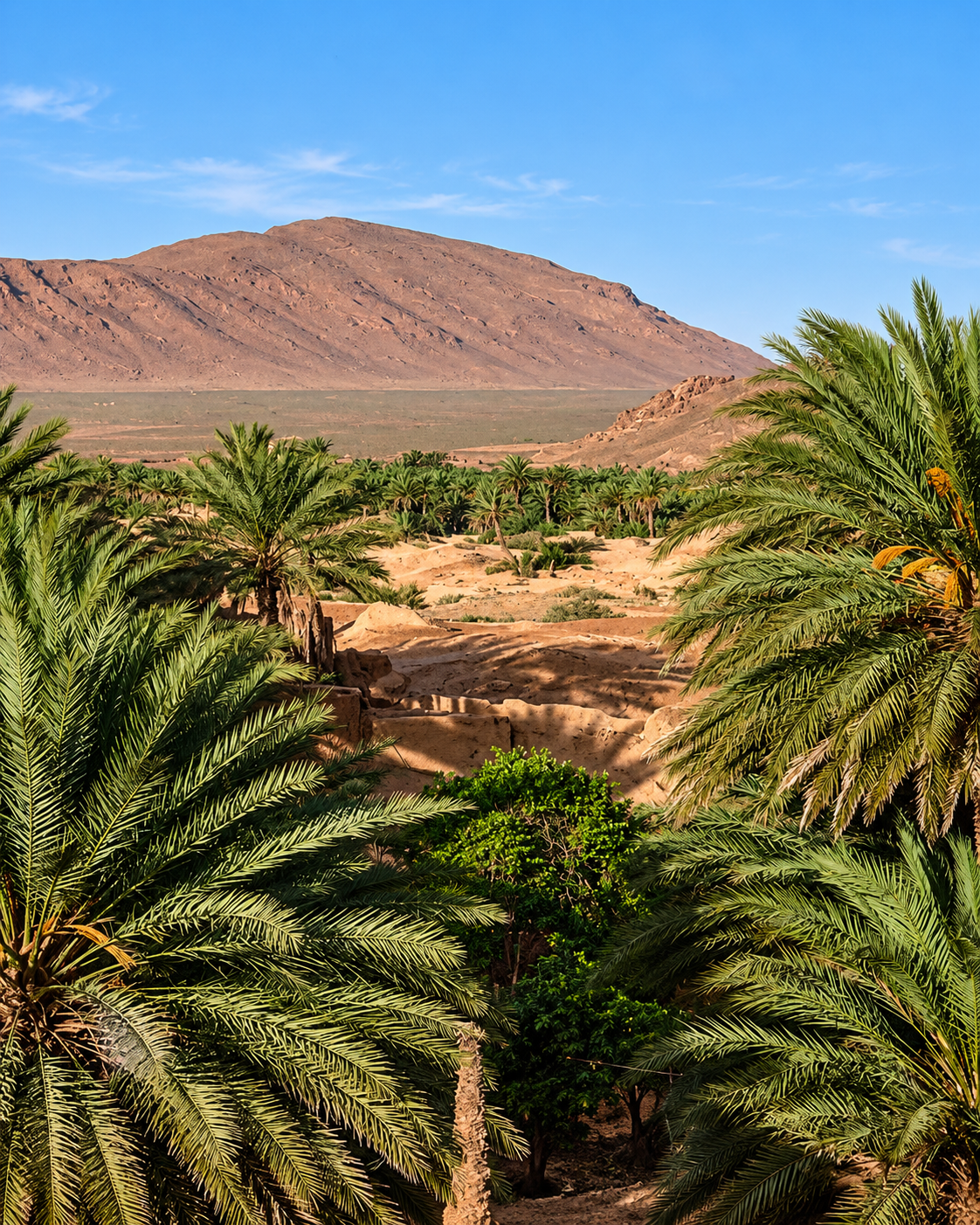
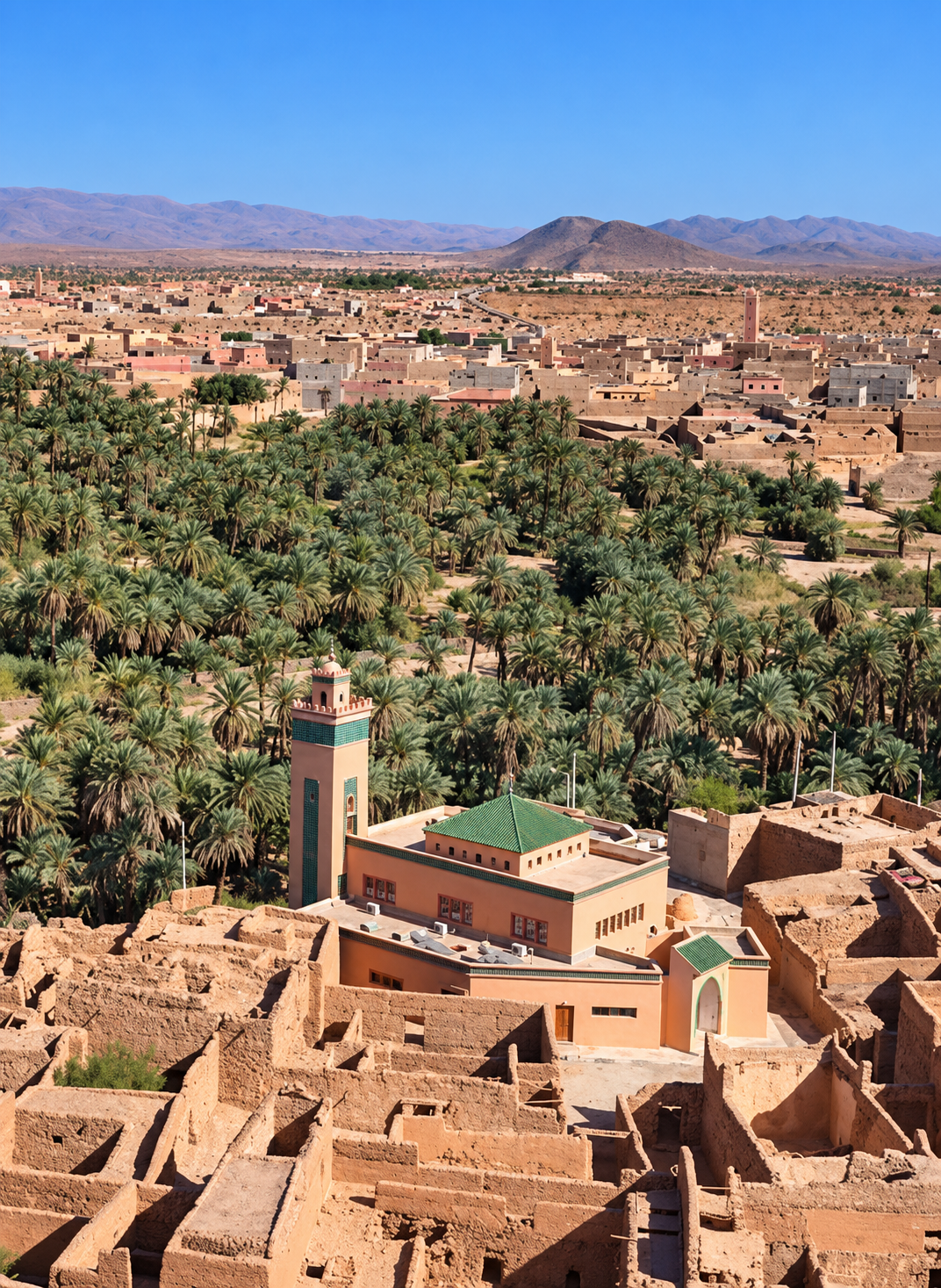
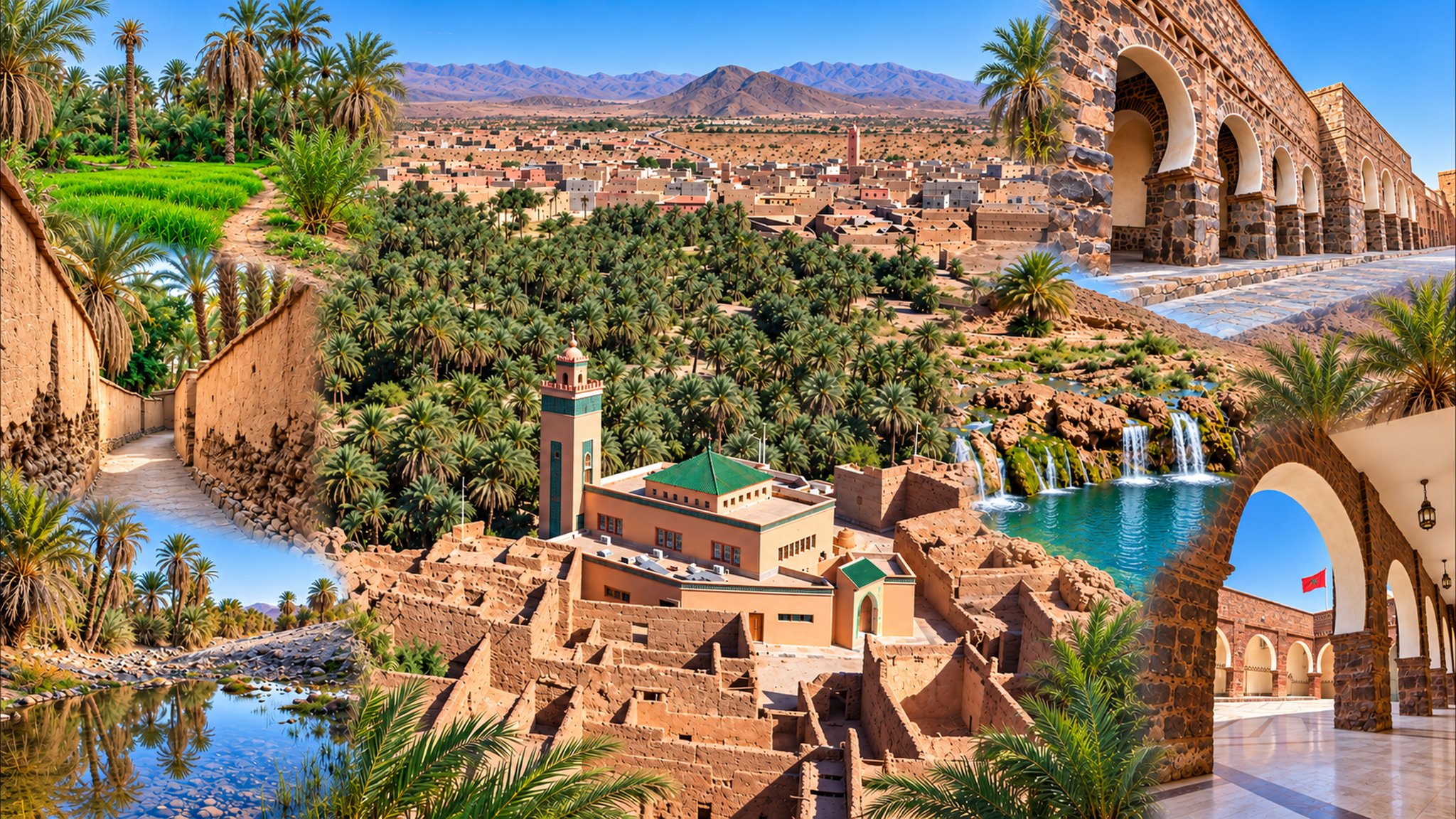
Assa Oasis is the palm-grove landscape beside Assa, in the province of Assa-Zag within Guelmim-Oued Noun. The old ksar occupies a rocky rise above it. Seen together, the cultivated ground, the historic settlement and the newer town explain more than any one building or viewpoint could on its own.
The palms draw attention first, but an oasis is also a place of work. Agriculture depends on access to water, on tending the ground and on keeping routes through cultivated land usable. This is a useful starting point for a visit: the green areas have a purpose beyond their appearance, and a narrow path may be serving a garden or a household.
Assa also has a religious history centred on its zaouia, a spiritual institution associated with Sidi Yazza Ou Idha. The provincial tourism council places its foundation in the thirteenth century. That history gives the landscape a further dimension: alongside cultivation and shelter, the town has been a place of gathering, learning and devotion.
The built heritage introduces a material distinction worth remembering. Assa’s old ksar combines stone and earth; its darker masonry should not be read as simply another version of the uniform earthen silhouettes found elsewhere in southern Morocco. Look at the actual surfaces, joints and openings before applying a familiar idea of what a ksar should look like.
For visitors, the reward is the ability to compare these scales in one setting. A broad view establishes the relation between grove and town. A closer walk brings attention to an individual palm, the line of a boundary or a doorway. Those small observations make the wider landscape easier to understand without turning local life into a spectacle.
Further reading: the provincial tourism council’s accounts of Assa’s ksar and zaouia, alongside the Aga Khan conservation project record.