
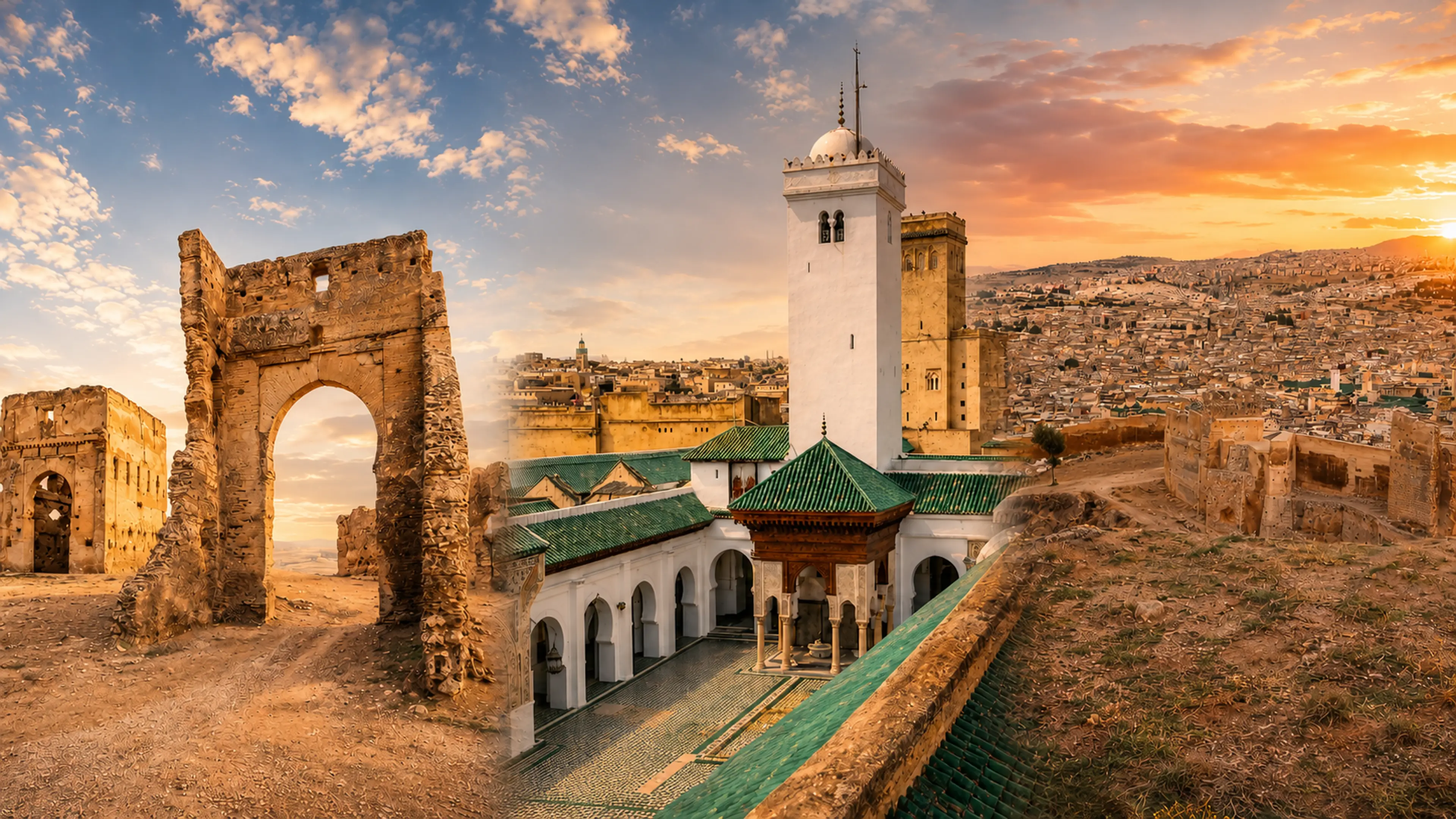
Borj Nord and the Marinid Tombs above the historic medina of Fez, Morocco

Visit / Place · Fez · Northern medina heights

Borj Nord & Marinid Tombs A hilltop reading of Fez through fortress, tombs and city light

Borj Nord and the Marinid Tombs sit above Fez el-Bali, turning the medina from a maze into a visible landscape of walls, roofs, minarets and memory.

Begin with the whole city below. From this ridge, Fez becomes readable at once: the defensive edge, the spiritual skyline, the old urban fabric and the quiet ruins that hold the northern horizon.

Why Borj Nord & the Marinid Tombs matter

Fez becomes legible from the northern heights.

Borj Nord and the Marinid Tombs matter because they let visitors read Fez from above without flattening it into a simple view. The ridge holds two different histories: a Saadian fortress built for control and defense, and the ruined tombs associated with the Marinid dynasty that shaped Fez into one of Morocco's great historic capitals.

Borj Nord is a sixteenth-century fortress on the heights north of Fez el-Bali. Reliable heritage references date its construction to 1582 under the Saadian sultan Ahmad al-Mansur. Its heavy form belongs to a period when the city was being watched, defended and politically managed from positions outside the dense medina.

The Marinid Tombs nearby are quieter and less complete. They are usually read as ruined monumental tombs from the Marinid period on the hillside above the old city. Their power is not in polished survival, but in position: broken architecture, open sky, cemetery landscape and a direct visual relationship with the medina below.

Seen together, the fortress and the tombs give Fez a wider frame. UNESCO describes the Medina of Fez as a city founded in the 9th century that reached its height in the 13th and 14th centuries under the Marinids. From this ridge, that long urban history stops being abstract and becomes spatial: walls, valleys, roofs, minarets, gates and movement.

For visitors, this is one of the clearest places to understand Fez before entering it again. The strongest experience is not only sunset photography. It is the moment when the city below, the fortress beside you and the tomb ruins nearby begin to explain each other.

Core facts are grounded in the UNESCO World Heritage Centre listing for the Medina of Fez, the Culturama profile of Borj Nord Arms Museum and Archnet's note on the Marinid Tombs. Opening hours, museum access, restoration work and routes should be checked close to travel.
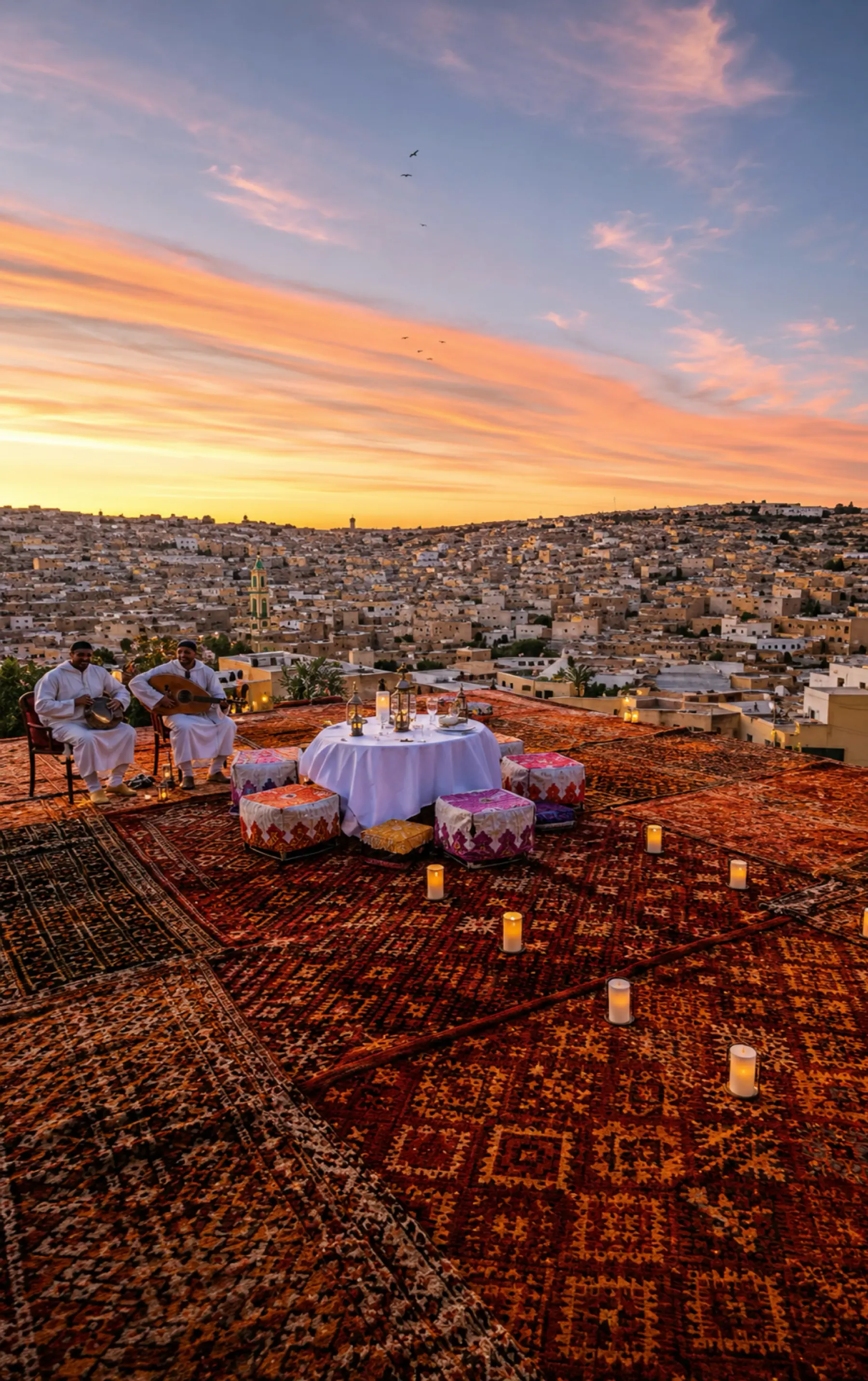
Fez medina at sunset from a rooftop terrace, the city context for Borj Nord and the Marinid Tombs

Map orientation

Use the map to place both sites above the northern edge of Fez el-Bali, close enough to read as one ridge experience.

Editorial reading

Its beauty comes from distance, not decoration.

The ridge above Fez is powerful because it changes scale. Below, the medina is intimate, crowded and sensory. Above, it becomes a vast pattern of roofs, streets, minarets and walls, with the old city gathered into one readable body.

Borj Nord adds a hard architectural note to that reading. It is not ornamental architecture first; it is a fortress, made to hold a position, command a view and express authority at the edge of the city.

The Marinid Tombs ask for a different kind of attention. Their ruined state keeps the experience quiet and unresolved. You read wall fragments, arches, exposed stone, the slope of the hill and the city beyond them.

That contrast is the point. Fortress and tomb, control and memory, solid mass and eroded ruin, city below and sky above: together they make the northern heights one of the most intelligent viewpoints in Fez.

A careful visitor does not rush the ridge. Stand still before photographing, let the call of the city and the changing light settle, and notice how the old medina becomes clearer precisely because you are outside it.

The best photographs here come after orientation. Once the eye understands the relationship between the fort, the ruins and Fez el-Bali, the image becomes less like a postcard and more like a map of history.

Historical and heritage orientation

Two dynasties, one ridge above Fez.

The northern heights above Fez are best understood as a layered heritage landscape. Borj Nord belongs to Saadian military architecture, while the Marinid Tombs recall the dynasty under which Fez reached one of its great medieval heights. Neither site should be isolated from the medina below.

01Saadian fort

Borj Nord

The fortress is widely dated to 1582, during the reign of Sultan Ahmad al-Mansur. Its position above Fez el-Bali makes its defensive and surveillance role easy to understand from the first approach.

02Museum layer

Arms and authority

The monument later became associated with Morocco's arms museum tradition. Access and programming can change, but the building's fortress character remains central to how the site should be read.

03Marinid memory

Ruined hilltop tombs

The nearby Marinid Tombs are ruined monumental tombs attributed to the 14th century. Documentation is limited, so the most honest reading combines dynasty context with visible remains and setting.

04Fez below

A World Heritage city

The Medina of Fez is listed by UNESCO for its historic urban fabric and major monuments. From the ridge, that city can be read as landscape: dense, old, living and still structurally powerful.

A visual bridge

Three readings between fortress, tombs and medina

The northern ridge teaches visitors to move between distance and detail. It is not a single monument experience, but a sequence of relationships: defensive form, ruined memory and the old city spread below.

01

Fortress

Mass as authority

Borj Nord should be read first through weight, position and horizon. Its purpose is visible in the way the fortress holds the hill and looks over the medina rather than blending into it.

  • Notice the distance between fort and medina.
  • Read corners, walls and height as control.
  • Let the building explain its position before its details.
02

Ruins

Memory on the slope

The Marinid Tombs do not need to be complete to matter. Their fragments hold the eye because they sit between cemetery ground, open sky and the city the Marinids helped define.

  • Look at the tombs against the skyline.
  • Keep the cemetery setting in mind.
  • Approach broken fabric with distance and restraint.
03

City

Fez as a living map

From above, Fez el-Bali becomes easier to read: not as a tourist maze, but as a deep urban fabric of roofs, lanes, minarets, walls, courtyards and movement.

  • Start with the full panorama.
  • Trace minarets, gates and green tile roofs.
  • Return to the medina with a stronger sense of scale.

Quick orientation

Type of place

A hilltop heritage pair: Borj Nord, a Saadian fortress and arms museum setting, plus the ruined Marinid Tombs on the northern heights above Fez.

Landscape context

The experience belongs to the ridge above Fez el-Bali, where city walls, cemetery ground, hillside paths and the medina panorama become one visual field.

Best for

Panoramic city reading, sunset light, dynasty context, fortress architecture, careful photography and understanding Fez before descending into the medina.

Closest city context

Fez is the essential base. The site works best when connected to the old medina, Bab Guissa side, madrasas, gates, craft streets and historic rooftops.

What visitors experience here

A place that turns Fez into a horizon.

The visit works in layers. First comes the climb or arrival above the old city. Then the fortress fixes the ridge with mass and authority. The tomb ruins soften the mood into memory. Finally, the medina below gathers everything into one broad, living panorama.

Arrival

The city below you

The first impression is spatial. Fez no longer feels like only lanes and crowds; it becomes a dense historic fabric, with the old city held between walls, slopes, rooftops and minarets.

Fortress

Borj Nord's heavy profile

The fortress gives the ridge a military grammar. Read the building through its placement and mass before looking for details: it was designed to command a view and hold a line above the city.

Ruins

The quiet of the tombs

The Marinid Tombs offer a more exposed, fragmentary experience. Stone, broken arches, hillside dust and open sky make the site feel less like a museum object and more like memory in the landscape.

Light

Sunset across the medina

Late light can make the roofscape easier to read: green tile, pale walls, shadowed lanes and minaret silhouettes begin to separate from the wide city surface.

Sound

A city heard from distance

Above the medina, sound changes. Street noise becomes softer, and the city feels both near and far. That distance helps visitors understand Fez without being swallowed by its movement.

Pace

A slow ridge walk

This is not a place to rush between photo points. The better rhythm is to look from Borj Nord, pause near the tombs, then return to the view with a stronger sense of history and scale.

Place details and orientation

Read the ridge through six defining elements

The power of Borj Nord and the Marinid Tombs comes from the relationship between fortification, dynasty memory, hillside exposure, cemetery landscape and the medina panorama below.

1
The northern ridge

The ridge creates the whole experience. It places the visitor outside the old city, high enough to understand Fez as an urban landscape.

2
Borj Nord

The Saadian fortress anchors the site with mass, defensive logic and a commanding view over Fez el-Bali.

3
Arms museum context

The building is known for its museum layer, but the visitor should still read the fort itself as architecture of authority and surveillance.

4
Marinid Tombs

The tomb ruins bring a quieter dynastic memory to the hill, with fragmentary architecture and a strong relationship to the city below.

5
Fez panorama

The view gives the old medina a structure: rooflines, minarets, walls, gates and valleys become visible as one historic composition.

6
Respectful edges

Paths, ruins, cemetery areas and exposed slopes require careful movement. The best visit keeps distance from fragile fabric and private or sacred contexts.

Viewpoint, not only view

The place asks for a careful eye.

Stand still before taking the first photograph. The panorama is beautiful, but it is also a working lesson in how Fez is built: dense quarters, religious markers, defensive edges, old routes and the difference between city interior and outer ridge.

Then turn back to the structures around you. Borj Nord explains control through mass and position. The Marinid Tombs explain memory through absence, erosion and exposure. Together they make the hill feel complete.

The best reading moves outward, inward and outward again: look across Fez, study the fort and tombs, then return to the panorama with more knowledge than you had at arrival.

Architecture and material intelligence

Stone, slope and distance do the work.

Borj Nord and the Marinid Tombs are not decorative in the same way as a madrasa courtyard or palace interior. Their intelligence is positional. The fort uses height and mass; the tombs use exposure and horizon; the city below gives both sites their meaning.

That is why the ridge should be read as a built landscape. Masonry, broken surfaces, compact urban fabric, cemetery ground, hillside paths and sunset light are not separate impressions. They are the material conditions that make the place powerful.

What to notice slowly

  • Read Borj Nord from a distance before focusing on doors, corners or museum details.
  • Look at how the Marinid Tombs sit between slope, sky and the medina below.
  • Trace the old city through rooflines, minarets, walls and green tile accents.
  • Notice how sunset separates the medina into layers rather than one flat surface.
  • Check current museum access, restoration work and local guidance before planning around entry.
  • Move carefully around ruins, edges and cemetery areas, especially in low light.

Architectural reading

Three visual languages to notice

Control and distance

Borj Nord speaks through distance from the medina. Its view is not accidental; the fortress makes political and defensive sense because of where it stands.

Dynasty and memory

The Marinid Tombs are fragmentary, so they should be read cautiously. Their importance comes from association, location and ruined form rather than complete architectural survival.

City as pattern

Fez el-Bali becomes understandable from above. The visitor sees a historic city as texture, movement and structure before returning to its narrow lanes.

Visual atmosphere

Light, roofscape and quiet ruins

From wall to roofscape

Begin with the fortress walls and the hard edge of the ridge, then let the eye travel downward into the old city. The shift from heavy architecture to fine urban pattern is the essence of the view.

From ruin to horizon

The Marinid Tombs are most affecting when seen with space around them. Broken stone, pale ground and open sky make the ruins feel suspended between dynasty history and the present city.

From photograph to orientation

The image matters, but the deeper memory is orientation: after this ridge, Fez is no longer only a maze. It becomes a city whose scale, slope and historic layers you have seen at once.

Nearby places and onward links

Connect the ridge to the wider Fez story

Borj Nord and the Marinid Tombs belong naturally to a Fez journey. Use the ridge to orient yourself, then connect the view to the medina, imperial history, architecture, craft and city planning.

Fez

The essential city context for the ridge: medina, madrasas, gates, rooftops, craft streets and the historic fabric visible from above.

Open Fez city guide

Imperial Morocco

Place the Marinid and Saadian layers of Fez within Morocco's wider imperial city story, from capitals and dynasties to monuments and urban memory.

Explore the region

Architecture & Heritage

Use this theme to read fortifications, madrasas, gates, tombs, urban fabric and preservation across Morocco with a sharper eye.

Read the theme

Visit Morocco places

Continue through monuments, kasbahs, valleys, lagoons, caves, viewpoints and natural heritage places beyond the city guides.

Browse Visit places

Plan your journey

Treat the ridge as an orientation stop, then build a Fez day around medina walking, viewpoints, museum access and calmer pauses.

Plan your journey

Learn Morocco

Use the learning section for deeper cultural context around Moroccan history, dynasties, architecture, language and urban heritage.

Open Learn

How to visit respectfully

Good behaviour protects the ridge.

This is a viewpoint, heritage site, museum setting and cemetery-edge landscape at once. Move with that complexity in mind. Do not treat ruins, graves, slopes or local movement as background decoration for photographs.

Respect also means checking current conditions. Museum access, restoration work, nearby routes and visibility can change. Keep plans flexible, avoid relying on old opening claims, and listen to local guidance when barriers or closed areas are present.

  • Ask before photographing people, guides, vendors or private moments around the ridge.
  • Do not climb on tomb remains, walls, fragile edges or closed areas.
  • Give cemetery spaces and religious context quiet distance.
  • Carry water and sun protection; exposed viewpoints can feel harsher than the medina lanes.
  • Use extra caution near slopes, traffic edges and low-light paths around sunset.

A strong first visit

Begin with the panorama before focusing on individual structures. Look across Fez el-Bali and identify the broad shape of the old city: roofs, minarets, walls, gates, cemetery ground and the slopes that hold the medina.

Then let Borj Nord reset the mood. Read it as a fortress first: heavy, strategic and deliberately placed. If the museum is open and accessible, use it as an added layer, not as a replacement for understanding the building itself.

Continue toward the Marinid Tombs with restraint. The ruins are visually strong but fragile in feeling; they deserve distance, quiet and careful movement. Their meaning comes from what remains and from what the hill reveals.

Finish by looking back over Fez. The best ending is not simply a sunset photo, but a stronger orientation to the city you will enter again below.

  • Start from the full ridge panorama and identify Fez as a whole city.
  • Read Borj Nord through position, mass and defensive purpose.
  • Approach the tomb ruins calmly, without climbing or forcing angles.
  • Keep enough time for changing light, especially late in the day.
  • Return to the medina with the ridge view still in mind.

Careful planning note: opening hours, prices, museum access, restoration conditions and routes can change. Verify practical arrangements locally before travelling.

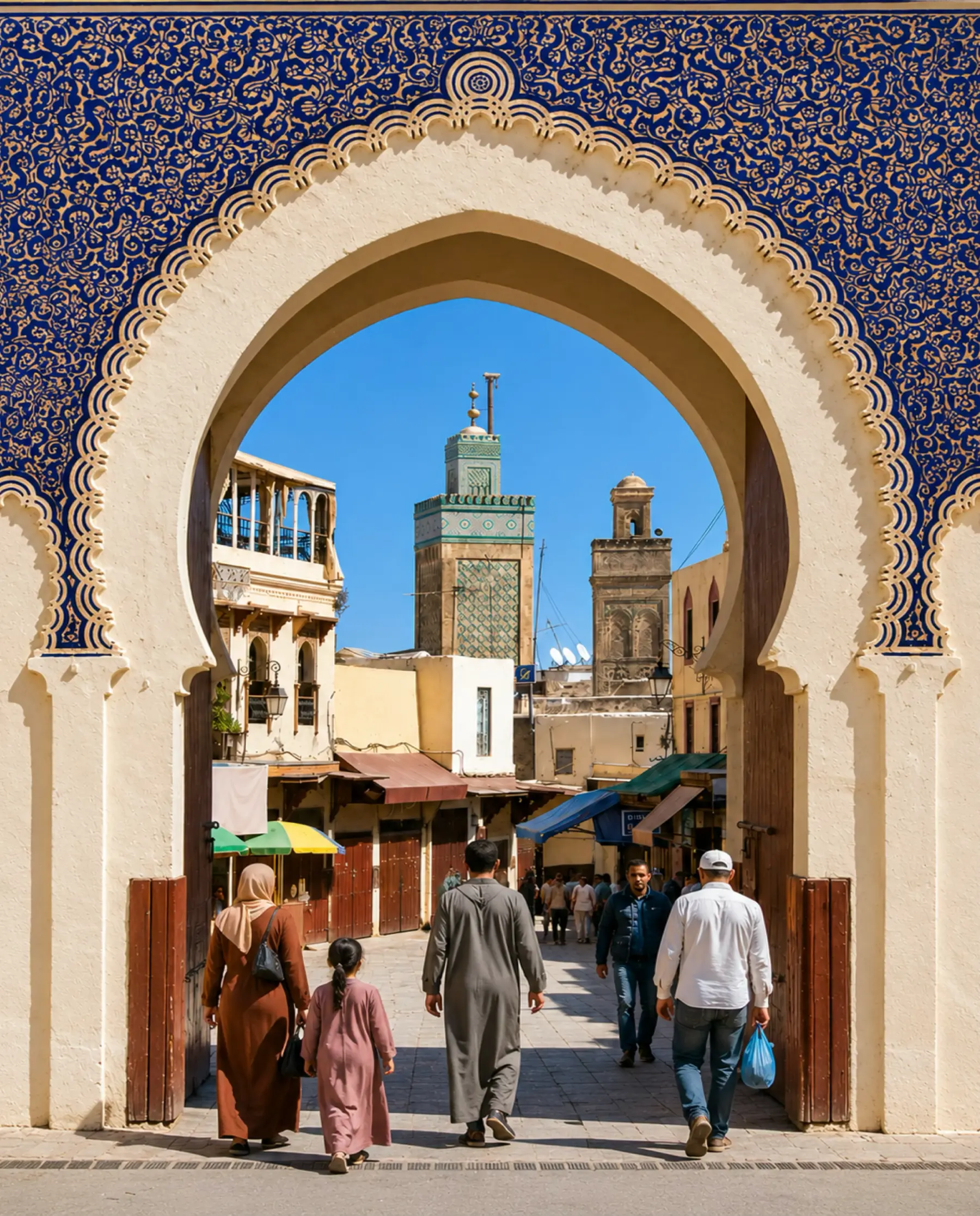
A decorated Fez medina gate opening toward historic streets, the city context for Borj Nord and the Marinid Tombs

Go deeper through the nearest city context

Fez - the city context for Borj Nord & the Marinid Tombs

Borj Nord and the Marinid Tombs belong naturally inside a wider Fez journey. The ridge gives the overview; the city below gives the detail: madrasas, gates, craft streets, rooftop views, sacred landmarks, markets and the dense logic of the old medina.

Use Fez after the ridge to connect panorama with lived urban fabric. Once you have seen the city from above, the narrow lanes become easier to understand as part of a larger historic structure.

Medina orientationImperial history Architecture and gatesRooftop viewpoints Craft and street rhythmCareful cultural context

Continue the journey

Continue from Fez's northern ridge into the wider imperial city.

Read the fortress, pause at the tombs, hold the panorama, then return to Fez with a sharper sense of history, scale and living urban memory.