
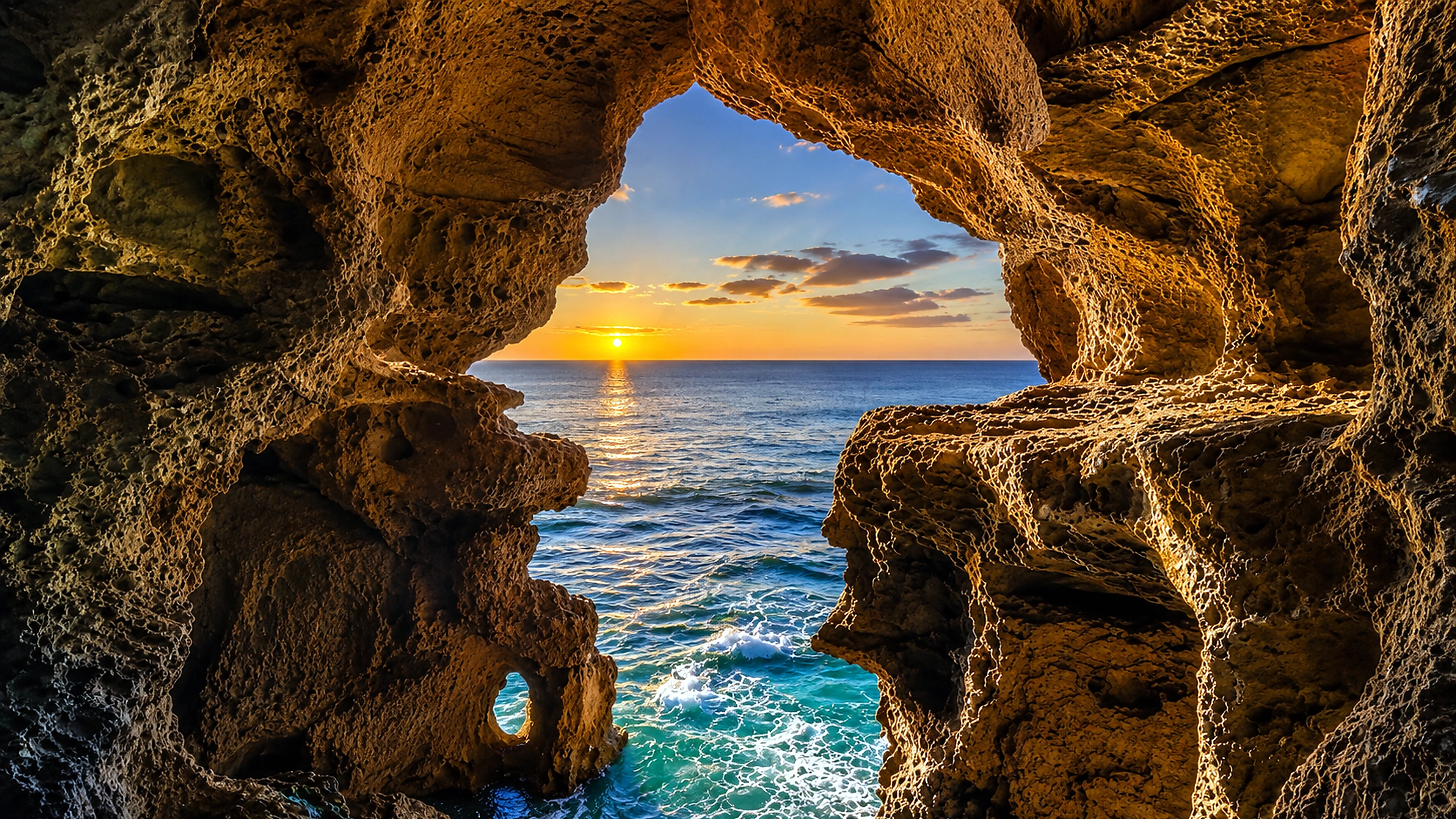
Atlantic sunset seen through the limestone opening of the Caves of Hercules near Tangier, Morocco

Visit / Place · Cap Spartel massif · Tangier

Caves of Hercules Atlantic limestone, ocean light and myth at Tangier's western edge

The Caves of Hercules are coastal limestone caverns where Tangier's Atlantic horizon, Cap Spartel geology and Greek legend meet in one compact, memorable place.

Look beyond the famous sea window. The stronger visit reads darkness, moisture, carved stone, wave sound and open horizon together, then connects the cave back to Tangier and the Strait of Gibraltar landscape.

Why the Caves of Hercules matter

A cave where geology, legend and Atlantic light meet.

The Caves of Hercules matter because they concentrate several Tangier stories in one place. They are not only a dramatic sea-facing cavern; they sit on the Cap Spartel massif, where the city opens toward the Atlantic and the wider geography of the Strait of Gibraltar begins to feel visible.

Morocco's Ministry of Youth, Culture and Communication describes the site as protected, located about 14 kilometres from Tangier, carved into natural limestone along the Atlantic coast, dark and humid inside, and lit by a distinctive passage opening toward the ocean. That official description is useful because it keeps the cave grounded in material and setting before myth or photography take over.

The mythic layer is part of the place's name. The same official source connects the caves with the Greek story of Hercules resting here and with the legend of separating the mountains that frame the Strait of Gibraltar. Visitors do not need to treat mythology as archaeology; it is enough to understand how story, sea and horizon gave the cave a powerful imaginative life.

The most photographed moment is the ocean opening, often read as a rough outline of Africa. It is visually memorable, but the cave becomes richer when visitors also notice the pitted limestone, the humid air, the echo of waves, the changing colour of the water and the way the dark chamber makes the horizon feel brighter.

Its popularity also asks for care. The Caves of Hercules are close to Tangier and easy to fold into a coastal visit, which means the strongest visitor experience depends on patience: step aside for others, keep the rock surfaces respected, photograph without blocking narrow spaces, and let the cave remain a place rather than a quick backdrop.

Core orientation is checked against the Moroccan Ministry of Youth, Culture and Communication, the Moroccan National Tourist Office Tangier guide and Tangier heritage material. Check current access and practical details close to travel.
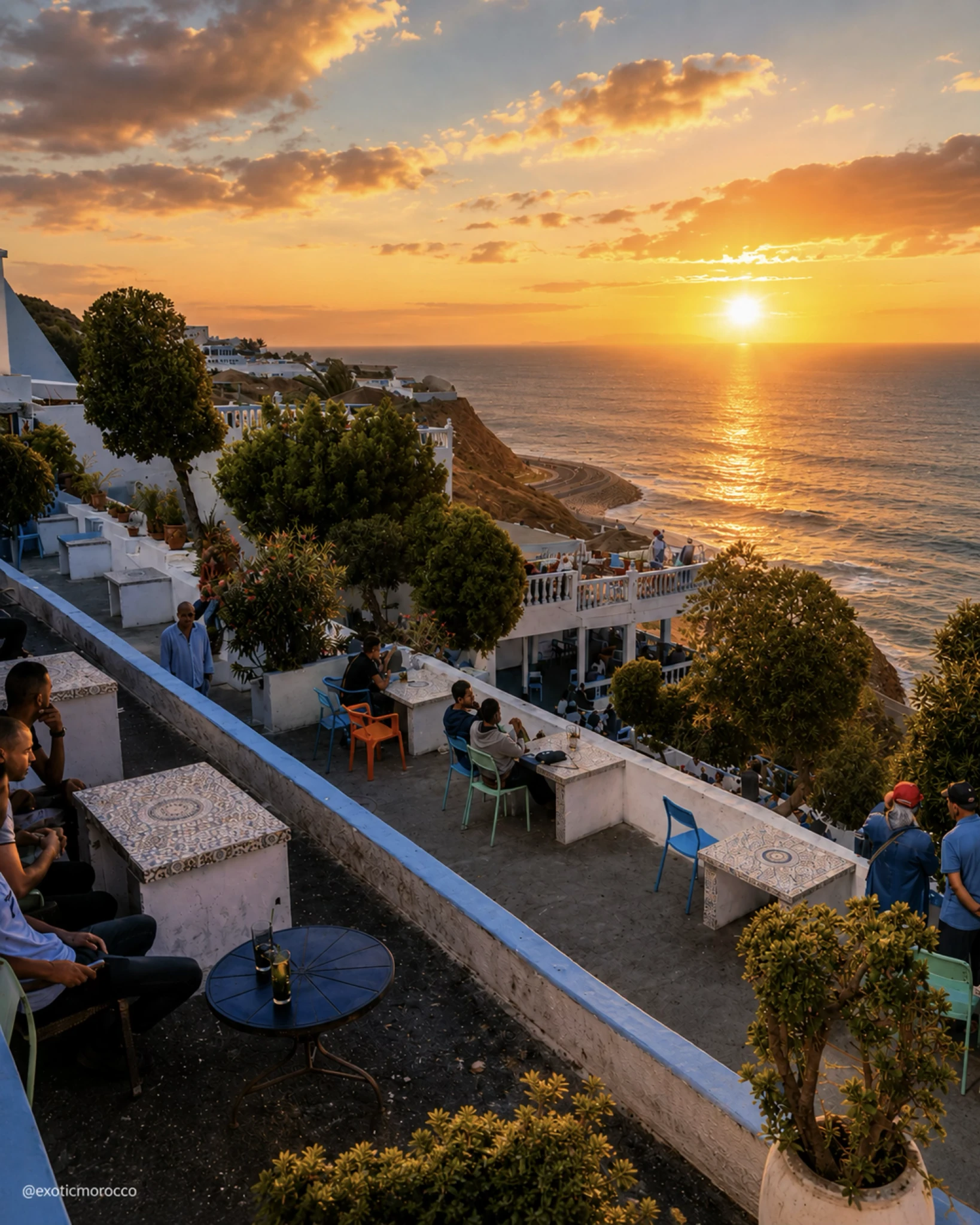
Sunset terrace view over Tangier's Atlantic coast, used as city context for the Caves of Hercules

Map orientation

Use the map to place the caves on Tangier's western Atlantic edge, close to the Cap Spartel landscape rather than inside the medina or city-centre rhythm.

Editorial reading

Its beauty comes from contrast.

The cave is powerful because it compresses opposites: dark chamber and bright horizon, rough limestone and moving water, a compact interior and a very wide ocean view. That contrast is what makes the place more than a photo stop.

Look at the rock before looking for the famous outline. The cave walls are uneven, perforated and weathered; they hold shadow in small pockets and catch warm light on raised edges. These details make the Atlantic opening feel carved rather than simply framed.

Listen as much as you look. Wave sound changes the atmosphere inside the chamber, and the humid air makes the cave feel different from Tangier's streets, gardens and terraces. A slower visit lets the body notice the place before the camera does.

The legend should be read as cultural atmosphere, not as proof. Hercules gives the site a mythic name, while the actual experience is geological and coastal: limestone, sea air, cliff edge, horizon and the strong feeling of being at a threshold between land and ocean.

The best photographs are usually the simplest ones: stone in shadow, Atlantic light beyond, a controlled frame, no pushing, no climbing and no turning the opening into a crowded stage. Restraint makes the place feel larger.

After visiting, connect the cave back to Tangier. The site belongs to the city's Atlantic side, to Cap Spartel and to a wider northern Moroccan coastline where natural form, maritime movement and layered stories meet.

Historical and heritage orientation

Separate the protected site, the myth and the coastline.

The Caves of Hercules should be read carefully: they are a protected coastal cave site with natural limestone forms, a famous ocean passage and a mythic name. Their visitor value comes from how these layers sit together without needing to exaggerate any one of them.

01Place type

Protected coastal caves

The official cultural description identifies the site as protected and carved into natural limestone along the Atlantic coast. That gives the caves both natural and heritage value.

02Material

Limestone and moisture

The dark, humid atmosphere is part of the place. The cave is not a dry monument; it is a coastal chamber shaped by rock, sea air, shadow and exposure.

03Myth

The Hercules story

The name belongs to Greek mythology. Official interpretation connects the site with Hercules resting here and with legends around the mountains of the Strait of Gibraltar.

04Tangier context

Atlantic edge of the city

The caves belong to Tangier's western coastal geography. They make most sense when linked with Cap Spartel, the Atlantic horizon and the city's wider maritime identity.

A visual bridge

Three readings between rock, ocean and story

Before the cave becomes a photograph, it is a sequence of thresholds: from road to entrance, from dry light to humid shadow, from rough stone to open Atlantic. These readings help visitors slow down.

01

Rock

Limestone before image

The cave's texture is not smooth or ornamental. It is pitted, irregular and tactile, with small holes, ridges and darker pockets that show how material holds light differently at every angle.

  • Read the wall surface before the famous opening.
  • Notice moisture, shadow and raised edges.
  • Keep hands away from fragile or worn surfaces.
02

Ocean

The horizon as architecture

The Atlantic is not just a background. It lights the cave, gives the chamber its sound and makes the opening feel like a living edge rather than a fixed stone window.

  • Watch how the water changes the colour of the cave.
  • Use the horizon to understand scale.
  • Step aside so others can see the frame clearly.
03

Story

Myth as atmosphere

Hercules gives the place a memorable name, but the visit should not become only legend. The strongest reading holds myth, geology and Tangier's maritime geography in balance.

  • Treat the legend as cultural memory.
  • Connect the cave to the Strait landscape.
  • Leave room for quiet observation, not only photos.

Quick orientation

Type of place

Protected Atlantic limestone caves near Tangier, best understood as a compact natural and heritage site with a strong sea-facing opening.

Landscape context

The caves sit on the Cap Spartel side of Tangier, where the city's coastal identity turns toward the Atlantic, cliff light and the wider Strait horizon.

Best for

Coastal geology, mythic place reading, ocean photography, sunset atmosphere, careful looking and a short but meaningful Tangier-side excursion.

Closest city context

Tangier is the natural base for understanding the caves, especially when combined with Cap Spartel, the medina, Atlantic viewpoints and northern Morocco routes.

What visitors experience here

A compact place with a very large horizon.

The Caves of Hercules work through compression. The site itself is not vast, but the sensory shift is strong: outside light, a darker chamber, rough limestone, ocean sound, then the Atlantic framed suddenly through stone.

Arrival

From coastal road to cave mouth

The approach belongs to Tangier's western edge rather than the old city. The cave visit feels coastal from the beginning: sea air, open sky, tourism rhythm and the expectation of the Atlantic.

Light

Warm stone, bright water

Light changes quickly inside the chamber. Stone can look gold, brown or almost black depending on the hour, while the sea opening stays brighter and pulls the eye outward.

Sound

The Atlantic inside the room

The cave is visual, but sound matters. Waves and echo make the interior feel active, especially when the water is moving strongly beyond the opening.

Texture

Pitted limestone and shadow pockets

The walls reward close attention. Small holes, ridges, worn sections and shadowed recesses make the surface feel alive without needing decoration or added spectacle.

Frame

The famous Atlantic window

The sea-facing opening is the place's clearest image. Photograph it patiently, but also look at how the surrounding rock creates the frame and how the water changes the whole composition.

Pace

A short visit that should not feel rushed

Because the site is compact, visitors often move too quickly. A better rhythm is simple: enter, pause, read the rock, listen, step back, photograph, then let someone else have the view.

Place details and orientation

Read the Caves of Hercules through six defining elements

No single feature explains the site. Its character comes from limestone, Atlantic exposure, mythic naming, managed visitor movement, Tangier geography and the sudden contrast between chamber and horizon.

1
Limestone chamber

The official description identifies the caves as natural limestone. That material gives the interior its rough texture, shadow and coastal vulnerability.

2
Ocean passage

A distinctive passage opens toward the Atlantic, bringing light, sound and horizon into the cave and giving the site its most recognisable view.

3
Cap Spartel setting

The caves belong to the Cap Spartel massif, so they should be read with Tangier's western coastline rather than as a detached indoor attraction.

4
Mythic naming

The Hercules association gives the site a classical story layer connected with rest, strength, mountains and the imagined making of the Strait.

5
Visitor threshold

The cave is popular and compact. Its narrow visual focus asks visitors to move courteously, wait for views and avoid blocking the main frame.

6
Tangier base

Tangier gives the site its wider reading: city, port, Atlantic edge, Mediterranean memory and northern Morocco's long relationship with movement across water.

Cave, not backdrop

The place asks for restraint.

Begin by letting your eyes adjust. The cave should not be consumed in one glance. The transition from outside brightness to interior shadow is part of the experience, and the Atlantic opening becomes stronger when the surrounding darkness has been noticed first.

Then read the stone. The pitted surfaces, darker hollows and rough edges show why the cave feels so textural in photographs. The beauty is not polished; it comes from the meeting of limestone, sea air, time and uneven light.

Finally, return to the horizon. The opening is memorable because it turns a small interior into a wide coastal image. That is the central lesson of the site: a compact chamber can hold a large geography when rock and ocean meet.

Landscape and material intelligence

Limestone, moisture and ocean light do the work.

The Caves of Hercules are not impressive because they are large or ornate. Their intelligence is spatial: a darker limestone interior is cut open by Atlantic light, turning a cave into a frame for sea, sky and myth.

This is why heavy decoration would add nothing. The site already has its own visual grammar: uneven rock, damp shadow, bright water, echo, cliff exposure and the knowledge that the cave sits on the edge of Tangier's Atlantic geography.

What to notice slowly

  • Let your eyes adjust before moving immediately to the sea-facing opening.
  • Notice the difference between dry exterior light and the darker, humid interior.
  • Read the pitted stone surfaces as material texture, not decorative carving.
  • Watch how wave sound changes the atmosphere even when the view stays still.
  • Keep the cave connected to Cap Spartel and Tangier's Atlantic edge.
  • Photograph with patience so the narrow viewing area stays respectful for others.

Visual reading

Three languages to notice

Rock before legend

The myth gives the cave a name, but the rock gives it presence. Start with limestone surface, shadow, moisture and the irregular edges around the chamber.

The ocean as light source

The Atlantic opening works like a natural aperture. It brightens the chamber, changes colour through the day and makes the cave feel connected to a wider maritime landscape.

Scale and restraint

The place is powerful but compact. Good looking means waiting, stepping aside, avoiding careless touch and letting the cave's small scale remain calm rather than crowded.

Visual atmosphere

Shadow, salt air and a sudden horizon

From chamber to ocean

The visual drama comes from a simple transition: rough interior stone gives way to water and sky. Hold both in view. The cave is not only the frame, and the ocean is not only the subject; they make each other stronger.

From dark stone to warm sunset

Late light can make the limestone glow without losing its roughness. The best atmosphere is natural, not exaggerated: warm edges, blue water, textured shadow and enough contrast for the cave to stay readable.

From photo to memory

A good memory of the caves includes more than the famous outline. It holds the smell of sea air, the echo of waves, the roughness of stone, the patience of waiting and the feeling of Tangier opening westward.

Nearby places and onward links

Connect the caves to Tangier's Atlantic edge

The Caves of Hercules become stronger when they are not treated as an isolated stop. Link them with Tangier, Cap Spartel, northern Morocco's coastline and a slower reading of natural places.

Tangier

The closest and most important city context. Use Tangier to connect the caves with medina life, Atlantic viewpoints, port history and northern Morocco's layered identity.

Open Tangier city guide

Cap Spartel

The cape gives the caves their wider landscape frame: lighthouse, Atlantic edge, sea wind and the feeling of standing near the western threshold of Tangier.

Open Cap Spartel place guide

Northern Morocco & Rif

The regional home for Tangier, Rif landscapes, coastal routes and the meeting of mountain, city and sea in northern Morocco.

Explore the region

Visit Morocco places

Continue through caves, coasts, kasbahs, lagoons, archaeological sites, parks, mountains and other place-led guides beyond the city pages.

Browse Visit places

Plan your journey

Treat the caves as part of a Tangier-side route, checking current access, local conditions and the best way to connect nearby stops without rushing.

Plan your journey

Stories from Morocco

Use the Stories section for slower cultural reading around coastal places, myth, material, memory and how landscapes become meaningful.

Read stories

How to visit respectfully

Good behaviour keeps the cave readable.

The Caves of Hercules are popular, compact and visually focused. Move with that in mind: do not crowd the sea opening, do not push for the photograph, and leave space for families, guides, guards and visitors who are trying to read the place quietly.

Respect also means caring for the cave's material presence. Avoid touching or scratching rock surfaces, climbing where it is not appropriate, leaving litter, shouting through the chamber or treating the site as a stage. The cave's atmosphere is strongest when people do less.

  • Wait your turn at the ocean opening and keep the viewing area moving calmly.
  • Ask before photographing people, guides, shopkeepers or anyone working near the site.
  • Stay on appropriate visitor routes and avoid leaning into fragile or wet rock edges.
  • Use natural light carefully; avoid disruptive behaviour for the sake of a photo.
  • Check current access and official information before travelling, especially in busy periods.

A strong first visit

Begin outside by placing the cave in Tangier's coastal geography. You are on the Atlantic side of the city, near the Cap Spartel landscape, not inside a museum room. That first orientation makes the interior feel more meaningful.

Inside, pause before photographing. Let the darkness, humidity and stone texture register, then approach the opening slowly. The image is stronger when the surrounding cave remains part of the composition instead of disappearing into a rushed snapshot.

Keep the myth in proportion. Hercules gives the place narrative force, but the site also deserves a material reading: limestone, water, light, sound, protection and visitor pressure. A respectful visit holds those layers together.

Afterward, connect the caves to Tangier rather than leaving them as a single image. Cap Spartel, the medina, the Atlantic terraces and the city's port identity all help explain why this coastline has carried so many stories.

  • Start with the location: Tangier's western Atlantic edge.
  • Read the rock surfaces before focusing only on the sea window.
  • Photograph patiently and give others clean access to the view.
  • Leave no litter and avoid marking, touching or testing the stone.
  • Finish by connecting the cave to Tangier and Cap Spartel.

Careful planning note: access, ticketing and opening arrangements can change. Verify current details through official or local sources close to travel.

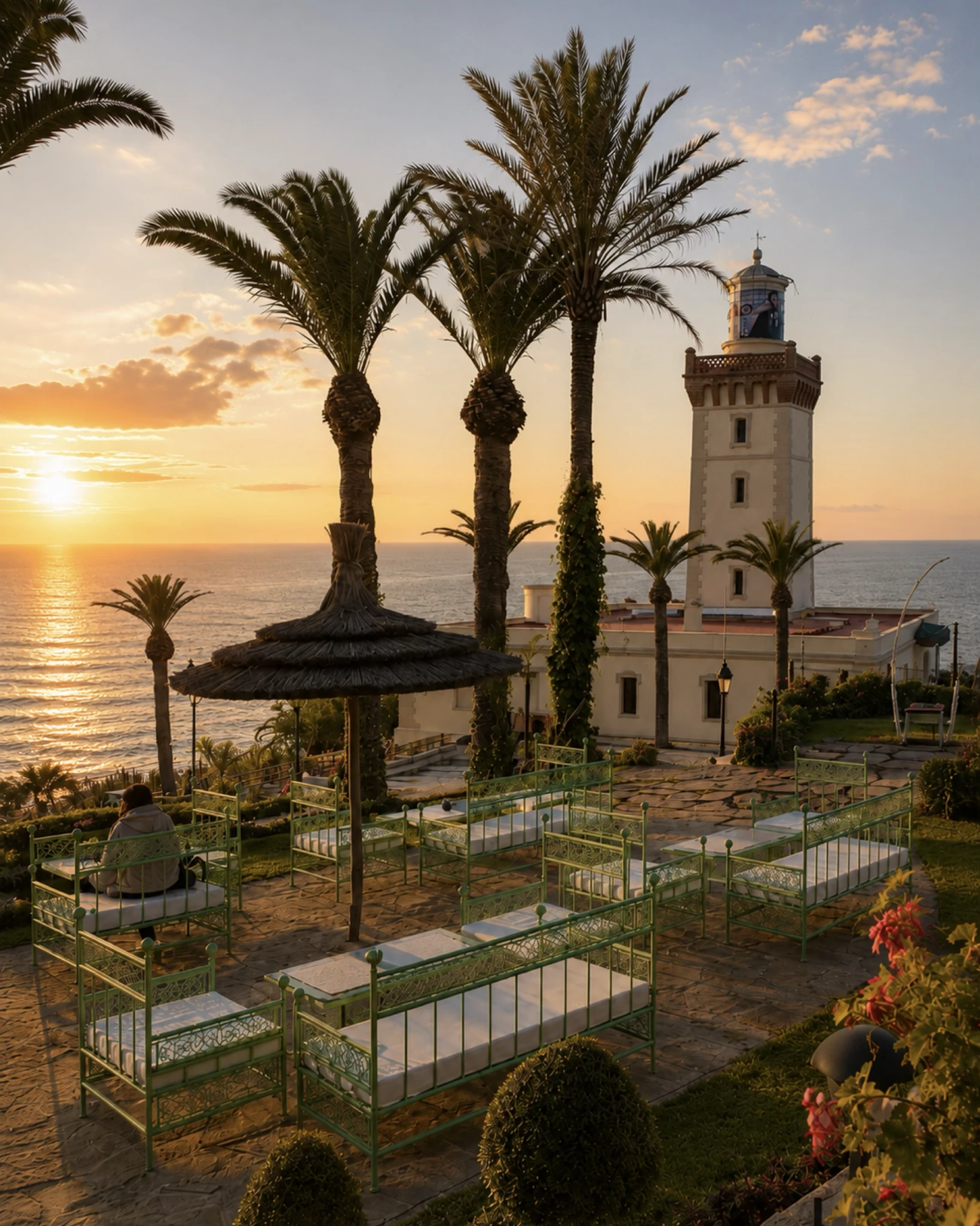
Cap Spartel lighthouse and garden near Tangier at sunset

Go deeper through the nearest city context

Tangier — the city gateway to the Caves of Hercules

The Caves of Hercules belong naturally inside a Tangier journey. The city gives visitors the stronger frame: a white northern port, medina lanes, Atlantic terraces, Cap Spartel, Mediterranean memory and the long cultural imagination of a place facing more than one sea.

Use Tangier to widen the context after the cave itself. The visit becomes richer when the caves are connected with the city's coast, viewpoints, markets, museums, port identity and the geography of the Strait of Gibraltar.

Tangier city orientationCap Spartel coastline Atlantic viewpointsMyth and maritime memory Responsible place visitsNorthern Morocco routes

Continue the journey

Continue from the Caves of Hercules into Tangier's Atlantic edge.

Read the cave slowly, then connect it to Cap Spartel, Tangier, coastal light, mythic memory and the wider northern Morocco journey.