Why Dakhla Lagoon matters
A lagoon before it is a postcard.
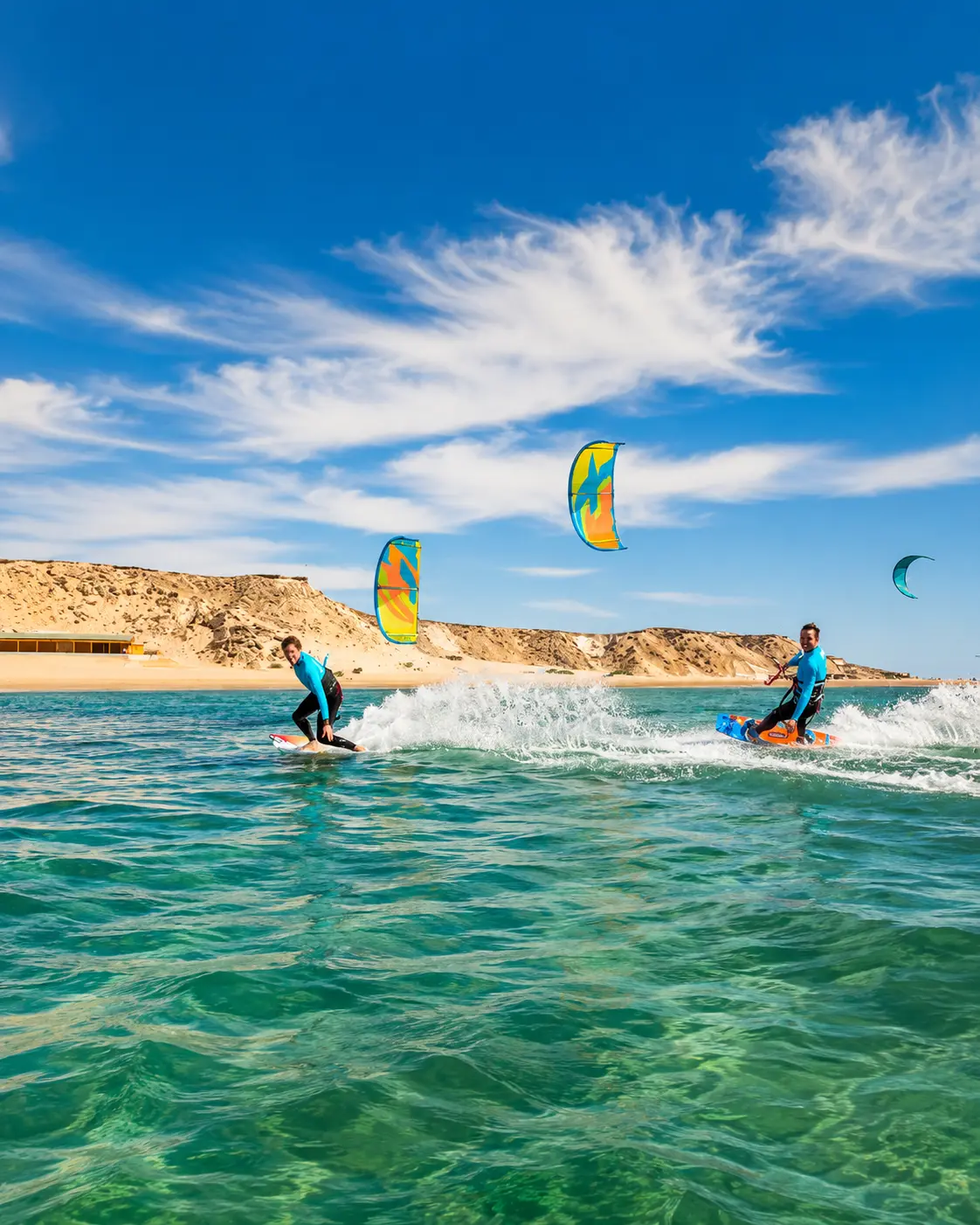
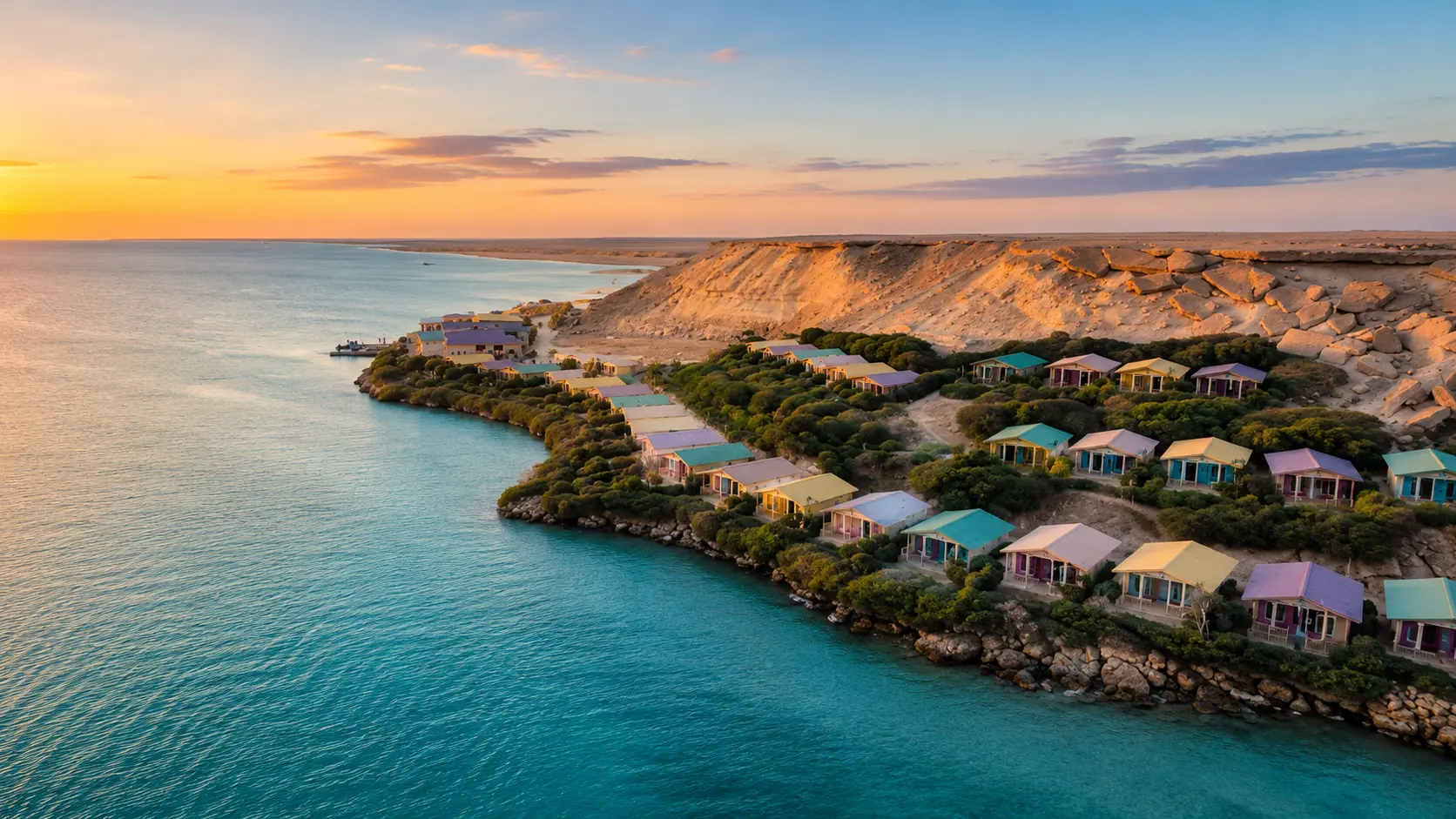
Dakhla Lagoon matters because it makes the meeting of desert and ocean unusually legible. The water is sheltered by the long peninsula, while the inland edge remains dry, pale and exposed. That contrast gives the place its clarity: blue shallows, sand-coloured slopes, strong sky and a horizon that keeps changing with wind and tide.
The lagoon is also a living coastal system. It supports birdlife, fishing and aquaculture contexts, and a visitor economy shaped by kitesurfing, wingfoil, sailing and beach-based stays. Its beauty therefore should not be separated from use, pressure and care. The same wind that makes the lagoon famous can also make visitors forget that calm-looking water is part of a sensitive environment.
Dakhla's position is important. The city sits on Morocco's far Atlantic south, with the lagoon on one side and the open ocean on the other. That geography creates a rare double reading: sheltered flat water inside, rougher Atlantic energy outside, and desert landforms holding both in one frame.
For travellers, the best visit begins with orientation. Notice where the peninsula protects the bay, where camps and lodges meet the shoreline, where riders use the wind, and where quieter zones ask for distance. Dakhla Lagoon rewards visitors who look at movement, ecology and light together.
That is why this page treats the lagoon as more than a beautiful blue surface. It is a place of water discipline, desert scale, local livelihoods, migrating birds, sports culture and restrained access. The stronger memory comes from reading those layers without flattening them into a single holiday image.
Core orientation is grounded in official Dakhla tourism material, Moroccan tourism guidance, Ramsar wetland context for Baie d'Ad-Dakhla and coastal-preservation references for Oued Eddahab Bay. Prices, exact activities, access rules and conditions should be checked close to travel.