
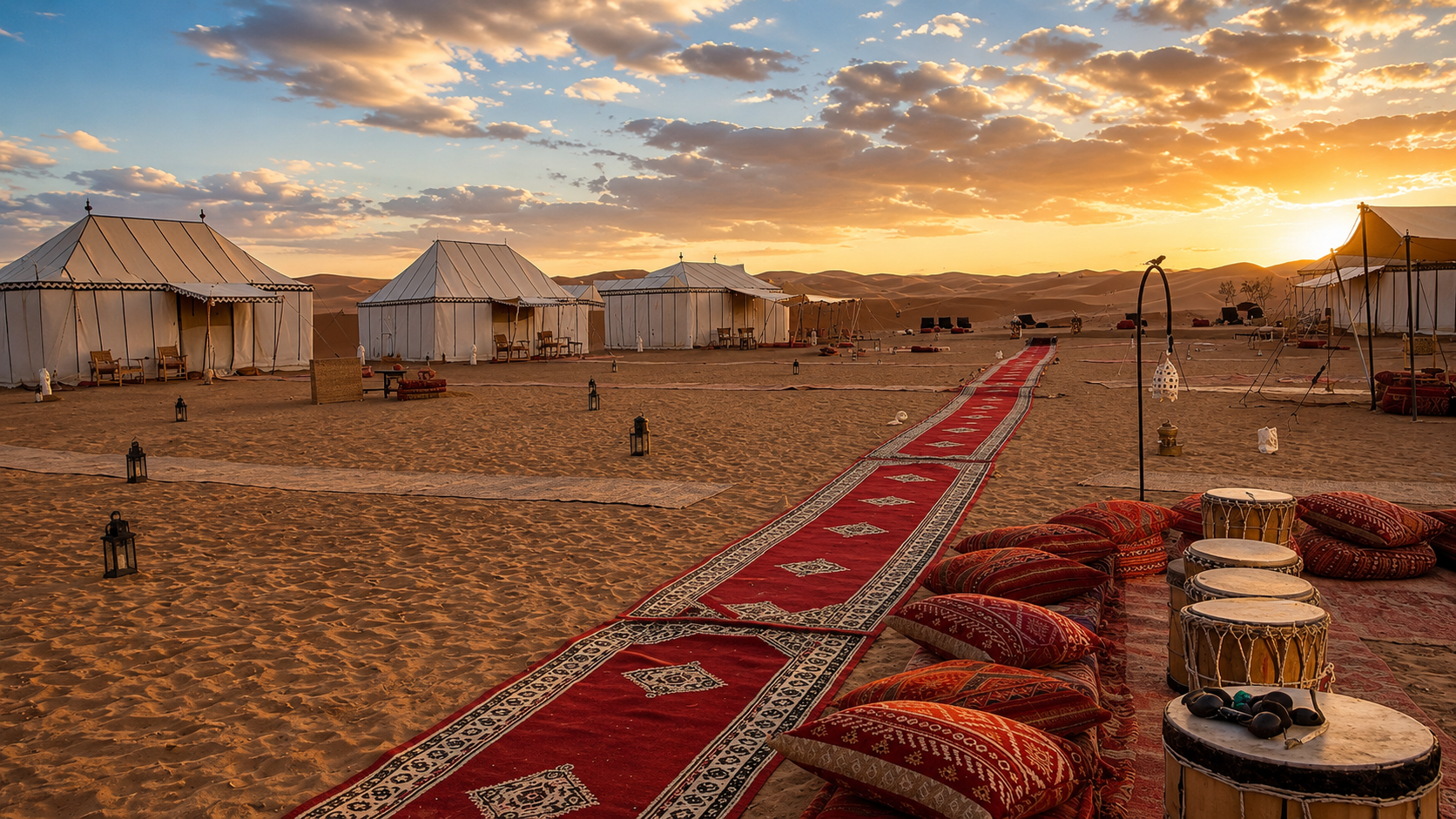
Erg Chebbi desert camp and dunes glowing at sunset near Merzouga, Morocco

Visit / Place · Merzouga · Southern Morocco

Erg Chebbi A Sahara dune field of wind, light, silence and desert-edge scale

Erg Chebbi is the dune landscape beside Merzouga where Morocco's south opens into wind-shaped sand, desert-edge settlement, palm-grove memory and a slower way of looking.

Begin with distance. The dunes are most powerful when the whole horizon is visible first: ridges, shadow, sand colour, camp edges and the quiet meeting between village life and open Sahara space.

Why Erg Chebbi matters

An erg before it is a postcard.

Erg Chebbi matters because it gives visitors one of Morocco's clearest encounters with a true dune field. The landscape is not a painted backdrop or a generic desert mood. It is a place shaped by wind, slope, granular texture, temperature, shadow and the way people move carefully along the edge of sand.

The official Moroccan tourism route for Errachidia, Midelt and Merzouga places Erg Chebbi within a wider world of dunes, palm groves, tracks and hikes. That context is important. Merzouga is the human gateway, while Erg Chebbi is the large visual and physical landscape that gives the journey its scale.

The dune field also matters because it teaches proportion. A single ridge can look close and then take longer to reach than expected; a footprint can feel sharp in the morning and almost disappear after wind; the same sand can shift from pale gold to deep orange as light changes. The visitor learns by slowing down.

Erg Chebbi should be read with its edges: Merzouga, desert camps, palm-grove traces, nearby tracks, the wider Tafilalet region and seasonal water around Dayet Srij when conditions allow. The dunes are the iconic image, but the richer story is the meeting between natural form and desert-edge life.

For a strong first visit, treat the dunes as a living landscape rather than a stage. Walk with patience, follow local guidance, keep noise and litter out of the sand, ask before photographing people, and remember that the desert is beautiful partly because it is not overloaded with explanation.

Core orientation is grounded in the official Moroccan tourism page for Errachidia, Midelt and Merzouga and its Moroccan desert geography context. Practical details such as activity rules, access, transport and seasonal conditions should be checked close to travel.
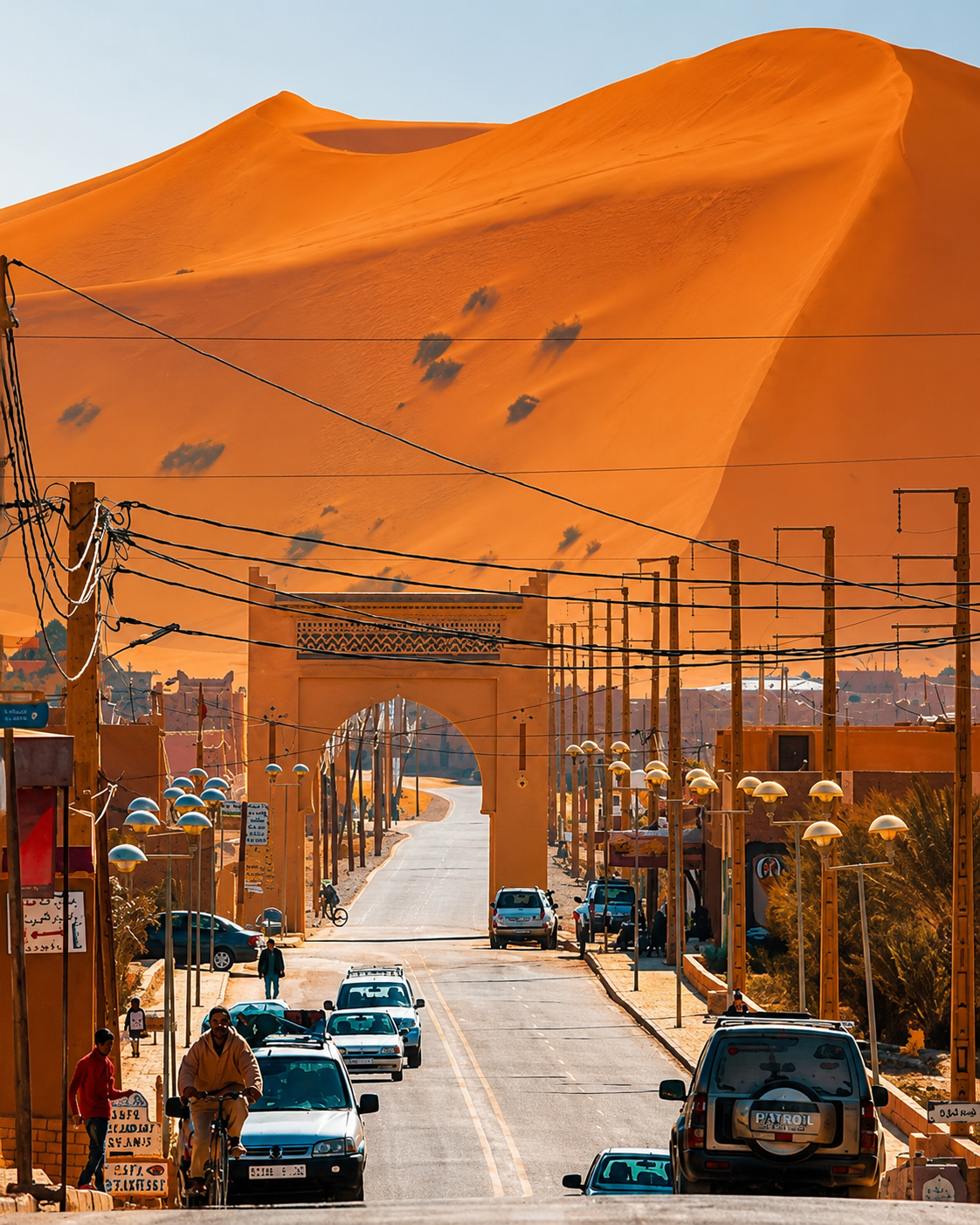
Merzouga street and gateway with Erg Chebbi dunes rising behind it

Map orientation

Use the map to read Erg Chebbi as a dune field beside Merzouga, with settlement and tracks on the western edge and open sand forming the dominant landscape.

Editorial reading

The dunes are a living system, not a backdrop.

The first impression is scale: sand lifting into ridges, the horizon broken by curved lines, and light turning every slope into a different surface. But Erg Chebbi becomes more interesting when the visitor looks for movement rather than spectacle.

Wind is the main author here. It sharpens crests, softens footprints, moves fine sand across the surface and makes the landscape feel newly drawn. That is why the same viewpoint can feel different in morning, afternoon and evening.

Merzouga gives the dunes a human edge. Roads, guesthouses, camps, guides, palms and small local routines remind visitors that the Sahara encounter is not detached from community life. The best photography keeps that context in view without turning people into props.

The desert also asks for restraint. Loud engines, careless driving, abandoned plastic, intrusive photography and wandering without local knowledge all weaken the experience. A quieter visit protects both the landscape and the dignity of the people who work around it.

Read the place in layers: settlement edge first, dune mass second, wind texture third, then the sudden intimacy of footsteps, fabric, tea, shade, stars and silence when the light begins to fall.

Landscape and heritage orientation

Read the site through wind, edge and desert intelligence.

Erg Chebbi is best understood as a natural and cultural landscape, not as a single attraction. Its meaning comes from the meeting of Saharan dune form, Merzouga's gateway role, desert-edge routes, palm-grove context and the visitor responsibility required by exposed terrain.

01Place type

A Moroccan erg

An erg is a dune field: a landscape where wind-blown sand gathers into ridges, slopes and crests. At Erg Chebbi, the form of the place is the experience.

02Gateway

Merzouga on the edge

Merzouga is the practical and visual gateway. It places hotels, guides, local services, palms and everyday movement beside the dune field instead of separating travel from local life.

03Region

Tafilalet and the south

The wider Tafilalet and Drâa-Tafilalet context matters because desert travel here is connected to oases, routes, markets, fossil landscapes, seasonal water and long patterns of movement.

04Care

Fragile openness

Sand may look endless, but the visitor footprint is real. Responsible access, low waste, respect for guides and care around camp areas help keep the landscape from becoming exhausted by tourism.

A visual bridge

Three readings between wind, sand and settlement edge

Before Erg Chebbi becomes a photograph, it is a relationship between wind, surface and human movement. These readings help visitors slow down and understand why the dunes feel monumental from afar, then delicate at foot level.

01

Wind

The invisible maker

Wind gives the dunes their line, polish and instability. It draws the crests, erases marks, shifts fine sand and makes each visit slightly different without needing drama.

  • Look for ripples, soft edges and sharp ridgelines.
  • Notice how footprints interrupt the surface.
  • Read the dunes as movement, not fixed sculpture.
02

Scale

Distance before detail

Erg Chebbi is strongest when read first as a horizon. The large shapes give the body a sense of proportion; only then do texture, colour, tracks and small human details begin to matter.

  • Pause before climbing toward a ridge.
  • Use shadows to understand slope and depth.
  • Let the horizon set the pace of the visit.
03

Edge

Merzouga gives orientation

The village edge, palms, tracks and camps make the dune field readable. They show where daily life meets visitor movement and where open sand begins to dominate the eye.

  • Connect the dunes to Merzouga before entering them.
  • Keep camp and village boundaries respectful.
  • Understand the desert through both people and place.

Quick orientation

Type of place

A Saharan dune field beside Merzouga, best understood through wind-shaped sand, large ridges, desert-edge movement and careful visual attention.

Landscape context

Southeastern Morocco, within the wider Errachidia, Midelt and Merzouga travel context where dunes, palm groves, tracks and oasis routes meet.

Best for

Sunrise and sunset light, dune walking with care, desert-camp context, photography, quiet observation, landscape reading and southern Morocco route planning.

Closest city context

Merzouga is the immediate gateway. Rissani, Erfoud and the wider Tafilalet area add market, oasis and route context for a fuller southern journey.

What visitors experience here

A landscape that changes with every angle of light.

Erg Chebbi works in stages. First comes the wide dune wall beyond Merzouga. Then the eye starts to read ridges, shaded hollows, camp lines, footprints and the fine surface texture left by wind. The place becomes clearer when the visitor stops rushing toward the highest point.

Arrival

The dune edge from Merzouga

The first strong moment is the transition from settlement edge to sand. Roads, palms, walls and small services make the dunes feel even larger because the open landscape begins so suddenly.

Light

Ridges catching colour

Low light gives the dunes their clearest form. One slope can glow while the next turns blue with shadow, allowing the visitor to understand depth, curve and height without needing explanation.

Movement

Footsteps that measure scale

Walking in sand slows the body down. That slower rhythm is useful: it makes distance honest, turns ridgelines into decisions and helps visitors respect heat, fatigue and orientation.

Texture

Ripple, crest and soft collapse

The surface is full of small readings: wind ripples, slipping edges, camel or foot tracks, smooth faces and rougher patches where the sand has recently moved.

Human rhythm

Camps without noise

Desert camps can frame the experience beautifully when they stay calm. Fabric, lanterns, carpets and shared meals belong best when they do not overwhelm the dark, the silence or the people working there.

Night

Clear sky, careful presence

On clear nights, the memory shifts from colour to space. The strongest atmosphere comes from restraint: less light, less noise, more attention to wind, temperature and the immense quiet around the dunes.

Place details and orientation

Read Erg Chebbi through six defining elements

No single dune explains the place. Its meaning comes from wind form, Merzouga's edge, sand texture, palm-grove context, seasonal water nearby and the routes that carry visitors into the landscape.

1
Main ridges

The high dune lines create the first impression of scale. Read them from a distance before choosing where to walk or photograph.

2
Wind texture

Ripples and crests show the surface as active. The best detail is often close to the feet, not only on the skyline.

3
Merzouga gateway

The village gives the dune field its practical base and cultural edge, connecting guides, routes, accommodation and everyday movement.

4
Palm and oasis edges

Green traces around the desert edge change the reading of the sand by showing water, shade and settlement in close conversation with arid space.

5
Dayet Srij context

The wider Merzouga area includes Dayet Srij, a lake setting noted by official tourism material. Conditions can vary, so treat it as seasonal landscape context rather than a guaranteed sight.

6
Tracks and access

Existing tracks, local guidance and camp boundaries help visitors move through the dunes without turning the whole landscape into an uncontrolled playground.

Dune field, not empty space

The place asks for a patient eye.

Stand back before entering the sand. The first lesson is spatial: Merzouga at the edge, dune ridges beyond it, tracks drawing movement, and a horizon that changes the scale of everything around it.

Then move closer. Texture becomes the subject: fine ripples, sliding slopes, wind-polished faces, footprints, camel tracks and small shadows that reveal the shape of the dune more clearly than a wide photograph can.

Keep returning to the edge. Erg Chebbi is not separate from the people who guide, host, drive, cook, clean and maintain visitor life around it. The most complete reading holds landscape and community together.

Landscape and climate intelligence

Wind is the architect here.

Erg Chebbi's intelligence is not built from walls or carved surfaces. It comes from exposure, movement and adaptation. Wind shapes the ridges, heat changes the body's pace, shade becomes precious, and orientation depends on reading edges rather than relying only on a straight path.

This is why the dune field deserves careful behaviour. A visitor who treats the desert as empty space misses its structure: camp boundaries, local routes, fragile quiet, the labour behind hospitality and the small signs that help people move safely through an exposed landscape.

What to notice slowly

  • Look at the full dune line before focusing on one ridge or viewpoint.
  • Notice where wind has made sharp crests, smooth faces and fine ripples.
  • Read Merzouga as the human edge of the landscape, not just a departure point.
  • Keep palm-grove traces and seasonal water context in mind when reading the desert edge.
  • Use existing tracks and local guidance instead of inventing careless routes.
  • Respect the quiet around camps, homes, animals and working guides.

Visual reading

Three desert languages to notice

Wind as form

The dune is never only a mound of sand. It is a record of wind direction, surface movement, collapse, compression and light. The sharpest line is often temporary.

Edge as orientation

Merzouga, palms, tracks and camps give the visitor a sense of where the dune field begins. Without that edge, the landscape becomes impressive but harder to read.

Human pace as measure

The desert makes the body honest. Slow walking, pauses, water, shade and local knowledge are not minor details; they are the practical grammar of a good visit.

Visual atmosphere

Light, texture and quiet transitions

From ridge to shadow

Start with the whole horizon, then follow the shadow lines. They reveal where sand rises, folds and drops away. The darker shapes are not empty; they are the map of the dune's depth.

From sand to sky

The strongest colour is usually simple: warm sand, pale blue sky, late sun, and sudden cool shadow. Avoid forcing the scene into fantasy; Erg Chebbi is already visually generous.

From photo to memory

The photograph may hold the glow, but the memory often comes from slower things: sand underfoot, quieter voices, changing temperature, fabric moving in wind and the moment the dunes lose detail after sunset.

Nearby places and onward links

Connect the dunes to the wider southern Morocco map

Erg Chebbi belongs to a broader southern itinerary. Merzouga gives the immediate gateway, while the wider region opens toward oasis routes, desert-edge towns, planning pages and slower cultural reading.

Merzouga

The closest gateway for Erg Chebbi. Use it to frame the dune field through local services, desert camps, palm edges, routes and the daily rhythm around the sand.

Open Merzouga city guide

Southern Morocco, Oases & Sahara

The regional home for desert-edge travel, oasis routes, dune landscapes, palm valleys and journeys across Morocco's south.

Explore the region

Visit Morocco places

Continue through dunes, valleys, waterfalls, lagoons, caves, monuments and natural heritage places beyond the city guides.

Browse Visit places

Plan your journey

Treat Erg Chebbi as a landscape anchor, not just a night stop. Build the journey around season, pace, guidance, comfort and onward routes.

Plan your journey

Themes of Morocco

Use the Themes section for wider readings of Moroccan landscapes, heritage, craft, food, architecture and cultural memory.

Browse themes

Stories from Morocco

Use the Stories section for richer cultural reading around landscape, place, memory and the human rhythm behind travel images.

Read stories

How to visit respectfully

Good behaviour protects the silence.

Erg Chebbi is famous enough to attract fast decisions: rushed rides, loud arrivals, careless driving and photographs taken without attention to people. A better visit is slower, quieter and more aware of the local work that makes desert travel possible.

Respect here is both cultural and environmental. Ask before photographing people, stay polite around homes and camp staff, avoid leaving any waste in the sand, keep noise low at night and use local guidance when moving beyond obvious paths.

  • Ask clearly before photographing guides, drivers, camp staff, families or private spaces.
  • Use established routes and local guidance, especially around camp areas and deeper dunes.
  • Carry water, sun protection and realistic expectations about walking in soft sand.
  • Keep plastic, cigarette ends and food waste out of the dune field completely.
  • Check current access, weather, seasonal conditions and activity rules close to travel.

A strong first visit

Begin at the edge of Merzouga so the transition is clear. Let the village, palms, tracks and first dunes arrange the scene before you move deeper into the sand. This gives the visit structure instead of turning it into a chase for the tallest ridge.

Choose the right pace. Early and late light are often the most legible for form, but comfort, heat, wind and local guidance matter more than the perfect photograph. Walk slowly, pause often and keep orientation in mind.

If staying in a camp, let the desert remain present. Low light, quiet voices and respect for shared space make the night stronger than any forced performance. The goal is not to fill the silence but to notice it.

Afterward, connect the dunes back to the wider south: Merzouga, Rissani, Erfoud, Tafilalet, oasis routes and the long movement between mountains, palms and desert. That wider context keeps Erg Chebbi from becoming only an isolated image.

  • Start from the settlement edge and read the full dune line first.
  • Move with local guidance when the route is not obvious.
  • Give sunset and sunrise space instead of crowding every viewpoint.
  • Respect camp boundaries, working staff and private moments around hospitality.
  • Finish by connecting Erg Chebbi back to Merzouga and southern Morocco.

Careful planning note: exact transport, activity access, weather, camp arrangements and seasonal landscape conditions can change. Verify practical details locally before travelling.

Merzouga gateway street with high Erg Chebbi dunes behind it

Go deeper through the nearest city context

Merzouga - the gateway to Erg Chebbi

Erg Chebbi belongs naturally inside a Merzouga journey. The village gives visitors a practical and cultural base for understanding the dunes: guides, camps, palm edges, desert tracks, local hospitality and the everyday threshold between settlement and open sand.

Use Merzouga to widen the context after the dunes themselves. The best journey connects the visual force of Erg Chebbi with the surrounding routes, oasis edges, Tafilalet towns and the careful planning needed for a respectful desert visit.

Merzouga city orientationDune and camp context Southern Morocco routesPalm and oasis edges Practical travel structureRespectful desert rhythm

Continue the journey

Continue from Erg Chebbi into southern Morocco.

Read the dunes slowly, then connect them to Merzouga, Tafilalet, oasis routes, desert-edge towns and the wider landscape map of Morocco's south.