Why Lake Yasmina matters
A meeting of water, dunes and living habitat.
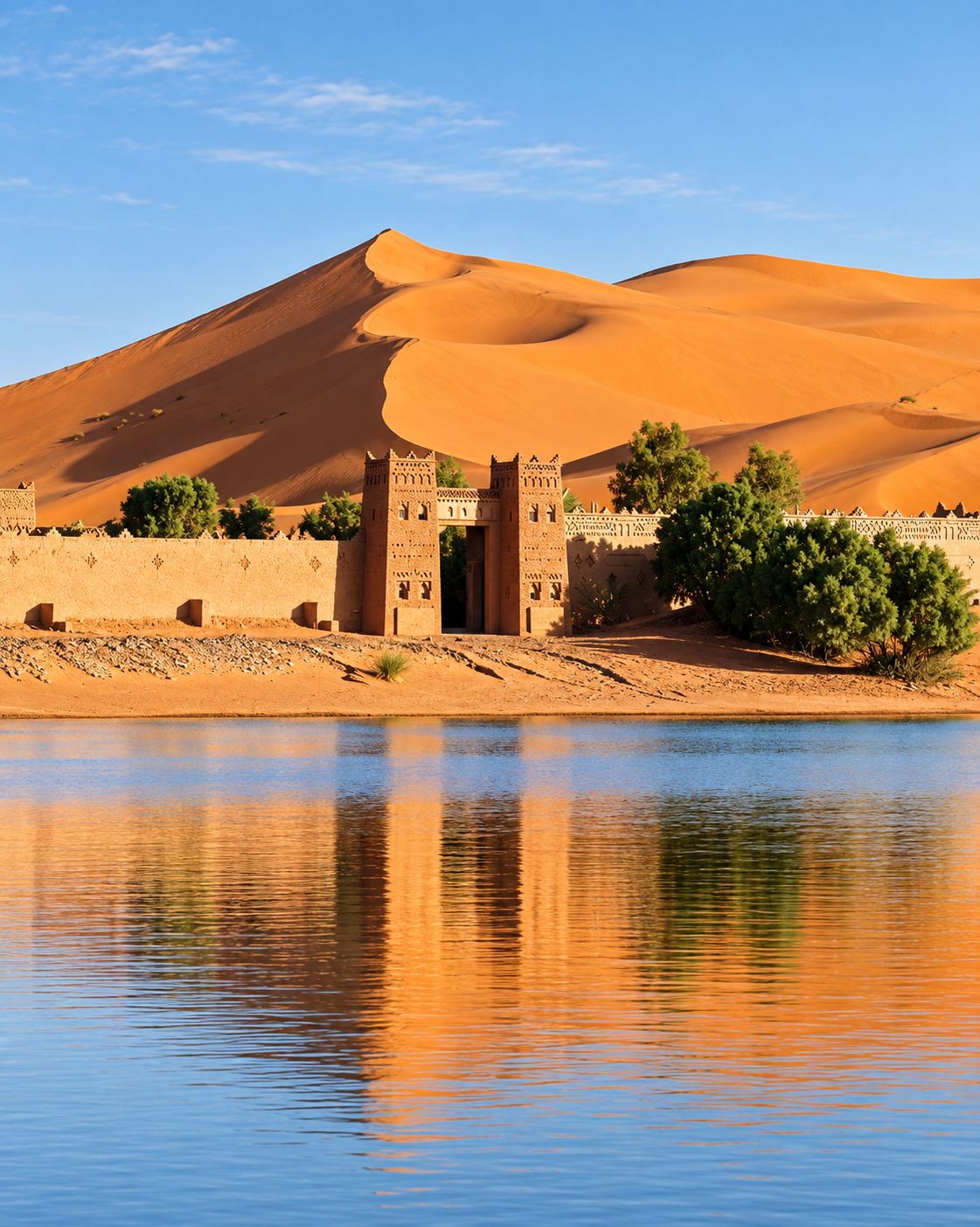
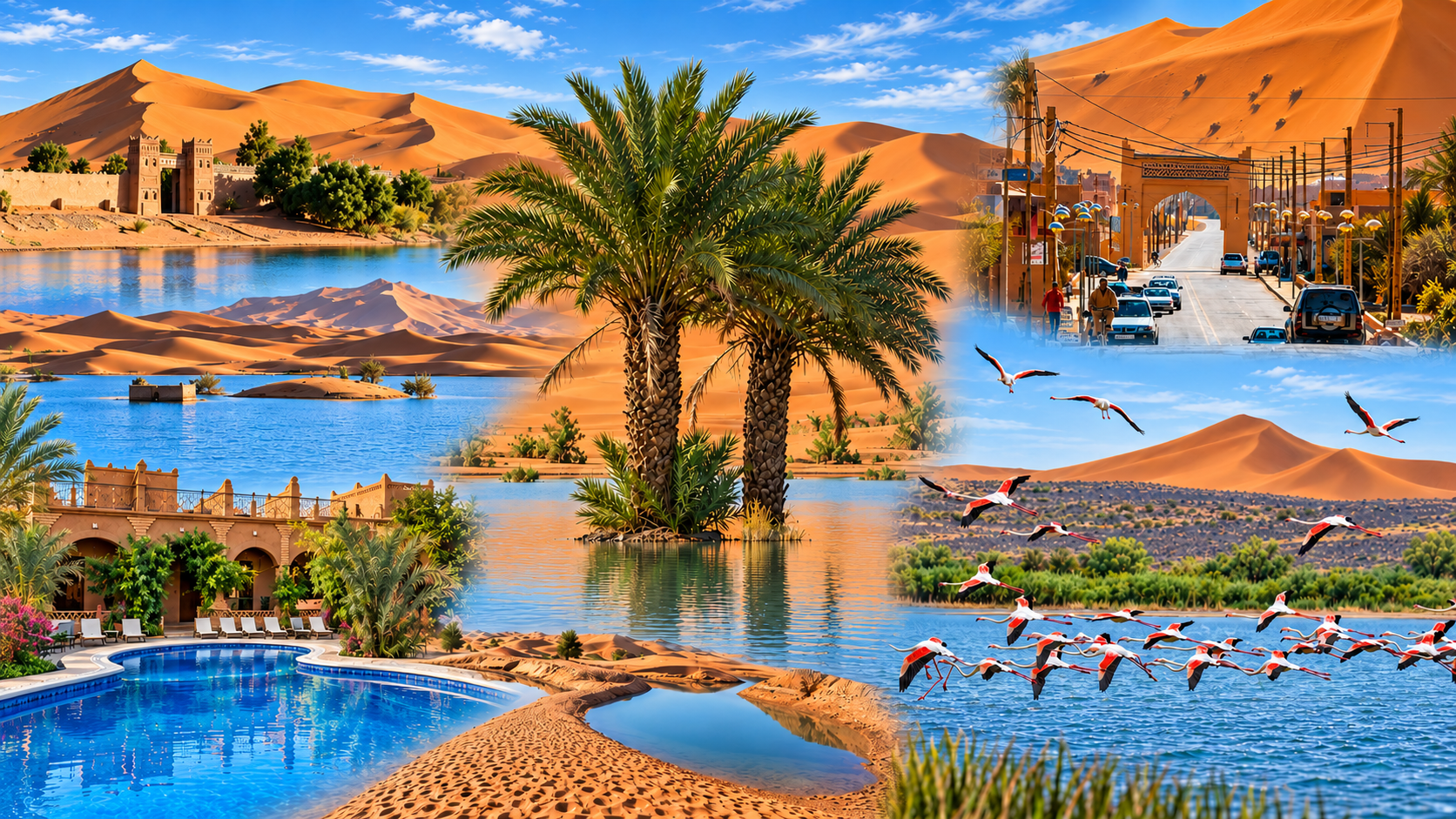
Lake Yasmina lies beside the northern part of Erg Chebbi, in the Merzouga area of southeastern Morocco. Its setting brings several desert surfaces into a small field of view: a low basin, steep sand slopes, scattered vegetation and the harder ground beyond. The lake makes those boundaries unusually clear.
Rain can transform this basin. Water spreads across ground that may otherwise appear dry and open, introducing a horizontal surface beneath the dunes. Calling it a seasonal lake describes that dependence on rainfall; it does not promise water at a particular time every year.
The vegetation deserves attention of its own. Research at Yasmina has documented migrating songbirds using tamarisk trees around the lake bed during their journeys across the Sahara. The site’s ecological value therefore extends beyond the periods when open water is the main attraction.
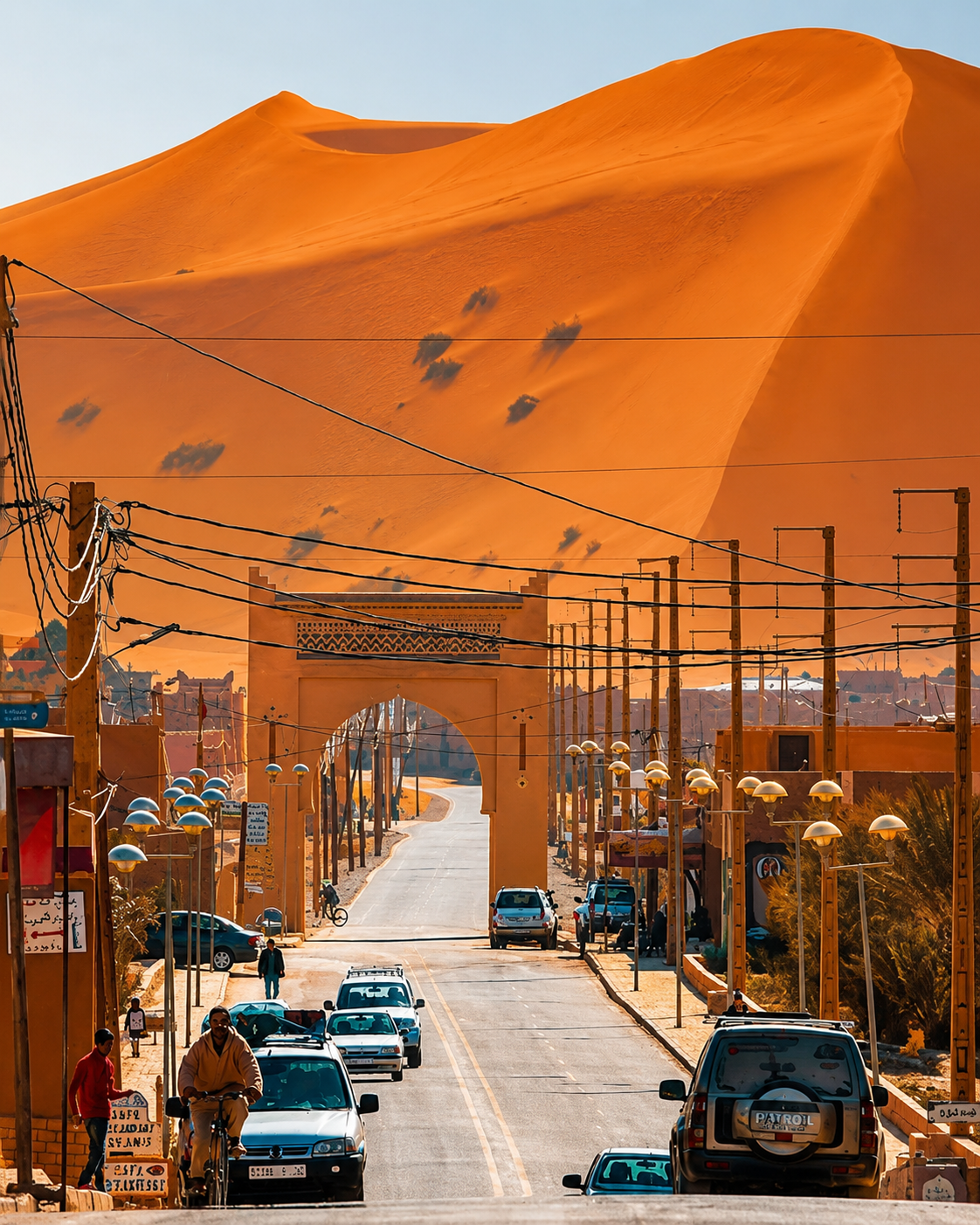
Yasmina also belongs to an inhabited and worked landscape. Nearby accommodation, tracks and local services connect it to the wider Merzouga visitor area. A view across the basin may include buildings as well as dunes; that relationship is part of the place, rather than something to overlook.
For a first visit, the most useful distinction is between seeing water and understanding the setting. A full lake offers reflections and an expanded horizon. In a dry phase, the shape of the basin and the separation between sand, trees and stony ground become easier to read.
The lake’s rainfall-dependent character is described by Hotel Yasmina. Its lake-bed setting and migratory habitat are documented in field research published in Scientific Reports.