
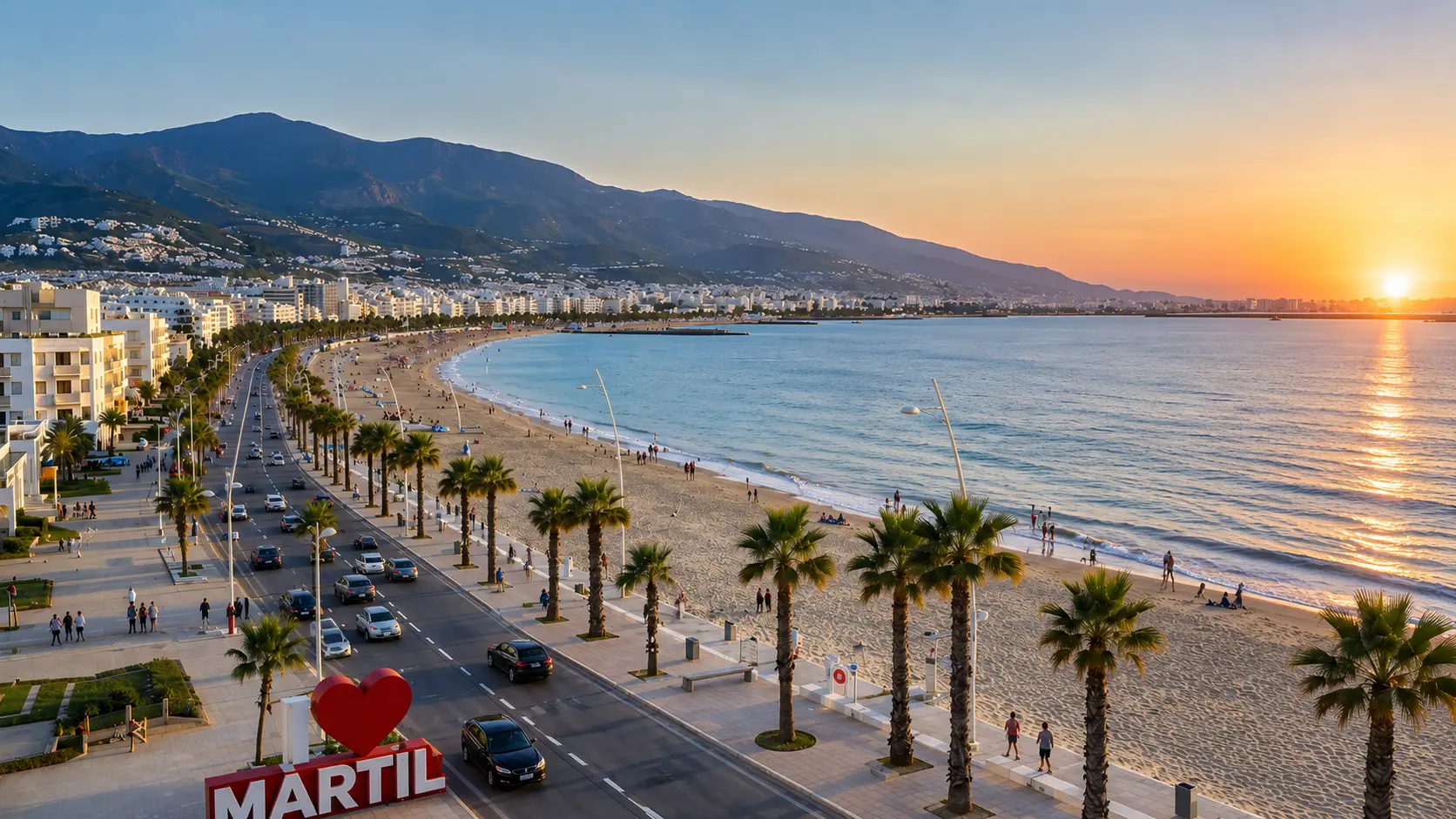
Martil Coast at sunset with beach, corniche, palms, Mediterranean water and Rif mountains near Tétouan, Morocco

Visit / Place · Mediterranean coast · Near Tétouan

Martil Coast Tétouan's bright Mediterranean edge of beach, corniche and Rif light

Martil Coast is where the Tétouan area opens to the sea: a long beach, palm-lined corniche, fishing-port rhythm, Oued Martil context and a wide blue horizon held by the Rif.

Begin with the whole curve of the coast before choosing a café, swim or walk. Martil reads best from a little distance: water, promenade, white buildings, evening light and mountains working together as one northern Moroccan shoreline.

Why Martil Coast matters

A coast before it is a beach day.

Martil matters because it gives Tétouan a direct conversation with the Mediterranean. The city is often read through its UNESCO-listed medina, Andalusian urban fabric and mountain setting, but Martil adds the missing coastal register: open water, public promenade, family beach rhythm and the everyday movement of a seaside town.

The place is not a remote natural escape and not a luxury resort bubble. Its character comes from a more interesting mix: apartment blocks and cafés, sand and palms, a fishing-port edge, evening walkers, summer density, off-season calm and the Oued Martil landscape that ties the inland plain to the sea.

That makes Martil useful for real visitors. It is easy to understand quickly, but it rewards slower looking. The beach line teaches scale; the corniche reveals social rhythm; the river context explains why the coast is also an urban and environmental threshold rather than only a leisure strip.

Martil also belongs to the wider northern coastal arc. Cabo Negro lies along the direction of the coast, Tétouan sits inland as the cultural base, and the Rif gives the horizon its weight. The strongest visit keeps those layers visible instead of reducing the place to sand and water.

For Exotic Morocco, Martil is valuable because it shows a familiar Moroccan coast with intelligence: relaxed, public, bright and lived-in, with enough visual order to be beautiful and enough local rhythm to avoid feeling staged.

Core orientation is grounded in the Visit Tetouan Martil Beach overview, the UPFI Oued Martil valley project context and UNESCO's Medina of Tétouan listing. Practical beach conditions should still be checked locally close to travel.
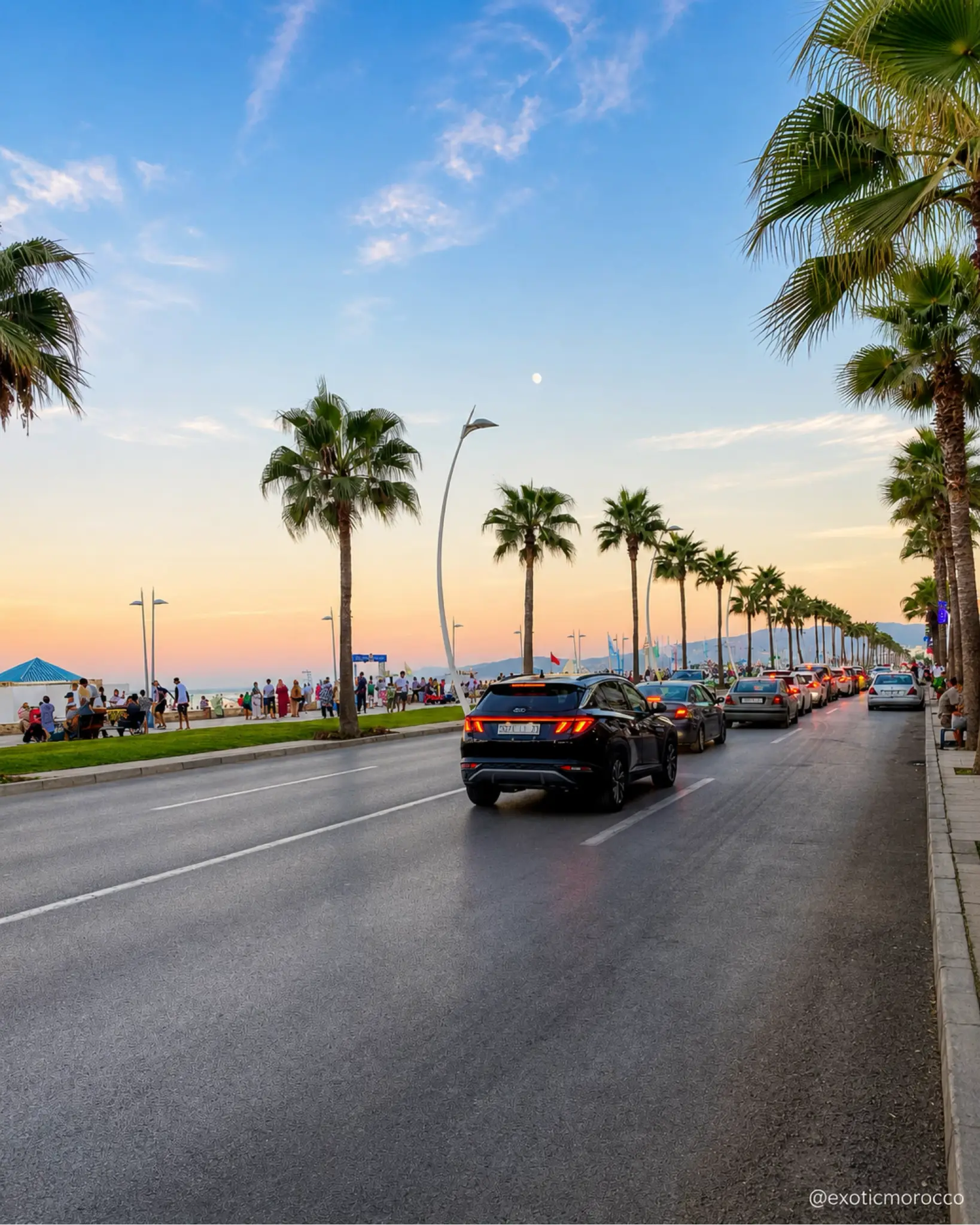
Palm-lined Martil corniche near the Mediterranean at soft evening light

Map orientation

Use the map to place the beach between Tétouan, Oued Martil, Cabo Negro and the Mediterranean shoreline.

Editorial reading

Its beauty comes from line, light and public rhythm.

Martil's first visual strength is the long horizontal line: sea, sand, promenade, road, buildings and mountain backdrop. Nothing needs to be exaggerated. The coast is already strong because each layer is easy to read.

The second strength is light. The Mediterranean water shifts from pale blue to deeper evening tones, while the white buildings and palms catch warmth without turning the scene into spectacle. Sunset works here when it feels natural, not theatrical.

The third strength is human rhythm. Martil is a lived coast: people walking, families gathering, cars moving slowly along the corniche, cafés filling and the port end reminding visitors that the sea is also work, not only leisure.

Read the place from south to north in your mind. The river and harbour side gives the coast its working edge; the broad beach gives it openness; the corniche gives it public life; the northern direction points toward the more resort-like coast around Cabo Negro.

A careful visitor does not need to chase novelty here. The reward is in proportion: the scale of the bay, the measured line of palms, the road against the sand, the Rif in the distance and the steady local use of a shoreline that belongs to more than tourists.

That is why Martil should be photographed with restraint. Let the water stay blue, the evening stay believable and the beach keep its social scale. The coast is most convincing when it looks like itself.

Historical and coastal orientation

Read Martil through water, urban change and Tétouan.

Martil is best understood as a coastal counterpart to Tétouan rather than as a single monument. Its identity comes from the meeting of Mediterranean beach life, Oued Martil, seasonal domestic tourism, fishing-port activity and the inland city whose history gives the wider area its cultural weight.

01Place type

Mediterranean seaside town

Martil is a northern Moroccan coastal town and beach setting. Its visitor value comes from the shore as a complete public landscape: sand, corniche, cafés, road, palms, harbour edge and evening movement.

02Water system

Oued Martil and the plain

The Oued Martil valley links the Tétouan area to the coast. Recent planning material treats the valley as urban, environmental and flood-risk infrastructure, which makes the river context part of the place reading.

03City relationship

Tétouan's seafront

Martil works as the accessible seaside face of Tétouan. Visitors can pair the coast with the inland medina, artisan quarters and white hillside urban landscape without pretending the beach is separate from the city region.

04Heritage context

A UNESCO city behind the coast

The nearby Medina of Tétouan is listed by UNESCO for its Moroccan-Andalusian urban heritage. Martil does not share that status, but it gives the cultural city a bright coastal extension.

A visual bridge

Three readings between sea, river and Rif

Martil is easy to enjoy and better when it is read slowly. These three readings keep the beach from becoming generic: the long waterline, the public room of the corniche and the mountain-backed horizon.

01

Waterline

The beach as a long edge

The coast is not only a strip of sand. It is a measured boundary where city life, sea air, walking pace and open horizon meet.

  • Read the curve of the shoreline before focusing on details.
  • Notice how the promenade holds movement beside the beach.
  • Let the water stay clear and natural in the visual memory.
02

Corniche

A public room by the sea

The corniche is where Martil becomes social. Cafés, palms, walkers and slow traffic create a public rhythm that changes from daytime brightness to evening warmth.

  • Watch how people use shade, benches, cafés and beach access.
  • See the road and promenade as part of the composition.
  • Give space to local walking and family routines.
03

Horizon

Rif light behind the bay

The distant mountains prevent the coast from feeling flat. Martil's best views hold sea, beach, white buildings and Rif shadow in a single northern Moroccan frame.

  • Look back from the water toward the mountain line.
  • Use late light for shape and depth, not false drama.
  • Connect the beach to Tétouan and the wider northern coast.

Quick orientation

Type of place

A Mediterranean beach, corniche and coastal town setting near Tétouan, best understood as a public seaside landscape rather than a remote natural site.

Area context

Part of northern Morocco's Tanger-Tétouan-Al Hoceïma region, with Oued Martil, the Rif backdrop and the Tétouan city area shaping the wider context.

Best for

Sunset walks, relaxed beach time, corniche cafés, seafood rhythm, coastal photography, family movement and pairing Tétouan culture with Mediterranean air.

Closest city context

Tétouan is the strongest city base for understanding Martil, especially when the coast is paired with the medina, artisan quarters and Andalusian heritage.

What visitors experience here

A coast that changes from bright day to warm evening.

Martil works through gradual changes rather than dramatic surprises. The beach is broad and readable, the promenade is active, the water keeps the scene open, and the Rif behind the town gives the coast a deeper horizon than a simple resort frontage.

Arrival

The bay opening wide

The first impression is horizontal: water to one side, palm-lined movement to the other, white buildings in the middle distance and mountains holding the frame behind the town.

Light

Sunset without theatre

Late light is strongest when it stays believable. The sea takes a softer blue, the sand warms slightly, lamps begin to appear and the coast keeps a calm Mediterranean tone.

Movement

Corniche pace

Martil's walking rhythm is central to the visit. People move between cafés, beach access, benches, parked cars and the promenade, making the shore feel public and lived-in.

Water

The river-sea threshold

The Oued Martil context gives the coast a second layer. Near river and harbour edges, visitors should read the shoreline with more caution and attention to local guidance.

Food

Port and seafood rhythm

The southern end of the coast carries a working-sea feeling through fishing activity and seafood restaurants. It keeps the beach connected to everyday coastal economy.

Season

Busy summer, softer edges

Martil can feel full in peak summer and much calmer outside the busiest holiday rhythm. The visual experience changes with crowd density, parking pressure, wind and light.

Place details and orientation

Read Martil Coast through six defining elements

No single detail explains the shore. Martil becomes memorable through the relationship between beach, corniche, river, harbour edge, Rif horizon and Tétouan city context.

1
Long sand beach

The beach gives Martil its open scale and simple visual clarity. It is the first layer to read before the town details begin to compete.

2
Palm-lined corniche

The corniche turns the coast into a public room. It is where walking, cafés, families, cars, lamps and evening gathering shape the visitor experience.

3
Oued Martil edge

The river context connects the coastline to the inland plain and Tétouan area. It also reminds visitors to respect changing water conditions near mouths and edges.

4
Fishing-port rhythm

The port side keeps the coast tied to work, supply and seafood rather than only leisure. This gives Martil a grounded local dimension.

5
Rif and Cabo Negro horizon

The northern and mountain horizons add depth. Martil should be seen as part of a wider coastal arc, not an isolated beach scene.

6
Tétouan relationship

The inland city gives Martil cultural context. Pairing medina, craft and coastal air makes the visit richer than a standalone beach stop.

Coast, not scenery

The place asks for a careful eye.

Stand back from the immediate beach scene and read the whole coast first. The strongest composition is not one object; it is the meeting of water, sand, promenade, palms, white buildings and mountain shadow.

Then move closer. Notice how people occupy the promenade, where cafés open to the road, how beach access works, where the river or harbour changes the mood, and how evening light softens the built edge without hiding it.

Finally, connect the view to Tétouan. Martil is more meaningful when it becomes the coastal half of a wider northern journey: medina and sea, craft and promenade, mountain and water, public leisure and everyday coastal life.

Landscape and urban intelligence

The coast works because several systems meet.

Martil's character is not produced by the beach alone. It comes from a small but powerful set of systems: Mediterranean water, the Oued Martil valley, the Tétouan urban area, road and promenade movement, fishing activity and the Rif landscape behind the town.

This is why the coast should be read as a threshold. It is leisure space, urban edge, river outlet, working shore and visual balcony all at once. The most intelligent visit notices those overlaps instead of flattening the place into a generic beach image.

What to notice slowly

  • Start with the full shoreline curve before choosing one viewpoint.
  • Notice where the corniche feels formal, relaxed, crowded or quiet.
  • Keep the Oued Martil and harbour edges in mind when reading the coast.
  • Watch how the Rif backdrop changes the depth of the beach scene.
  • Use Tétouan as the cultural counterweight to the sea.
  • Respect local routines, beach cleanliness and shared public space.

Visual reading

Three coastal languages to notice

Line and horizon

Martil speaks first through long lines: beach, road, promenade, water and mountain ridge. The calm order of those lines gives the coast its visual confidence.

Public rhythm

The corniche is not background. It is where local use becomes visible through walking, eating, talking, watching the sea and returning in the cooler evening hours.

River and working edge

The river and harbour context keeps the coast practical. It reminds visitors that water, food, movement and urban planning all shape how Martil feels.

Visual atmosphere

Blue water, white city light and evening warmth

From distance to detail

Start with the whole bay, then move closer to read palm trunks, lamps, café terraces, beach umbrellas, road movement and the edge where sand meets promenade. The shift from horizon to human scale is the heart of Martil.

From sea to mountain

The strongest contrast is the clean Mediterranean surface against the darker Rif backdrop. That relationship gives the shore depth and keeps the visual mood northern, open and precise.

From photo to memory

The remembered Martil visit is often simple: air moving across the corniche, a bright line of water, families walking, a seafood smell near the port and the city of Tétouan waiting inland.

Nearby places and onward links

Connect Martil to northern Morocco's coastal map

Martil belongs naturally to a Tétouan-based journey. Use the coast to balance medina, mountain and sea, then continue through the wider northern Morocco map with restraint and clear routing.

Tétouan

The closest city context for Martil. Use it to frame Andalusian heritage, white hillside urban form, artisan culture and the inland side of the coastal journey.

Open Tétouan city guide

Northern Morocco & Rif

The regional frame for Tétouan, Rif mountain landscapes, Mediterranean towns and coast-to-city routes across Morocco's north.

Explore the region

Architecture & Heritage

Pair Martil with Tétouan's deeper urban heritage so the beach becomes part of a fuller northern Moroccan reading.

Read the theme

Visit Morocco places

Continue through beaches, lagoons, caves, mountains, kasbahs, valleys, monuments and natural heritage places beyond the city guides.

Browse Visit places

Plan your journey

Treat Martil as a coast-and-city pairing: beach time, Tétouan cultural reading, northern routes and onward Mediterranean stops.

Plan your journey

Stories from Morocco

Use the Stories section for richer cultural reading around public space, memory, food, landscapes and everyday Moroccan place rhythms.

Read stories

How to visit respectfully

Good coastal behaviour keeps the place generous.

Martil is a shared public coast. Respect means giving room to families, walkers, workers, swimmers, restaurant staff and residents who use the corniche as part of ordinary life, not as a stage for visitors.

Beach respect is practical. Keep litter out of the sand and water, avoid loud intrusion, pay attention to local swimming guidance, and be especially careful around harbour, river-mouth and traffic edges where conditions can change.

  • Ask before photographing people, families, workers or private moments on the beach.
  • Keep the corniche passable; do not block walking routes for long photo sessions.
  • Leave sand, water and seating areas cleaner than you found them.
  • Follow local flags, warnings and lifeguard or authority guidance when swimming.
  • Use cafés, restaurants and local services with courtesy, patience and fair interaction.

A strong first visit

Begin with a slow walk along the corniche before settling in one place. This gives the coast its full structure: beach, palms, lamps, cafés, water, cars, families and the Rif line beyond the town.

Then choose your rhythm. Some visitors come for the sand, others for the promenade, seafood, photography or a soft evening after Tétouan. Martil works best when the visit stays flexible and follows the light without rushing the place.

Give special attention to the south and river context. You do not need to turn the walk into a technical study, but noticing the Oued Martil and harbour side helps explain why this is a real coast with movement, work and environmental sensitivity.

Afterward, return inland through Tétouan. The contrast is the point: Mediterranean openness outside, medina density inside, Rif landscape around both. That pairing gives Martil more depth than a beach-only visit.

  • Start wide, where the beach curve and promenade rhythm are easiest to see.
  • Walk before stopping, so the coast becomes a sequence rather than one frame.
  • Keep sunset natural in photos; Martil does not need false colour to feel warm.
  • Stay alert near traffic, harbour activity and river-mouth conditions.
  • Finish by connecting the coast back to Tétouan and northern Morocco.

Careful planning note: beach conditions, services, crowd levels and transport details can change. Verify practical arrangements locally before travelling.

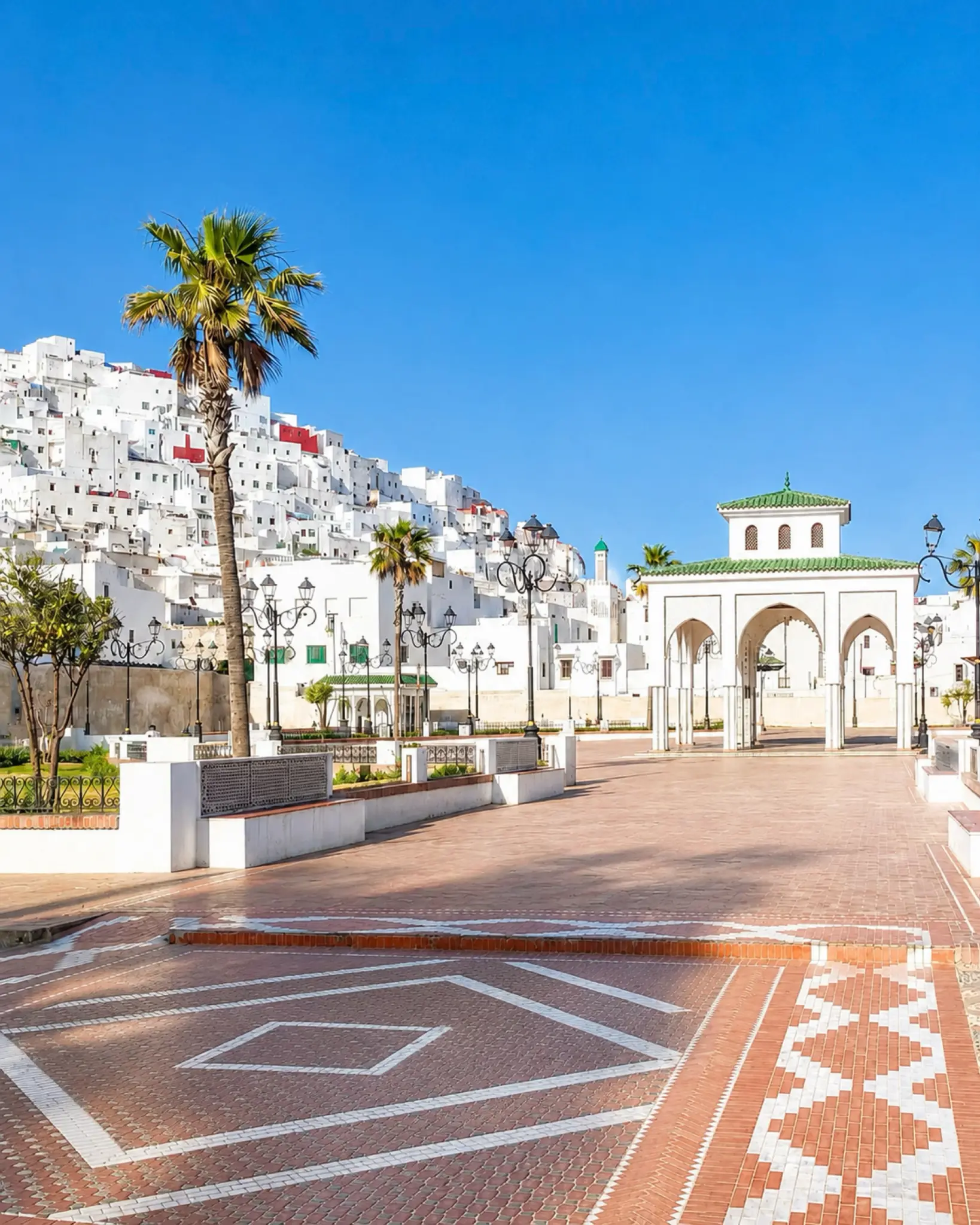
Tétouan white hillside architecture and square, the inland city gateway to Martil Coast

Go deeper through the nearest city context

Tétouan - the city gateway to Martil Coast

Martil belongs naturally inside a Tétouan journey. The coast gives the city its Mediterranean release, while Tétouan gives the coast cultural depth through medina structure, Andalusian memory, craft traditions and the white urban landscape below Jebel Dersa.

Use Tétouan to widen the visit after the beach itself: move from corniche light to medina lanes, from seafood rhythm to artisan detail, from open shoreline to the layered city that makes this part of northern Morocco feel distinct.

UNESCO medina contextMediterranean day-trip base Andalusian urban heritageCraft and architecture reading Rif and coast orientationPractical northern routes

Continue the journey

Continue from Martil Coast into northern Morocco.

Read the coast slowly, then connect it to Tétouan, Oued Martil, the Rif backdrop, Mediterranean towns and the wider northern Morocco journey.