
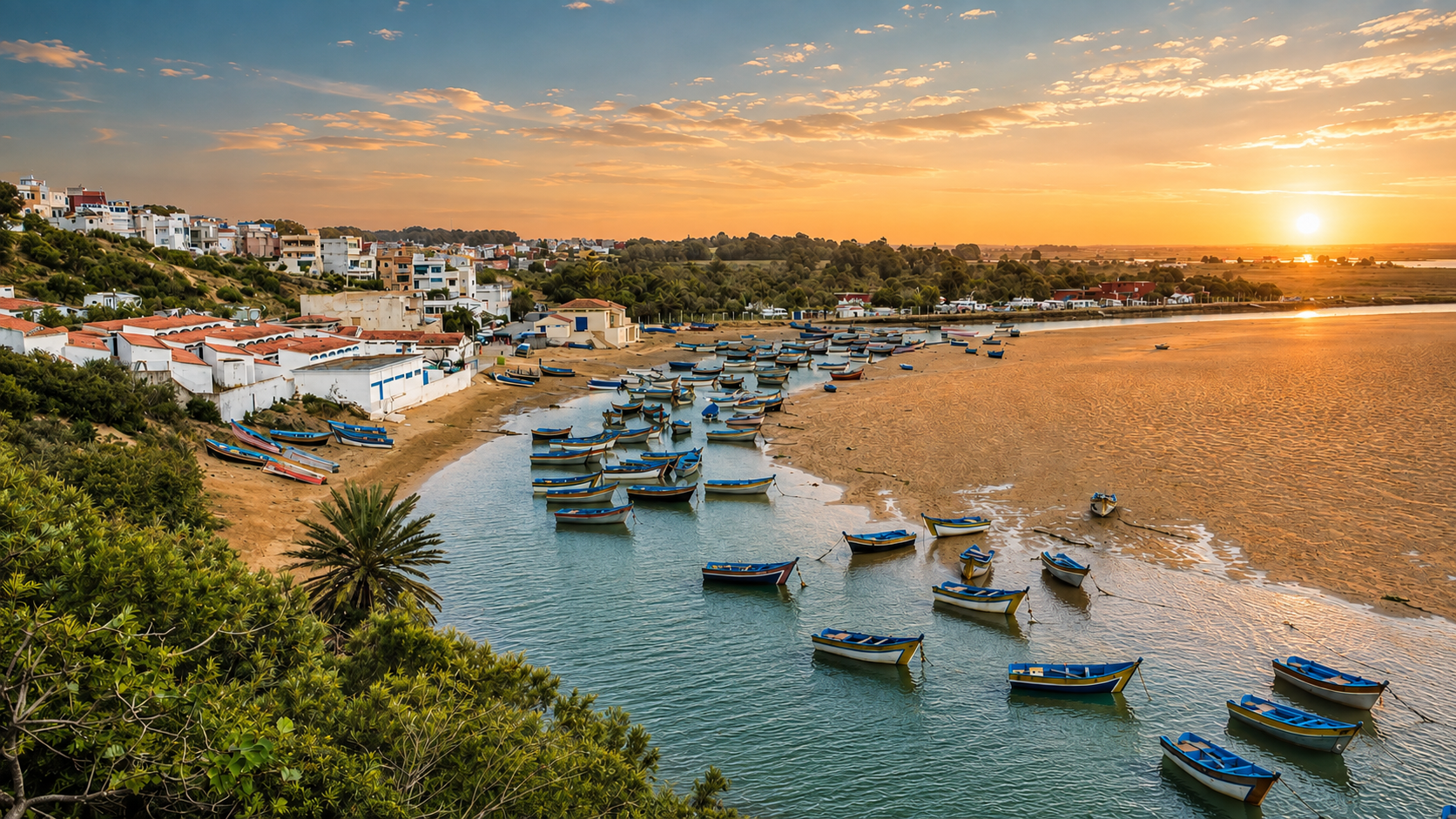
Merja Zerga lagoon at sunset with fishing boats, Moulay Bousselham and Atlantic coastal light

Visit / Place · Moulay Bousselham · Atlantic lagoon

Merja Zerga A tidal lagoon of blue water, birds, reeds and Atlantic light

Merja Zerga is the Moulay Bousselham lagoon: a protected Atlantic wetland where tide, freshwater, mudflats, reeds, birds and village life meet in one calm coastal landscape.

Begin with the whole lagoon before looking for detail. The place is strongest when open water, low boats, reed edges, tidal flats and the white town above the shore are read together.

Why Merja Zerga matters

A lagoon before it is a view.

Merja Zerga matters because it is one of Morocco's most important Atlantic wetland landscapes. It is not only a pretty blue opening beside Moulay Bousselham; it is a living tidal system where sea water, freshwater influence, sediment, reeds and bird movement shape the visitor experience.

The lagoon is widely described as a Ramsar-listed wetland and a biological reserve. That status changes the way the place should be read. The water, mudflats and reedbeds are not background decoration for photographs; they are the reason the lagoon has ecological value.

Merja Zerga also matters because it sits on a major bird-migration route along the Atlantic. Waders, waterbirds and other wetland species use this kind of habitat for resting, feeding and seasonal movement. Visitors do not need specialist knowledge to feel that importance, but they do need patience and distance.

Moulay Bousselham gives the lagoon its human threshold. The town, small boats, shore paths and local guides make the wetland accessible, while also reminding visitors that conservation and local livelihoods share the same water space.

For visitors, the richest experience comes from reading the lagoon as a system: tide and channel, quiet water and exposed flats, reeds and open sky, bird movement and village rhythm. The beauty is calm because the structure is natural.

Core wetland facts are checked against the Ramsar country profile for Morocco, Birdingplaces orientation notes and published lagoon descriptions. Practical access, boat availability, tide conditions and local guidance should be checked close to travel.
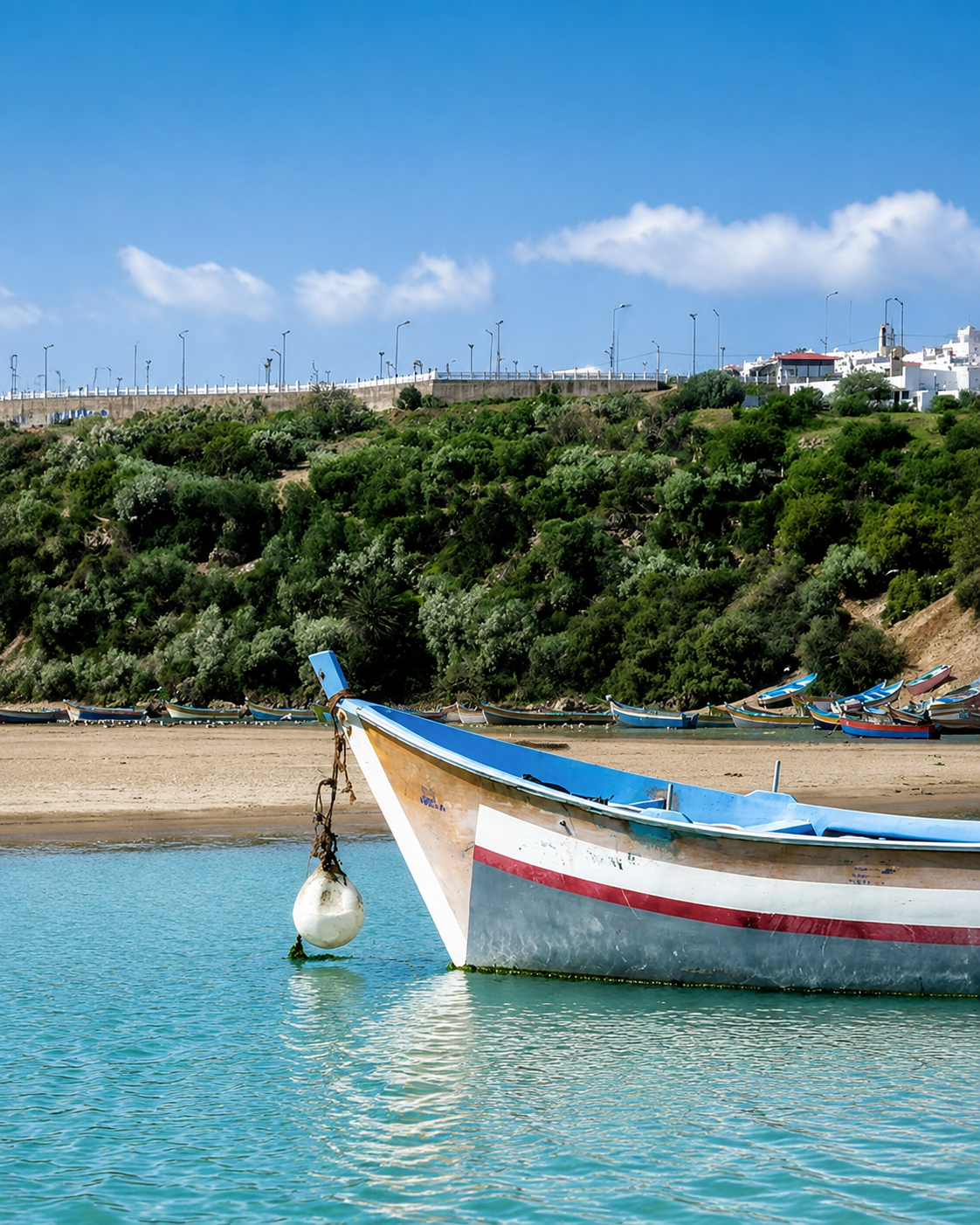
Fishing boat on the water at Moulay Bousselham, the local gateway to Merja Zerga lagoon

Map orientation

Use the map first to place the lagoon beside Moulay Bousselham and the Atlantic edge, then read the visit as water, village, channel and wetland habitat.

Editorial reading

Its beauty is ecological, not decorative.

Merja Zerga does not need a monument to hold attention. Its force comes from horizontal water, low boats, open sky, reed margins and the slow shift between tide-covered surfaces and exposed mudflats.

That is why the lagoon rewards visitors who slow down. A fast stop sees colour and boats. A careful visit sees how the water is organised: where channels hold movement, where birds keep space, where vegetation thickens, and where the village turns the wetland into a lived coastal place.

The most useful reading keeps two truths together: access and fragility. The lagoon is close to Moulay Bousselham, but easy access should not make the wetland feel ordinary or endlessly resilient.

Look from a respectful distance before moving closer. Wide views protect the birdlife and improve the composition: water, boats, reeds, sand, sky and town can be understood as one landscape rather than a set of disconnected details.

Listen as well as look. Wind over the water, small boat movement, distant birds and the quiet opening of the horizon are part of the place. The strongest visit leaves room for that calm to stay intact.

Read Moulay Bousselham through the lagoon too. The town is not just a base; it is the human edge of the wetland, where fishing rhythm, visitor movement and ecological care meet.

Leave with the whole system in mind. Tide, mudflat, reedbed, boats, birds, dunes and village life explain why Merja Zerga deserves more than a quick photo stop.

Natural and heritage orientation

Read the lagoon through water, protection and seasonal movement.

Merja Zerga is best understood as a protected tidal lagoon rather than a beach-side attraction. Its identity comes from Atlantic exchange, freshwater influence, mudflats, reedbeds, marsh edges and the birds that use these habitats across the year.

01Place type

A tidal coastal lagoon

The site is a shallow lagoon connected to the Atlantic coast near Moulay Bousselham. Its character changes with water level, wind, sediment and the opening between sea and lagoon.

02Protection

A Ramsar wetland

Merja Zerga is recognised in Ramsar and biological-reserve contexts. Visitors should therefore treat the lagoon as habitat first, scenery second.

03Habitat

Mudflats, reeds and marsh

Intertidal flats, reedbeds and marsh vegetation are central to the lagoon's ecological reading. These edges can look simple from far away, but they hold much of the wetland's value.

04Birdlife

A migration stop and wintering area

Ornithological references describe Merja Zerga as important for birds along the Atlantic flyway. The practical lesson is clear: keep distance, move quietly and let birds remain undisturbed.

A visual bridge

Three readings between tide, birds and village

Before Merja Zerga becomes a photograph, it is a relationship between water, wind, vegetation and human use. These three readings help visitors understand why the lagoon feels open, calm and alive at the same time.

01

Water

The tide as structure

The lagoon changes as water moves. Channels, shallow surfaces, exposed flats and reflected sky are part of one system, not separate views.

  • Read the full water shape before details.
  • Notice channels, flats and small ripples.
  • Let the tide set the rhythm of looking.
02

Habitat

Reedbeds and bird space

The strongest ecological signs often sit at the edges. Reeds, marsh plants and quiet flats create distance, shelter and feeding space for wetland life.

  • Keep sensitive margins undisturbed.
  • Use binoculars instead of closeness.
  • Watch how birds choose space.
03

Gateway

Moulay Bousselham above the water

The village gives the lagoon scale. White buildings, small boats and shore movement show how a protected wetland can also be a lived local landscape.

  • Read the town as part of the edge.
  • Notice boats without blocking work.
  • Connect the view to local guidance.

Quick orientation

Type of place

A Ramsar-listed Atlantic lagoon and biological-reserve landscape near Moulay Bousselham, best understood as a protected wetland rather than a simple beach view.

Landscape context

The lagoon sits on Morocco's northern Atlantic coast, where tidal water, freshwater influence, mudflats, reeds, dunes and village access meet.

Best for

Birdwatching, boat views, calm photography, tidal-landscape reading, slow coastal observation and understanding Morocco's Atlantic wetlands with care.

Closest city context

Moulay Bousselham is the immediate gateway. Kenitra gives the stronger city base, with the Atlantic Coast region framing onward travel.

What visitors experience here

A lagoon that becomes richer when you wait.

Merja Zerga works in quiet stages. First comes the wide water and the town above it. Then the eye begins to separate boats, channel lines, mudflats, reed edges, bird movement and the Atlantic light moving across the surface.

Arrival

The village over the lagoon

The first impression often comes from the relationship between Moulay Bousselham and the water below. The town gives height, colour and scale before the lagoon opens into a wider wetland view.

Light

Blue water, warm shore

The lagoon is strongest when colours stay natural: pale sand, blue-green water, white buildings, orange roofs, small boats and soft coastal haze rather than forced contrast.

Tide

Channels and exposed flats

The landscape changes with water level. Low flats, shallow channels and wet surfaces give the place its visual grammar and explain why timing can change what the visitor sees.

Boats

A working water edge

Small boats add colour and rhythm, but they also point to local use. Photograph the scene with awareness that the shore is not only scenic; it is part of everyday movement.

Birdlife

Watching without pressure

Birds are central to Merja Zerga's identity. The better approach is patient distance: watch movement across the flats and water without pushing into sensitive habitat.

Pace

A slow coastal pause

The lagoon does not need a crowded checklist. Its value is in a slower sequence: view, pause, short walk, boat edge, another pause, and a final look back across the water.

Place details and orientation

Read Merja Zerga through six defining elements

No single feature explains the lagoon. Its meaning comes from the relationship between tidal water, exposed flats, reed margins, dune influence, bird habitat and Moulay Bousselham's local gateway role.

1
Tidal water

Water movement gives the lagoon its changing shape, from broad reflection to narrower channels and shallow edges.

2
Mudflats

Exposed flats may look empty from a distance, but they are essential feeding and resting space for wetland birds.

3
Reed and marsh edges

Vegetated margins give the lagoon texture, shelter and ecological depth. They should be observed without trampling or disturbance.

4
Atlantic channel

The connection with the sea helps explain the lagoon's salinity, movement and coastal character.

5
Local boats

Boats make the water edge vivid, but they also mark local livelihoods and guide-led movement across the lagoon.

6
Moulay Bousselham setting

The town frames the visit with viewpoints, shore access and the practical rhythm of a small Atlantic gateway.

Wetland, not backdrop

The place asks for a careful eye.

Stand back before moving to the shore. The first lesson is spatial: a large shallow lagoon held between village, dune edge, Atlantic air and sensitive wetland habitat. That wider view explains the place better than any single close-up.

Then look slowly at the margins. Reeds, boats, water texture and bird movement make the lagoon human in scale, but the sensitive edges should remain undisturbed. A careful visitor watches without pressing the habitat for a better photograph.

Finally, connect the lagoon back to Moulay Bousselham. The town gives the visit practical shape, but Merja Zerga gives the town its deeper landscape identity.

Landscape and ecological intelligence

A lagoon is not static scenery.

The visual character of Merja Zerga comes from ecological structure. Water exchange shapes channels and flats; reeds and marsh plants hold sensitive edges; birds use distance; coastal wind changes surface, sound and light.

This is why the lagoon should be read as a living system. Its beauty depends on balance: enough water movement, enough quiet, enough habitat, and enough visitor restraint for wildlife and local use to remain present.

What to notice slowly

  • Start with the complete lagoon before focusing on boats or individual birds.
  • Notice where open water becomes mudflat, reedbed or marsh edge.
  • Use distance, patience and binoculars instead of pushing close to wildlife.
  • Read Moulay Bousselham as the human threshold of the wetland.
  • Watch how wind and tide change the surface through the visit.
  • Keep waste out of the lagoon and avoid noise near sensitive margins.

Visual reading

Three landscape languages to notice

Horizontal water

Merja Zerga speaks first through width and calm. The low horizon lets the sky become part of the lagoon, while boats and birds give scale without overwhelming the view.

Reed-edge habitat

The reed and marsh line is the lagoon's most delicate visual boundary. It looks soft, but it is where shelter, feeding space and visitor responsibility become easiest to understand.

Village-to-wetland threshold

Moulay Bousselham gives the lagoon its human frame. The best reading keeps town, boats, shore and habitat together instead of separating nature from everyday life.

Visual atmosphere

Light, water and quiet transitions

From distance to detail

Begin with the whole lagoon, then let the eye move toward boats, reed lines, wet sand, bird silhouettes and the town above the shore. The shift from wide water to fine edge detail is the lagoon's most important visual movement.

From water to sky

The strongest contrast is natural: blue-green water against pale sand, white houses against open sky, warm roofs against reflected light, and the Atlantic air softening the horizon.

From photo to memory

The deeper memory comes from the slower senses: wind over the water, boats resting in shallow channels, birds keeping distance and the calm of seeing Moulay Bousselham from the wetland edge.

Nearby places and onward links

Connect the lagoon to Morocco's Atlantic coast map

Merja Zerga belongs to a clean northern Atlantic itinerary. Use Moulay Bousselham as the local gateway, Kenitra as the stronger city base, and the Atlantic Coast region for onward route planning.

Kenitra

The closest major city context for Merja Zerga. Use it for arrival, accommodation, onward movement and the urban counterpoint to the lagoon's quiet rhythm.

Open Kenitra city guide

Atlantic Coast & Historic Port Cities

The regional frame for coastal wetlands, river mouths, port histories, Atlantic towns and west-coast travel across Morocco.

Explore the region

Visit Morocco places

Continue through lagoons, reserves, beaches, caves, valleys, monuments and major landscapes beyond the city guides.

Browse Visit places

Themes

Use the Themes section to connect nature, coastal landscapes, heritage, cities and visual culture across the wider Exotic Morocco project.

Explore themes

Plan your journey

Treat Merja Zerga as a slow coastal wetland pause, with tide, weather and local guidance checked before the visit.

Plan your journey

Stories from Morocco

Use the Stories section for richer cultural and landscape reading around place, memory, water, cities and the human rhythm behind travel.

Read stories

How to visit respectfully

Good behaviour protects the calm.

Merja Zerga is accessible enough to attract casual visits from Moulay Bousselham, but it should still be approached as a protected wetland. Move quietly, keep distance from birds, respect local guides and boat operators, and avoid treating reed margins as shortcuts.

Respect also means understanding that wetlands can be fragile even when they look wide and open. Do not leave litter, feed wildlife, push into sensitive vegetation, disturb birds for photographs, fly intrusive drones or turn a quiet lagoon into a noisy stop.

  • Use distance, patience and binoculars for birdwatching.
  • Keep sound low around water, mudflats and reed edges.
  • Ask before photographing local people, guides, boats or working activity.
  • Carry water and take every piece of waste back out with you.
  • Check tide, weather, boat availability and local guidance close to travel.

A strong first visit

Begin with a wide view from Moulay Bousselham or the shore so the lagoon has a clear structure in your mind. Let water, boats, channel lines and reed edges settle before trying to collect details.

Move slowly along appropriate edges and avoid pushing toward birds or dense vegetation. The best rhythm is wide view, quiet pause, short walk, another pause. It is better to see fewer details well than to disturb the place trying to see everything.

If you go onto the lagoon with local guidance, treat the boat as part of the wetland rhythm rather than as a chase for close views. The strongest experience keeps space around birds and gives the landscape room to breathe.

Finish by looking back toward the town. Merja Zerga often makes most sense at the end, when village, water, boats, birds and Atlantic air start to read as one coastal system.

  • Start wide, where the full lagoon and Moulay Bousselham setting are easiest to understand.
  • Walk slowly and keep a respectful distance from sensitive margins.
  • Use local guidance when conditions, tides or routes are unclear.
  • Do not rely on old price, access or programme information without checking locally.
  • Leave the lagoon quieter and cleaner than you found it.

Careful planning note: boat options, tides, weather, access arrangements and practical facilities can change. Verify current details locally before travelling.

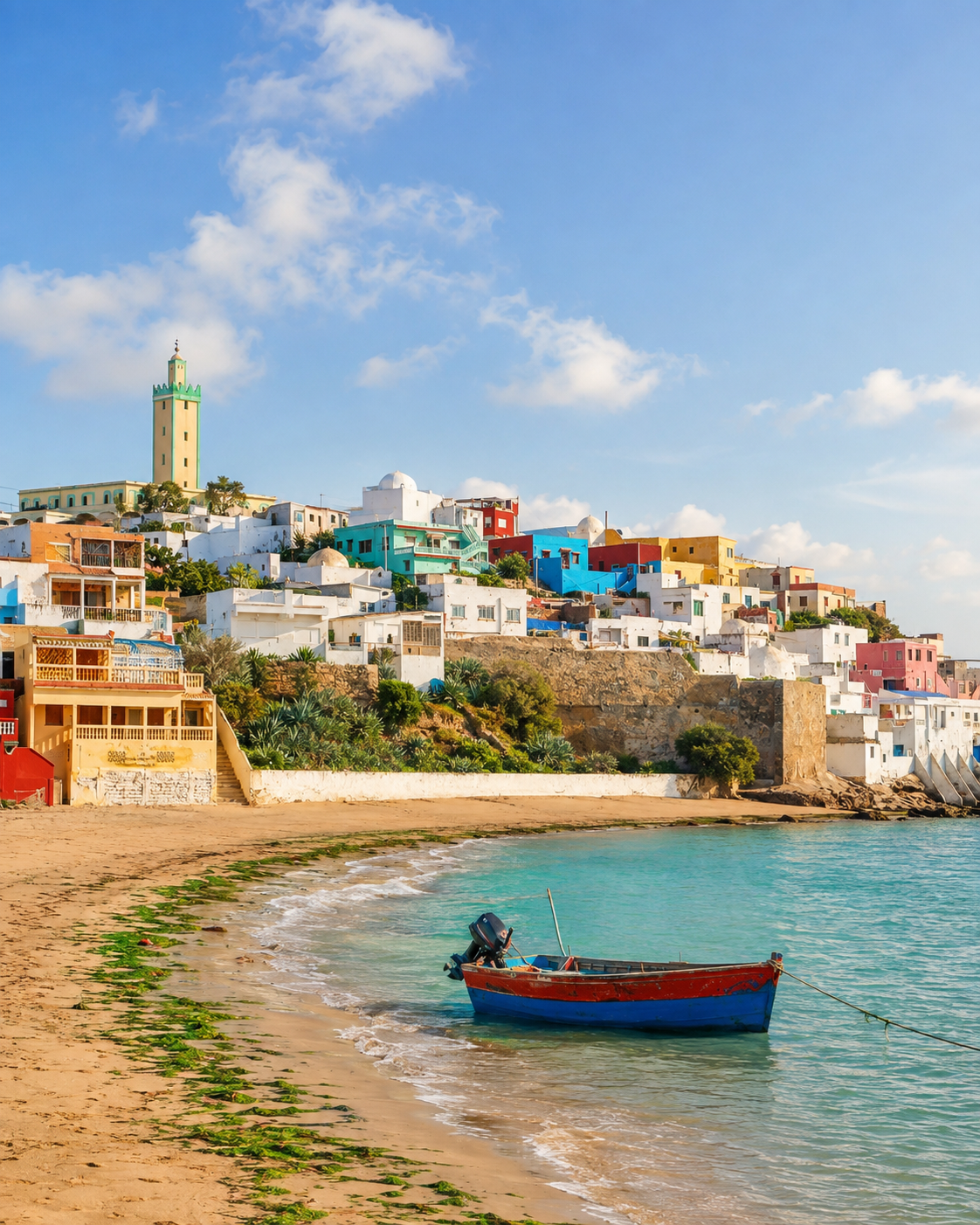
Moulay Bousselham beach, mosque tower, colourful houses and a boat beside turquoise water

Go deeper through the nearest travel base

Moulay Bousselham - the village gateway to Merja Zerga

Merja Zerga belongs naturally inside a Moulay Bousselham visit. The village gives the lagoon its immediate entry point: shore views, boat access, local guidance, coastal colour and the practical rhythm that helps visitors understand the wetland without rushing it.

Use Kenitra as the stronger city base when you need wider travel structure, then let Moulay Bousselham slow the day down. The best sequence is city context, Atlantic road, village edge, lagoon view and a careful return to the wider coast.

Moulay Bousselham gatewayKenitra city context Lagoon and birdlife readingAtlantic route planning Boat-edge orientationNearby coastal rhythm

Continue the journey

Continue from Merja Zerga along Morocco's Atlantic coast.

Read the lagoon slowly, then connect it to Moulay Bousselham, Kenitra, Atlantic wetlands, coastal towns and the wider nature map of Morocco.