
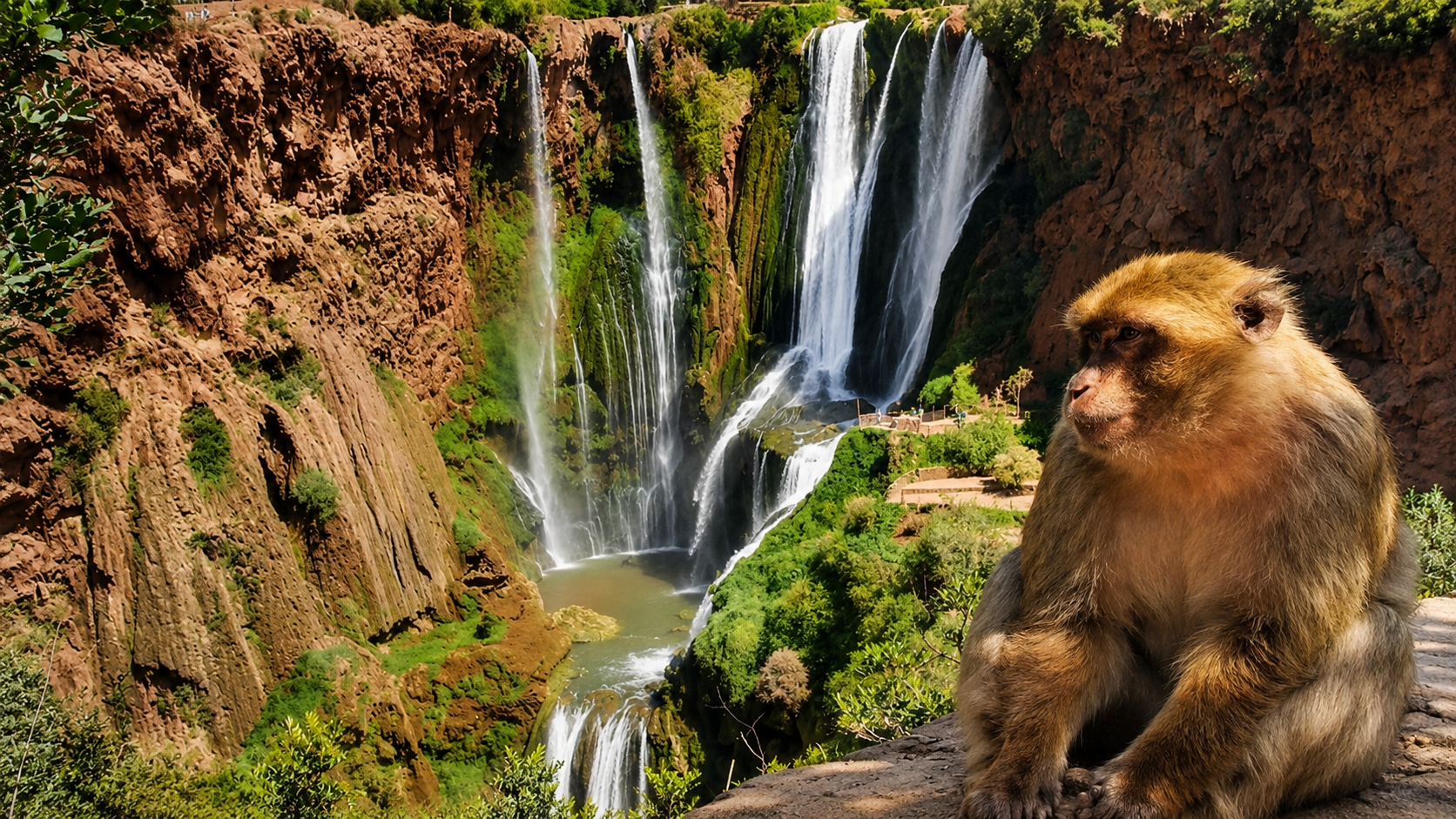
Ouzoud Waterfalls dropping through red cliffs with green vegetation and a Barbary macaque in Azilal, Morocco

Visit / Place · Azilal · Atlas interior

Ouzoud Waterfalls Atlas cascades, red cliffs, olive shade and falling water in Azilal

Ouzoud Waterfalls is one of Morocco's clearest natural encounters with water in motion: a gorge of falling cascades, reddish rock, green terraces, mist, paths and mountain light.

Begin from the upper viewpoints before descending. The place is strongest when the whole vertical landscape is visible first: cliff, water, vegetation, lower basin, paths and the human scale around the falls.

Why Ouzoud Waterfalls matters

Water is the architecture here.

Ouzoud matters because it makes the Atlas interior feel immediate. The visitor is not looking at a distant mountain idea, but at water dropping through a red-rock gorge, vegetation gathering around spray, paths negotiating slope, and local life arranged around a place that is both natural landmark and visitor magnet.

The official Moroccan tourism pages place Ouzoud inside the wider Azilal nature context, alongside mountain valleys, gorges, lakes and other landscapes. That context is important. Ouzoud is not only a day-trip image; it belongs to a region where water, relief, agriculture, movement and rural hospitality shape how people read the land.

The falls also matter because they concentrate several Moroccan contrasts in one view: dry reddish cliff and bright green growth, falling water and still pools, open viewpoints and narrow descents, public excitement and pockets of quiet. A good visit reads those contrasts before rushing to the closest photo angle.

For many travellers, Ouzoud is the first place in Morocco where the sound of water dominates the scene. That sound changes the rhythm of the visit. It slows conversation, pulls attention downward, and makes visitors aware of cliff height, mist, slippery surfaces, shade and the fragile edge between spectacle and care.

Seen carefully, Ouzoud is a lesson in restraint. The beauty is generous, but the place is not indestructible. Paths, terraces, wildlife, local services and water edges all need visitors who move patiently, keep distance where needed, and leave the gorge cleaner than they found it.

Core place context is grounded in the Moroccan National Tourist Office page on nature in Azilal, which identifies Ouzoud as a major waterfall landscape in the region. Practical details such as access, prices, path conditions and local services should be checked close to travel.
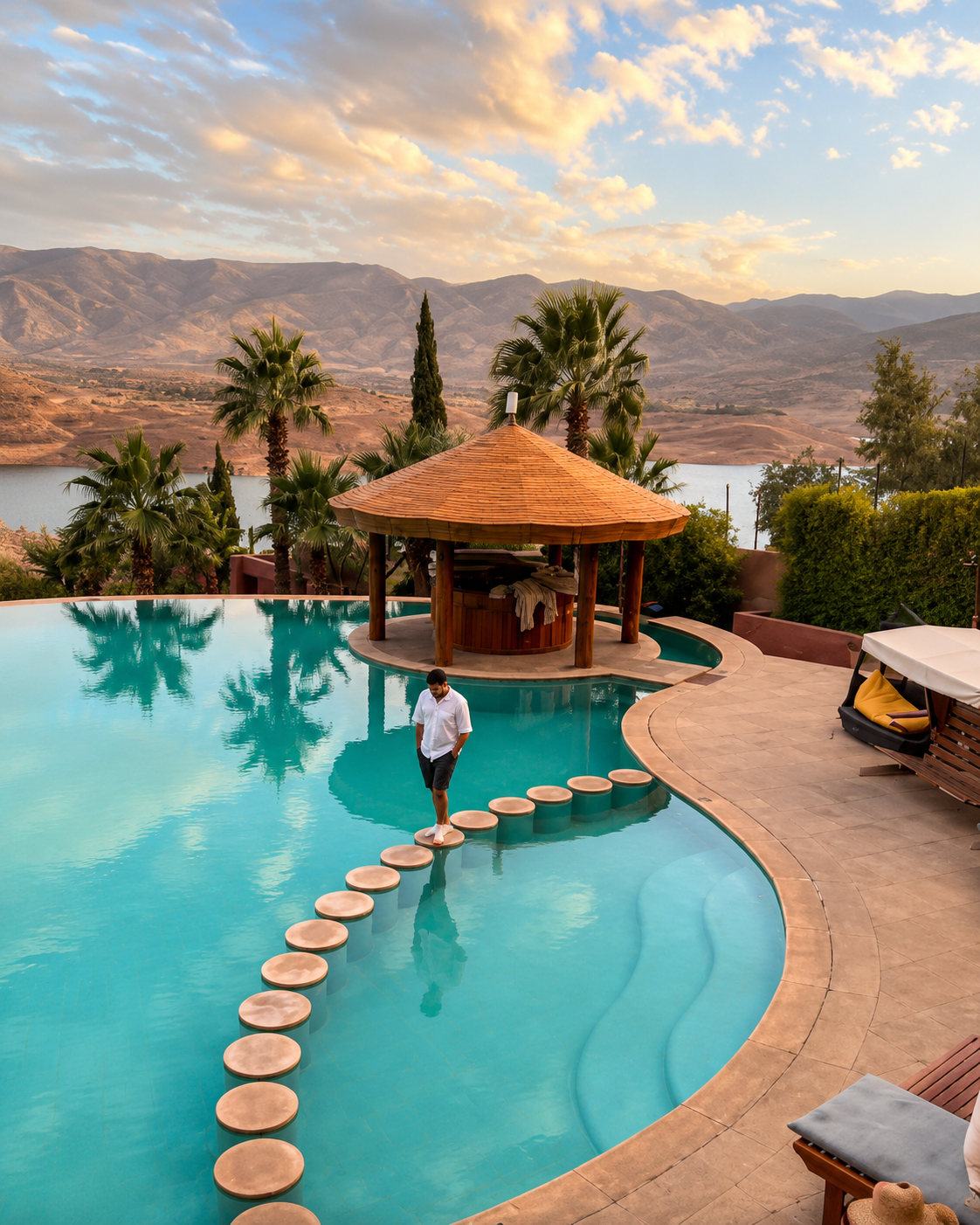
Azilal mountain and water context near Ouzoud Waterfalls in Morocco

Map orientation

Use the map to read Ouzoud as a gorge landscape in the Azilal area, connected to mountain roads, nearby villages and the wider Atlas interior.

Editorial reading

Its beauty is movement, not decoration.

The first impression is vertical: water falls, mist rises, cliff walls hold the scene, and the eye follows the cascade downward before it understands the paths around it. That movement is the real composition of Ouzoud.

Look past the obvious panorama and the place becomes more intelligent. The red rock explains the drama; the green edges reveal water's reach; the shade of olive trees softens the descent; the lower pool turns height into sound, reflection and spray.

Ouzoud also asks visitors to read people and landscape together. Terraces, cafés, guides, paths and small local services are part of the visitor rhythm, but they should never erase the natural scale of the gorge.

If Barbary macaques are present near the paths, they should be observed with distance. Feeding, crowding or turning wildlife into entertainment damages the dignity of the encounter and weakens the place for everyone after you.

The best visit moves in layers: upper viewpoint, falling water, cliff texture, shaded path, lower basin, return climb. Each layer changes the sound and the light. That is why Ouzoud deserves more than a quick photograph from the rim.

Natural and visitor orientation

Read the falls through water, cliff, shade and pressure.

Ouzoud Waterfalls is best understood as a vertical landscape rather than a single viewpoint. The experience depends on falling water, red cliff faces, green vegetation, paths, lower-basin sound and the way visitor movement gathers around a powerful natural feature.

01Place type

Waterfall gorge

The identity of Ouzoud comes from a cascade system dropping into a gorge-like setting. Viewpoints, descents and lower pools matter because they reveal different parts of the same water landscape.

02Landscape

Rock, vegetation and mist

The contrast between reddish cliff, white falling water and green growth gives the place its visual strength. The scene should be read as a natural composition, not only as a background for photographs.

03Azilal context

Part of a wider Atlas region

Official Moroccan tourism material frames Ouzoud within Azilal's broader natural landscapes, including mountain valleys, gorges and lakes. The falls belong to that regional geography.

04Care

A popular place under pressure

Because Ouzoud attracts many visitors, care is part of the experience. Litter, noise, risky edges, wildlife feeding and careless path use all weaken the very landscape people come to see.

A visual bridge

Three readings between water, cliff and path

Before Ouzoud becomes a photograph, it is a sequence of movement. These three readings help visitors slow down and understand why the falls feel dramatic from above, intimate near the basin and physically real on the climb back.

01

Water

Motion as structure

The falling water gives Ouzoud its architecture. It draws the eye downward, fills the place with sound, cools the air near spray and turns the gorge into a layered experience rather than a flat view.

  • Begin with the whole drop before focusing on details.
  • Notice where mist changes light and texture.
  • Let sound guide the sense of scale.
02

Cliff

Red rock holding the scene

The cliff bowl gives the falls their frame. Its colour, height, shadow and rough surface make the white water more legible and connect the place to the broader Atlas interior.

  • Read the rock face as part of the view.
  • Watch how green vegetation follows water.
  • Stay careful near exposed edges and wet surfaces.
03

Path

Viewpoint before descent

The strongest visit begins by reading the whole gorge from above. Descent then changes the place: water becomes louder, spray becomes physical, and the lower basin returns the panorama to human scale.

  • Use viewpoints to understand the full drop.
  • Move slowly on steps and wet ground.
  • Return upward with the landscape in mind.

Quick orientation

Type of place

A waterfall and gorge landscape in the Azilal area, best understood through falling water, cliff form, lower-basin atmosphere, olive shade and visitor pathways.

Landscape context

Ouzoud belongs to the Atlas interior and the wider natural geography of Azilal, where valleys, gorges, lakes, relief and rural routes shape the travel experience.

Best for

Waterfall viewpoints, nature photography, mountain light, slow walking, sound, mist, cliff texture and a more careful reading of Morocco beyond city monuments.

Closest city context

Azilal is the clearest nearby city context for placing Ouzoud within a wider mountain journey; Béni Mellal-Khénifra gives the broader regional frame.

What visitors experience here

A place that changes as you descend.

Ouzoud works in stages. First comes the upper panorama: a wide view of falling water, red cliff and green edges. Then the route changes the experience. Steps, shade, spray, voices and water-sound bring the landscape closer until the falls feel less like a postcard and more like a physical place.

Arrival

The view from above

The first strong view is usually from the rim area, where the falls can be read as one vertical scene. This is the moment to understand the shape of the gorge before detail and movement take over.

Sound

Water setting the rhythm

The closer visitors move to the lower basin, the more the place is organised by sound. Falling water softens conversation, hides small noises and gives the descent a pace that photographs cannot fully carry.

Light

Red rock and white spray

Light changes the character of the cliffs, the water and the green growth around the gorge. The best visual reading is not only brightness; it is the contrast between rock, vegetation, foam, shadow and mist.

Movement

Paths, terraces and pause points

Ouzoud is not experienced from one fixed platform. Paths, steps, terraces and viewpoints create a sequence. Each pause changes the angle of the falls and the relationship between visitor and cliff.

Wildlife

Macaques with distance

Barbary macaques may be seen around visitor areas. The right experience is quiet observation: keep distance, avoid feeding, and let wildlife remain part of the landscape rather than a staged attraction.

Pace

A slower nature visit

The falls can be seen quickly, but they are understood slowly. A stronger visit gives time to upper scale, lower sound, shaded sections, slippery surfaces, local services and the climb back toward the rim.

Place details and orientation

Read Ouzoud through six defining elements

No single detail explains the falls. Their force comes from the relationship between water, cliff, vegetation, paths, lower-basin atmosphere and the visitor pressure that gathers around a beloved natural place.

1
Upper viewpoints

The rim view gives the cleanest first reading of Ouzoud: water dropping through cliff, green vegetation marking moisture, and paths showing how visitors move through the site.

2
Main cascades

The falling water is the centre of the experience. Read the cascades as motion, sound and spray rather than as a static landmark.

3
Red cliff bowl

The cliff face gives Ouzoud its colour and depth. Its rough surfaces, shadows and edges make the water appear brighter and more dramatic.

4
Olive shade and green edges

Vegetation softens the descent and shows where water changes the land. The contrast between dry rock and green growth is part of the site's intelligence.

5
Lower-basin atmosphere

Near the bottom, the place becomes physical: spray, sound, wet surfaces, reflections and moving viewpoints replace the distant panoramic view.

6
Visitor paths and terraces

The experience depends on shared paths, local services and careful movement. Read these human layers without letting them overpower the natural scale of the gorge.

Waterfall, not backdrop

The place asks for a careful rhythm.

Stand above the falls before descending. The first lesson is spatial: water, cliff, vegetation, path and basin belong together. The view is not simply spectacular; it explains how the whole gorge is organised by falling water.

Then move closer. Spray, sound, wet stone, shade and changing angles make the place physical. This is where the visit becomes more than a view: the body starts to understand height, footing, cool air and the force of moving water.

Return upward with attention. The climb back restores the larger landscape: the falls become part of Azilal's mountain geography, and the visitor can connect the experience to wider Atlas routes rather than treating it as an isolated stop.

Landscape and water intelligence

Ouzoud is shaped by flow, edge and return.

The character of Ouzoud is not just visual drama. Falling water organises the gorge, feeds green growth, changes sound, creates mist and forces visitors to negotiate height, footing and viewpoint. The place feels generous because water keeps moving through it.

That movement also makes care necessary. A waterfall landscape is sensitive to crowding, slippery paths, wildlife disturbance and litter. The most intelligent reading keeps beauty and responsibility together: admire the force of water, then behave as if the next visitor and the landscape both matter.

What to notice slowly

  • Start with the whole cascade system before isolating one photo angle.
  • Notice how red cliff, white water and green vegetation balance each other.
  • Listen to how the sound changes from rim to lower basin.
  • Watch your footing where spray, steps or loose surfaces make movement slower.
  • Keep wildlife encounters distant, quiet and unfed.
  • Respect paths, terraces, local services and the natural edges of the gorge.

Visual reading

Three landscape languages to notice

Vertical motion

Ouzoud speaks first through descent. The eye follows the water down, then climbs back through cliff, vegetation and path. That up-and-down reading is the site's visual grammar.

Colour contrast

The most memorable palette is not artificial: reddish rock, white water, green growth, pale paths and blue sky. The contrast gives the falls depth without needing visual exaggeration.

Human scale

Viewpoints, terraces and paths remind visitors how large the gorge is. People should clarify scale, not dominate it; the natural landscape remains the main subject.

Visual atmosphere

Spray, cliff colour and changing distance

From rim to basin

Start with the whole gorge from above, then let the descent change the scale. At the lower level, the falls become louder, cooler and less abstract; the place shifts from panorama into contact.

From rock to water

The strongest visual contrast is the meeting of cliff and cascade. Rough red surfaces, green edges and bright white water make the landscape readable even before the visitor understands the route.

From photograph to rhythm

The image is powerful, but the deeper memory comes from sequence: arrival view, shaded descent, spray near the basin, wildlife kept at a distance, local pauses and the climb back into open light.

Nearby places and onward links

Connect Ouzoud to the wider Atlas interior

Ouzoud belongs naturally to Azilal and the wider mountain interior. Use it as a gateway into water landscapes, highland routes, valleys, gorges and slower nature-focused Morocco planning.

Azilal

The clearest city context for Ouzoud, useful for reading the falls within a wider landscape of mountain roads, valleys, gorges and regional nature travel.

Open Azilal city guide

Atlas, Interior & Mountain Morocco

The regional frame for Ouzoud's inland mountain character: water landscapes, highland routes, relief, valleys and slower travel beyond the coast.

Explore the region

Visit Morocco places

Continue through waterfalls, valleys, lagoons, caves, monuments, kasbahs, natural sites and heritage places beyond the city guides.

Browse Visit places

Plan your journey

Treat Ouzoud as a real nature visit, not only a quick excursion. Build in space for the descent, local conditions, weather, return route and respectful pace.

Plan your journey

Themes of Morocco

Use the themes section to connect Ouzoud with Moroccan landscape, rural routes, water, ecology, hospitality and the visual grammar of place.

Explore themes

Stories from Morocco

Use the Stories section for deeper cultural reading around place, memory, landscape, everyday rhythm and the people behind travel scenes.

Read stories

How to visit respectfully

Good behaviour protects the landscape.

Ouzoud is beautiful enough to attract fast movement, crowded photo stops and careless behaviour. A better visit is quieter and more controlled: keep to appropriate paths, give space to other visitors, avoid risky edges, and let local workers, residents and guides move without being blocked.

Respect also means caring for the natural setting. Do not leave litter, throw objects into the water, damage vegetation, crowd wildlife, feed macaques or treat wet and exposed areas as playgrounds. A slower visitor sees more and leaves less pressure behind.

  • Ask clearly before photographing local people, guides, shopkeepers or private moments.
  • Keep to appropriate walking routes and slow down where steps, spray or loose ground make footing uncertain.
  • Support local services with courtesy and fair-minded interaction.
  • Carry water, protect yourself from sun and avoid turning discomfort into impatience with the place.
  • Check current access, local guidance, weather and path conditions close to travel.

A strong first visit

Begin above the falls so the full relationship between cliff, water, vegetation and basin is clear. This first view gives the visit its structure: you understand the drop before the descent breaks the landscape into smaller scenes.

Descend only with a careful pace. Pause where the view changes, keep your footing on damp sections, and allow the sound of the water to reset the rhythm. The best route is not rushed; it moves from overview to contact and back to overview again.

If a local guide is involved, listen for practical context: current path conditions, safer viewpoints, wildlife behaviour and where not to stand. Useful guidance protects the visitor and reduces pressure on the place.

Afterward, connect the visit to Azilal and the wider Atlas interior. That wider context helps Ouzoud feel less like a single attraction and more like part of Morocco's inland geography of water, rock, routes and rural landscapes.

  • Start above, where the full drop and gorge are easiest to understand.
  • Descend slowly, giving attention to shade, spray, steps and changing sound.
  • Use viewpoints to read scale, not only to photograph the panorama.
  • Leave space for local movement, guides, small businesses and other visitors.
  • Finish by connecting the falls back to Azilal and the Atlas interior.

Careful planning note: access details, prices, path conditions and exact travel times can change. Verify practical arrangements locally before travelling.

Azilal mountain and water landscape used as the city context cover for Ouzoud Waterfalls

Go deeper through the nearest city context

Azilal — the mountain city context for Ouzoud

Ouzoud Waterfalls belongs naturally inside a wider Azilal journey. The city context helps visitors connect the falls with mountain roads, valleys, gorges, lakes, local services and the inland landscapes that make this part of Morocco feel so different from the imperial-city circuit.

Use Azilal to widen the context after the falls themselves: the waterfall becomes part of a regional story of water, relief, rural routes and careful nature travel rather than a single stop detached from its surroundings.

Azilal city orientationAtlas interior context Waterfalls and gorgesMountain route planning Nature travel rhythmNearby regional highlights

Continue the journey

Continue from Ouzoud into Morocco's Atlas interior.

Read the falls slowly, then connect the water, cliff, olive shade, Azilal context and wider mountain routes to the deeper natural map of Morocco.