Visit / Place · Atlantic coast · Guelmim-Oued Noun
Plage Blanche A vast southern Atlantic beach where dunes, surf and open light meet
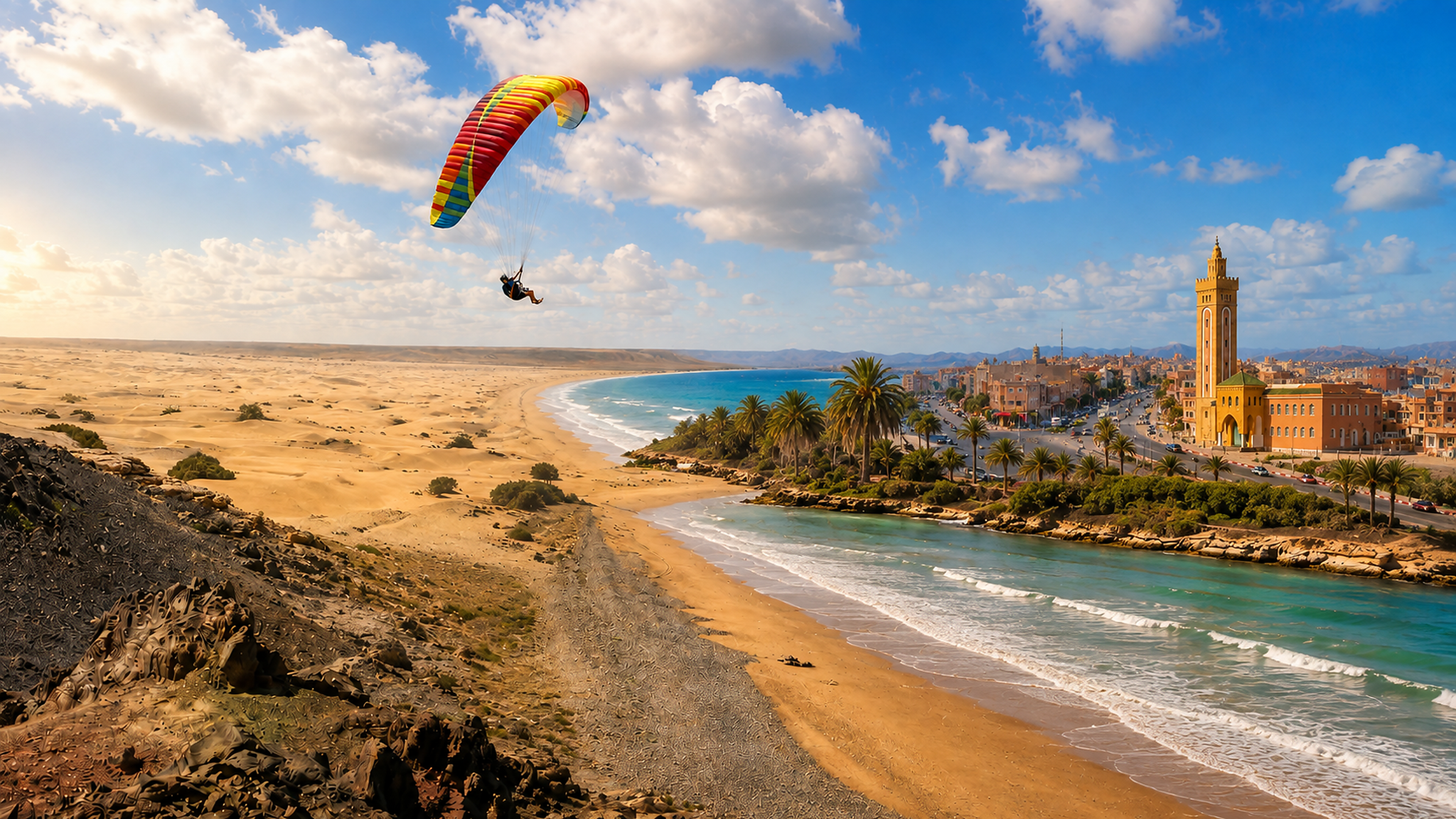
Plage Blanche is not a beach built around spectacle. Its force comes from scale: a long Atlantic strand, ochre dunes, hard coastal wind and the feeling of Morocco opening toward the desert edge.
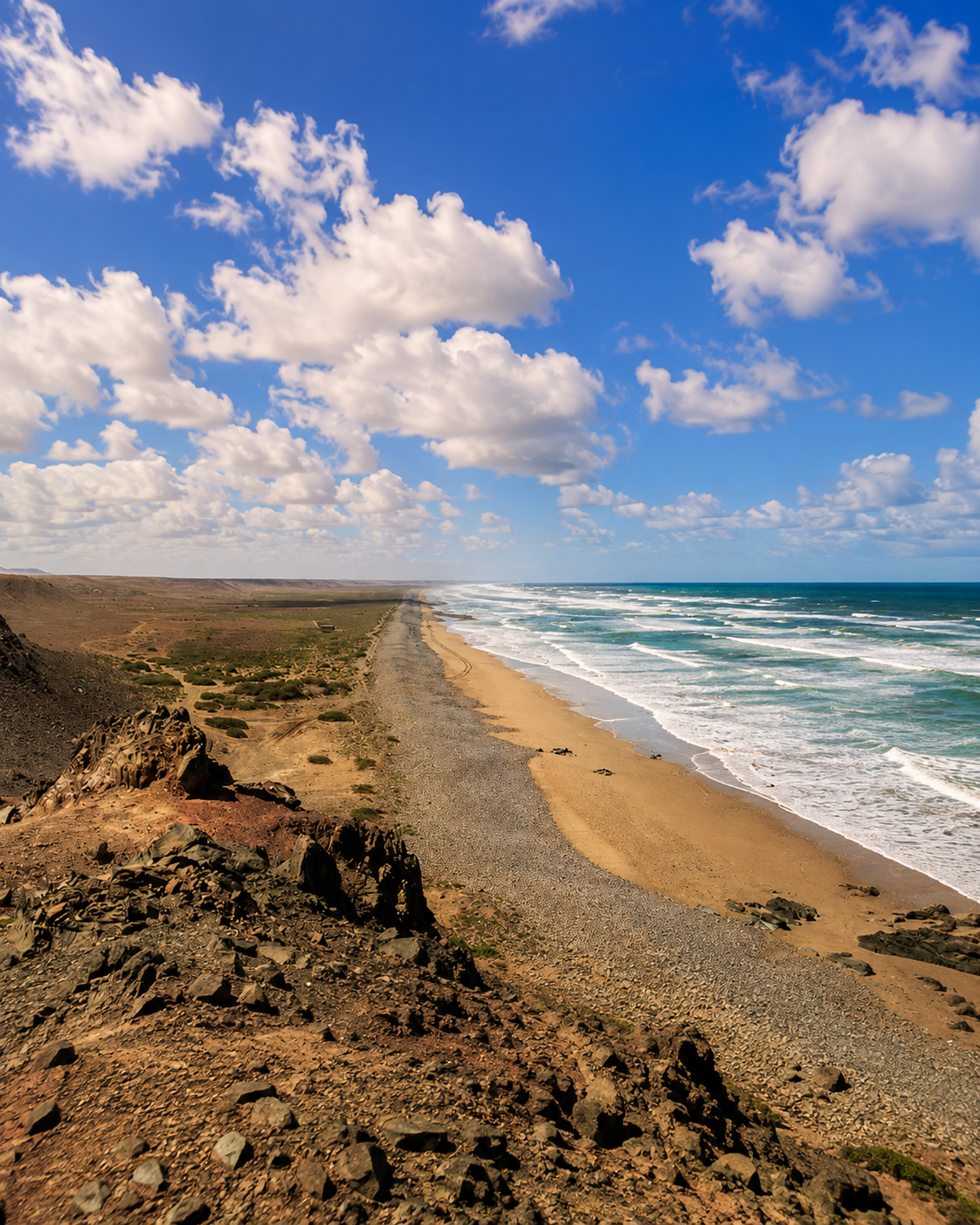
Read it slowly from distance first. The beach is strongest when the whole line is visible: surf on one side, dune and stone behind it, and a horizon that makes the visitor feel small in the right way.
Plage Blanche matters because it shows a side of Morocco that cannot be understood through city streets or monuments alone. Here, the Atlantic does the first work. Waves, wind, dune lines and pale sand create a landscape that is wide, exposed and deliberately unsentimental.
The Guelmim-Oued Noun Regional Council describes White Beach as stretching for about fifty kilometres along the Atlantic, backed by ochre dunes and facing the open ocean. Exact measurements vary across travel references, but the essential fact is clear: this is a major coastal landscape, not a small resort beach.
Its value is spatial. The beach teaches distance, weather and restraint. Visitors come for the uninterrupted horizon, the meeting of desert tones and Atlantic blue, and the rare feeling that the coast has not been over-arranged for them.
The place also belongs to a wider southern geography. Guelmim gives the strongest city context, while the coastal route connects the beach to dunes, river-mouth landscapes, stone plateaus and the long transition between Anti-Atlas, Atlantic and Saharan light.
That is why Plage Blanche should be approached with care. It rewards slow looking, practical planning and respect for fragile sand, vegetation, tracks, local life and changing coastal conditions.
Use the map to understand the beach as a long coastal edge, not a single point. Guelmim is the clearest city context, while the coast itself asks for weather-aware planning.
Editorial reading
Its beauty is distance, wind and proportion.
The first impression should be wide. Plage Blanche becomes legible when the eye follows the full line: pale sand, Atlantic movement, dunes behind the shore and a horizon without much interruption.
The beach does not need decorative explanation. Its drama comes from natural forces that are still active: wind reshaping sand, surf cutting rhythm into the edge, salt light flattening distance, and rock or low vegetation holding the land just enough.
A good visit keeps admiration and caution together. The same openness that makes the place powerful can also make it exposed. Sun, wind, tides, tracks and remoteness are part of the experience, not afterthoughts.
Read the coast in layers. First the horizon, then the line of water, then the dune field, then the smaller signs of movement: shells, wind marks, footprints, tyre tracks, bird movement and the way colour changes where wet sand meets dry sand.
The strongest photographs usually come from patience rather than height or noise. Let the coastline remain larger than the frame. Plage Blanche is most convincing when the image still carries space around it.
Respect here is practical. Stay light on the ground, avoid careless driving on sensitive surfaces, take litter back out, and give the landscape enough quiet for its scale to be felt.
Landscape and coastal orientation
Understand the beach through scale, exposure and southern geography.
Plage Blanche is best understood as an Atlantic landscape rather than a conventional seaside stop. Its identity comes from length, wind, dunes, surf, sparse development and the way the coast sits between Guelmim's inland city context and the open southern ocean.
01Place type
Wild Atlantic beach
The site is a long natural beach landscape in Guelmim-Oued Noun. Its value lies in openness, coastal movement and dune-backed space rather than built attractions.
02Coastal setting
Ocean and dunes
The strongest visual relationship is between Atlantic surf and ochre sand. The shore feels powerful because land and water stay visibly connected over a long distance.
03Regional context
Guelmim-Oued Noun
The beach belongs to Morocco's southern coastal map, where inland desert-edge routes meet the Atlantic. Guelmim gives visitors a useful base for reading that transition.
04Visitor caution
Exposed conditions
Because the landscape is open and lightly serviced, visitors should treat weather, tides, access tracks, water, shade and local advice as part of the plan.
A visual bridge
Three readings between dunes, water and horizon
Before Plage Blanche becomes a photograph, it is a lesson in scale. These three readings help visitors slow down and understand why the place feels so large even when the details are simple.
01
Dunes
Sand as movement
The dunes are not just a backdrop. They record wind, exposure and the inland pull of the coast. Their colour makes the Atlantic feel sharper and the shore feel longer.
Notice where sand gathers behind the beach.
Look for wind marks and soft changes in height.
Keep fragile vegetation and dune edges undisturbed.
02
Water
Atlantic rhythm
The water gives the place its pace. Surf lines, wet sand and changing light make the beach feel alive even when there are few people in view.
Read wave sets before walking close to the edge.
Watch how wet sand changes colour and texture.
Treat tides and wind as serious conditions.
03
Looking
Horizon before detail
The strongest visit begins with the whole line. Distance explains why Plage Blanche feels different from a resort beach: the coast remains larger than the visitor.
Start with the full beach line before moving closer.
Let the horizon set the rhythm of the visit.
Use detail to deepen scale, not replace it.
Quick orientation
Type of place
A long Atlantic beach and dune landscape, best understood through scale, wind, surf and open southern Moroccan light.
Landscape context
Guelmim-Oued Noun coast, where dune-backed beach, stone, seasonal channels and ocean exposure shape the visitor experience.
Guelmim is the strongest city base for understanding the inland market rhythm, desert-edge routes and the wider coastal journey.
What visitors experience here
A place that becomes larger as you slow down.
Plage Blanche works through patience. At first it may look simple: sand, ocean, sky. Then the scale starts to separate into textures, wind lines, surf rhythm, dune edges, exposed tracks and the quiet pressure of a coast that has not been softened into a polished resort scene.
Arrival
The long first line
The first view should feel horizontal. The eye follows the beach before it settles on details, and that long line is the key to the place's authority.
Light
Blue against ochre
The colour contrast is clean rather than decorative: Atlantic blue, pale foam, golden sand, darker rock and dry earth behind the shore.
Wind
Movement you can read
Wind shapes the surface. It marks dunes, lifts sand, changes comfort and gives the beach its raw southern character.
Texture
Wet sand, dry sand, stone
The details are subtle but strong: shell fragments, tide marks, darker wet edges, compacted tracks, low vegetation and rougher ground behind the beach.
Silence
Few interruptions
The landscape feels powerful because there is room around the visitor. Silence here is not empty; it lets surf, wind and distance take the lead.
Pace
A careful coastal rhythm
The better visit is unhurried and practical. Walk lightly, watch conditions, avoid fragile dunes and keep enough time to see the beach as a whole.
Place details and orientation
Read Plage Blanche through six defining elements
No single viewpoint explains the beach. Its meaning comes from the relationship between surf, sand, dunes, wind, access and the Guelmim-Oued Noun landscape around it.
1
The open strand
The beach reads first as a long uninterrupted edge, where walking distance matters more than a single landmark.
2
Atlantic surf
Wave rhythm gives the place sound, motion and caution. Conditions can change the mood and the safe walking edge quickly.
3
Dune-backed horizon
Ochre dunes and dry coastal ground make the ocean feel sharper, giving Plage Blanche its desert-meets-Atlantic character.
4
River-mouth landscape
Seasonal channels and nearby river-mouth geography add another layer to the coast, especially where sand, water and low ground meet.
5
Exposed access
The beauty depends partly on limited development, so access planning, vehicle choice, weather and local guidance should be treated seriously.
6
Guelmim context
Guelmim connects the beach to inland routes, market life and the broader southern Moroccan map beyond the shoreline.
Coast, not scenery
The place asks for distance first.
Stand back before trying to frame the beach. The first lesson is scale: ocean on one side, dune and stone on the other, and a long exposed line where the visitor is not the centre of the scene.
Then move closer. Wet sand, wind marks, foam, shells, footprints and low vegetation make the landscape specific. The details are quiet, but they prevent the coast from becoming only a wide postcard.
Keep returning to the horizon. At Plage Blanche, the wide view is not background; it is the structure of the visit. The more carefully you look, the more the beach reads as a complete coastal system.
Landscape intelligence
The coast is shaped by forces you can see.
Plage Blanche does not need architectural language. Its intelligence is environmental: wind moving sand, Atlantic water cutting lines into the shore, dune colour changing with light, and sparse coastal ground holding the beach between ocean and inland dryness.
This is why the place should not be treated as an empty playground. Sand, tracks, vegetation, bird movement and water edges all carry the pressure of use. A careful visitor reads beauty and fragility together.
What to notice slowly
Start with the entire beach line before focusing on a single photo angle.
Notice how wind changes sand texture and walking comfort.
Watch the difference between dry sand, wet sand, rock and dune edge.
Keep a respectful distance from fragile vegetation and soft dune surfaces.
Use Guelmim as context for supplies, orientation and the wider route.
Check current weather, tide and access guidance before committing to a long excursion.
Visual reading
Three coastal languages to notice
Horizon and scale
The beach speaks first through length. A strong visit lets that length remain visible instead of reducing the place to one close-up of sand or surf.
Wind and surface
Wind writes across the coast. It shifts sand, sharpens cloud shadow, changes the feel of the walk and makes the landscape visibly active.
Edge and restraint
The meeting of dune, beach and water is powerful because it is not overbuilt. That restraint is part of the value and part of what visitors should protect.
Visual atmosphere
Light, surf and quiet transitions
From distance to detail
Begin with the full coast, then move closer to read the smaller surface changes: foam lines, shells, darker wet sand, dune texture and tracks fading toward the interior.
From sand to water
The strongest visual contrast is the clean meeting of ochre land and Atlantic blue. The colours should feel natural: bright, dry, clear and shaped by open southern light.
From photo to memory
The image may be dramatic, but the memory comes from scale: wind against the face, the repetitive sound of surf, the long line of beach and the feeling of space around every step.
Nearby places and onward links
Connect Plage Blanche to the wider southern Morocco map
Plage Blanche belongs to a broader southern itinerary. Guelmim gives the clearest city context, while the region opens toward Atlantic routes, oasis landscapes, desert-edge towns and quieter travel planning.
Guelmim
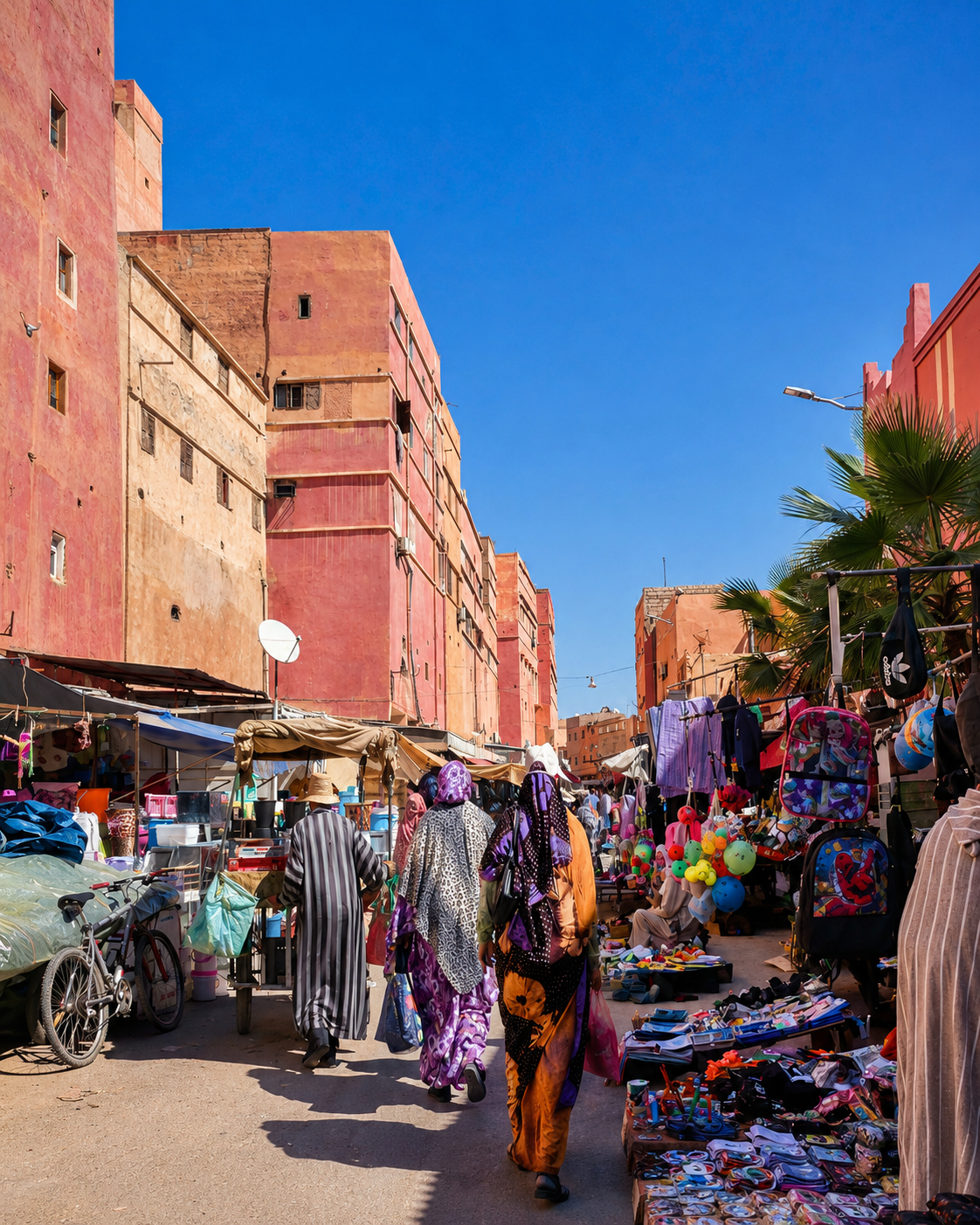
The closest strong city context for Plage Blanche. Use it to frame supplies, inland rhythm, market life and the transition from coast to desert-edge travel.
Plage Blanche feels wild because the landscape is still allowed to feel large. Respect begins with keeping that quality intact: move lightly, avoid leaving marks beyond ordinary footprints, take litter out, and do not turn fragile dune edges into shortcuts.
Respect also means planning honestly. The beach is exposed to sun, wind, surf and changing access conditions. Bring water, protection from light and wind, and enough time to turn back without pressure. If driving is involved, follow local guidance and avoid sensitive surfaces.
Ask before photographing people, camps, guides, fishers or private activity.
Keep vehicles and walking routes away from fragile dunes and vegetation where possible.
Carry water, sun protection and wind-aware clothing for exposed conditions.
Leave no litter, food waste, plastic, glass or burned material behind.
Check current access, weather, tide and local guidance close to travel.
A strong first visit
Begin with orientation, not speed. Locate Plage Blanche on the map, understand where Guelmim sits in relation to the coast, and decide how much time you can realistically give to the beach without rushing the return.
Arrive ready to look from distance first. The first view should include the whole coast: water, sand, dunes, stone and sky. That wide reading makes the later details more meaningful.
Walk only as far as conditions make sensible. Watch the surf line, wind, soft sand and return distance. The aim is not to conquer the beach, but to experience its scale without losing respect for exposure.
Afterward, connect the coast back to Guelmim. The city helps turn the visit from an isolated view into part of a southern Moroccan journey: inland routes, market rhythm, desert-edge geography and Atlantic light.
Start with the map and conditions before choosing a walking or driving rhythm.
Read the full beach line before focusing on close details.
Keep dunes, vegetation and quiet spaces protected from unnecessary disturbance.
Use Guelmim as the practical and editorial base for the wider route.
Let the beach remain larger than the photograph.
Careful planning note: access, weather, tide and road conditions can change. Verify practical arrangements locally before travelling.
Go deeper through the nearest city context
Guelmim, the city gateway to Plage Blanche
Plage Blanche makes more sense when it is connected to Guelmim. The city gives visitors a human and practical base for the coast: supplies, route orientation, market rhythm and the wider desert-edge identity of southern Morocco.
Use Guelmim to widen the context after the beach itself. The Atlantic landscape, inland roads, oasis directions and southern light become easier to read when Plage Blanche is treated as part of a larger regional geography.
Guelmim city orientationAtlantic coast contextDesert-edge routesMarket and travel rhythmPractical planning baseSouthern Morocco highlights