Why Sidi Kaouki matters
A coast before it is a beach day.
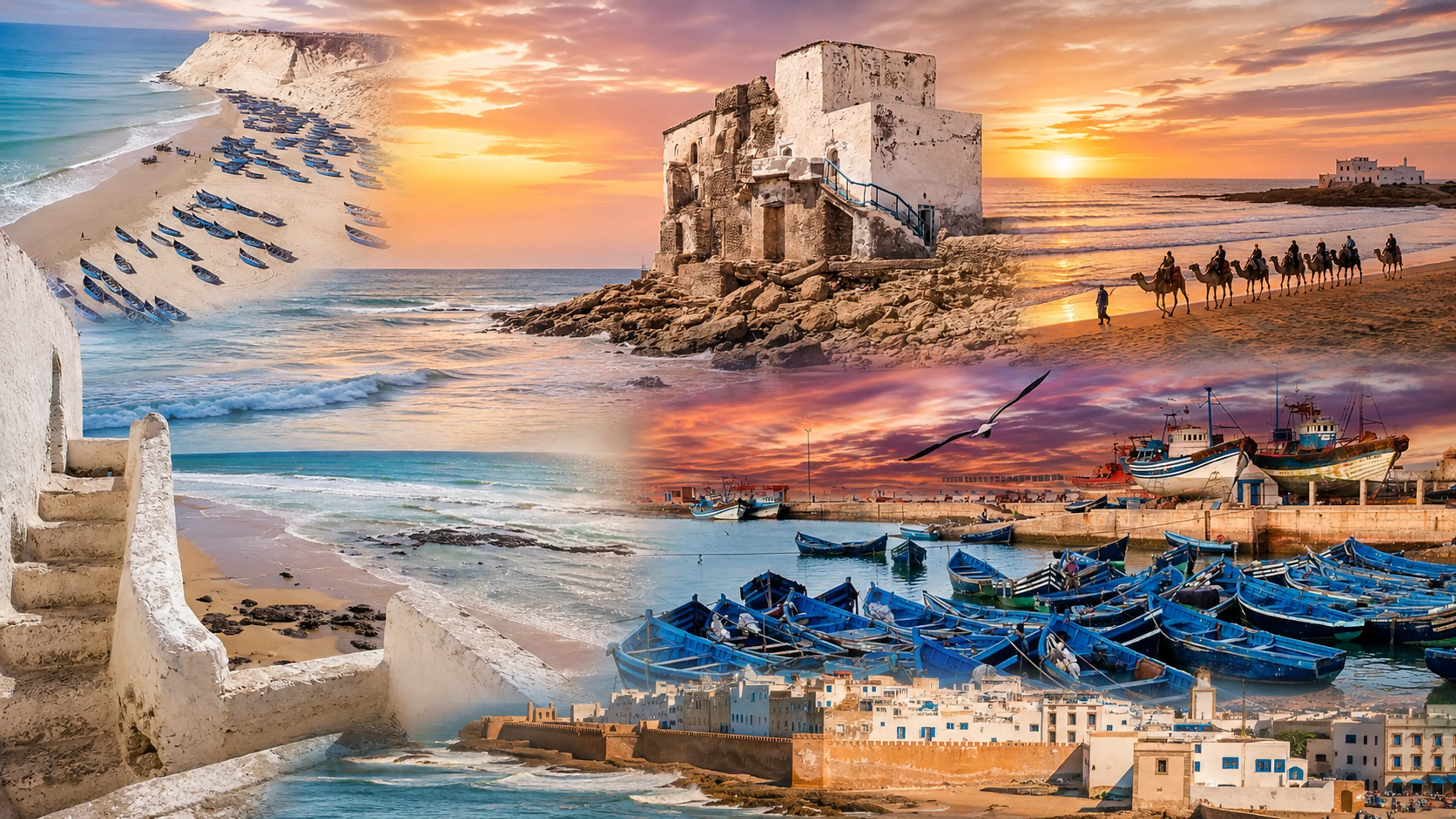
Sidi Kaouki matters because it shows the Atlantic side of Morocco without forcing it into a city frame. The place is not defined by one monument or a dense medina. Its identity comes from exposure: open sand, steady wind, ocean sound, whitewashed edges, fishing colour and the feeling of space that begins where Essaouira's walls end.
The village is often approached from Essaouira, but it should not be treated as a simple add-on. It has its own rhythm. The beach is broad enough for long walking, surfing, wind sports, horse and camel rides, quiet pauses and slow photography, yet the best visit is still simple: understand the wind, watch the tide, respect the working edge and let the horizon set the pace.
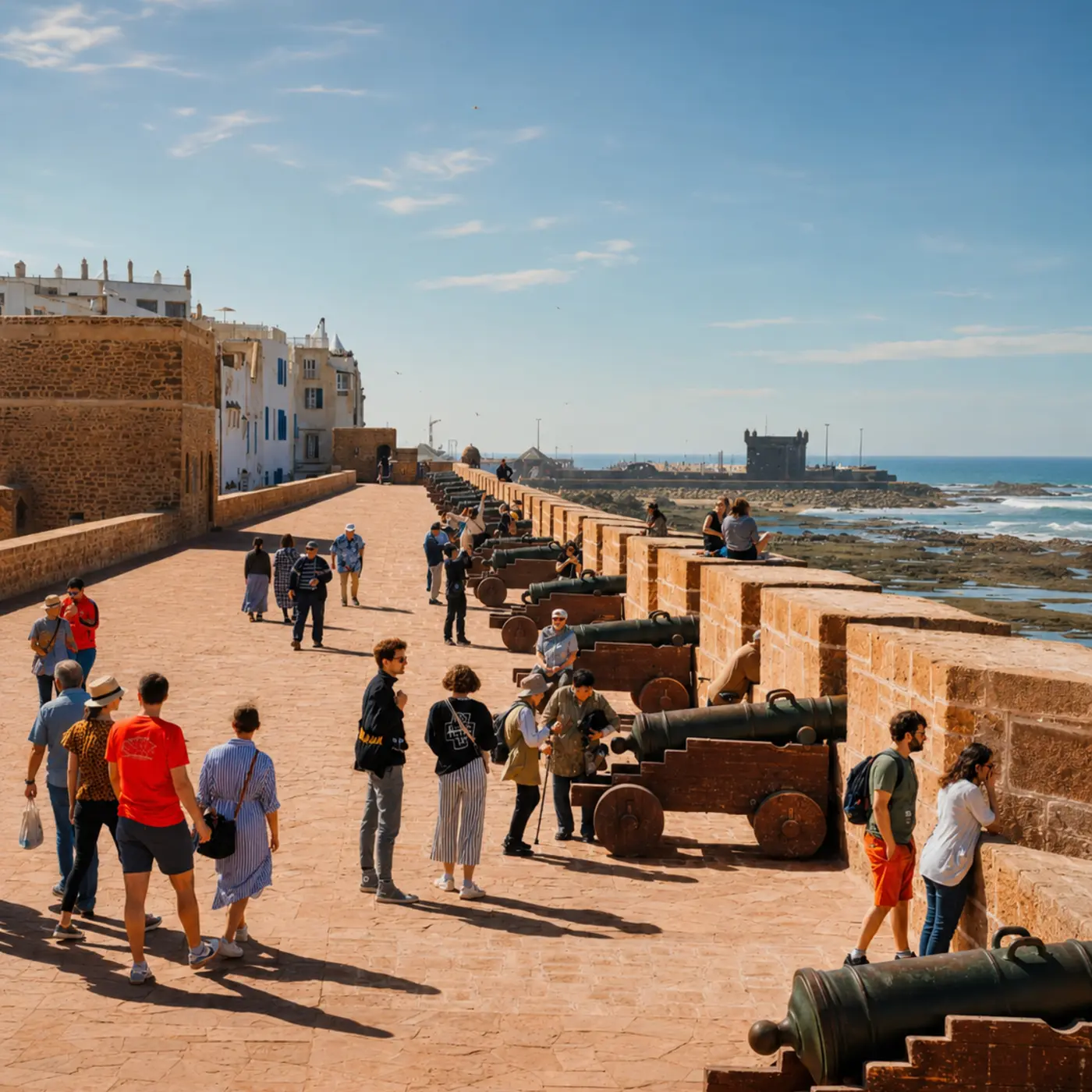
Its visual value comes from contrast. Essaouira gives fortified walls, port life and urban craft; Sidi Kaouki gives distance, sand, exposed water and a softer settlement line. Together they make the province easier to read: one side built and protected, the other open to weather, movement and Atlantic scale.
The coast also asks for practical intelligence. Wind can make the beach spectacular and uncomfortable in the same hour. Surf conditions change, currents deserve attention, and the shoreline should be treated as a living place rather than a stage. Sidi Kaouki rewards visitors who adjust to conditions instead of pushing through them.
For Exotic Morocco, the place belongs to a coastal language of light and restraint. Its beauty is not decoration. It is the relationship between blue boats, pale walls, low buildings, sand, rock, ocean line and sunset colour, held together by the clear Atlantic air.
Orientation is cross-checked against regional tourism information for Plage de Sidi Kaouki and the UNESCO World Heritage Centre listing for Essaouira's medina, used here only for the nearby city context. Practical surf, wind, access and safety details should be checked close to travel.