Why Todra Gorge matters
A canyon before it is a viewpoint.
Todra Gorge matters because it makes the meeting of water, stone and human movement immediately readable. The place is not only a beautiful stop on a southern route. It is a narrow geological passage where a river system, hard rock, road access, oasis settlement and mountain weather all press into one visible space.
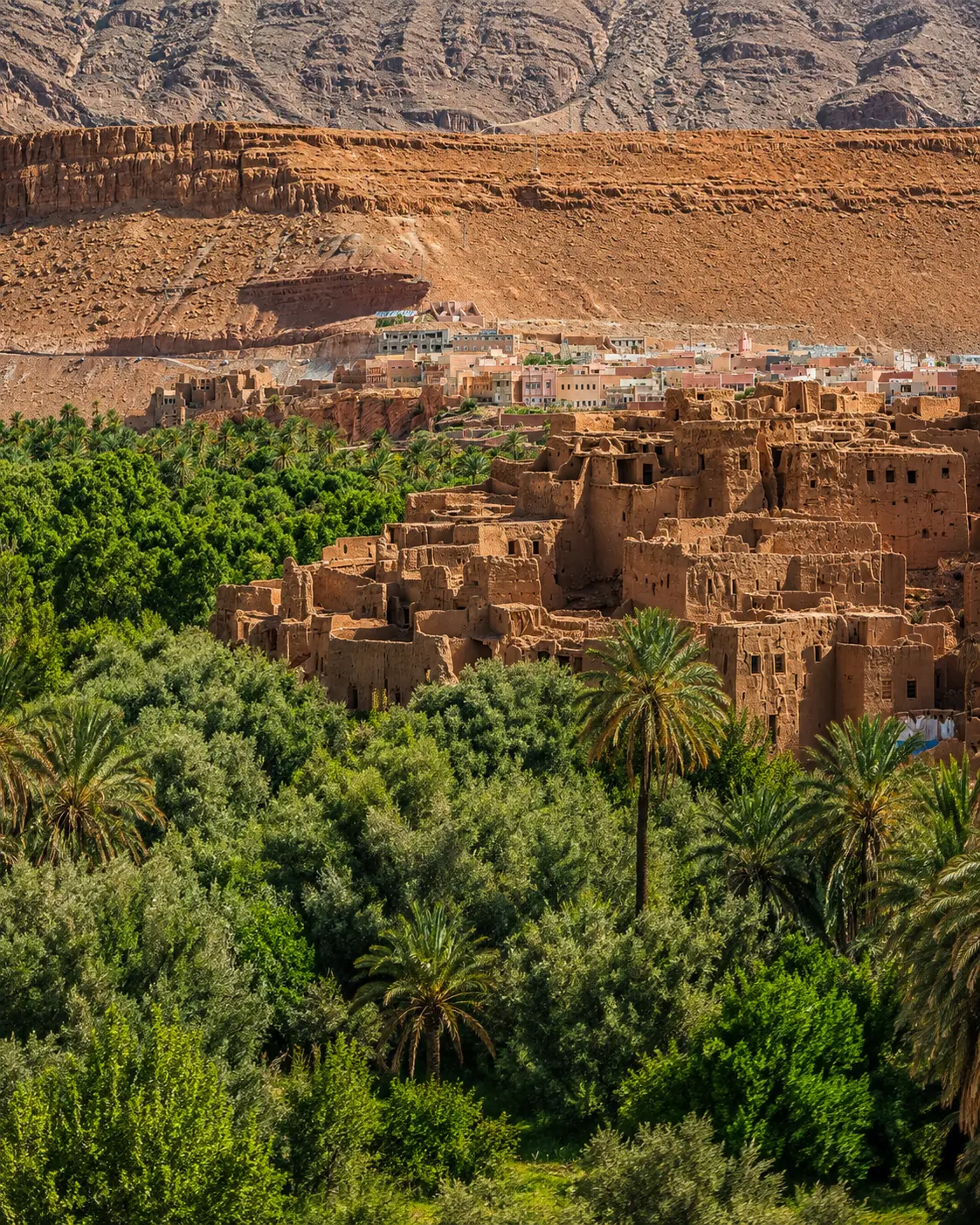
The approach from Tinghir is part of the meaning. Before the walls close in, the valley opens through palms, gardens, villages and dry slopes. That sequence matters because it shows how precious water is in this landscape and why the gorge should be read together with the oasis below it, not as an isolated photo spot.
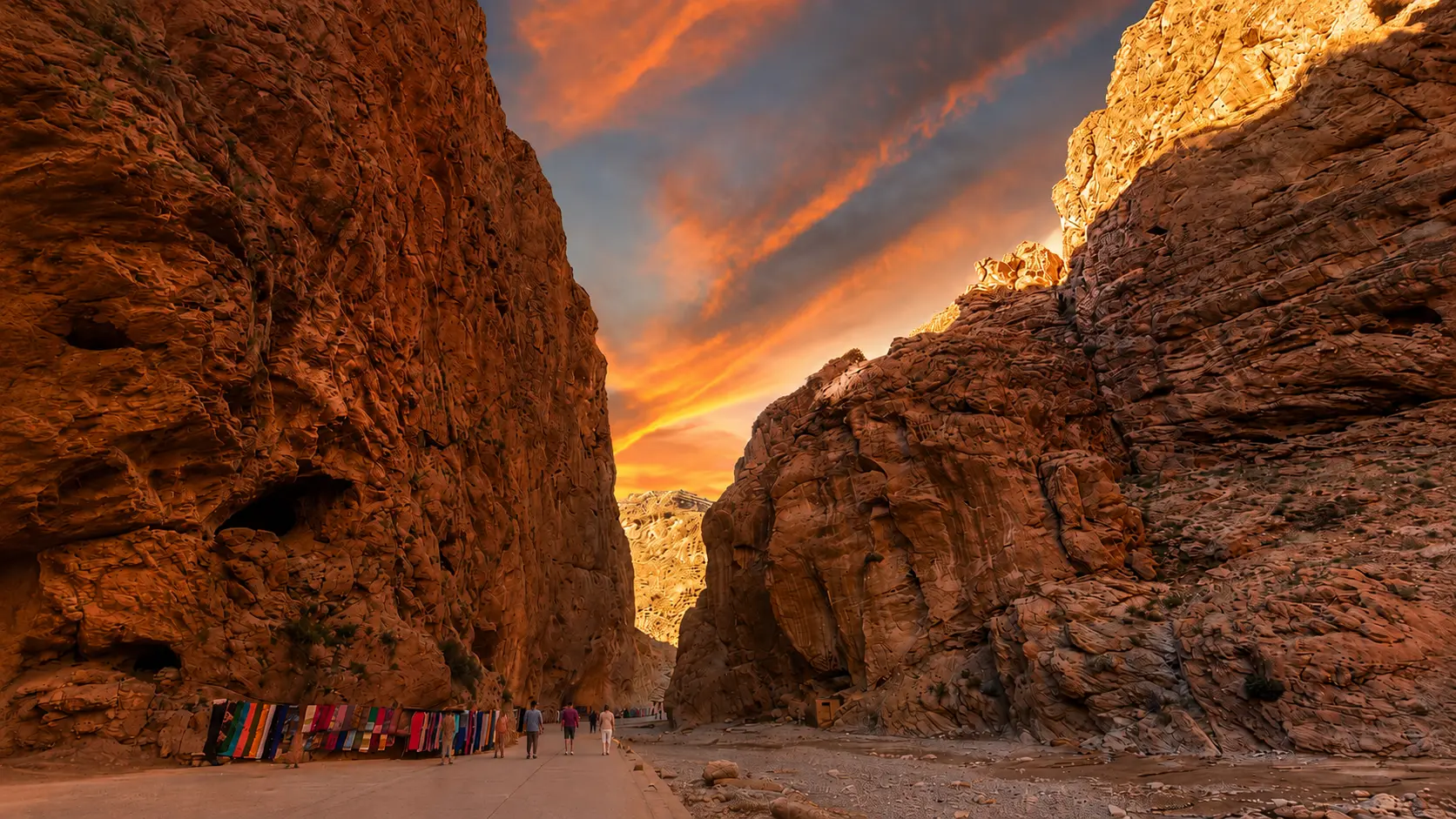
Inside the gorge, scale becomes physical. The visitor looks upward more than outward. Rock faces hold shadow, warmth, ledges, cracks and changing tones of orange, rose, grey and gold. The road and walking path make the place accessible, but the height of the walls keeps the experience disciplined and quiet.
Todra also matters as a living visitor landscape. Walkers, drivers, climbers, guides, local businesses and nearby communities all share the same compressed corridor. A good page should therefore treat the gorge with precision: as nature, route, local economy, visual experience and fragile environment at once.
For Exotic Morocco, the strongest reading is not spectacle. It is attention. Look at how water shaped the passage, how shade cools the base of the cliffs, how rock texture changes with light, and how the oasis image behind the gorge explains the human geography of the whole valley.
Core orientation is grounded in Moroccan National Tourist Office references to the Todgha Gorges and in geographic descriptions of Todra as limestone river canyons near Tinghir. Water levels, access conditions and practical details should be checked locally close to travel.