Why Boujdour Lighthouse matters
A city landmark with a maritime purpose.
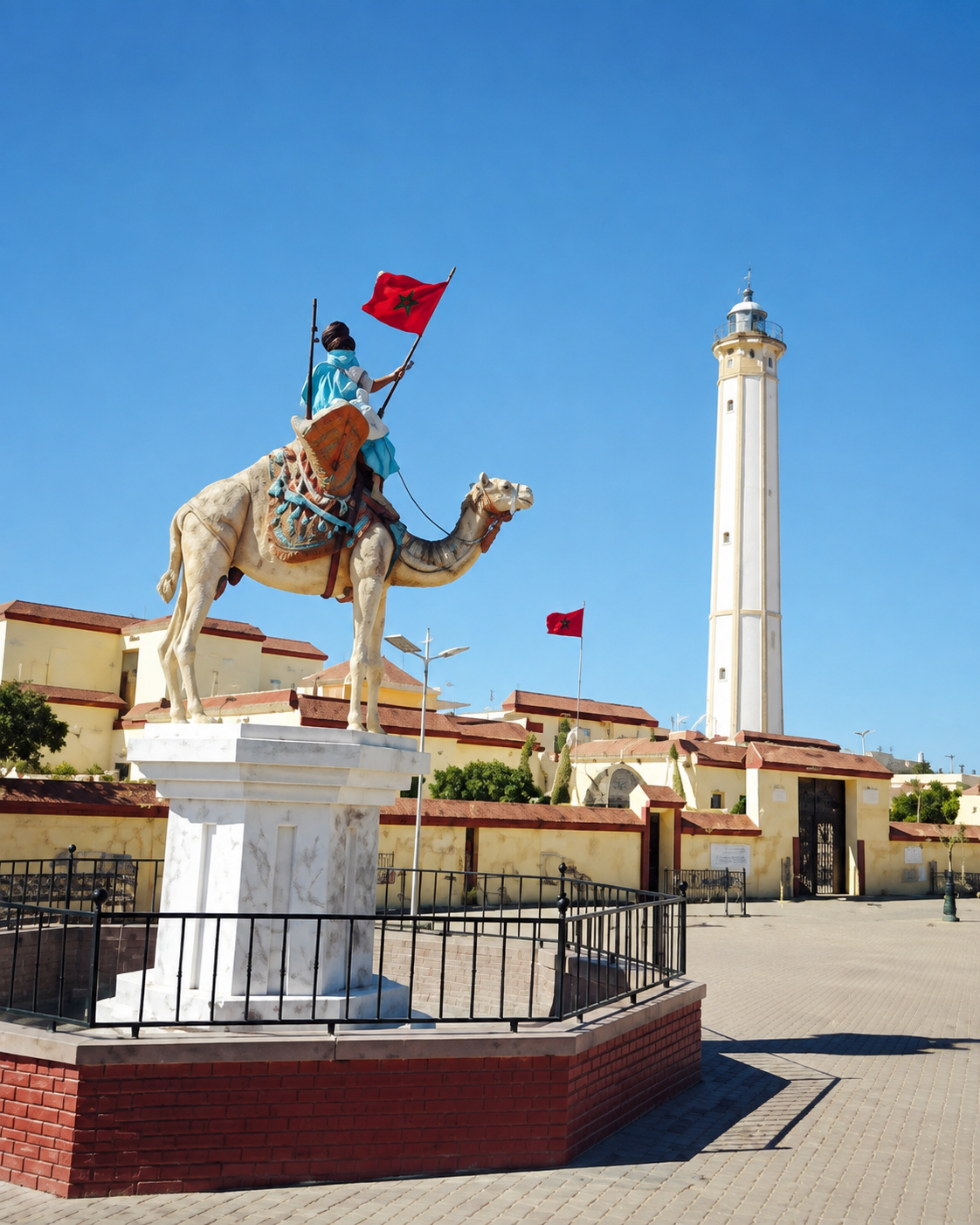
Boujdour Lighthouse marks the coast near Cape Bojador. Its significance begins with navigation: a fixed point that helps identify a stretch of Atlantic shoreline. Seen from land, that same vertical presence gives the city a recognisable centre of attention.
The building belongs to the twentieth-century development of this coast. The Moroccan equipment ministry places the present lighthouse in the 1950s, during Spanish administration. It describes the tower as part of Boujdour’s urban memory, linking a maritime installation with the settlement that grew around it.
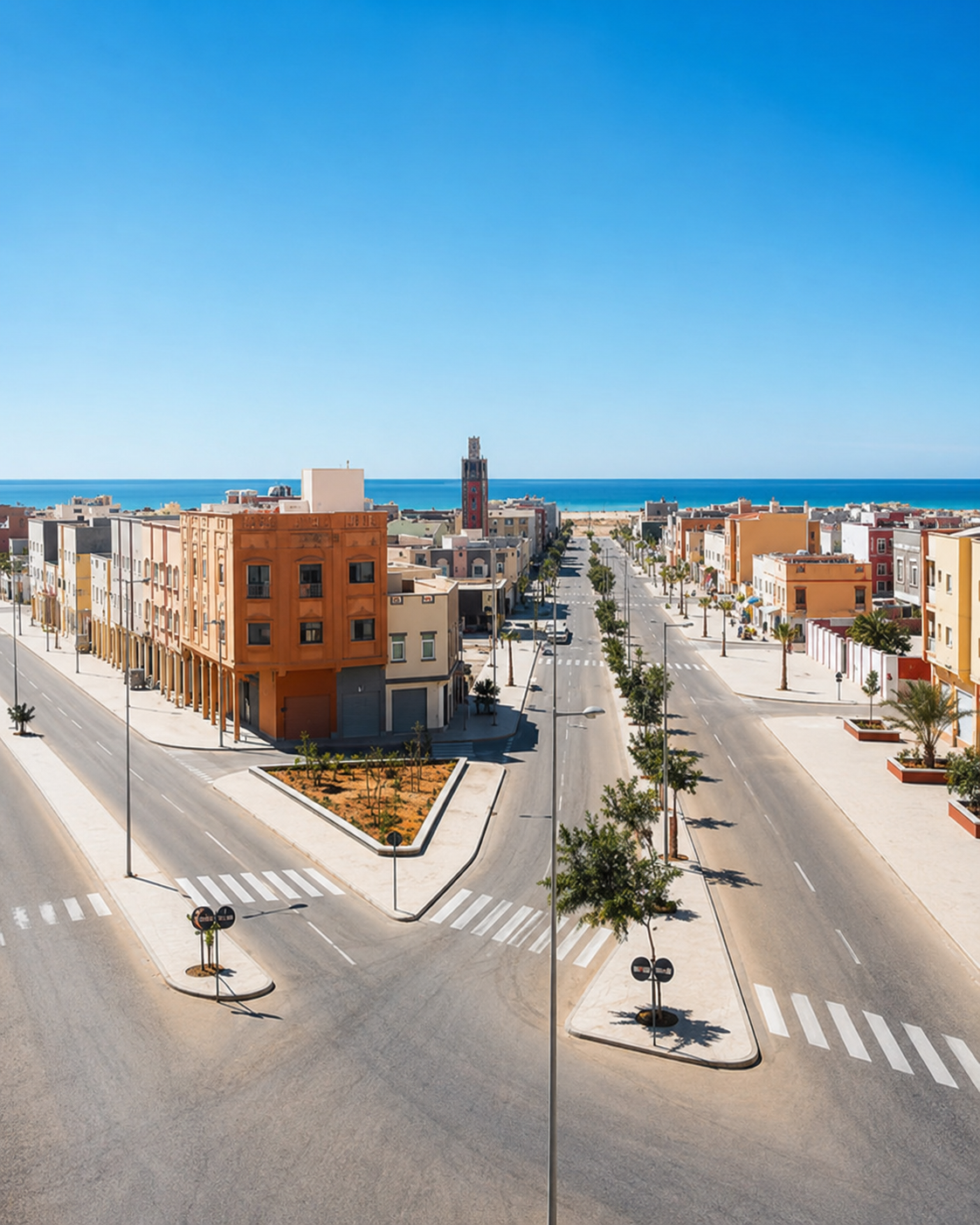
For a visitor, this is a useful way to understand the place. The tower is more than an isolated object to photograph. Its proportions can be read against ordinary streets, entrances and roofs, while its purpose points beyond the city towards vessels at sea.
The visual encounter is unusually direct: pale surfaces, vertical bands, small openings and a lantern high above the surrounding buildings. These elements make the tower legible without elaborate ornament. The eye follows a clear progression from the base to the light.
Allow the surrounding city into the visit. A short walk, a pause at street level and attention to how the tower appears between buildings offer a fuller encounter than a tight close-up alone. Boujdour supplies the everyday scale against which the lighthouse becomes memorable.
Historical context: the ministry’s archived Boujdour lighthouse profile. Maritime identification: Lighthouse Digest’s Cabo Bojador record.