
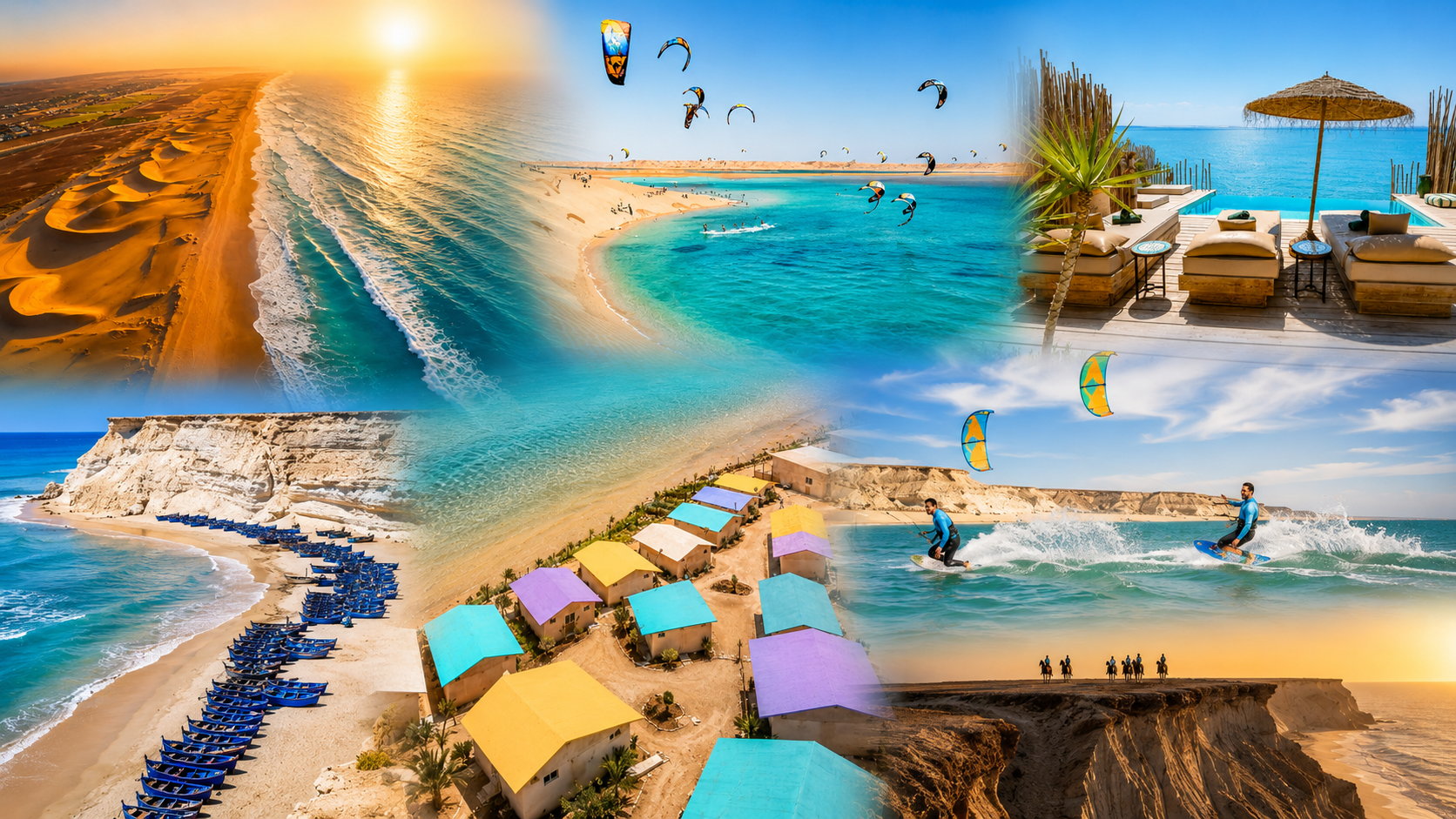
Dakhla National Park landscape with Atlantic coast, lagoon water, dunes, beaches and southern Moroccan light

Visit / Place · Dakhla-Oued Eddahab · Atlantic coast

Dakhla National Park A vast Atlantic edge of lagoon water, desert light and exceptional natural scale

Dakhla National Park belongs to Morocco's far southern Atlantic imagination: lagoon water, wind, dunes, marine horizons and semi-arid landscapes gathered around Dakhla.

Read it wide first. The power is not in one monument, but in the meeting of ocean, sand, shallow water, exposed light and the careful visitor rhythm needed in a fragile coastal landscape.

Why Dakhla National Park matters

A coast before it is a postcard.

Dakhla National Park is best understood as a very large natural landscape rather than a single scenic stop. Its identity comes from scale: Atlantic water, sandy peninsula, lagoon edges, desert exposure, coastal wind and the ecological value of a place where land and sea keep changing each other's meaning.

The UNESCO World Heritage Centre lists Parc national de Dakhla on Morocco's Tentative List, submitted in 1998 under natural criterion (x). The entry describes a vast area in Oued Eddahab, noted for flora and fauna adapted to pre-arid conditions, and identifies the Cap Blanc-Aguerguer coast for its Mediterranean monk seal context. That status is tentative, not a World Heritage inscription.

The park also matters because Dakhla is one of Morocco's clearest lessons in coastal contrast. The Moroccan National Tourist Office presents Dakhla through lagoon water, beaches, wind sports, the White Dune and Dragon Island. Those visitor images are real, but the deeper reading is quieter: shallow water, desert margins, bird habitat, marine life and careful access all belong to the same landscape.

For Exotic Morocco, this place sits at the meeting point between visual pleasure and environmental restraint. It can look open, bright and endless, yet its shorelines, dunes and wildlife areas should not be treated as empty scenery. The best visit begins with wonder, then keeps attention on fragility, local guidance and the difference between public viewpoints and sensitive habitats.

Visitors should also understand that Dakhla National Park is broad. Exact access points, management conditions, route choices and activity permissions can change. A strong plan uses Dakhla city as the base, checks current local guidance, and keeps the visit flexible enough for wind, tide, light and conservation considerations.

Core natural-heritage facts are grounded in the UNESCO World Heritage Centre Tentative List entry for Parc national de Dakhla, the Moroccan National Tourist Office Dakhla page and the Key Biodiversity Areas Dakhla factsheet. Practical details such as access, prices, routes and conditions should be checked close to travel.
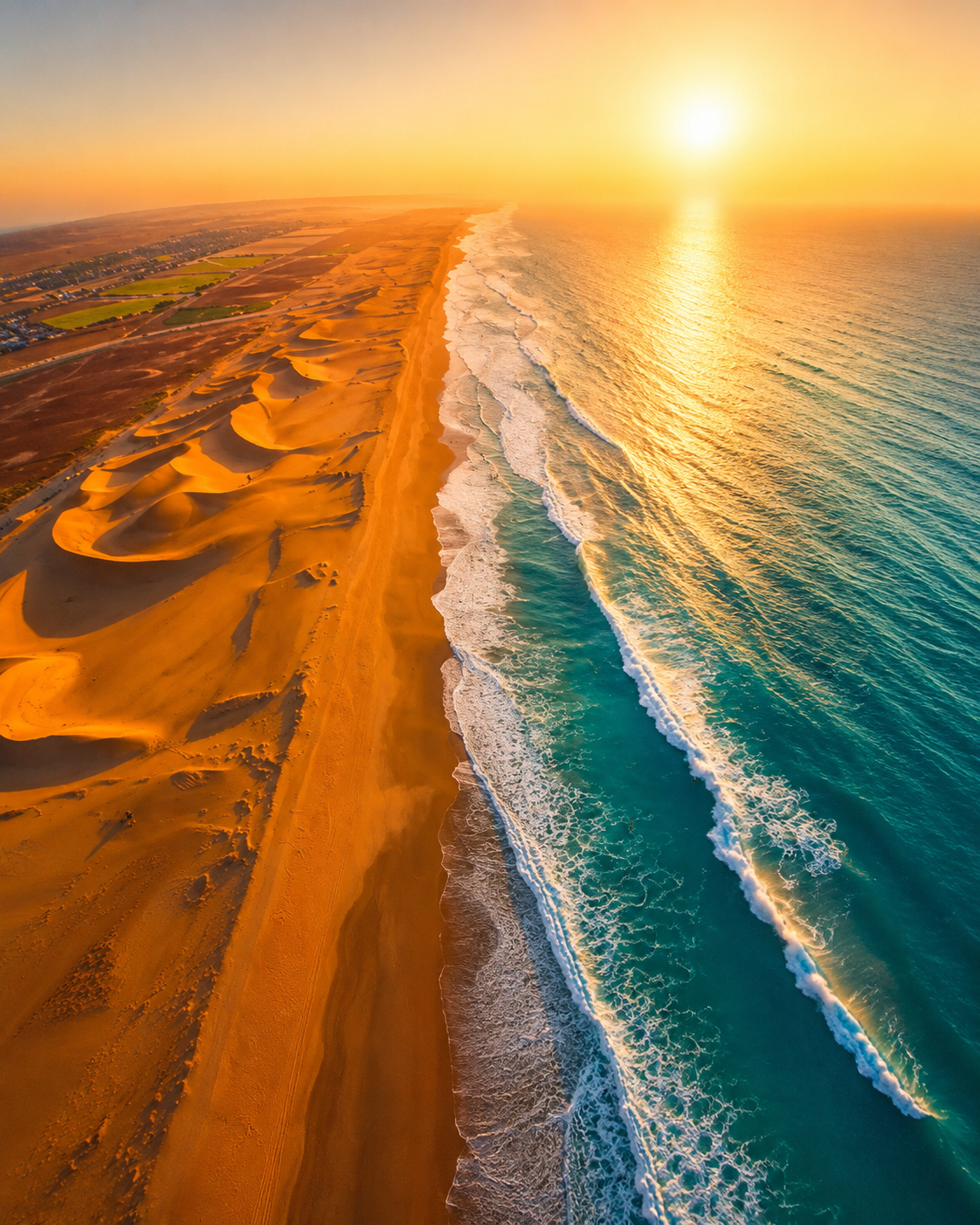
Aerial sunset view of Dakhla's Atlantic desert coast, dunes and ocean edge

Map orientation

Use the map to place the park around Dakhla's lagoon, Atlantic peninsula and southern coastal context. The area is broad, so confirm exact access locally.

Editorial reading

Its beauty is scale, wind and restraint.

The first impression is horizontal: water opening into sky, sand holding the edge, wind moving across the surface and a city base set within a much larger coastal geography. Dakhla is powerful because the landscape refuses to become one simple view.

Look longer and the place separates into layers. The lagoon can feel calm while the Atlantic side remains exposed. Dunes can look soft from a distance but are easily marked by careless movement. Bright water can suggest leisure, while the same shoreline may be important for birds, marine life and local livelihoods.

This is why the strongest visit balances energy with restraint. Dakhla's wind-sport image is part of its contemporary identity, but the park should also be read through quiet observation: tidal flats, coastal lines, semi-arid vegetation, distant dunes and the way light changes the scale of everything.

The visitor's eye should move from spectacle to structure. Ask where the lagoon is protected from the open ocean, where sand is mobile, where human activity concentrates and where the landscape needs space. Those questions make the view richer without turning it into a checklist.

Good photography here is not about forcing drama. It is about clean horizons, bright water, long shadows, small figures against scale and enough patience to let wind and light decide the pace. The place rewards a calm frame more than a crowded one.

Respect is part of the visual experience. Keep distance from wildlife, avoid driving or walking into sensitive dune and shoreline areas, follow local advice and let the landscape remain spacious. Dakhla's beauty depends on that feeling of openness, not on taking possession of every edge.

At the end of the visit, the image should feel larger than the photograph: Atlantic energy, lagoon stillness, desert exposure and the understanding that a fragile natural place can be both exhilarating and quiet.

Natural and heritage orientation

Read the park through scale, habitat and caution.

Dakhla National Park is a natural landscape of exceptional scale. Official and biodiversity references describe it through pre-arid habitats, Atlantic coast, lagoon context and conservation value. The important distinction for visitors is simple: this is not only a beautiful coastline, but a sensitive natural system that should be approached with care.

01Place type

Coastal natural park

The place is best read as a broad Atlantic desert-and-lagoon landscape rather than a compact visitor attraction. Its meaning depends on water, sand, wind, wildlife and route context.

02UNESCO 1998

Tentative natural listing

UNESCO records Parc national de Dakhla on Morocco's Tentative List with a 1998 submission date and natural criterion (x). It should not be described as an inscribed World Heritage Site.

03Landscape system

Lagoon, coast and desert

Dakhla's visitor identity comes from the contrast between sheltered lagoon water, open Atlantic exposure, sandy landforms and sparse vegetation adapted to a dry coastal climate.

04Conservation

Sensitive habitats

Biodiversity references underline the importance and vulnerability of the wider Dakhla area. Visitors should treat access, driving, wildlife observation and shoreline movement as matters of care.

A visual bridge

Three readings between Atlantic water, desert and wind

Before Dakhla National Park becomes a hero image, it is a relationship between sheltered water, exposed coast and moving air. These readings help visitors slow down and see more than blue lagoon and sand.

01

Water

The lagoon as structure

The lagoon gives Dakhla its calm surface, colour and sense of depth. It also organises how visitors read the place: sheltered water on one side, open Atlantic energy on the other.

  • Watch where water turns from turquoise to deeper blue.
  • Read shorelines before rushing to viewpoints.
  • Notice how wind changes the water surface.
02

Desert

Sand without emptiness

The dunes and dry coastal ground may look open, but they are not blank space. Tracks, vegetation, bird areas and fragile edges all ask the visitor to move with restraint.

  • Keep to appropriate routes and access points.
  • Look for small signs of life in sparse terrain.
  • Let scale remain spacious instead of crowded.
03

Wind

Movement without hurry

Wind gives Dakhla its kinetic identity. It animates sport, sand, water and light, but it also reminds visitors that the landscape is controlled by conditions rather than by itinerary.

  • Plan around conditions rather than fixed certainty.
  • Use distance to understand the whole coastline.
  • Photograph clean horizons and moving surfaces.

Quick orientation

Type of place

A large natural park and coastal landscape around Dakhla, best understood through lagoon water, Atlantic exposure, semi-arid habitats and conservation value.

Landscape context

The place belongs to the Dakhla-Oued Eddahab region on Morocco's southern Atlantic coast, where desert landforms, ocean light and lagoon edges meet.

Best for

Wide coastal views, lagoon atmosphere, wind-sport context, careful photography, nature observation with guidance and a slower reading of Morocco's far south.

Closest city context

Dakhla is the natural base for understanding the park, planning access, reading the lagoon and connecting the visit to the wider southern Atlantic journey.

What visitors experience here

A place that opens in long horizontal layers.

Dakhla National Park works through breadth. First comes the horizon: water, sand and sky stretched almost flat. Then the details arrive slowly: dune contours, wave texture, shoreline marks, kite movement, sparse vegetation and the quiet discipline required by a sensitive coastal environment.

Arrival

The scale arrives first

The first feeling is openness. Dakhla's park landscape is not enclosed by a gate or a single viewpoint; it stretches across coast, lagoon, dunes and distance, asking the visitor to orient slowly.

Light

Bright water, golden edges

Light is part of the experience. Turquoise water can sit beside warm sand, pale sky and sharper Atlantic glare. Early and late light often make the shoreline easier to read without making the landscape feel heavy.

Wind

A moving landscape

Wind is not background weather here. It shapes water texture, sport activity, sand movement and the way people use the coast. A good visit accepts that the conditions are part of the place.

Lagoon

Calm surface, active edge

The lagoon can appear peaceful, but it is also a working and ecological space. Read the water with patience: colour, depth, birds, boats, sport and shore access all tell different stories.

Desert coast

Dunes meeting Atlantic energy

The strongest visual contrast comes where sand and ocean share the same frame. Dunes, beaches and coastal cliffs should be admired from appropriate routes, without treating fragile ground as a playground.

Pace

Weather-aware visiting

The visit is better when it remains flexible. Wind, tide, light and local guidance can change the order of the day, and that flexibility makes the experience more intelligent, not less complete.

Place details and orientation

Read Dakhla National Park through six defining elements

No single detail explains the park. Its meaning comes from the relationship between lagoon water, Atlantic exposure, dunes, semi-arid habitats, biodiversity value and Dakhla as the human gateway.

1
Atlantic lagoon

The lagoon gives the landscape its most recognisable calm: luminous water, sheltered edges and a slower rhythm beside the open ocean.

2
Sandy peninsula

Dakhla's peninsula helps organise the visual contrast between lagoon stillness and Atlantic exposure, making the coastline feel unusually legible.

3
Pre-arid habitats

UNESCO describes the wider park through flora and fauna associated with pre-arid conditions, so sparse ground should be read as habitat, not emptiness.

4
Cap Blanc-Aguerguer context

UNESCO highlights the Cap Blanc-Aguerguer coast for its Mediterranean monk seal context, one reason the site has natural-heritage significance.

5
Bird and marine sensitivity

Biodiversity references point to the importance of the wider Dakhla area for birds and marine life. Observation should keep distance and avoid disturbance.

6
Dakhla city gateway

Dakhla city gives visitors the practical base for local guidance, route planning, lagoon orientation and a respectful first reading of the park.

Nature, not scenery

The place asks for a wider eye.

Begin by reading the whole coastal system. Lagoon, dunes, shoreline and open water should be understood together before the visit narrows into individual stops. The beauty is not only colour; it is relationship.

Then move closer with restraint. A beach track, a wind-sport launch point, a bird-rich edge or a dune view may look casual, but each belongs to a fragile place shaped by weather, access and local use.

Finally, connect the park back to Dakhla. The city is not separate from the experience; it is the place where visitors can slow down, ask locally, plan responsibly and understand how lagoon life, coastal work and landscape tourism meet.

Landscape and ecological intelligence

The intelligence is in water, wind and exposure.

Dakhla National Park is not a lush green park; its refinement is spare, bright and wind-shaped. The lagoon softens part of the Atlantic edge, while dunes, tidal zones and dry coastal ground create a landscape where small changes in light and movement matter.

The best reading avoids forcing the place into a simple beach image. Water colour, sand texture, distant shorelines, wildlife sensitivity and changing conditions all belong to the experience. The visitor's task is to see the whole system and move through it lightly.

What to notice slowly

  • Look for the boundary between calm lagoon water and open Atlantic movement.
  • Notice how wind changes sand, water texture, sound and visitor pace.
  • Treat sparse vegetation and quiet shorelines as habitat rather than empty ground.
  • Keep distance from birds, marine wildlife and any locally marked sensitive areas.
  • Use Dakhla city as a planning base instead of assuming every edge is easy to access.
  • Confirm current access, weather and local advice before choosing a route.

Visual reading

Three landscape languages to notice

Horizontal scale

Dakhla speaks through length: coastlines, lagoon edges, road approaches, open sky and the feeling that every view continues beyond the frame.

Water colour and depth

The lagoon's colour is not decoration. Changes in blue and green suggest depth, shallows, wind and seabed conditions, helping visitors read the landscape rather than only admire it.

Wind, tracks and restraint

Wind gives movement; tracks reveal human pressure. The careful visitor notices both, then chooses routes and viewpoints that preserve the openness of the place.

Visual atmosphere

Light, water and distance

From panorama to edge

Start with the whole horizon, then let the eye move toward the shoreline. The shift from vast blue and gold to small tracks, ripples and dune curves is what makes the landscape feel alive.

From blue water to gold sand

Dakhla's strongest palette is direct and clean: turquoise lagoon, darker Atlantic, pale sky and warm sand. The colour works best when it remains natural, bright and uncluttered.

From sport image to habitat

Kites and boards may catch the eye first, but the better memory includes quiet water, birds at distance, wind moving the surface and the understanding that activity belongs inside a larger natural setting.

Nearby places and onward links

Connect Dakhla National Park to the southern Atlantic map

Dakhla National Park belongs to a wider southern Morocco journey. Dakhla gives the city base, while the region opens toward Atlantic desert landscapes, lagoon travel, Sahara routes and careful nature-focused planning.

Dakhla

The closest city context for the park, lagoon, wind-sport culture, seafood, local guidance and southern Atlantic orientation.

Open Dakhla city guide

Southern Morocco, Oases & Sahara

The regional frame for Morocco's far south, from desert routes and Atlantic edges to oasis landscapes and large-scale travel planning.

Explore the region

Atlantic Coast & Historic Port Cities

Use the coastal region page to connect Dakhla's ocean reading with Morocco's wider Atlantic identity, ports, beaches and maritime routes.

Read the coastal region

Visit Morocco places

Continue through lagoons, valleys, waterfalls, caves, monuments, parks and natural heritage places beyond the city guides.

Browse Visit places

Plan your journey

Treat Dakhla National Park as a weather-aware southern base, not a fixed quick stop. Plan with light, wind, access and local guidance in mind.

Plan your journey

Stories from Morocco

Use the Stories section for richer cultural reading around coast, desert, movement, memory and the human rhythm behind Moroccan landscapes.

Read stories

How to visit respectfully

Good behaviour protects the landscape.

Dakhla National Park can feel immense, but large landscapes are not automatically resilient. Shorelines, dunes, bird areas, sparse vegetation and marine edges can all be disturbed by careless movement, noise, litter or unmanaged access.

Respect means planning with conditions and people. Ask locally before entering unfamiliar tracks, keep a generous distance from wildlife, avoid driving over fragile dune and shoreline areas, and do not treat working coastal spaces as empty backdrops. A slower visitor sees more and leaves less pressure behind.

  • Ask clearly before photographing local people, workers, guides or private spaces.
  • Keep to appropriate access points and avoid creating new tracks in dunes or shorelines.
  • Give birds, marine wildlife and quiet habitats distance, especially around resting or feeding areas.
  • Carry water, sun protection and wind-aware layers; exposed light can feel stronger than expected.
  • Check current access, weather, tide, route and local guidance close to travel.

A strong first visit

Begin in Dakhla with orientation rather than speed. Use the city to understand the lagoon, the wind, the practical access points and the difference between public visitor areas, working coastal spaces and sensitive natural edges.

Choose one or two strong viewpoints instead of trying to consume the whole landscape in one rush. Let the first view be wide: water, peninsula, dunes, sky and Atlantic horizon. After that, move closer only where access is appropriate and conditions are clear.

If you go with a guide or local operator, listen for the language of the place: lagoon, Atlantic side, wind conditions, dunes, tide, bird areas, Cap Blanc-Aguerguer context and natural value. These terms help organise what the eye is seeing.

End the visit by returning to the city context. Dakhla makes the park easier to understand because it holds the human rhythm around the landscape: travel services, fishing and seafood culture, water sports, local knowledge and southern Atlantic identity.

  • Start with a broad lagoon or coast view before narrowing into details.
  • Keep the day flexible around wind, tide, light and local advice.
  • Use viewpoints to read scale, not only to collect photographs.
  • Leave space for local movement, guides, workers and coastal activity.
  • Finish by connecting the park back to Dakhla and southern Morocco.

Careful planning note: access, activity permissions, prices, weather and exact route conditions can change. Verify practical arrangements locally before travelling.

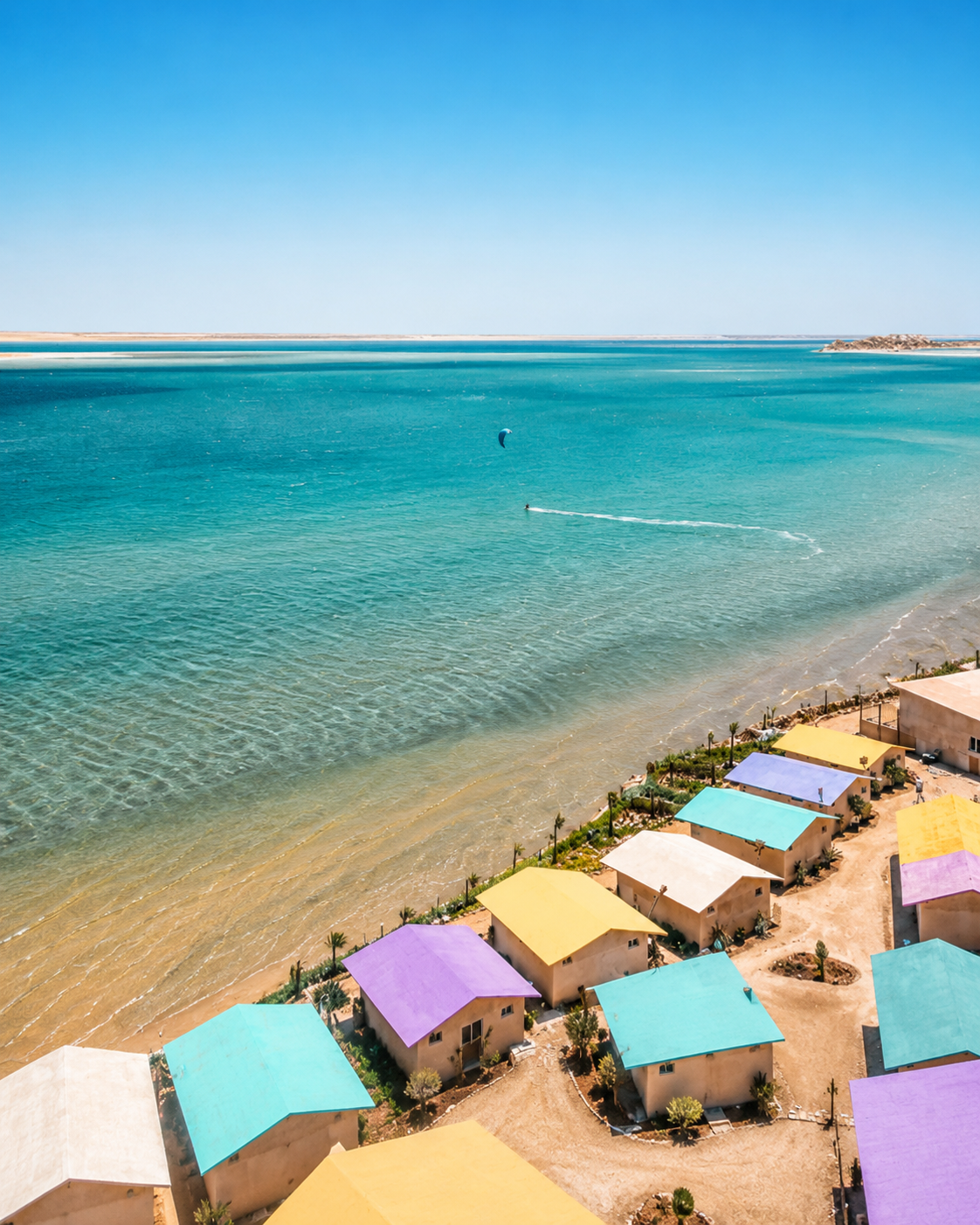
Dakhla lagoon view with turquoise water, shore buildings and open southern Moroccan sky

Go deeper through the nearest city context

Dakhla - the city gateway to the park and lagoon

Dakhla gives the park its practical and cultural base. From the city, visitors can understand lagoon orientation, wind conditions, Atlantic beaches, seafood culture, local operators and the southern routes that frame the far edge of Morocco.

Use Dakhla to widen the context after the park itself: lagoon life, water sports, coastal work, desert light and careful natural observation all become easier to read when the city and landscape are held together.

Lagoon and coastal orientationDakhla city context Wind and water-sport rhythmNature and wildlife sensitivity Practical travel structureSouthern Atlantic identity

Continue the journey

Continue from Dakhla National Park into Morocco's southern Atlantic.

Read the park slowly, then connect it to Dakhla, the lagoon, desert coast, wind-shaped light and the wider natural map of Morocco's far south.