
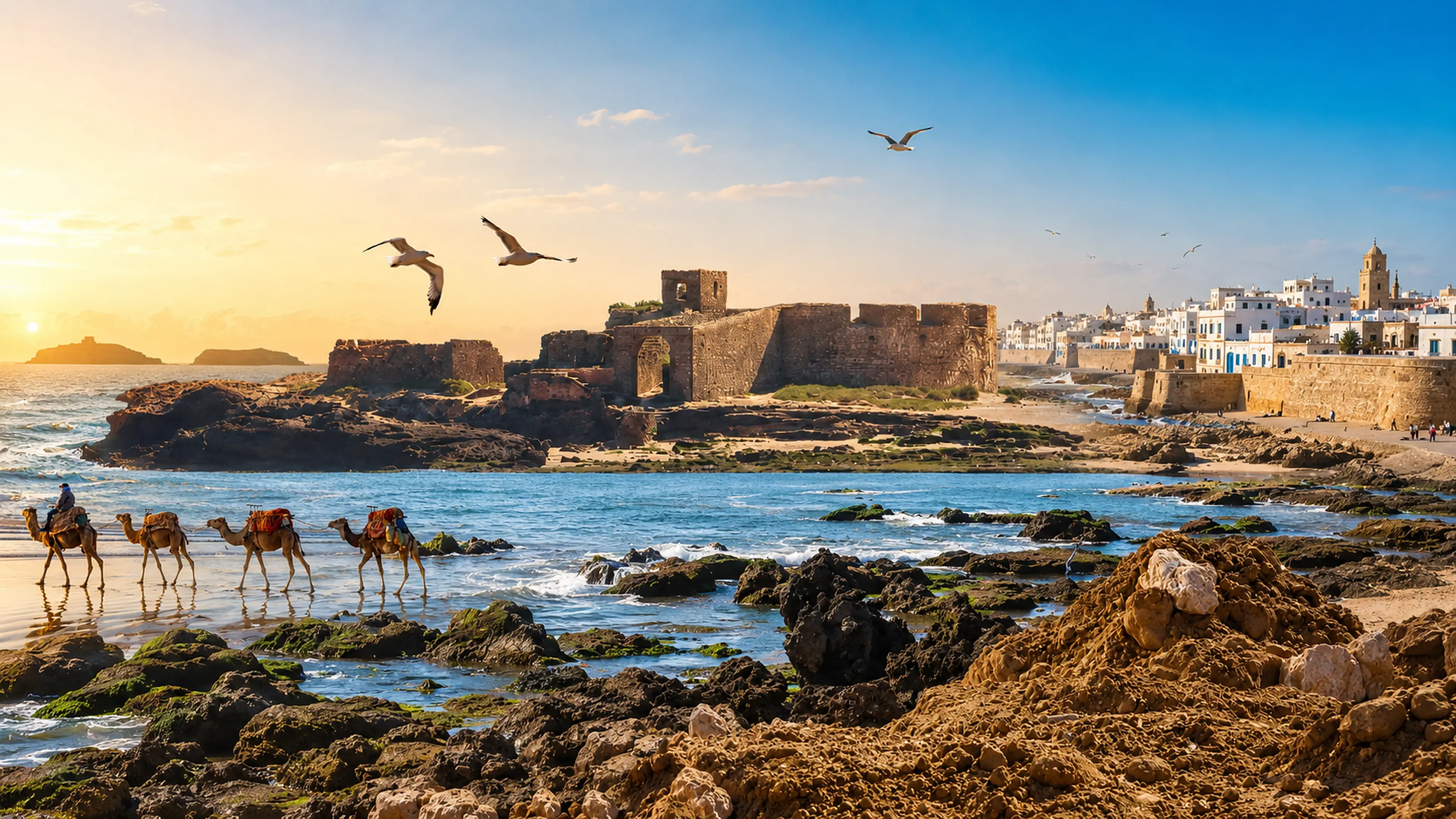
The Essaouira Islands and Mogador archipelago seen across Atlantic water from Essaouira, Morocco

Visit / Place · Mogador Archipelago · Essaouira

Essaouira Islands The Atlantic islands that give Mogador its horizon

Just offshore from Essaouira, the Mogador Archipelago gathers history, seabirds, ruins, wind and open Atlantic light into one of Morocco's most distinctive coastal views.

Read the islands from the city first: from the beach, the harbour walls and the Sqala, their low forms explain why Essaouira feels protected, ocean-facing and inseparable from the sea.

Why Essaouira Islands matter

A protected horizon, not a beach excursion.

The Essaouira Islands are better understood as a visible protected landscape than as somewhere to tick off by boat. The archipelago, also known as the Mogador Islands or Îles Purpuraires, sits just offshore from the Atlantic city and shapes the way Essaouira is seen from almost every wide coastal viewpoint.

The islands matter because they hold two stories at once. One is cultural: the name Îles Purpuraires recalls ancient purple-dye associations linked to murex shells and the wider Mogador trading horizon. The other is ecological: the archipelago is a protected bird area where disturbance is not a harmless detail.

UNESCO treats the Mogador Archipelago as part of the natural and cultural setting of the Medina of Essaouira. That connection is essential. Essaouira is not only a fortified city facing the ocean; it is a city whose harbour, ramparts, beach and horizon are visually completed by the island group outside the walls.

For visitors, the best experience is therefore one of careful observation. The islands are most meaningful from a distance: as a line in the water, a bird sanctuary, a historical echo of Mogador and a reminder that not every important place should be entered to be understood.

Look from the harbour, the beach or the Sqala with the wind in your face. The value of the scene is not just the view itself, but the relationship between sea, birds, fortifications, Atlantic trade memory and the protected space beyond the city.

Core facts are grounded in the UNESCO World Heritage Centre listing for the Medina of Essaouira and the Key Biodiversity Areas factsheet for Archipel d'Essaouira. Access rules, sea conditions and local guidance should be checked close to travel.
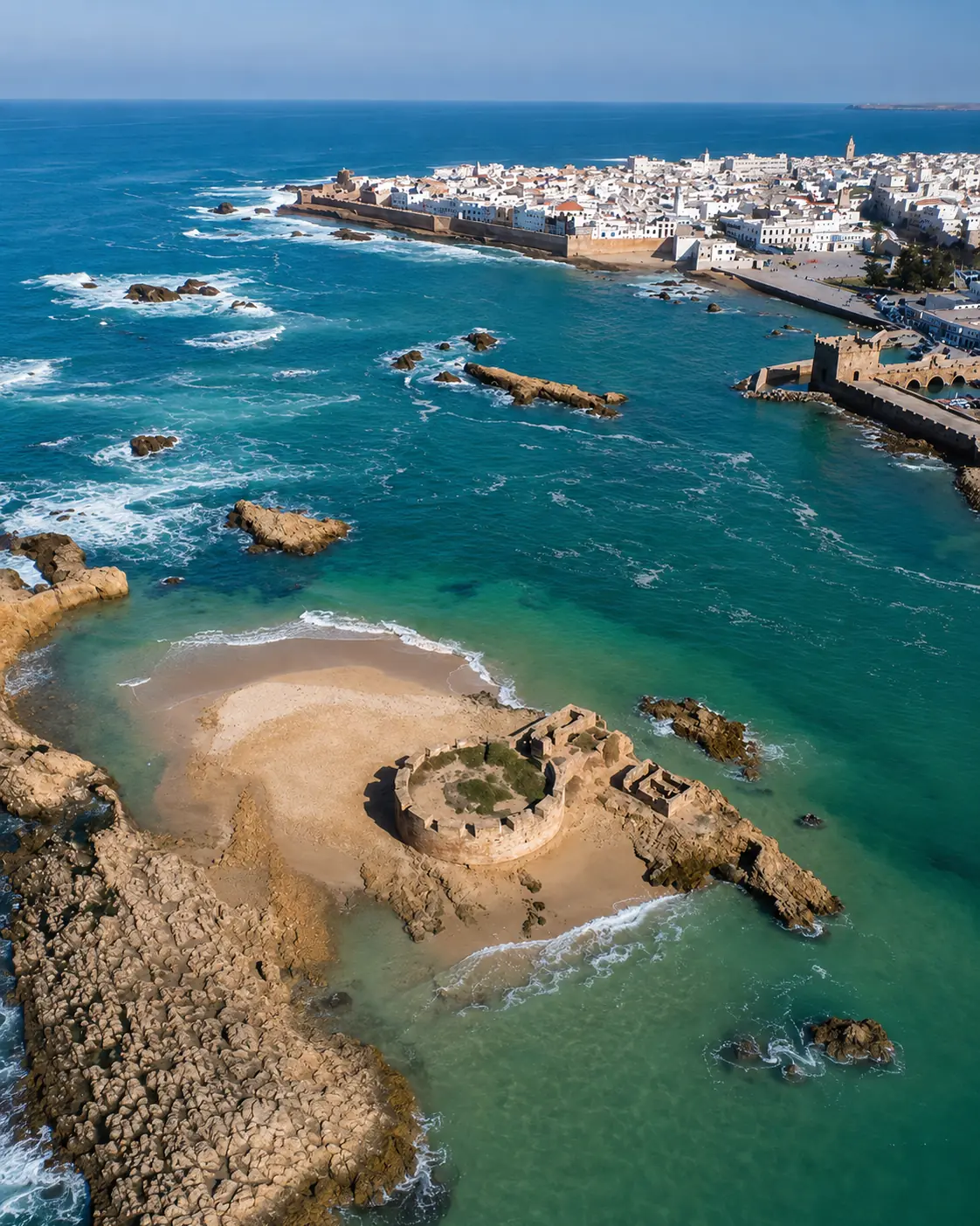
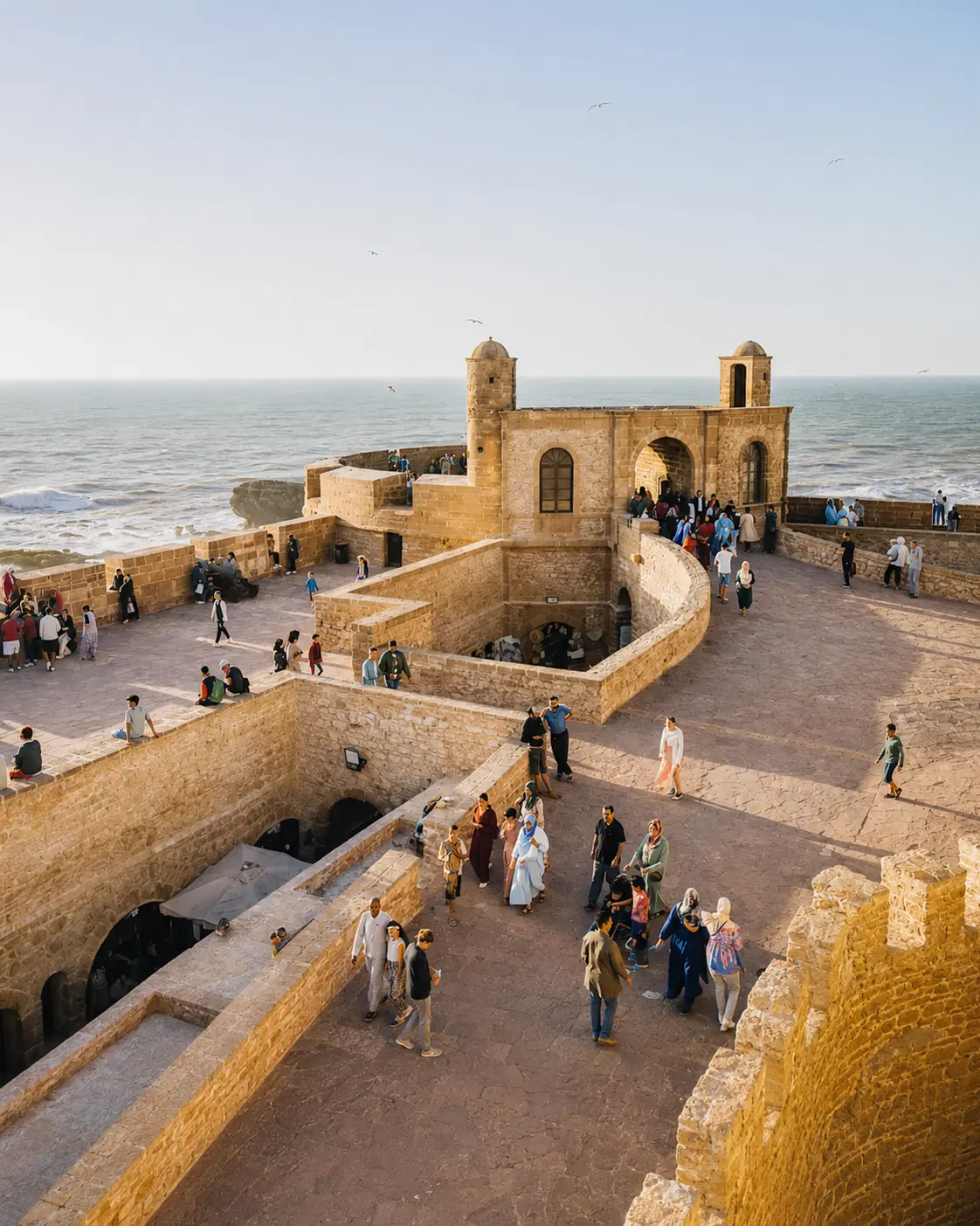
Essaouira coastal architecture and Atlantic city atmosphere near the Mogador Islands

Map orientation

Use the map to place the island group just offshore from Essaouira, then read the view from the harbour, beach and ramparts.

Editorial reading

The strongest visit happens from the shore.

The islands ask for a different kind of attention. They are close enough to define the city view, but protected enough to resist ordinary sightseeing habits. That tension is exactly what gives them their force.

From Essaouira's ramparts, the archipelago works like a second edge to the city. The harbour, gulls, Atlantic swell and fortified walls all point outward, but the islands hold the view in place. They make the ocean feel present without letting it become empty background.

The historical reading is subtle. Mogador was a port, a meeting point and a name carried through trade, defence and maritime memory. The islands belong to that story without needing to be over-described or turned into a theatrical ruin.

The ecological reading is more direct. Protected nesting areas are not decorative. If access is restricted, that restriction is part of the place's meaning. A respectful visitor does not treat distance as disappointment; distance is what allows the habitat to remain habitat.

Bring binoculars if birdlife matters to you, but do not reduce the islands to a checklist. The richer experience is the whole coastal composition: white city, blue water, wind, boats, seabirds, ramparts and the low island forms beyond.

At sunset, the scene becomes especially clear. The islands darken slightly against the Atlantic, the city catches warmer light, and the horizon shows why Essaouira's identity is both urban and maritime.

Historical and natural orientation

Read the archipelago through purple, Mogador and protection.

The Essaouira Islands carry a compact but layered history. Their older identity as Îles Purpuraires points toward ancient marine resources and purple-dye associations, while the name Mogador ties them to the port city that became modern Essaouira. Today their strongest public value is also ecological: the island group is protected because nesting birds need distance.

01Antiquity

Îles Purpuraires

The island name recalls the ancient purple-dye world connected to murex shells. It gives the horizon a deeper historical register than a simple offshore view.

02Mogador

Port memory

The islands belong to the visual setting of old Mogador, the Atlantic port city later known as Essaouira. Their presence helps explain the city's maritime character.

03UNESCO 2001

City and archipelago

UNESCO describes the Medina of Essaouira as a fortified Atlantic town and notes the Mogador Archipelago as part of its natural and cultural ensemble.

04Protection

Bird habitat first

The archipelago is recognised as a Key Biodiversity Area. Its value depends on limiting disturbance, especially around nesting birds.

A visual bridge

Three readings between city, sea and island

Before the islands become a photograph, they are a relationship: Essaouira looking outward, the Atlantic pushing inward, and a protected archipelago holding the horizon in place.

01

City

Essaouira faces the islands

The medina, harbour and ramparts all make more sense when the islands are kept in view. They complete the city's Atlantic silhouette.

  • Look from the Sqala and harbour edges.
  • Connect walls, boats and horizon in one view.
  • Read the islands as part of the city setting.
02

Sea

Wind gives the view movement

The Atlantic is never still here. Swell, gulls, fishing boats and shifting light make the islands feel alive even when viewed from a distance.

  • Watch how light changes the waterline.
  • Notice birds moving between sea and city.
  • Let weather remain part of the experience.
03

Protection

Distance is part of respect

The archipelago's ecological value depends on restraint. Seeing well does not always mean getting closer; here, careful viewing protects what makes the place matter.

  • Use binoculars instead of seeking landing.
  • Follow local access restrictions.
  • Keep nesting habitat undisturbed.

Quick orientation

Type of place

A small protected Atlantic archipelago off Essaouira, also known as the Mogador Islands, Îles Purpuraires or Archipel d'Essaouira.

Landscape context

Low island forms, Atlantic water, harbour views, city ramparts and coastal wind define the experience from Essaouira's shore.

Best for

Coastal views, birdwatching from a distance, heritage reading, photography, sunset light and understanding Essaouira's maritime identity.

Closest city context

Essaouira is the essential base. The islands are read most clearly from the beach, harbour, Sqala and medina edges.

What visitors experience here

A horizon that changes with wind and light.

The Essaouira Islands do not behave like a monument with a single front door. Their experience is visual and atmospheric: sometimes sharp in clear Atlantic light, sometimes softened by haze, sometimes animated by birds and boats, always connected to the city watching from shore.

Arrival

The first offshore line

The islands appear as a low broken line beyond the city and beach. That first outline helps visitors understand why Essaouira feels open to the Atlantic but visually anchored.

Light

Water around the forms

The sea gives the islands their changing edge. Blue, silver, grey and late orange light can all shift the mood without changing the geography.

Birdlife

Movement above the rocks

Seabirds and protected nesting species make the archipelago more than scenery. Watch from shore and let the habitat remain undisturbed.

Heritage

The Mogador name

The islands carry the older Mogador horizon: port memory, maritime routes and the Îles Purpuraires association with ancient dye history.

Viewpoints

Ramparts and beach

The strongest public views come from the city edge: harbour walls, the Sqala, the beach and open coastal viewpoints where the islands sit beyond the medina.

Pace

A slower coastal reading

The islands reward patience. Stay long enough for the wind, light and bird movement to change the scene before deciding you have seen it.

Place details and orientation

Read Essaouira Islands through six defining elements

The archipelago is small, but its meaning is broad: island geology, purple-dye memory, Mogador heritage, bird habitat, Atlantic exposure and protected access all belong to the same reading.

1
Mogador Island

The main island gives the archipelago its strongest identity and is the name most visitors notice on maps.

2
Îles Purpuraires

The purple-islands name points toward ancient marine resources and dye associations, adding historical depth to the view.

3
Bird sanctuary

The islands are recognised for important bird habitat, including Eleonora's falcon and other nesting species.

4
Atlantic setting

Wind, swell and salt air are not background effects. They are central to how the islands are seen and understood.

5
City viewpoint

Essaouira's harbour, beach and ramparts provide the public reading points that keep the islands connected to the medina.

6
Restricted access

Landing is not the normal visitor experience. The responsible visit respects protection rules and observes from shore.

Protected, not remote

The place asks for a careful eye.

Stand where the city opens to the water. The islands are near enough to feel present and far enough to remain separate. That distance is not a flaw in the visit; it is the condition that keeps the archipelago readable as habitat.

Look for layers rather than access. The harbour places work and movement in the foreground, the ramparts give the city its line, the water carries light, and the islands hold the final edge of the view.

When birds cross the scene, the islands stop being a static backdrop. They become a living place with rules, seasons and vulnerability. That is the moment the visit becomes more than a photograph.

Nature and maritime intelligence

The islands protect more than a view.

The archipelago's importance comes from its ecological role as much as its beauty. Low offshore islands may seem visually simple, but for nesting birds they create a rare protected space close to a busy historic city.

The KBA factsheet identifies Archipel d'Essaouira as a confirmed Key Biodiversity Area with full protected-area coverage. That is why the visitor language around the islands should stay precise: look, observe, photograph from shore, but do not frame restricted access as a missed attraction.

What to notice slowly

  • Begin from the ramparts or harbour so the city remains part of the island view.
  • Watch the waterline; light and swell change the islands' outline throughout the day.
  • Use binoculars for birds instead of trying to get closer to nesting areas.
  • Read the name Îles Purpuraires as a historical clue, not just a poetic label.
  • Keep the Atlantic weather in the experience; wind is part of Essaouira's character.
  • Respect restricted access and avoid encouraging unauthorized landings.

Coastal reading

Three languages to notice from shore

Fortified city

Essaouira's walls and harbour give the islands their human foreground. Without the city edge, the archipelago loses part of its meaning.

Open Atlantic

The sea creates scale. Boats, swell, wind and light make the island group feel close, distant and changing within the same hour.

Living habitat

Protected birdlife turns the view into a responsibility. The most respectful visitor accepts distance as part of conservation.

Visual atmosphere

Sea colour, island edges and Essaouira light

From city to water

Start with Essaouira's built edge: walls, harbour forms, boats and pale facades. Then let the eye cross the water toward the islands. The passage from architecture to horizon is the point.

From blue to silver

The Atlantic surface rarely gives one colour. Morning clarity, midday glare, sea haze and sunset warmth all change the way the low islands sit against the water.

From view to memory

The lasting image is usually simple: wind, birds, ramparts, water and the island line. Its strength comes from restraint, not from adding drama the place does not need.

Nearby places and onward links

Connect the islands to Essaouira's Atlantic map

The islands are best paired with Essaouira itself: harbour, medina, ramparts, beach and the wider Atlantic Coast & Historic Port Cities region.

Essaouira

The essential city context for the islands. Use it to frame the medina, harbour, ramparts, wind and Atlantic-facing identity.

Open Essaouira city guide

Atlantic Coast & Historic Port Cities

The regional home for Morocco's ocean-facing medinas, harbours, fishing culture, ramparts and coastal heritage.

Explore the region

Architecture & Heritage

Essaouira's fortified urban fabric and Mogador memory connect the island view to a wider heritage reading.

Read the theme

Visit Morocco places

Continue through islands, beaches, lagoons, caves, valleys, monuments and natural heritage places beyond the city guides.

Browse Visit places

Plan your journey

Treat the islands as part of an Essaouira day: medina, harbour, shore viewpoints, sunset light and responsible coastal observation.

Plan your journey

Stories from Morocco

Use the Stories section for deeper cultural reading around ports, memory, conservation, coastal life and visual heritage.

Read stories

How to visit respectfully

Good observation protects the place.

The normal visitor experience is from Essaouira's shore, not from unauthorized landing. That matters because the islands are protected habitat, and disturbance around nesting birds can damage exactly what makes the archipelago important.

Respect here means patience, distance and accurate expectations. Enjoy the view from the beach, harbour, Sqala and ramparts; use binoculars if you want detail; ask locally about any permitted boat activity; and avoid advice that treats access restrictions as an obstacle to beat.

  • Do not attempt to land on the islands unless a current official arrangement allows it.
  • Use shore viewpoints for photography and birdwatching.
  • Keep drones away unless you have clear legal permission and no wildlife risk.
  • Check wind, visibility and sea conditions before planning coastal photography.
  • Give the place time; the best view often comes when light and bird movement shift.

A strong first visit

Begin at the harbour or the Sqala so the city and islands appear together. That first frame explains the relationship: fortified port in the foreground, Atlantic water in the middle, protected island forms beyond.

Then walk toward the beach for a wider angle. The islands may feel smaller from the sand, but the view becomes more open and the horizon easier to read. Late afternoon can be especially strong when the city warms and the island line turns more graphic.

If birdlife is your focus, bring binoculars and keep the expectation quiet. The point is not to chase the birds, but to understand why protected distance matters for a nesting site close to a popular destination.

Afterward, return through the medina or harbour. The islands will make the city feel different: less like an isolated historic centre, more like a fortified Atlantic place shaped by wind, trade, birds and water.

  • Start from the harbour or Sqala for the strongest city-island relationship.
  • Continue to the beach for a wider Atlantic view.
  • Use binoculars for birds and distant ruins rather than seeking closer access.
  • Stay flexible; haze, wind and visibility can change quickly.
  • End by linking the islands back to Essaouira's medina and port history.

Careful planning note: access rules, sea conditions, visibility and any guided arrangements can change. Verify locally before travelling.

Essaouira city and Atlantic coastal atmosphere, the guide context for the Mogador Islands

Go deeper through the nearest city context

Essaouira — the city gateway to the islands

The Essaouira Islands belong naturally inside an Essaouira journey. The city gives visitors the right frame: fortified medina, working harbour, Atlantic beach, trade memory, wind, music, craft and the ocean horizon that keeps Mogador visible.

Use Essaouira to widen the context after seeing the islands. The medina explains the port city; the harbour explains the working coastline; the ramparts explain the view; and the islands explain why the city never feels separated from the Atlantic.

Medina and rampartsEssaouira city orientation Harbour and Atlantic viewsMogador heritage reading Responsible coastal watchingNearby shore viewpoints

Continue the journey

Continue from the Essaouira Islands into Morocco's Atlantic coast.

Read the islands from shore, then connect them to Essaouira's medina, harbour, ramparts, birdlife, trade memory and wider coastal heritage.