
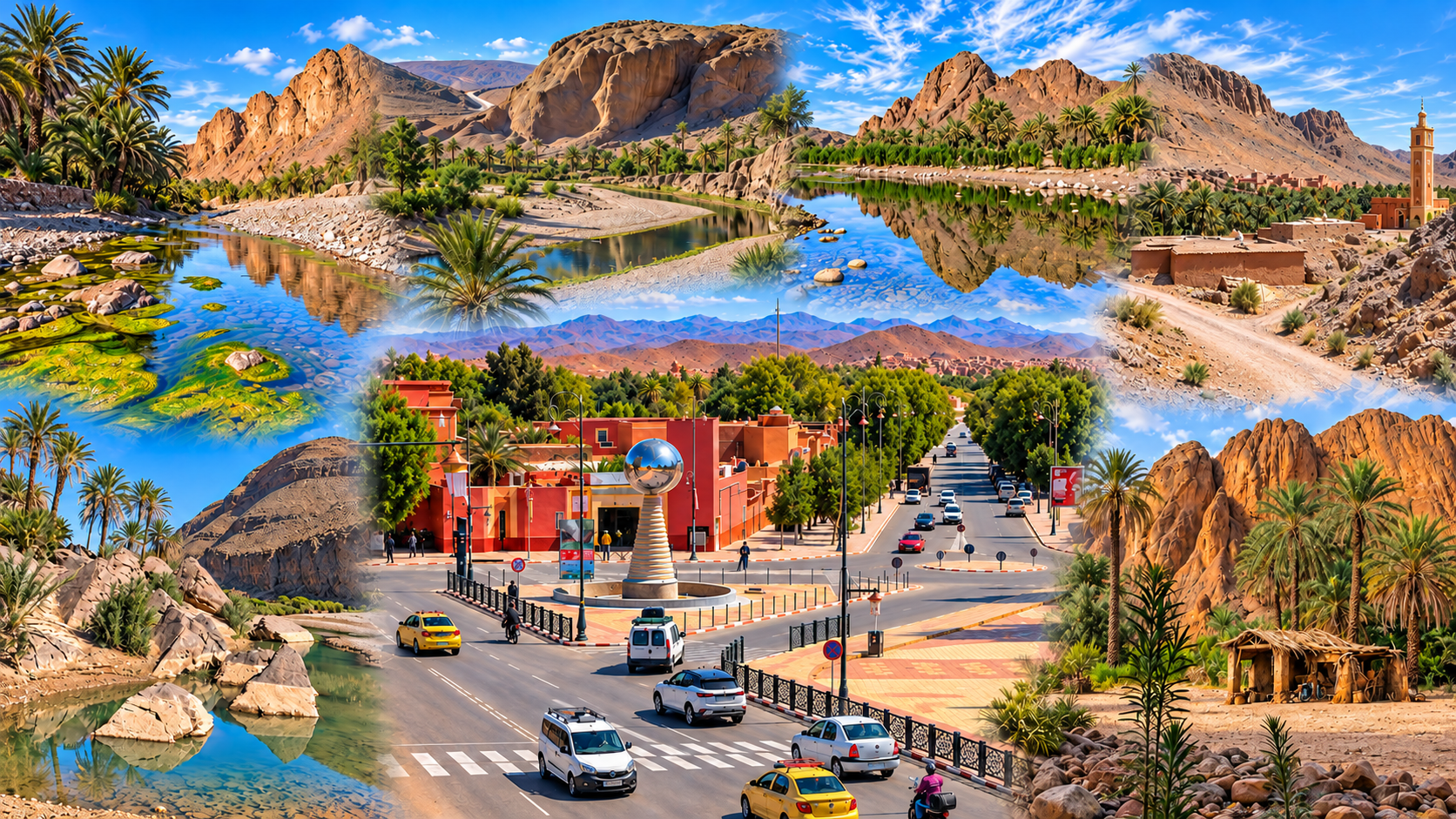
Panoramic composition of Fint Oasis palms, rocky valley and water, with Ouarzazate at the centre

Visit / Place · Fint Oasis · Ouarzazate province

Fint Oasis A green valley held between bare southern hills

South of Ouarzazate, Fint brings palms, cultivated ground and village life into a narrow valley of rock and changing water.

Follow the valley from its open outlooks to the paths beside the gardens. The most revealing details are often close to the ground.

Why Fint Oasis matters

A landscape sustained by daily work.

Fint is an inhabited oasis valley south of Ouarzazate, in the Drâa-Tafilalet region. Its palm groves and cultivated plots occupy a setting enclosed by largely bare hills. The abrupt meeting of green ground and rock is striking, but the gardens are also productive spaces beside people’s homes.

The word oasis can suggest a self-contained pool surrounded by palms. Here, a more useful starting point is the valley itself: a watercourse, worked land and settlements connected along its course. Follow those relationships and Fint becomes easier to understand than it would through a single panoramic photograph.

Water deserves careful attention. What a visitor sees on the surface is only one part of an agricultural landscape; a reflective stretch of channel cannot, by itself, explain how a particular garden receives water. Irrigation arrangements and planting are better discussed with someone who works or lives here than guessed from a viewpoint.

Fint also gives a rural counterpoint to Ouarzazate. Its relevance is in the change of scale: the city’s streets and regional connections give way to a valley where a footpath, a field edge or an entrance can determine the course of a walk. This makes the oasis a useful place to consider how travel passes through everyday life.

Look beyond the idea of an untouched retreat. A cultivated landscape includes decisions, upkeep and changing needs. Houses, working routes and visitor services belong to the present. Appreciating that present makes room for a more attentive encounter with the people whose home this is.

For regional context, see the Moroccan National Tourist Office. Sudestmaroc’s Fint overview discusses the valley and local visiting arrangements.
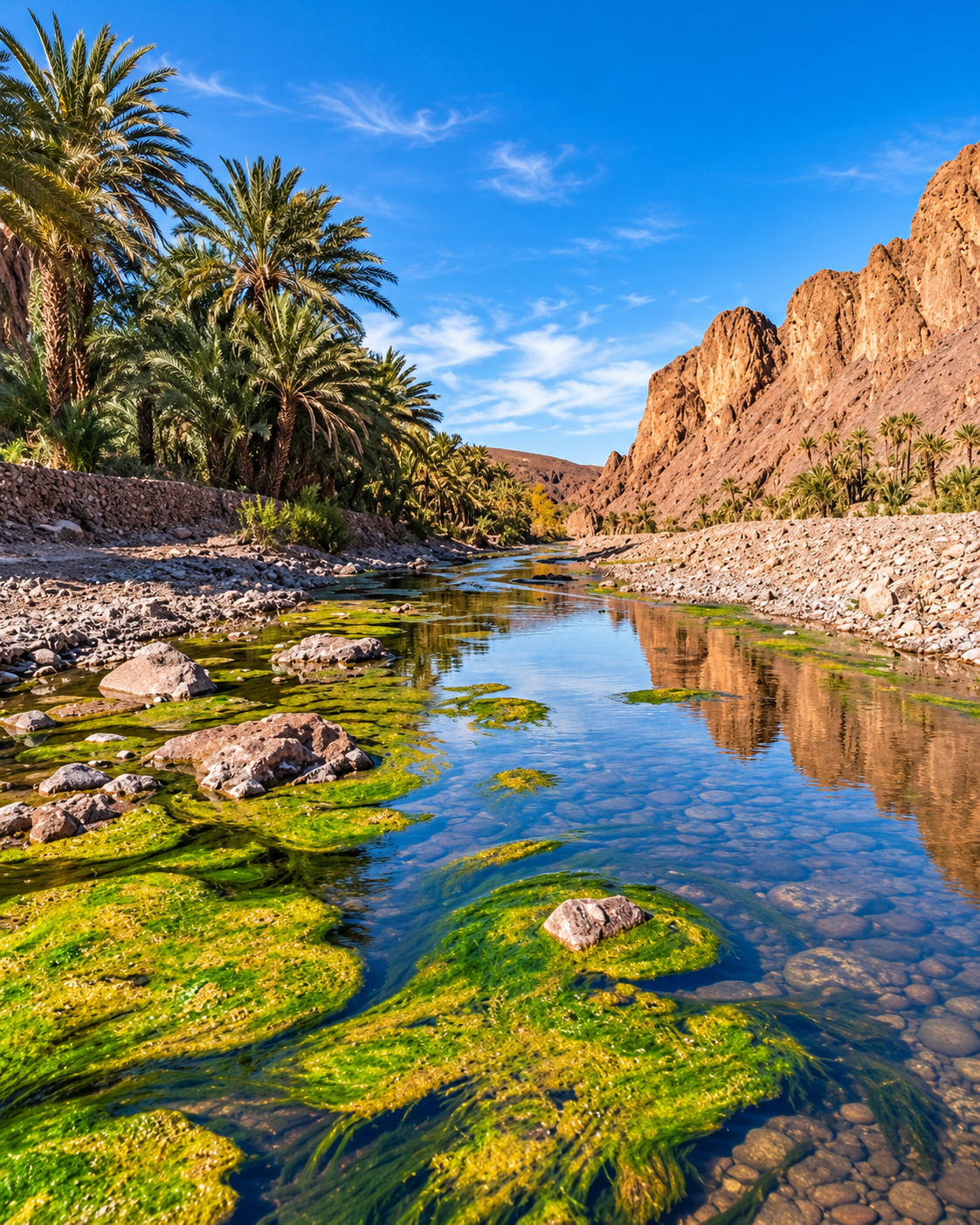
Palms beside a rocky watercourse in Fint Oasis, with bare hills beyond
Fint OasisOuarzazate

Map orientation

The map centres on the oasis valley. Confirm your arrival point locally. Open Google Maps.

Editorial reading

The edge gives the valley its form.

Look at the point where the palm canopy ends and exposed hillside begins. That boundary gives the view its tension: a dense, irregular band of leaves lies below broad slopes with very little visual cover.

Rock and vegetation do different work in the composition. The hills establish weight and enclosure; palm trunks interrupt them with slender vertical lines. Between the two, open ground allows the eye to follow the bend of the valley.

Buildings bring a third scale. Rooflines and openings introduce dimensions that the eye can relate to a person. A distant wall may share the colours of its setting while its straight edge makes it legible as something built.

These are visual clues, rather than proof of a particular geological age, building date or construction method. Notice what is actually visible, then let local explanation add the knowledge that a photograph cannot supply.

Try looking away from the brightest patch of green. A gap between palms or a quiet stretch of ground can reveal the valley’s shape more clearly than its most dramatic view.

Landscape and heritage orientation

Understand a lived valley through its different layers.

Fint’s rural heritage is read through cultivated ground, settlement and local knowledge. A responsible introduction keeps those subjects distinct, without assigning an unsupported founding date or treating the whole valley as one historic monument.

01Setting

An oasis valley

Fint belongs to the landscapes around Ouarzazate. It offers a close view of the relationship between a green valley floor and the rocky terrain around it, on a much smaller scale than the wider southern journey.

02Agriculture

Cultivated ground

Palm groves and small plots give the valley much of its character. Their value extends beyond the view: the layout records how land is worked. Ask about the current planting instead of assuming that every green patch holds the same crop.

03Settlement

Several village spaces

Think of Fint as a valley with settlements, rather than a single building to enter. A walk can bring you beside houses and everyday routes. An open door or an attractive lane does not automatically indicate a public visitor space.

04Local knowledge

History in conversation

Names, family memories and explanations of work can give a visit depth. When a resident shares a story, retain that personal context. A local account is valuable without needing to become a claim about the entire oasis.

A visual bridge

Three ways to follow the valley with your eye

Use a wide view to orient yourself, then choose one relationship at a time. These observations need no special equipment and work without stepping into a garden or seeking a higher, unmarked path.

01

Contour

Follow the valley’s bends

Trace the route of the lower ground through the enclosing hills. Notice where a bend hides the next stretch, and where a wider opening allows several layers of landscape to appear at once.

  • Find the lowest visible line through the scene.
  • Watch where the hills overlap.
  • Keep some open ground in the frame.
02

Canopy

Read the palms as a group

Individual trunks are only part of the view. The canopy creates an uneven upper edge, with gaps that reveal rock, roofs or sky. Those interruptions make the grove easier to read than a solid mass of green.

  • Compare the heights of neighbouring palms.
  • Notice the spaces between the fronds.
  • Look for the background through the canopy.
03

Scale

Let a small detail measure the view

A doorway, a wall or a path can make the surrounding slopes feel much larger. Use one modest foreground element to understand distance, without asking residents to become subjects in a landscape photograph.

  • Choose a visible path or building edge.
  • Compare it with the hillside behind.
  • Change your angle from the public route.

Quick orientation

Type of place

An inhabited oasis valley with palm groves, cultivated plots and a rocky watercourse. Best approached as a rural landscape for attentive walking.

Best for

Landscape photography, an introduction to oasis agriculture and a locally informed walk. The travel mood is unhurried, with time to stop and look.

City gateway

Ouarzazate is the relevant city base north of Fint. Arrange your outward and return transport together and confirm the current approach before leaving.

What visitors experience here

From an open outlook to the ground underfoot.

A walk through Fint offers changes in enclosure, surface and light. Let conditions on the day set the pace: the view from an exposed approach and the experience beside the palms are different parts of the same visit.

Arrival

The valley comes into view

Pause where stopping is safe and the lower ground first becomes legible. The reveal is especially clear when a foreground slope partly screens the vegetation. Avoid stopping a vehicle where it blocks the approach.

Light

Moving patches of shade

Fronds break sunlight into narrow, irregular shapes. On a breezy day, those shapes move across the path while the hillside beyond can appear almost still. Look at the ground as well as the canopy.

Footing

Stones change the pace

Loose stones, uneven surfaces and changes of level reward deliberate steps. A short distance can require more attention than its appearance on a map suggests. Wear shoes that let you watch the landscape without worrying about every foothold.

Water

Reflections when conditions allow

Where water is present, a shallow angle can turn a small surface into a reflection of palms or sky. That effect is fleeting. Neither photographs nor a place name guarantee the same water level when you arrive.

Sound

Listen without expectations

Pause with your phone put away. You may notice leaves, conversation or work nearby; there is no need to expect absolute silence. The sounds of residents using the valley belong to the place as much as its views.

Encounter

Conversation at a comfortable pace

If you take a guided walk or stop for refreshments, allow time for the exchange itself. Ask a clear question, listen to the answer and agree on services beforehand. Hospitality is an interaction between people, not an attraction to collect.

Place details and orientation

Six details that make a closer look worthwhile

Once the broad valley is familiar, use these smaller observations to give the walk variety. Some are visible from a path; others are useful questions for a local guide.

1
The channel margin

Notice the transition between stones, bare ground and vegetation beside the watercourse. The boundary is often more revealing than the water surface alone.

2
Palm trunks

Look for differences in height, spacing and trunk texture. A cluster can contain distinct shapes even when its canopy appears continuous from a distance.

3
Plot boundaries

Edges divide working ground into readable units. Observe them from the established path; crossing a low boundary can still mean entering someone’s cultivated land.

4
Water distribution

Where a channel is visible, ask how it is used today. Its appearance alone cannot tell you who manages it or how access to water is organised.

5
Built thresholds

A doorway, step or change in wall alignment signals a shift between spaces. Give entrances room and avoid lingering where someone needs to pass.

6
Loose rock and hillside

Compare fragments underfoot with the larger forms above. Observe colour and texture without assigning a rock type or geological story that has not been verified.

A careful eye

Let observation lead to a better question.

Choose something small that you do not immediately understand: a branch beside a plot, a channel edge or a change in a wall’s surface. Start by describing it accurately to yourself. That simple act helps separate what you can see from what you are assuming.

If someone is available and willing to explain, ask about its use. A practical answer can be more interesting than a sweeping account of the valley. It may also reveal why a place that looks empty to a visitor needs to remain clear.

Leave room for uncertainty. Not every detail requires a historical label, and a brief walk cannot explain every relationship in a working landscape. Curiosity and restraint make a good pair here.

Water and landscape intelligence

A surface view cannot tell the whole water story.

A watercourse, a cultivated plot and a palm grove describe related parts of an oasis, but they should not be treated as interchangeable evidence. Green leaves do not establish the depth of groundwater; a dry stretch of bed does not explain the condition of every garden. Look carefully before drawing conclusions.

The same restraint improves practical planning. Do not use yesterday’s photograph to choose a crossing or decide that a channel is safe. Ask about the present route and weather, and follow an established way through the valley. Local conditions matter more than a familiar image.

What to notice slowly

  • Distinguish a view of water from an explanation of its supply.
  • Ask which plants are currently being cultivated.
  • Notice where a path serves access to a plot.
  • Observe water channels without touching or obstructing them.
  • Avoid judging water quality by colour or apparent clarity.
  • Treat a suggested crossing as a question to confirm locally.

Landscape reading

Three relationships beyond the first impression

Enclosure and opening

The valley alternates between framed views and wider outlooks. Compare how much sky is visible from each public stopping point. A slight change in position can make the same slope feel protective, steep or distant.

Straight edges and irregular forms

A field boundary or wall introduces a deliberate line among leaves and rock. Look at where the two meet: the distinction helps separate cultivated or built space from the larger terrain without forcing them into opposing categories.

Visible form and hidden purpose

You can recognise a path without knowing whom it serves. A visual reading becomes richer when it acknowledges those limits. Ask about use before deciding that an appealing route is intended for a visitor’s walk.

Visual atmosphere

Colour, depth and a view worth remembering

A restrained palette

Let the scene keep its real differences: shaded leaves can be much darker than sunlit fronds, and rock can shift from brown to grey within one view. Preserving those distinctions gives a photograph more depth than pushing every colour to the same intensity.

Foreground and distance

A nearby stone or an unobtrusive edge of path can anchor a wide composition. Keep it subordinate to the valley and remain on firm, appropriate ground. The photograph should come from the available viewpoint, without rearranging the place to fit it.

Remember one particular moment

After putting the camera away, choose one detail you could describe later without a picture. It might be the pattern of a shadow or a question answered during the walk. A specific memory gives the visit more character than a collection of interchangeable panoramas.

Nearby places and onward links

Connect Fint to the wider southern Morocco journey

Use Ouarzazate for city orientation, then choose the next layer of your journey: regional landscapes, built heritage or practical planning. These links give each subject its own space.

Ouarzazate

Return to the city guide for Ouarzazate’s urban character and surrounding travel context. It is the natural reference point for organising a visit to Fint.

Open Ouarzazate city guide

Southern Morocco, Oases & Sahara

Place the oasis within a broader regional journey through Morocco’s south. Use the region overview to compare landscapes before adding another destination.

Explore the region

Architecture & Heritage

Continue the questions raised by village walls and thresholds through a wider introduction to Moroccan buildings, materials and heritage.

Read the theme

Visit Morocco places

Browse the dedicated place guides to choose a subsequent landscape or heritage visit. Keep each stop distinct instead of treating every oasis or valley as the same experience.

Browse Visit places

Plan your journey

Build an itinerary with time for the return journey, a meal and a flexible walking pace. Confirm transport arrangements before committing to several stops in one day.

Plan your journey

Stories from Morocco

Continue with editorial reading about Morocco’s places and people when you want a longer narrative after the practical details of a visit.

Read stories

How to visit respectfully

A good visit leaves everyday routes usable.

Walk as a guest in an inhabited place. Keep entrances and working paths clear, ask before photographing people, and accept a refusal without negotiation. Request permission before entering a house, garden or cultivated plot, even when there is no gate.

Care for the ground and watercourse as you would a productive garden. Leave plants and fruit alone, keep rubbish with you, and avoid washing or discarding anything into water channels. Choose a pause spot that does not obstruct someone else’s work.

  • Agree on the route, duration and total price before accepting a guided visit.
  • Ask before taking close photographs of residents or private interiors.
  • Keep children close beside uneven ground, channels and steep edges.
  • Carry drinking water and sun protection; plan breaks in suitable shade.
  • After rain or a weather warning, confirm access and avoid uncertain crossings.

A strong first visit

Before leaving Ouarzazate, arrange a clear arrival point and a return plan. Ask your driver or host about the current road and the kind of walk that suits your group. Do not rely on an old description of the approach or a fixed journey time.

On arrival, choose an established route and begin with a short outlook over the valley. If you want local explanation, settle the details of a guided walk before setting off. Say whether your priority is photography, agriculture or a gentle introduction to the village setting.

Leave room to shorten the walk for heat, footing or the needs of your companions. Pause before everyone becomes tired and keep enough drinking water for the return. A comfortable visit does not need to cover every part of the oasis.

Finish at the agreed meeting point with time to spare. If you stop for refreshments or a meal, confirm availability and price first, and tell your driver about any change of plan. A little coordination makes an unhurried visit easier for everyone involved.

  • Confirm the meeting point and return arrangements.
  • Choose a walk suited to the day’s conditions.
  • State your interests when arranging a guide.
  • Leave time for a break without rushing the return.
  • Recheck the plan whenever weather or access changes.

Planning note: confirm current access, transport and any service charges locally. Water levels and the usable walking route can change.

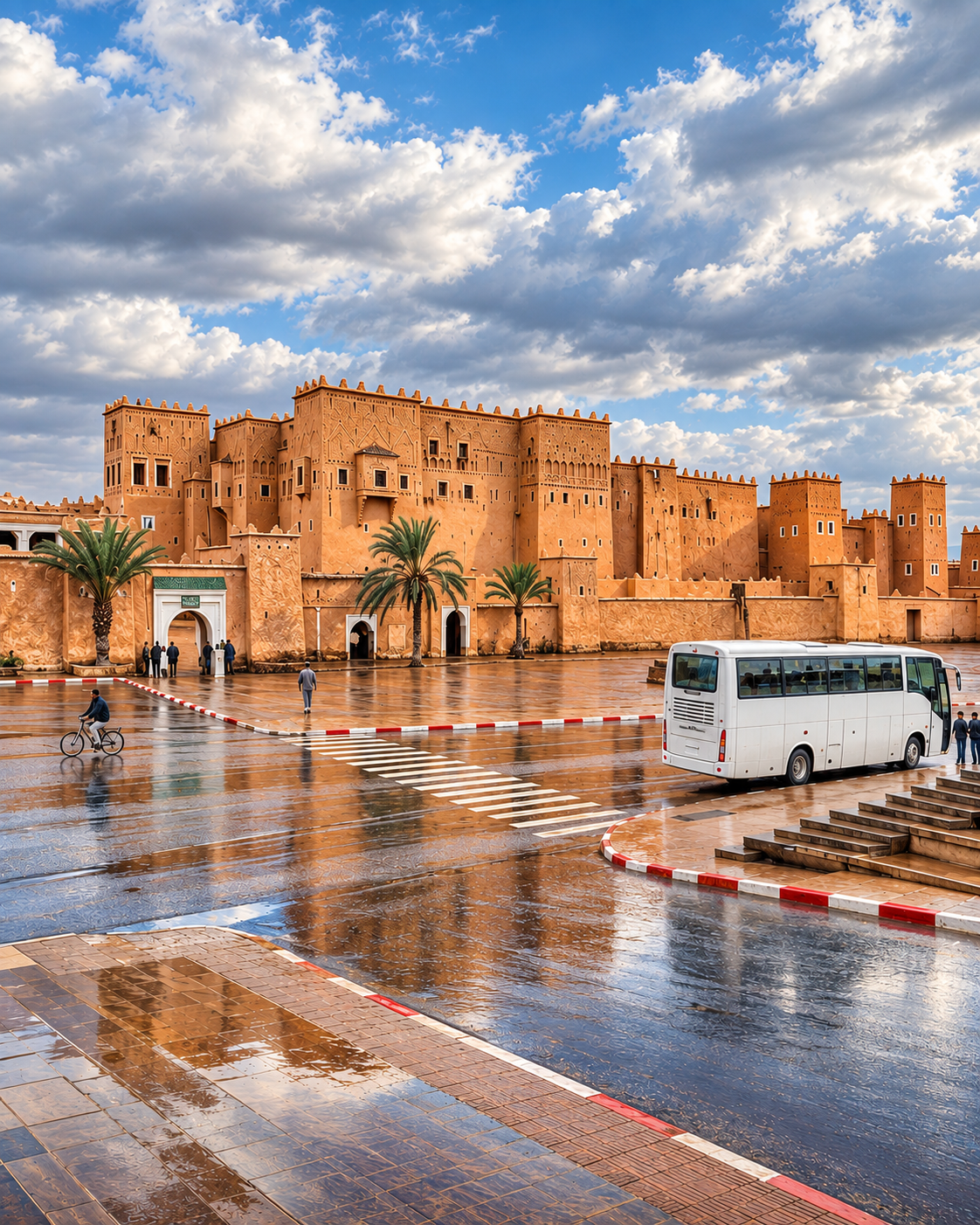
Earthen kasbah architecture and a street scene in Ouarzazate, the city gateway to Fint Oasis

Go deeper through the nearest city context

Ouarzazate — the city gateway to Fint Oasis

Use the Ouarzazate guide to give the oasis visit a clear city base. It brings the urban setting and wider southern route into focus, helping you decide what belongs before or after your time in Fint.

Allow the two experiences their own pace. A walk beside gardens and village paths asks for different attention from a city visit. Plan enough room for both, with transport and practical arrangements settled before you leave.

Ouarzazate city orientationA base for the oasis visit Kasbah and urban contextWider southern routes Practical journey planningMore dedicated place guides

Continue the journey

From Fint Oasis, continue through Ouarzazate.

Carry the valley’s smaller details into a wider journey through southern Morocco’s cities, landscapes and places.