Why Khenifiss matters
A lagoon before it is a viewpoint.
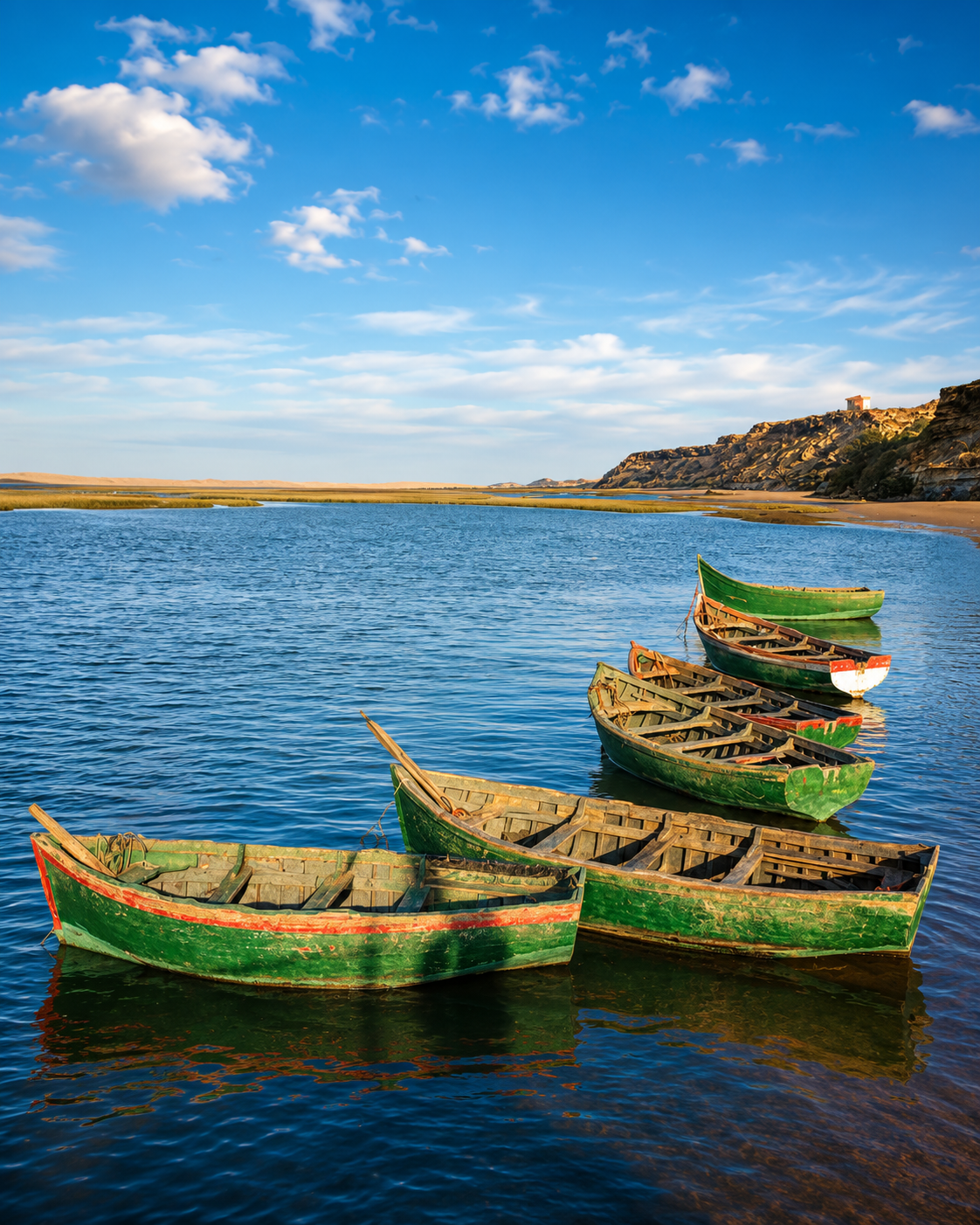
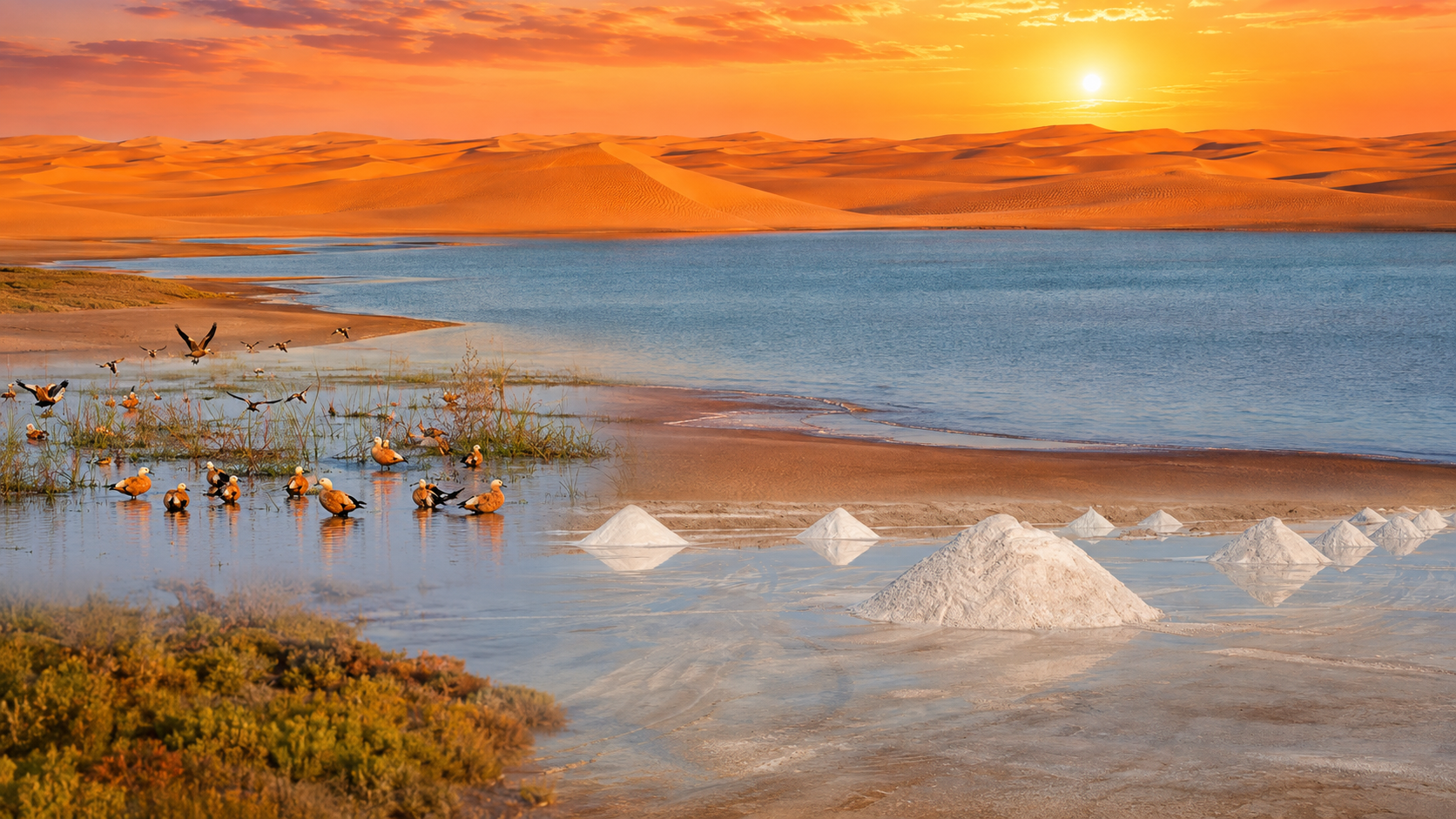
Khenifiss matters because it is not a simple beach stop or a decorative desert scene. Official Moroccan biodiversity information describes the protected area as a marine and terrestrial landscape: the Khenifiss lagoon on one side, with sebkhas and high plateaus carrying Saharan vegetation on the other.
The site sits on Morocco's southwest Atlantic coast between Tan-Tan and Tarfaya. That position gives it a rare character. Ocean water, tidal flats, desert wind and long southern light meet in one open system, making the park feel both coastal and Saharan at the same time.
The lagoon has international wetland importance and has been listed under the Ramsar Convention since 1980. It is also described by Morocco's biodiversity clearing-house as North Africa's only Saharan lagoon and the largest lagoon along Morocco's Atlantic coast.
For visitors, the importance of Khenifiss is visual and ecological at once. The place teaches scale: wide water, exposed salt flats, low vegetation, dunes, cliffs and birds that make the silence feel alive without needing spectacle.
It should be approached carefully. Birdlife, tidal edges, dunes and sebkha surfaces can be disturbed by noise, litter, careless driving or intrusive photography. The strongest visit is quiet, observant and guided by respect for a fragile wetland landscape.
Core facts are grounded in Morocco's national biodiversity clearing-house entry for Parc National Khenifiss and the UNESCO Tentative List entry for Lagune de Khnifiss. Check practical access locally before travelling.