Why White Dune matters
A dune before it is a viewpoint.
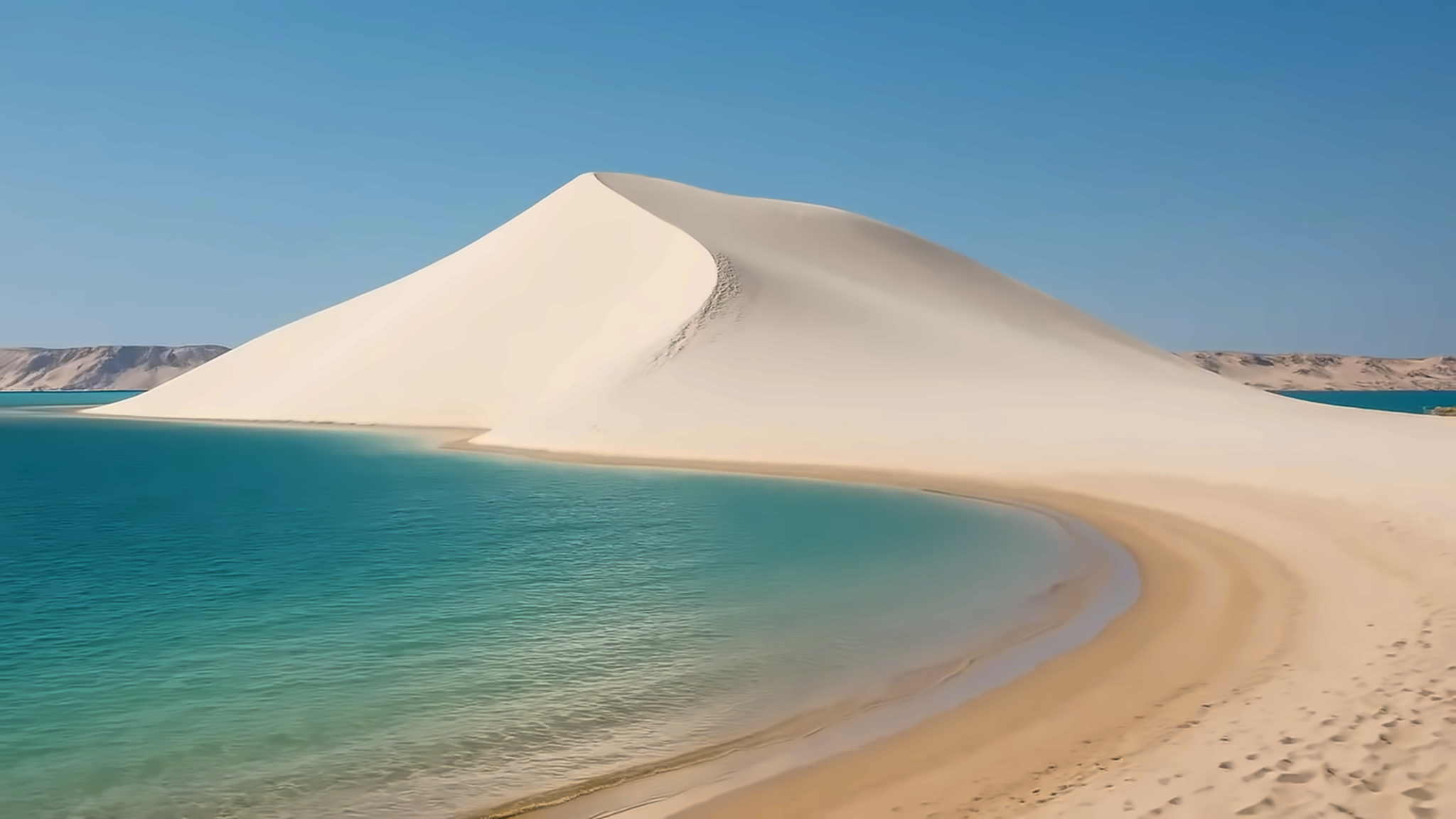
White Dune matters because it makes Dakhla's geography visible in one clear form. Pale sand rises beside lagoon water, with desert light on one side and Atlantic influence on the other. Few places explain the region so quickly.
The site is not a city beach or a decorative stop. Its identity depends on tide, wind and distance. At different water levels, the dune can feel attached to exposed flats or framed by shallow lagoon water, changing the way visitors read its shape.
White Dune also matters because it slows the Dakhla journey down. The famous lagoon is often described through sport, wind and open water; here, the eye can pause on a single sand form and understand how stillness and motion belong together.
The place should be approached with local guidance and current conditions in mind. Tracks, tide windows, soft sand and lagoon edges are practical realities, not minor details. A strong visit respects them from the start.
For visitors, the value is not only the photograph from the crest. It is the full reading: the curve of the dune, the colour of the shallows, the wind marks in the sand and the feeling of Dakhla's desert edge meeting water.
Core orientation is grounded in the Moroccan National Tourism Office Dakhla page and open map data for La dune blanche. Exact access, tide and route conditions should be checked close to travel.