Why Zagora Palm Grove matters
The cultivated heart of an oasis town.
Zagora Palm Grove belongs to the chain of cultivated oases along the Draa Valley in southeastern Morocco. Around the town, and particularly towards Amezrou, palms, gardens and settlements form a connected landscape. The name describes an area of oasis agriculture rather than one enclosed attraction with a single entrance.
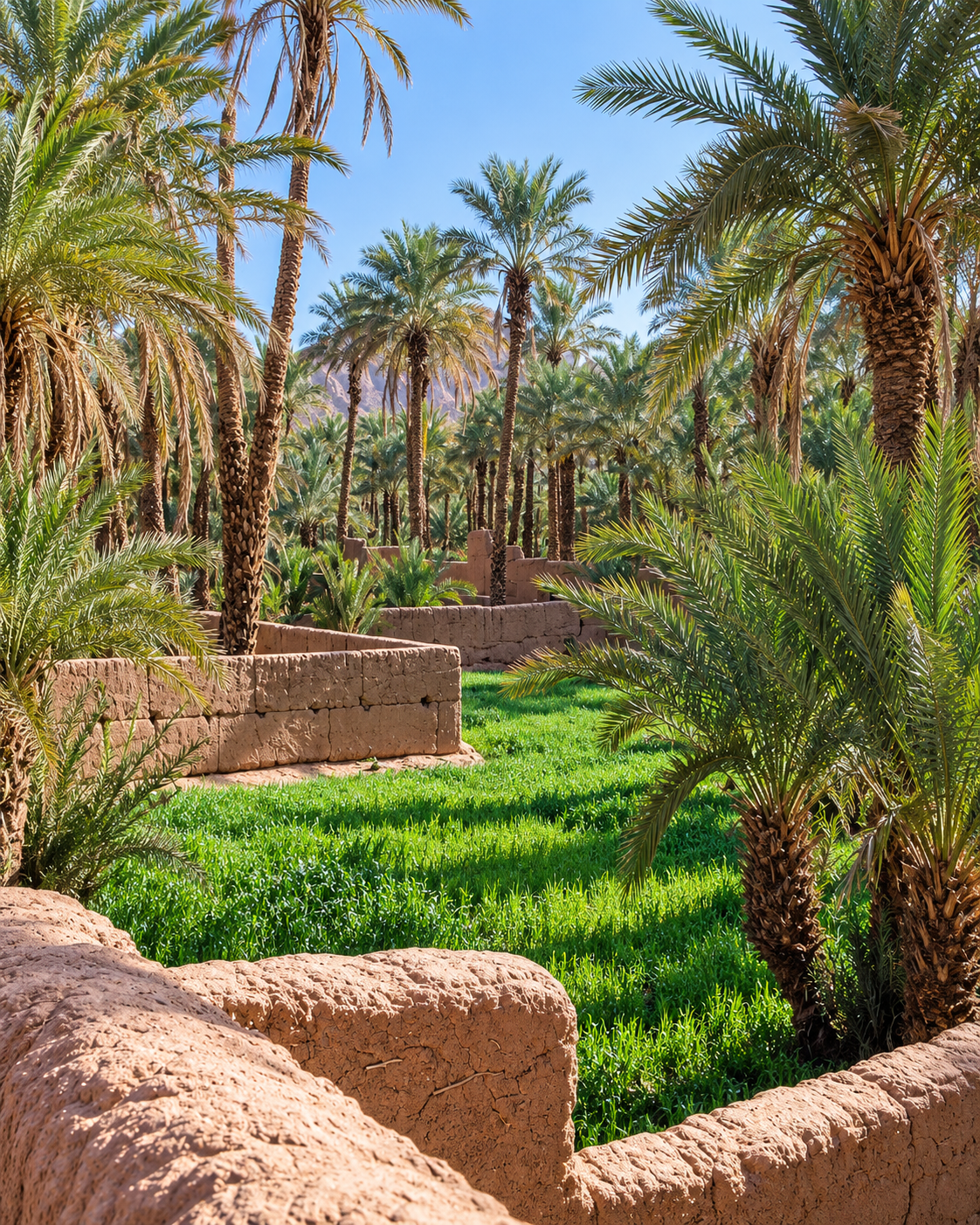
Its importance begins with the relationship between food and place. Date palms are a crop as well as the most visible feature of the skyline. Beneath and between them, the ground is divided into plots whose boundaries, access paths and water channels give the grove a much finer structure than the distant green canopy suggests.
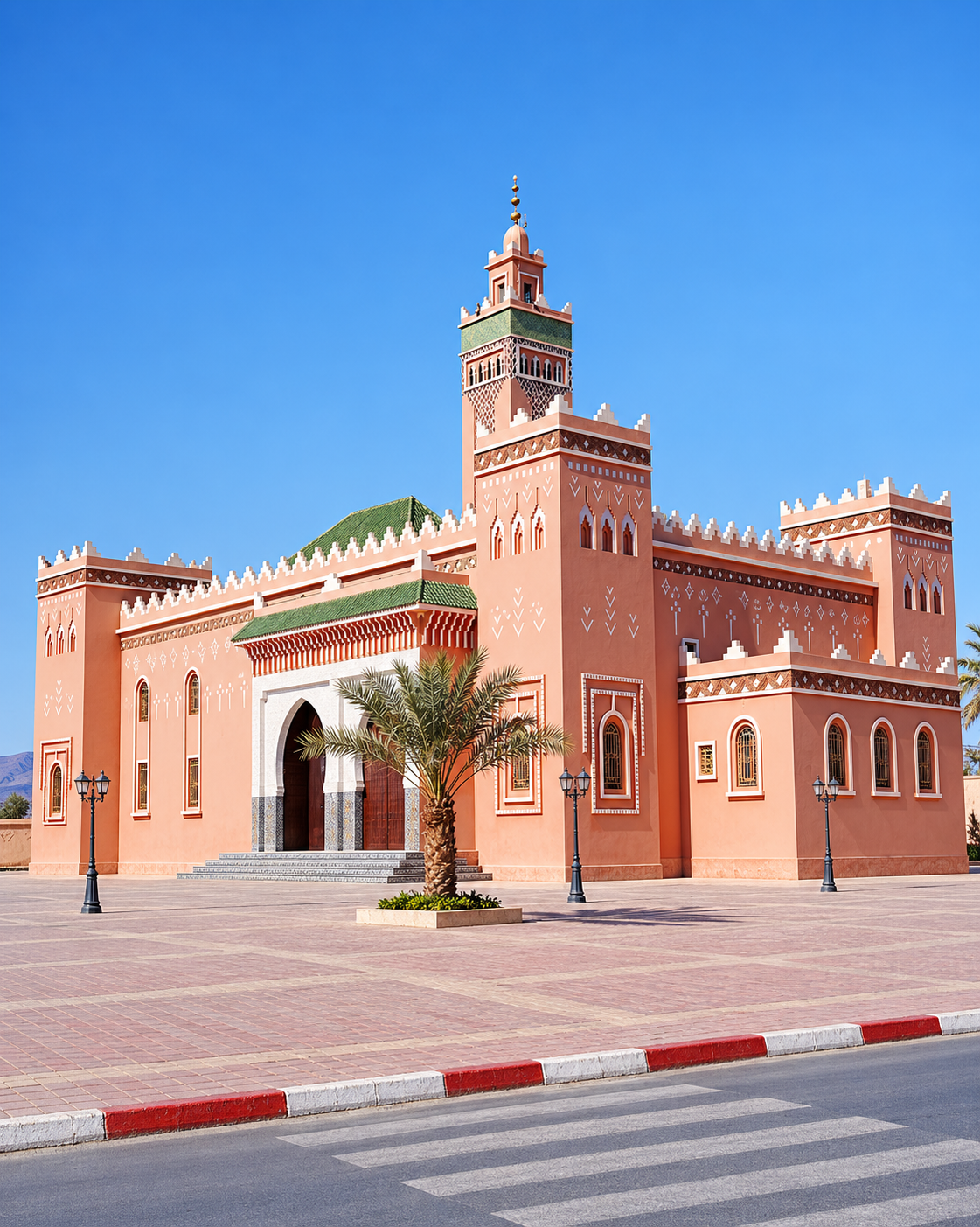
The oasis also makes the relationship between settlement and cultivation tangible. Amezrou’s earthen buildings stand close to the gardens, bringing domestic life and agricultural space into the same view. Seeing those edges together helps explain a landscape that a passing road journey can otherwise flatten into a strip of palms.
A visit here adds something distinct to a southern itinerary. The interest lies in cultivated ground and daily use, with the town close at hand. Desert excursions beyond Zagora are a separate experience; the palm grove deserves time for its own agricultural and human geography.
For a first encounter, choose one locally recommended path and give it your attention. A short walk can reveal how much is held within a small area: a field entrance, a bend in a wall, an opening under the canopy and a sudden view of bare hills. The value is in connecting these details.
For regional context, see the Moroccan National Tourist Office’s Draa landscapes and the Jbel Bani association’s Zagora overview.