
A meeting of forms.
A plurality of voices.
Dates not announcedRecent editions in July · Next dates not announced
The Festival National des Arts Populaires, often shortened to FNAP, brings regional performing traditions into a changing programme in Marrakech. The regional tourism authority records its fifty-fifth edition on 2–6 July 2026. The Moroccan government describes a celebration of diverse rhythms, organized through the Association Le Grand Atlas with cultural and local partners.
“Popular arts” here should lead the visitor towards the people who carry a practice: musicians, dancers, ensemble leaders and communities. It does not mean a single style shared everywhere, nor an anonymous spectacle without authorship. The programme can introduce a regional form; a brief stage presentation cannot explain its whole social life.
Look at the group.
Hear the relationships.
Begin by noticing how an ensemble works together. Who establishes the pulse? Does a voice lead and a group answer? How do movement, rhythm and spacing relate? These observations give you something concrete to follow before you know the name or history of a form.
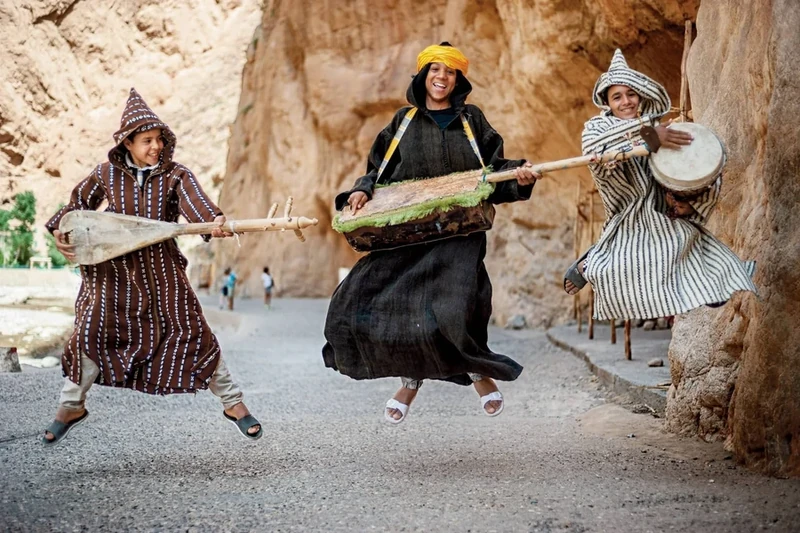
Clothing and instruments can carry place and performance identity, but avoid reading them as a simple code. Similar objects may appear in different settings, and a festival costume may be chosen for a stage presentation. Use the troupe’s own description rather than guessing a community from appearance.
If the programme names a region, language or tradition, keep that information with your notes. Specific attribution helps prevent several distinct performances from merging into a generic memory of “Moroccan folklore”.
Three layers
of a performance.
The practiced skill
Watch timing, breath, coordination and the ability to respond to other performers. What may look effortless often depends on repeated practice and shared knowledge. Applause can recognize that work without reducing it to a visual effect.
The social setting
A form may have meanings in community life that are only partly visible on stage. The festival offers a selected presentation under technical and scheduling constraints. Leave room for the wider setting that the performance cannot reproduce.
The present-day choice
Traditions continue through people making decisions now. A staged arrangement, collaboration or shortened sequence need not be dismissed simply because it differs from an older description. Ask what is being presented and by whom.
The city stage
changes the frame.
Lighting, amplification and a fixed running order help a festival bring many acts to a large audience. They also shape what can be heard and seen. A form performed in a community gathering may take on a different scale when placed within an evening programme.
This is a reason to attend attentively, not to judge the performance against an imagined untouched past. A festival can support visibility and exchange while leaving much of a tradition’s life outside the visitor’s view.
Read introductions and listen to the presenter when a troupe is named. If the explanation is in a language you do not understand, look for the printed programme or ask later. A correct name is a better starting point than an invented interpretation.
Choose an evening
with enough attention.
Check the edition
The verified 2026 dates are historical. Wait for the forthcoming organizer announcement before planning a fixed trip around the next edition. Do not assume that July dates or previous venues will repeat exactly.
Read the running order
Select an evening for its actual performers when the programme is available. Check start time, venue and access together. A photograph from an earlier event does not prove that the same setting is in use.
Allow for the complete session
If you want to compare several forms, stay for a coherent programme rather than rushing between stages. Plan food and the return journey around the published schedule, with room for changes.
Marrakech
as a meeting place.
The current FNAP venues
Confirm the official venue list for the edition you intend to attend. Historic spaces have appeared in previous programmes, but a remembered setting is not a substitute for a current address, entrance and access notice.
Marrakech medina
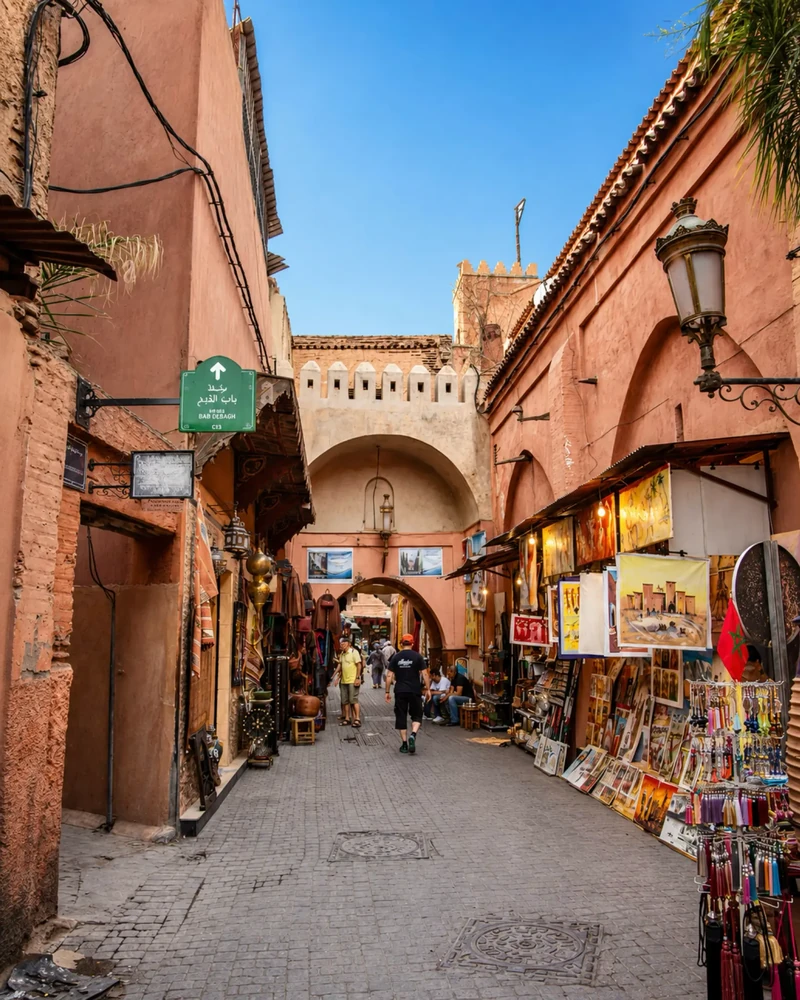
The city offers everyday craft, commerce and public life beyond a festival programme. Give those places their own context; not every street performance or shop demonstration is part of FNAP.
Explore Marrakech medinaThe regions represented
A programme can become the beginning of a wider journey through Morocco. Follow a named troupe or tradition towards its regional context rather than assuming Marrakech is the home of every form performed there.
Explore The regions representedAsk a smaller
and better question.
After a performance, a useful question might concern the name of an instrument, the place where the group works or the role of a particular rhythm. Ask at an appropriate moment and accept that performers may be preparing, resting or moving to another obligation.
Do not demand a private demonstration because you enjoyed the public one. If a workshop or audience encounter is formally offered, check its language, capacity and registration. A structured session gives the artists a clearer opportunity to decide what they want to share.
When recording your impressions, distinguish the programme’s explanation from your own response. “I noticed the group answering the lead voice” is a more careful observation than assigning a ritual meaning that nobody established.
A respectful audience
keeps the work visible.
Photographs
Follow the current venue policy and avoid flash that distracts performers. Keep cameras from blocking other viewers. Ask before close portraits away from the stage, when people are no longer presenting themselves to an audience.
Participation
Join only when the invitation is clear. A shared rhythm does not automatically invite spectators into the performance space. Let the performers and stewards define how audience participation works.
Names and captions
Credit the troupe and form when the programme identifies them. Avoid labels that turn living performers into timeless types. A place, date and correct name make a photograph more informative and respectful.
Before attending.
Is FNAP one musical tradition?
No. Its purpose includes presenting a range of regional performing arts. Read each troupe’s programme entry and allow the forms to remain distinct.
Are the next dates available?
The checked official regional reference lists 2–6 July 2026. A future edition was not verified as announced on 29 September 2026.
Are all activities open to everyone?
Check the current programme’s public-access, ticket and reservation information. Different venues or associated activities may have different arrangements.
Can children enjoy the programme?
Choose a manageable session and check admission rules. Consider length, amplified sound, seating and the route out. A shorter attentive visit can be better than a late programme that exceeds the family’s comfort.
From recognition
to curiosity.
Try to leave knowing the name of one form or ensemble that was new to you. That is a useful beginning. It lets you search for the performers’ own work and understand how a festival appearance fits into a longer practice.
The next encounter may look different: another arrangement, a different group or a community setting with another purpose. Hold those differences open. Living arts remain meaningful through the people who practice, teach and adapt them, not because every presentation must look identical.
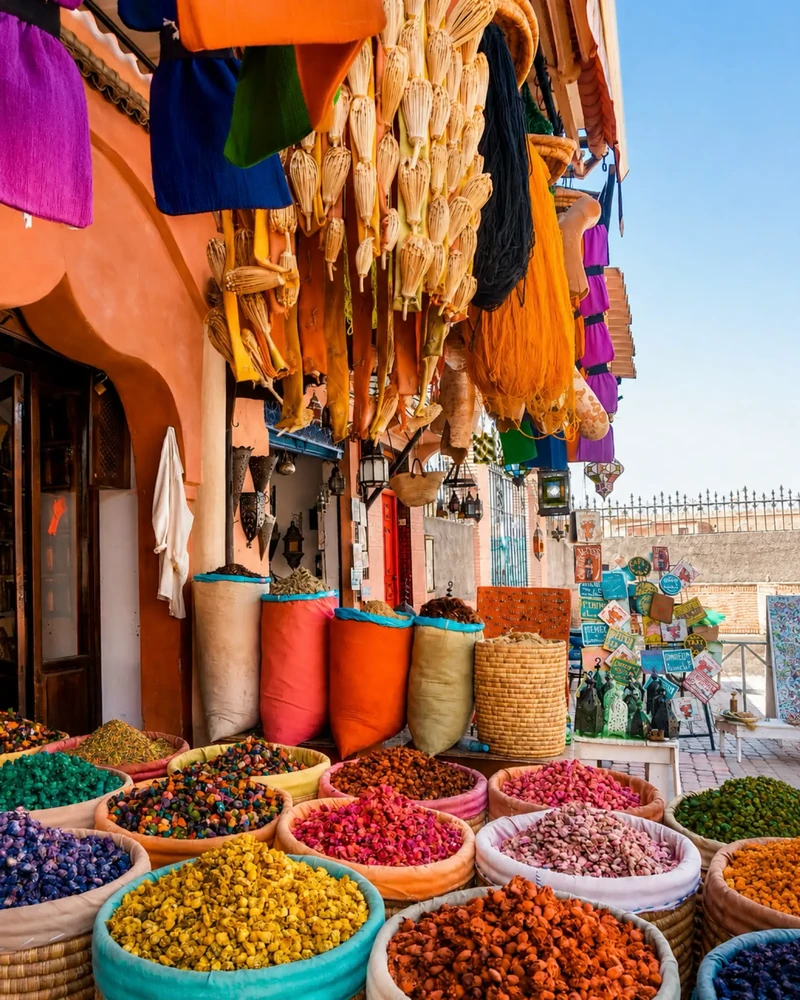
Keep the forms
and places connected.
Music & sacred sound
Learn to distinguish performance contexts.
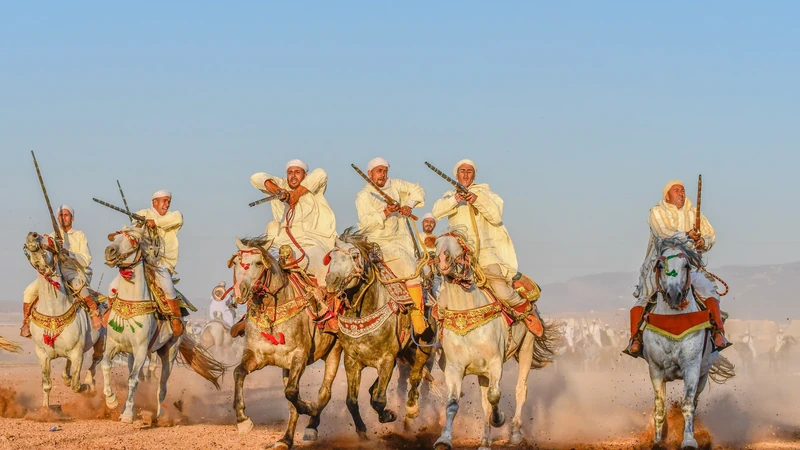
Moussems & fantasia
Explore another relationship between arts and gathering.
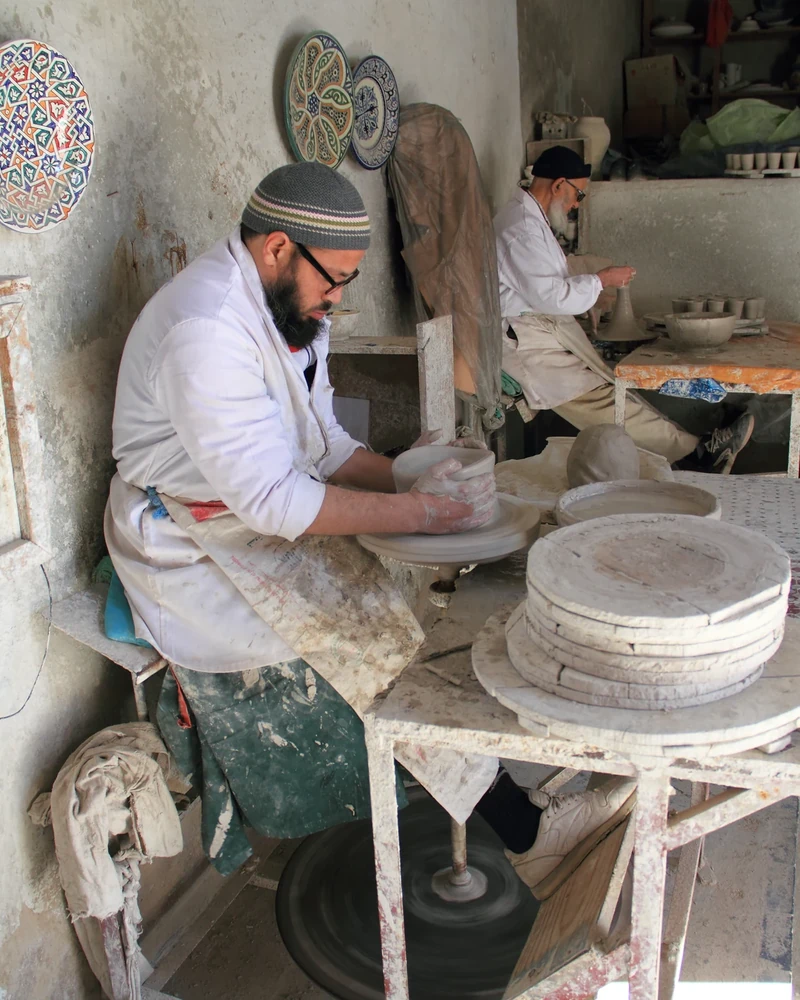
Craft & heritage
Meet other forms of transmitted skill.
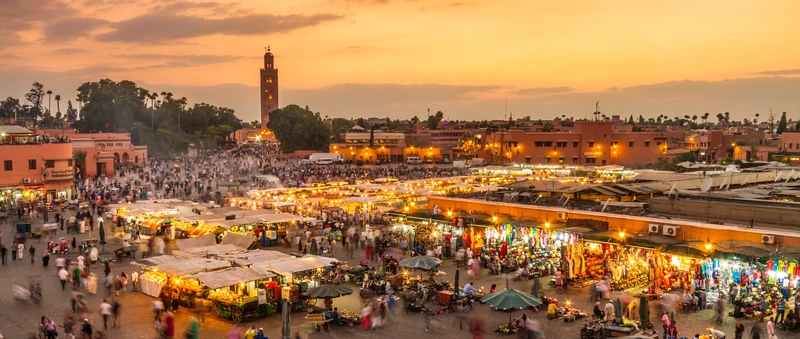
Marrakech
Continue into the host city.
Sources, date checks & image context
Event information checked on 29 September 2026. Dates marked typical describe a seasonal pattern, not an announced booking date. Recheck the linked organizer before committing to travel.
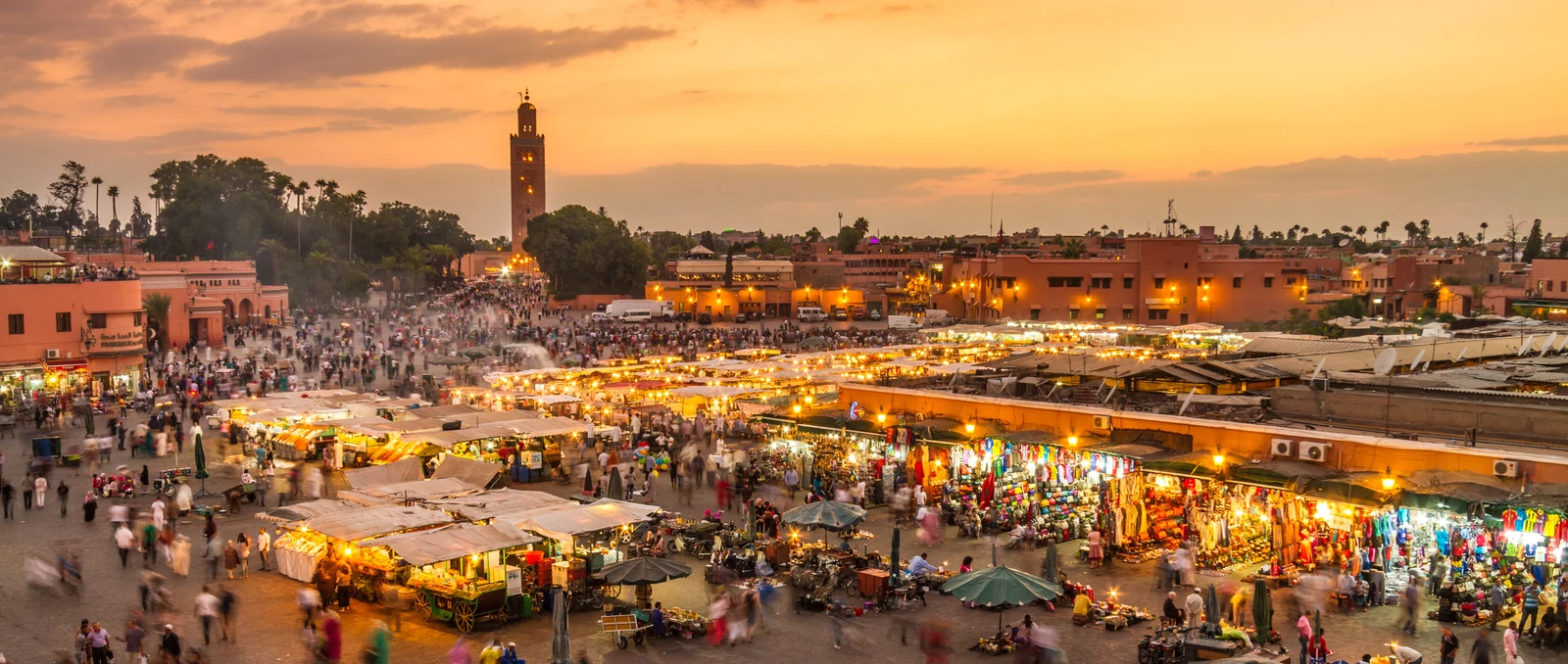
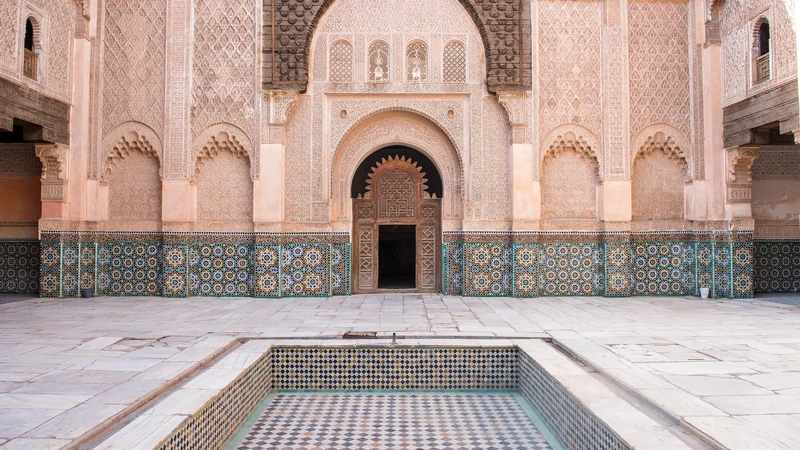
Library images illustrate the host place, materials and cultural context. They are not presented as documentary records of a particular festival edition.
- Marrakech National Festival of Popular Arts — official reference
- Moroccan government — 55th FNAP edition
Photograph credits
Attributions retained from the canonical library. Responsive resizing and WebP conversion; each photograph’s stated licence continues to apply.
- Library photograph: Ben Youseff Madressa.jpg — Nash Finley. CC BY-SA 4.0. Cropped/resized; original licence retained.
- Library photograph: Houssain tork · CC BY-SA 4.0.Editorial crop, resizing and WebP conversion. The adaptation retains the source licence.
- Library photograph: Schorle · CC BY-SA 4.0.Editorial crop, resizing and WebP conversion. The adaptation retains the source licence.


