
Start with
the gathering.
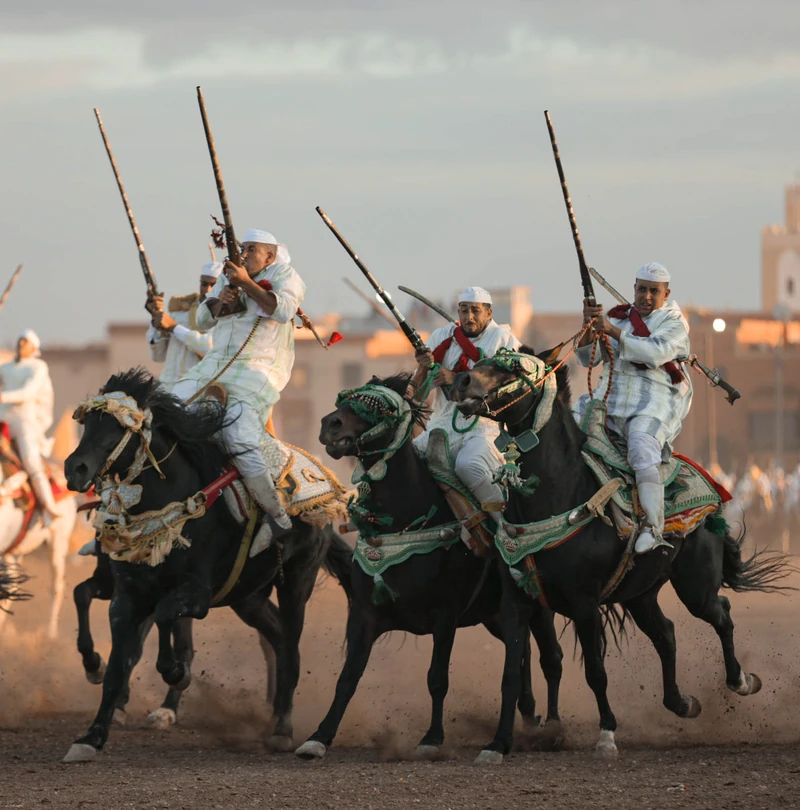
A moussem is not simply another name for an equestrian show. The word can describe a recurring gathering whose meaning grows from a particular place, community and occasion. Religious observance, social ties, exchange and public cultural activity may meet within it, in different proportions.
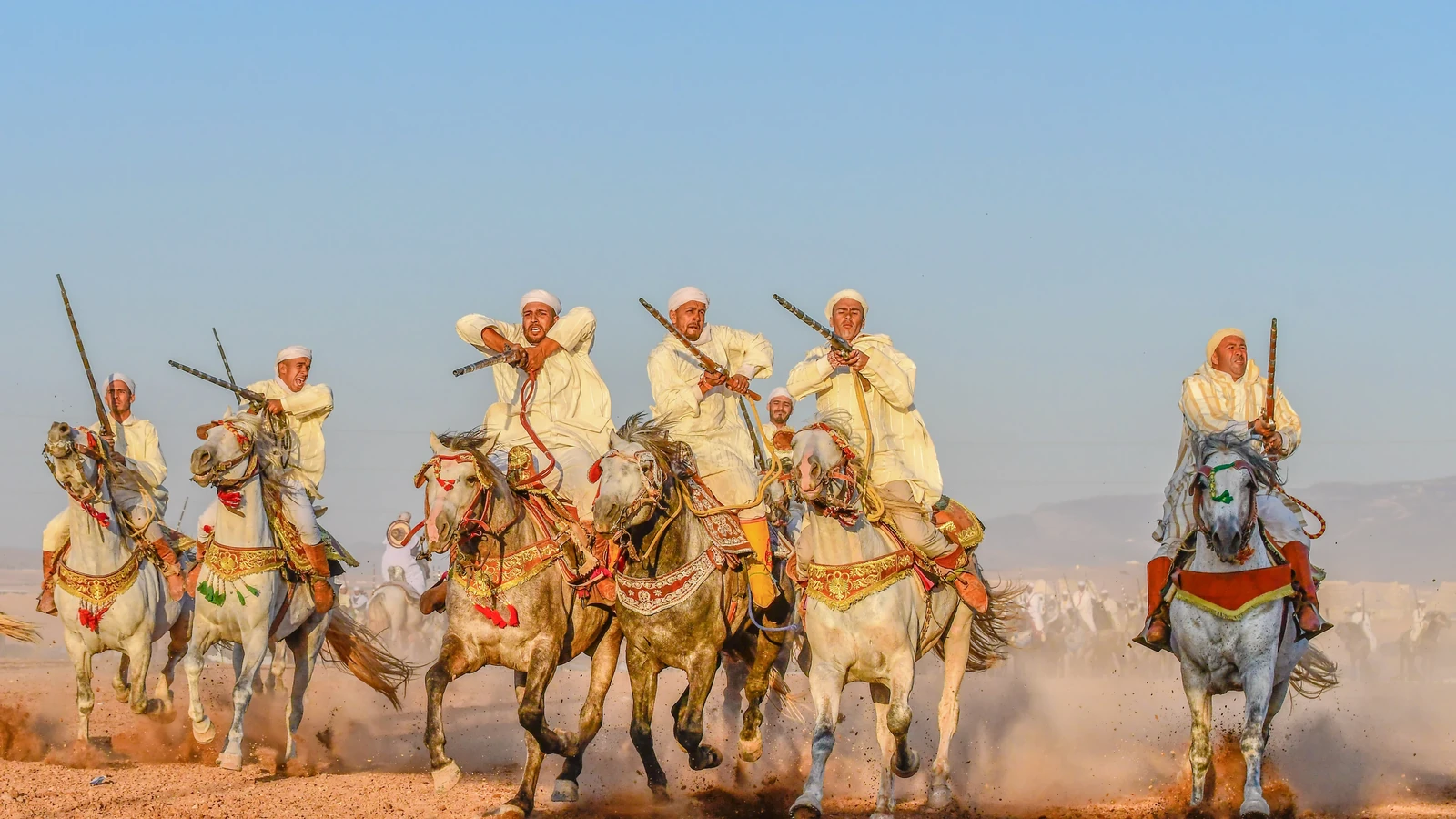
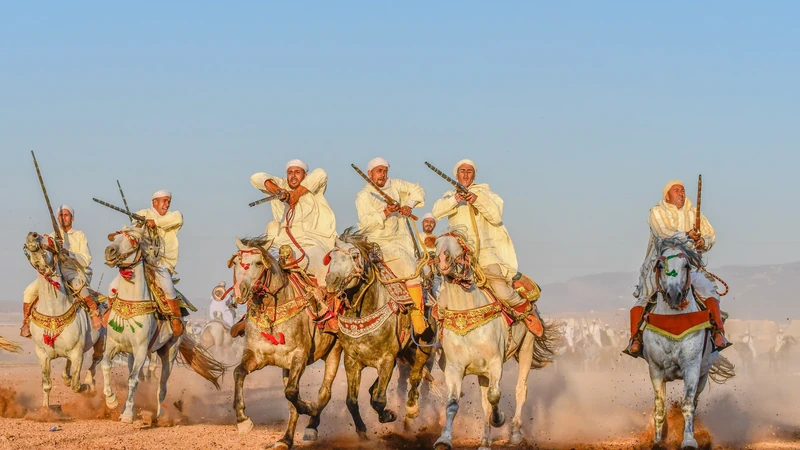
Tbourida is an equestrian practice that can form one highly visible part of such an event. Its speed, coordination and dress make an immediate impression. Yet watching a riding team tells you only part of what a gathering means to those attending.
This guide begins with the relationships around the performance: the people who organize, prepare, host, maintain equipment and return to a place together. Keeping that wider frame in view makes the spectacle more intelligible without claiming that every moussem follows one model.
Four connected worlds.
Different responsibilities.
Community and place
Ask which local relationships give this gathering its identity. A public programme can introduce a visitor to an occasion whose meaning also includes family connections and obligations that are not visible on stage.
Performance and preparation
A riding display depends on practice, coordination and the care of horses and equipment. The short moment an audience sees rests on work before and after it.
Hospitality and boundaries
Welcoming visitors does not make every tent, meal or devotional space public. An invitation should be understood at the scale at which it is offered, without extending it to every activity nearby.
Tbourida.
A team makes the moment.
UNESCO inscribed tbourida in 2021 as an equestrian performance transmitted within communities. Its account emphasizes coordination, shared knowledge and preparation, including spiritual dimensions. It is a living practice involving people and horses, rather than a historic scene held still for visitors.
Watch how riders organize themselves and respond to one another. The relationship between the beginning of a run, its alignment and its conclusion can tell you more than concentrating only on the loudest instant. Ask an informed host to explain local terms and judging or presentation conventions where relevant.
Do not approach the working ground to improve a photograph. Horses, riders and stewards need space to prepare and move. Observe from the designated audience area and let local instructions determine where you may stand.
Clothing and equipment
carry skilled labour.
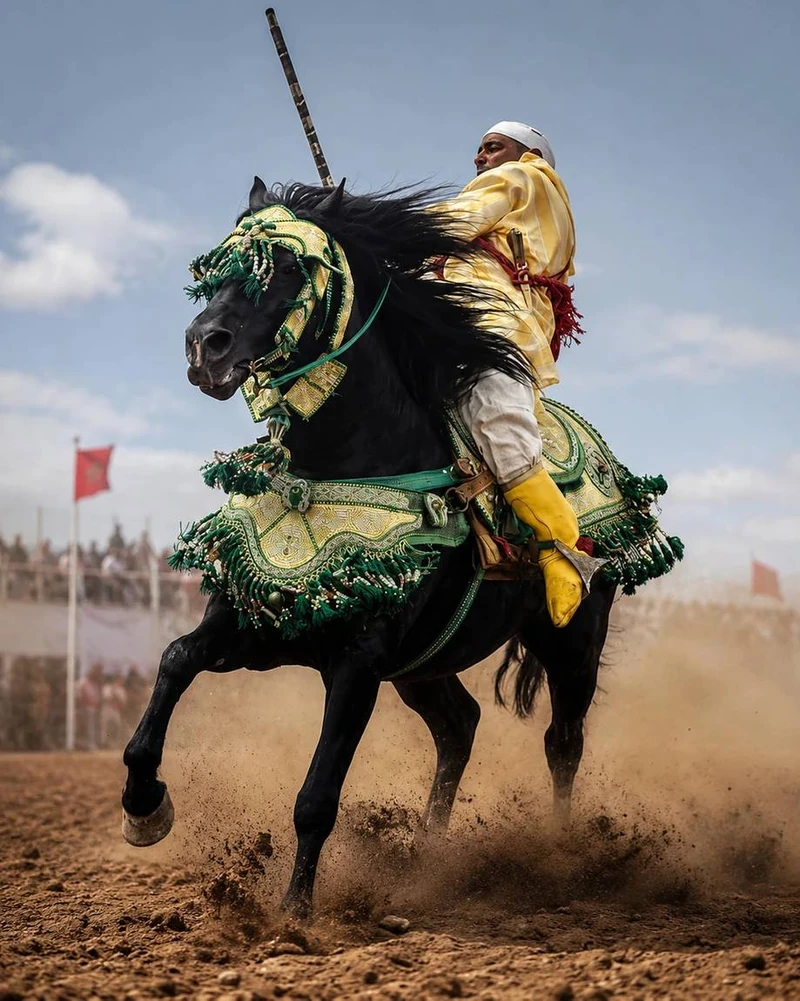
A decorated saddle or carefully arranged garment is not merely a colourful accessory. It has to work within a performance that involves movement, heat, handling and repeated use. The visual effect and practical function belong together.
Where an artisan demonstration or display is explicitly open, look at materials and construction rather than treating the object as a single ornament. How are parts joined? Which surfaces show wear? What must be adjusted before use? These questions recognize skill without assuming you already know a piece’s origin or meaning.
Ask before touching clothing, reins or equipment, including items that seem to be waiting unattended. They may be part of someone’s preparation. A quiet interval can still be working time.
A day has
more than one rhythm.
Before a public presentation
People may be arriving, arranging goods, meeting relatives or preparing an activity. Treat this as purposeful time. Keep passageways clear and avoid turning preparation into an uninvited backstage visit.
During the shared moment
Follow the rules of the particular area. A performance zone, a commercial stall and a devotional threshold may sit close together while asking for very different behaviour.
Between and after activities
A pause in the programme can be a meal, a conversation or a transition for participants. Visitors can use it to rest and orient themselves, without assuming that every group is available for questions or photographs.
Different places.
Different gatherings.
Moulay Abdellah Amghar
Near El Jadida in Doukkala, the moussem brings religious, equestrian and artistic dimensions into a coastal setting. Its identity should be understood through this place and its community, not used as a universal model.
Read Moulay Abdellah. The moussem.Tan-Tan
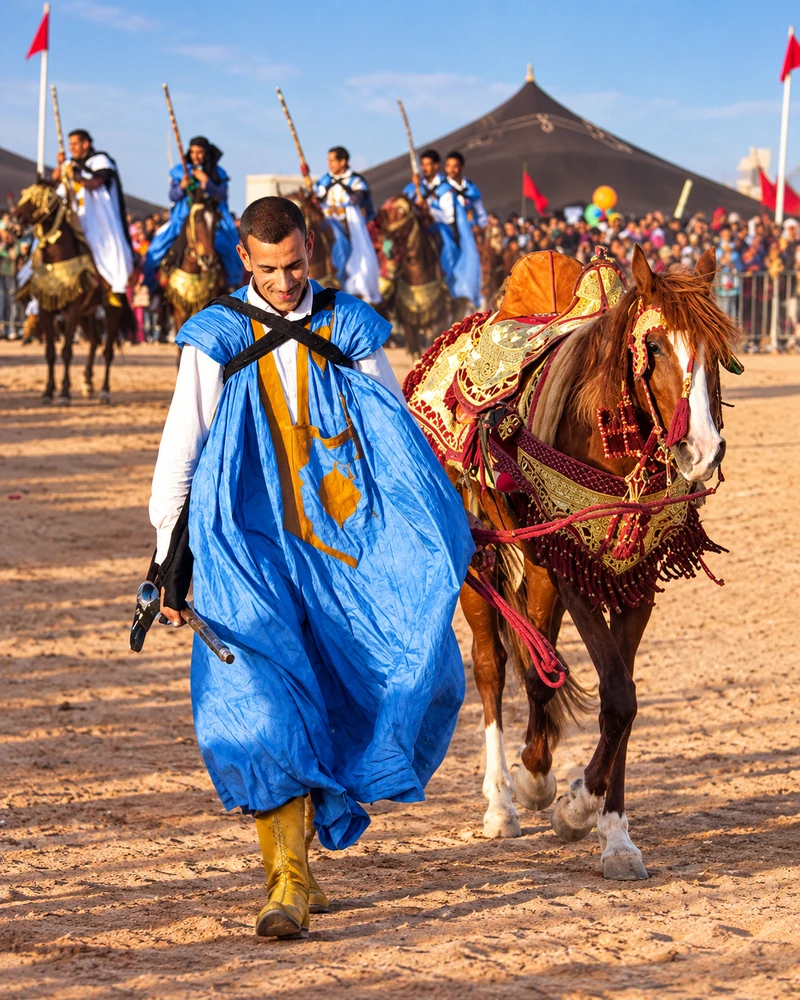
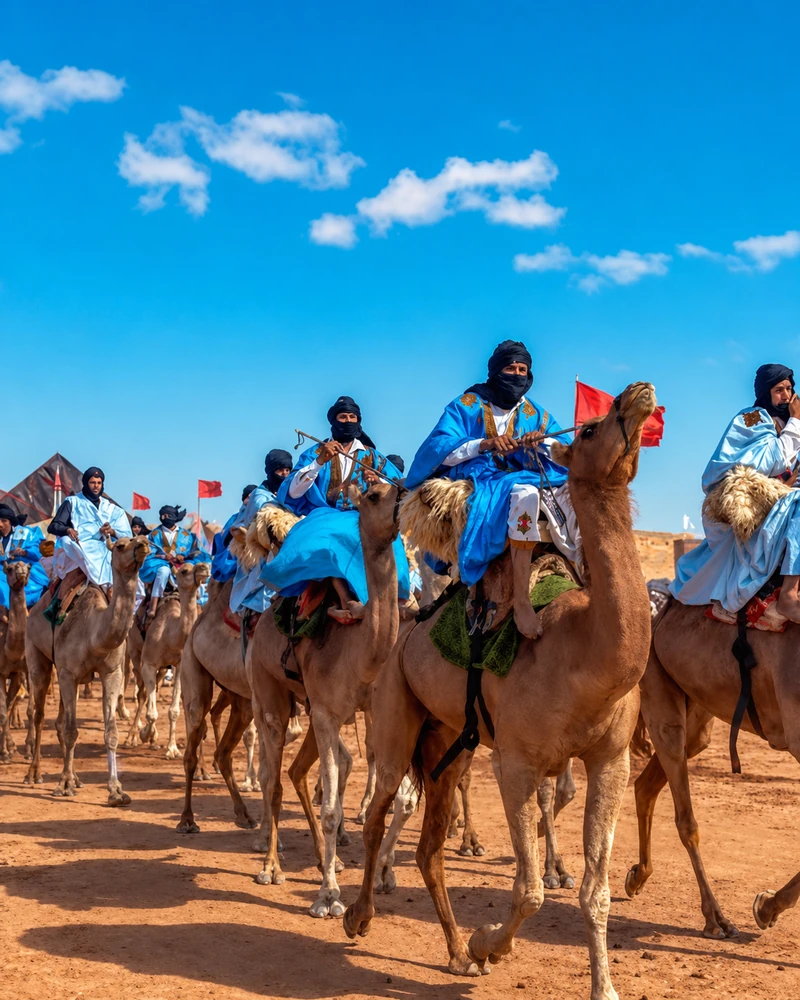
The gathering is associated with southern nomadic heritage, cultural exchange and oral traditions. Its public programme offers another expression of a moussem, with a different geography and history.
Read Tan-Tan. The moussem.Other local traditions
A gathering may be smaller, less formally publicized or shaped around a different occasion. Look for a current local invitation and a reliable explanation of visitor access before treating it as an event to attend.
Read A local occasion. A clear invitation.Transmission happens
between appearances.
A tradition continues because people learn how to take part. That learning can include physical technique, vocabulary, equipment care, social responsibilities and knowing when to act. It is not captured fully by a single photograph of a finished performance.
If a public talk or demonstration is offered, ask how learning is organized today. Who teaches, what requires repetition and what responsibilities come with joining a group? Let the answer remain local and contemporary. Do not presume that every participant has followed the same route into the practice.
You may also notice supporting roles that attract less attention: arranging a space, maintaining an object or helping a group move safely. These tasks are part of the conditions that make public cultural life possible.
Hospitality begins
with a clear invitation.
A friendly conversation may lead to an invitation, but its limits still matter. Clarify whether you are being welcomed to sit, share food, observe or enter a particular space. Do not convert one person’s welcome into permission to photograph everyone present.
Accepting hospitality can also mean slowing your own agenda. Put away the camera when it becomes a barrier, avoid interrupting a conversation for content and do not promise to send images unless you can follow through privately and respectfully.
If you are unsure whether an area is open, ask a steward or host from outside its threshold. Being a considerate guest includes remaining in public space when a more intimate encounter has not been offered.
A visitor’s field notes.
Observe without overclaiming.
Describe the visible action
“The riders aligned before moving together” is an observation. An explanation of symbolic meaning needs a reliable source or a participant’s account, attributed with permission.
Keep names and contexts together
Record the event, place and date of your visit. If you learn a local term, check its meaning before using it to describe other gatherings.
Leave uncertainty visible
You can say that you did not understand an activity or that access was private. An honest gap is preferable to filling the story with a generalized idea of tradition.
The performance ends.
The relationships continue.
The audience may remember a coordinated run while participants carry other memories: a reunion, a responsibility completed or knowledge passed to someone learning. A visitor cannot see every layer, but can make room for their existence.
Let that awareness shape what you choose to support. Pay agreed prices for goods or services, credit named cultural workers when appropriate and use official event information rather than circulating uncertain dates. The most useful encounter is one that respects the life of the gathering beyond the time you spend there.
Follow a different
part of the story.
Fantasia & moussem
A field guide to a first encounter.
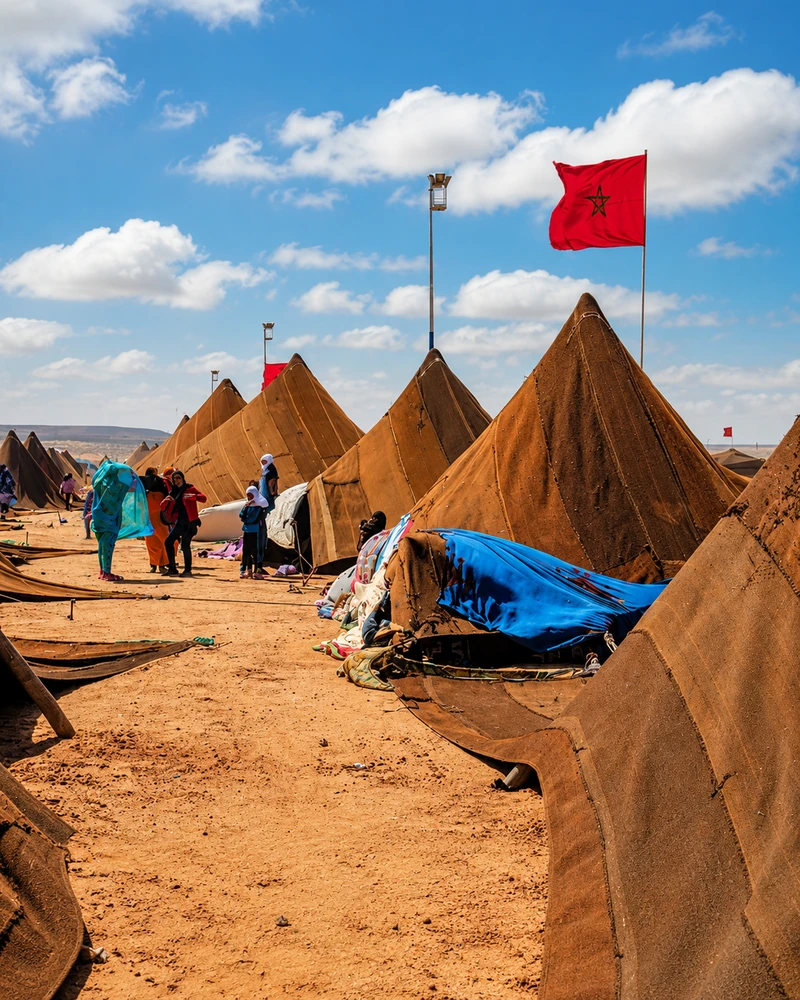
Desert gatherings
Understand southern cultural geography.
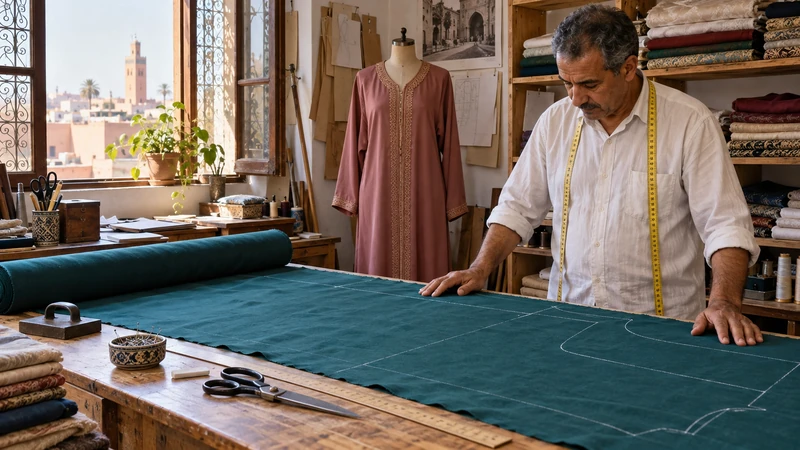
Craft & heritage
Look at learning, maintenance and skill.
The Story
Read the gathering through human attention.
Sources, date checks & image context
Event information checked on 29 September 2026. Dates marked typical describe a seasonal pattern, not an announced booking date. Recheck the linked organizer before committing to travel.
Library images illustrate the host place, materials and cultural context. They are not presented as documentary records of a particular festival edition.
Photograph credits
Attributions retained from the canonical library. Responsive resizing and WebP conversion; each photograph’s stated licence continues to apply.
- Library photograph: Houssain tork · CC BY-SA 4.0.Editorial crop, resizing and WebP conversion. The adaptation retains the source licence.
