
Choose an occasion,
not a generic spectacle.
A local gathering may combine several kinds of activity: observance, performance, exchange, hospitality and reunion. What makes it meaningful is the relationship between those activities and the people of a particular place.
This index helps you compare named occasions with different identities. It includes two moussems alongside examples of civic celebration and staged regional performance, so the distinctions remain visible. A shared heritage theme does not make them the same kind of event.
Begin by finding a reliable public programme and understanding its invitation. Then consider whether the setting, travel and level of participation suit your interests. The broader Moussems and Fantasia guide explains cultural relationships; this page helps you select an encounter.
Two named moussems.
Two specific contexts.
Moussem Moulay Abdellah Amghar
Dates not announcedTypically August · Next dates not announced
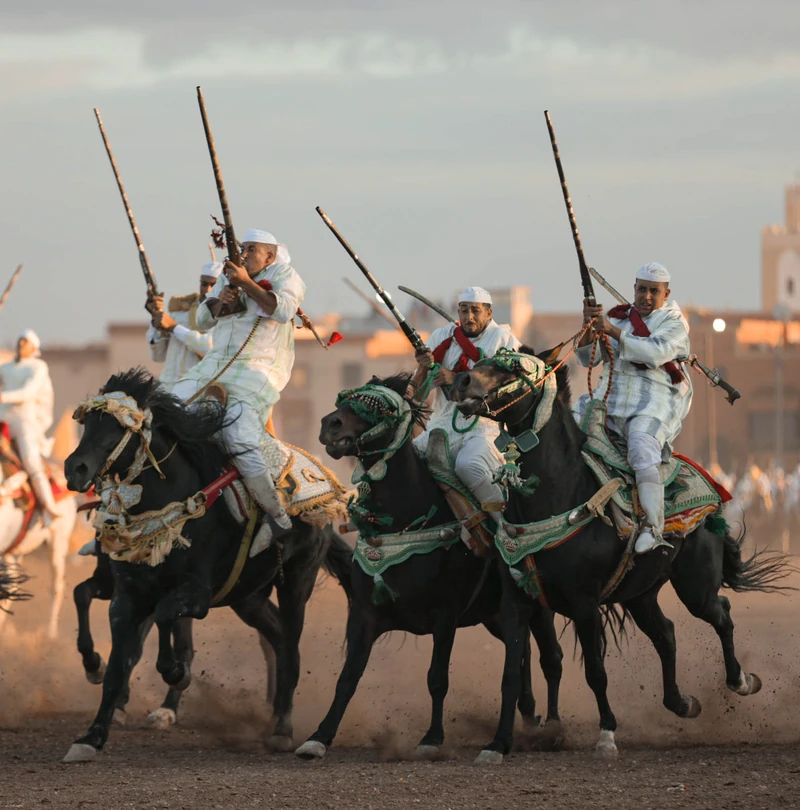
Devotional life, equestrian practice and a large coastal gathering in the Doukkala region.
Explore this eventTan-Tan Moussem
Confirmed dates30 October–3 November 2026 · Revised dates
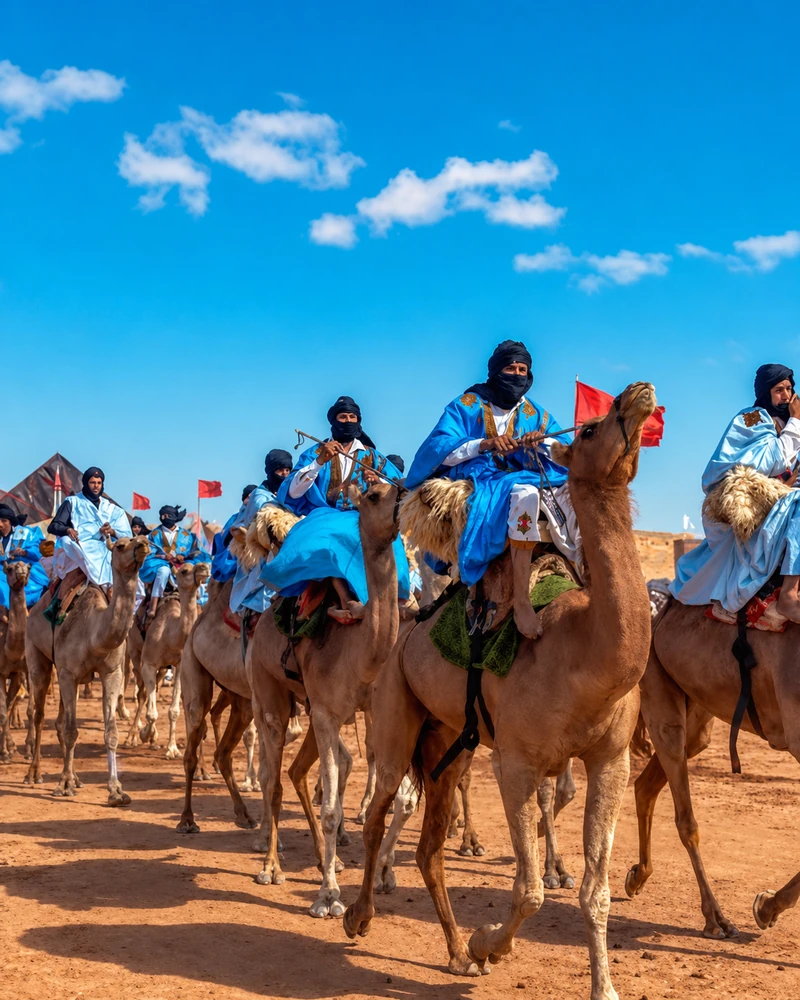
A gathering around nomadic and Hassani heritage, oral culture, exchange and intergenerational ties.
Explore this eventMoulay Abdellah Amghar.
A Doukkala coastal gathering.
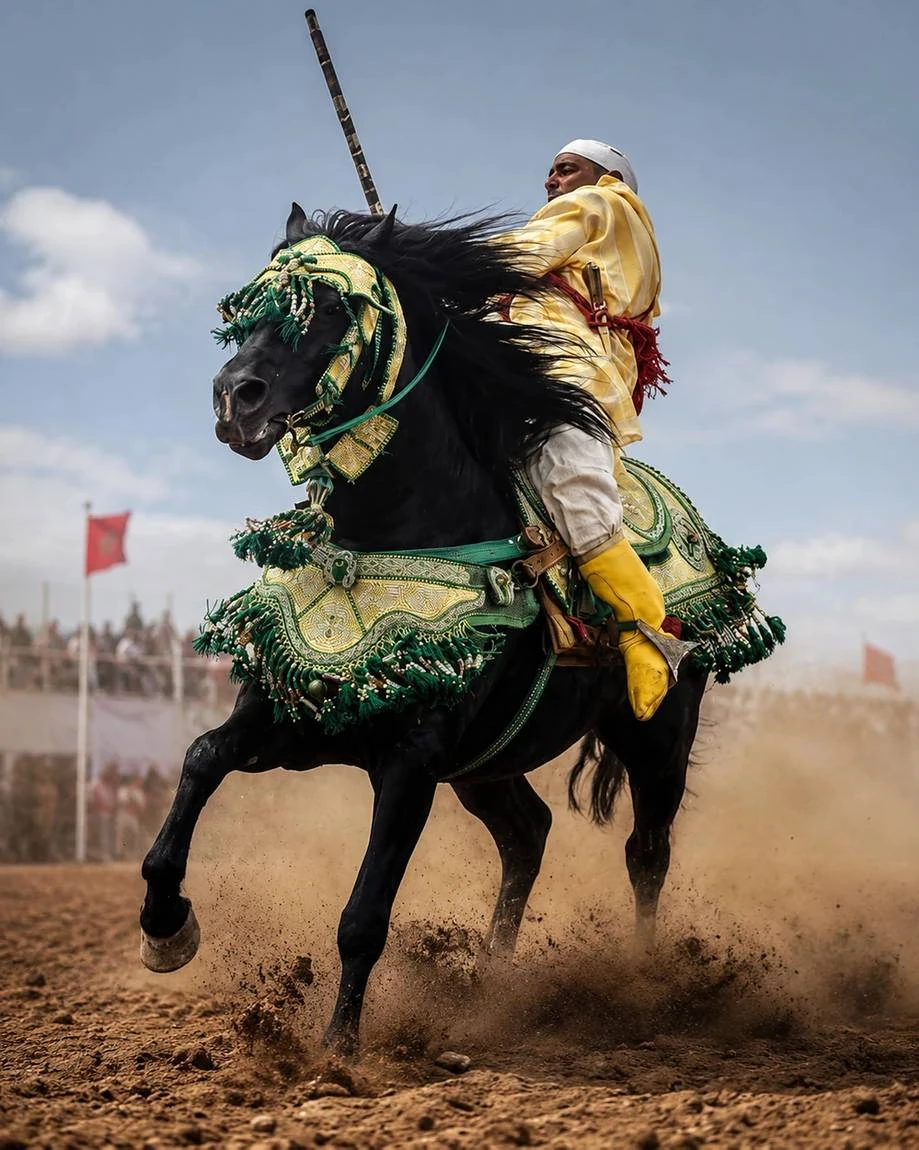
The moussem near El Jadida brings religious, equestrian and artistic dimensions into one wider occasion. Tbourida is a major reason many visitors look towards it, but the riding display does not contain the whole identity of the gathering.
Choose it with an interest in that wider relationship. Read the current public programme, identify the spectator arrangement and leave preparation, private hospitality and devotional spaces to the people responsible for them.
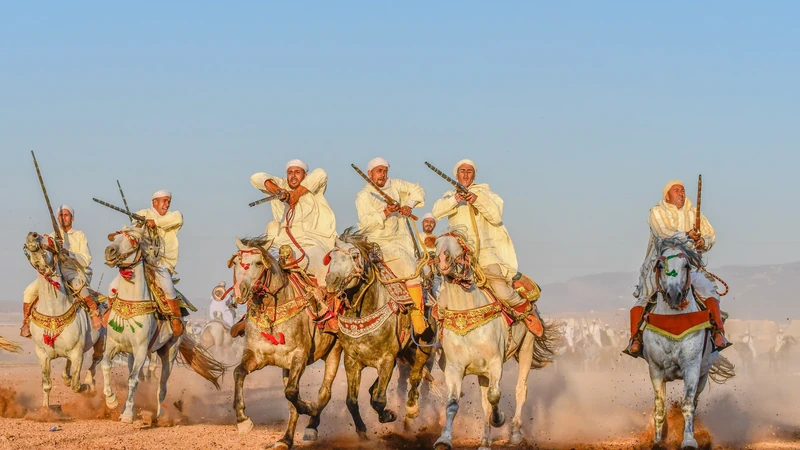
If the equestrian practice is your central interest, the Fantasia and Moussem field guide can prepare your attention. It follows the visible sequence from arriving at the public boundary to observing coordination and leaving without obstructing the work around the display.
Tan-Tan.
Exchange and southern heritage.
UNESCO’s account places the Moussem of Tan-Tan within the cultural life of nomadic communities and the exchange of knowledge and oral traditions. That context distinguishes it from simply another arena for equestrian performance.
A public programme may introduce a visitor to several cultural forms. Read the named activities and any interpretation provided, and resist drawing conclusions about contemporary ways of life from a tent, a garment or a single presentation.
This choice also carries a geographical commitment. Plan the journey and accommodation around the gathering itself. The verified 2026 dates were revised to 30 October–3 November; our dossier retains the source of that change so earlier information can be recognized as superseded.
Related occasions.
Different forms of public culture.
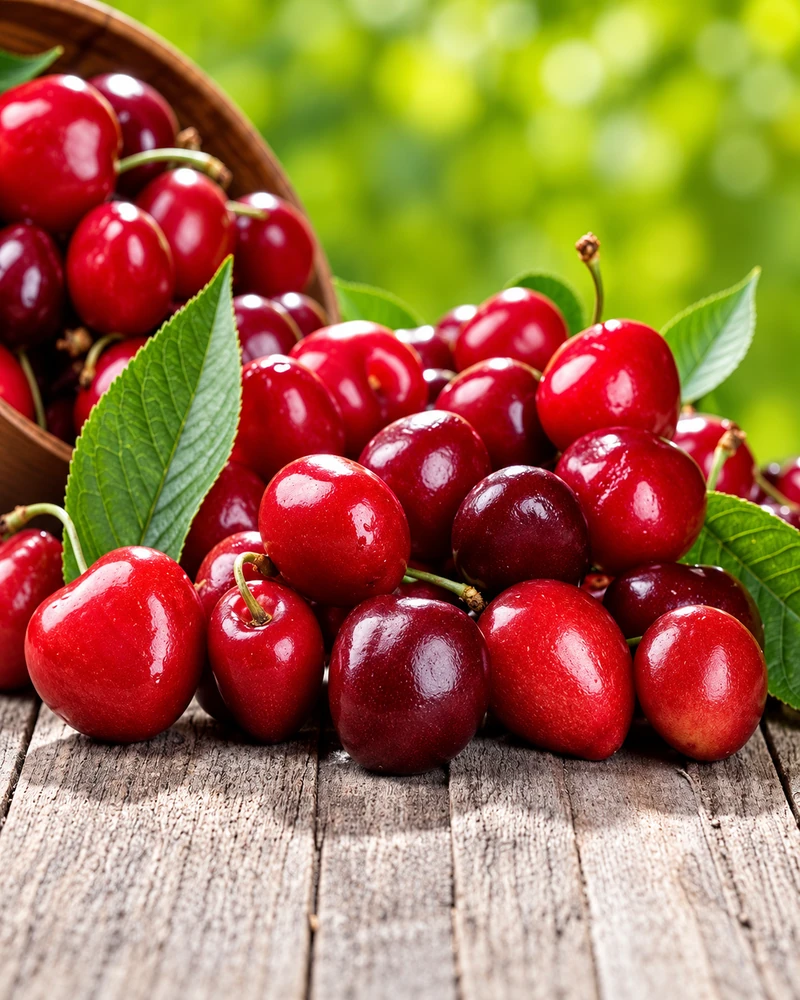
Sefrou Cherry Festival
A crop-linked civic celebration recognized as living heritage. Its local participation and annual rhythm offer a different model from a moussem.
Read the Sefrou dossier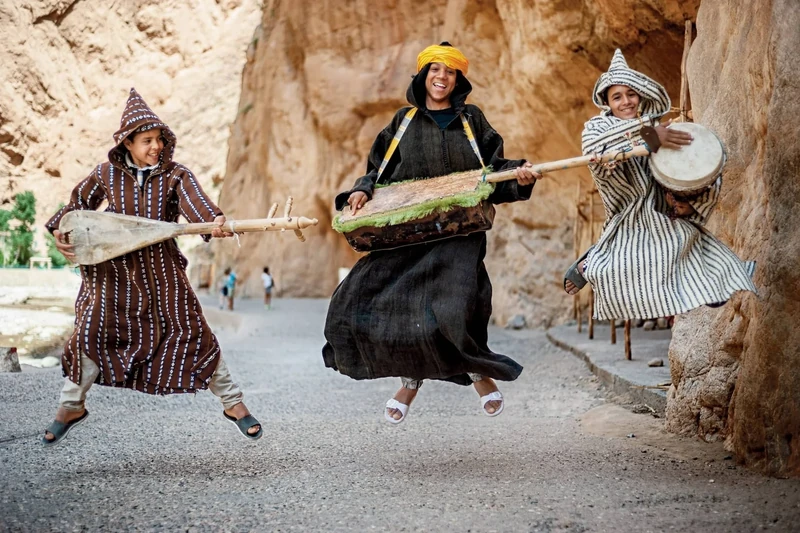
Marrakech Popular Arts
A festival programme bringing regional performance traditions into a city setting. A staged presentation provides a public encounter while leaving the practice’s wider life beyond the stage.
Read the FNAP dossierThe host place
belongs in the decision.
El Jadida and the Doukkala coast
Use the city as geographical context while confirming the actual moussem site and event access. The name of a nearby city is not a substitute for the correct arrival point.
Explore El Jadida and the Doukkala coastTan-Tan
Give the town and the gathering a realistic place in a southern route. Confirm the current public site, travel options and accommodation separately.
Explore Tan-TanSefrou
Allow time for the town whose civic life gives the Cherry Festival its setting. A visit beyond the programme can help you understand the relationship between place and occasion.
Explore SefrouMarrakech
Read the FNAP edition venue by venue. The host city offers a cultural setting, but its best-known public spaces should not be assumed to host every programmed activity.
Explore MarrakechCompare the invitation
before comparing the dates.
What is explicitly public?
Look for a named performance, exhibition, route or visitor area. Publicity for a gathering does not make every activity within it open to visitors.
What requires an arrangement?
Transport, a guided encounter, an exhibition category or a reserved session may need separate action. Establish who is responsible for each part.
What remains private?
Family, working and devotional spaces can coexist with a public programme. A respectful plan includes the possibility of observing less than a photograph first suggested.
What can be understood?
Choose an activity with a useful introduction or an informed host when possible. Context can make a modest encounter more valuable than a dramatic scene whose meaning remains guessed.
Do not search for
an untouched past.
Living traditions continue through contemporary people. They make choices about learning, work, presentation and the place of a practice in their lives. A public festival is one setting in which those choices become visible.
Avoid judging a gathering by whether it matches an imagined scene outside time. A microphone, a road connection or a new way of organizing an audience does not automatically remove cultural meaning. Equally, a visually traditional setting does not establish authenticity by itself.
Seek a more precise account: who is presenting, what is being done and how participants explain its role. Specific questions make room for continuity and change without requiring a simple verdict from a visitor.
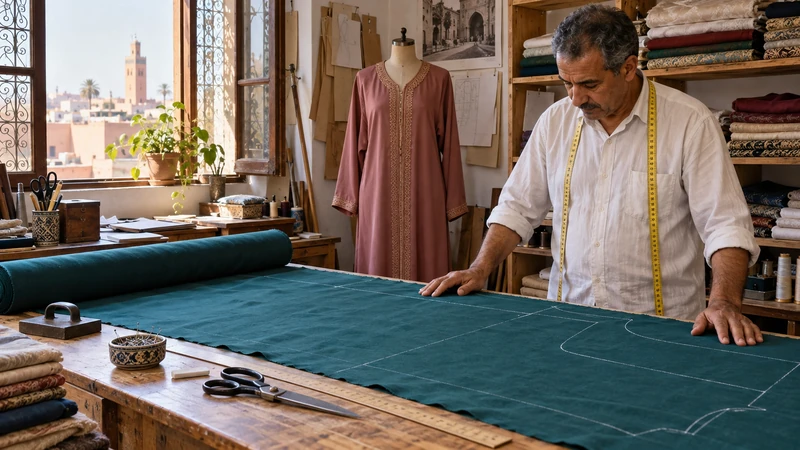
A first visit can be
deliberately modest.
Choose one announced public activity, arrive with time to orient yourself and remain where visitors are expected. If a host offers further explanation, listen without turning the conversation into an obligation.
Prepare for the conditions that matter to your group, including walking, sound and the return journey. A tbourida display, an oral performance and a market encounter involve different demands. Select the session rather than relying on the event’s broad name.
Keep photography optional. A clear memory of what you observed, together with the limits of your understanding, is a better record than a collection of intrusive images.
Let the encounter
lead to a better question.
You may leave interested in a particular craft, the coordination of a riding team or the relationship between a town and its annual occasion. Follow that detail through the linked cultural guides and Stories.
When sharing the experience, distinguish the public programme from the wider community life you did not enter. Name the event and place accurately, and avoid presenting a single edition as a permanent description of everyone connected with it.
A thoughtful visit does not end with claiming to know a tradition. It creates a more informed way to continue learning.
Choose another
way into the occasion.
Moussems & fantasia
Understand the cultural relationships.
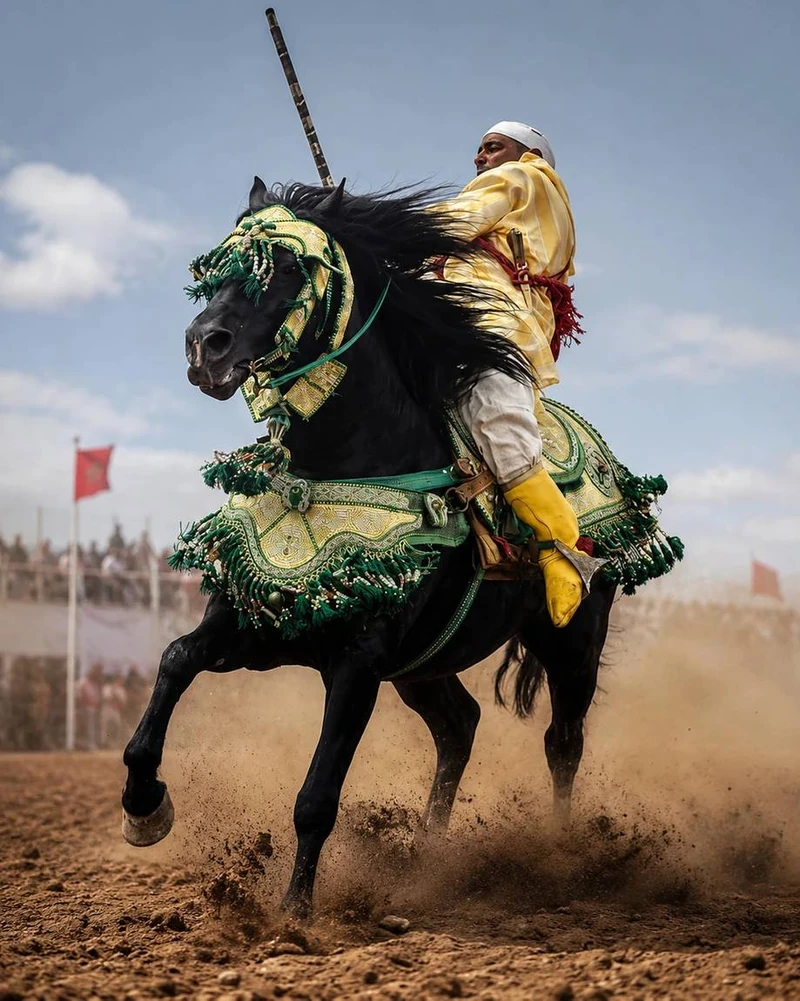
Fantasia & moussem
Prepare for a first public encounter.
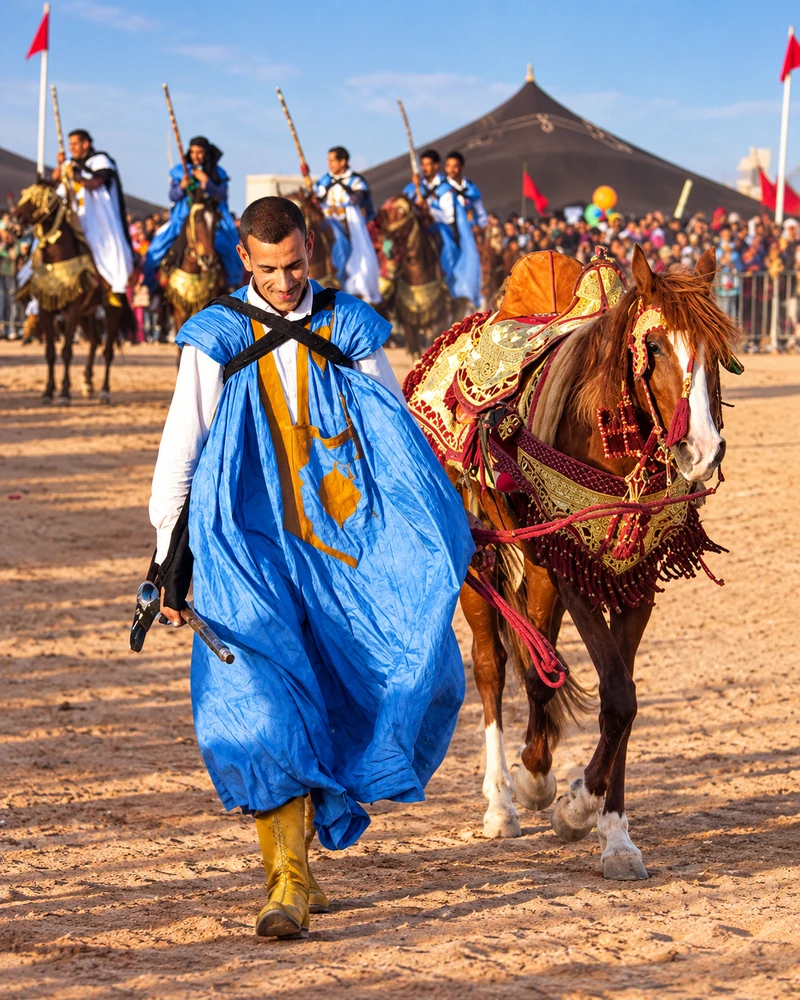
Desert gatherings
Read the southern setting with care.
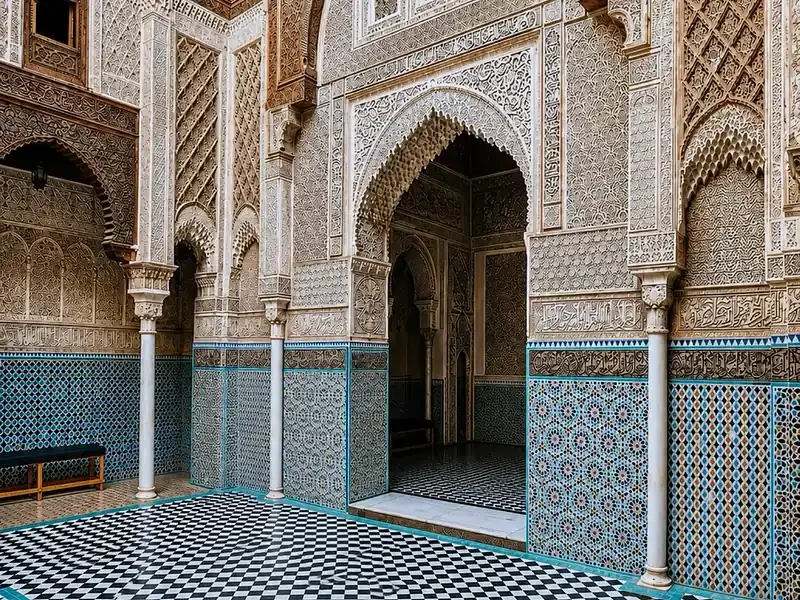
Sacred & local moments
Clarify the invitation and its limits.
Sources, date checks & image context
Event information checked on 29 September 2026. Dates marked typical describe a seasonal pattern, not an announced booking date. Recheck the linked organizer before committing to travel.
Library images illustrate the host place, materials and cultural context. They are not presented as documentary records of a particular festival edition.
- Moulay Abdellah Amghar — official organizer
- UNESCO — Moussem of Tan-Tan
- SNRT — revised Tan-Tan dates
- UNESCO — Cherry Festival in Sefrou
- Marrakech tourism authority — FNAP
Photograph credits
Attributions retained from the canonical library. Responsive resizing and WebP conversion; each photograph’s stated licence continues to apply.
- Library photograph: Houssain tork · CC BY-SA 4.0.Editorial crop, resizing and WebP conversion. The adaptation retains the source licence.
