
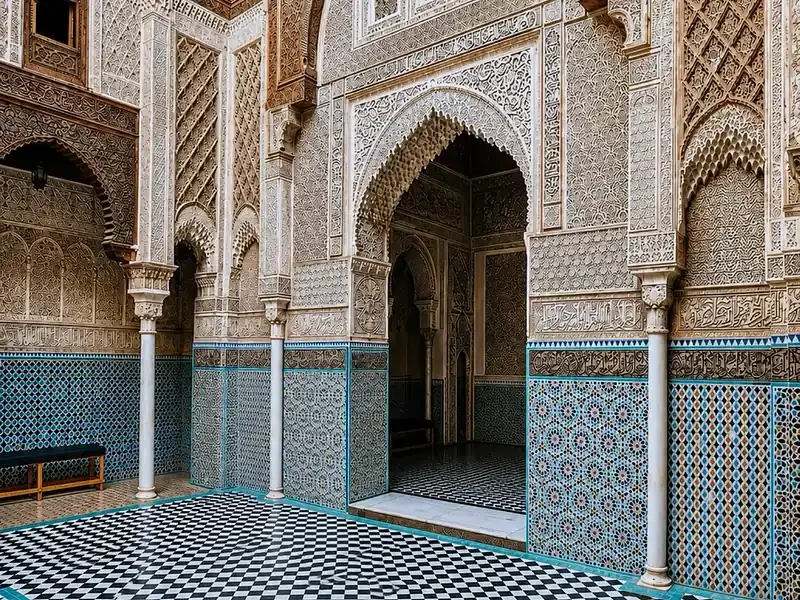
Presence begins
before you enter.
A festival can place visitors close to occasions whose meaning is not immediately clear. A group may be preparing a performance, sharing a private conversation or taking part in a devotional activity. The fact that you can see it does not establish how you may join it.
Pause at the threshold and identify the invitation. Is this an announced public activity? Has someone responsible welcomed you? Are there signs, stewards or a host who can explain the boundary? A clear answer makes participation more comfortable for everyone.
This guide concerns the quality of that decision. It does not try to turn Morocco’s varied religious and local practices into one etiquette formula. The people responsible for a particular occasion should determine its terms.
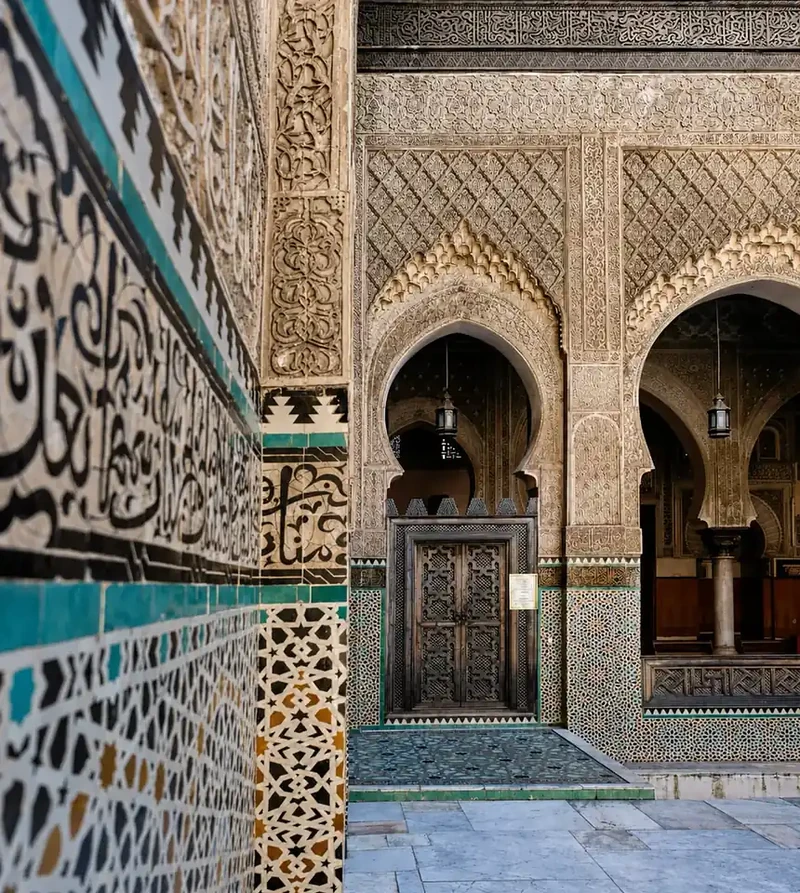
Four settings.
Four starting assumptions.
A programmed public performance
The organizer has invited an audience to a defined activity. Read its rules and follow the venue arrangement. Public presentation still does not guarantee unrestricted recording or backstage access.
A working preparation area
People may be rehearsing, dressing, caring for animals or arranging equipment. Remain outside unless someone with responsibility explicitly invites you in.
A family or hospitality space
An invitation can be personal and limited. Clarify whether you are welcome to sit, share food or observe, and ask separately before including companions or taking photographs.
A devotional or sacred moment
Do not infer access from appearance. Ask an appropriate host, observe the stated rules and accept that a meaningful encounter may be to remain outside.
Ask a small,
answerable question.
A simple request is easier to answer than a broad demand for access. “May I stand here and watch?” establishes something different from “May I photograph this?” Ask the question that matches what you intend to do.
If language is a barrier, seek help from an appropriate guide or steward. Gestures can assist a basic exchange, but a smile should not be treated as clear consent to a more intrusive action. When the answer remains uncertain, keep your distance.
Allow a refusal to end the request. Do not ask several people until someone agrees, or use a visitor nearby as proof that entry is permitted. Their relationship with the occasion may differ from yours.
A stage and a ceremony
can share a sound.
A musical practice can have public, social and devotional dimensions. UNESCO’s description of Gnawa recognizes a wider cultural life than a concert alone. Hearing a familiar rhythm at a festival does not mean you have entered every context in which that music has meaning.
Use the programme’s language to identify the public encounter you are attending. If an artist or host explains a connection with another setting, retain that distinction in your account. Avoid calling a programmed concert a private ceremony because it felt emotionally powerful.
The same care applies to clothing, gestures and repeated forms. Their meaning needs context. Visual intensity is not evidence that a visitor can interpret an occasion without explanation.
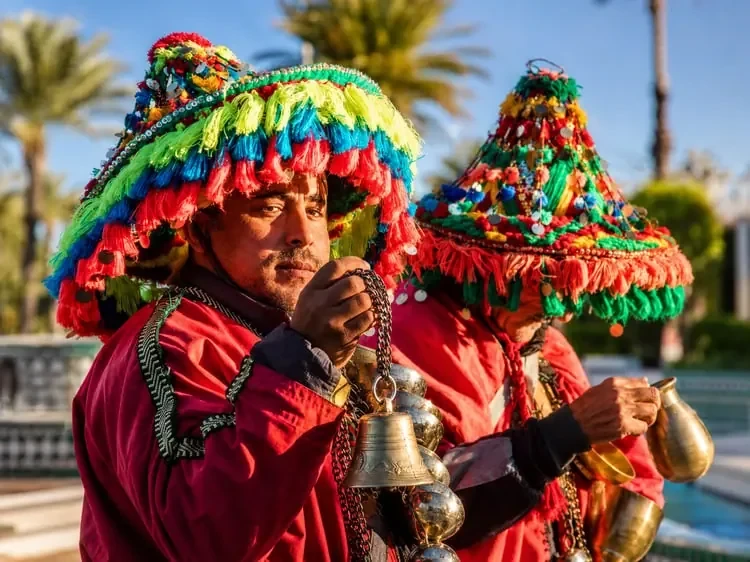
Participation has
several degrees.
Being present
A welcome to watch may ask only for quiet attention from a particular place. Settle into that role rather than immediately seeking a more active one.
Joining an action
Follow an explicit invitation and the host’s guidance. Do not imitate a movement or enter a group simply because another participant does so.
Making a record
Ask about the specific form: a still image, a short video, audio or notes. Permission for one form does not establish permission for another.
Sharing afterwards
Consider the audience and context of publication. A private exchange may be meaningful precisely because it was not offered for public circulation.
Place changes
the invitation.
Fès — a festival venue and the surrounding city
A ticketed performance has a defined public setting. Nearby religious, residential or working spaces keep their own rules; a festival visit does not extend admission into them.
Read Festival nights. In Fès.Moulay Abdellah Amghar — a wider gathering
The public equestrian or artistic programme sits within an occasion with religious and community dimensions. Use the organizer’s guidance and respect separate boundaries within the gathering.
Read Moulay Abdellah. The moussem.Tan-Tan — heritage and hospitality
Public cultural presentation can coexist with more intimate social spaces. Let the host of each encounter establish whether you may enter, observe, participate or record.
Read Tan-Tan. The moussem.Clothing and conduct
should fit the actual place.
Check any stated dress or conduct requirements before visiting a religious or culturally sensitive venue. Ask about the site you intend to enter rather than relying on a generalized rule for an entire country.
Move quietly where the occasion calls for it, keep passageways free and avoid placing belongings on furniture or surfaces without knowing their use. If footwear or other arrangements are required, follow the host’s directions and keep the entrance clear while doing so.
The aim is attentiveness, not performance. You do not need to demonstrate that you already understand every convention. A brief, respectful question and a willingness to follow guidance are often more useful than confident imitation.
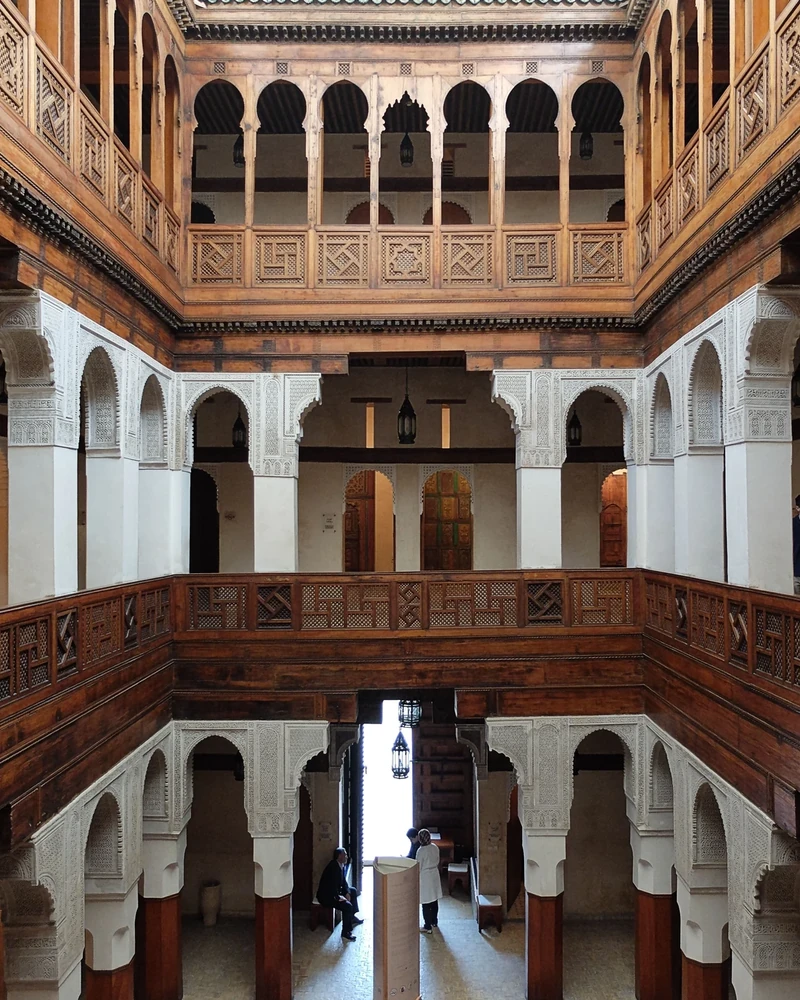
Photography can wait.
The encounter comes first.
Before lifting the camera, consider whether taking a picture would interrupt attention, expose someone who has not agreed or change the atmosphere of a small gathering. Even where photography is allowed, the timing can still be poor.
For a close portrait, ask the person directly where possible. If the frame includes others, do not assume one person can consent for everyone. Be particularly careful around children and follow both the responsible adult’s permission and the child’s comfort.
If someone changes their mind, stop. Where practical, respect a request to delete an image you have just made. The value of a photograph does not outweigh the relationship that made your presence possible.
Three moments
that call for restraint.
You arrive during an unexplained activity
Remain at the public edge and ask an appropriate host. Avoid narrating the activity to companions as though its meaning were already established.
A host welcomes you but others seem uncomfortable
Reduce the intrusion and clarify the invitation. A welcome to one visitor is not a reason to ignore the comfort of other people sharing the space.
The group begins to move elsewhere
Do not follow automatically. A transition can mark the end of the public part of an occasion. Wait for guidance and accept a natural ending.
Describe what
you were invited to know.
After a visit, separate observation, explanation and interpretation. You may have seen an action, heard a host’s account and formed your own impression. Those are three different kinds of statement.
If you share the encounter, use the correct place and occasion, attribute explanations with permission and leave private details out. Do not invent names, quotations or motives to make the story more vivid. A thoughtful account can acknowledge that some meanings remained beyond a visitor’s understanding.
The encounter can still be valuable when it ends without a photograph or a complete explanation. Respect is sometimes expressed by the things you choose not to collect.
Keep learning
without crossing the boundary.
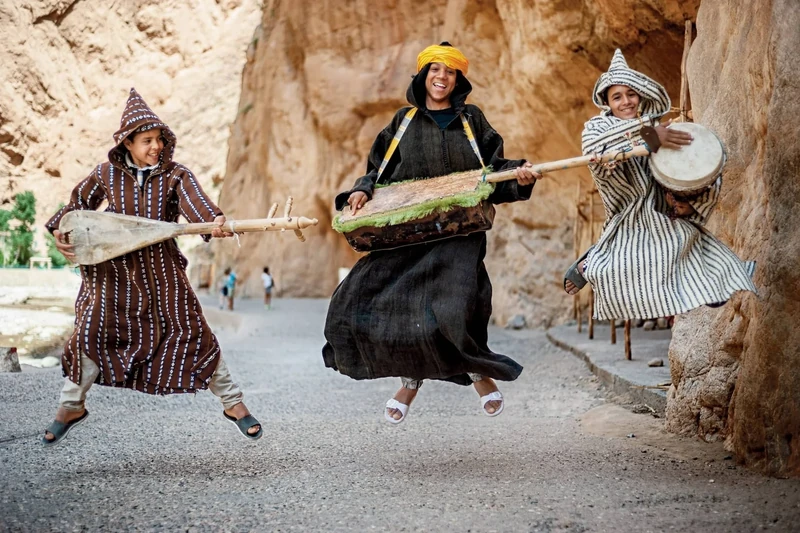
Music & sacred sound
Distinguish listening contexts and traditions.
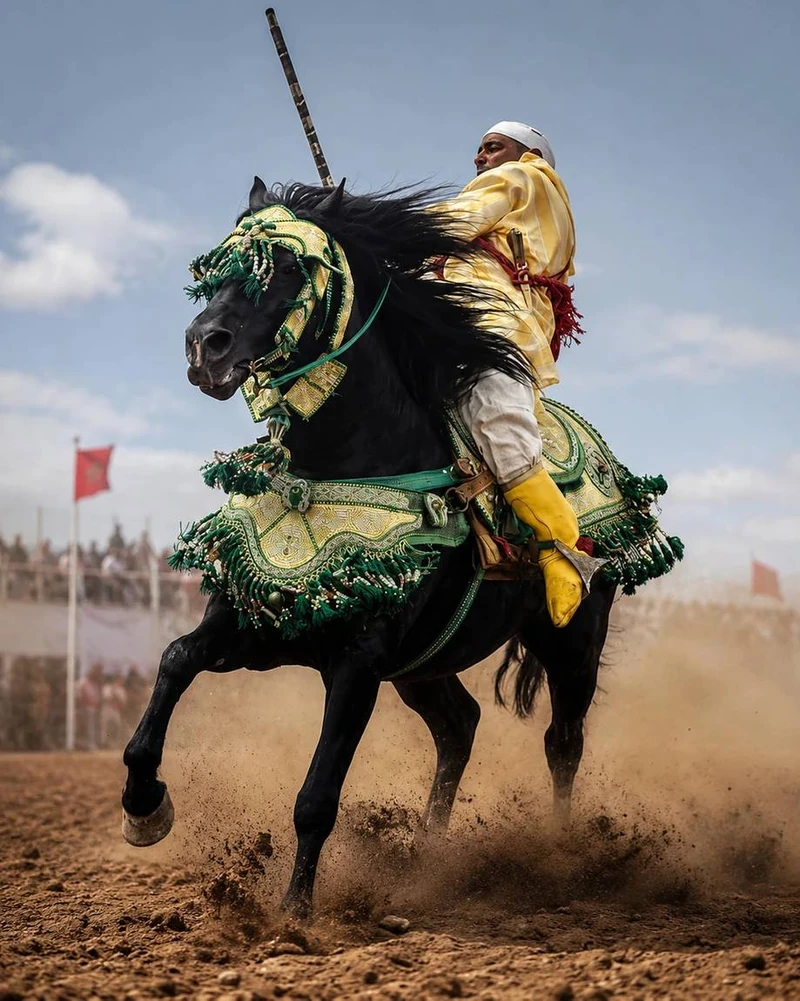
Moussems & fantasia
Read the relationships around the performance.
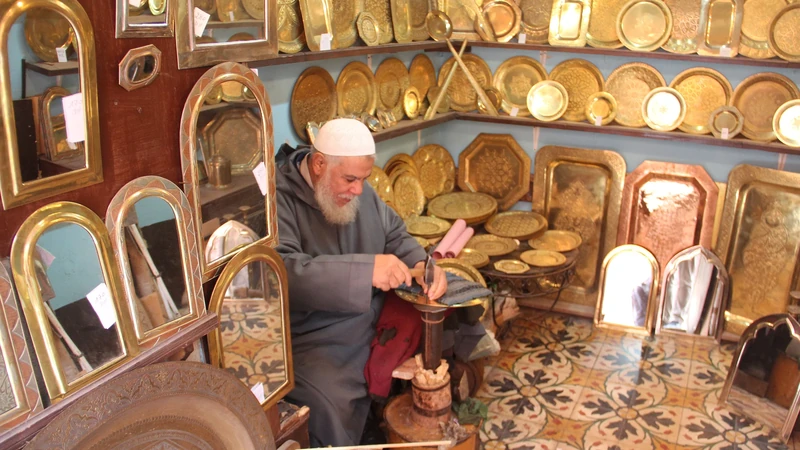
Photography & respect
Make deliberate image decisions.
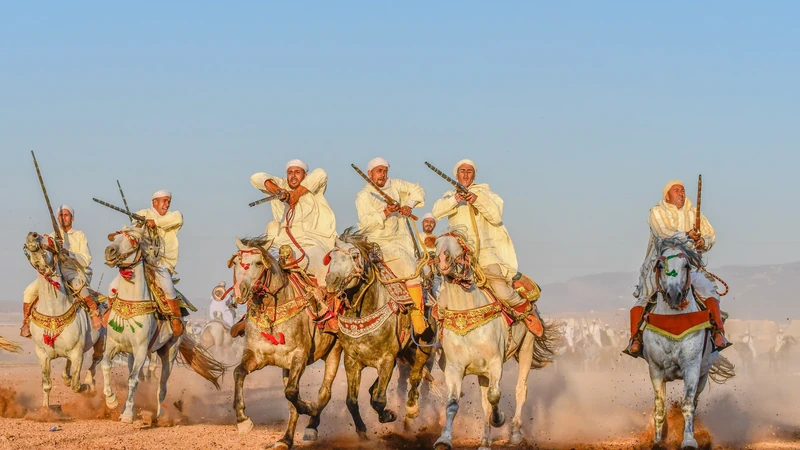
Local traditions
Choose a gathering with a clear invitation.
Sources, date checks & image context
Event information checked on 29 September 2026. Dates marked typical describe a seasonal pattern, not an announced booking date. Recheck the linked organizer before committing to travel.
Library images illustrate the host place, materials and cultural context. They are not presented as documentary records of a particular festival edition.
Photograph credits
Attributions retained from the canonical library. Responsive resizing and WebP conversion; each photograph’s stated licence continues to apply.
- Library photograph: Robert Prazeres · CC BY-SA 4.0.Editorial crop, resizing and WebP conversion. The adaptation retains the source licence.
- Library photograph: PlateMakerMarrakech.jpg — Elgaard. CC BY-SA 4.0. Cropped/resized; original licence retained.
- Library photograph: Houssain tork · CC BY-SA 4.0.Editorial crop, resizing and WebP conversion. The adaptation retains the source licence.


