
The picture is part
of an encounter.
Your camera changes the situation, even when it is a phone.
At an event, the person in front of you may be working, performing, waiting for a relative or taking part in something deeply personal. Begin by understanding that role. A musician on an advertised public stage has a different relationship to an audience than a family inside a private gathering.
Decide what you want the image to say before taking it. A wide view can describe a crowd without isolating someone; a close portrait makes a person the subject and calls for a direct conversation. The more intimate the photograph, the more carefully you should establish permission.
This is a practical guide to considerate behavior. Venue conditions still govern access, equipment and recording. Check the specific organizer’s rules, and treat a refusal as a complete answer.
Permission has
more than one layer.
The venue
A ticket admits you under stated conditions. It may allow a phone while restricting video, flash, tripods or professional equipment. A rule posted at the entrance can be more specific than the general festival website.
The person
Ask an identifiable subject whether they are comfortable being photographed. Make your intention understandable, give them time to answer and avoid surrounding them with a camera while asking.
The use
A personal travel album, a public social post and a commercial campaign are different uses. Explain what you intend to do. Permission for a casual picture should not be stretched into a claim that someone endorses a product or publication.
A respectful portrait
takes a little time.
Make contact first
Lower the camera, greet the person and ask simply. If you do not share a language, a clear gesture and a friendly pause can help, but uncertainty is a reason to wait rather than an excuse to proceed.
Leave room for a real choice
Do not block someone’s path or interrupt a task that cannot be paused. A reluctant smile is not always an invitation. If they turn away, cover their face or seem uncomfortable, put the camera down.
Agree the frame
If the person says yes, show where you will stand and avoid adding other people without asking. Do not rearrange a working space or ask someone to repeat a private action for a more dramatic picture.
Close the exchange
Thank them and offer to show the image. If you promise to send a copy, make that a commitment you can keep. If they ask you to delete it, respond graciously and do so.
The stage is public.
The sightline is shared.
Being allowed to photograph does not mean being allowed to obstruct.
A raised screen can sit between many listeners and the stage. Take a brief image from your own space, then lower it. Avoid walking to the front through a seated audience or leaning over a barrier to improve the angle. A performance is also an experience for the people around you.
Respect the difference between a souvenir photograph and sustained recording. Some intimate Gnaoua festival settings explicitly prohibit photographs and video in the conditions checked for this guide. Read the conditions for your own performance rather than applying the policy of an outdoor stage to a smaller venue.
Flash can disrupt concentration and change the atmosphere. Even where a ban is not posted, use available light. If the light is too low for the image you want, the better choice may be to listen and leave the photograph untaken.
Three situations
worth recognizing.
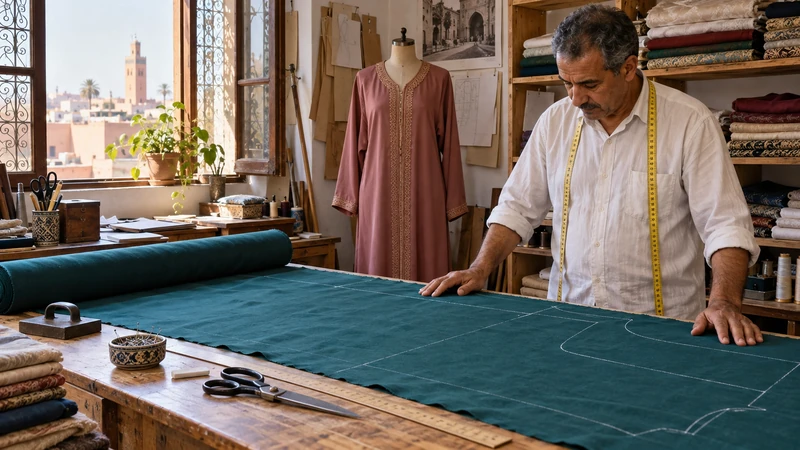
A working artisan
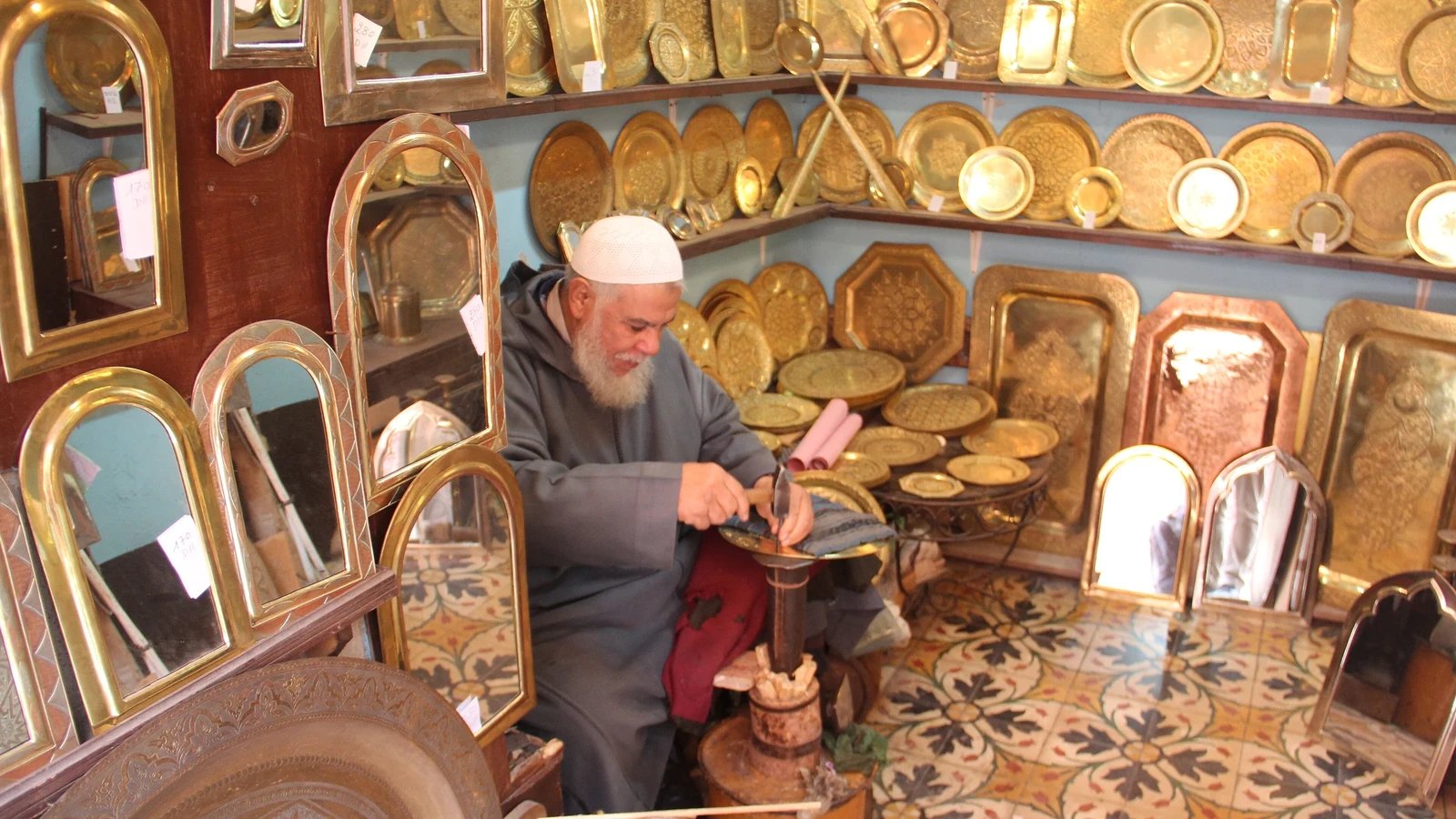
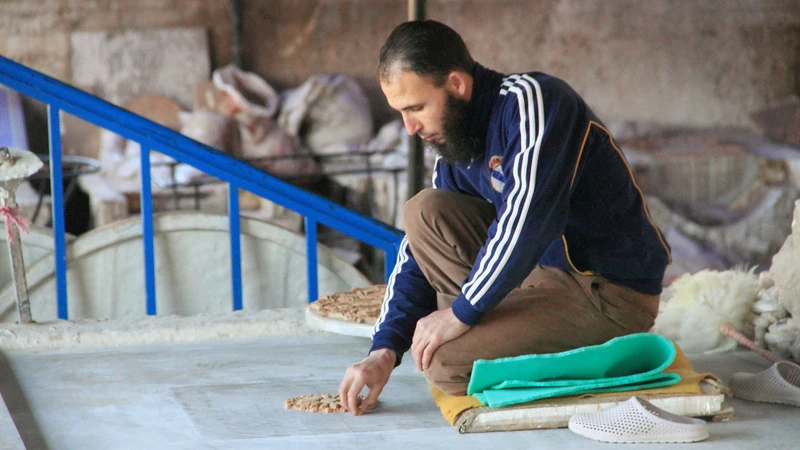
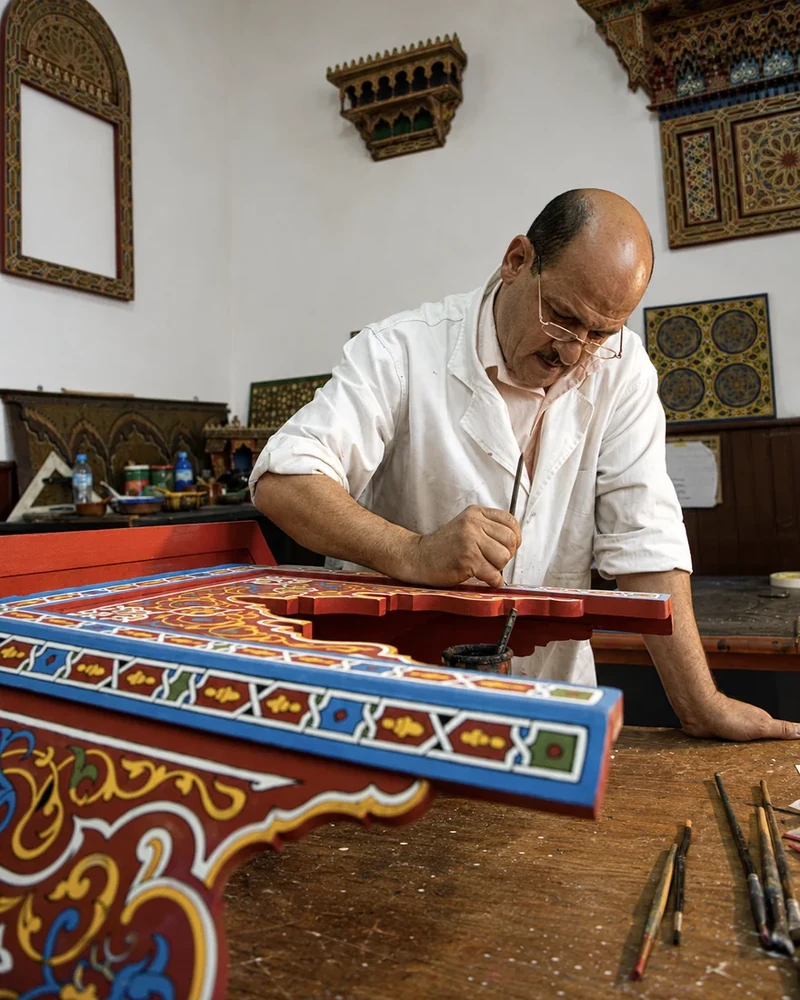
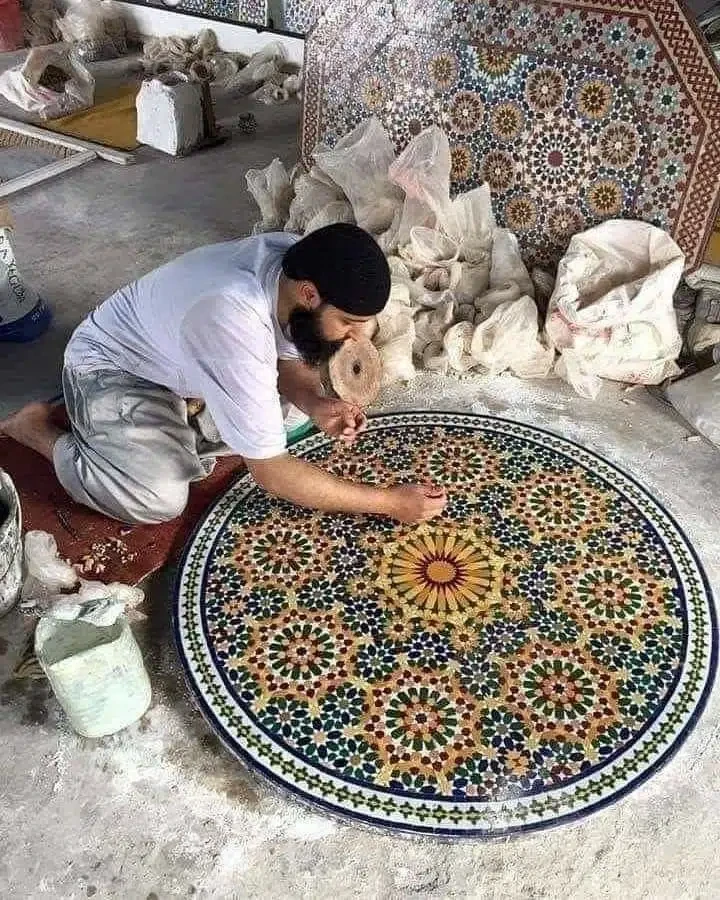
Ask before moving close to hands or tools. Wait for a safe pause, and avoid making the worker choose between concentrating on a delicate task and responding to your camera.
Explore craft heritage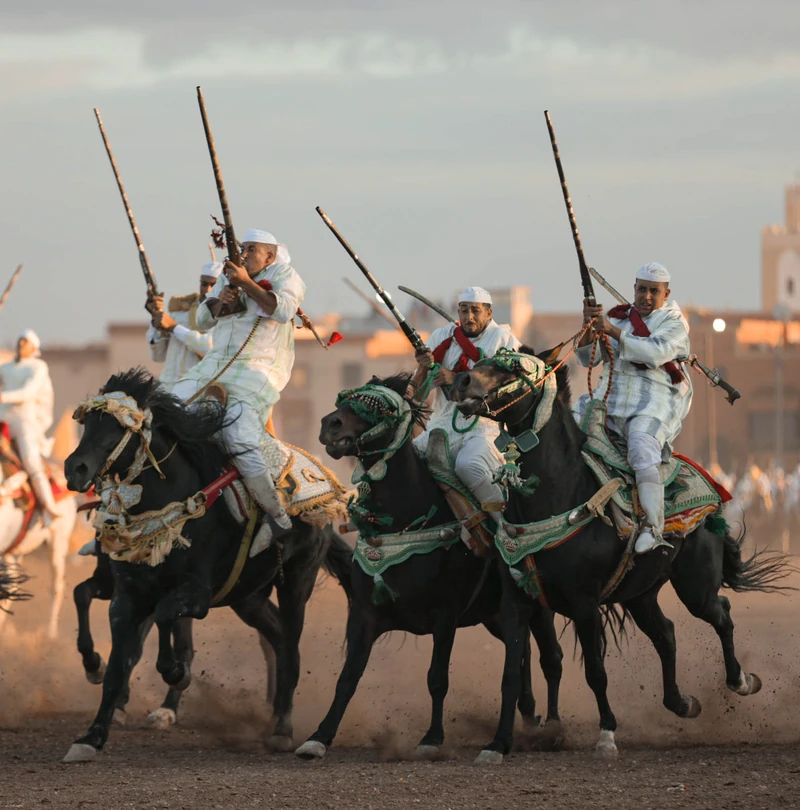
An equestrian display
Stay in the designated audience area. A photograph is never a reason to step into the course, approach a horse unexpectedly or distract a rider during preparation.
Understand tbourida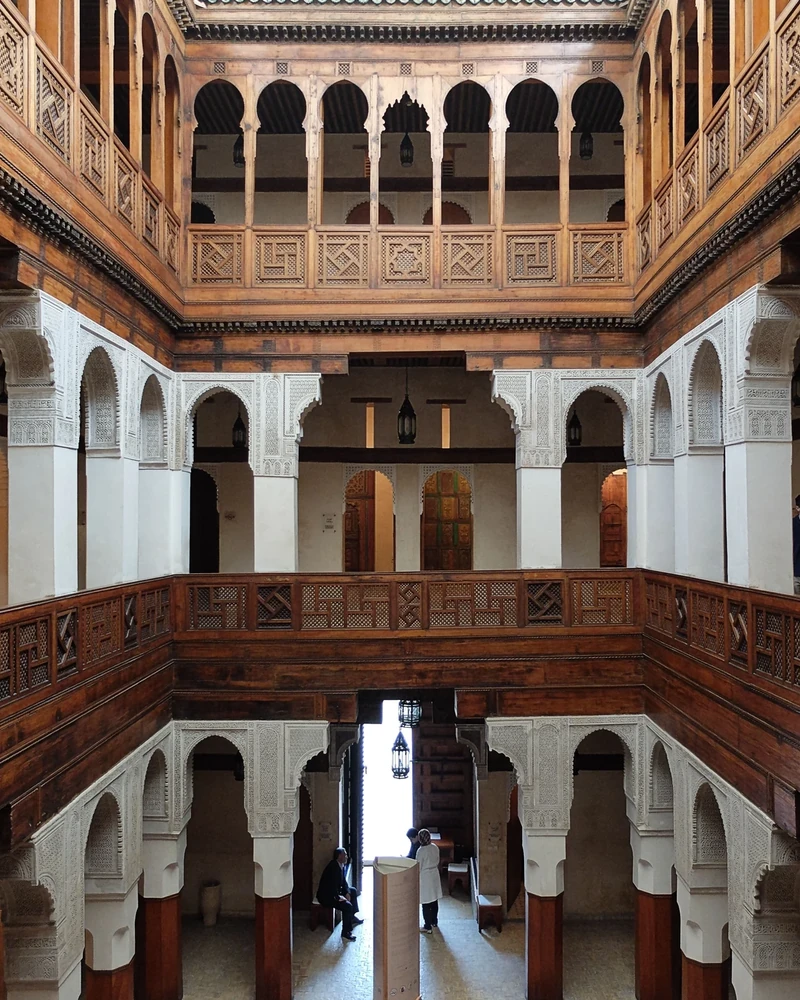
An interior or collection
Check the sign at the room itself. Permissions can differ between a courtyard, an exhibition and a temporary loan. Ask staff when the policy is unclear.
Visit heritage thoughtfullyA location is
not a permission slip.
Festival streets in Essaouira
Crowded public lanes also lead to homes and workplaces. Keep entrances clear and avoid treating a doorway as a portrait backdrop while residents are trying to use it.
Read Festival streets. Essaouira.Historic settings in Fès
A performance invitation applies to the named event space. It does not establish access to nearby religious interiors or private courtyards. Ask the appropriate host before crossing another threshold.
Read Festival nights. In Fès.Moussem grounds
A gathering can contain public displays, family areas, working spaces and devotional activity. Learn which areas welcome visitors and which require an invitation. Do not infer that every tent or group is part of a public show.
Read A local occasion. A clear invitation.Craft markets and fairs
A stallholder may welcome pictures of a display but prefer not to be included. Ask separately about photographing the person, the work and any demonstration. Buying an object does not purchase control over their image.
Read Meet the making. Choose the encounter.Children deserve
extra consideration.
Avoid making an unfamiliar child the subject of a close photograph without an appropriate adult’s permission and the child’s own comfort. Do not direct a child away from the people responsible for them to improve a picture. If the exchange feels uncertain, choose a wider scene or another subject.
Before sharing, look again at the background. School information, a house entrance, a name badge or a precise location can reveal more than you intended. A photograph that feels harmless in a private album may carry different consequences when placed in a searchable public feed.
The same care applies to anyone in a vulnerable, distressed or private moment. The fact that a scene is visible does not make publishing it considerate. Your strongest record of the occasion may be a description rather than an identifiable image.
Keep the caption
as honest as the image.
Name what you know
Use a place, material, instrument or event name only when it is established. If you are unsure, describe what is visible without inventing a ritual, profession or personal story.
Separate illustration from evidence
A cultural image can evoke a place without documenting this year’s festival. Do not attach a future date or a specific edition to an unrelated photograph. That distinction protects the reader as well as the people pictured.
Resist the exotic shortcut
Words such as “timeless” can erase the present-day lives in a photograph. A working musician, maker or family member has a contemporary role. Specific language usually tells a more interesting story than a dramatic label.
When the answer
is not obvious.
Can I pay someone for a photograph?
If a person offers a paid portrait or performance, agree the terms before photographing. Payment should be clear and voluntary. It does not automatically settle where or how an image may be published.
What if someone changes their mind?
Stop photographing. Listen to the request and respond respectfully. If they ask you to remove an image from your device or a post you control, address that request rather than arguing about the effort involved.
Can a guide give permission for everyone?
A guide can explain the venue and help you communicate. They should not replace the choice of the individual being photographed or the authority of a host over a private space.
What if I miss the picture?
A missed photograph is a normal part of considerate travel. You can still remember the music, describe the detail or ask whether there is an official image the organizer makes available.
Leave with
more than images.
Try one part of the event with the camera put away.
Listen for a change in rhythm, watch how a craftsperson prepares a tool or notice how people make room for one another. These observations often become the context that gives your photographs meaning later.
When you review the day, select fewer pictures and describe them more carefully. A small set of accurate, considerate images can communicate more than a stream of decontextualized faces. Keep the people’s dignity at the centre of the story you tell.
Sacred & local moments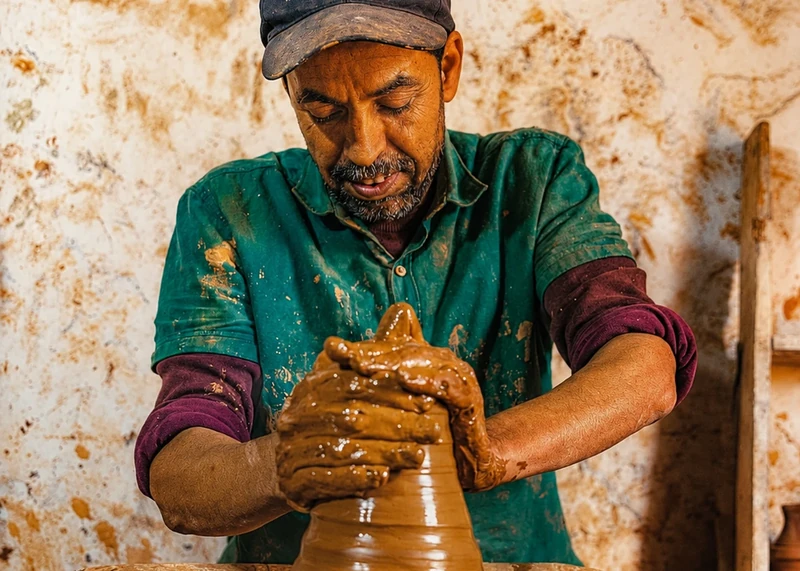
Plan the whole
experience.
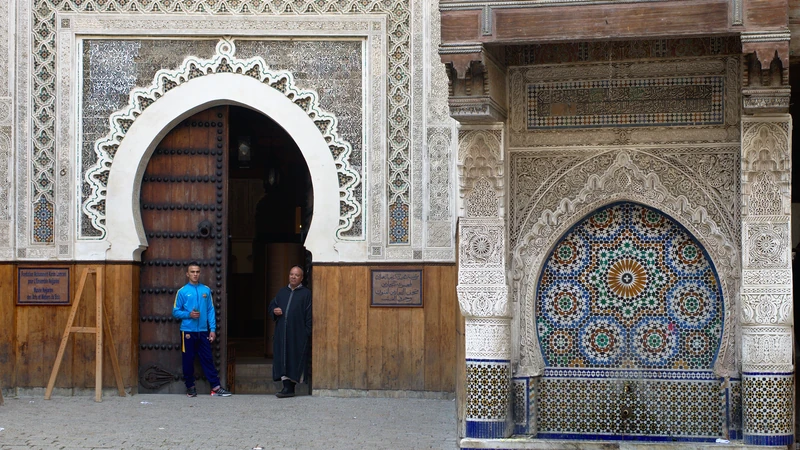
Public access
Understand the invitation before arriving.
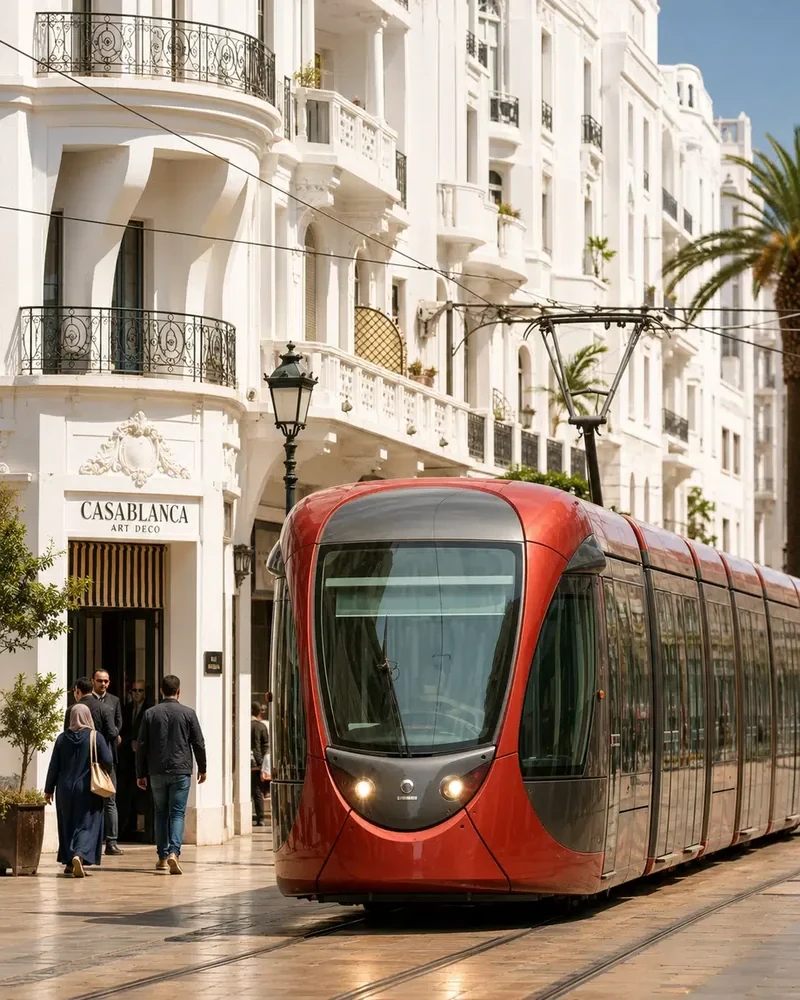
Getting there
Give the journey the same care as the event.
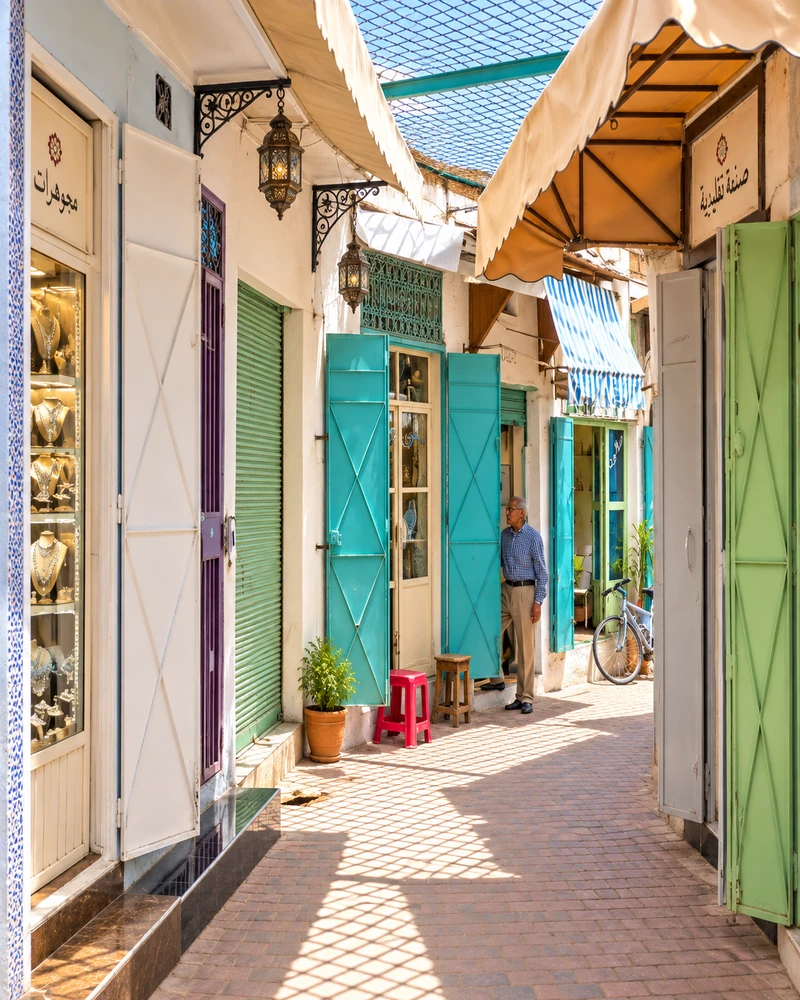
Families & crowds
Choose a manageable place and pace.
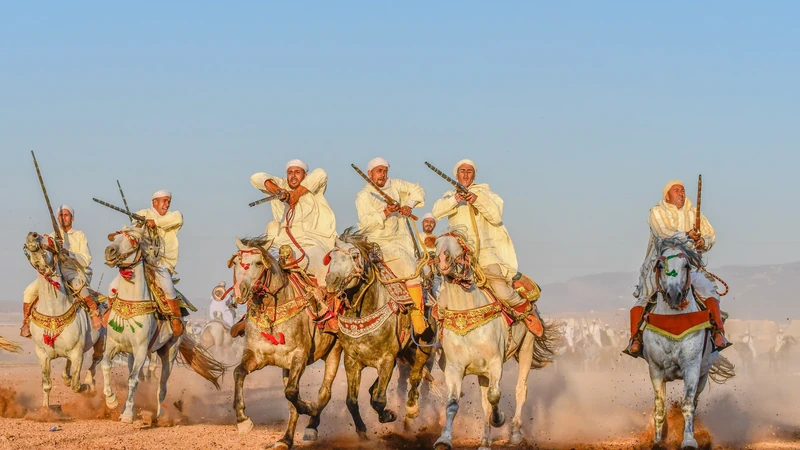
Living traditions
Understand the gathering around the image.
Sources, date checks & image context
Event information checked on 29 September 2026. Dates marked typical describe a seasonal pattern, not an announced booking date. Recheck the linked organizer before committing to travel.
Library images illustrate the host place, materials and cultural context. They are not presented as documentary records of a particular festival edition.
- Gnaoua festival — venue-specific ticket and photography conditions
- National Foundation of Museums — visits and filming enquiries
- UNESCO — ethical principles for safeguarding living heritage
Photograph credits
Attributions retained from the canonical library. Responsive resizing and WebP conversion; each photograph’s stated licence continues to apply.
- Library photograph: PlateMakerMarrakech.jpg — Elgaard. CC BY-SA 4.0. Cropped/resized; original licence retained.
- Library photograph: Schorle · CC BY-SA 4.0.Editorial crop, resizing and WebP conversion. The adaptation retains the source licence.
- Library photograph: Robert Prazeres · CC BY-SA 4.0.Editorial crop, resizing and WebP conversion. The adaptation retains the source licence.
- Library photograph: Marek Kubica from Copenhagen, Denmark · CC BY-SA 2.0.Editorial crop, resizing and WebP conversion. The adaptation retains the source licence.
- Library photograph: Houssain tork · CC BY-SA 4.0.Editorial crop, resizing and WebP conversion. The adaptation retains the source licence.


.jpg)
