
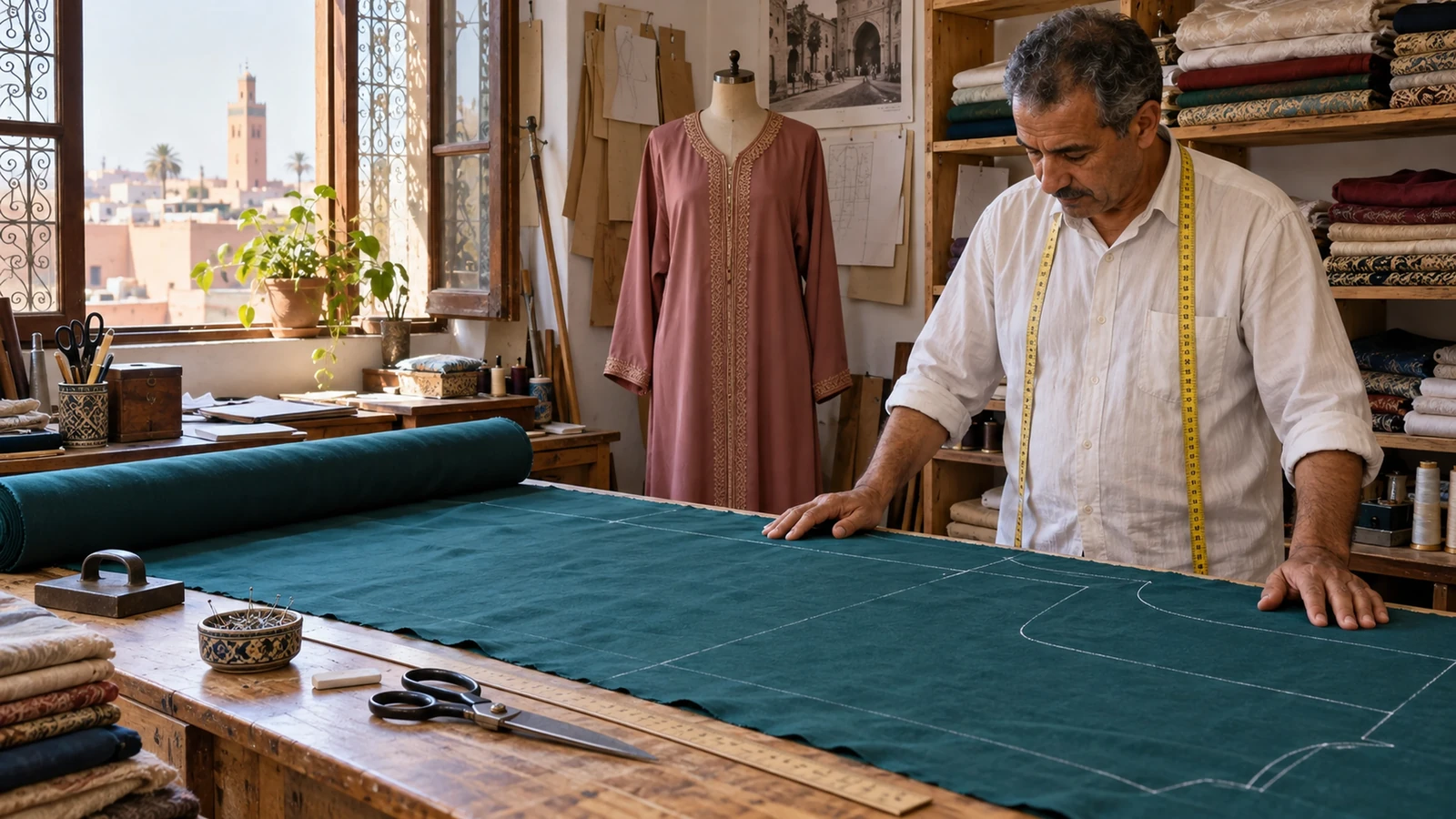
Begin with the format.
It shapes what you can learn.
The phrase “craft event” can describe several very different experiences. A museum exhibition interprets objects. A demonstration makes part of a process visible. A market creates an opportunity to browse and buy. A workshop may invite participation under a maker’s guidance.
Decide which of those interests you before searching for a date. A beautiful display is not necessarily a place to watch production, and a working demonstration does not necessarily include a class or a sales opportunity.
This is a discovery guide, not a calendar of unverified craft fairs. It points towards reliable kinds of hosts and helps you assess an announced event. Where no current public programme has been confirmed, it does not invent one to fill a listing.
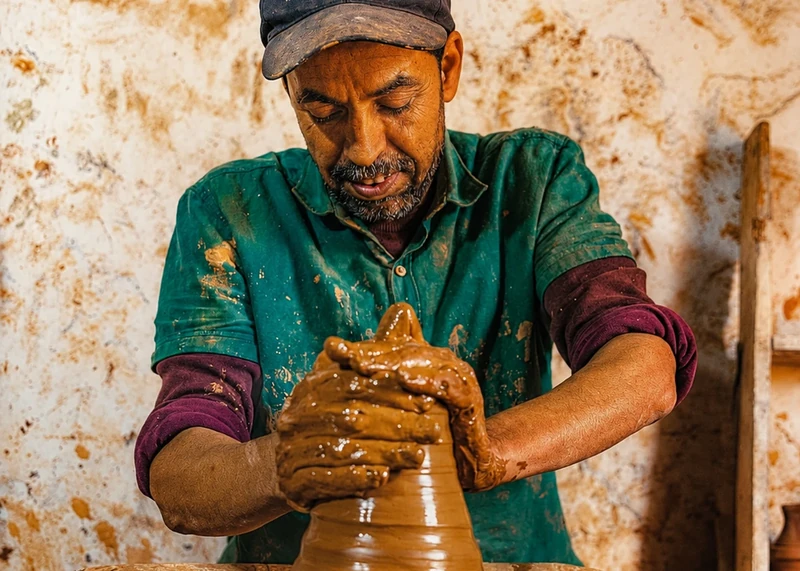
Four kinds of encounter.
Four useful expectations.
The exhibition
Look for a named institution, curatorial subject, dates and visitor information. Labels and interpretation can help place objects in historical, material or artistic context.
The demonstration
Expect a selected process presented for an audience. Ask which stages are being shown and which happen elsewhere. Watching a skilled action does not reveal the whole production sequence.
The artisan market
Expect an exchange involving goods, prices and sellers. Clarify authorship and materials rather than assuming every seller made every object on display.
The participatory workshop
Check the activity, duration, language, age suitability and what is included. A visitor exercise can introduce a skill without being equivalent to professional training.
Institutions provide
a traceable starting point.
A museum’s own programme can establish the title, host and dates of an exhibition or public activity. The Fondation Nationale des Musées is one useful starting point for institutional programmes in Morocco. Follow through to the actual museum and current visitor information.
As a documented example, Dar Jamaï presented “Le métal sous toutes ses formes” from 6 February 2025, as reported by Le Matin. The exhibition connected metal objects with the processes of making. That announcement demonstrates a particular curatorial approach; it does not establish that the exhibition is still showing today.
When researching any similar event, distinguish an archive notice from a current listing. If the dates or end of a run are unclear, confirm with the institution before travelling specifically to see it.
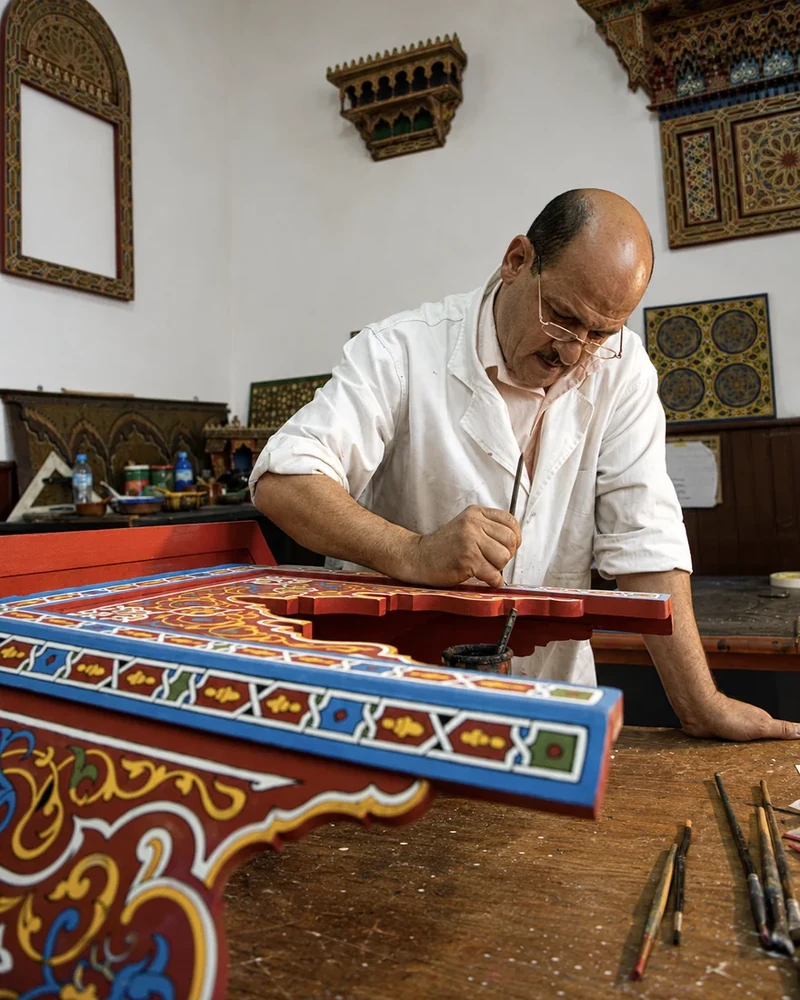
A maker-led encounter
asks a different question.
At an open workshop or demonstration, the most valuable information may come from a decision being made in front of you. Ask about a material, a sequence or the point at which the maker judges a stage complete.
Keep questions proportionate to the setting. Someone working to a deadline may have little time, while a booked teaching session may be designed for extended explanation. Clarify the arrangement so both sides know what is expected.
Do not assume that the person demonstrating is available to sell, take commissions or host another visit. Ask directly and accept the answer. An encounter can be worthwhile without extending beyond its announced purpose.
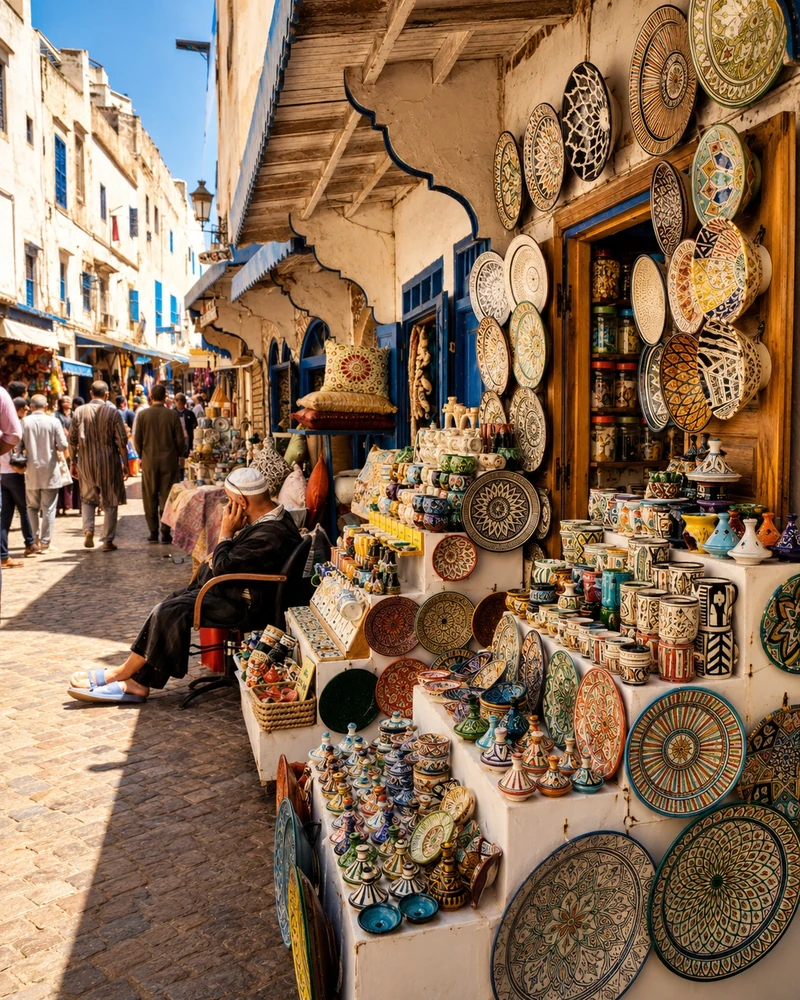
A market is
a place of trade.
The variety of a craft market can be part of its pleasure, but it requires clear questions. Who made the piece? What materials are described? Is the item on display the one being sold, or is it an example for a future commission?
A seller may represent their own work, a workshop or several suppliers. Those relationships should be understood rather than judged from appearance alone. If a particular origin or technique matters to your decision, ask what supports the description.
Take time to compare workmanship, dimensions and suitability for use. A purchase should be chosen for a reason you can explain, rather than for a broad promise that an object contains the whole character of a place.
Use existing places
to deepen the search.
Fès
The city’s museums, historic buildings and working craft contexts can support an interest in materials and making. Check public access and arrange workshop encounters through a responsible host.
Explore FèsMeknès — Dar Jamaï
The National Museum of Music also occupies a building with its own decorative and restoration history. Consult the FNM for current exhibitions and programmes rather than relying on an old event announcement.
Explore Meknès — Dar JamaïTétouan
Architecture and decorative work can provide a setting for a focused craft interest. Look for a named maker, institution or current event whose invitation is clear.
Explore TétouanMarrakech
A city stay can connect public cultural institutions, artisan encounters and market browsing. Keep each host and admission arrangement distinct instead of assuming every shop is a visitor workshop.
Explore MarrakechRead an event listing
before trusting its photograph.
Identify the organizer
Look for a named institution, association, maker or venue with a current contact route. An image reposted without a source is not enough to establish an event.
Check the edition and dates
Confirm the year, opening period and session time. A recurring title or an old poster can remain online after the event has ended.
Read the activity
Establish whether the offer is viewing, demonstration, participation or shopping. Check reservations, charges and any required materials.
Confirm practical access
Verify the location, entrance, language, age or mobility considerations and the cancellation terms of a booked activity. Resolve the details that affect your visit before committing.
Before buying,
make the agreement concrete.
Confirm the exact item, quantity, dimensions, material description and price. For a commission, record the agreed design, finish, delivery timing and payment terms. A photograph can support the specification, but it should not replace a clear written description.
If shipping is involved, establish who packs the piece, which service is used and what the quoted price includes. Check any import requirements relevant to the destination before arranging delivery.
Do not treat a public demonstration as a reason to demand a reduced price. Skilled explanation and production are work. You can decide not to buy while still respecting the time and care that made the encounter possible.
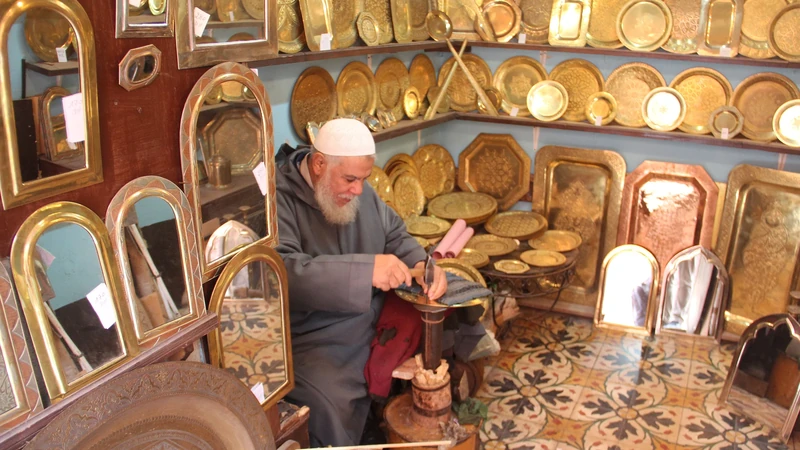
Match the activity
to your way of learning.
You want historical context
Choose an exhibition with interpretation and allow time to read. Note one material or technique to follow through another museum or documented building.
You want to understand a process
Choose a demonstration or guided working encounter. Ask about sequence and decisions, and leave room for the maker’s own account.
You want to try something
Choose a clearly described participatory session. Establish what a beginner will do and what can reasonably be completed in the time, without confusing an introduction with mastery.
Recognition can be
more precise than praise.
Instead of describing an object only as beautiful, identify what held your attention: a joined edge, a controlled line, a practical shape or the relationship between a surface and the light. Specific observation gives skilled work a clearer place in your memory.
If you share images, ask about permission and credit the maker accurately where they want to be named. Avoid publishing a private conversation or an unverified account of someone’s life.
The encounter becomes richer when the artisan remains a contemporary person making choices, and the object remains something with a purpose, a process and an author.
Follow the skill
beyond the event.
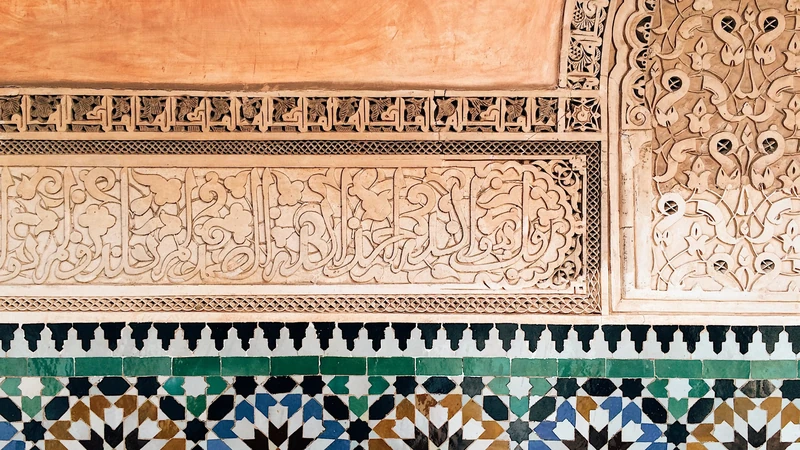
Craft & ornament
Read materials and worked surfaces.
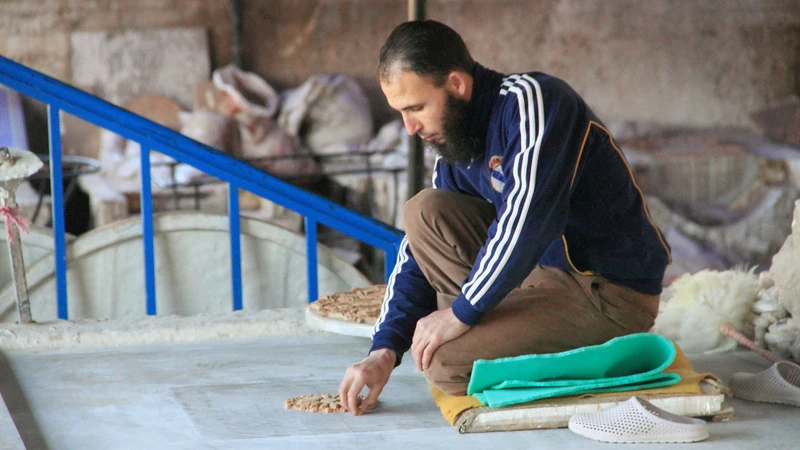
Craft & heritage
Understand transmission and care.
Craft days — the Story
A slower essay on attention and making.
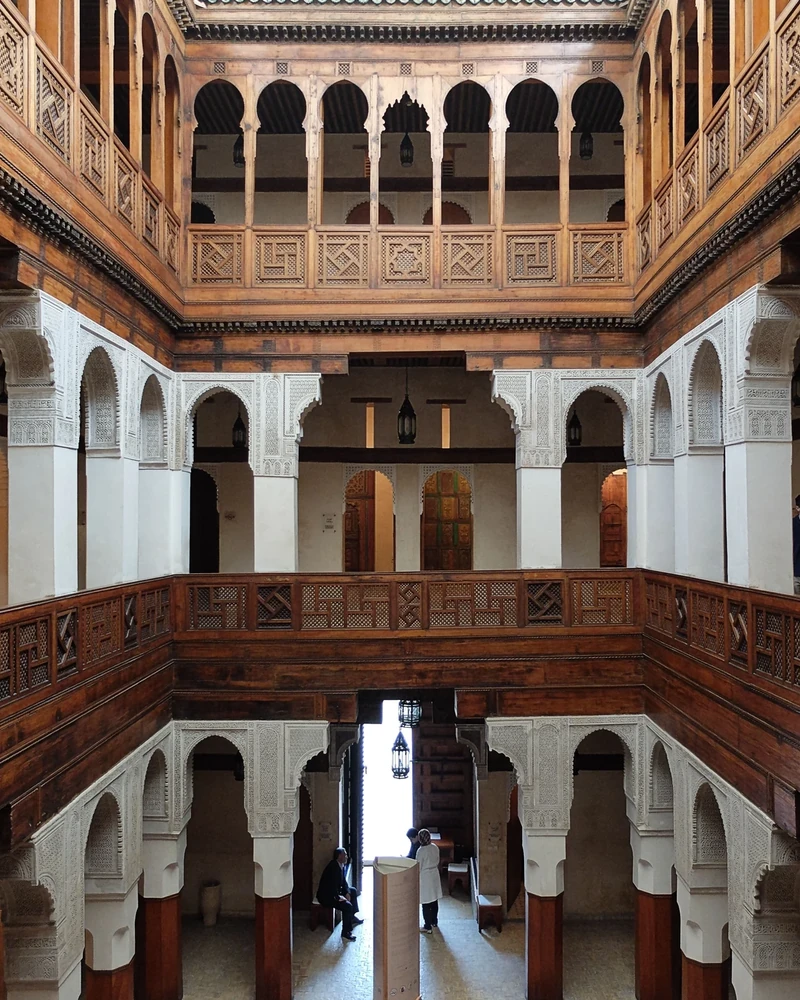
Heritage openings
Find the invitation in a cultural building.
Sources, date checks & image context
Event information checked on 29 September 2026. Dates marked typical describe a seasonal pattern, not an announced booking date. Recheck the linked organizer before committing to travel.
Library images illustrate the host place, materials and cultural context. They are not presented as documentary records of a particular festival edition.
- Fondation Nationale des Musées — museums and programmes
- FNM — Dar Jamaï National Museum of Music
- Le Matin — Dar Jamaï metal exhibition, February 2025
- UNESCO — Medina of Fez
Photograph credits
Attributions retained from the canonical library. Responsive resizing and WebP conversion; each photograph’s stated licence continues to apply.
- Library photograph: PlateMakerMarrakech.jpg — Elgaard. CC BY-SA 4.0. Cropped/resized; original licence retained.
- Library photograph: مدرسة ابن يوسف 04 24 52 023000.jpeg — إيان. CC BY-SA 4.0. Cropped/resized; original licence retained.
- Library photograph: Schorle · CC BY-SA 4.0.Editorial crop, resizing and WebP conversion. The adaptation retains the source licence.
- Library photograph: Robert Prazeres · CC BY-SA 4.0.Editorial crop, resizing and WebP conversion. The adaptation retains the source licence.


