
Choose one detail.
Stay with it.
An ornamented room or a busy craft event can overwhelm attention. Begin with a small element: an edge, a repeated shape, a carved recess or the point where two materials meet. Describe what you see before deciding what it means.
This guide is an exercise in looking at materials and workmanship. The related Craft & Heritage page follows transmission and working lives; Craft Fairs & Artisan Events helps you evaluate an event or purchase. Here, the aim is to make the next encounter more legible, whether you are watching a demonstration, visiting an exhibition or standing before an architectural detail.
A useful observation can be simple. One surface catches light sharply; another holds it softly. One joint is exposed; another is concealed. Those differences give a maker or guide something concrete to explain.
Pattern begins
with material choices.
A geometric arrangement is not only a drawing. It must be realized in a material with thickness, weight, texture and limits. The same motif will behave differently in tile, carved plaster or painted timber. Look for what the material makes possible and what it asks the maker to solve.
Surface
Notice whether the colour sits in a glaze, a paint layer, the material itself or an applied finish. If you cannot tell, ask. A photograph alone may hide the distinction.
Edge
Follow the boundary of a piece or carved area. Edges reveal cutting, joining and finishing decisions that are less obvious when you look only at the complete pattern.
Repetition
Compare similar units without expecting them to be mechanically identical. Variation needs explanation; it is not automatically proof of either quality or poor work.
Tile invites
a reading of joints.
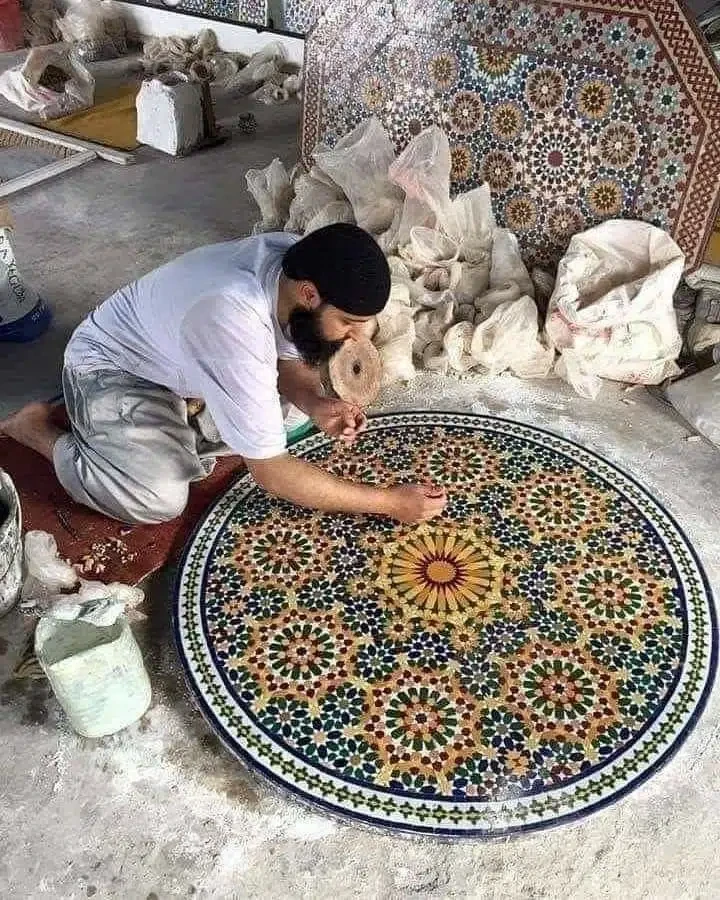
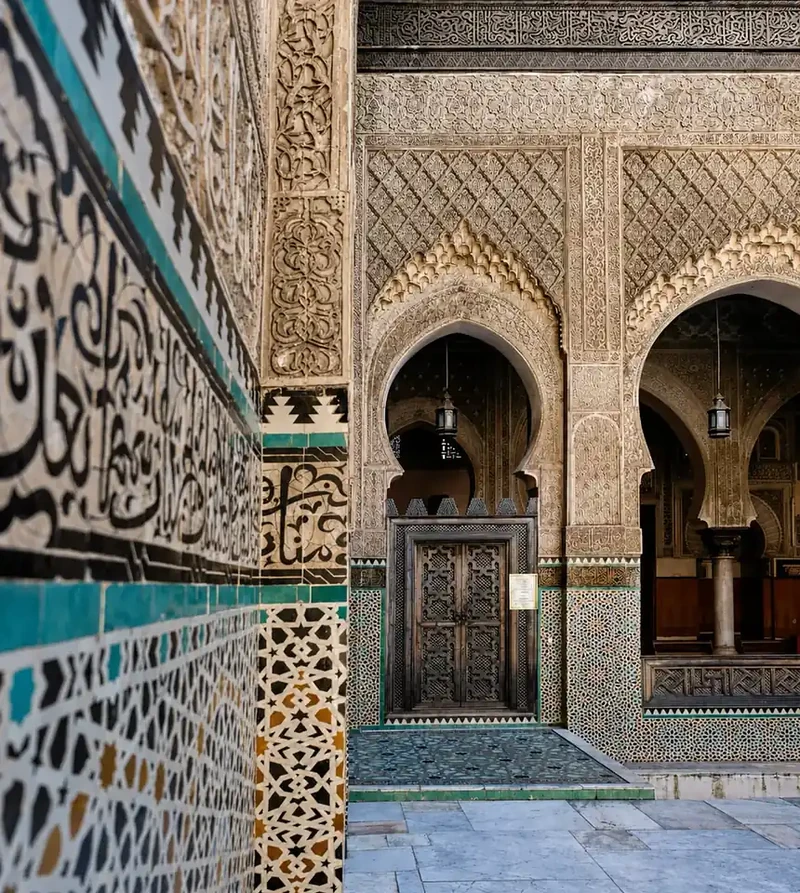
When looking at a mosaic surface, follow one line across several pieces. Notice where the rhythm changes, where a border turns a corner and how the pattern meets an opening. These transitions often reveal more than the broad centre of a wall.
Do not infer an entire making process from a decorative effect. Ask how the pieces were formed, cut, assembled and fixed when a knowledgeable person is available. A demonstration may show one stage while leaving earlier preparation and later installation out of view.
Stand back again after looking closely. The detail belongs to a larger composition, and the way a surface works at room scale may be different from the way it rewards a close photograph.
Relief changes
with the light.
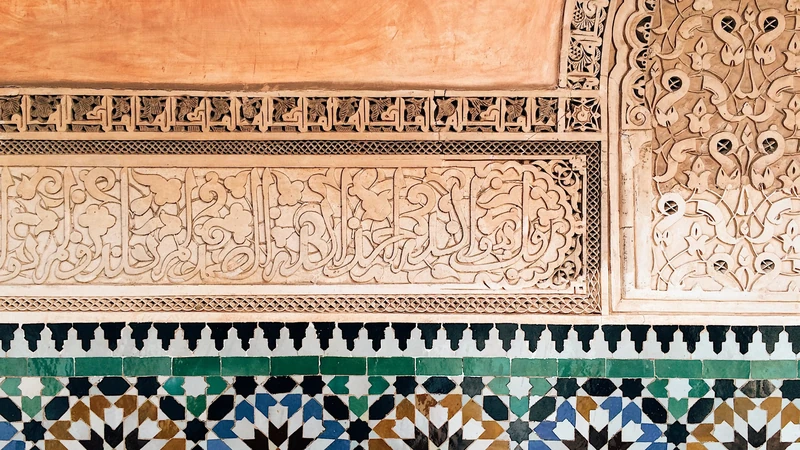
Carved ornament can seem dense from one position and clear from another. Move within the permitted viewing area and notice how shadows define depth. Look at the relationship between the raised surface and the spaces cut away, rather than only trying to identify a motif.
Fragile surfaces should remain untouched. The desire to feel a carving can be understandable, but repeated contact and oils from hands can affect finishes. If a workshop offers a handling sample, use that explicit invitation instead of reaching towards a historic surface.
Age and material should be established from a reliable explanation or label. A pale carved panel is not enough evidence to decide exactly what it is made from or when it was produced.
Timber carries
structure and decoration.
Find the joining logic
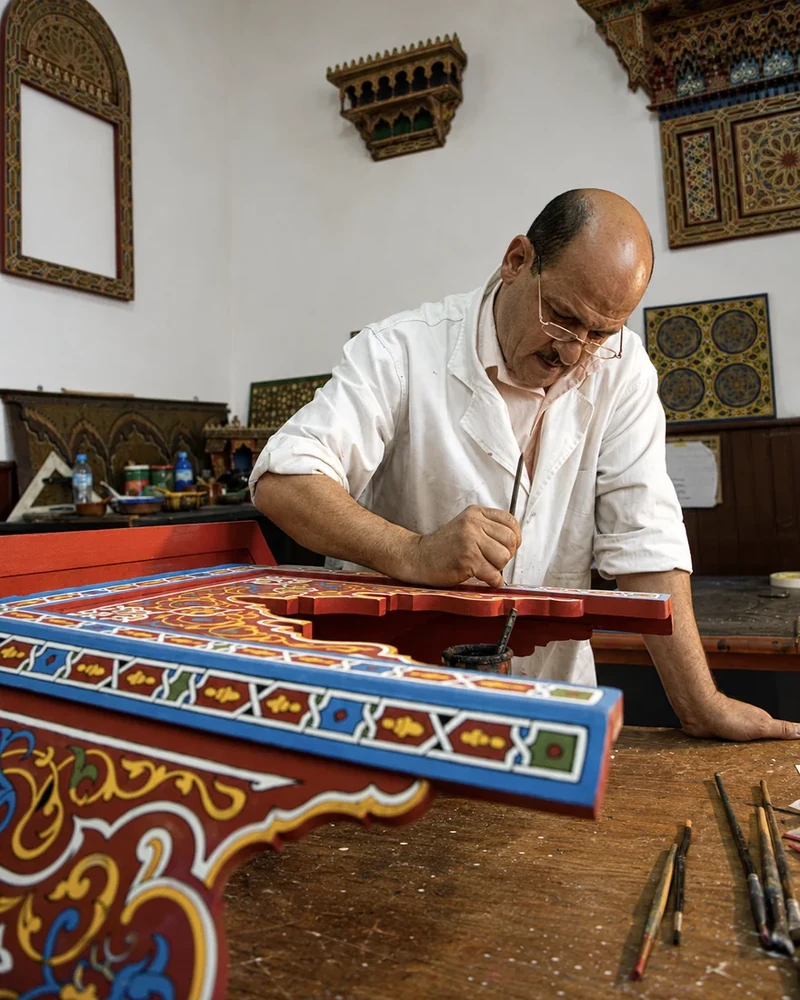
Look at how a frame, panel or door is put together. Ask where the object needs strength and where it allows movement. A painted or carved surface may conceal part of that construction.
Read the finish
Notice the relationship between grain, paint, carving and wear. Do not assume that a newly bright finish means an object is new, or that a worn surface proves great age. Ask what is known about its history.
Watch the sequence
During a demonstration, ask which stage you are seeing and what came before it. The visible finishing work may depend on preparation that took much longer and required different skills.
Materials live
in particular places.
Fès
Architectural surfaces and working craft streets can be read together, while keeping the distinction between a public heritage visit and a private workplace. Ask for access and interpretation appropriate to each.
Explore FèsTétouan
A city visit can connect decorative work with makers and workshop settings. Focus on the particular practice you encounter rather than expecting one artisan to explain every regional tradition.
Explore TétouanMarrakech
Museums, historic buildings and commercial craft spaces offer different kinds of information. A label, a guide and a seller may each speak from a different position; keep those sources distinct.
Explore MarrakechMetal makes
light part of the pattern.
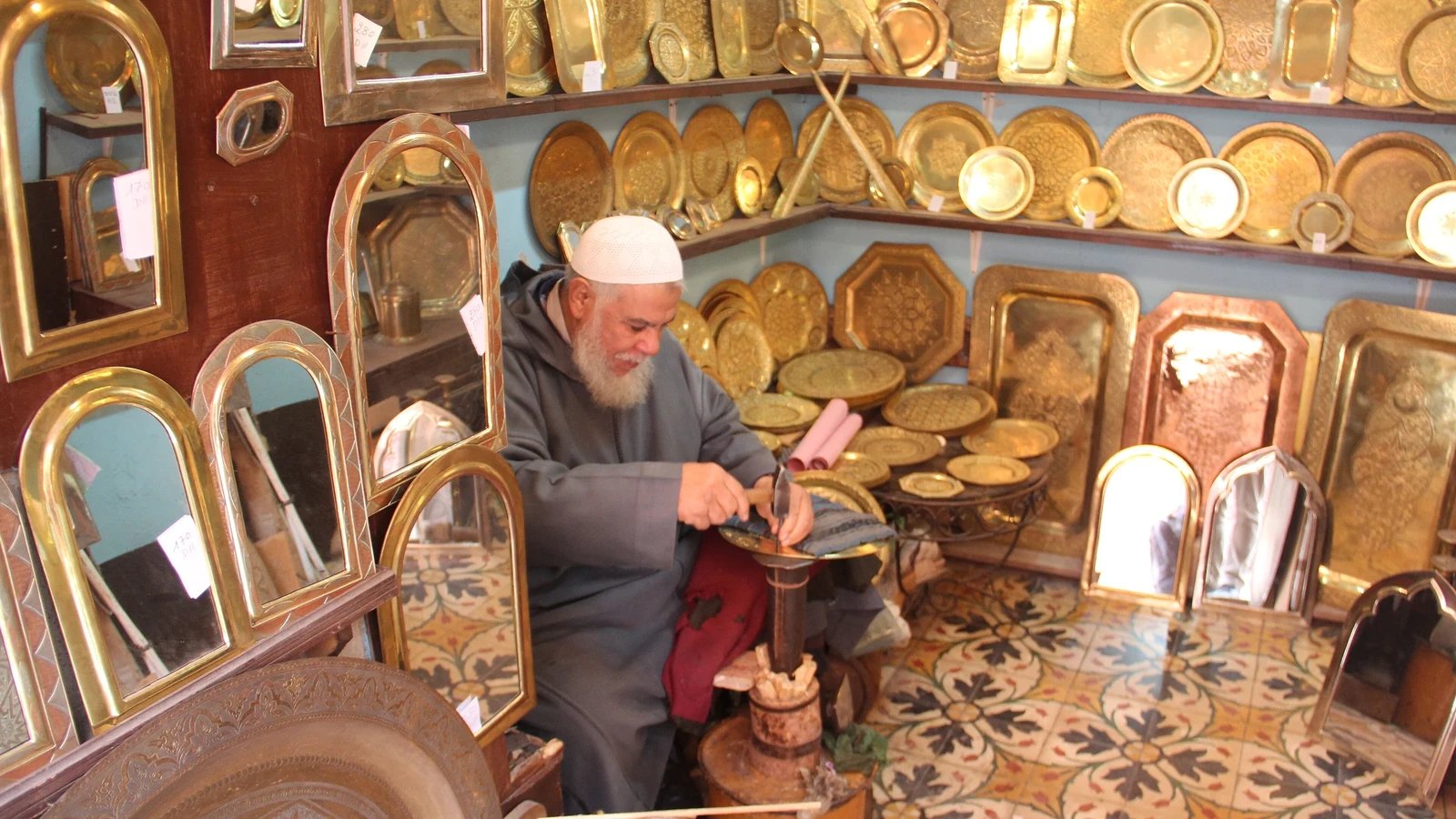
An engraved or worked metal surface changes as it reflects its surroundings. Look at a detail from more than one angle, within the host’s permitted space. Notice whether the pattern is carried by a line, a change of level, a pierced opening or a combination of methods.
At a demonstration, watch the relationship between the hand, tool and supported object without moving too close. The working position matters to the maker. Ask before touching an unfinished piece or lifting an object that may be part of an active task.
If an item is offered for sale, ask about the material and intended use. A decorative object and one intended for food, water or heat may require different information and care.
The demonstration
is an edited moment.
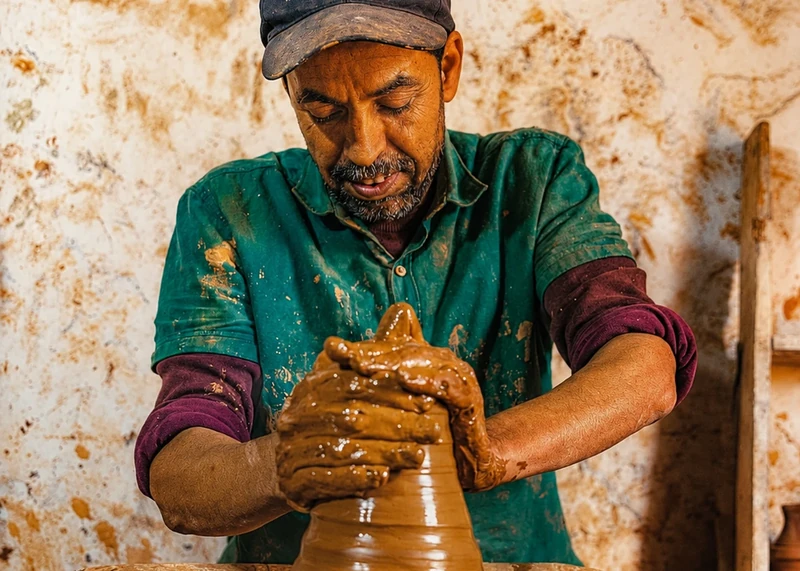
A short public demonstration is valuable because it makes one part of a process visible. It cannot show every hour of preparation, every failed attempt or every judgement involved in learning the work. Give the maker room to explain that wider sequence.
Ask about time
A question about the stages of an object can reveal more than asking only how long the final visible action takes. Preparation, drying, finishing and coordination may matter as much as the demonstration itself.
Ask about decisions
Choose a detail and ask why it was made that way. This recognizes the maker’s judgement rather than treating the work as a mechanical repetition of tradition.
Ask before recording
A demonstration offered to an audience does not necessarily include unrestricted filming. Clarify permission and keep the camera out of the maker’s working space.
Three questions
before a purchase.
What is it?
Establish the material, maker or source, dimensions and intended use. Do not let a general description such as “traditional” replace the practical information you need.
How will I use it?
Consider cleaning, storage, installation and transport. Ask for relevant care instructions in writing when possible. An object that fits your life is more likely to remain valued.
What supports the claim?
If age, origin or a particular production method affects the price, ask what evidence is available. Keep appreciation of the object separate from an unverified story told about it.
Looking carefully
does not require owning.
You can leave a craft encounter with a drawing, a note or a newly understood detail. A purchase is one possible response, not the only measure of appreciation. If a visit or demonstration has a stated fee, pay for that service on its own terms.
Try comparing one detail in the next place you visit. The exercise should sharpen your questions, not make you a judge after a single afternoon. Skilled work becomes more interesting as you recognize how much judgement it contains and how much remains to learn.
From the object
to the people.
Craft & heritage
Follow knowledge, work and transmission.
Craft fairs
Choose an event and evaluate its offer.
Craft & ornament days
Read the longer Story of attentive looking.
Architecture & craft
Explore materials within built space.
Sources, date checks & image context
Event information checked on 29 September 2026. Dates marked typical describe a seasonal pattern, not an announced booking date. Recheck the linked organizer before committing to travel.
Library images illustrate the host place, materials and cultural context. They are not presented as documentary records of a particular festival edition.
Photograph credits
Attributions retained from the canonical library. Responsive resizing and WebP conversion; each photograph’s stated licence continues to apply.
- Library photograph: PlateMakerMarrakech.jpg — Elgaard. CC BY-SA 4.0. Cropped/resized; original licence retained.
- Library photograph: مدرسة ابن يوسف 04 24 52 023000.jpeg — إيان. CC BY-SA 4.0. Cropped/resized; original licence retained.
- Library photograph: Schorle · CC BY-SA 4.0.Editorial crop, resizing and WebP conversion. The adaptation retains the source licence.
- Library photograph: Ben Youseff Madressa.jpg — Nash Finley. CC BY-SA 4.0. Cropped/resized; original licence retained.


