
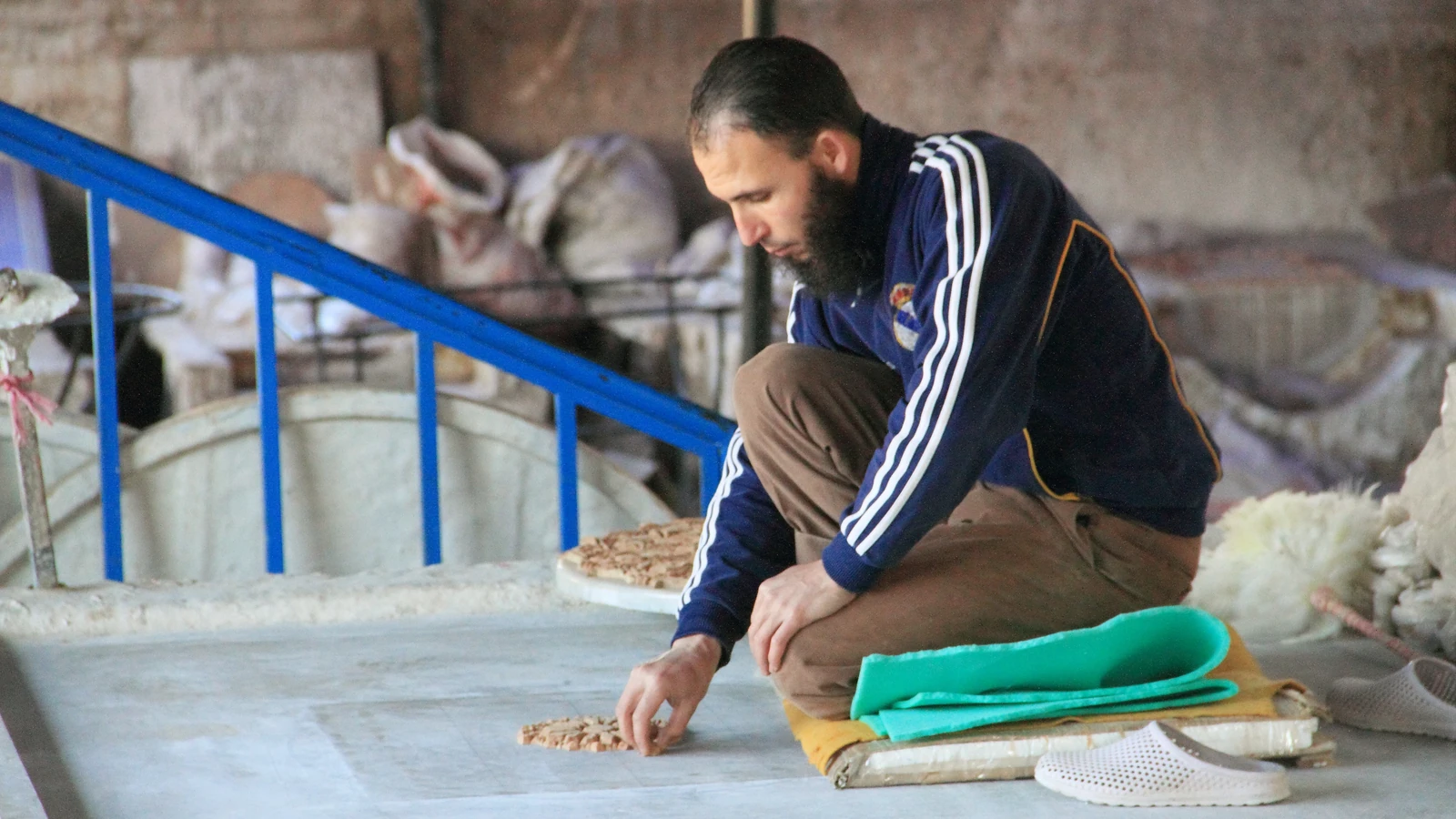
Heritage is something
people do.
An ornament can be admired in a moment. Understanding the work behind it takes longer. A finished surface conceals decisions about proportion, material, tools, sequence and the point at which a maker considers a piece ready.
Craft heritage includes objects and buildings, but also the knowledge that enables people to make, maintain and adapt them. A public demonstration offers a small window into that knowledge. An exhibition can explain its context. A working commission shows another relationship between a maker, a client and a purpose.
This guide follows those relationships rather than treating craft as a collection of souvenirs. It asks how skills are learned, how a place supports work and how a visitor can recognize the difference between seeing a process and understanding it.
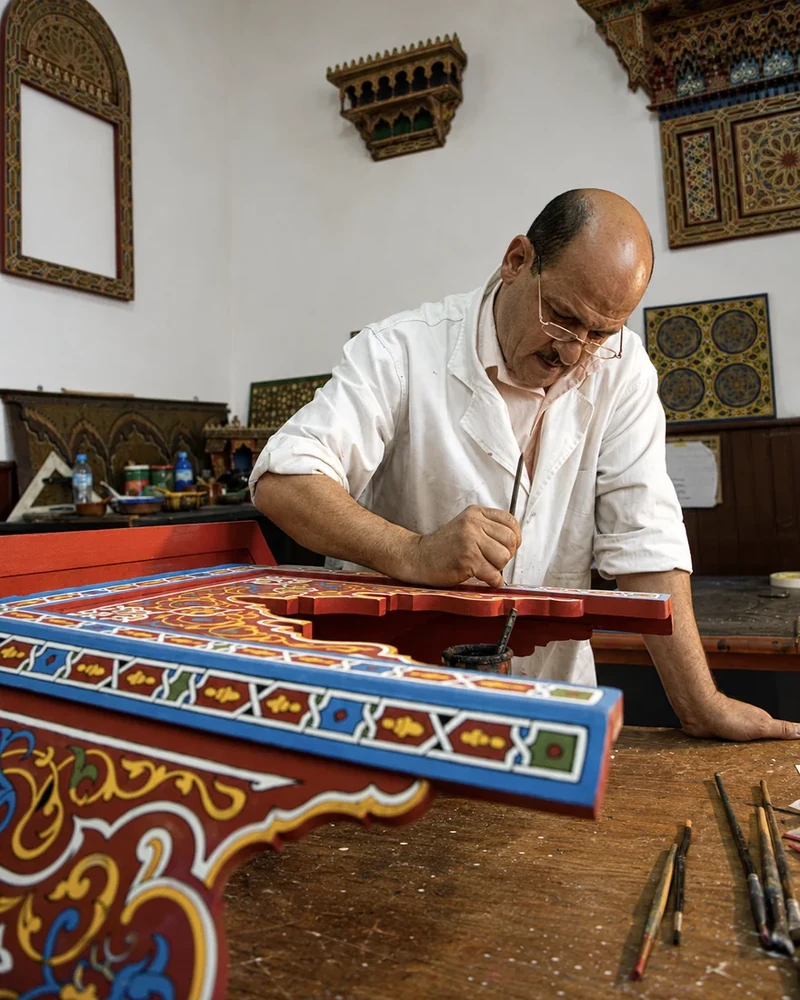
The first lesson
may be how to look.
Imagine watching the same movement several times during an open demonstration. At first it seems identical. Then you notice a change in pressure, angle or timing. What looked like repetition becomes a series of adjustments.
This is a useful way to approach unfamiliar skilled work: observe a short sequence before asking for an explanation. Note what changes and what stays consistent. A focused question about one visible action can invite a clearer answer than asking a maker to explain an entire tradition.
Do not mistake speed for ease. A practiced movement can appear effortless because the difficult decisions have become familiar. The object may contain many stages that are not being shown at the event.
Three material questions.
Three routes into skill.
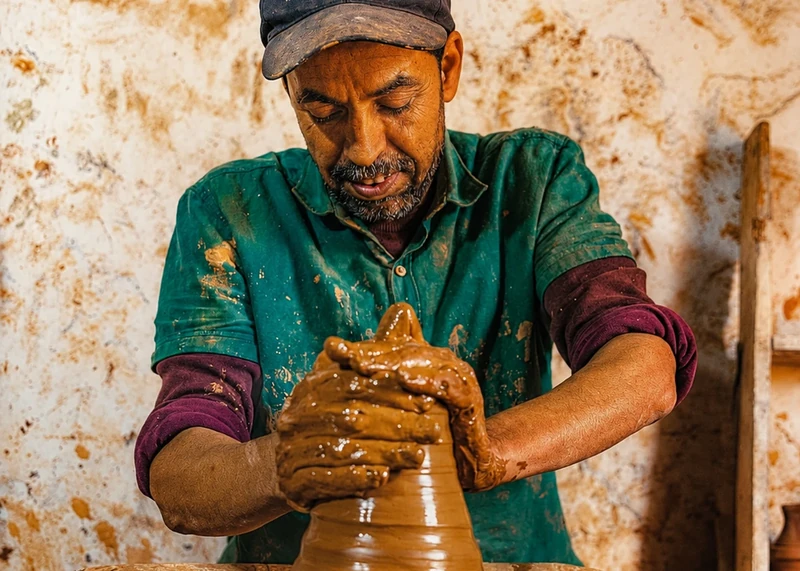
Clay: what happens next?
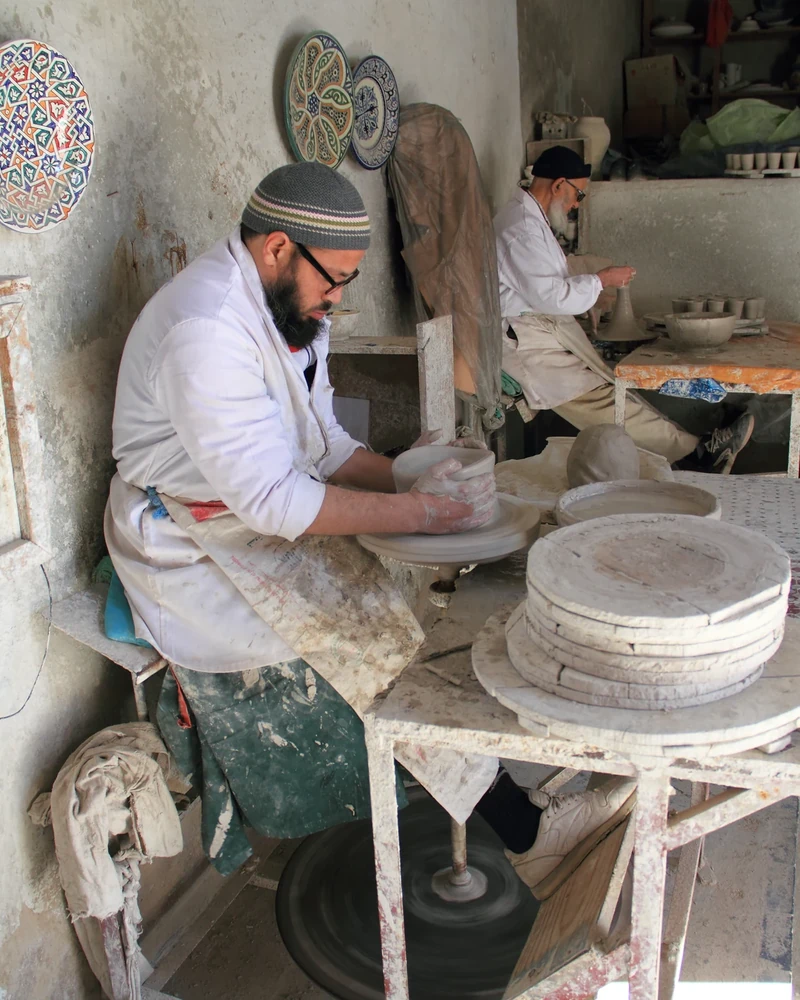
A shaped vessel is one stage in a longer process. Ask which later steps will change its surface, strength or use. A demonstration piece may be unfinished even when its form already looks complete.
Explore material and ornament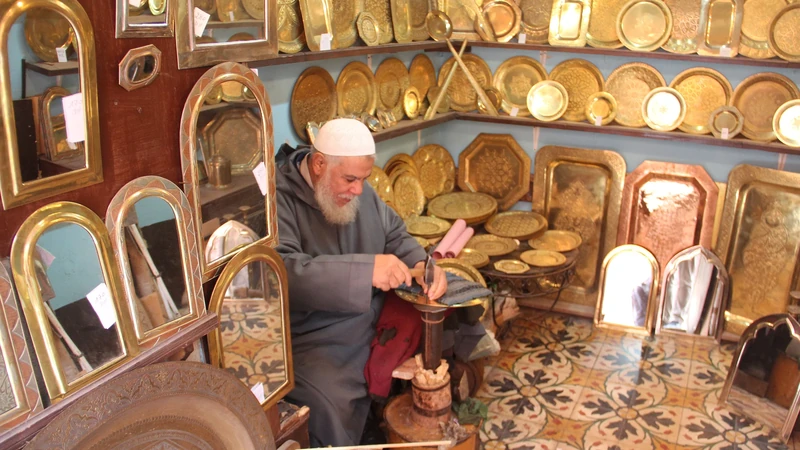
Metal: where is the mark?
Look at how a pattern occupies the object and how the surface catches light. Ask which operations produced it and whether the maker showing the work also shaped the underlying form.
Read the craft Story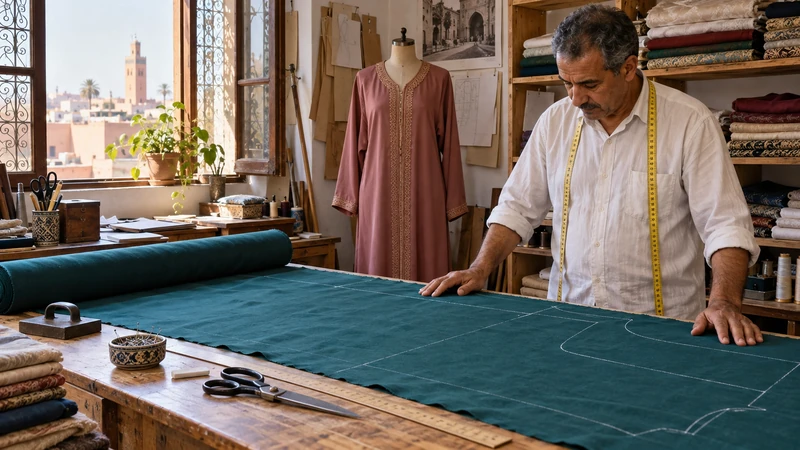
Cloth: how will it move?
A garment must be worn as well as seen. Consider seams, weight, fit and the relationship between embellishment and movement. Ask about the intended use before assigning a style to a whole region.
Explore clothing and craftA workshop has
its own order.
Tools, stock, partially completed pieces and finished goods may share a small space. What seems visually crowded to a visitor can be arranged around a practiced sequence of work. Avoid moving objects or stepping into a work area without an invitation.
An event demonstration changes that setting. It may bring selected tools and a portable task into a public area, making the process easier to see while leaving other stages elsewhere. Ask what has been brought to the event and what remains in the workshop.
This distinction matters for interpretation. A short demonstration should not become the basis for judging the full time or complexity of production. The visible minutes are one part of a larger working life.
Continuity allows
new decisions.
A craft does not stop being meaningful when a maker changes a colour, adapts a scale or works with a contemporary designer. The useful questions concern the nature of the change: who made it, why, and how it relates to the skills and purposes of the work.
Equally, novelty is not automatically an improvement. A familiar form may remain valuable because it serves a use well or carries an aesthetic that a maker and client choose to sustain. Let the people involved explain their decisions.
Avoid dividing everything into “authentic old” and “inauthentic new.” That opposition can erase contemporary agency. A precise account of materials, authorship, technique and use gives a more informative basis for appreciation.
Buildings can reveal
the work of care.
Fès
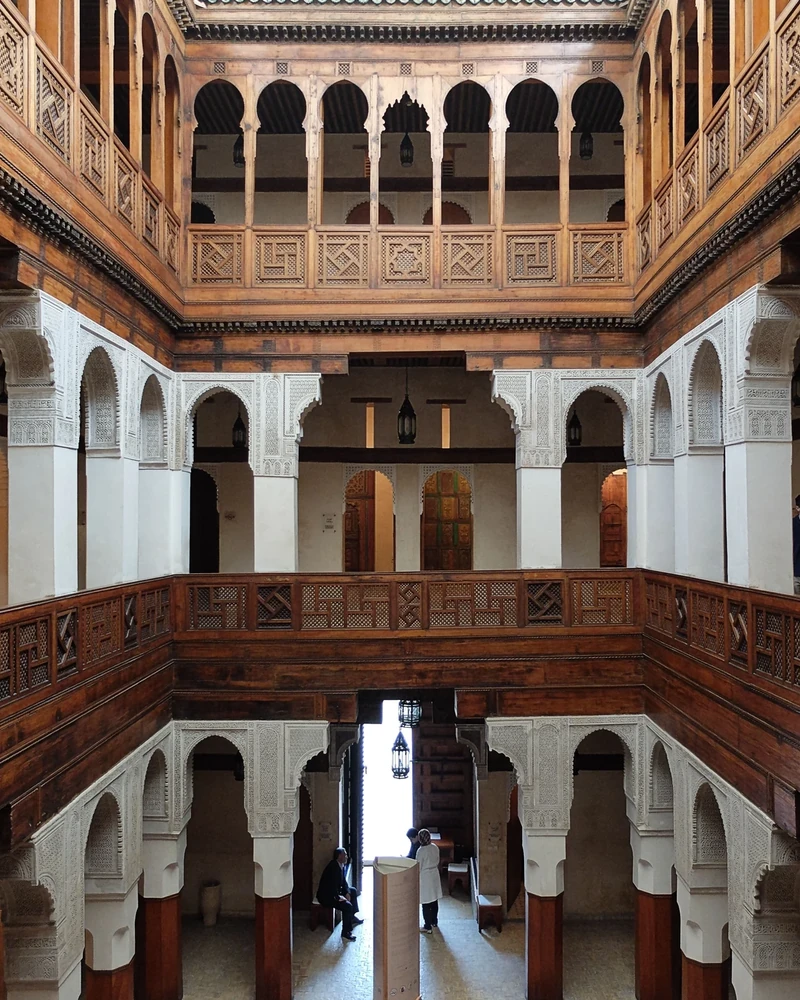
A visit to its historic fabric can lead to questions about timber, plaster, tile and the skills needed to maintain buildings. Use established City and Visit pages to plan public access; working restoration areas are not automatically open.
Explore FèsMeknès — Dar Jamaï
The FNM records a restoration involving artisans and conservators, with work on the palace’s timber, plaster and zellige before its reopening as the National Museum of Music. The building and its collection offer different kinds of cultural evidence.
Explore Meknès — Dar JamaïTétouan
Use a stay in the city to explore the relationship between architecture, decorative work and contemporary making through public cultural places and invited encounters. Let individual makers identify their own practice.
Explore TétouanRepair changes
what you notice.
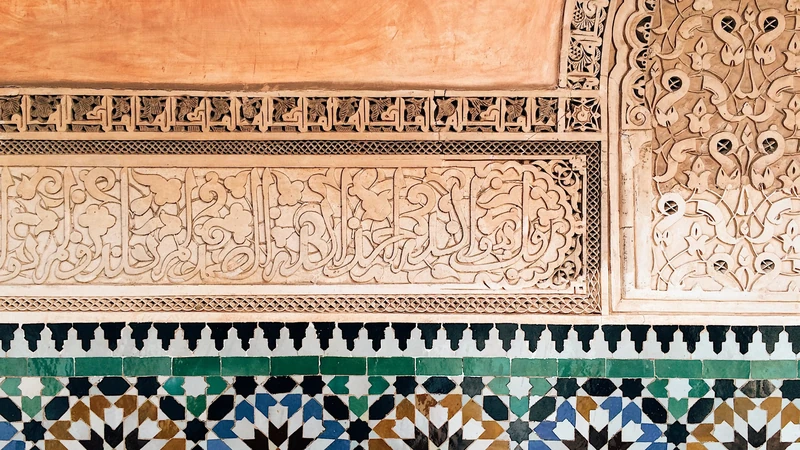
A visitor often looks for the most complete, brilliant surface. Looking for maintenance introduces another set of questions: which parts receive wear, how damage is assessed and what kind of skill is needed to keep an object useful.
Do not diagnose a historic surface from appearance alone. A variation in colour or texture may have several explanations. Museum labels, a conservator’s talk or an authorized guide can help distinguish documented intervention from a visitor’s guess.
Repair also challenges the idea that heritage is finished. A building or object has a continuing life shaped by use, care and decisions about change. That ongoing responsibility can be as significant as the moment of its original making.
At a demonstration,
ask a better question.
Ask about sequence
“Which stage comes before this?” helps place a visible action in context. It also gives the maker room to explain work that cannot be brought into a public event.
Ask about a decision
“What made you choose this material or proportion?” recognizes judgment. The answer may concern a client, a practical constraint or a personal preference rather than a fixed cultural rule.
Ask about learning
“How did you learn this part of the work?” invites an individual account. Accept that the person may be busy or prefer not to discuss it, and avoid treating one biography as a universal apprenticeship model.
Support the work
you have actually encountered.
When considering a purchase, establish who made the item, which materials are described and whether the person selling it represents a workshop or another supplier. A market can include several legitimate forms of trade; clarity is more useful than an assumption based on appearance.
Discuss price, dimensions, condition and delivery arrangements before agreeing. For a commission, record the specification and the terms you have accepted. Do not assume that a demonstration price, a display piece and a made-to-order object are interchangeable.
Photography can support recognition when a maker welcomes it and is credited accurately. It can also interrupt work or expose a design that someone does not want circulated. Ask specifically about both taking and sharing an image.
Let the maker remain
the author.
A travel account can easily make a craft worker into scenery: anonymous hands, a picturesque room, a sentence about an unchanged past. A more thoughtful account attends to skill and choice in the present.
Use a name only with permission, describe the work accurately and avoid inventing a life story from a brief encounter. The strongest memory may be a small technical detail that changed how you see an everyday object. That is enough to begin a deeper interest.
Look closer.
Then look beyond the object.
Craft & ornament
Learn to read a surface and its making.
Craft fairs & artisan events
Choose the right kind of encounter.
Architecture & craft
Connect materials with the built setting.
Heritage openings
Understand temporary public access.
Sources, date checks & image context
Event information checked on 29 September 2026. Dates marked typical describe a seasonal pattern, not an announced booking date. Recheck the linked organizer before committing to travel.
Library images illustrate the host place, materials and cultural context. They are not presented as documentary records of a particular festival edition.
- FNM — Dar Jamaï and its restoration
- UNESCO — Medina of Fez
- Fondation Nationale des Musées — exhibitions and museums
Photograph credits
Attributions retained from the canonical library. Responsive resizing and WebP conversion; each photograph’s stated licence continues to apply.
- Library photograph: Schorle · CC BY-SA 4.0.Editorial crop, resizing and WebP conversion. The adaptation retains the source licence.
- Library photograph: PlateMakerMarrakech.jpg — Elgaard. CC BY-SA 4.0. Cropped/resized; original licence retained.
- Library photograph: Schorle · CC BY-SA 4.0.Editorial crop, resizing and WebP conversion. The adaptation retains the source licence.
- Library photograph: مدرسة ابن يوسف 04 24 52 023000.jpeg — إيان. CC BY-SA 4.0. Cropped/resized; original licence retained.
- Library photograph: Robert Prazeres · CC BY-SA 4.0.Editorial crop, resizing and WebP conversion. The adaptation retains the source licence.


