
Before the movement,
read the ground.
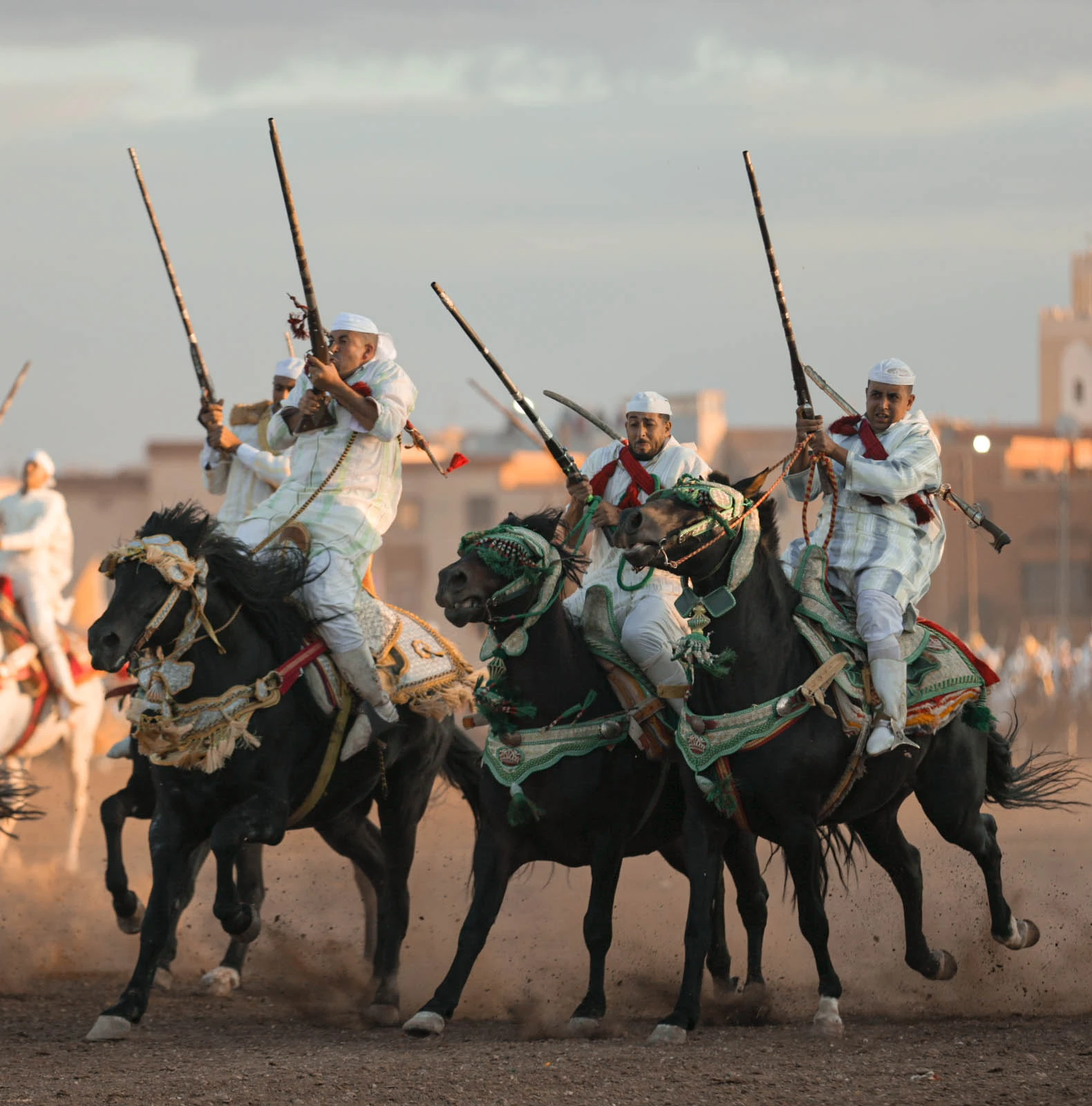
A first encounter with tbourida can be dominated by speed, colour and a sudden report. Begin earlier, with the arrangement of the place. Find the designated spectator area, the routes used by horses and the people directing the activity. These boundaries make it possible to watch without interfering.
“Fantasia” is a familiar visitor term; tbourida is the name used by UNESCO for the Moroccan equestrian performance inscribed in 2021. A moussem is a broader gathering in which riding may be one part. This field guide focuses on what a newcomer can notice and how to behave, while the related world and tradition pages explain the larger relationships.
Choose a position
before choosing a picture.
Locate the public boundary
Use the stewarded entrance and viewing area. Do not follow participants into preparation zones or cross an arena because it looks temporarily empty. Working movement can resume before a visitor expects it.
Keep a way out
Stand where your group can leave without pushing through a tightly packed audience. With children or anyone unsure about the sound and movement, begin farther away and reassess after observing a session.
Leave routes open
A gate, passage or gap between barriers may be needed by handlers, organizers or other spectators. Do not occupy it with a chair, bag or camera simply because it offers a clear view.
Preparation
is part of the skill.
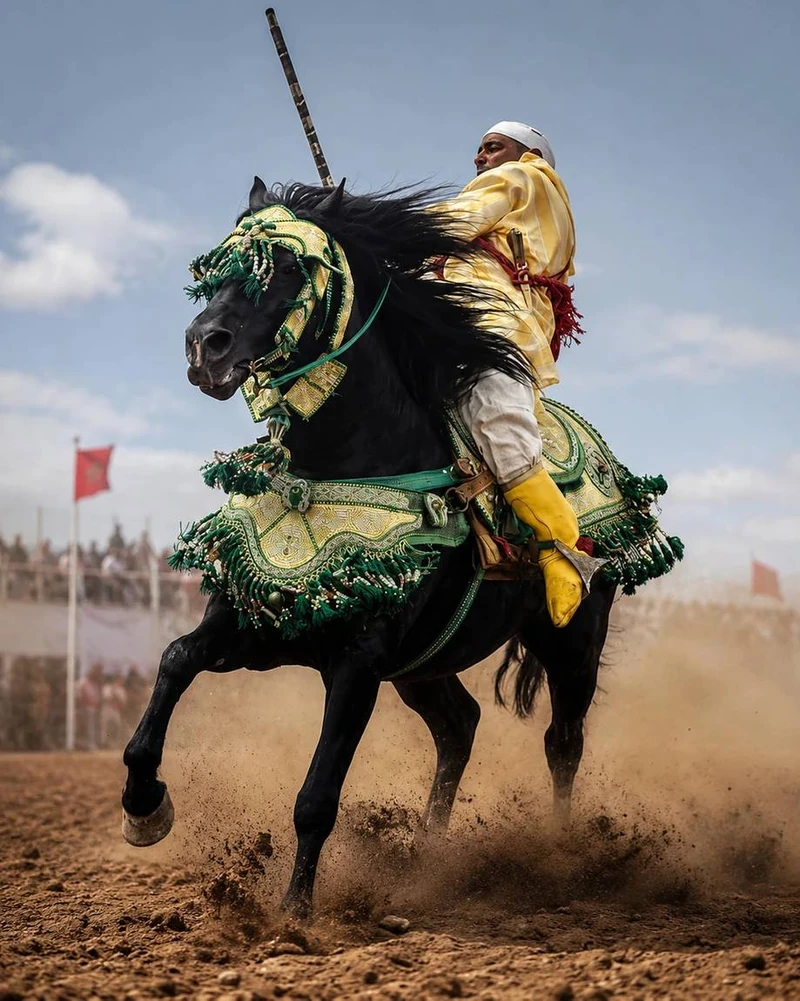
Look at the care taken before the group moves. Equipment, clothing, the relationship between a rider and horse, and the coordination among participants all contribute to the performance. The visible finale depends on work that can be easy to overlook.
Observe from the public area rather than approaching to inspect equipment. If a handler or rider is available for conversation afterwards, ask about one detail and let them decide how much to share. Preparation time is not automatically an audience encounter.
A horse’s decoration can be visually elaborate, but the animal is not a display object. Never reach to touch or feed it without the handler’s clear permission, and keep children from approaching on their own.
Watch the formation.
Follow the collective timing.
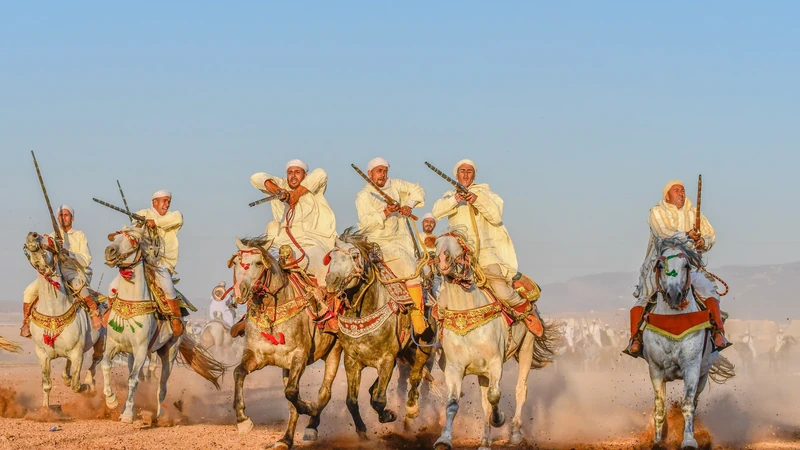
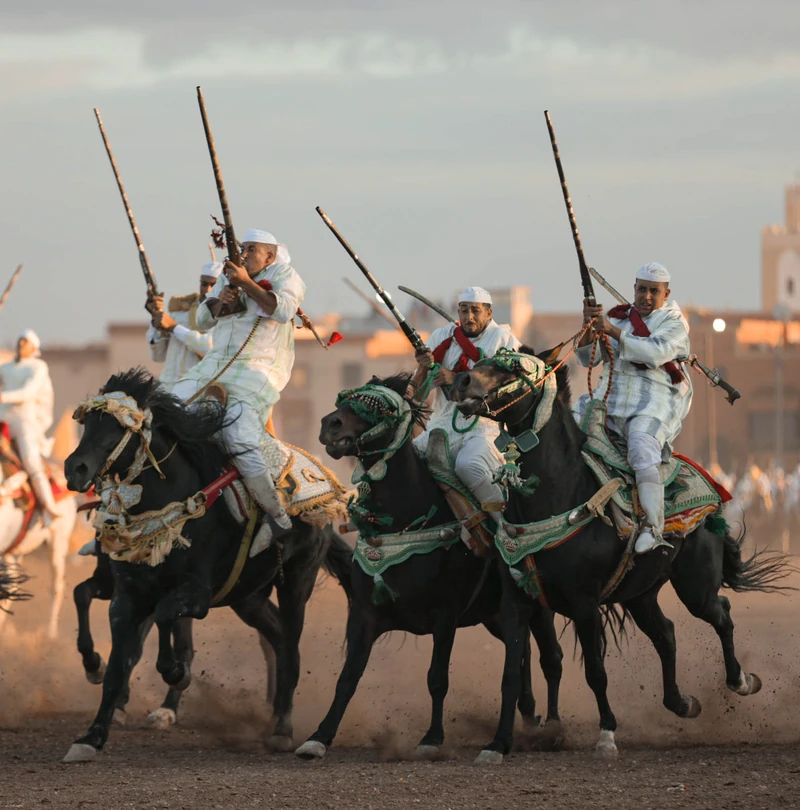
Instead of following only the most conspicuous rider, widen your attention to the group. Notice alignment, changes of pace and the effort to act together. This makes the performance legible as a coordinated practice rather than a series of individual gestures.
The UNESCO description places tbourida within a history of equestrian performance and shared transmission. You do not need to know every technical term to appreciate precision. A useful first observation might concern how a line holds its shape or how participants respond to a common cue.
Avoid judging an unfamiliar practice solely by the visual force of its conclusion. The quieter details of control, preparation and cooperation are part of what gives that moment its significance.
Expect the sound.
Keep the perspective.
Tell companions what to expect
The coordinated discharge can be loud and startling. Explain this before approaching the viewing area. Consider appropriate hearing protection for amplified or impulsive event sound, and move away if anyone is uncomfortable.
Stay within the spectator arrangement
The use of blank discharge does not turn the arena into an unrestricted space. Follow the boundaries and directions established by the people responsible. Do not move forward between runs without permission.
Let a photograph be optional
Trying to predict the exact moment can pull attention away from your surroundings. Keep the camera from blocking others and accept that a clear memory of the whole performance may matter more than one dramatic frame.
Every encounter
has a particular place.
The named moussem or event
Confirm the current public programme and the actual equestrian location. Tbourida is a practice encountered in different settings, not a single festival with one national visitor timetable.
Moulay Abdellah, near El Jadida
The named moussem dossier explains an established gathering with devotional, equestrian and artistic dimensions. Use its checked context as a starting point, then verify the edition you want to attend.
Read Moulay Abdellah. The moussem.The wider gathering
A riding area may sit near markets, family spaces and sacred activity. Admission to one public performance does not establish access to all nearby places. Ask at each threshold rather than carrying one permission everywhere.
Look at the making
behind the appearance.
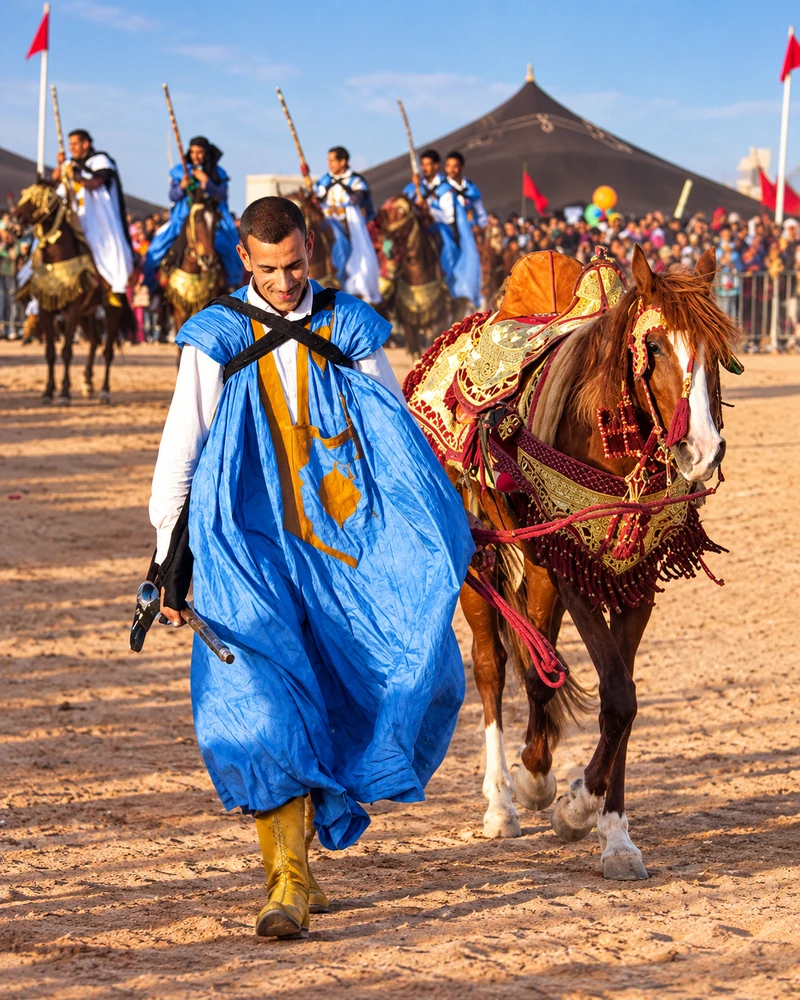
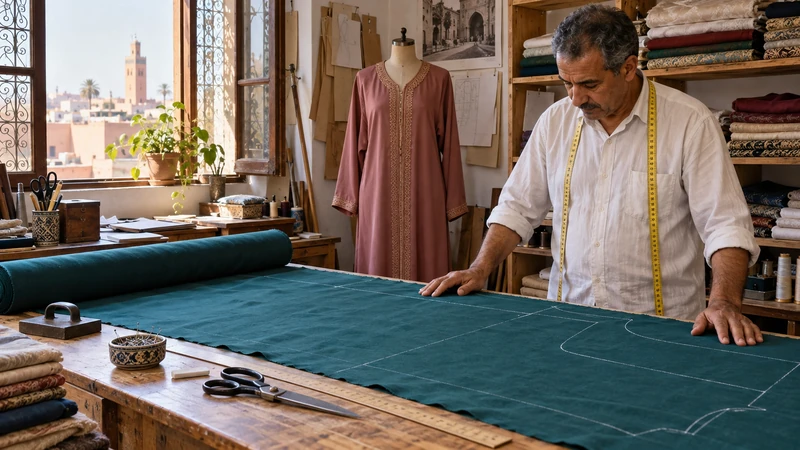
A saddle, garment or decorated accessory can invite questions about materials and skilled work. Begin with what you can see: stitching, a join, a repeated motif or an area worn through use. Then ask the maker, owner or an informed guide when the opportunity is appropriate.
Do not assign age, origin or symbolic meaning from appearance alone. A new object may be carefully made for present-day use; an older-looking one may have another history. The question becomes more useful when it is attached to a specific detail.
If an object is offered for sale, distinguish that commercial exchange from the equipment a participant is using. A performer’s belongings are not automatically a market display.
Step beyond the arena
without losing the boundaries.
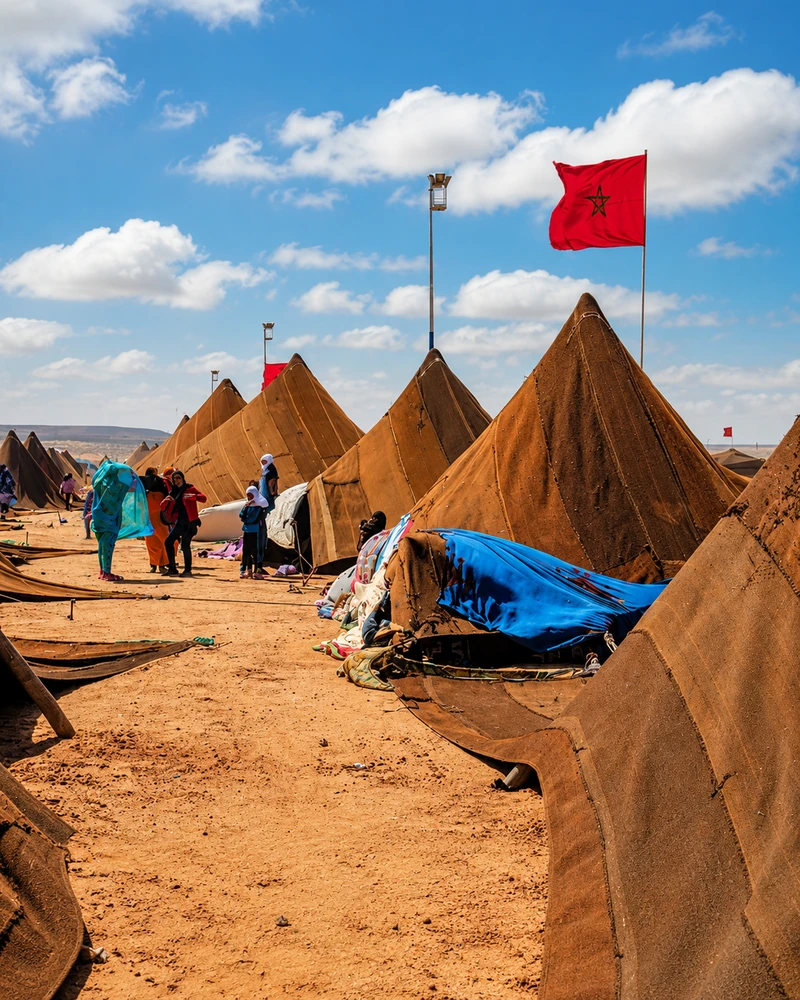
The wider moussem can hold commerce, devotion, reunion and cultural activity at once. A visitor sees only part of that social world. Move between spaces with the expectation that each may have its own rules and hosts.
A tent opening is not proof of public access. A group of people entering a sacred or family space may have a relationship to it that you do not share. Ask from outside and accept a limit without seeking another entrance.
This does not diminish the visit. Understanding where your invitation ends is part of understanding what the gathering means to the people who return to it for reasons beyond spectatorship.
Three moments
that call for a pause.
A horse approaches your route
Follow the handler or steward and give the working route space. Keep the group together without sudden attempts to obtain a close picture. Let those responsible direct the movement.
Someone declines a portrait
Accept the answer immediately. Do not take the same picture from farther away to bypass the refusal. The person’s clothing or public participation does not cancel their choice.
The group is ready to leave
End the visit while the return remains manageable. Fatigue can make a familiar route or a busy exit harder. A complete first encounter does not require staying through every session.
Describe what
you actually saw.
Keep a note of the event name, place and date, together with any explanation supplied by the organizer or a participant. If you do not know the name of a group or a detail, leave the uncertainty visible rather than filling it with a confident guess.
A first encounter can be both powerful and incomplete. You may understand the coordination more clearly while still knowing little about the community that sustains it. Let that be the beginning of further reading and listening, rather than a reason to turn one afternoon into a universal account.
From a first look
to a wider understanding.
Moussems & fantasia
Explore people, teams and social relationships.
Local traditions
Compare the purposes of different gatherings.
The moussem Story
Read the human work around the performance.
Photography & respect
Make careful choices with a camera.
Sources, date checks & image context
Event information checked on 29 September 2026. Dates marked typical describe a seasonal pattern, not an announced booking date. Recheck the linked organizer before committing to travel.
Library images illustrate the host place, materials and cultural context. They are not presented as documentary records of a particular festival edition.
Photograph credits
Attributions retained from the canonical library. Responsive resizing and WebP conversion; each photograph’s stated licence continues to apply.
- Library photograph: Houssain tork · CC BY-SA 4.0.Editorial crop, resizing and WebP conversion. The adaptation retains the source licence.
