
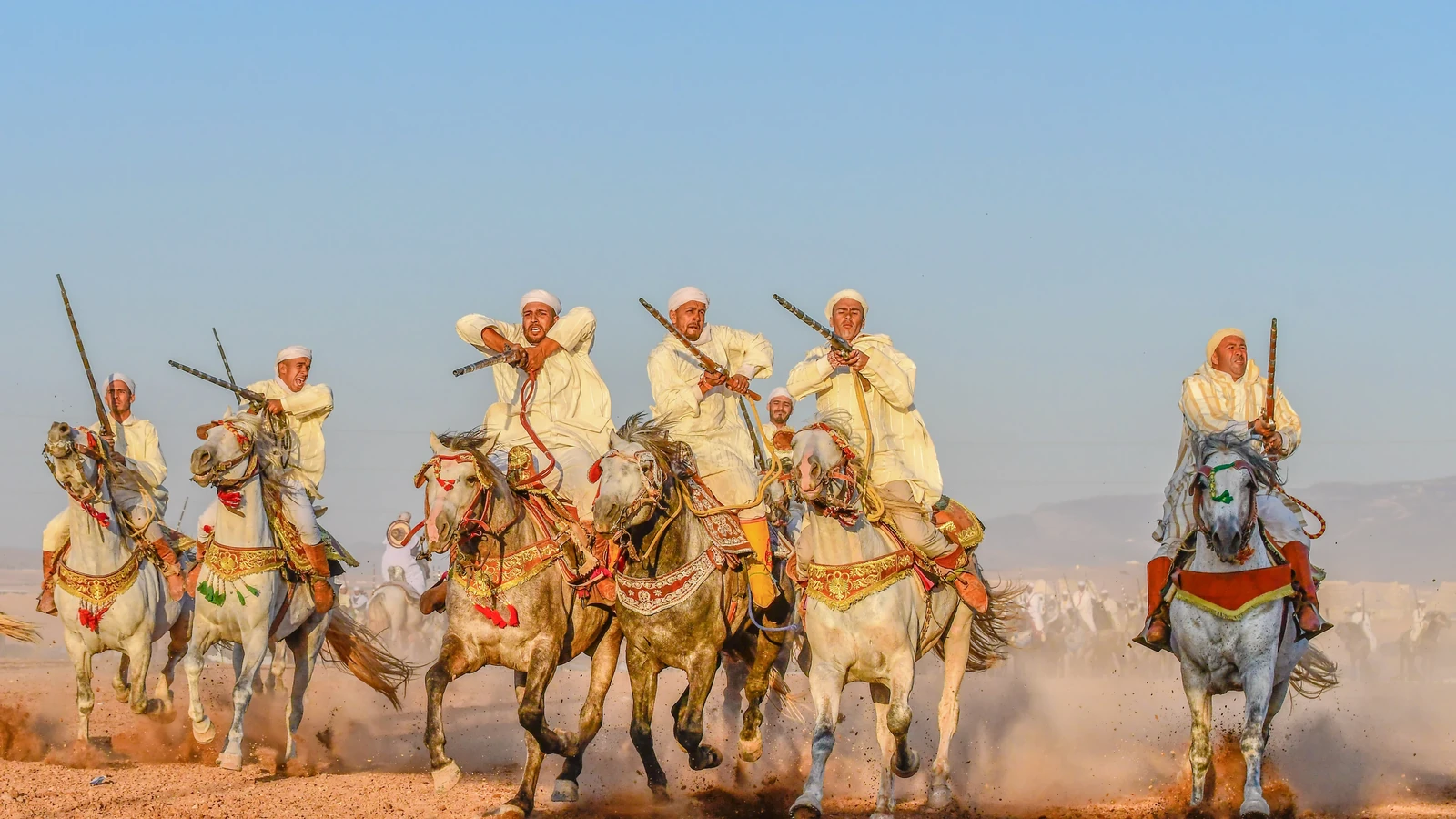
More than
the riding ground.
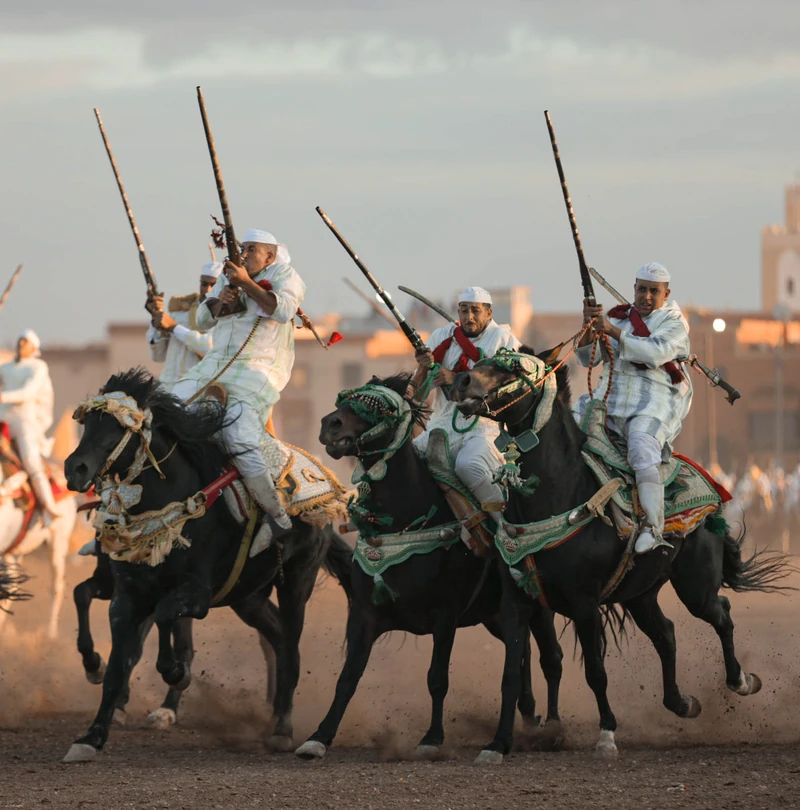
Typically August · Next dates not announced
The Moussem Moulay Abdellah Amghar takes place at Moulay Abdellah, near El Jadida in the Doukkala region. The organizer presents religious, equestrian and artistic strands within the gathering. Its 2026 daily archive documents 7–14 August; the next edition’s dates were not verified as announced.
Tbourida can be the most immediately visible attraction for a first-time visitor, but it belongs within a wider occasion. People may arrive for devotion, family ties, social exchange, trade or participation in a performing group. These purposes overlap without becoming the same thing. Your visit will be more considerate if you begin by asking which part of the gathering is openly offered to spectators.
A moussem
has several centres.
The riding arena is organized around the needs of teams, horses and spectators. A devotional place follows another rhythm. A market or family gathering has its own transactions, invitations and limits. Moving between these settings requires a change of attention, even when they are physically close.
A public programme does not turn every tent, courtyard or religious activity into an attraction. Look for signs, stewards and a clear invitation; when uncertain, ask from outside the space. A polite answer that directs you elsewhere is useful information, not an obstacle to overcome.
Give participants the freedom to be occupied. Someone preparing a horse, receiving relatives or taking part in devotion may have little time for questions, and no obligation to explain their day to a visitor.
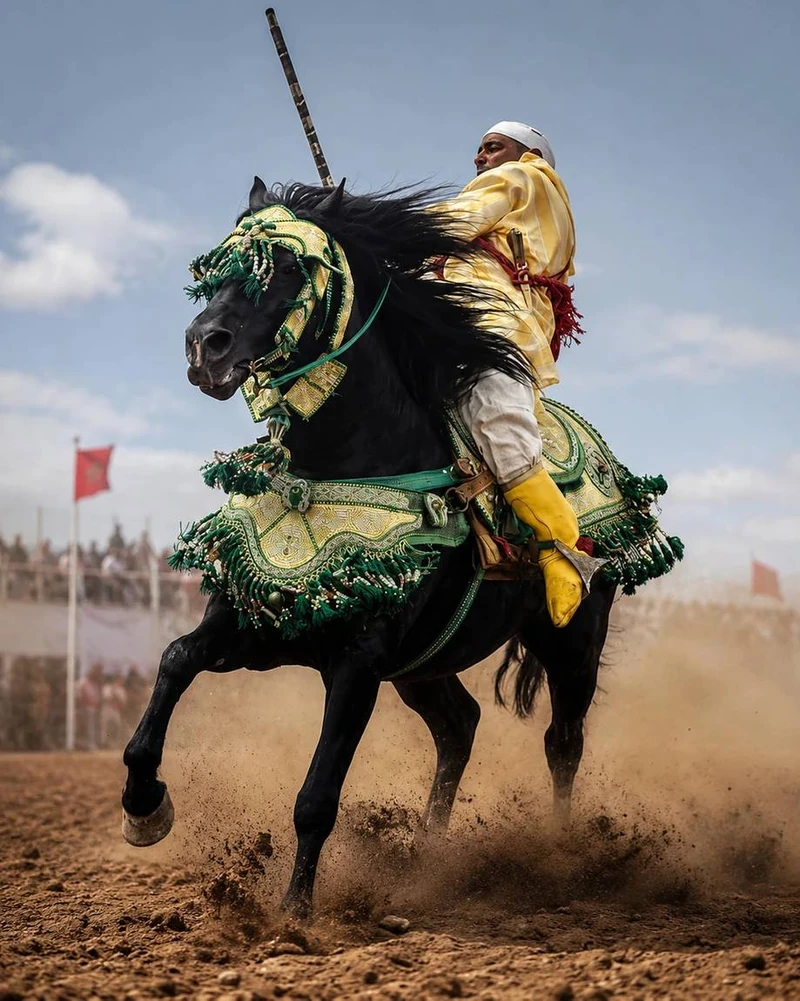
Watch the team.
Notice the coordination.
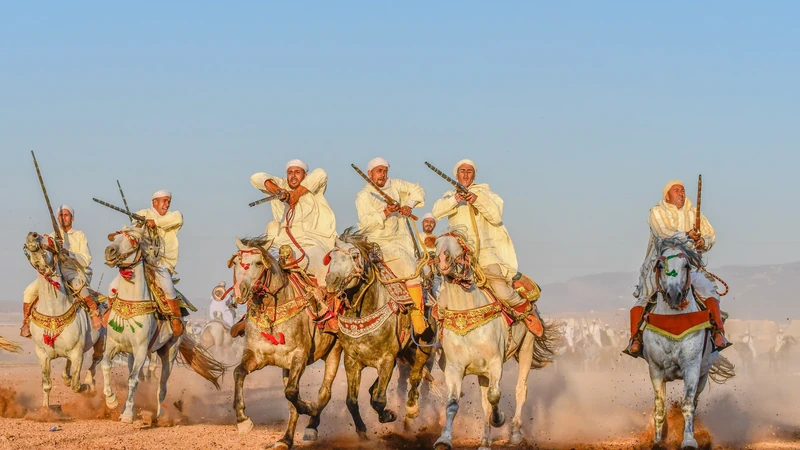
UNESCO inscribed tbourida in 2021, recognizing an equestrian practice carried through groups and shared knowledge. The coordinated movement and final discharge draw attention, but preparation, horsemanship and collective timing are part of the work as well. The performance is not simply a collection of individual riders.
Observe from the designated spectator area. Follow the stewards’ instructions and stay clear of the arena, horse routes and preparation zones. The sound of the discharge can be startling, especially for children. Choose a position and duration that suit your group, and leave space to step away.
Do not feed, touch or approach a horse without the handler’s permission. A decorated animal is still a powerful living animal engaged in a demanding activity.
Read the first-visit field guideObjects carry
the work of many hands.
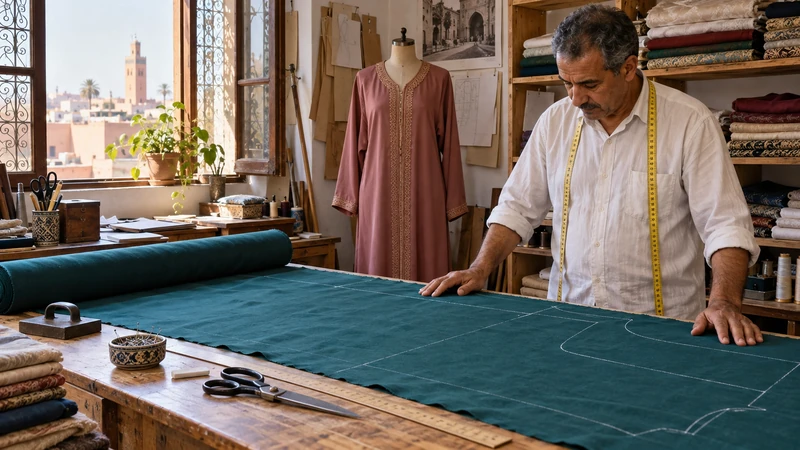
Clothing, saddlery and other equipment can make equestrian presentation visually rich. Look at how objects are used, not only how they shine. A strap, embroidered surface or fitted garment has to function within movement and repeated handling.
If a craftsperson or seller is available for conversation, ask about a particular material or technique. Distinguish a contemporary piece made for use from an object sold as a souvenir. Do not assume that an elaborate appearance proves age, origin or a particular level of workmanship.
Photographs of equipment can be informative when they are taken with permission and accurately described. Avoid separating a person’s clothing from their identity so completely that the image becomes only an exotic detail.
Arrive with
a modest first plan.
Find the public information
Use the current organizer programme for dates, entrances and scheduled activities. Ask where visitors may watch and whether any area has a separate ticket or restriction. Do not treat an old festival video as a map.
Choose one focus
For a first visit, select a public performance or equestrian session and allow time to understand its setting. Avoid trying to enter every part of a large gathering in a single afternoon.
Set the departure
Agree on transport, a meeting point and a time before the group disperses. The immediate exit area may be busy after a popular activity. A recognizable pickup point away from the densest flow can make leaving easier.
The coast
and its hinterland.
Moulay Abdellah
The gathering is associated with this coastal locality near El Jadida. Use the current event access plan for arrival. A town name alone does not identify the correct entrance, parking area or public viewing position.
El Jadida
El Jadida can provide a wider city context for a stay, but travel between the city and the moussem still needs planning. Confirm the return arrangement rather than assuming transport will be equally easy at every hour.
Explore El JadidaDoukkala and the Atlantic region
The moussem belongs to a regional social and cultural geography. Connect it with the surrounding coast and settlements thoughtfully, leaving enough time for each place rather than using them only as stops between performances.
Explore Doukkala and the Atlantic regionDevotion calls for
a different kind of attention.
If a gathering includes sacred activity, first establish whether visitors are welcome in that specific space. Dress and behave according to the host’s guidance. Keep voices and devices quiet, and avoid stepping into a route simply to obtain a photograph.
Permission to enter does not automatically include permission to record. People can be participating in a personal or communal act that is not intended for an outside audience. When the meaning of a moment is unclear, observing from a respectful distance—or choosing not to remain—can be the better response.
Do not present a brief encounter as a complete explanation of belief. A moussem can hold different meanings for different participants, including people within the same family.
A comfortable visit
is a flexible one.
With children
Explain loud sound and horses before approaching a viewing area. Keep children with an adult and choose a clear route away. Plan breaks and be ready to shorten the visit without making the child feel responsible for disappointing the group.
Around crowds
Identify a meeting point and avoid stopping in narrow passages. If a route becomes dense, follow the stewarded flow and look for a calm place to pause. Do not press towards a performance simply because others are moving forward.
In the open air
Prepare for the day’s actual weather and the amount of walking involved. Carry what the current admission rules allow, and establish where water, toilets and assistance can be found rather than assuming provision near every activity.
Questions at the threshold.
Is the moussem only a tbourida show?
No. The organizer describes religious, equestrian and artistic dimensions. A spectator’s access to the riding programme does not define the entire gathering.
When is the next edition?
The checked organizer archive documents 7–14 August 2026. The next dates were not verified as announced on 29 September 2026; August is a typical planning context, not a confirmed future booking.
May I enter tents or private gatherings?
Only with a clear invitation from the people responsible. A public festival setting does not make every temporary or permanent space public.
Can I photograph the riders?
Follow the current event rules and remain in the designated area. Ask for close portraits away from the arena, and do not interfere with horses, equipment or preparation.
Remember the people
around the spectacle.
A well-timed equestrian performance can remain the strongest image of the day. Let your memory include the other work that made it possible: preparation, handling, organization and the everyday effort of hosting a large gathering.
If someone shared an explanation, record the name or context only with appropriate care. Do not turn an individual account into a universal definition of the moussem. A good visit can leave you with a clearer understanding of one part while acknowledging the many parts you did not enter.
Follow the practice.
Keep the context.
Fantasia & moussem
A field guide for a first encounter.
Moussems & fantasia
Understand the larger social relationships.
The Story
Read beyond the moment of performance.
Sacred & local moments
Learn how to recognize an invitation.
Sources, date checks & image context
Event information checked on 29 September 2026. Dates marked typical describe a seasonal pattern, not an announced booking date. Recheck the linked organizer before committing to travel.
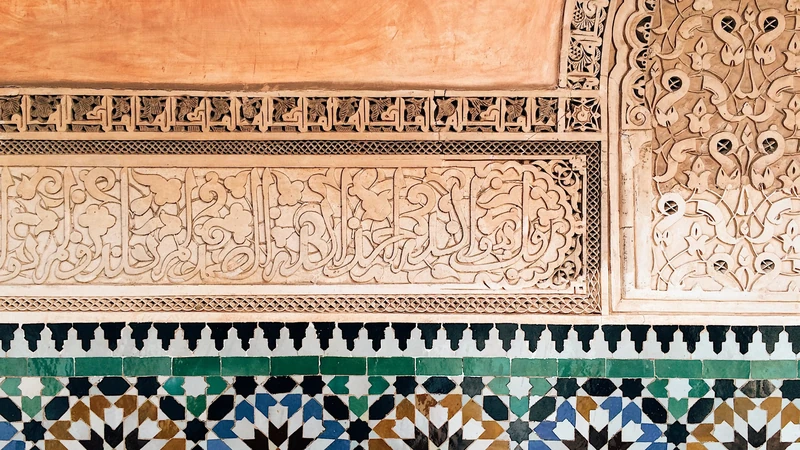
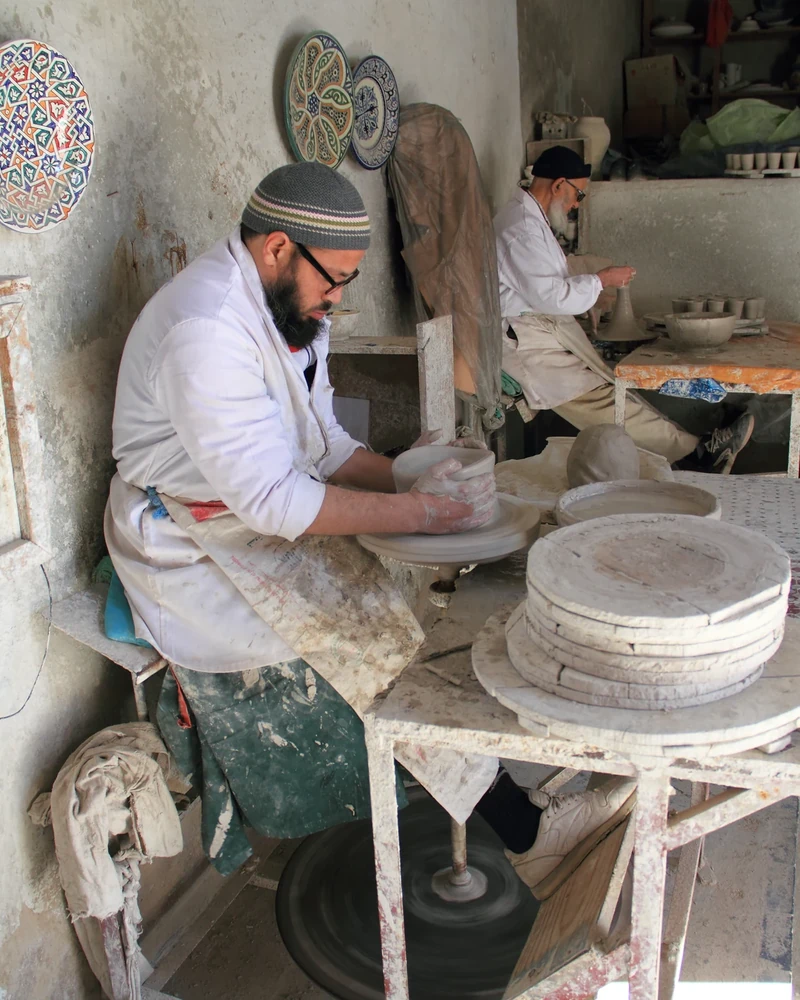
Library images illustrate the host place, materials and cultural context. They are not presented as documentary records of a particular festival edition.
Photograph credits
Attributions retained from the canonical library. Responsive resizing and WebP conversion; each photograph’s stated licence continues to apply.
- Library photograph: Houssain tork · CC BY-SA 4.0.Editorial crop, resizing and WebP conversion. The adaptation retains the source licence.
- Library photograph: مدرسة ابن يوسف 04 24 52 023000.jpeg — إيان. CC BY-SA 4.0. Cropped/resized; original licence retained.
- Library photograph: Schorle · CC BY-SA 4.0.Editorial crop, resizing and WebP conversion. The adaptation retains the source licence.


