
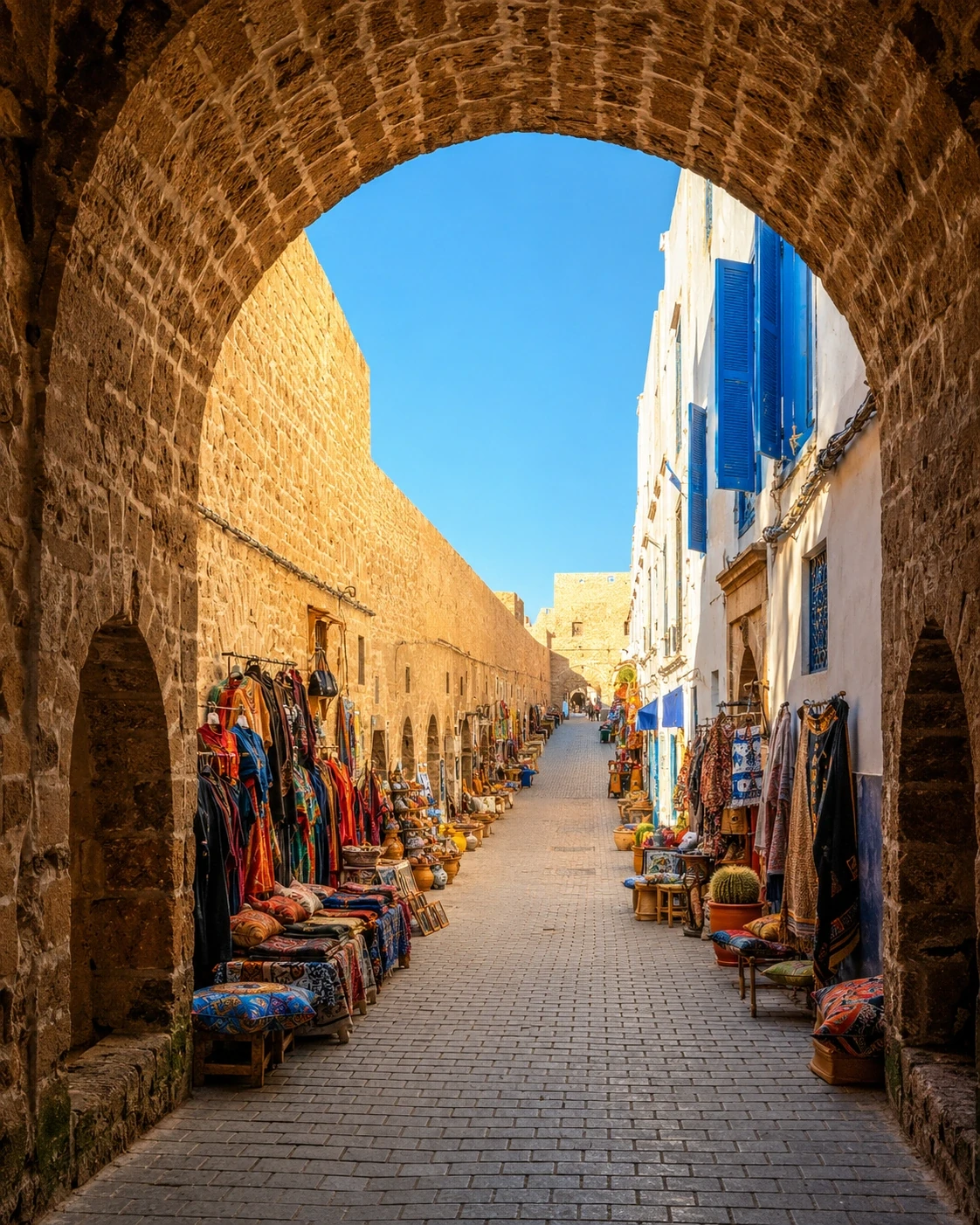
The route between
is part of the visit.
A festival programme connects performances by time. The city connects them by streets, thresholds and distances. In Essaouira, the transition from an open public space into a narrower medina passage can change the pace of a walk immediately. Plan for that change instead of assuming that a short line on a map means a quick transfer.
This page is a guide to using the city thoughtfully during festival pressure. The named Gnaoua & World Music Festival has a separate dossier for dates, musical context and admission. Street life around an event can be rewarding, but it is not all an official programme and it is not all offered for a visitor’s participation.
Four kinds of space.
Four kinds of attention.
The open gathering place
A broad space can accommodate an audience and still have controlled entrances or circulation routes. Identify how people are meant to move before choosing where to stand. Open air does not mean unlimited access.
The connecting passage
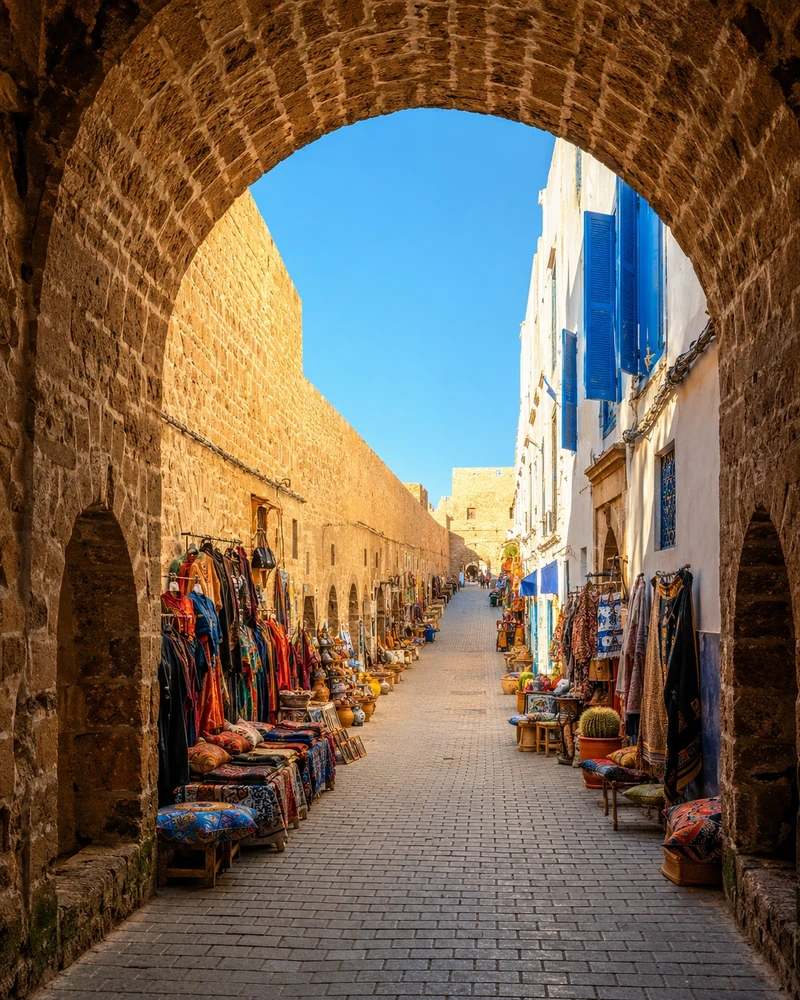
A narrow street is often a route first. Keep moving until you find a place to pause without blocking others. A group stopping shoulder to shoulder can occupy more of the passage than it realizes.
The working threshold
A shop entrance, house door or delivery route has a purpose independent of the festival. Do not use it as a viewing platform, meeting point or resting place without permission.
The fourth space is the edge: a place where the audience thins and ordinary movement resumes. Learn to recognize it. That is often where a group can regroup, check directions and decide calmly what to do next.
Walk once
without a deadline.
Use a quieter part of the day to understand the relationship between your accommodation, an event entrance and a recognizable meeting point. Look for landmarks that remain visible after dark or when a shop closes. A temporary sign or a particular stall may not be reliable later.
Ask for the entrance rather than only the venue name. A stage or cultural building can be approached from several directions, while ticket checks admit people from one designated side. Confirm the route with someone responsible for the event when possible.
Keep the orientation walk small. Its purpose is confidence, not to complete a sightseeing list before the music. A little familiarity can free your attention during the evening.
When the audience moves,
move with care.
At a performance ending
Allow the first wave to pass if you are not in a hurry. Avoid stopping at the narrowest exit to check messages. Move to an agreed wider place before regrouping.
At a crossing flow
People heading to another performance may meet people leaving one. Follow stewards and keep to a predictable path. Do not cut through a working or restricted area because it appears less crowded.
At an uncomfortable point
Change the plan while there is still room to do so. Step towards a calmer area and discuss the next move there. A desired performance does not require accepting a crowd situation that feels unsuitable for your group.
The shopfront
is not a festival prop.
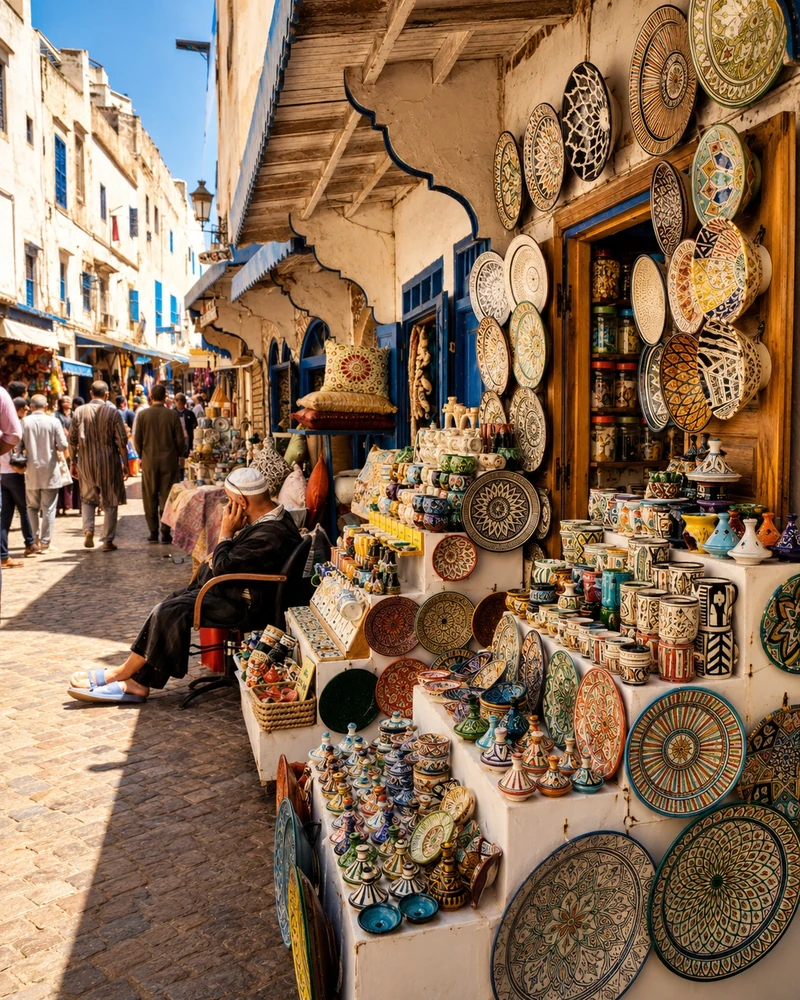
A medina business may welcome the extra interest of festival visitors while still needing to serve customers and move goods. Look before stopping for a photograph. Are you standing in a doorway, blocking a display or interrupting a conversation? A small change of position can make the encounter easier for everyone.
If you want to photograph a maker at work, ask the person rather than only the shop owner. Agree on whether a demonstration, conversation or purchase is being offered. Browsing is ordinary; expecting a worker to perform a process repeatedly for the camera is another arrangement.
Support a business on its actual terms. Ask the price of an item or service clearly, and leave room for other customers while deciding.
Keep the city’s
different edges distinct.
The medina
Its passages contain shops, homes and routes used by residents throughout the day. Use the city guide to orient yourself, then follow current event signage for temporary arrangements.
Explore The medinaThe ramparts and waterfront
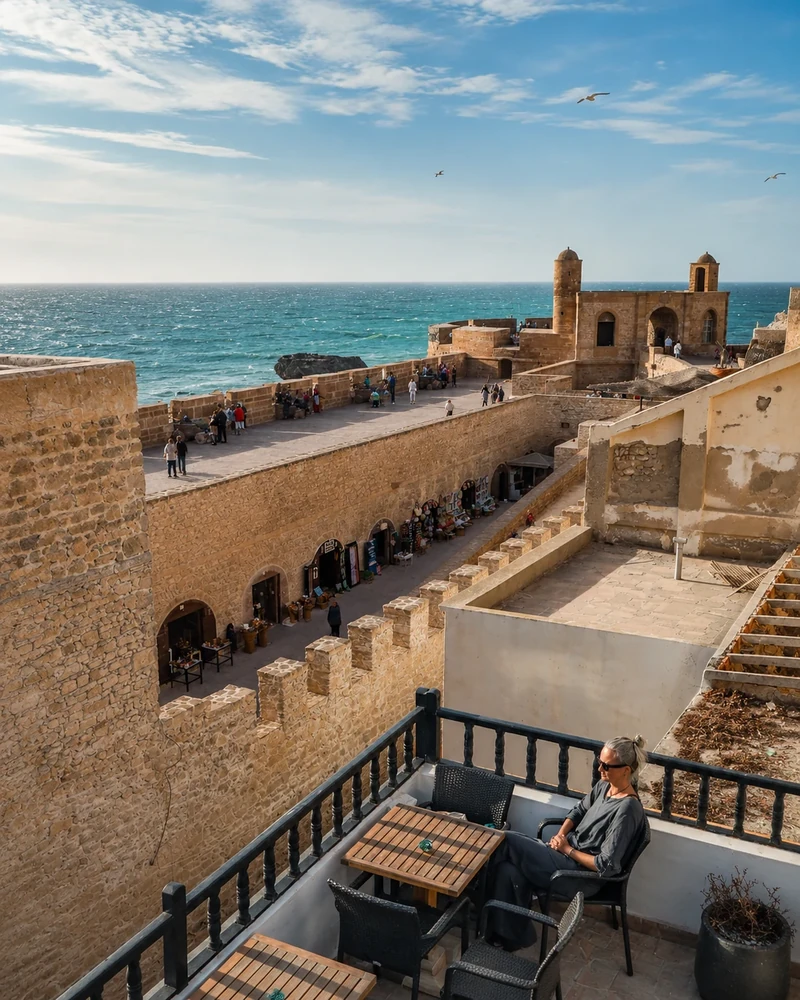
A coastal walk can give a festival day breathing room. Check access and conditions for the particular stretch you want to visit, and keep away from closed or working areas.
Explore The ramparts and waterfrontThe announced festival spaces
The organizer’s current map determines where a public performance or ticketed session takes place. Streets nearby may carry the audience without becoming part of the controlled event area.
Read Gnaoua. Essaouira.Wind, light
and a change of pace.
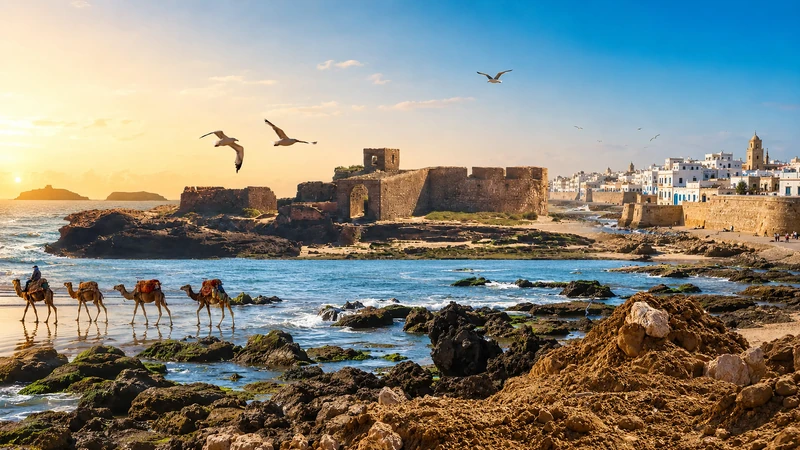
The Atlantic setting can change how an evening feels. Consider the forecast and bring a layer suited to the conditions you expect, without assuming that the warmth of a sheltered afternoon will last. Plan a pause where the group can sit, eat or step away from amplified sound.
Choose that pause for its usefulness rather than for the promise of a perfect photograph. A comfortable meal and a clear return route can matter more than fitting another viewpoint into the day.
If the waterfront is part of the walk, treat it as its own environment. Keep the route within permitted public areas and avoid turning a working edge or exposed position into a shortcut between performances.
Sound reaches farther
than a stage.
Music can be audible outside the place where it is performed. Hearing it from a passage does not establish a public entrance, and following the sound can lead towards a private or restricted space. Look for the actual invitation before approaching.
Likewise, a street gathering is not automatically an informal extension of the official festival. If people are engaged in a personal, devotional or family activity, give them the same privacy you would on an ordinary day. Ask when the setting is unclear and accept the answer.
At night, let your own sound diminish as you move away from the programme. Conversations that felt ordinary beside amplified music can become loud in a residential lane.
Choose the next move
from where you are.
There is time
Take a deliberate route and allow a stop that does not obstruct the street. Keep the next admission time in view, but resist filling every spare minute with another destination.
There is a bottleneck
Wait in a suitable space or use a clearly permitted alternative. Do not push against a directed flow. If a delay makes the next performance unrealistic, revise the plan rather than forcing the connection.
Someone needs a break
Move the group’s decision-making out of the crowd. Find a place to sit or return to the accommodation if that is the better option. A festival day remains successful when it fits the people experiencing it.
Leave a clear path
behind you.
At the end of the night, collect what you carried, follow the agreed route and leave thresholds as usable as you found them. Ask before waiting at a business that is closing. Keep the accommodation address ready so the last part of the journey does not become a search through unfamiliar doors.
The city’s most generous impression may come from the ease with which different lives share its space. Visitors contribute to that ease through small choices: stepping aside, lowering a voice, asking first and giving a working street the room to continue.
From the street
to the sound.
Gnaoua Festival
Verified dates and musical context.
The festival-streets Story
A slower reading of a city in gathering.
Arrival & transport
Connect the whole journey.
Craft & ornament
Look more closely at the work around you.
Sources, date checks & image context
Event information checked on 29 September 2026. Dates marked typical describe a seasonal pattern, not an announced booking date. Recheck the linked organizer before committing to travel.
Library images illustrate the host place, materials and cultural context. They are not presented as documentary records of a particular festival edition.