Enter the city
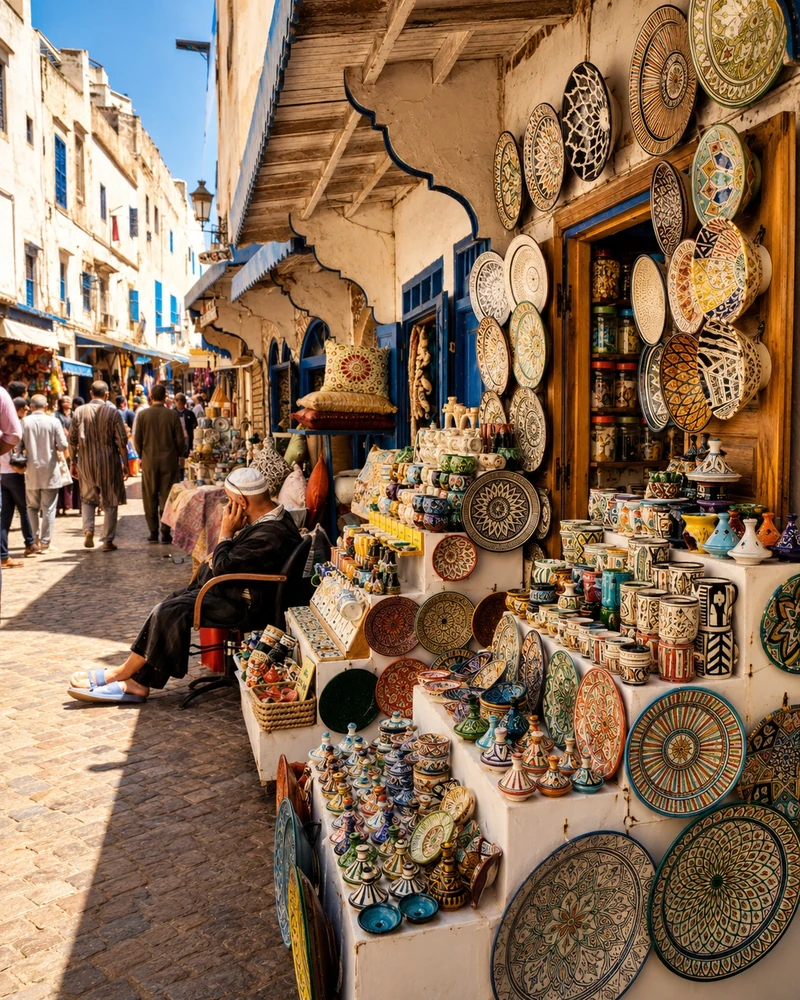
An artisan market along an Essaouira medina street.

Exotic Morocco · Stories
The music draws an audience. Between performances, streets carry the quieter negotiations of a city that continues to work.
Enter the story ↓01 / The starting point
A festival gives a visitor a strong direction. There is a stage to find, an artist to hear and an hour to remember. Streets become connections between those appointments, useful until the next performance begins. Yet the connection is where another part of the city can be read.
In Essaouira, a passage may contain movement, shop displays and the ordinary work of receiving people. An audience passes through these activities without owning the space around them. The relationship can be generous and complicated at once: music brings attention, while daily life still needs room.
The city between songs is therefore more than an interval. It is the place where a visitor’s intention meets other people’s purposes. Someone stops to look; someone needs to pass. A photograph wants a clear view; a business needs its doorway. The quality of a festival visit is partly made through these small negotiations.
To notice them does not diminish the excitement of the music. It gives that excitement a setting. A public celebration becomes more interesting when the city around it remains specific, inhabited and capable of asking something of the visitor.
02 / Read the details
Three visual encounters within this story.
An artisan market along an Essaouira medina street.
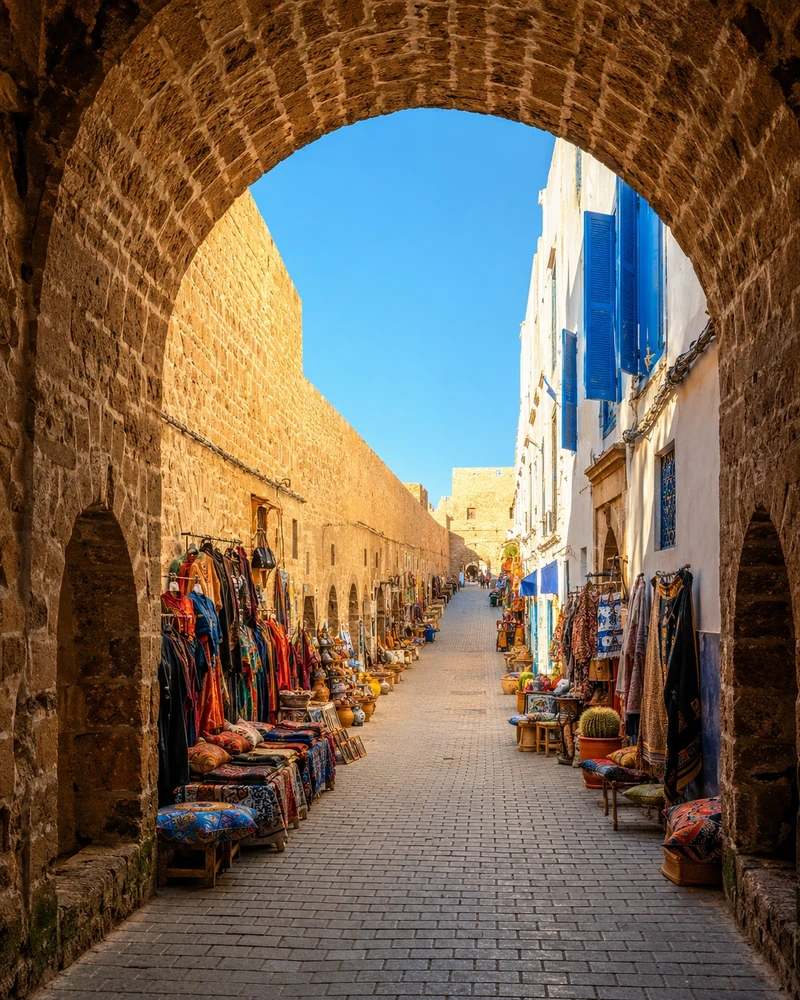
An arched passage through the Essaouira medina.
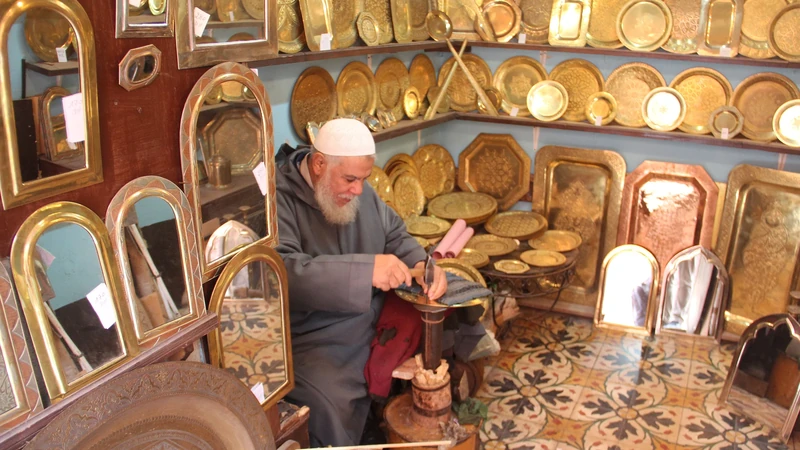
A craftsman working among engraved metal trays and mirrors.
03 / Look closer
The festival’s musical identity offers a useful starting point: Gnawa masters and encounters with other musicians. A programme can put inherited practice and new collaboration beside one another, inviting an audience to hear both continuity and choices made for the present performance.
UNESCO’s recognition of Gnawa in 2019 concerns a wider cultural practice, including music, performance and ritual dimensions. That context matters because a festival does not contain the whole life of the tradition it presents. A concert can be a significant public expression without becoming a substitute for every other setting in which the practice has meaning.
The listener does not need to resolve that whole relationship before enjoying a performance. It is enough to keep the distinction visible. Read the artist’s name and introduction. Notice whether the programme describes an ensemble or a new collaboration. Let musicians remain particular people with practices and decisions, rather than representatives of a single atmosphere.
The same precision improves the way a city is described. Essaouira is not simply the visual opposite of the music, an old stone container filled with new energy. Its streets and working places are active parts of contemporary life. The festival and the city meet as two organized realities, each more complex than the image of one enlivening the other.
04 / The story in context
02 / Movement becomes visible
A narrow route reveals how much public space depends on cooperation. People adjust their pace, move a bag, wait for a gap or step aside for a delivery. Much of this happens without a formal instruction. The street works through repeated small decisions made by people who have different destinations.
UNESCO’s Gnawa account, inscribed in 2019, describes a cultural practice that includes music, community relationships and ritual contexts. A public festival performance offers one encounter with that practice; it does not reproduce every setting in which the music has meaning. Naming that difference makes listening more attentive. Read the Gnawa heritage account ↗
Follow the transition from performance space to street and shore. A doorway still serves its occupants, a shopfront still supports work and the waterfront has its own pace. Keep those settings in the story alongside the musicians. Essaouira becomes more legible when the festival and ordinary city remain in conversation.
Stay with the context
A visitor can interrupt that cooperation without intending to. Stopping abruptly for a photograph or opening a map in a doorway turns a private need into an obstacle for others. The correction is rarely dramatic: move to an appropriate edge, finish the task, then rejoin the flow. The gesture is small because the shared space is small.
Festival movement can make these relationships more visible. Several people may leave one performance at once, while another group is trying to arrive. The useful question is not how quickly to get through. It is where to stand so that the next decision does not make movement harder for everyone else.
This way of reading a street also changes what becomes interesting. An arch is not only a pleasing frame; it is a narrowing of space. A shopfront is not only a patterned surface; it is a boundary between work and public passage. The city’s beauty becomes connected to the things people need it to do.
A closer encounter
Notice the direction of travel and the places where flows meet. Make your own pause where it leaves a clear route for others.
A stall or workshop has a purpose beyond the image it offers. Let the person responsible decide whether looking, entering or photographing is welcome.
A quieter public edge can restore attention between sessions. Use it as a real pause rather than an obligation to find another attraction.
A different distance
03 / The life behind the display
Objects displayed towards a street invite attention, but the invitation has a purpose. A seller may hope for a transaction, a maker may be explaining work, or a shop may simply be arranging its goods for an ordinary day. Looking is part of that exchange; turning the whole setting into a backdrop is something else.
The difference becomes clear in the questions a visitor asks. “What is this made from?” recognizes an object. “Did you make it?” seeks a relationship. “May I take a photograph?” gives the person a choice about how their space is used. None of those questions needs to become a long interview to improve the encounter.
A different distance
A brief exchange also has limits. It cannot reveal a maker’s whole working life or establish the origin of every object nearby. A photograph of hands at work is especially persuasive because it appears to show skill directly, but it still selects one moment. The caption should not supply a biography that the encounter never provided.
Between festival sessions, a small purchase or conversation can offer a different pace from the stage. The pleasure lies in changing the scale of attention: from a large audience to one object, from amplification to a practical explanation. There is no need to pretend that the quieter encounter is more authentic. Both can be real parts of the visit when their different terms are respected.
The image beside this passage shows a metalworker from the wider library. It illustrates the attention given to making; it is not evidence that this particular workshop lies on an Essaouira festival route. Keeping that distinction visible is part of describing places honestly.
A different distance
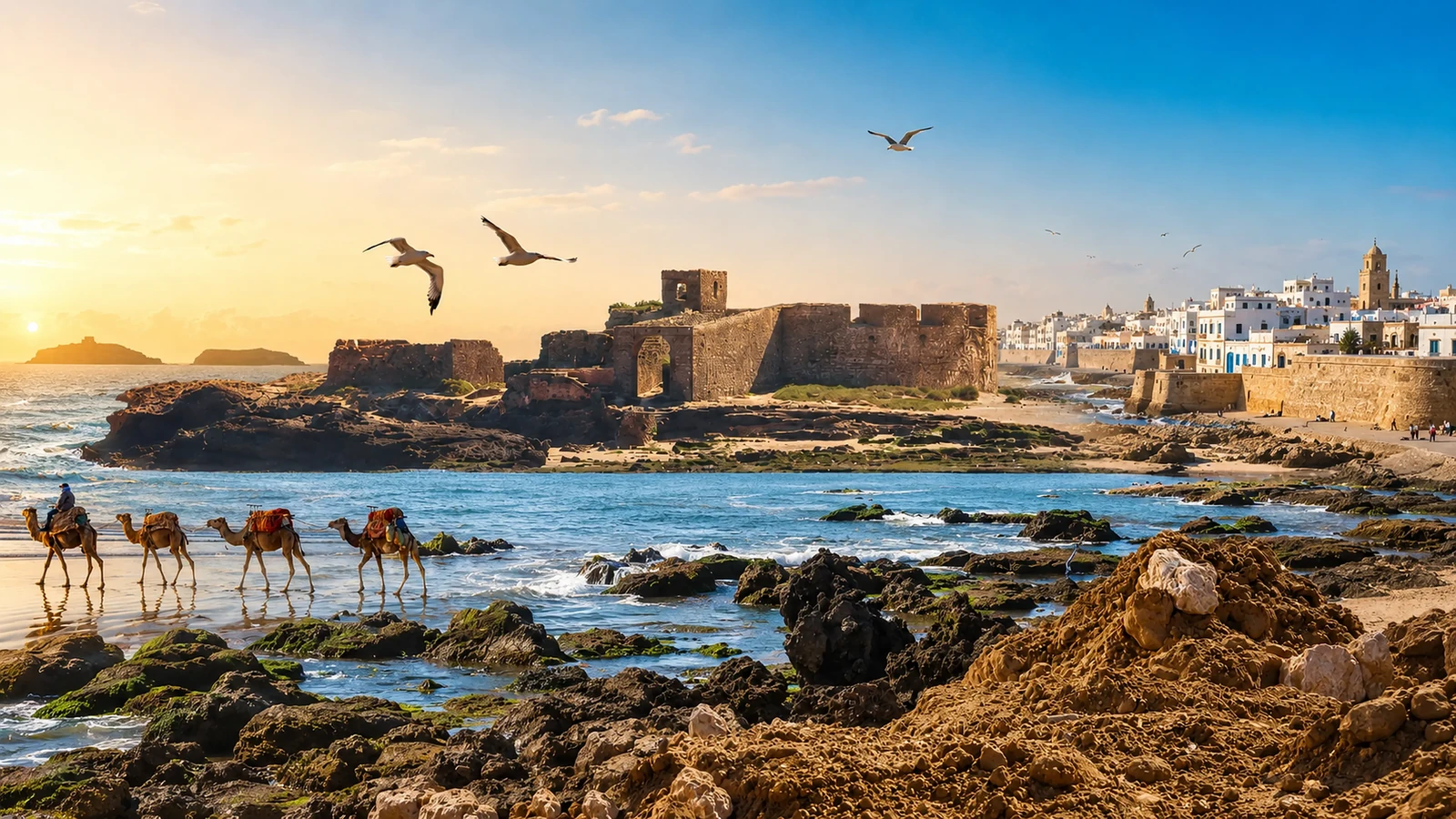
Moving towards the Atlantic edge can change the scale of a festival day. The close sequence of streets gives way to a longer view. A listener who has spent an hour concentrating on a stage may notice light, distance and the movement of water differently afterwards.
The sea does not supply a complete escape from practical decisions. Public routes, current access arrangements and the return to the next venue still matter. A pause is most useful when it has enough structure to remain a pause: a clear place, a manageable duration and no uncertainty about where the group will go next.
It can also be a time to compare memories. One person followed a leading voice; another noticed a response from the ensemble. Neither account needs to cancel the other. A shared performance becomes several experiences because each listener gives attention differently.
That plurality belongs to the city as well. The same festival street may be a route to a concert for one person and a route home for another. Holding both views at once is a form of cultural understanding that does not depend on collecting another fact. It depends on remembering that your own purpose is one among many.
A different distance
At the end of a festival visit, the strongest account may connect two scales: a musical moment that held your attention and a small street encounter that changed how you moved through the city. Neither needs to stand for all of Essaouira.
Keep names, dates and places accurate. Use the official programme for the performance and distinguish a personal impression from an explanation offered by an artist or host. Let the parts you did not understand remain questions. They may lead to a recording, a text or another visit with a clearer purpose.
Our Events page on Essaouira festival streets offers the practical route through this subject, while the Gnaoua festival dossier keeps current dates and access information in view. This Story concerns the quality of attention between those practical decisions.
A different distance
A good visit can end without a final claim that the city has revealed its secret. It can end with the more useful recognition that the music was extraordinary to you, and that other people’s ordinary day deserved room beside it.
Hear the performance.
Leave the street open.
Story pathways
Cities, cultural context and a connected essay, chosen for this subject.
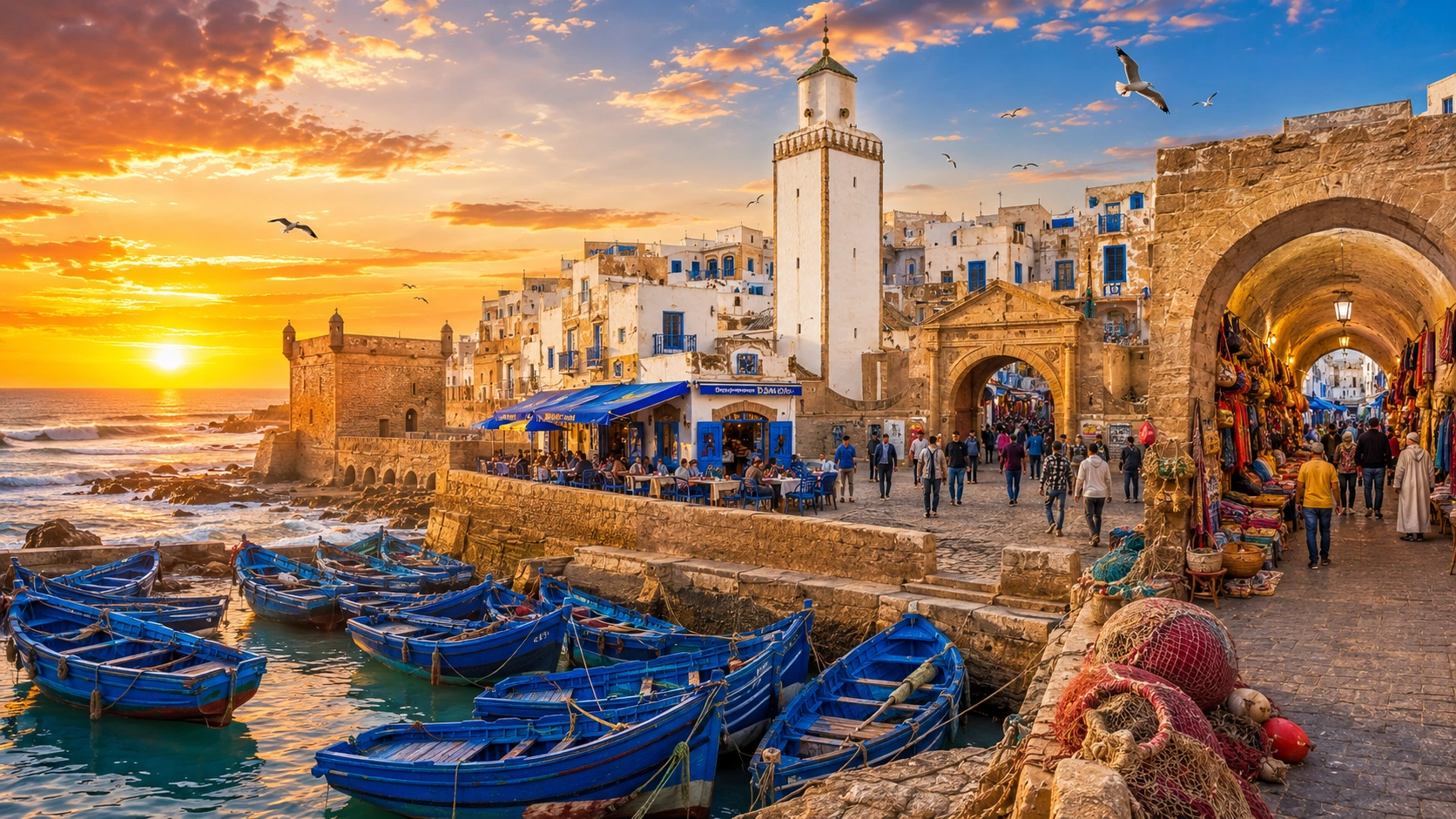
Explore Essaouira ↗
Explore the city ↗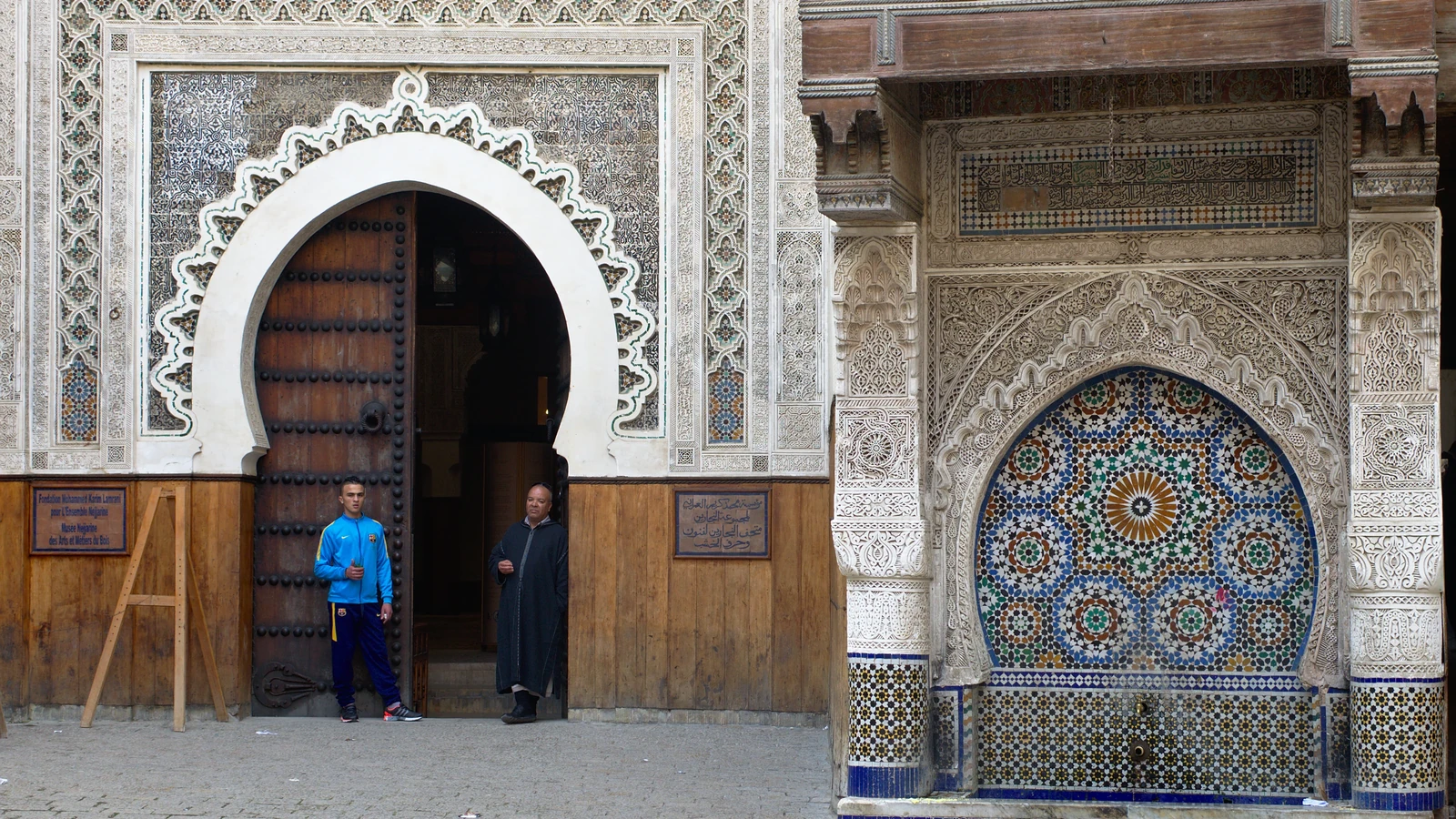
A musical evening gathers many kinds of attention: the performer’s, the listener’s, and the city’s continuing life around them.
Explore the story ↗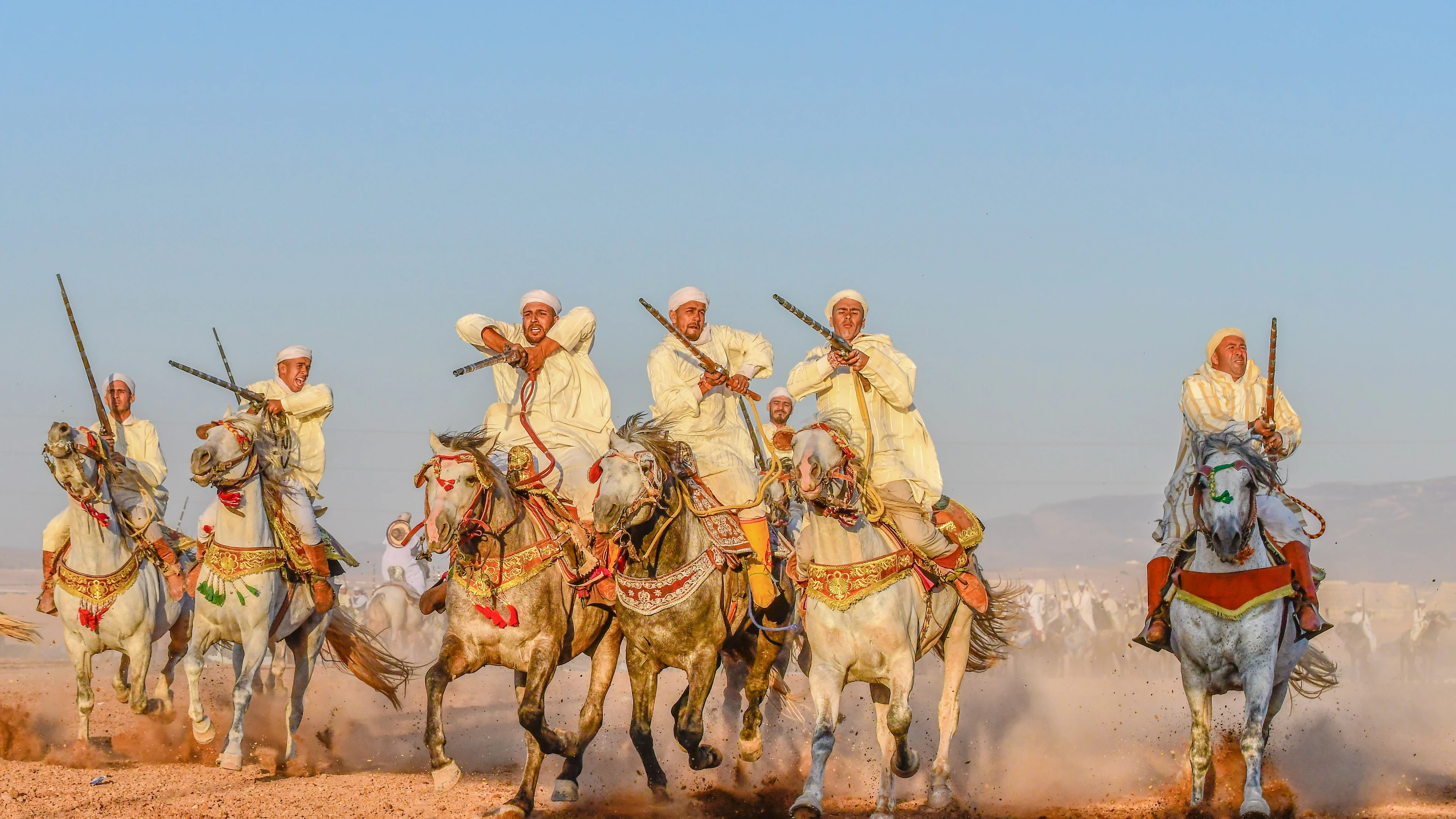
Performance, knowledge and the communities that give an event its meaning.
Explore the story ↗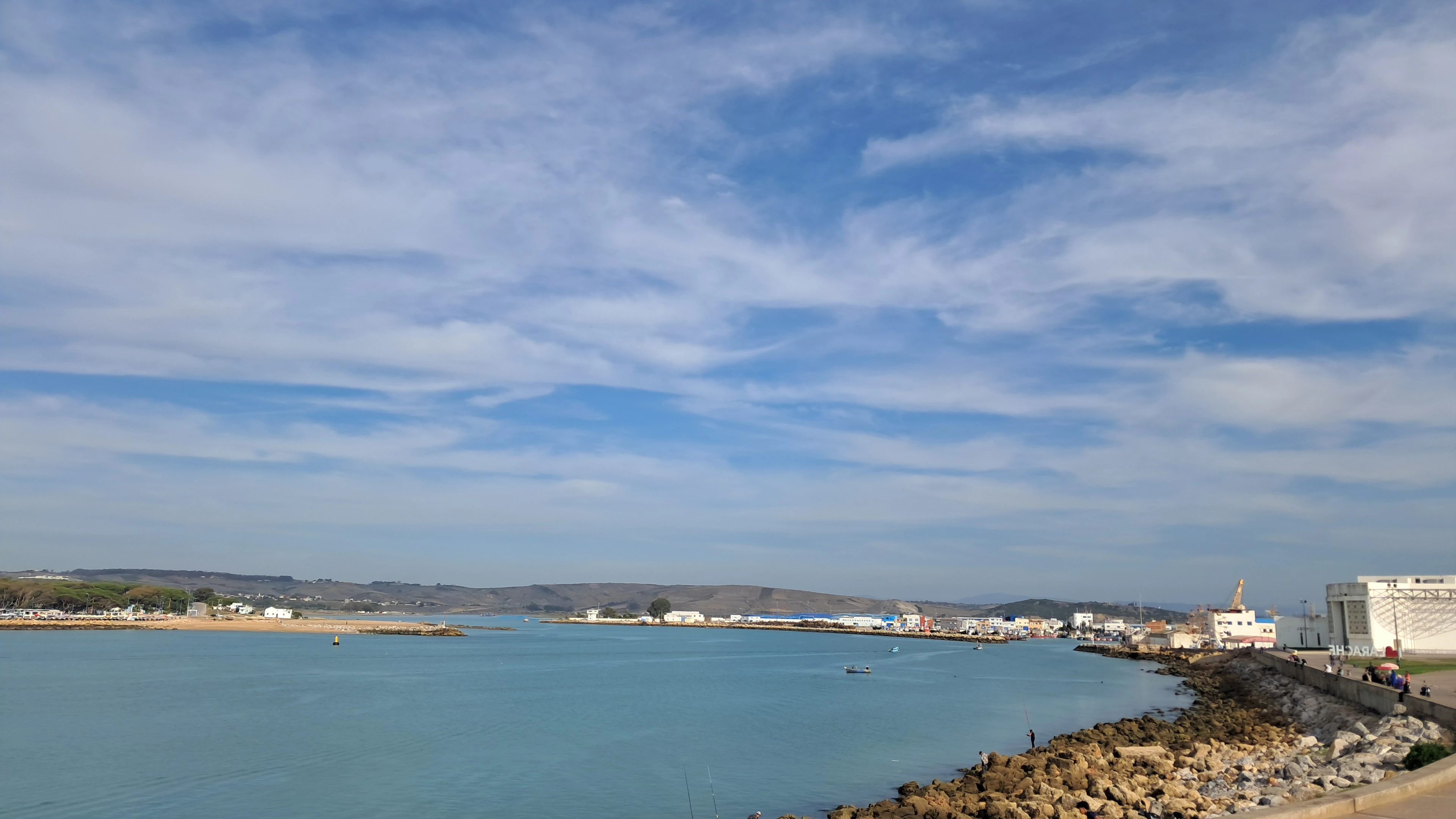
An estuary, a working port and an ancient hill across the water. Read Larache through the relationships that a sea view leaves out.
Explore the story ↗Continue reading
Keep the subject in view as you choose your next chapter.
A musical evening gathers many kinds of attention: the performer’s, the listener’s, and the city’s continuing life around them.
Read the story ↗Performance, knowledge and the communities that give an event its meaning.
Read the story ↗An estuary, a working port and an ancient hill across the water. Read Larache through the relationships that a sea view leaves out.
Read the story ↗
How we look, listen and move changes the quality of an encounter.
Read the story ↗This is a researched cultural essay. It does not report an invented visit, interview or quotation. Cultural references are distinguished from observations and suggested ways of looking.
Research checked 29 September 2026.
Library images illustrate the places, people, materials and practices discussed. They are not presented as documentary records of a particular festival edition. Captions identify what each image is used to show.
Attributions retained from the canonical library. Responsive resizing and WebP conversion; each photograph’s stated licence continues to apply.

.jpg)


.jpg)

_(7346181900).jpg)

.jpg)


