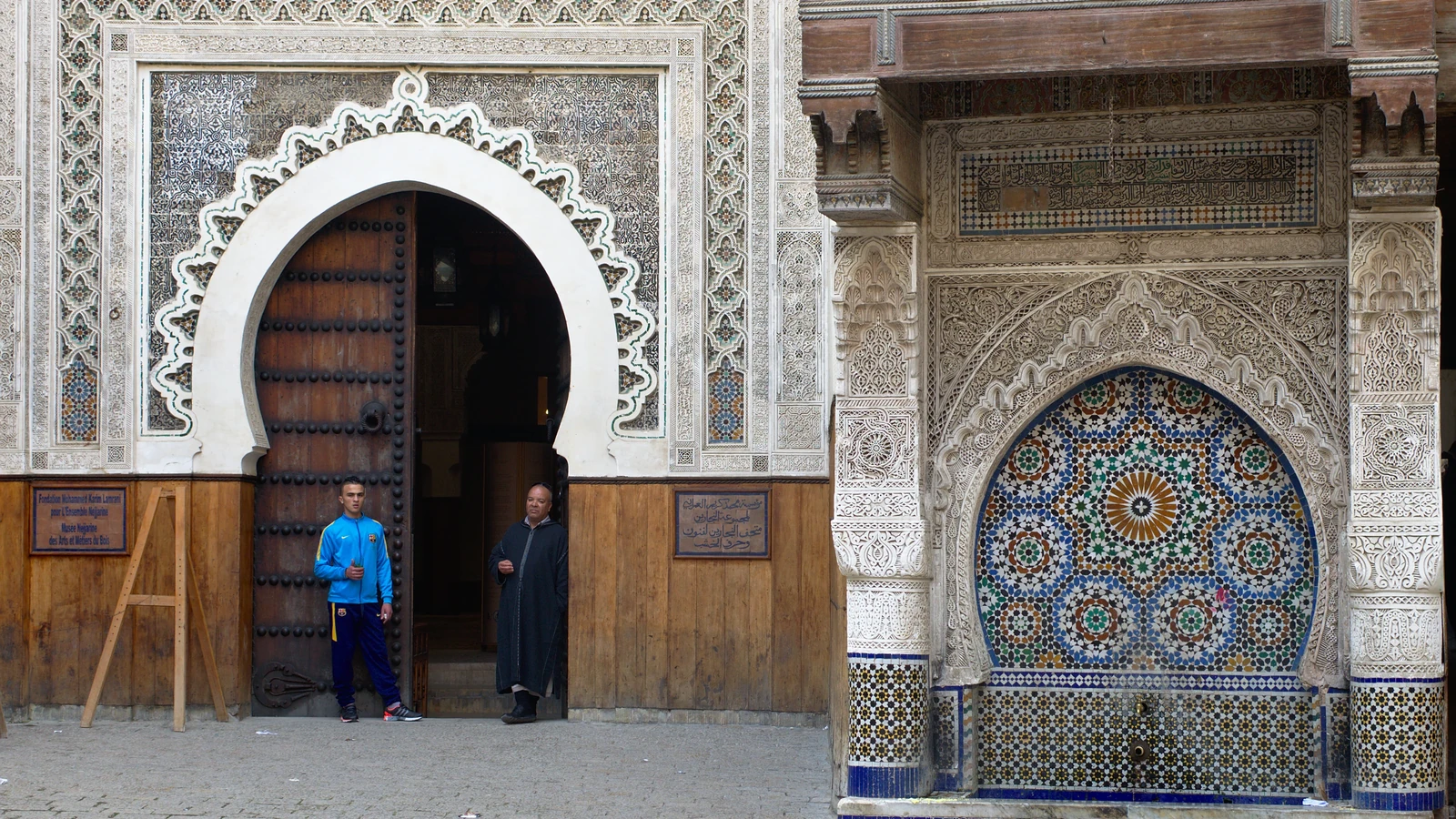
Fès, after the first note
A musical evening gathers many kinds of attention: the performer’s, the listener’s, and the city’s continuing life around them.
Read the story ↗
Exotic Morocco · Stories
Performance, knowledge and the communities that give an event its meaning.
Enter the story ↓01 / The starting point
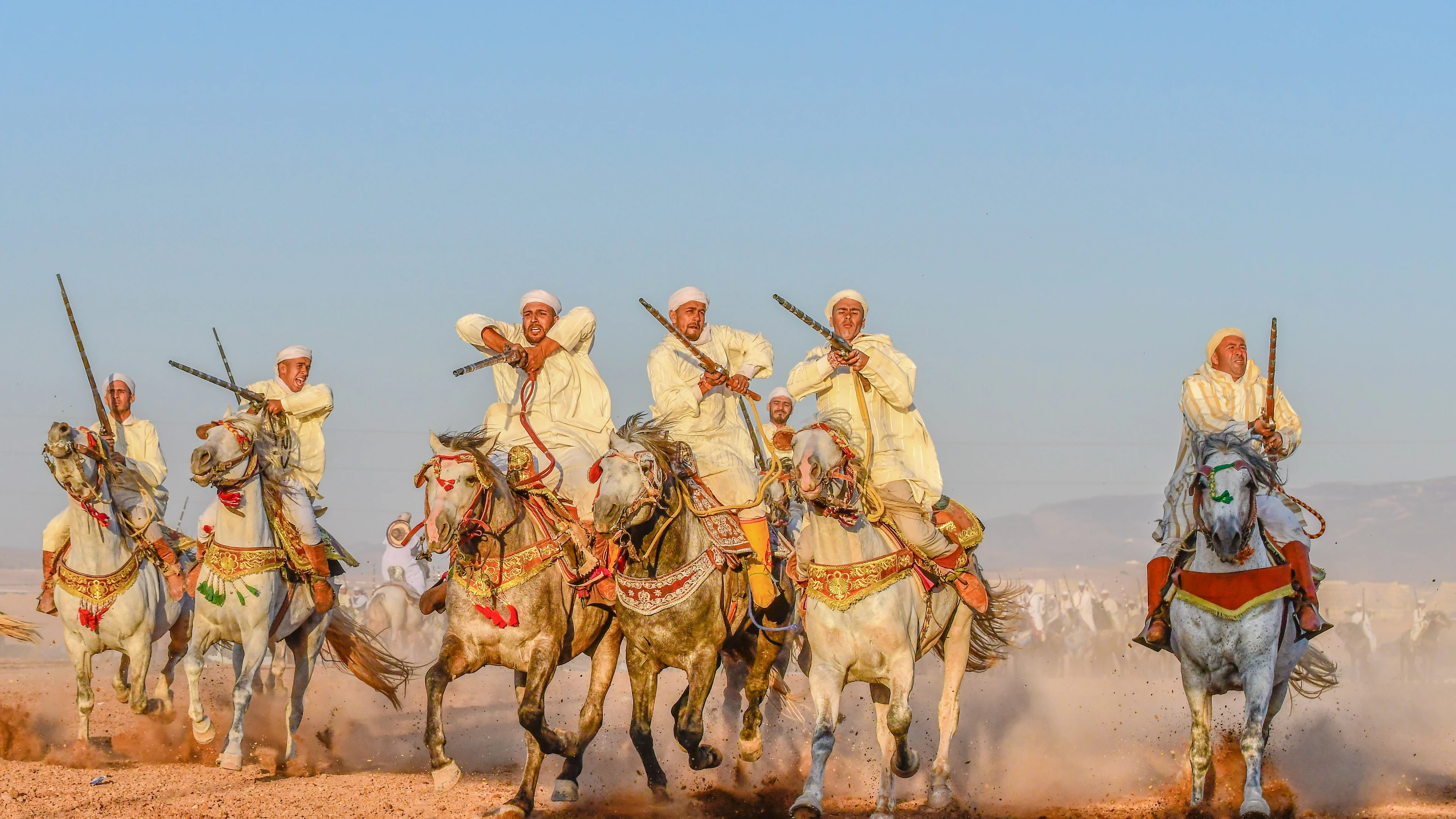
An event photograph can hold a powerful instant: horses moving together, a player concentrating, a crowd responding. Understanding that instant means asking what kind of gathering it belongs to. A public performance, a religious observance and a private celebration do not offer the same relationship to an audience.
Tbourida, pictured above, is a Moroccan equestrian performance inscribed by UNESCO in 2021. Its coordinated riding, dress and transmission within communities matter alongside the dramatic collective charge. Gnawa, inscribed in 2019, has musical, fraternal and ritual dimensions. A festival stage can present music associated with a tradition without representing every part of its social or spiritual life.
02 / Choose your first encounter
Choose the essay that brings this subject into focus.
A musical evening gathers many kinds of attention: the performer’s, the listener’s, and the city’s continuing life around them.
Read the story ↗
The music draws an audience. Between performances, streets carry the quieter negotiations of a city that continues to work.
Read the story ↗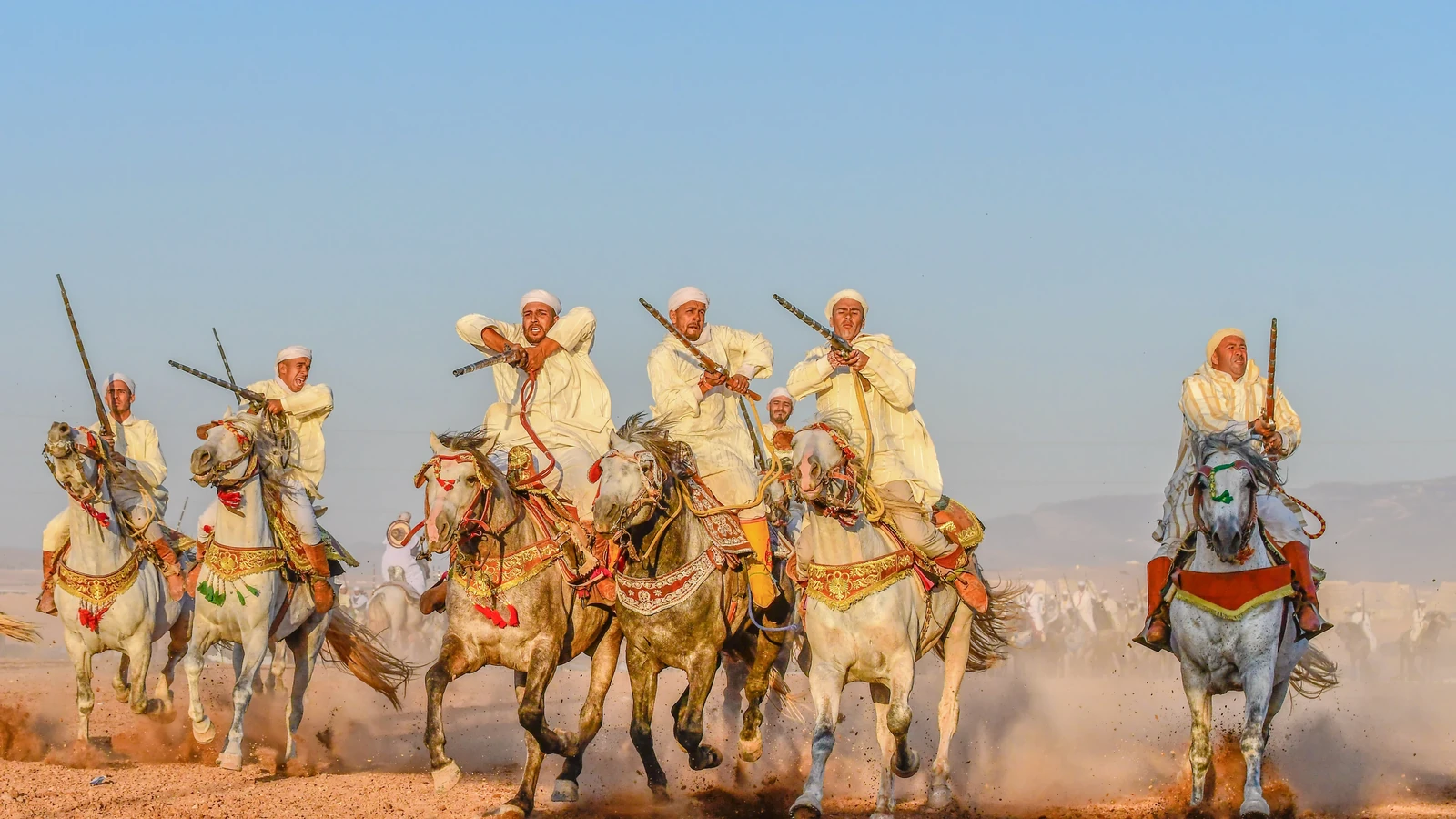
A coordinated run is brief. The knowledge, preparation and relationships that make it possible extend far beyond the audience’s view.
Read the story ↗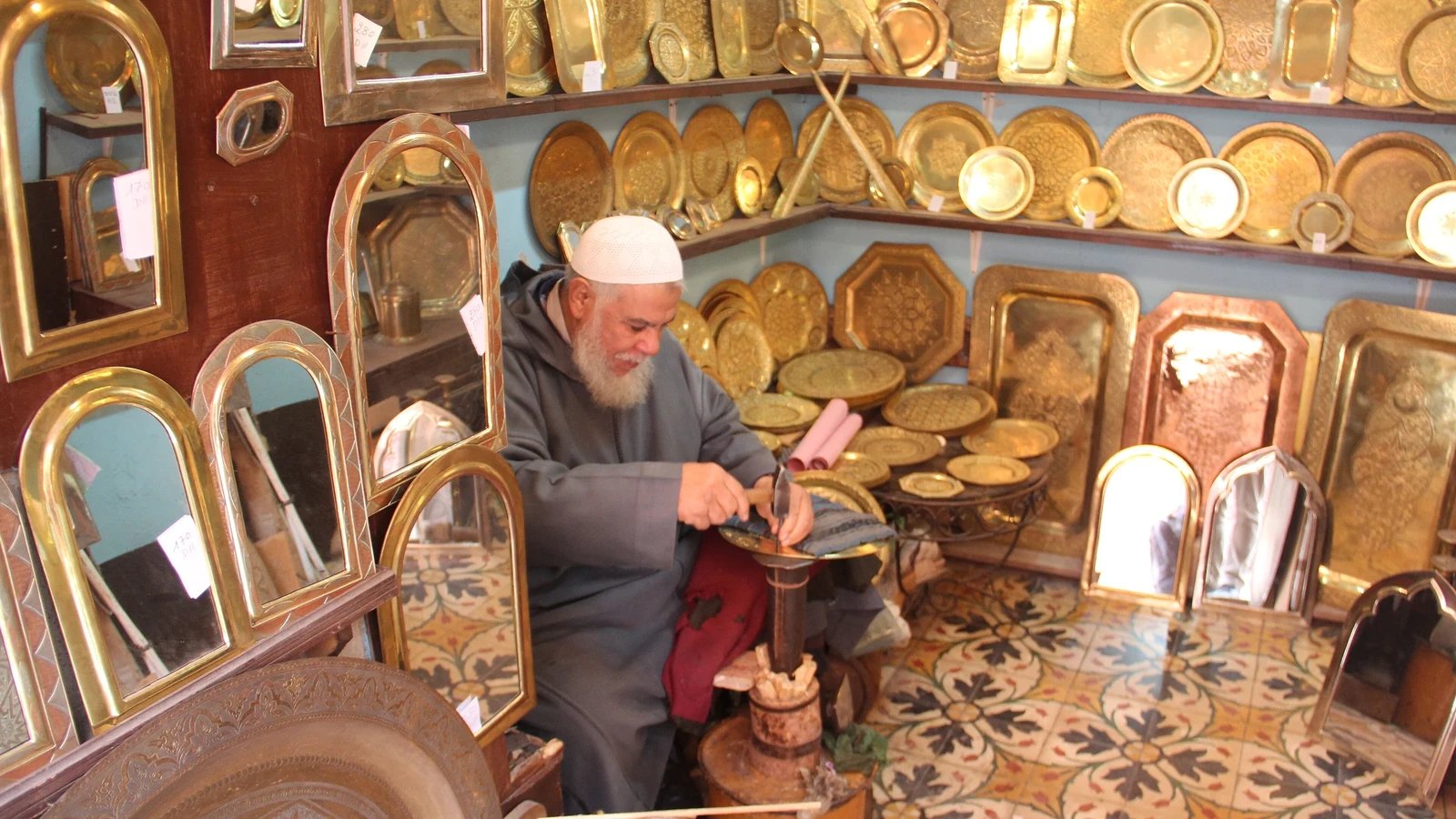
A worked surface can hold a long sequence of decisions. Looking closely begins to return the finished object to the people and processes behind it.
Read the story ↗03 / Look closer
Use this page as cultural orientation, then consult the Events section and the organiser’s current programme for an actual visit. Dates, venues and access arrangements belong to a particular edition. Our Meknès essay offers another route into performance culture through Dar Jamaï’s museum of music, while the craft and city stories show how knowledge is transmitted between occasions. Learning about a tradition can begin before a festival and continue after it.
04 / The story in context
A programme tells you when something happens. It says less about the people who prepare it, the setting in which it is heard or the ordinary life around the occasion. Begin the story before the performance or procession. Ask what can be understood from public information and what requires an invitation or a more specific explanation.
The Events pages provide the practical entry point; the city and regional guides keep the journey connected to its surroundings. Read them together rather than building a route around a name alone. A visit becomes richer when the event has a place in the itinerary and the host place has a life beyond the event.
The three event essays offer different kinds of attention. A Fès music evening asks you to listen to a complete performance and understand its setting. Essaouira connects festival movement with ordinary streets and a working coast. Tbourida directs the eye towards a coordinated team, preparation and the relationship between riders and horses.
A festival programme, a public equestrian display and a community occasion are not interchangeable. Check the current organiser’s information before choosing a date, then read the relevant story for context. These essays explain the encounter; they do not promise that a particular venue, ceremony or performance will be available on your visit.
A different distance
An unfamiliar performance does not need an immediate interpretation from the visitor. Listen to the introduction where one is offered, observe the setting and leave questions open. Distinguish between a public programme and a private or religious occasion. The possibility of seeing something does not automatically establish permission to record it or enter every space around it.
The Atlantic music route offers one way to connect listening with a coastal journey, but it remains a framework. Confirm the actual programme and access arrangements with the organiser. Keep enough space around the occasion to arrive without hurry and to leave without making the experience the first link in another rushed transfer.
A different distance
The next day can be a useful part of an event journey. Return to a neighbourhood, follow an architectural interest or spend time with a city story that changes the way you understand the setting. This keeps the visit from becoming a brief encounter with a stage while everything around it remains unnamed.
When telling someone else about the occasion, separate what you witnessed from the history you have checked. Avoid presenting one performance as the definitive form of a broad tradition. Give credit to the people and programme you actually encountered, and retain the questions that deserve more reading. A good account can be attentive without pretending to be complete.
Story pathways
Cities, cultural context and a connected essay, chosen for this subject.
Learn Be a considerate audience Bring context to photography, access and participation. Explore ↗
Explore the context ↗A musical evening gathers many kinds of attention: the performer’s, the listener’s, and the city’s continuing life around them.
Explore the story ↗The music draws an audience. Between performances, streets carry the quieter negotiations of a city that continues to work.
Explore the story ↗A coordinated run is brief. The knowledge, preparation and relationships that make it possible extend far beyond the audience’s view.
Explore the story ↗Continue reading
Keep the subject in view as you choose your next chapter.
A musical evening gathers many kinds of attention: the performer’s, the listener’s, and the city’s continuing life around them.
Read the story ↗The music draws an audience. Between performances, streets carry the quieter negotiations of a city that continues to work.
Read the story ↗A coordinated run is brief. The knowledge, preparation and relationships that make it possible extend far beyond the audience’s view.
Read the story ↗A worked surface can hold a long sequence of decisions. Looking closely begins to return the finished object to the people and processes behind it.
Read the story ↗This reading room connects published stories with contextual guides. Each linked story includes its own research and photography notes.
Photography is identified through the linked source records. Crops and responsive sizes were prepared for this layout.
Research checked 27 September 2026.
.jpg)

.jpg)


