Enter the setting
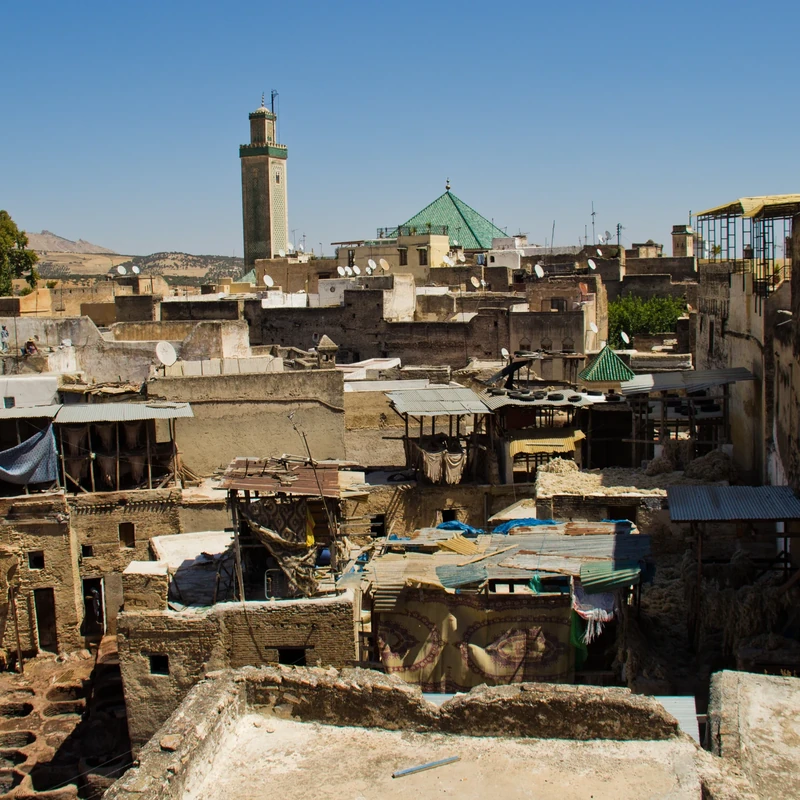
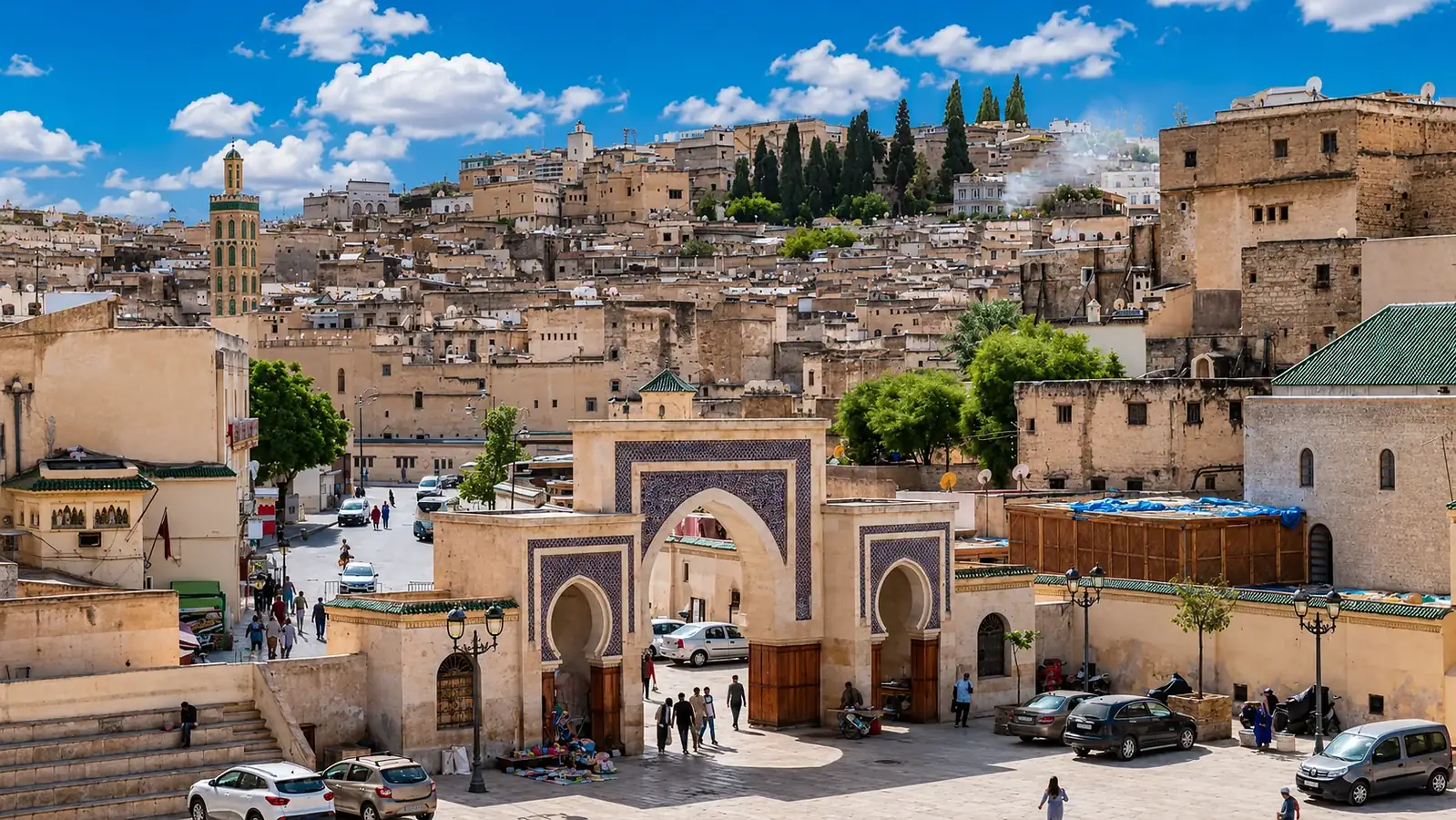
Medina rooftops and working spaces in Fès.

Exotic Morocco · Stories
A musical evening gathers many kinds of attention: the performer’s, the listener’s, and the city’s continuing life around them.
Enter the story ↓01 / The starting point
A concert ticket divides an evening into an apparent before and after. There is the hour printed on it, and there is everything that happens until that hour. Yet the approach can shape the listening as much as the programme. An unfamiliar route asks for attention. A doorway changes the scale of a street. Entering a venue changes the purpose of waiting.
In Fès, that transition takes place within a city whose historic fabric continues to carry ordinary work and movement. A visitor may be going to hear music while someone beside them is finishing a day’s trade or returning home. These journeys briefly share a passage without becoming the same story.
The evening becomes richer when those purposes remain visible. Architecture is not simply a frame prepared for the performance, and the city is not an audience waiting for the visitor to arrive. Music takes its place within a setting that already has many uses. The listener’s task is to make enough room in their own attention to notice that relationship.
02 / Read the details
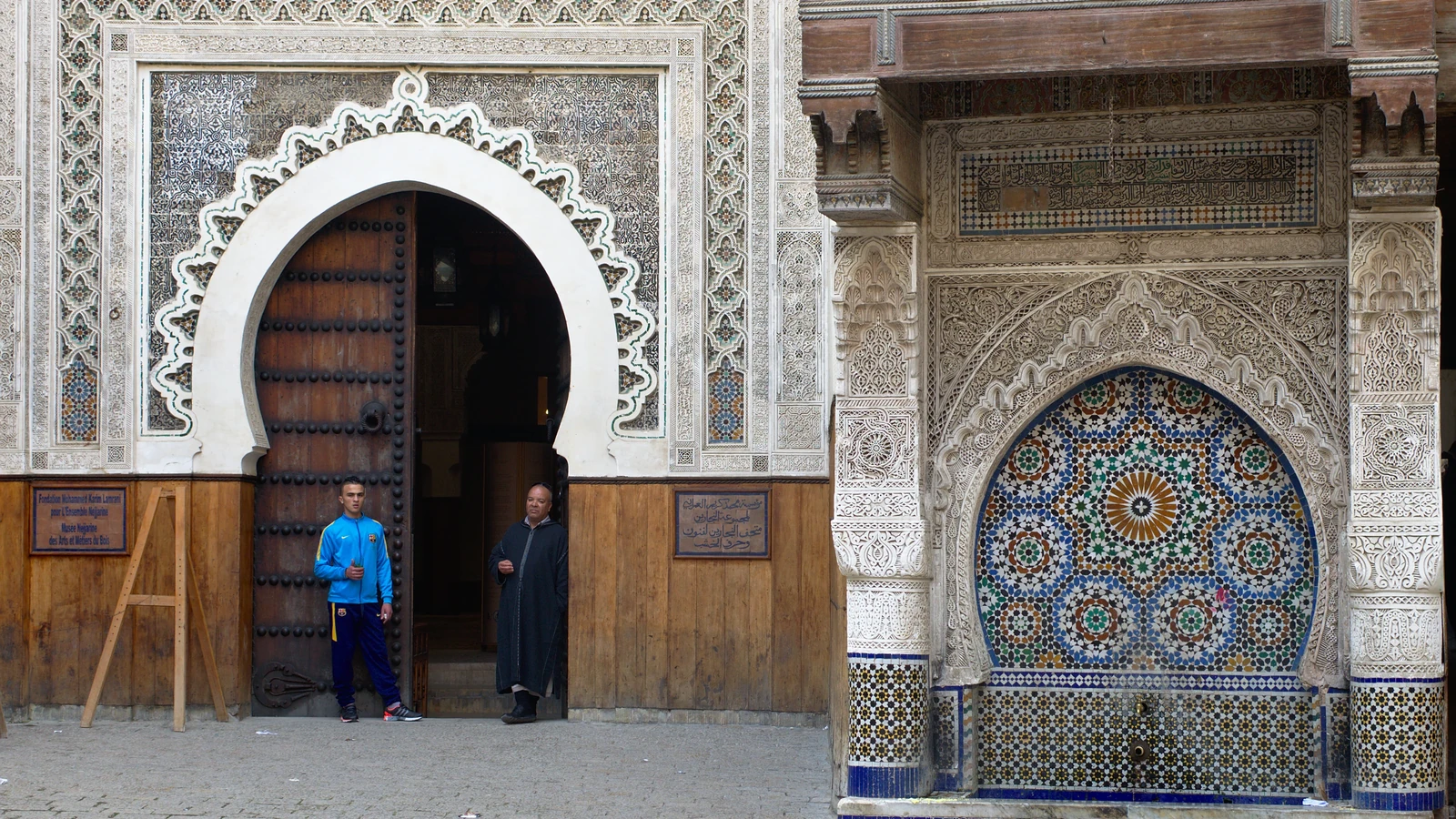
Three visual encounters within this story.
Medina rooftops and working spaces in Fès.
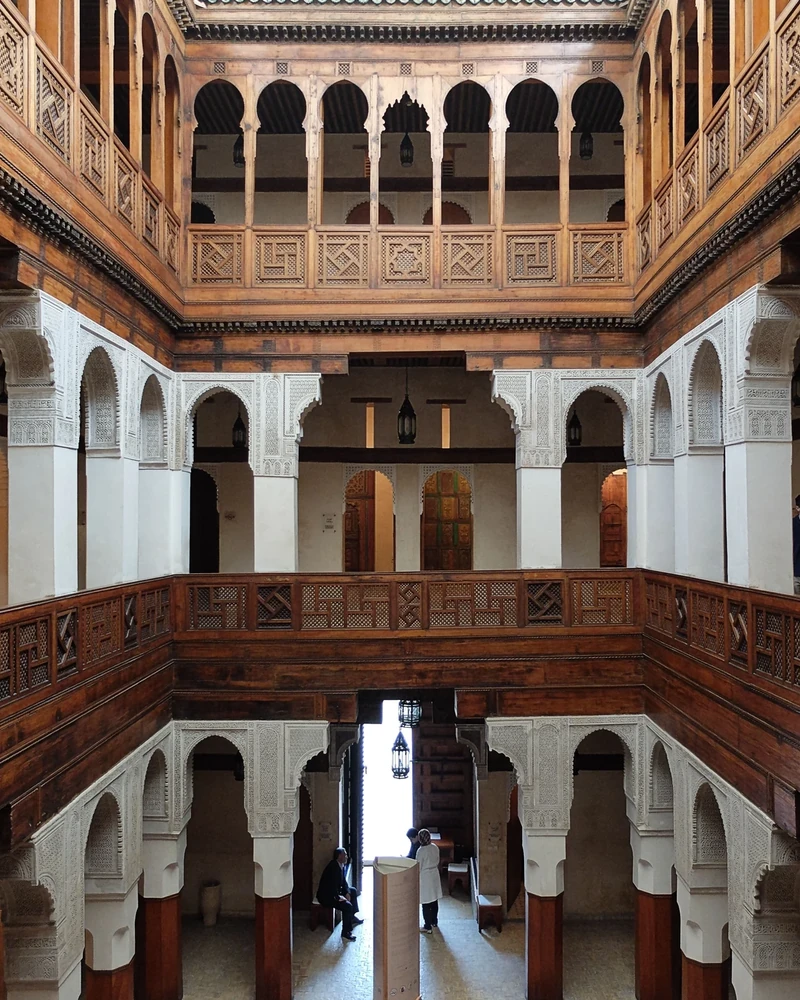
The wooden galleries of the Nejjarine fondouk courtyard.
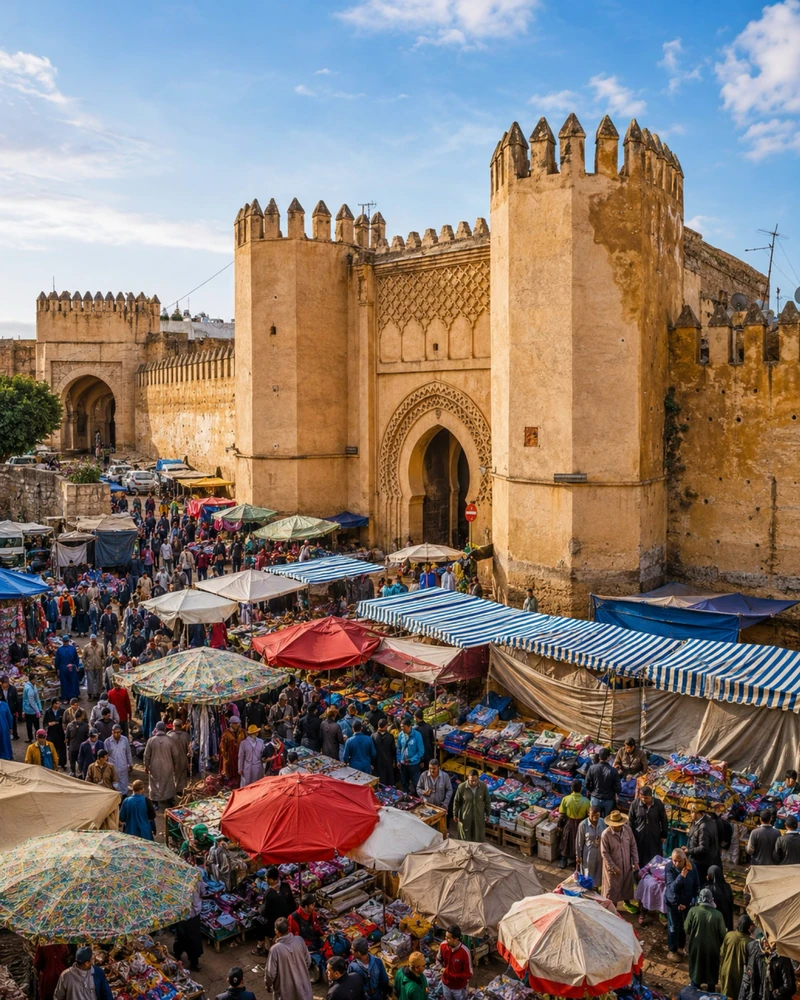
Market stalls beside Bab Ftouh in Fès.
03 / Look closer
The Festival of World Sacred Music brings artists into a programme shaped around musical and cultural encounters. Its name creates an expectation, but each performance still needs its own introduction. A tradition, a composition and a collaboration do not acquire identical meanings because they appear under one festival title.
The setting can be powerful. The organizer’s recent programme has used places including Bab Makina and Jnan Sbil, alongside other venues. Their presence in one edition is useful evidence for that programme, not a promise that the next will repeat it. A visitor should follow the named venue and the current invitation rather than turn a memorable image into a permanent map.
Architecture and music can sharpen attention to each other without becoming one explanation. A courtyard may make you more aware of enclosure; a garden may leave the sky in the edge of your vision. Those impressions belong to the experience of listening. They do not tell you what a poem means or why a musician has chosen a particular phrase.
That is where a programme note earns its place. A name, language or short account of an artist’s practice gives the listener something precise to hold alongside the atmosphere. The most useful context is often modest. It makes one detail clearer and leaves the performance enough space to do its own work.
04 / The story in context
02 / The work of listening
There are many ways to lose a performance while appearing to attend it. A phone offers the possibility of preserving everything and asks for a steady stream of small decisions: frame, focus, duration, exposure. Meanwhile the music continues, including the parts that do not announce themselves as moments worth recording.
A useful listening note has three parts: the named performer or ensemble, the venue and one musical detail you can actually describe. The programme helps establish the first two. For the third, follow a recurring phrase, an exchange between instruments or a change in the group’s response. This keeps the account close to what you heard.
The historic setting adds another layer, but a courtyard does not explain every musical tradition performed within it. Read the artist’s introduction and leave room for translations or unfamiliar forms. After the performance, the route back through the city returns the evening to ordinary streets, work and residents; it is part of the experience rather than empty space between venues.
Stay with the context
A different kind of record begins by choosing one line to follow. It might be a voice, an instrumental figure or the response that comes from elsewhere in the ensemble. You do not need to name its technique to notice when it returns. Repetition becomes legible through small differences: a pause, a change in weight, another musician joining.
If the words are unfamiliar, there is a limit to what sound alone can reveal. That limit need not be concealed with a large claim about transcendence. You can hear an intensity or a change of pace while acknowledging that the text remains beyond your understanding. A translation read later may alter the memory, adding something that the first encounter could not supply.
Listening also includes the audience. People may be still, responsive or moving with a shared rhythm, depending on the occasion. A visitor can learn from these cues without copying every action or assuming that participation is always expected. The attentive question is not how to look like an insider. It is how to be present without interrupting the form of attention around you.
A closer encounter
Describe a phrase, a response or a change in the ensemble. Keep the observation close to what you actually noticed.
Use the artist’s or organizer’s account to understand names and context. Attribute it rather than presenting it as a discovery made by atmosphere alone.
A personal response can be vivid without becoming a claim about an entire tradition. Leave room for another listener to hear differently.
A different distance
03 / The evening is made by people
A performance appears to gather around its most visible figure, but an evening has many makers. Someone prepares an instrument. Someone makes the route into the venue understandable. Someone checks admission, manages the sound or helps an audience settle. Their tasks shape what listening becomes possible.
This wider labour is easy to overlook because good organization often makes itself unobtrusive. The gate opens, the light changes, the next part of the programme begins. A visitor notices the transition without always seeing the decisions beneath it. Respecting the work can be as simple as arriving prepared, following the actual entrance and keeping a passage clear.
A different distance
Outside, the city has its own evening tasks. A shop may be closing while a café continues to receive people. The festival’s timetable intersects with other timetables, and the same street can carry both. There is no need to turn these ordinary activities into picturesque supporting scenes. Their independence is the point: the place remains larger than the programme.
A complete account of a festival night would therefore contain more than a performer and a monument. It would include the systems of work and care that bring people together, while admitting that a brief visit cannot reveal every role. The listener can at least resist the easy fiction that an exceptional evening simply appears, fully formed, in an ancient city.
A different distance
When a performance ends, shared attention becomes shared movement. People retrieve belongings, locate companions and work out which way to leave. A concentrated room or garden begins to open back into the city. The practical return is not separate from the cultural experience; it determines whether the evening can end with the same care with which it began.
Knowing a route and a meeting point frees some attention for that transition. It reduces the temptation to stop in a doorway, consult several screens at once or press forward because everyone else seems to know the way. The useful details were best settled earlier, when the city and the group were easier to read.
There may be a wish to keep the performance going through conversation. A companion remembers a different passage; a question about the words returns; the name of an instrument becomes worth finding out. These are good beginnings for further learning. They do not require turning the walk home into a search for another spectacle.
Some parts of the city will be quiet, others still active. Let those differences remain local and particular. The night is not a single atmosphere spread evenly across Fès. It is many simultaneous evenings, of which the visitor has shared one small part.
A different distance
A festival memory can become clearer when it is reduced rather than expanded. Choose one thing you genuinely noticed: the way two musicians answered each other, a phrase that returned differently, or the moment the audience’s attention changed. Write it down before replacing it with the general vocabulary of an unforgettable night.
Then add what can be established. Keep the artist’s name, the work if it was identified, the venue and the edition. Use the official programme to check what memory has blurred. This small act of accuracy gives the experience a life beyond a caption.
The rest can remain open. A musical question may lead to a recording; an architectural detail may lead to a museum or a documented building. Our Events guide to a Fès evening offers the practical framework, while the named festival dossier keeps dates and access separate from the essay’s slower concerns.
A different distance
The strongest evening does not have to make you feel that you have understood Fès. It may leave you with a more precise reason to listen again.
One night can be complete.
The listening can continue.
Story pathways
Cities, cultural context and a connected essay, chosen for this subject.
Explore Fès ↗
Explore the city ↗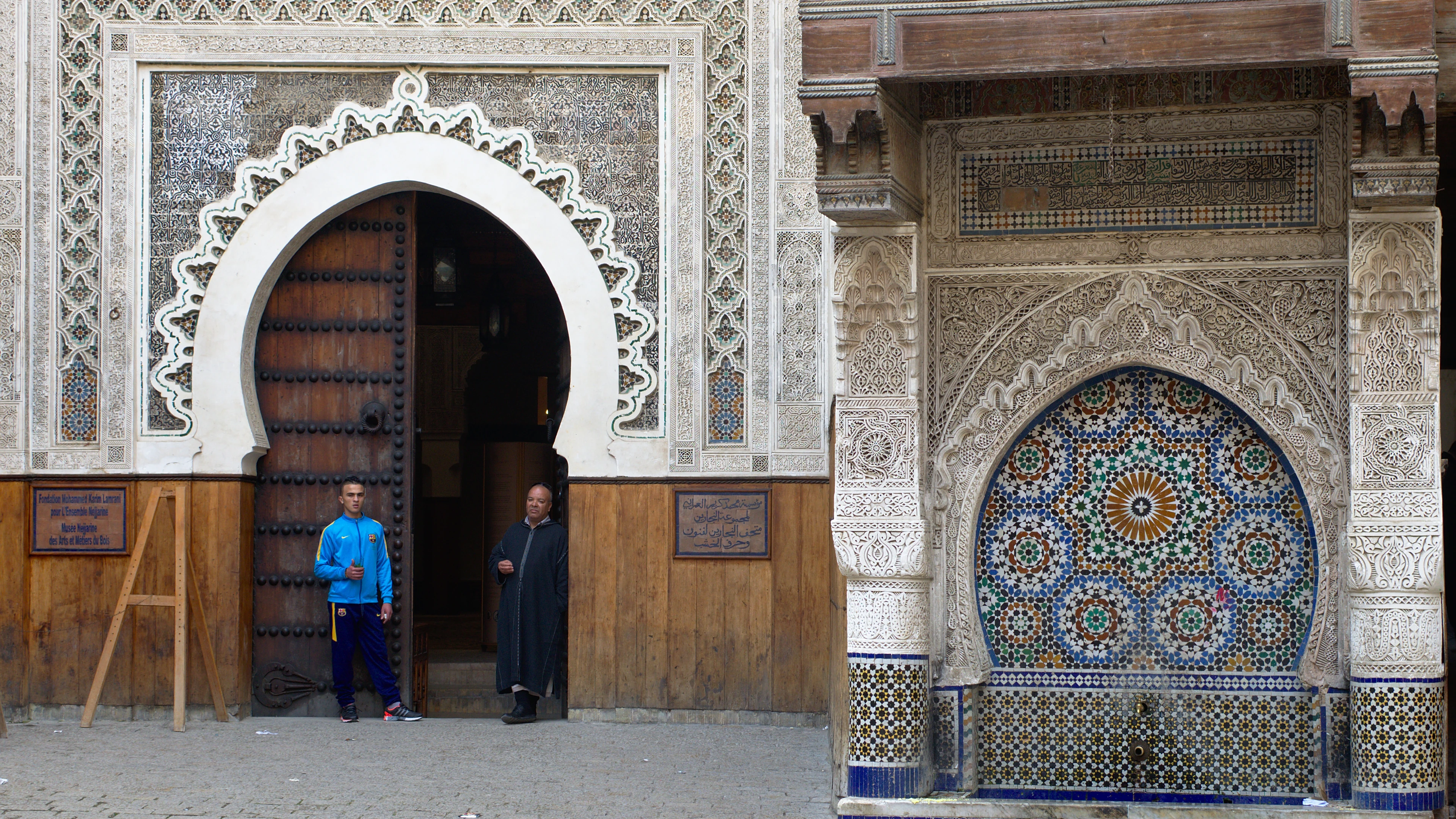
A city’s records can be held in walls, objects and practiced skills. Reading Fès means leaving room for the people who keep it alive.
Explore the story ↗
The music draws an audience. Between performances, streets carry the quieter negotiations of a city that continues to work.
Explore the story ↗
Performance, knowledge and the communities that give an event its meaning.
Explore the story ↗Continue reading
Keep the subject in view as you choose your next chapter.
A city’s records can be held in walls, objects and practiced skills. Reading Fès means leaving room for the people who keep it alive.
Read the story ↗The music draws an audience. Between performances, streets carry the quieter negotiations of a city that continues to work.
Read the story ↗Performance, knowledge and the communities that give an event its meaning.
Read the story ↗
Names, greetings and the small conversations that put words into everyday life.
Read the story ↗This is a researched cultural essay. It does not report an invented visit, interview or quotation. Cultural references are distinguished from observations and suggested ways of looking.
Research checked 29 September 2026.
Library images illustrate the places, people, materials and practices discussed. They are not presented as documentary records of a particular festival edition. Captions identify what each image is used to show.
Attributions retained from the canonical library. Responsive resizing and WebP conversion; each photograph’s stated licence continues to apply.
.jpg)
.jpg)


.jpg)

_(7346181900).jpg)

.jpg)


