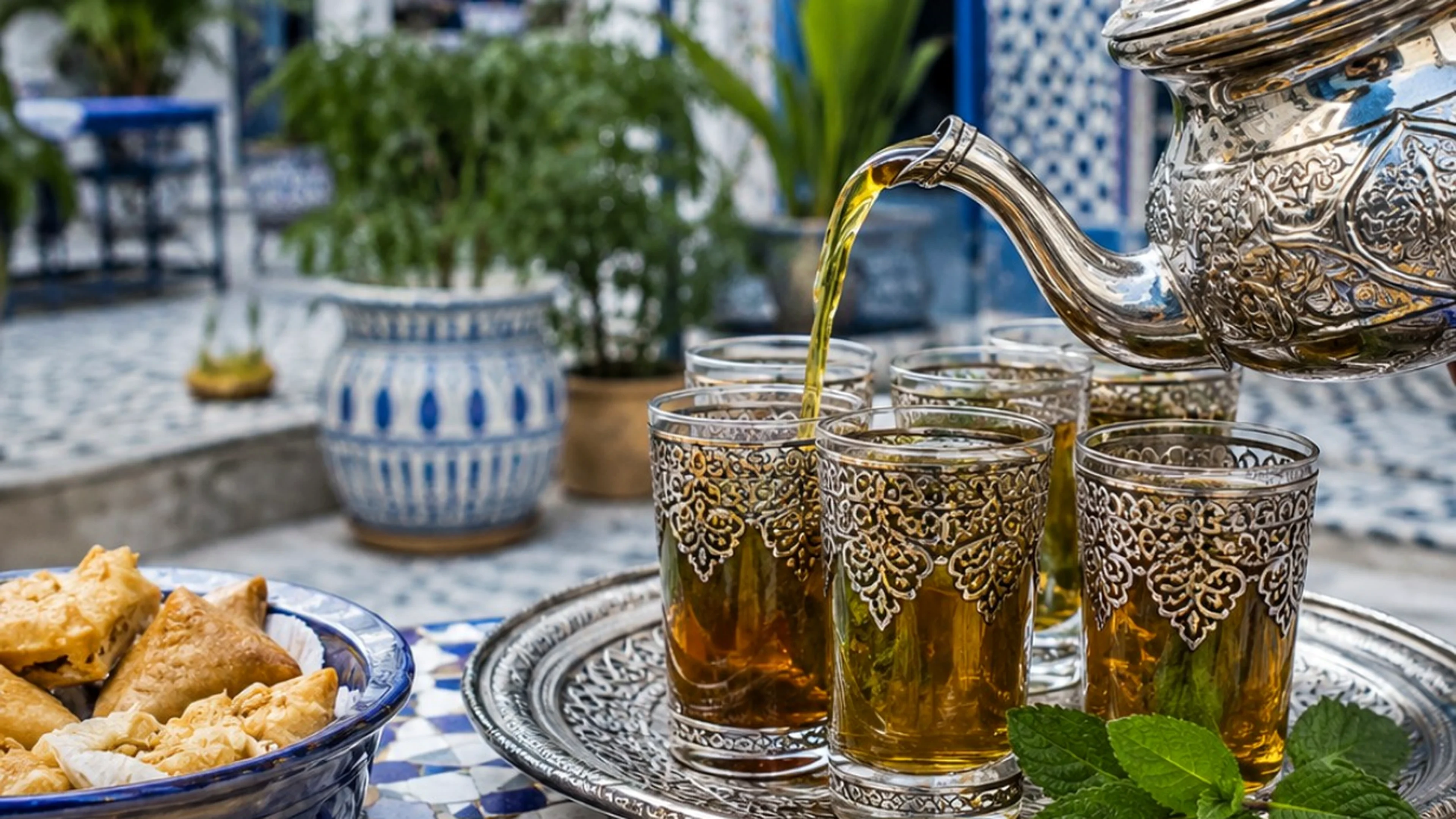
The culture of travel
How we look, listen and move changes the quality of an encounter.
Read the story ↗
Exotic Morocco · Stories
Names, greetings and the small conversations that put words into everyday life.
Enter the story ↓01 / The starting point
A phrase list can tell you what to say. A conversation asks something more: who is speaking, what they are trying to do, and what the other person might say next. The useful unit is often an exchange rather than a word collected on its own.
This reading room connects language to lived settings. Darija guides introduce greetings, hospitality and practical conversation. The Tétouan essay considers a city shaped by people carrying skills and memories across the Strait. The Amazigh culture guide offers another part of Morocco’s cultural context. These connections help keep one language or one written sign from standing in for everyone’s experience.
02 / Choose your first encounter
Choose the essay that brings this subject into focus.
How we look, listen and move changes the quality of an encounter.
Read the story ↗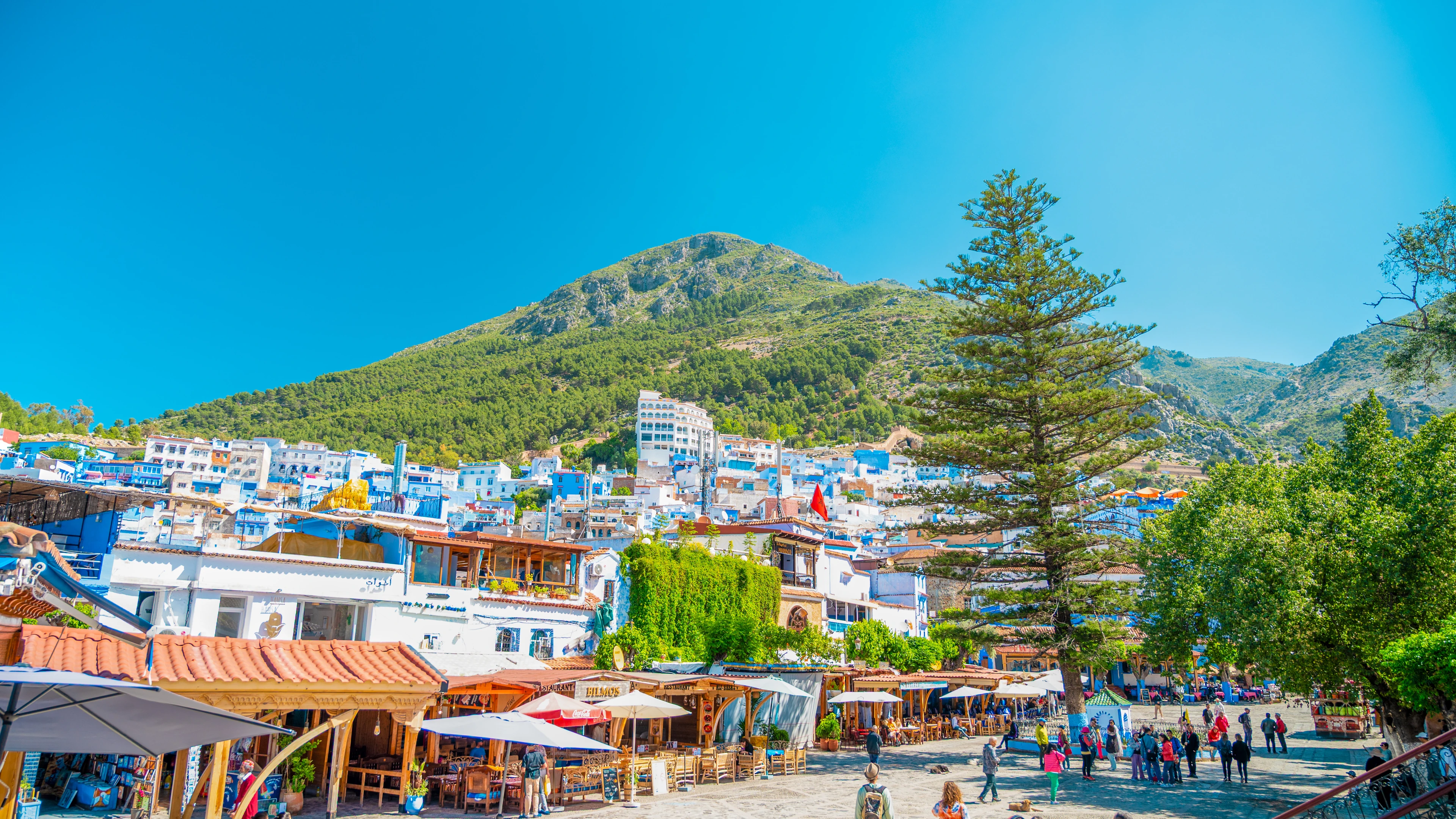
Five places, five ways into the streets, institutions and working life behind a familiar image.
Read the story ↗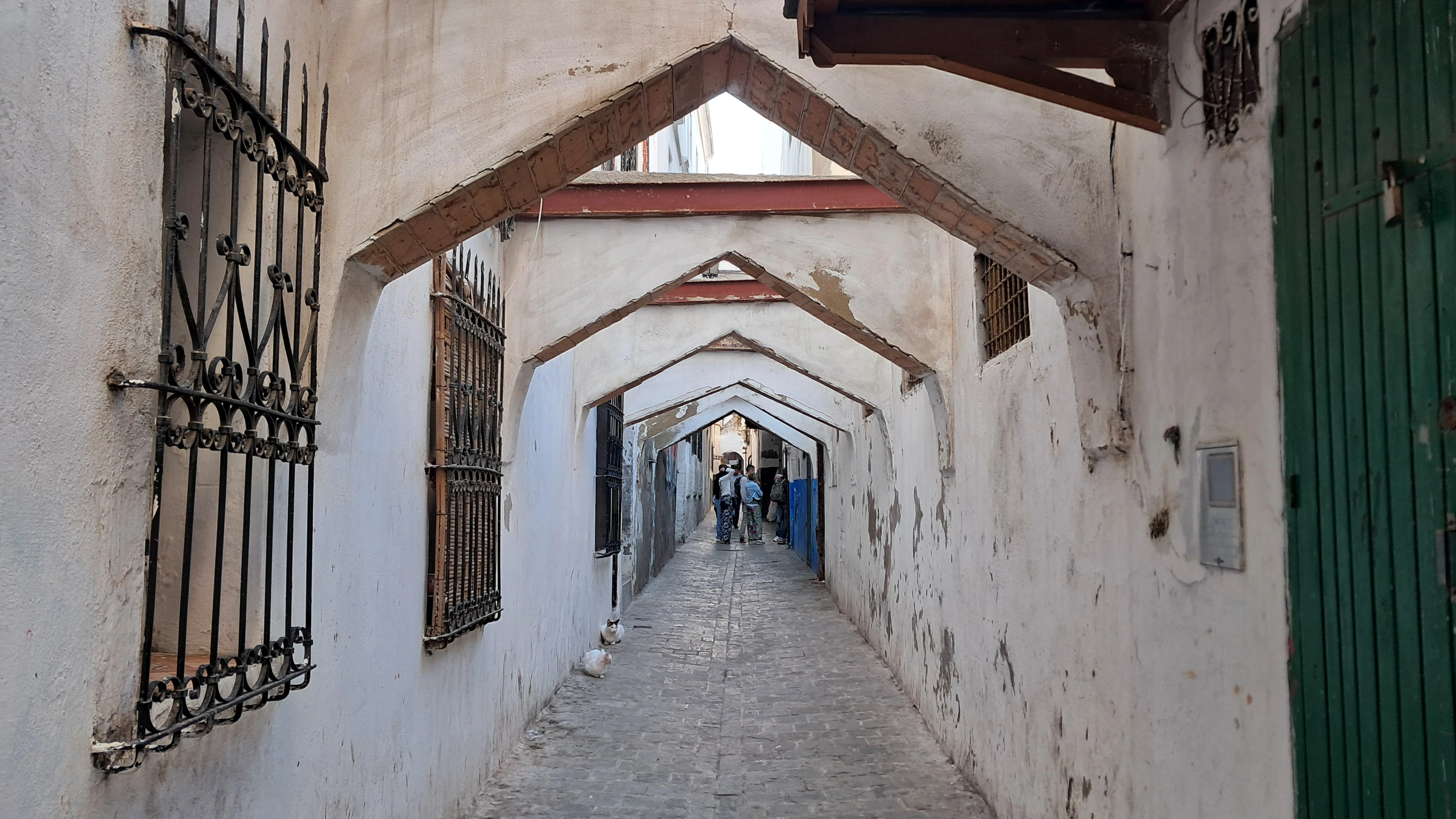
Across a white hillside city, streets, thresholds and working crafts reveal an inheritance carried by people.
Read the story ↗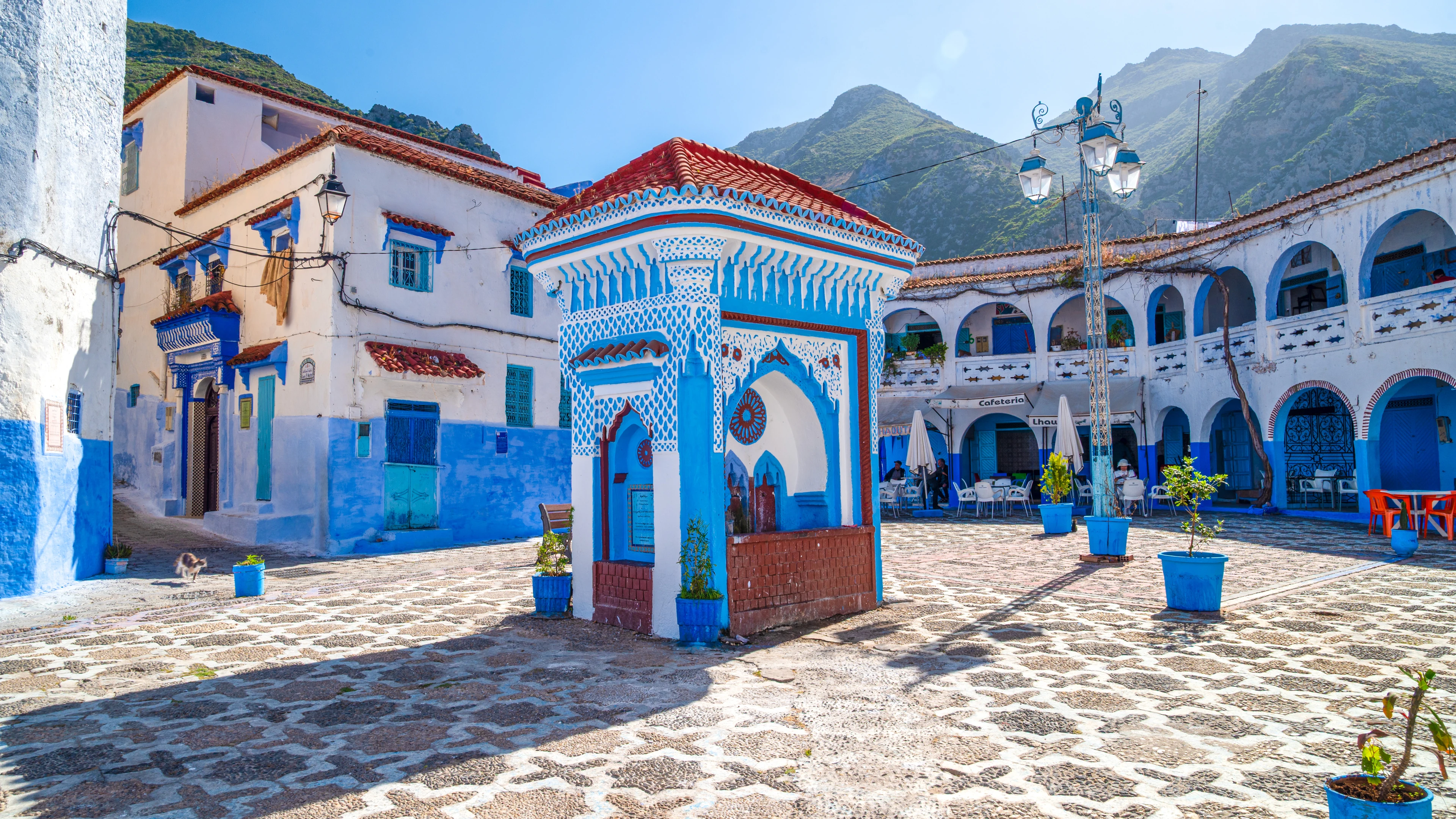
The colour draws you in. Mountains, ochre walls, water and food give the photograph a much larger story.
Read the story ↗03 / Look closer
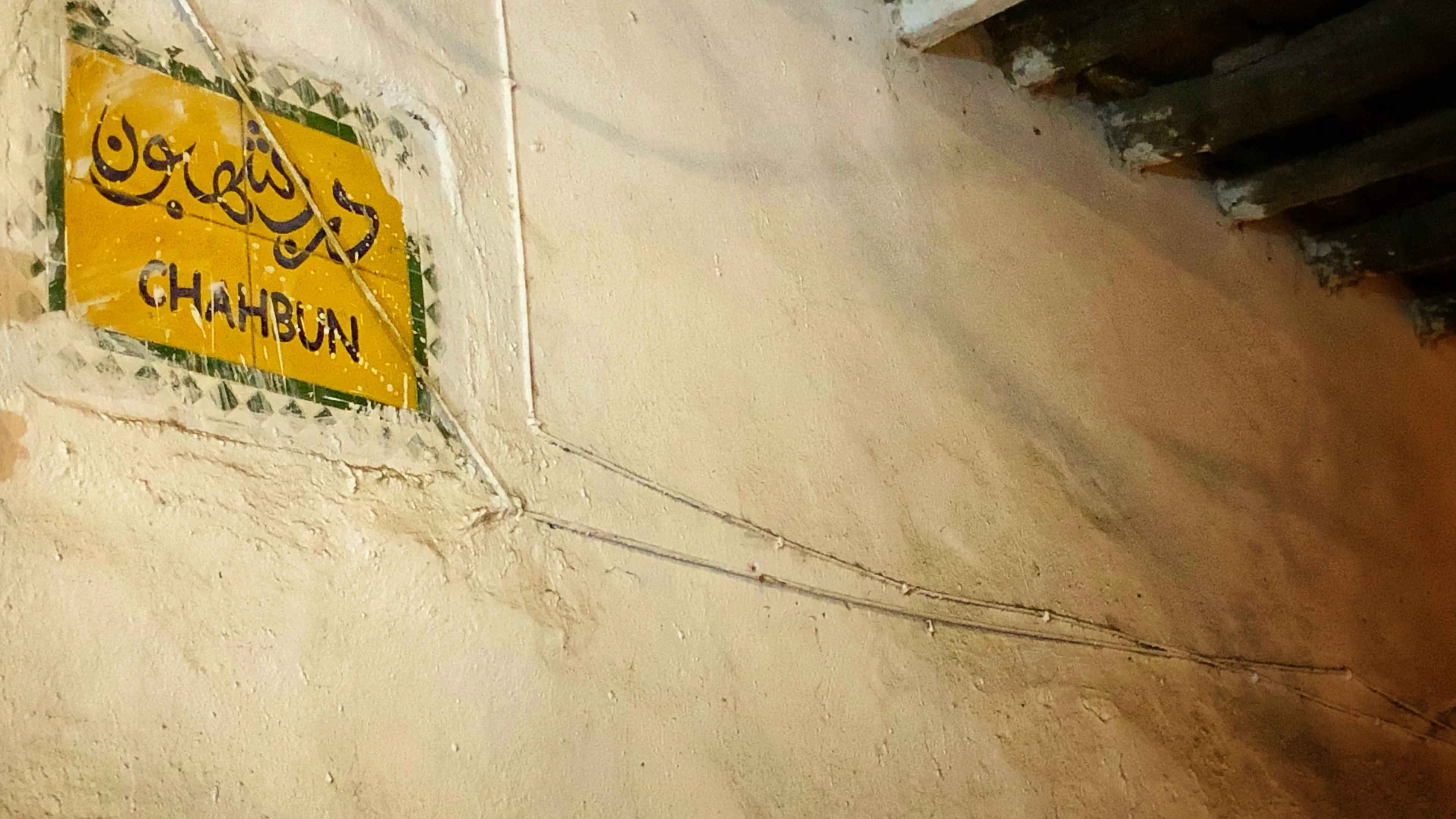
The hero photograph shows Arabic and Latin lettering on a street sign in Tétouan. It records a named place and two scripts; it cannot establish what every person on that street speaks. Written Arabic should not automatically be labelled Darija, and a translated name does not explain every layer of the place. Use the sign as an invitation to notice, then turn to a situated exchange: greeting someone, asking a direction or checking that you have understood.
04 / The story in context
A phrase on a page has a stable shape. In a conversation it meets a person, a pace and an answer you may not expect. The Darija guides begin with this difference. Learning how to say a request is useful, but recognising whether the reply answers it is what allows the exchange to continue.
Think of a greeting as a small shared sequence rather than a line to perform. One person begins; the other gives the next moment its direction. A pause, a change of language or a clarifying gesture can become part of a successful exchange. None of those needs to be treated as a failure to complete the lesson.
There is a useful difference between recognising a written word, pronouncing it and knowing when to use it. A sign offers the first kind of encounter; an exchange with a person adds tone, timing and a reply. Keep those experiences together when building a small vocabulary, and ask for a correction when the situation allows.
Our Darija collection provides a practical companion, while city stories supply settings in which an exchange might happen: buying food, asking about a workshop or finding a public route. Record the phrase with that setting rather than as an isolated translation. One overheard conversation does not establish which languages everyone in a city speaks.
A different distance
Signs, conversations and written place names provide different kinds of access to a city. A sign can help you locate an entrance without telling you how the people inside prefer to speak. Keep that distinction in mind when reading Morocco’s multilingual setting. A place name and an individual language preference are not the same piece of information.
The city stories offer settings for listening without assigning one fixed voice to an entire place. Fès is read through practiced knowledge as well as walls; Tétouan through inheritance and present-day streets. Language belongs to those living relationships, but a visitor should not make a short overheard exchange carry more cultural explanation than it can support.
A different distance
Record the purpose of an exchange alongside the words you are learning. Note what you understood, what you needed to check and what happened next. Ask a willing speaker to help with a phrase rather than guessing its meaning from a single situation. A notebook organised around encounters becomes a practical companion to the Darija lessons.
Continue through greetings, markets, directions or food according to the situation you want to handle next. Learn both sides of a small exchange before adding another long list. This gives the language a human scale: enough preparation to take part, enough honesty to ask for help and enough attention to let the other person change the conversation.
Story pathways
Cities, cultural context and a connected essay, chosen for this subject.
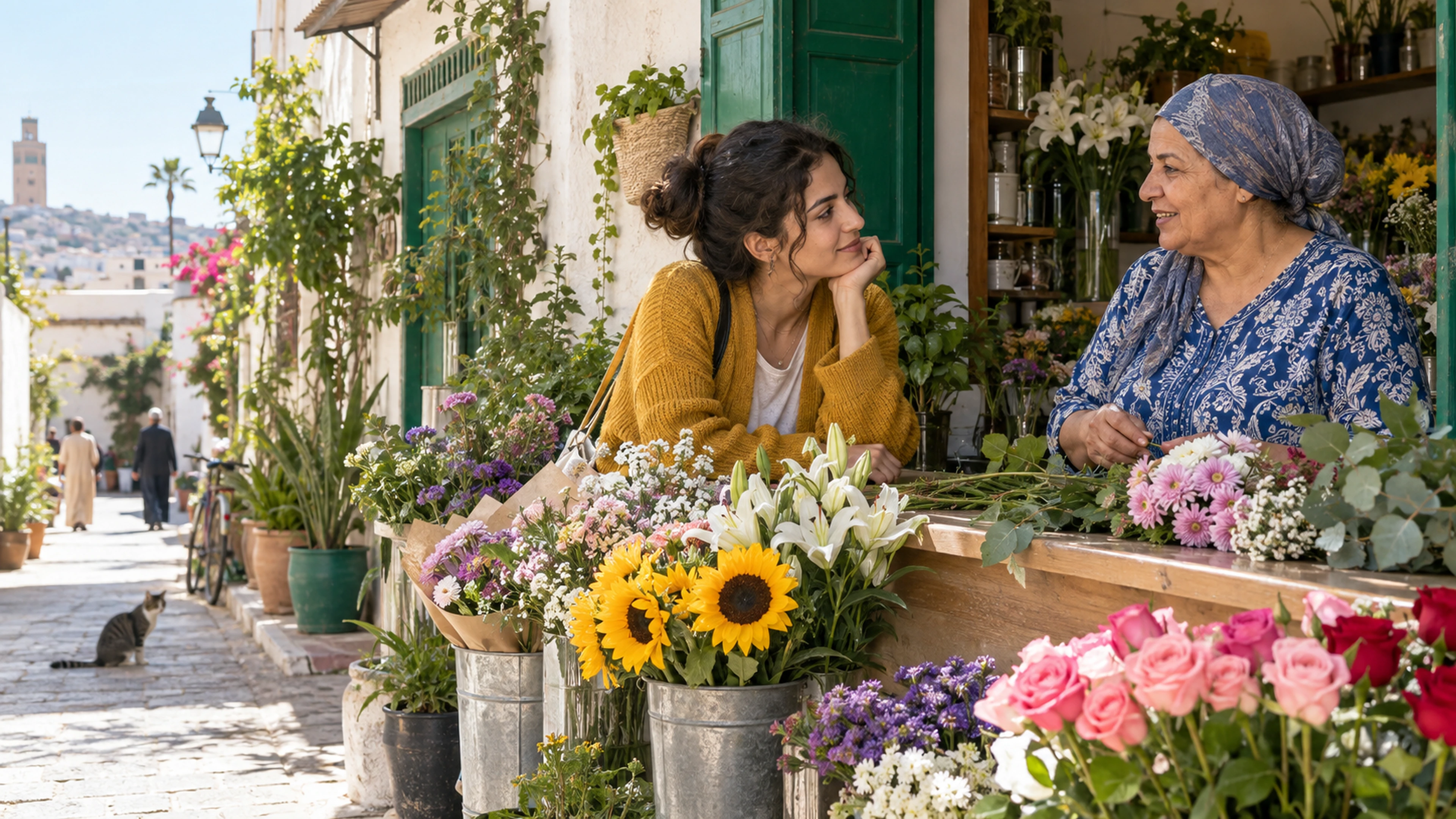
Darija Begin with the basics Build a useful first set of words and exchanges. Explore ↗
Explore the context ↗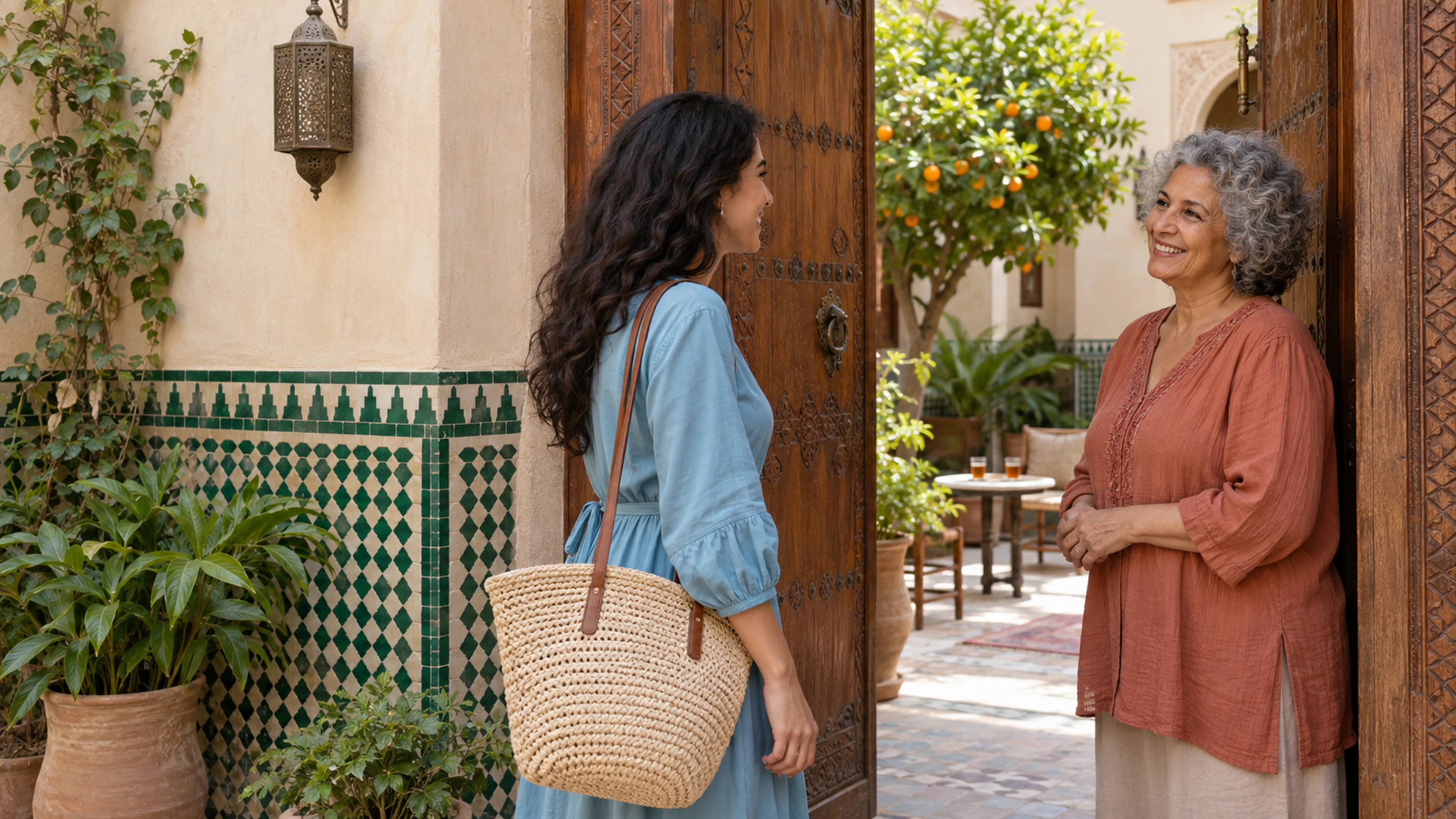
Darija Greetings & hospitality Follow the conversation beyond the first greeting. Explore ↗
Explore the context ↗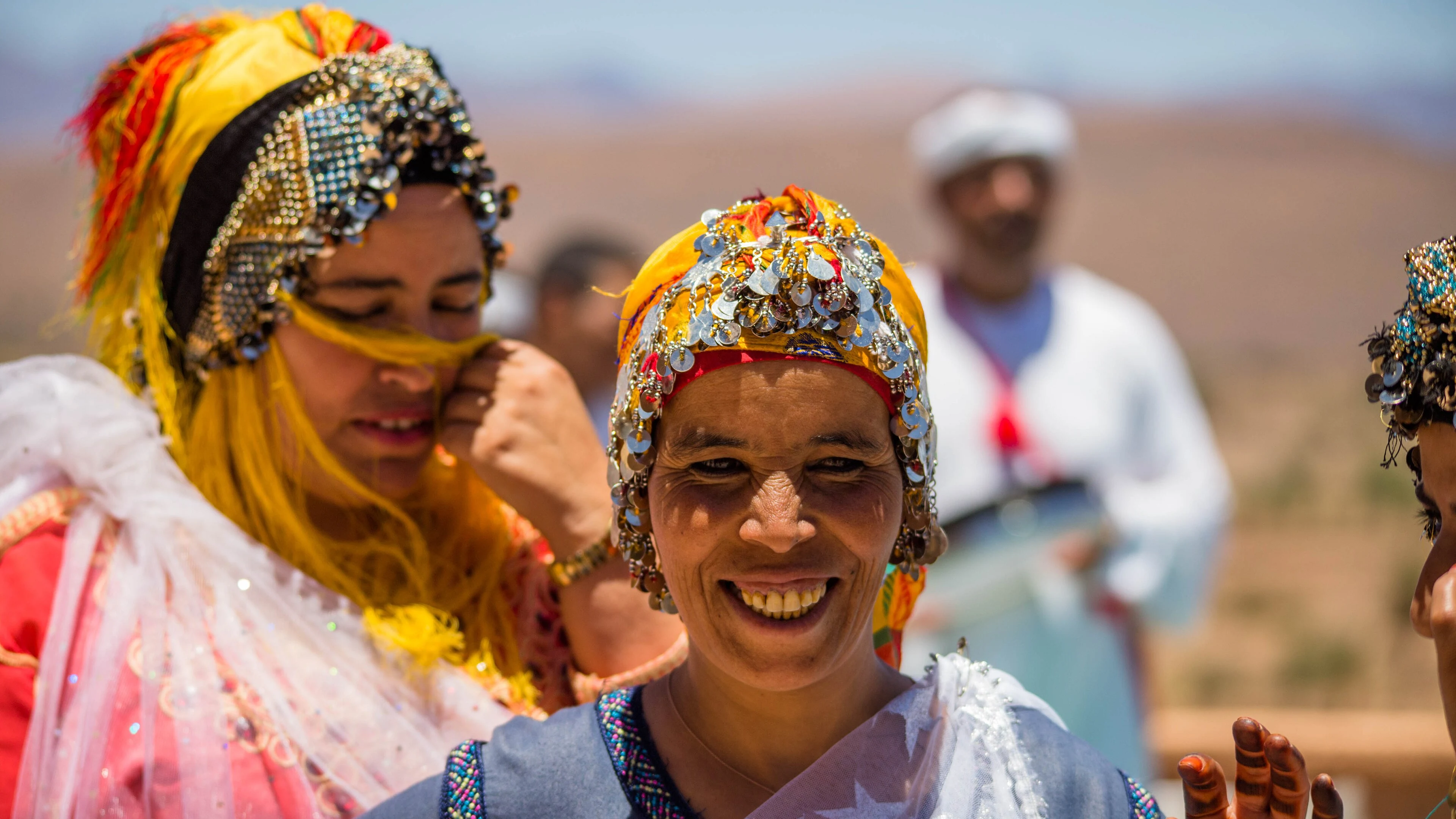
Learn Amazigh culture Place language alongside identity, region and cultural life. Explore ↗
Explore the context ↗How we look, listen and move changes the quality of an encounter.
Explore the story ↗Continue reading
Keep the subject in view as you choose your next chapter.
How we look, listen and move changes the quality of an encounter.
Read the story ↗Five places, five ways into the streets, institutions and working life behind a familiar image.
Read the story ↗Across a white hillside city, streets, thresholds and working crafts reveal an inheritance carried by people.
Read the story ↗The colour draws you in. Mountains, ochre walls, water and food give the photograph a much larger story.
Read the story ↗This reading room connects published stories with contextual guides. Each linked story includes its own research and photography notes.
Photography is identified through the linked source records. Crops and responsive sizes were prepared for this layout.
Research checked 27 September 2026.

.jpg)

