
A revised date.
A continuing gathering.
Confirmed dates30 October–3 November 2026 · Revised dates
The current announcement supersedes the earlier October schedule.
The Foundation Almouggar’s revised dates for the Tan-Tan Moussem are 30 October–3 November 2026, reported by SNRT on 24 September 2026. Earlier announcements gave a different October window. Use the revised announcement and recheck the organizer as travel approaches; do not rely on an old poster saved before the change.
UNESCO recognizes the moussem as a gathering associated with nomadic communities of the Sahara, exchange and cultural expression. It was proclaimed in 2005 and inscribed on the Representative List in 2008. The heritage is carried in relationships and knowledge as well as in the performances a visitor may see.
A meeting point
is more than a destination.
For communities whose lives and histories involve movement across large distances, a gathering can concentrate opportunities to exchange news, goods and knowledge, renew relationships and share forms of expression. That social density matters as much as a public programme.
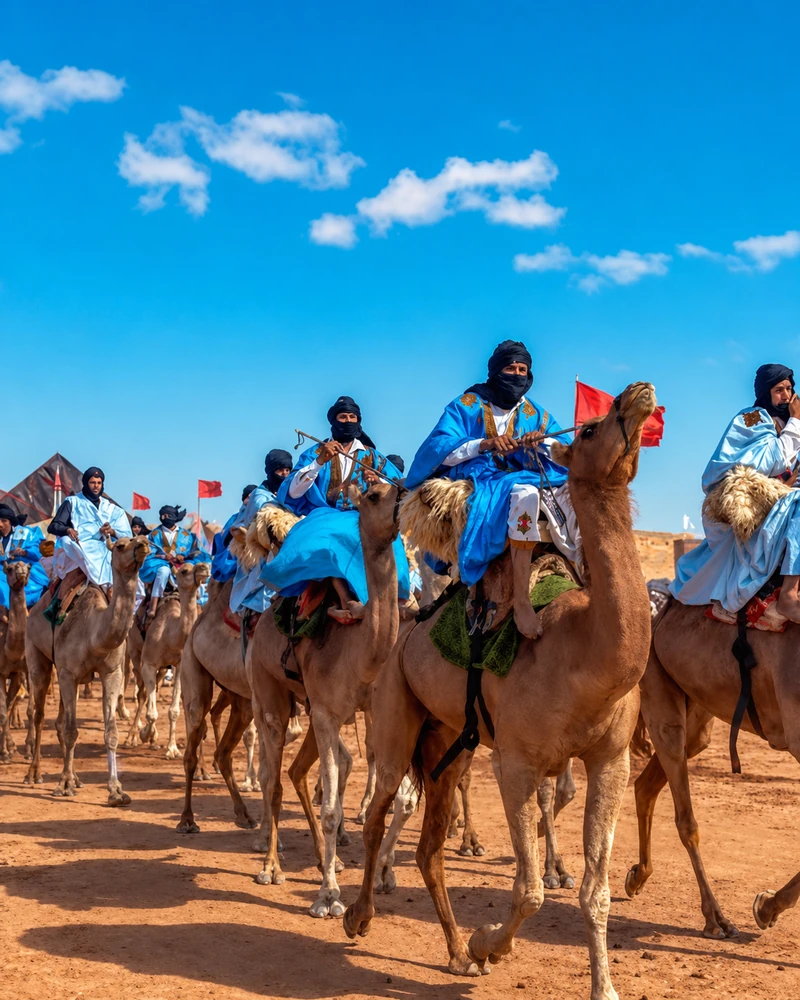
The UNESCO account places oral culture, music, poetry and other practices within this broader meeting. Avoid reducing the moussem to camel imagery or a generic idea of “desert life”. Participants are contemporary people with different professions, family histories and reasons for attending.
A visitor can begin by paying attention to how people introduce the gathering themselves. A programme note, a guide’s explanation and a participant’s account may each illuminate a different aspect without exhausting the whole meaning.
What becomes visible.
What needs explanation.
Oral expression
A poem, story or spoken exchange carries language, memory and performance together. If you do not understand the language, appreciate the delivery while avoiding claims about the content. Seek a reliable explanation before assigning a meaning.
Material knowledge
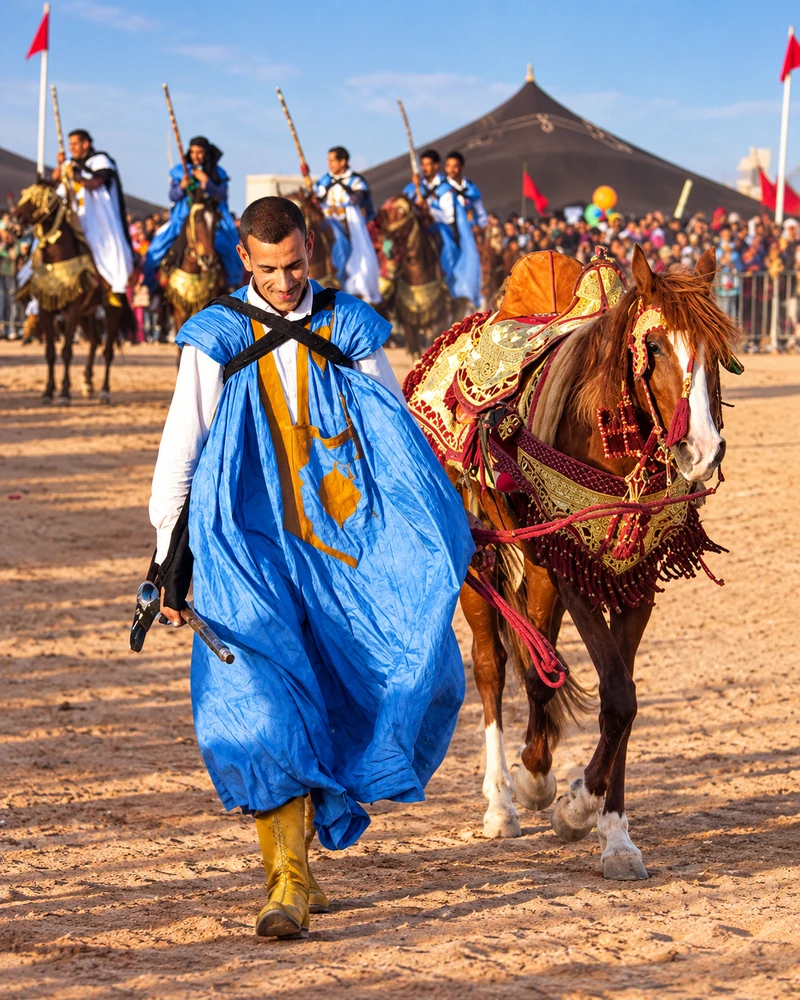
Clothing, tents and equipment belong to practices of making and use. Ask about the particular object and its maker when the setting allows. A decorative display does not automatically explain how the object works in daily life.
Public performance
A scheduled presentation is organized for an audience. It may condense a longer practice or bring different participants together. Read the programme’s description and let the performers define what they are sharing.
Hospitality
begins with an invitation.
A welcoming atmosphere does not mean every space is open. Tents and gathering areas can hold family meetings, official activity, cultural presentations or private conversations. Establish which kind of space you are approaching before entering.
If invited to sit or share tea, follow the host’s pace and ask before taking photographs. Hospitality is a relationship, not a service included with a festival visit. Accepting it thoughtfully may involve listening, waiting and allowing the exchange to remain unrecorded.
Do not pressure a host to reproduce a gesture for the camera or to explain a personal subject in front of other visitors. An encounter can be meaningful without becoming content for a public account.
Plan for distance.
Keep a margin.
Confirm the revised programme
Check the current dates and public schedule together. The date change makes it especially important to confirm accommodation and transport arrangements against the revised window, rather than assuming an earlier booking still matches.
Build the journey in stages
Identify your arrival point in the region, the onward connection to Tan-Tan and the final approach to the event. Check each operator directly for the travel date. Long-distance travel deserves room for rest and delays.
Arrange the return
Agree on departure transport before the gathering absorbs your attention. Save the meeting point and a contact method that does not depend entirely on a live map. Avoid a tightly timed onward connection after a large closing activity.
Tan-Tan
in southern geography.
Tan-Tan
Use the city as a real host place, with everyday services and residents, rather than only as a name attached to a festival. Confirm where you will stay and how that location connects to the current public event site.
Explore Tan-TanThe moussem grounds
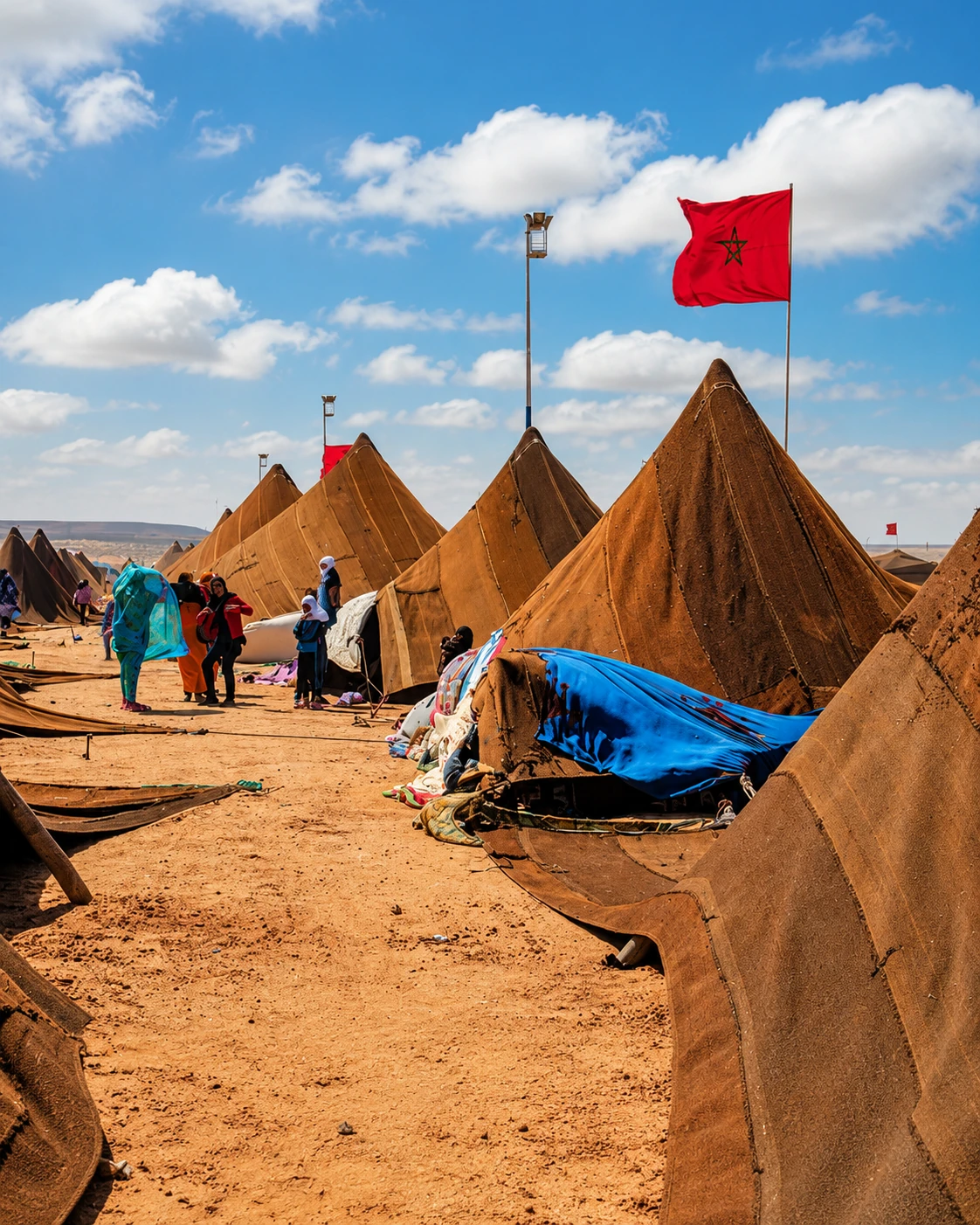
Consult the organizer’s current visitor information for entrances, public areas and scheduled activities. A photograph of a tented landscape does not establish a route or permission to enter a particular area.
The wider southern journey
Southern Morocco contains varied coastal, oasis and arid landscapes, with different communities and travel conditions. Choose a manageable route and give each place its own context.
Explore The wider southern journeyKeep the people
in the picture.
Portraits deserve a clear request, even when clothing or equipment is visually striking. Explain what you want to photograph and accept a refusal without negotiation. For children, seek permission from a responsible adult and remain attentive to the child’s own comfort.
A caption should not turn an individual into an anonymous symbol of nomadic culture. Use a person’s name only when they are comfortable with that attribution, and avoid inventing a tribal affiliation, occupation or ritual role from appearance.
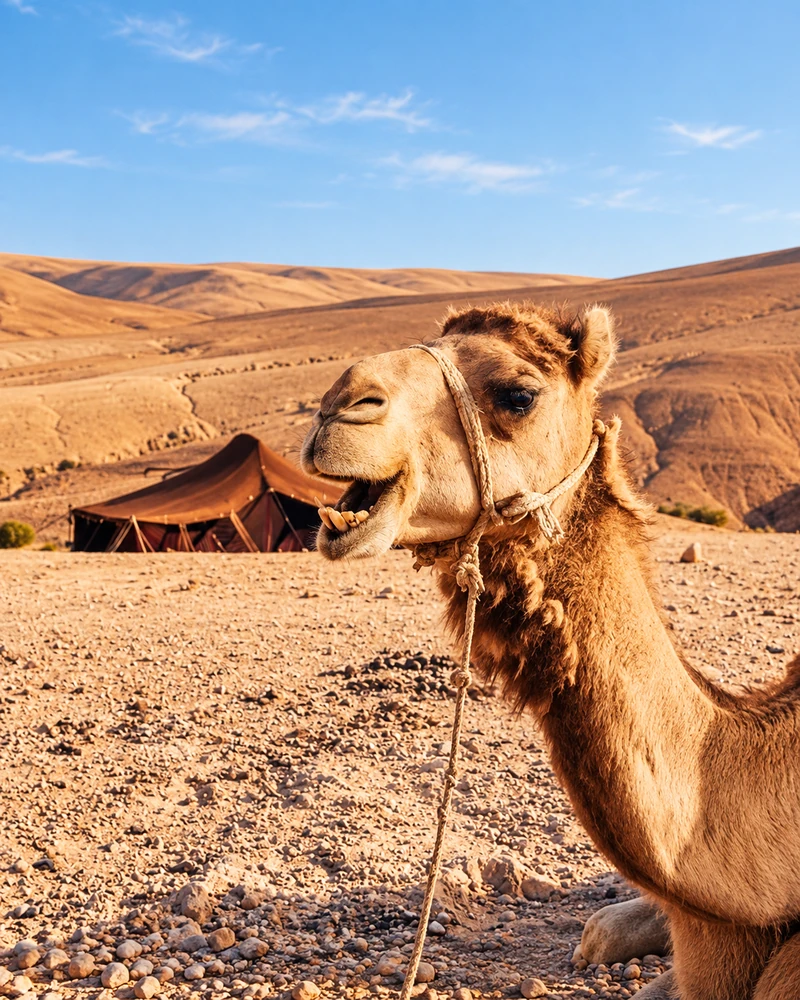
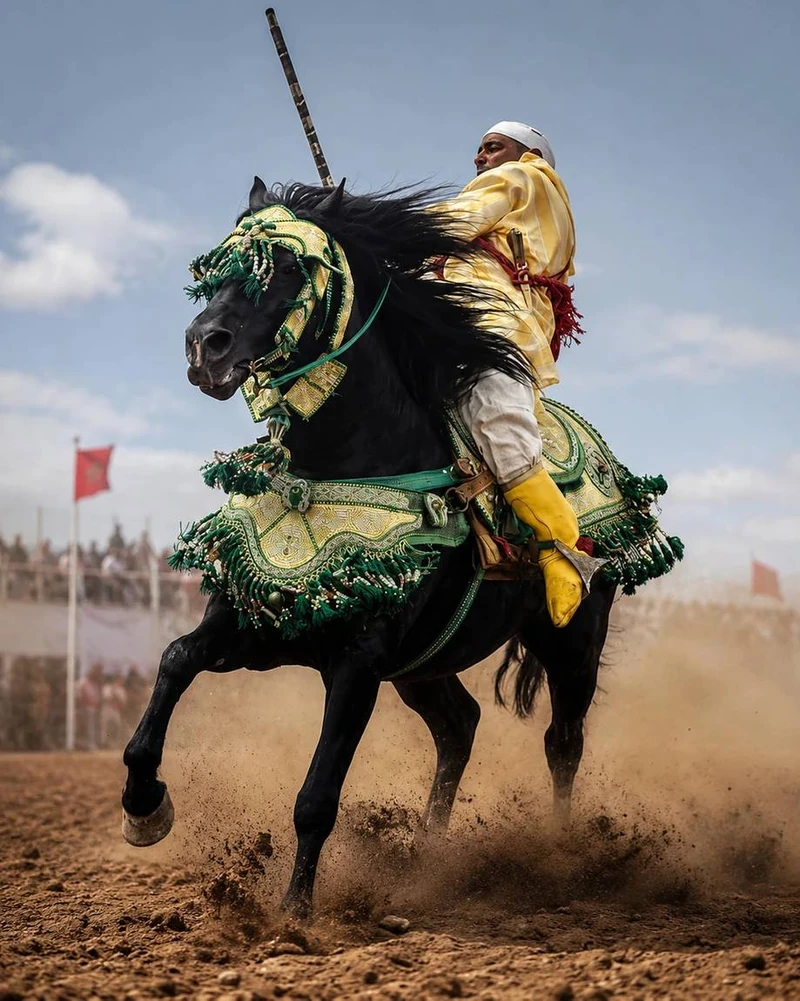
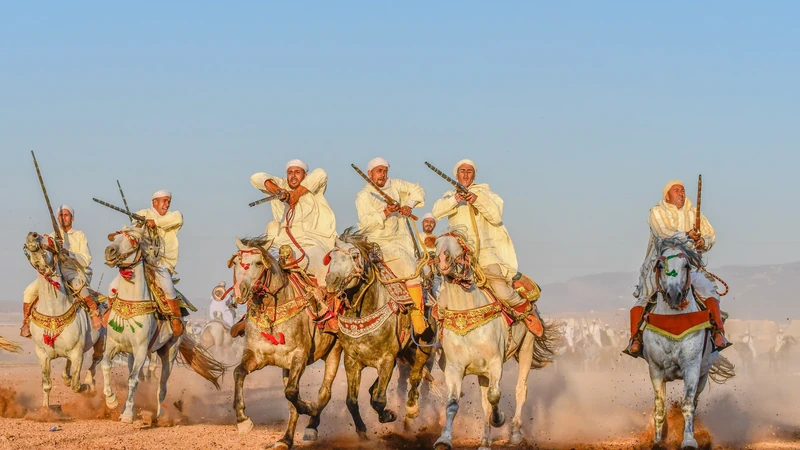
The same precision applies to landscape images. Name the place when it is known, and distinguish a contextual illustration from a photograph of the actual edition. Visual appeal does not justify a misleading claim about what occurred.
An open-air visit
still needs ordinary care.
Comfort and access
Check current weather, ground surfaces, distances between activities and available seating. If you have specific mobility needs, ask about the full route from drop-off to viewing area, including temporary paths and facilities.
Children and groups
Choose a limited public programme and a simple regrouping point. Large outdoor grounds can make companions difficult to find even when they are nearby. Agree on what to do if the group becomes separated.
Animals and working areas
Respect barriers around horses, camels and preparation zones. Follow handlers and stewards. A close photograph is never a reason to step into a route used by an animal or a working team.
Clarify the essentials.
Which 2026 dates should I use?
Use 30 October–3 November 2026, the revised organizer dates reported by SNRT on 24 September. They supersede the earlier October announcement.
Does UNESCO recognition mean all activities are public?
No. Recognition concerns the cultural heritage, not unrestricted visitor access. Follow the organizer and the people responsible for each space.
Is the moussem only about camels or riding?
No. Its heritage context includes social exchange and oral and cultural practices. A visible animal presentation is one possible part of a larger gathering.
Can I turn up without a travel plan?
For a visit involving long distances, arrange accommodation and the main transport stages in advance. Verify the public programme and access details close to departure.
Let distance
become understanding.
A journey to Tan-Tan asks for time. Use some of it to consider the relationships that a gathering makes possible: knowledge carried between generations, news exchanged across distance and a place renewed through the people who return to it.
That perspective changes what counts as a successful visit. Seeing one public activity with a clear understanding of its context can be more valuable than collecting images from many spaces you have not understood. Leave with specific observations and room for what remains beyond your view.
Read the gathering
within its world.
Desert gatherings
Explore mobility, hospitality and social geography.
Moussems & local traditions
Compare different forms of gathering.
Tan-Tan
Continue through the host place.
Families & crowds
Build a visit around your group’s needs.
Sources, date checks & image context
Event information checked on 29 September 2026. Dates marked typical describe a seasonal pattern, not an announced booking date. Recheck the linked organizer before committing to travel.
Library images illustrate the host place, materials and cultural context. They are not presented as documentary records of a particular festival edition.
- Tan-Tan Moussem — official reference
- Edition date reference
- UNESCO — Moussem of Tan-Tan
- Foundation Almouggar — history
Photograph credits
Attributions retained from the canonical library. Responsive resizing and WebP conversion; each photograph’s stated licence continues to apply.
- Library photograph: Houssain tork · CC BY-SA 4.0.Editorial crop, resizing and WebP conversion. The adaptation retains the source licence.
