
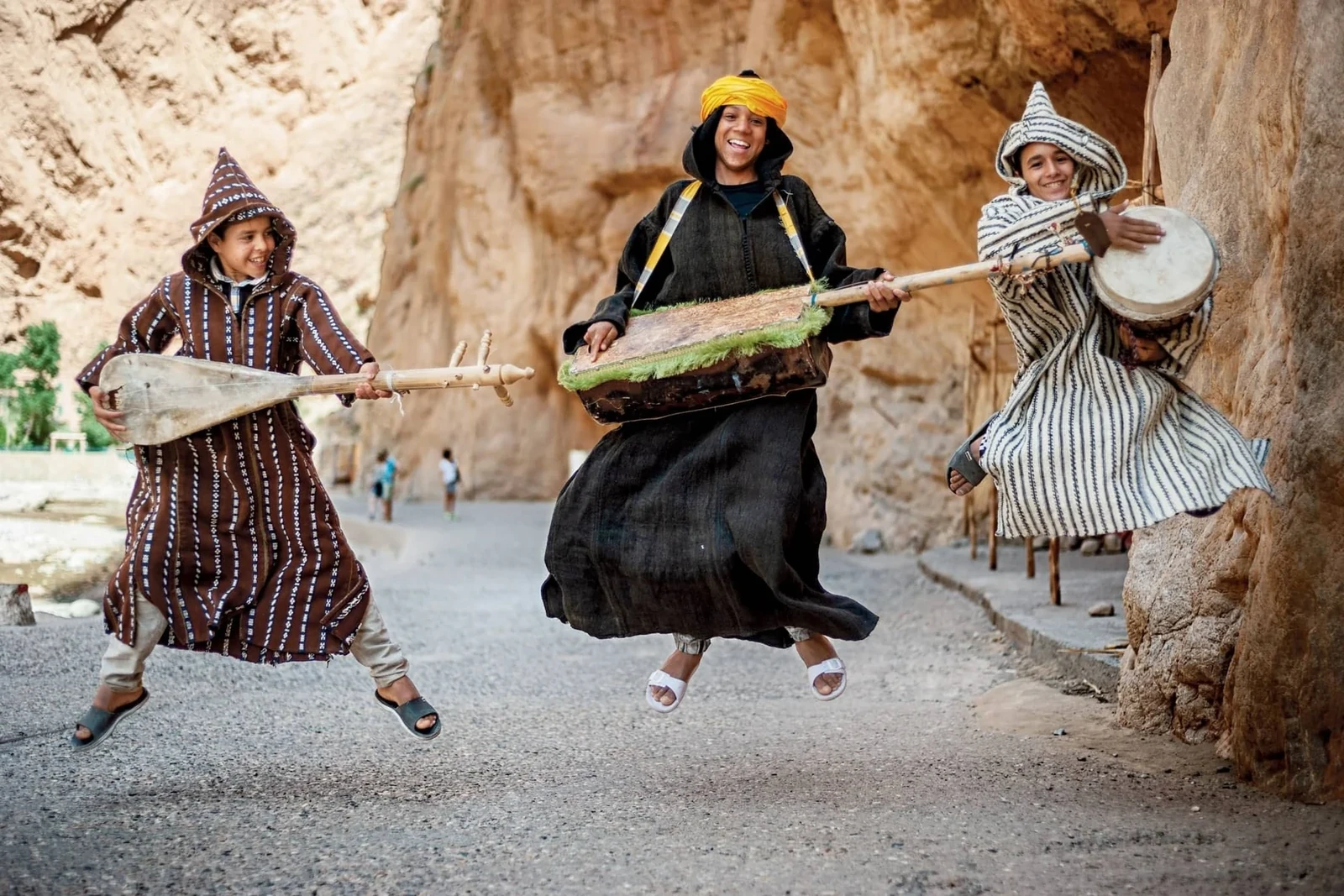
Begin with the sound.
Then widen the frame.
A festival programme offers a meeting with musicians, but it also makes choices: a duration, a setting, an order of appearance and a way of addressing an audience. Listen to the performance as a crafted encounter. Then ask which parts of its wider musical life you have not yet heard.
Morocco’s musical cultures cannot be reduced to one mood, instrument or category. Poetry can address devotion, love or everyday society. A practice may have ceremonial and public forms. Musicians may work within inherited repertoires while also making deliberate new collaborations.
A useful listener holds these differences open. You do not need to understand every word or name every instrument before attending. You do need to resist turning a compelling first impression into a complete explanation of someone else’s tradition.
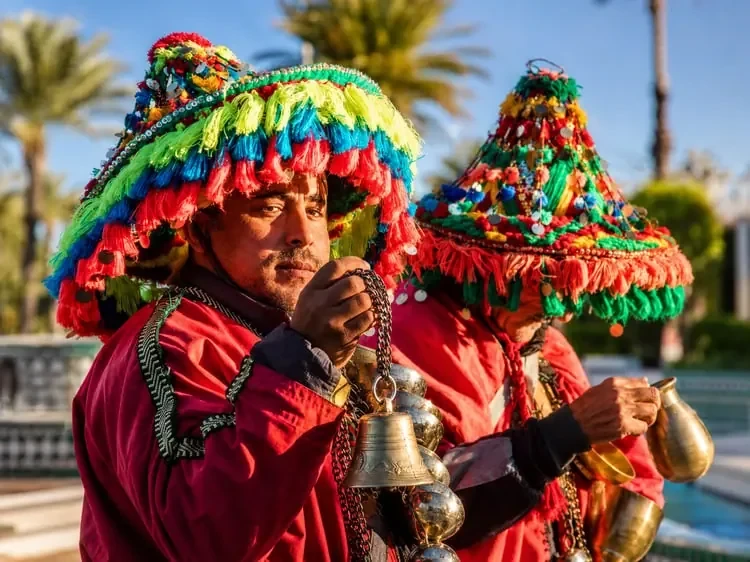
Three questions
before the first note.
Who is making the music?
Read the artist’s own biography and programme introduction. Notice whether the performance is presented by an individual, an ensemble, a community group or a new collaboration. These are different relationships, even when the stage looks similar.
What kind of occasion is this?
A concert, a workshop and a devotional gathering carry different invitations. The sound alone does not tell you whether you may move freely, photograph or join in. Let the host’s explanation and the stated format establish that boundary.
What is being carried into this setting?
Look for a named repertoire, language, poem, regional connection or line of teaching. A little precise context can transform listening. It is more useful than a broad label such as “timeless” that erases the people doing the work now.
Gnawa.
A wider life than the stage.
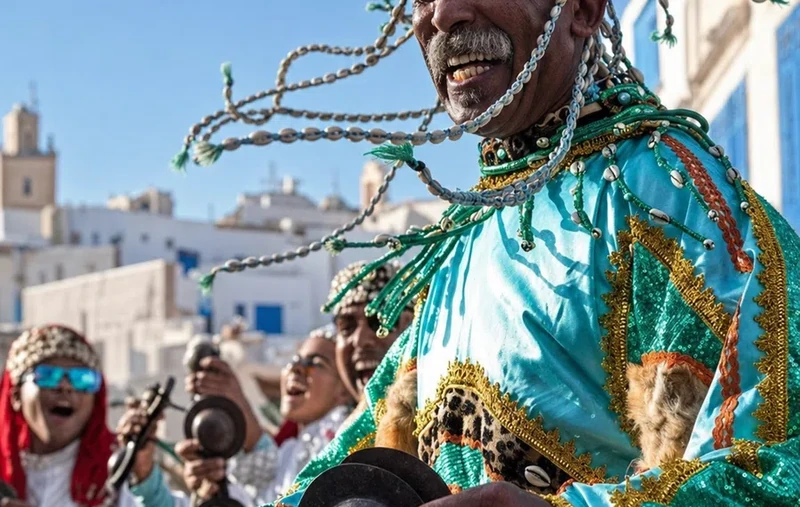
UNESCO’s account of Gnawa describes a culture with musical, performative and ritual dimensions, connected to African histories that include enslavement. Its 2019 inscription recognizes a living practice and the people who transmit it. A festival appearance is one public expression within that larger field.
At a staged performance, attend to the exchange between a leading voice and the ensemble, to repetition and to the way momentum develops. You can notice these relationships without claiming access to ceremonial meaning that has not been explained to you.
Collaboration introduces another layer. Listen for the decisions that bring musicians together: who begins, who answers, which sounds remain distinct and where a new shared phrase takes shape. Fusion is made by particular artists, not by an abstract meeting of whole cultures.
Malhun.
Words carried by music.
Malhun, inscribed by UNESCO in 2023, is a poetic and musical art sung in Moroccan dialect Arabic and sometimes Hebrew. Its subject matter can range across love, nature, social life and prayer. That breadth matters: a musical tradition associated with spiritual expression may also speak vividly about the ordinary world.
Where a programme offers a translated poem, read it before listening and return to it afterwards. Follow the difference between the words on a page and the shaping of a line in performance: breath, emphasis, repetition and the room left around a phrase.
If no translation is available, acknowledge that limit. You may appreciate vocal colour and form while remaining uncertain about the text. Asking for a title or a reliable introduction afterwards is a better beginning than assigning a meaning from the atmosphere alone.
Listen in layers.
A small practical exercise.
First, follow one voice
For a few minutes, let one vocal or instrumental line guide you. Notice where it returns and how it changes. Resist recording immediately; memory begins to form through attention.
Then hear the relationships
Shift your focus to responses, accompaniment and shared timing. What changes when another musician enters? Which gestures appear to organize a transition? Describe what you hear without turning a guess into a technical fact.
Finally, hear the room
Audience participation, silence and movement shape a public performance. Follow local cues while leaving other listeners space. Applause and dancing are not appropriate at every moment or in every setting.
Three places
to extend the encounter.
Fès
The Festival of World Sacred Music provides a curated programme of artists and traditions. Use its edition-specific introductions to understand individual performances, then explore the city through its own architecture and working life.
Read Fès. Sacred music.Essaouira
The Gnaoua and World Music Festival is an entry into public performances and collaborations. The city’s streets, workshops and shore remain places of daily life throughout the event.
Read Gnaoua. Essaouira.Meknès — Dar Jamaï
The National Museum of Music offers an institutional setting for learning about instruments and Moroccan musical heritage. Check the Fondation Nationale des Musées for the current visitor programme before arranging a visit.
Explore Meknès — Dar JamaïAn instrument is
also skilled work.
Looking closely at an instrument can lead beyond its sound to the material choices, maintenance and learned movements that make performance possible. A museum display offers one kind of access; watching a musician prepare offers another, only when that preparation is open to visitors.
Ask a focused question at an appropriate moment: what needs adjusting, how the instrument is carried or how a player learns a particular movement. Leave room for a short answer. A working musician is not obliged to give an informal lesson between appearances.
The craft connection also broadens the idea of cultural transmission. Makers, repairers, teachers and organizers contribute to the conditions in which music can continue. Their labour deserves attention alongside the most visible person at the microphone.
Sacred is a context.
It is not a visual style.
A dim room, repeated rhythm or formal clothing cannot tell a visitor that an occasion is open, private, devotional or theatrical. Nor does a festival’s use of “sacred” mean that every performance is an act of worship. Read how the artists and organizers describe the encounter.
If you are invited into a local or devotional setting, ask about presence before photography. Consent to attend does not automatically include permission to record, circulate images or describe participants publicly. Silence and respectful withdrawal can be the right response when the invitation is unclear.
Keep your account precise afterwards. “I attended a programmed concert” says something different from “I witnessed a ceremony.” The distinction protects the meaning of the event and improves the quality of your own understanding.
Build an evening
around listening.
Choose deliberately
Read several artist introductions and select a session that gives you a reason to listen. A smaller number of complete performances can reveal more than hurried fragments from many stages.
Make room for concentration
Locate the venue and decide how you will return. Keep bags and phone use unobtrusive. If sound or crowd conditions become uncomfortable, leave by a clear route without pushing towards the performance.
Carry a question away
Write down one name, work or musical relationship to explore later. Use official artist pages, recordings and cultural institutions to continue learning beyond a short festival encounter.
What stays with you
should remain specific.
A strong memory may be very small: a phrase returned by several voices, a pause that changed the room or the concentration between performers. Let that detail lead your description. Avoid using one evening to make sweeping claims about a country’s character.
Credit musicians when you know their names, distinguish your impression from an explanation given by a host and acknowledge what you did not understand. Listening well includes leaving a tradition larger than your account of it.
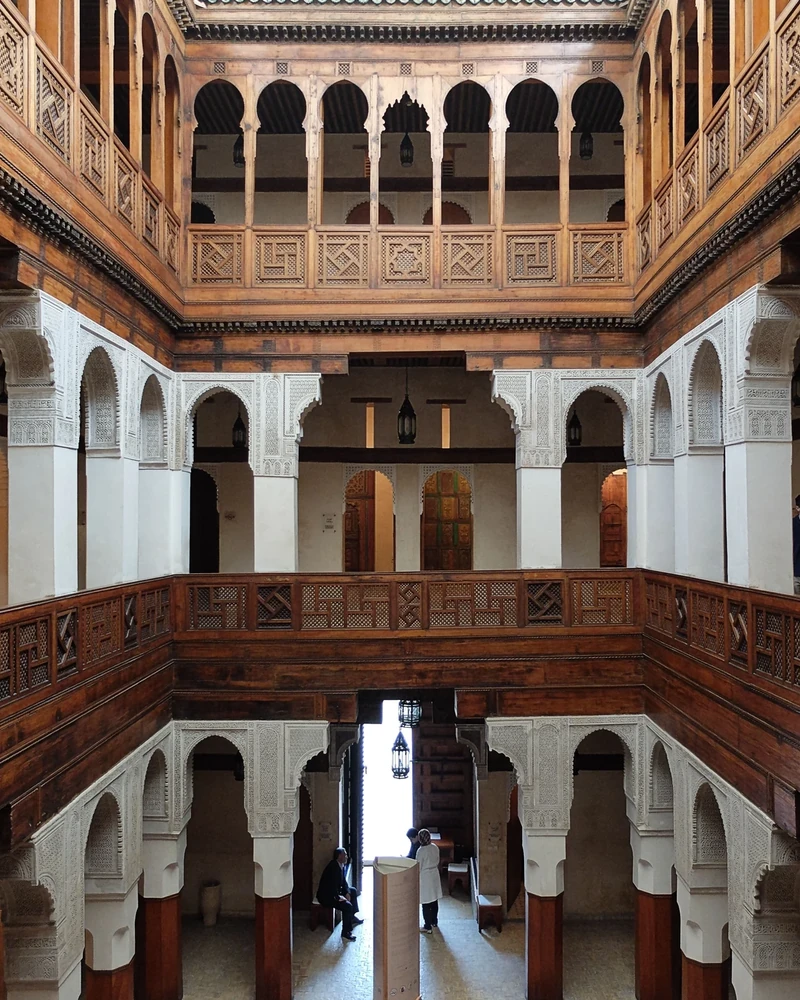
Find your next
musical encounter.
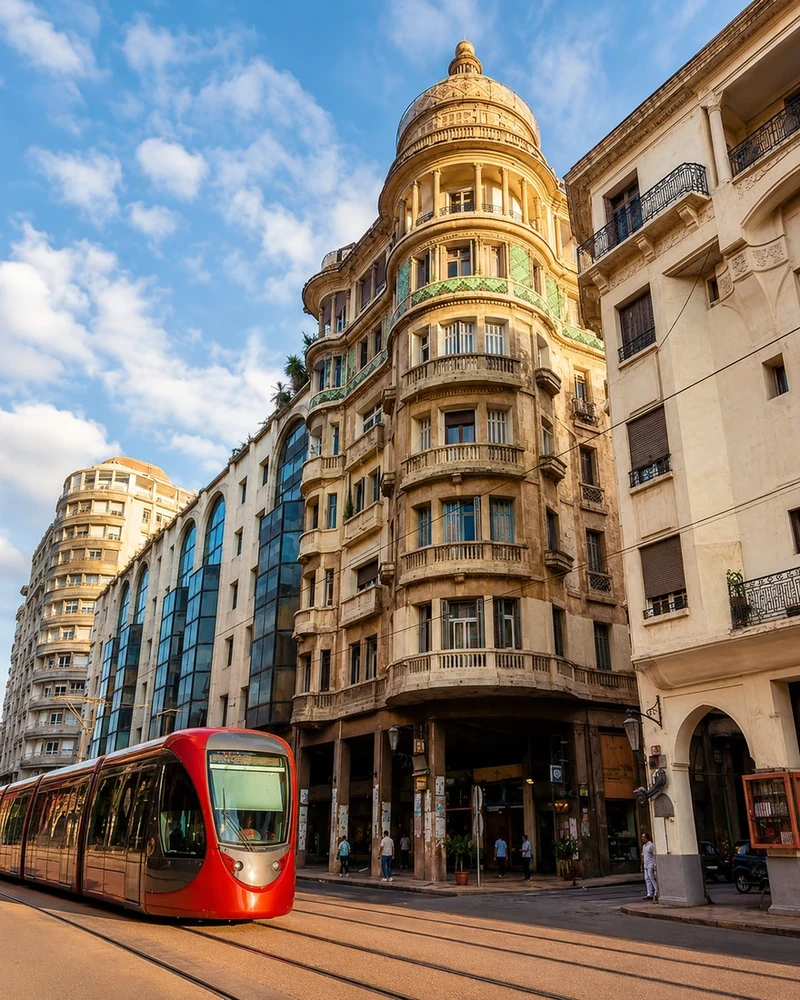
Music festivals
Compare programme identities and event formats.
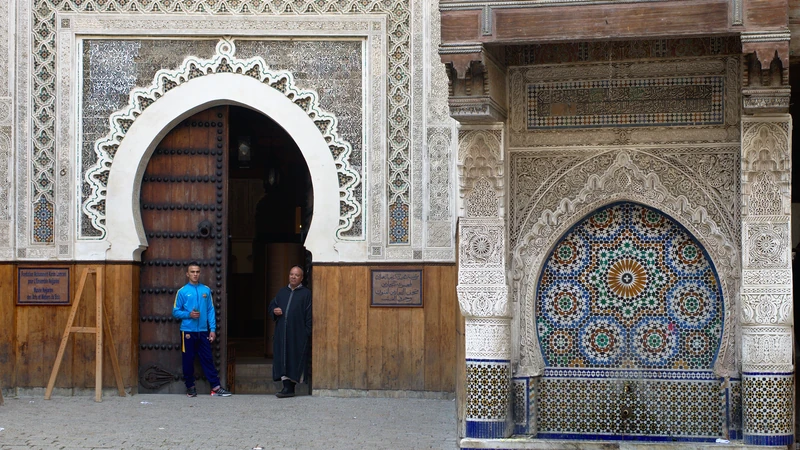
Festival nights in Fès
Give an evening a thoughtful pace.
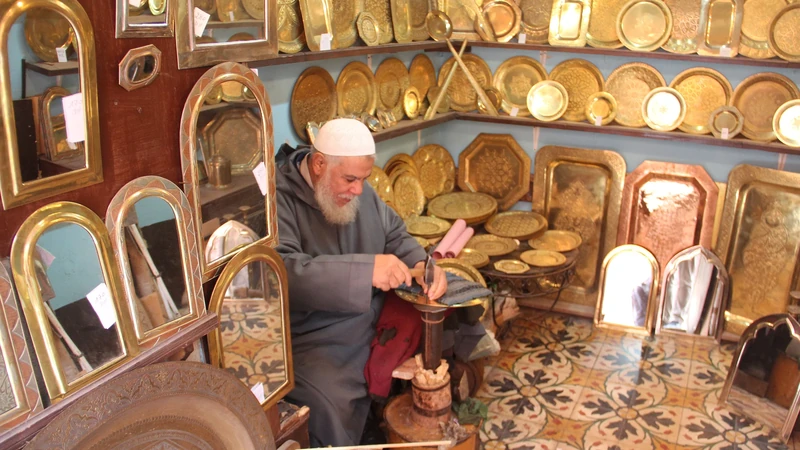
Craft & heritage
Follow the work of transmission.
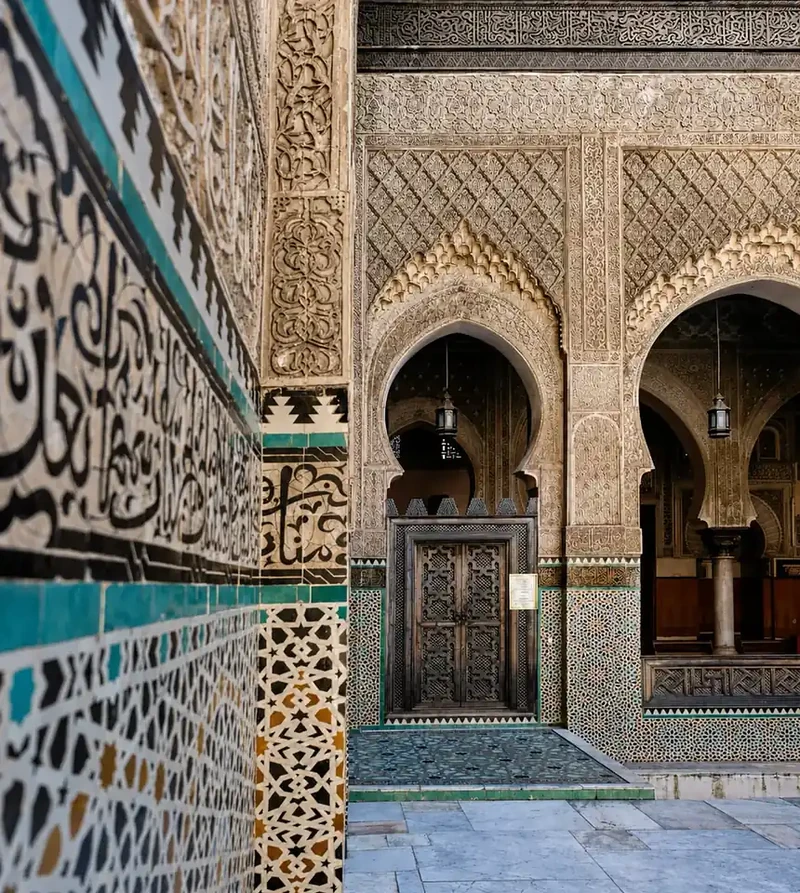
Sacred & local moments
Understand the invitation before entering.
Sources, date checks & image context
Event information checked on 29 September 2026. Dates marked typical describe a seasonal pattern, not an announced booking date. Recheck the linked organizer before committing to travel.
Library images illustrate the host place, materials and cultural context. They are not presented as documentary records of a particular festival edition.
Photograph credits
Attributions retained from the canonical library. Responsive resizing and WebP conversion; each photograph’s stated licence continues to apply.
- Library photograph: Robert Prazeres · CC BY-SA 4.0.Editorial crop, resizing and WebP conversion. The adaptation retains the source licence.
- Library photograph: Marek Kubica from Copenhagen, Denmark · CC BY-SA 2.0.Editorial crop, resizing and WebP conversion. The adaptation retains the source licence.
- Library photograph: PlateMakerMarrakech.jpg — Elgaard. CC BY-SA 4.0. Cropped/resized; original licence retained.

.jpg)
