
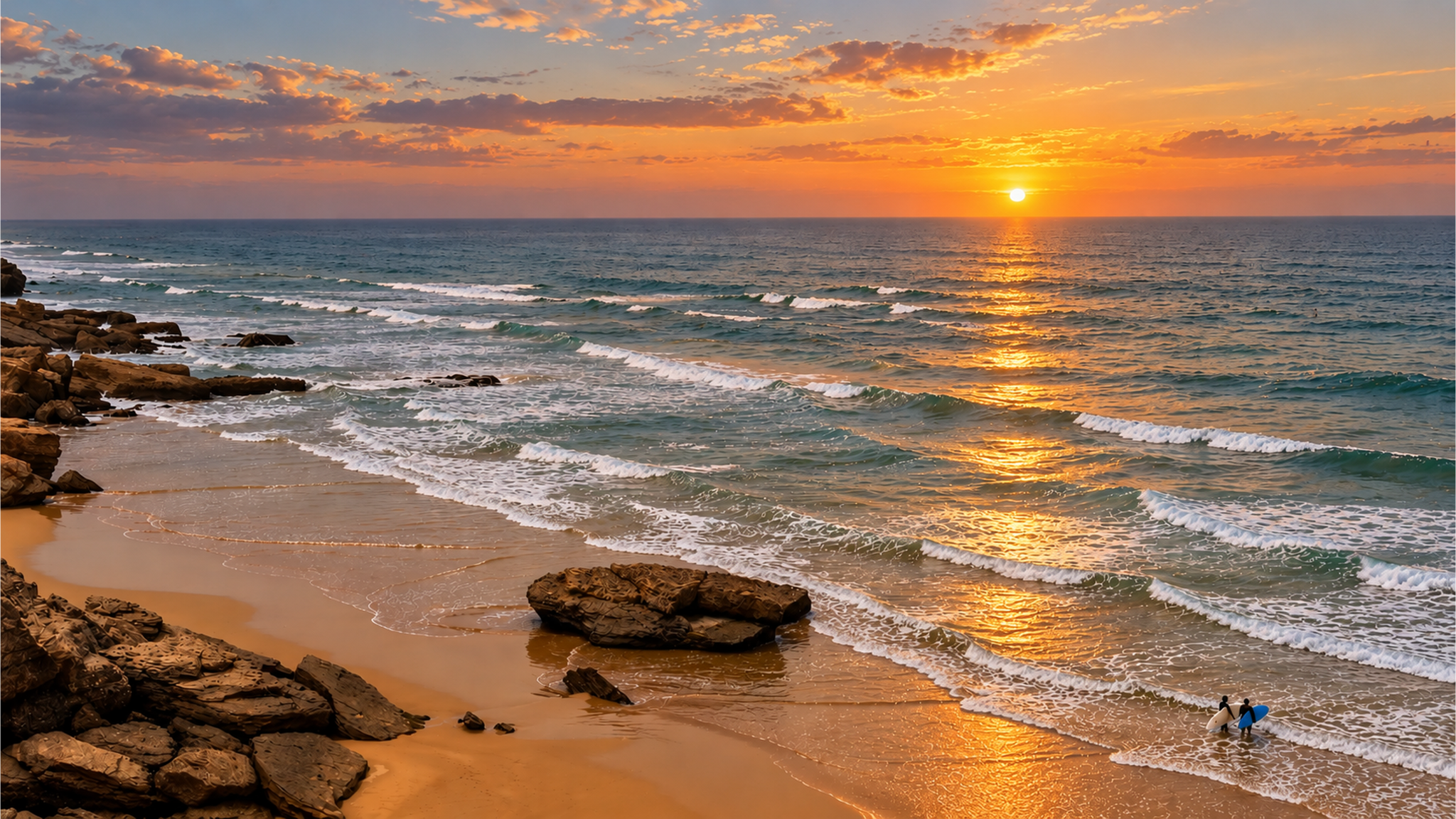
Sunset waves, golden sand and rocky Atlantic shoreline at Puerto Rico Beach near Dakhla, Morocco

Visit / Place · Dakhla coast · Atlantic Sahara

Puerto Rico Beach A wild Dakhla shoreline where dunes, cliffs and Atlantic light meet

Puerto Rico Beach, also written locally as Plage Porto Rico, is one of the Dakhla coast's most atmospheric Atlantic stops: open sand, clear water, dune edges, rock and a strong sense of distance.

Arrive slowly. The beach is not a resort-front scene; its power comes from the meeting of empty shore, moving tide, wind-shaped sand and the long southern horizon.

Why Puerto Rico Beach matters

A beach before it is a viewpoint.

Puerto Rico Beach matters because it shows the Dakhla coast without heavy urban framing. The place is read through natural scale: Atlantic water, broad sand, dune-backed edges, rocky relief and a horizon that makes the visitor aware of Morocco's far south.

The official Dakhla destination site lists Plage Porto Rico among the area's named coastal places and describes a setting of golden dunes, rocky cliffs and clear water. The Moroccan National Tourism Office also places the Beach of Puerto Rico within the Dakhla visitor map, alongside the lagoon, White Dune, Dragon Island and water-sport culture.

That context matters. Puerto Rico Beach is not only a pretty stop south of Dakhla; it belongs to a wider coastal geography where desert, wind, tide and Atlantic exposure shape how people move, photograph, rest and plan. The beach rewards visitors who understand that emptiness here is not absence, but scale.

Its strongest value is visual honesty. There are no dense monuments to decode and no old medina fabric to narrate. The intelligence of the place lies in shorelines, layers of sand, mineral colour, the changing edge of the water and the way late light gives the coast a quiet, almost geological rhythm.

For a good visit, treat the beach as a fragile natural setting rather than a disposable backdrop. Keep vehicles away from vulnerable sand when local guidance requires it, avoid litter, give distance to other visitors and read the coastline before reducing it to one photograph.

Place context is cross-checked with the Moroccan National Tourism Office Dakhla guide and the Visit Dakhla Plage Porto Rico page. Practical access can change and should be checked locally.
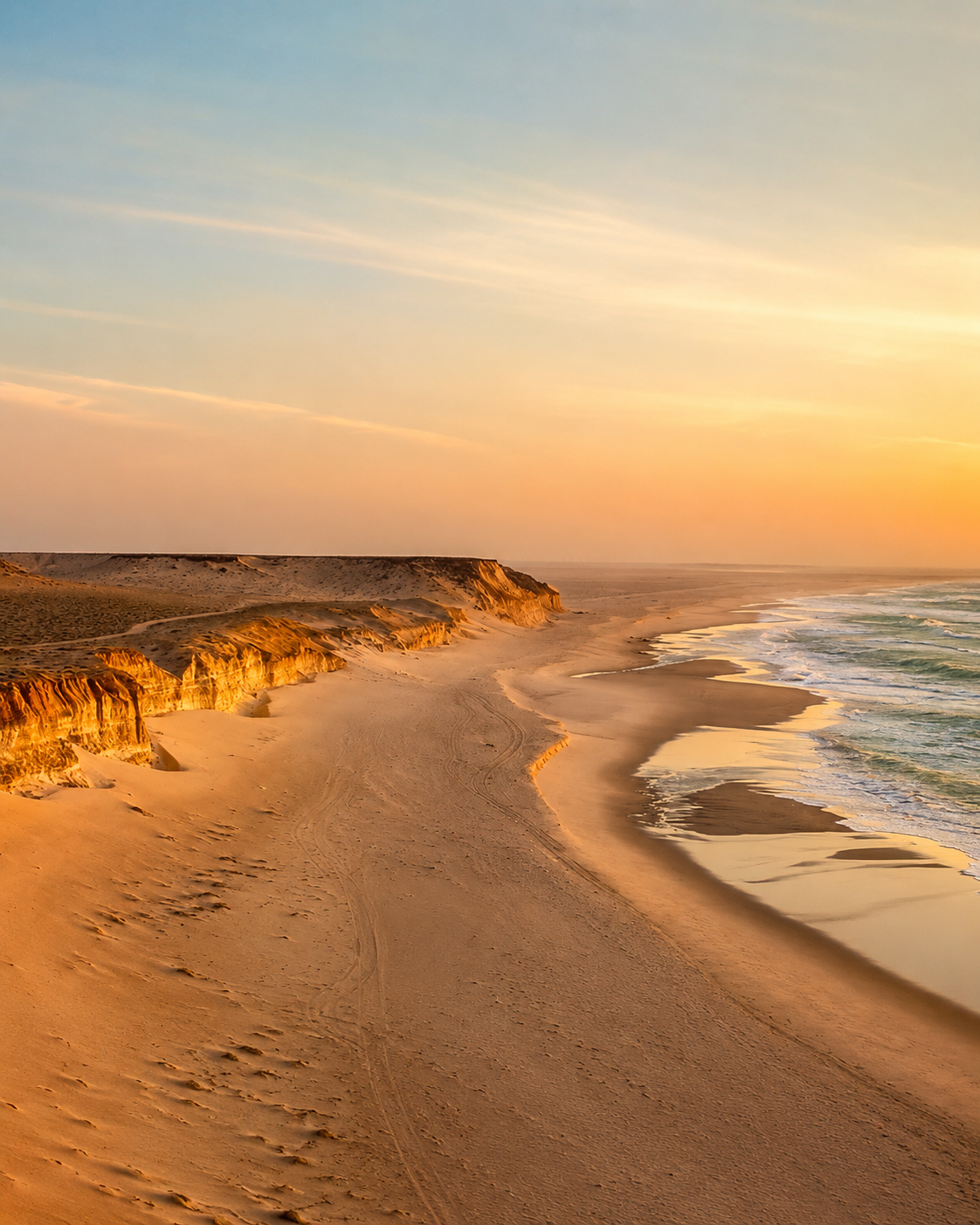
Golden dunes and Atlantic surf at Puerto Rico Beach near Dakhla

Map orientation

Use the map to place Puerto Rico Beach on the Atlantic side of the Dakhla area, where open coast and desert-edge terrain meet.

Editorial reading

The beauty is in the scale, not in decoration.

Puerto Rico Beach asks for a different kind of attention from the visitor. Its power is not an architectural silhouette or a dense cultural monument. It is a coastal field of wind, tide, sand, cliff and light.

Look first at the whole shoreline. The beach stretches visually because the sand, water and horizon run in long lines. The rocky edges interrupt that openness just enough to give the place form and memory.

The dunes matter as much as the water. They show how the Sahara reaches the Atlantic here, not as a slogan, but as visible geography: pale sand, exposed slopes, wind marks and mineral tones pressed against blue water.

Late light can make the beach feel cinematic, but the better reading stays grounded. Notice the wet sand, the foam line, the texture of rock, the angle of the coast and the way the horizon remains calm even when the foreground is active.

This is why the beach should not be overdescribed. Its authority comes from restraint. A visitor who slows down will see more: tide patterns, bird movement when present, shifting colour, footprints, silence, wind and the small scale of people against the shore.

Respect is part of the visual experience. An empty-looking beach can still be ecologically and socially sensitive. Keep the place clean, follow local access advice and avoid treating the sand or cliffs as a playground for careless driving.

The strongest memory comes after leaving: a wide Atlantic image held together by water, mineral colour and southern distance. Puerto Rico Beach is beautiful because it lets the Dakhla coast remain itself.

Coastal and natural orientation

Read the place through shore, dune and exposure.

Puerto Rico Beach is best understood as a wild Atlantic beach in the Dakhla-Oued Ed-Dahab region, not as a built attraction. Reliable visitor material identifies it as a named Dakhla coastal place; more detailed claims about facilities, exact access, swimming conditions or services should be checked close to travel.

01Place type

Atlantic beach

The identity of the place comes from an open shoreline, golden sand, clear water, rocky edges and dune-backed coastal space rather than from architecture or urban life.

02Regional context

Dakhla's southern coast

The beach belongs to the wider Dakhla travel map, where lagoon experiences, ocean beaches, desert terrain and wind-shaped landscapes sit close together.

03Landscape reading

Dunes and cliffs

Local tourism descriptions consistently associate Porto Rico with sand, rocky relief and clear Atlantic water. Those elements should guide the visitor's eye more than any single viewpoint.

04Visitor care

Remote-feeling coast

The beach can feel open and informal, which makes self-discipline important: keep waste out, avoid damaging sand edges and respect local guidance on routes, tides and weather.

A visual bridge

Three readings between ocean, sand and sky

Before Puerto Rico Beach becomes a sunset image, it is a relationship between moving water, open sand and desert-edge terrain. These three readings help the visitor slow down and understand the place without turning it into a generic beach postcard.

01

Shoreline

Water drawing the edge

The first structure is the tide line. Foam, wet sand and small changes in water colour show where the Atlantic is active and where the beach becomes walkable, reflective and quiet.

  • Read the foam line before walking close to the water.
  • Notice how wet sand reflects the sky.
  • Let the horizon set the scale of the place.
02

Dunes

Desert meeting Atlantic light

The dune edge gives Puerto Rico Beach its southern identity. Sand is not just foreground; it is the landscape system that carries wind, colour and route memory toward the ocean.

  • Look for wind marks and soft ridges.
  • Keep fragile slopes undisturbed.
  • Read the beach as part of the Dakhla desert coast.
03

Light

Distance before detail

The strongest view begins wide. From a distance, water, sand and cliff sit in one calm composition; closer in, the place becomes texture: rock, shell fragments, footprints, foam and wind.

  • Start from a high or wide viewpoint when possible.
  • Move closer only after reading the whole shore.
  • Photograph slowly, without blocking or crowding others.

Quick orientation

Type of place

A wild Atlantic beach near Dakhla, known locally in French as Plage Porto Rico and valued for open sand, clear water, dunes and rocky coastal relief.

Landscape context

Desert-edge Atlantic coastline in the Dakhla-Oued Ed-Dahab region, where wind, tide, sand and cliff form the main visitor experience.

Best for

Coastal photography, sunset light, quiet walking, dune-and-ocean landscapes, careful route exploration and visitors who prefer wide natural space over dense beach infrastructure.

Closest city context

Dakhla is the natural base for understanding the beach, the lagoon, White Dune, Dragon Island and the wider Atlantic Sahara travel rhythm.

What visitors experience here

A coast that opens slowly.

Puerto Rico Beach works through space rather than spectacle. First comes the broad Atlantic view. Then the shoreline starts to separate into details: wet sand, pale dunes, rocky cuts, wind marks, foam lines and the way southern light changes the colour of everything.

Arrival

The wide first view

The strongest arrival is from a distance, where the beach appears as a long meeting between ocean and desert. That first view gives the place its scale and keeps the visit calm.

Water

Clear Atlantic colour

Tourism descriptions regularly note the clarity of the water here. Conditions still depend on weather and tide, so read the sea carefully before assuming it is gentle.

Sand

Golden shore and wind marks

The sand is part of the visual architecture of the beach. Footprints, vehicle traces, soft ridges and darker wet zones all show how movement changes the surface.

Rock

Cliff edges and mineral tone

Rocky relief gives the beach structure. It prevents the coast from becoming flat scenery and makes the meeting of sand, stone and surf easier to read.

Light

Late colour without exaggeration

Evening light can warm the dunes and turn the water reflective. The most elegant view keeps the colour natural: orange in the sky, blue in the Atlantic, earth tones in the sand.

Pace

A quiet walking rhythm

This is a place for slow movement, not a rushed checklist. Walk, pause, look back at the route and let the beach shift from panorama to detail.

Place details and orientation

Read Puerto Rico Beach through six defining elements

No single feature explains the place. Its character comes from the relationship between open Atlantic water, beach width, dune slopes, rocky edges, wind exposure and the Dakhla travel context.

1
Atlantic water

The ocean gives the beach its sound, movement and horizon. Treat the water as active, especially when wind, swell or tide changes the shoreline.

2
Golden sand

The sand creates the long visual field and records movement through footprints, wind marks and wet reflective surfaces near the waterline.

3
Dune-backed coast

The dune edge connects the beach to Dakhla's desert geography. It is beautiful, but it should also be treated as a vulnerable surface.

4
Rocky relief

Cliff and rock forms give shape to the coast, especially in photographs where sand and water might otherwise read as a single flat plane.

5
Southern light

Light is one of the beach's main materials. It changes the water from blue to silver and turns dune edges warmer without needing artificial drama.

6
Dakhla context

The beach is strongest when linked with Dakhla city, the lagoon, White Dune and Dragon Island, forming a wider map of Atlantic Sahara landscapes.

Coast, not backdrop

The place asks for restraint.

Stand back first. Puerto Rico Beach reads best when the whole coast is visible: water to one side, dune and rock to the other, and a horizon that makes the human scale feel small.

Then move closer to the shoreline. Foam, wet sand, broken stone and wind traces begin to replace the big view. This is where the beach becomes less abstract and more physical.

Keep the visit light. The most respectful way to experience a remote-feeling coast is to leave almost no evidence of having been there: no litter, no damaged slopes, no careless tracks and no pressure on fragile edges.

Landscape and coastal intelligence

The beach is shaped by movement.

Puerto Rico Beach is not visually strong because it is still. It is strong because everything is moving: tide, wind, sand, foam, cloud, light and the visitor's own point of view. The coastline teaches through change rather than through fixed monuments.

That movement should guide behaviour. A good visit reads the conditions first, follows local access advice, avoids fragile dune surfaces and understands that remote beauty depends on restraint.

What to notice slowly

  • Read the waterline before walking close to the surf.
  • Notice where sand is dry, wet, rippled, compacted or fragile.
  • Use rocky edges as visual anchors, not climbing props.
  • Watch how colour changes between open sky, water and dune slopes.
  • Connect the beach to Dakhla's wider map of lagoon, dune and Atlantic coast.
  • Leave the beach cleaner and quieter than you found it.

Visual reading

Three coastal languages to notice

Line and horizon

The horizon gives the place its discipline. It keeps the image calm while the foreground carries movement through foam, sand, rock and footsteps.

Wind and surface

Wind is visible in the sand before it is felt on the skin. Small ridges, softened tracks and exposed edges show the coast as an active environment.

Water and reflection

Wet sand turns the beach into a mirror for brief moments. Those reflections are part of the atmosphere, but they depend on tide, angle and light.

Visual atmosphere

Light, water and quiet distance

From distance to detail

Start with the full coast, then come closer to read foam, shells, stone, damp sand and the small marks left by wind. The shift from panorama to texture is the heart of the visit.

From sand to sky

The strongest colour contrast is simple: earth-toned sand, Atlantic blue, pale sky and the warm edge of sunset. Let those colours remain natural; the place does not need forced drama.

From photograph to memory

The image may be beautiful, but the memory is wider: wind on the face, slow footsteps, moving water, mineral warmth and the feeling that Dakhla's coast still has room to breathe.

Nearby places and onward links

Connect the beach to the wider Dakhla coast

Puerto Rico Beach belongs to a broader Dakhla itinerary. Use the city as the base, then connect the beach with lagoon landscapes, dune landmarks and other Atlantic Sahara readings.

Dakhla

The closest city context for Puerto Rico Beach and the natural base for understanding the lagoon, ocean beaches, seafood culture and southern route planning.

Open Dakhla city guide

White Dune

A signature Dakhla landscape where sand, tide and lagoon space make the meeting of desert and water especially clear.

Visit White Dune

Dragon Island

A lagoon landmark that gives the Dakhla area a different rhythm: sheltered water, island profile and wind-sport geography.

Visit Dragon Island

Southern Morocco, Oases & Sahara

The regional frame for desert-edge travel, Atlantic Sahara landscapes, oasis routes and long-distance southern journeys.

Explore the region

Visit Morocco places

Continue through beaches, lagoons, dunes, caves, valleys, monuments and natural places beyond the city guides.

Browse Visit places

Plan your journey

Puerto Rico Beach is best planned with local access, weather, wind and route conditions in mind, especially outside dense visitor areas.

Plan your journey

How to visit respectfully

Good coastal behaviour keeps the place clean.

Puerto Rico Beach can feel spacious, but space does not remove responsibility. Move with care, avoid leaving waste, keep distance from fragile dune edges and follow local guidance on route access, tides, wind and swimming conditions.

Photography should stay respectful. Do not crowd people, vehicles, fishermen, families or other visitors for the sake of a frame. If local workers, guides or private setups are present, ask clearly before photographing them.

  • Use established access routes where they are available and avoid damaging dunes.
  • Carry out all litter, including food packaging, bottles and small plastic pieces.
  • Read the water and wind conditions before swimming or walking near exposed surf.
  • Give other visitors and local users space, especially around vehicles or temporary camps.
  • Check current local advice rather than relying on old route notes or fixed assumptions.

A strong first visit

Begin from a wider viewpoint so the beach can be read as a whole. Look for the balance between water, sand, dune and cliff before moving toward the shoreline.

Walk slowly along the edge where conditions are safe. The details change quickly: one section may be reflective and calm, another textured by foam, another shaped by rock or wind.

Keep the visit flexible. Dakhla's coast is shaped by weather and wind, so the best plan allows time to pause, wait for light, change direction or leave if conditions feel exposed.

After the beach, connect the experience back to Dakhla. The city context helps the shoreline make more sense, especially when paired with the lagoon, White Dune and Dragon Island.

  • Start wide, then move closer only after reading the shore.
  • Protect dunes and avoid unnecessary tracks on soft sand.
  • Use sunset light carefully without forcing colour or contrast.
  • Respect quiet; remote-feeling beaches lose their force when treated noisily.
  • Finish by connecting the beach to the larger Dakhla coastal map.

Careful planning note: access conditions, services, weather and sea state can change. Verify practical arrangements locally before travelling.

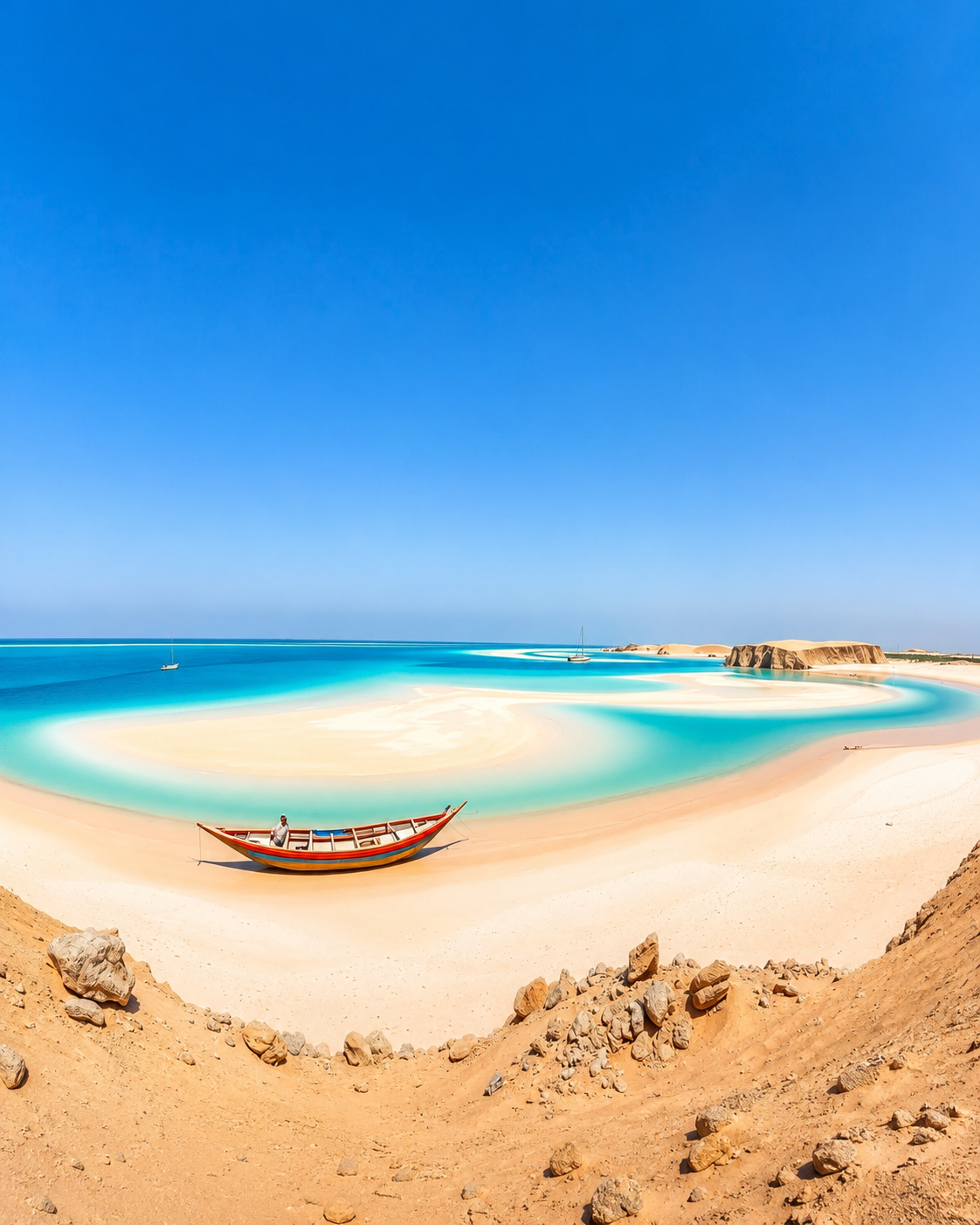
Turquoise lagoon, pale sand and boats in Dakhla, the city context for Puerto Rico Beach

Go deeper through the nearest city context

Dakhla - the city gateway to Puerto Rico Beach

Puerto Rico Beach belongs naturally inside a Dakhla journey. The city gives visitors a stronger base for reading the far southern coast: lagoon water, ocean beaches, wind, seafood, desert routes and the open Atlantic Sahara landscape.

Use Dakhla to widen the context after the beach itself. White Dune, Dragon Island, lagoon viewpoints and the Atlantic shoreline all become clearer when Puerto Rico Beach is treated as part of a wider coastal system.

Dakhla city orientationAtlantic beach context Lagoon and dune landscapesSouthern route planning Wind and water conditionsNearby Dakhla highlights

Continue the journey

Continue from Puerto Rico Beach into the Dakhla coast.

Read the shoreline slowly, then connect it to Dakhla, White Dune, Dragon Island, lagoon light and Morocco's wider Atlantic Sahara journey.