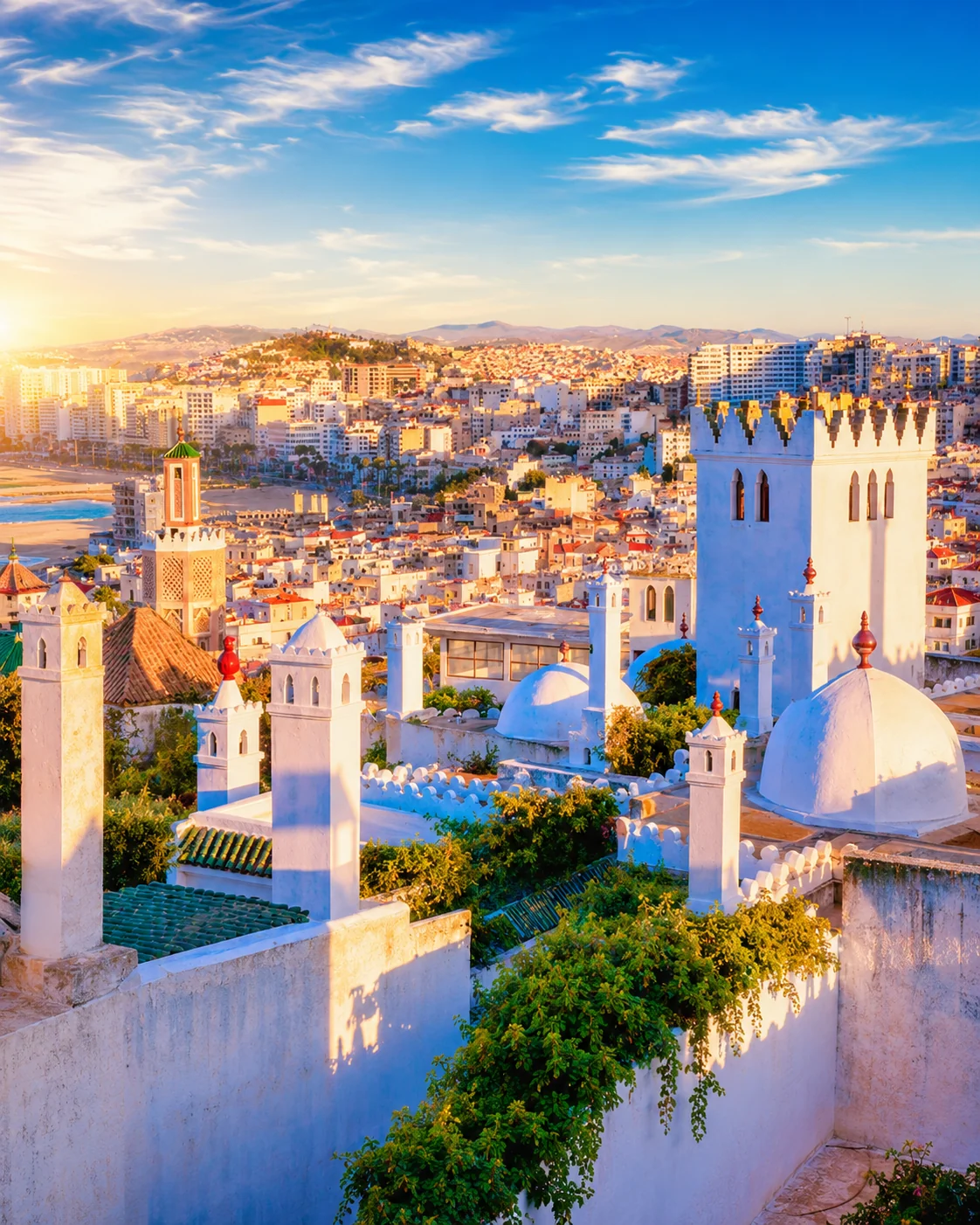
Tangier
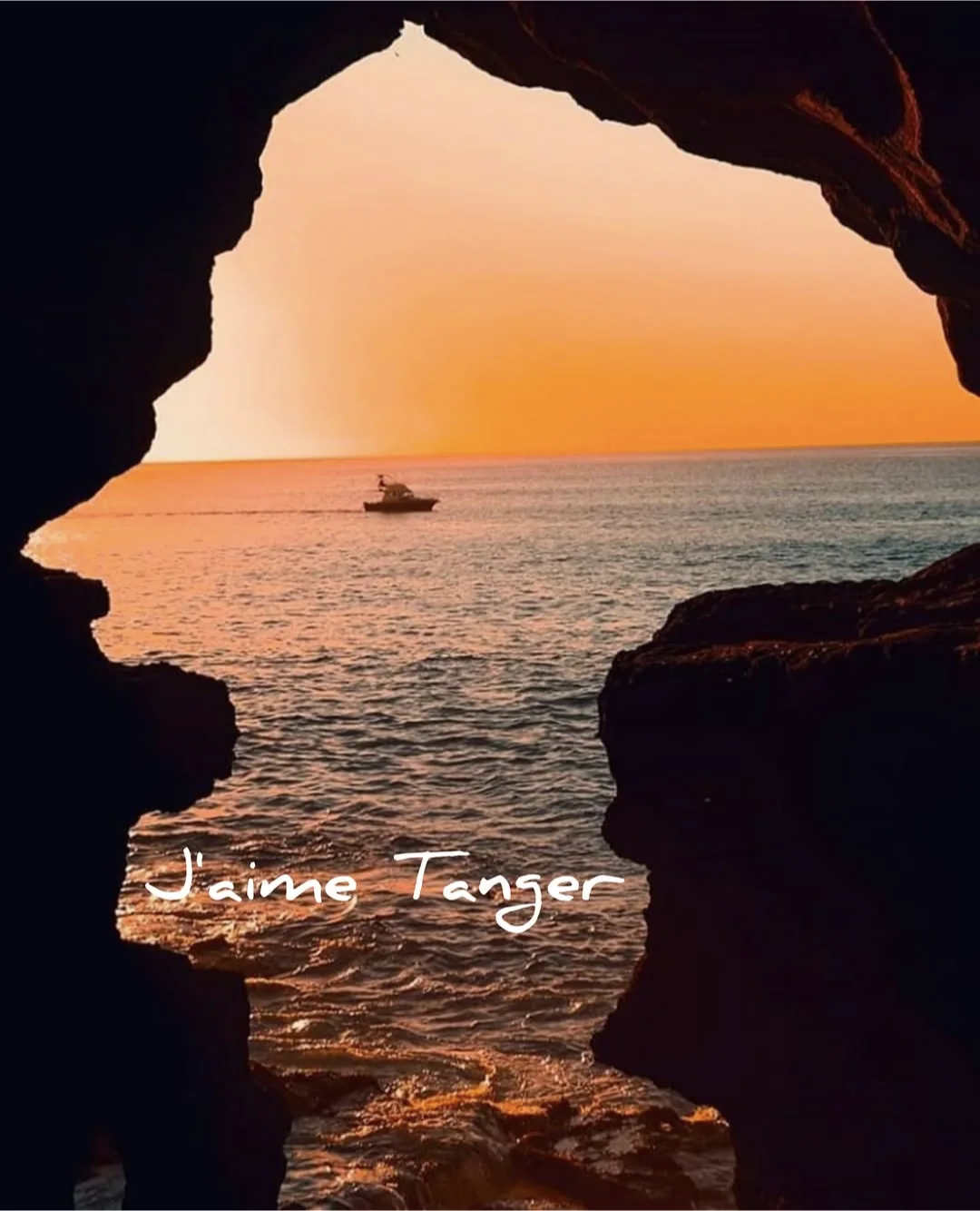
A sea view becomes more specific when the city remains in it.

Look longer, describe more precisely
Explore light, architecture, landscape and ethical image-making through Tangier, Marrakech, Tafraout and the Drâa around Zagora.
A photography journey can deepen attention rather than accelerate the search for a familiar frame. Light shows a surface differently through the day; a wider view explains where a detail belongs; a conversation can change the meaning of an image. Choose this mood if you want the photographs to emerge from time spent understanding a place.
Tangier, Marrakech, Tafraout and Zagora offer four different visual questions: threshold and horizon, enclosure and public space, rock and scale, cultivation and dry ground. They are alternatives or separate parts of a longer journey, not a promise that every subject can be collected in a few days. The route begins with a way of looking and continues through the choices made before, during and after taking a picture.
A sea view becomes more specific when the city remains in it.
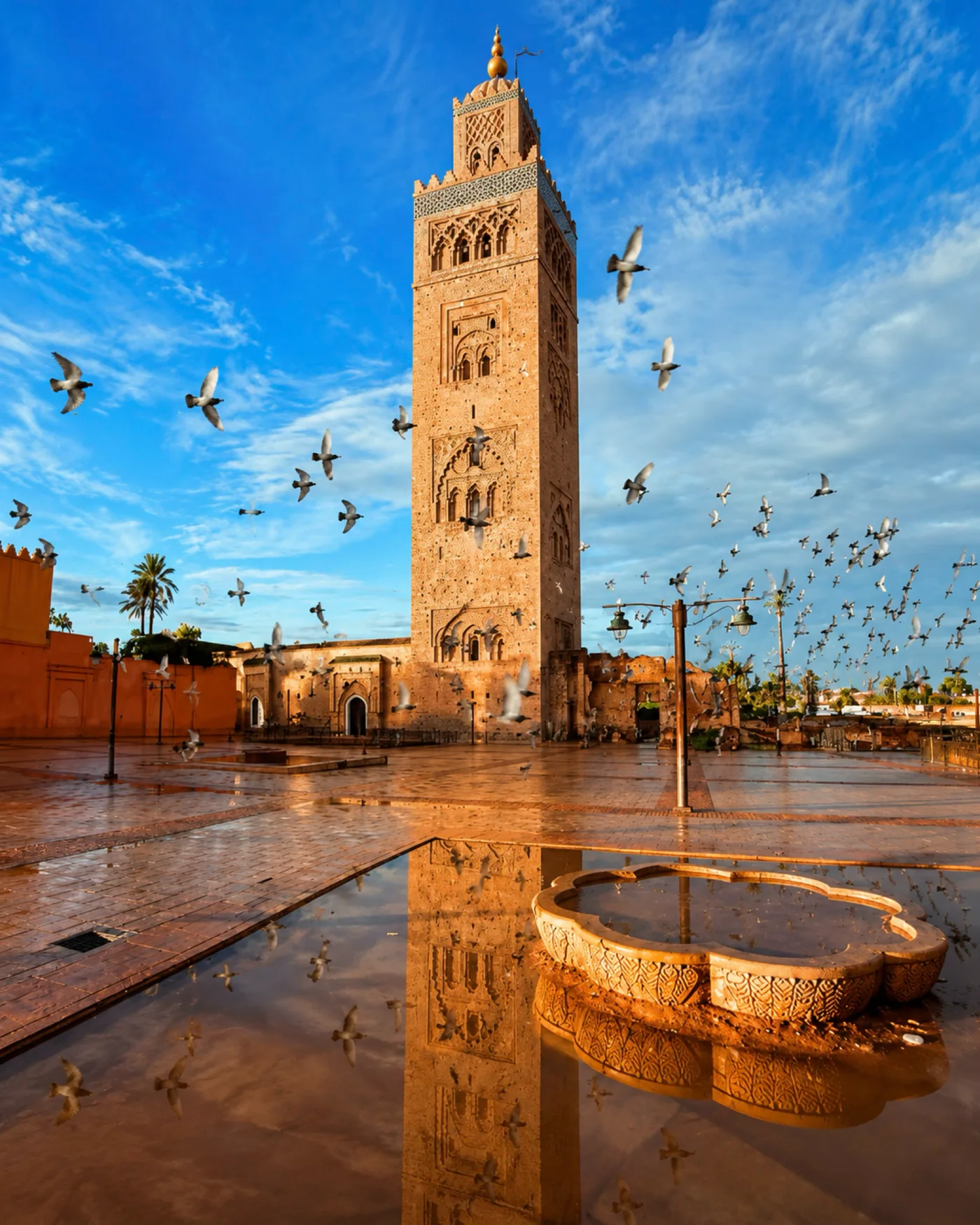
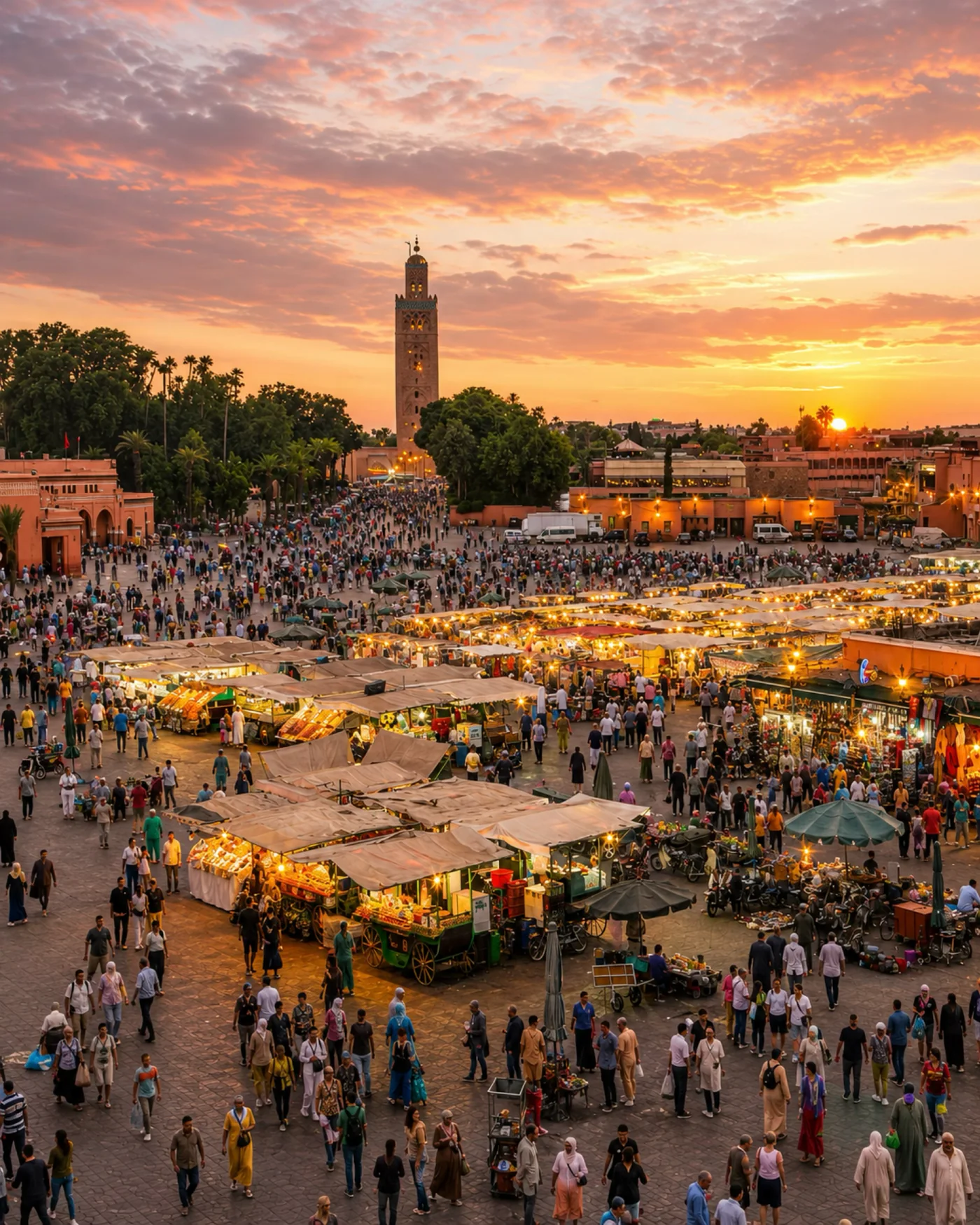
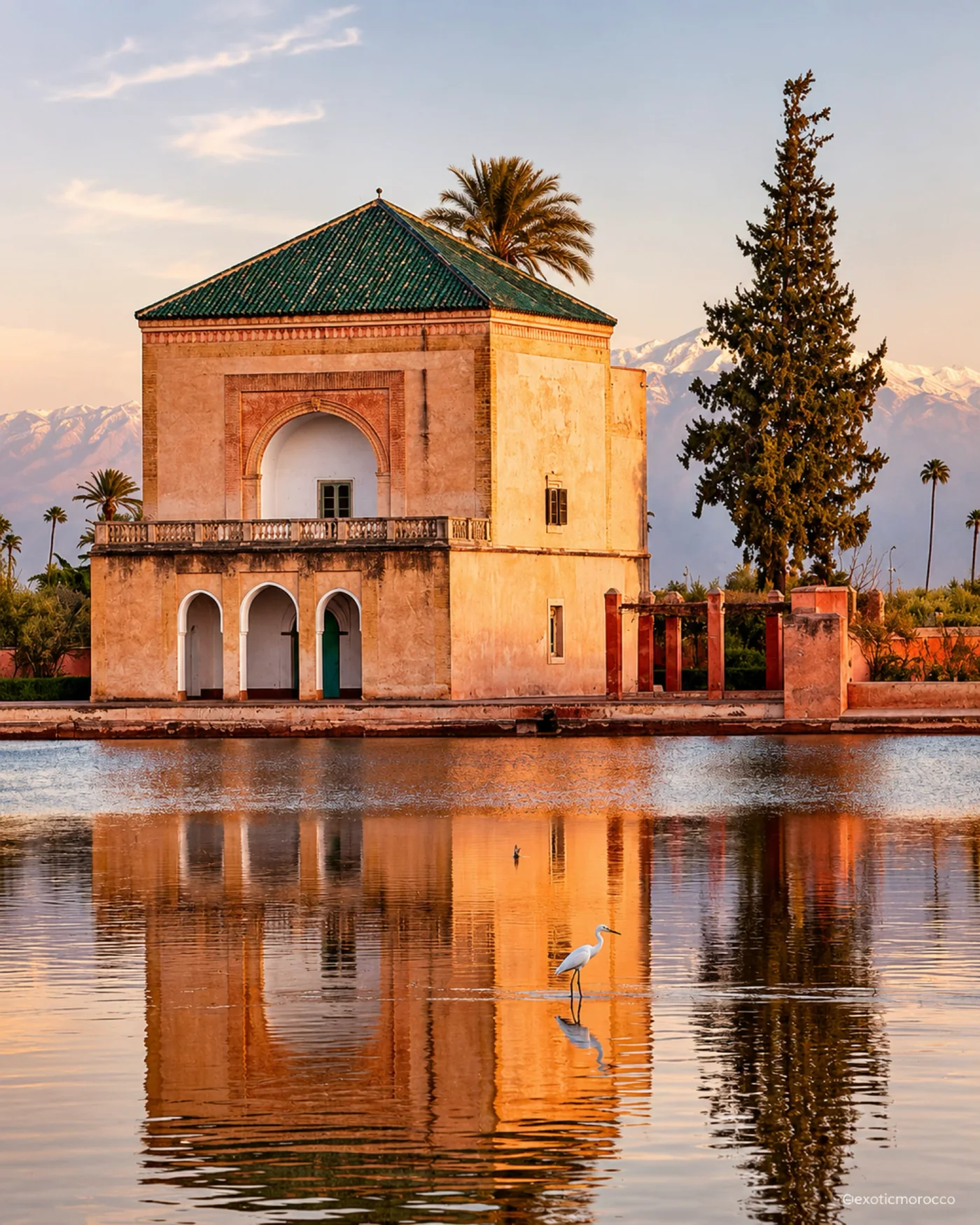
A courtyard can be studied through proportion, shadow and material.
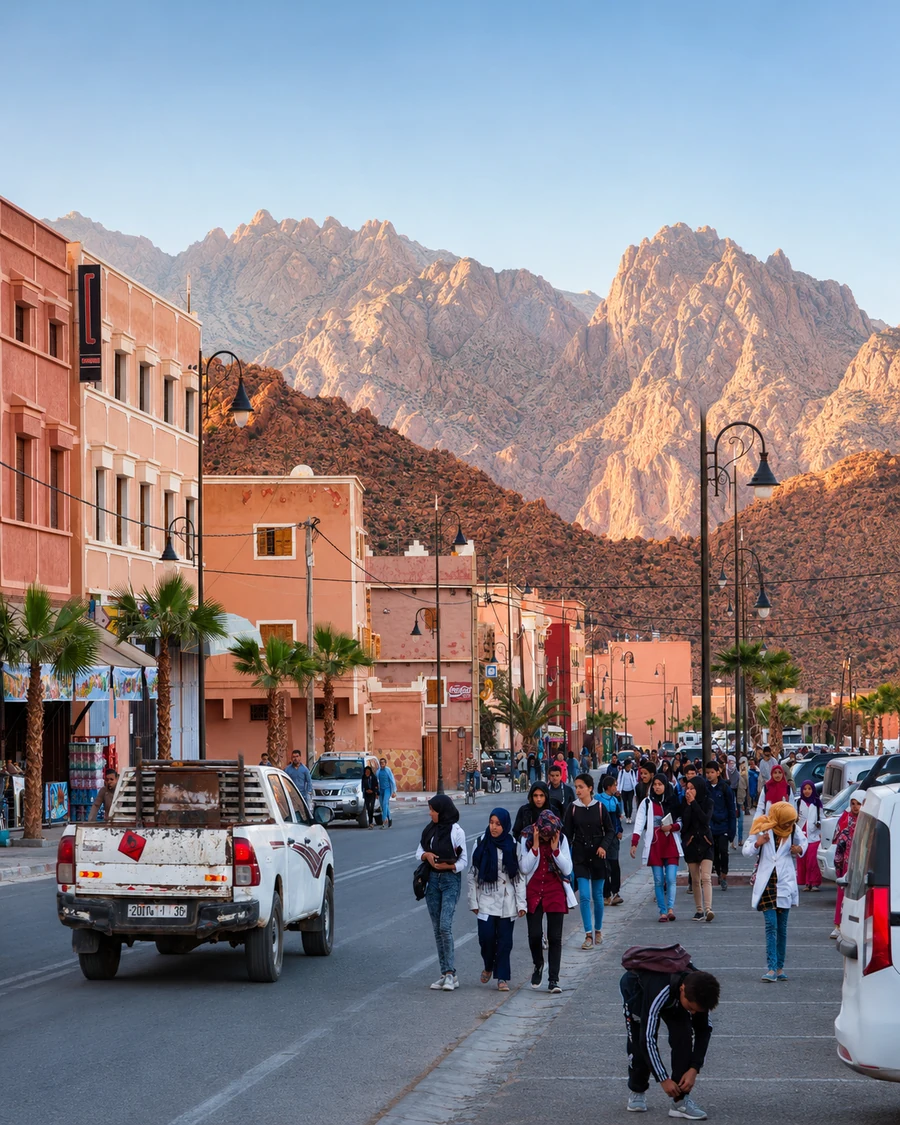
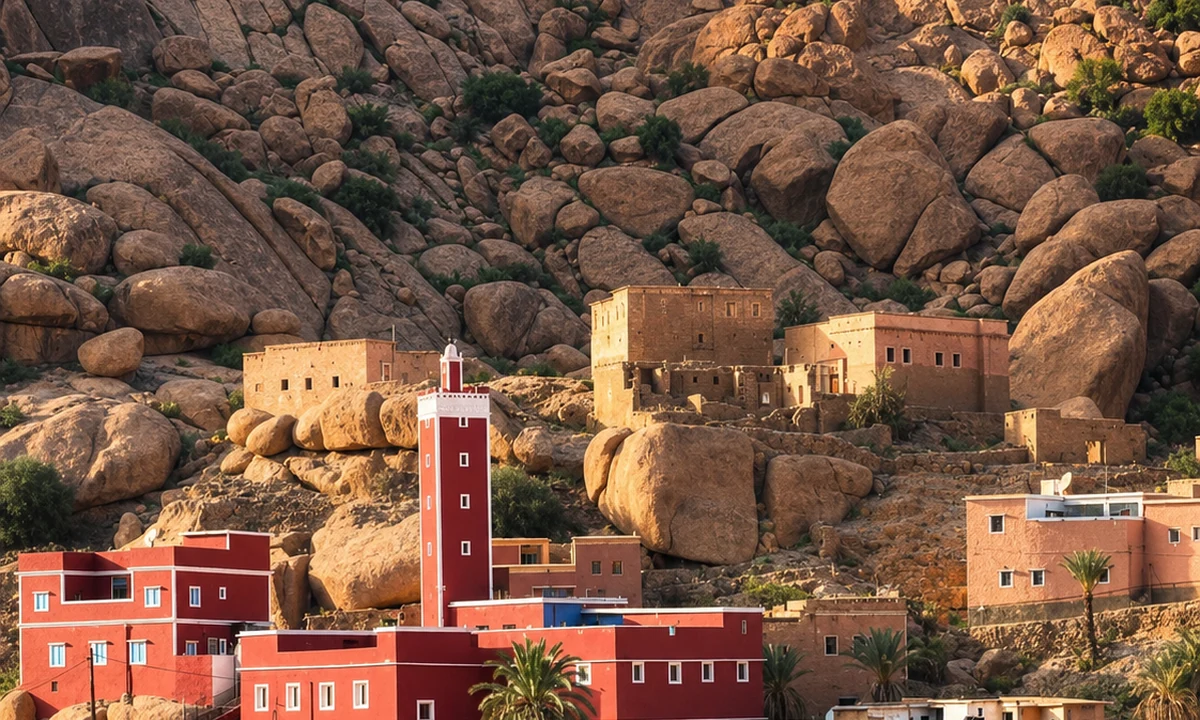
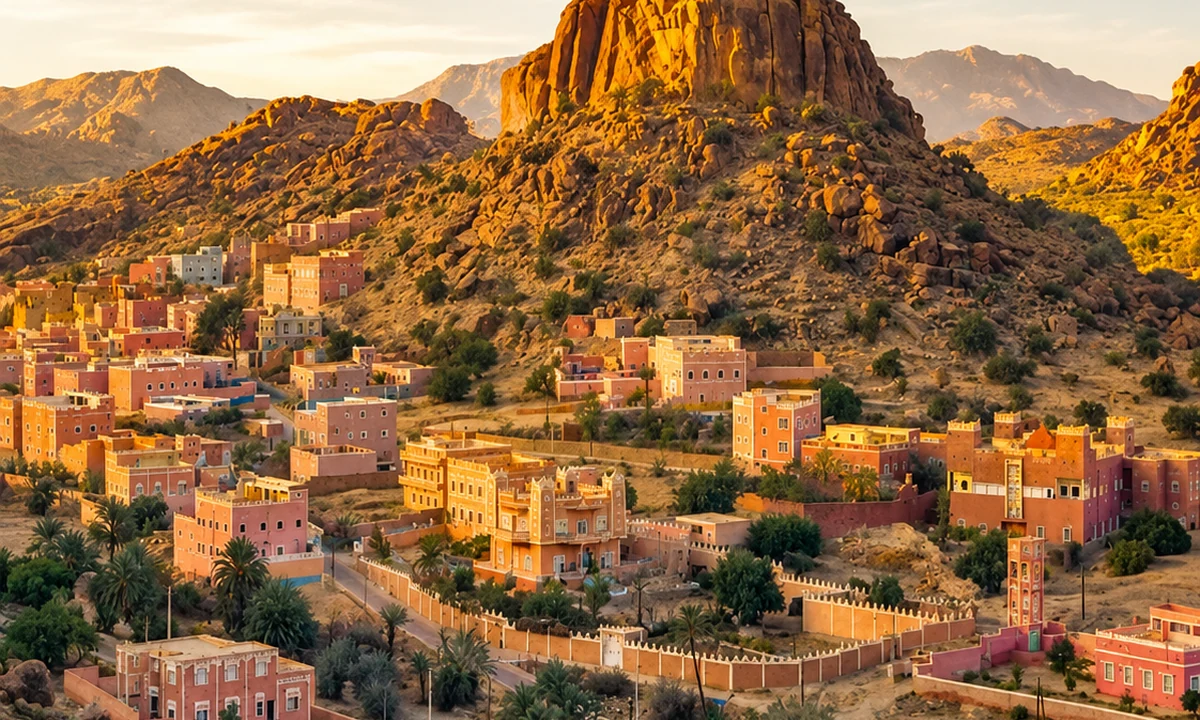
Scale makes a landscape legible without turning people into props.
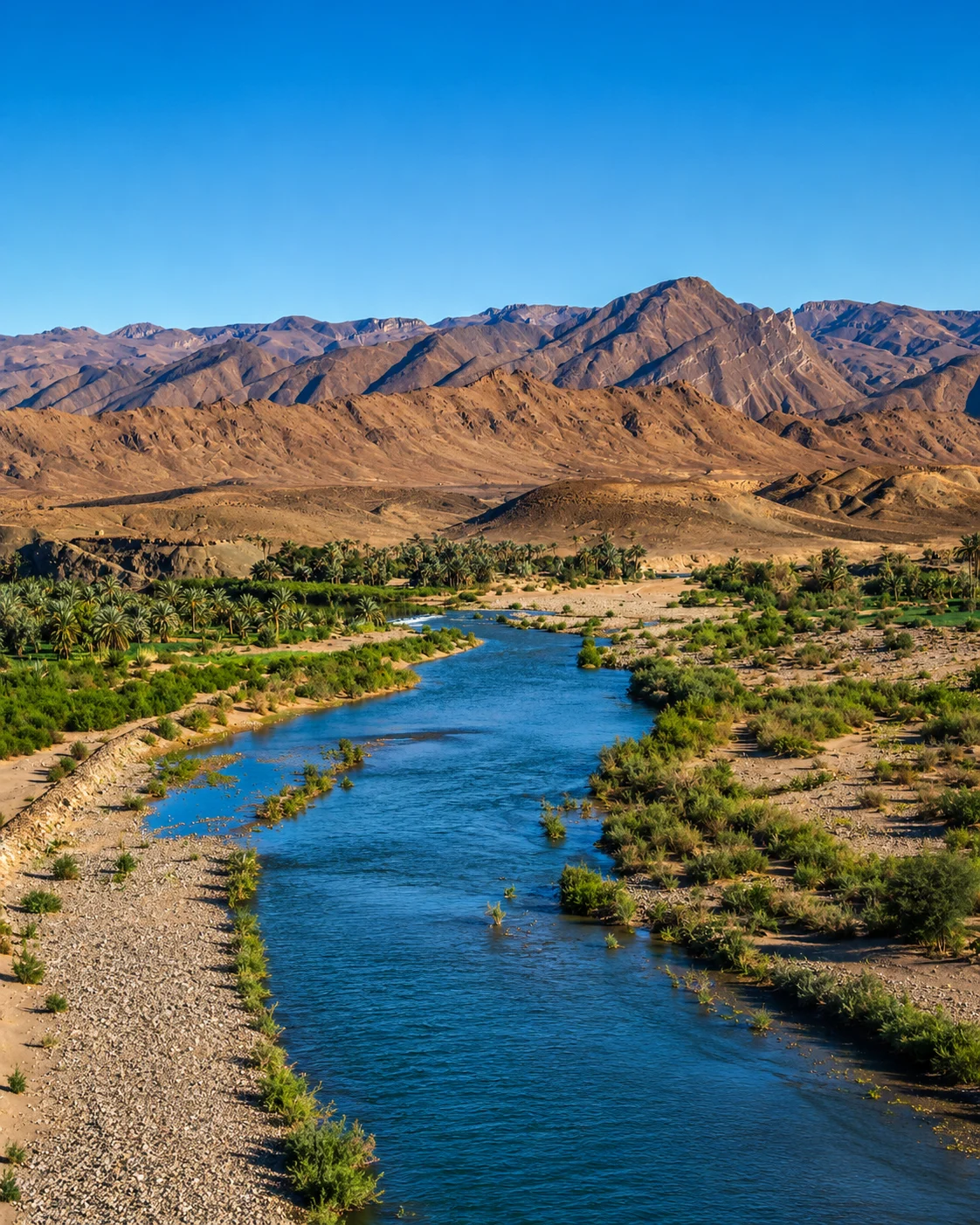
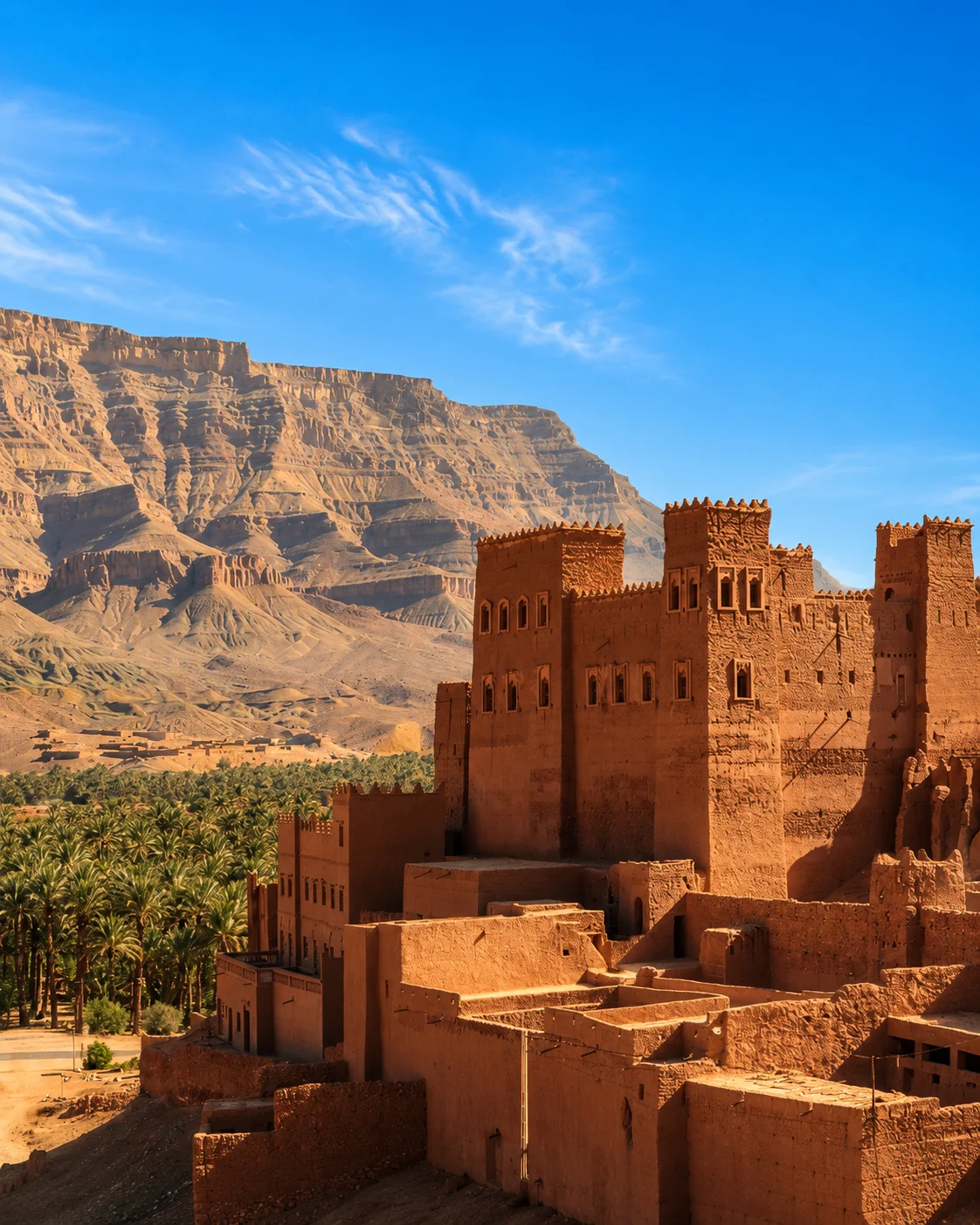
Cultivation and dry ground belong to a managed, inhabited valley.
Work with one idea for a day: how a town frames the sea, how a courtyard receives light, how a building gives scale to a rock formation, or how cultivation occupies a valley. Tangier, Marrakech, Tafraout and Zagora provide distinct settings for those questions. Revisit a small area when possible, and allow the actual conditions to shape the work rather than chasing a photograph made elsewhere in another season.
Tangier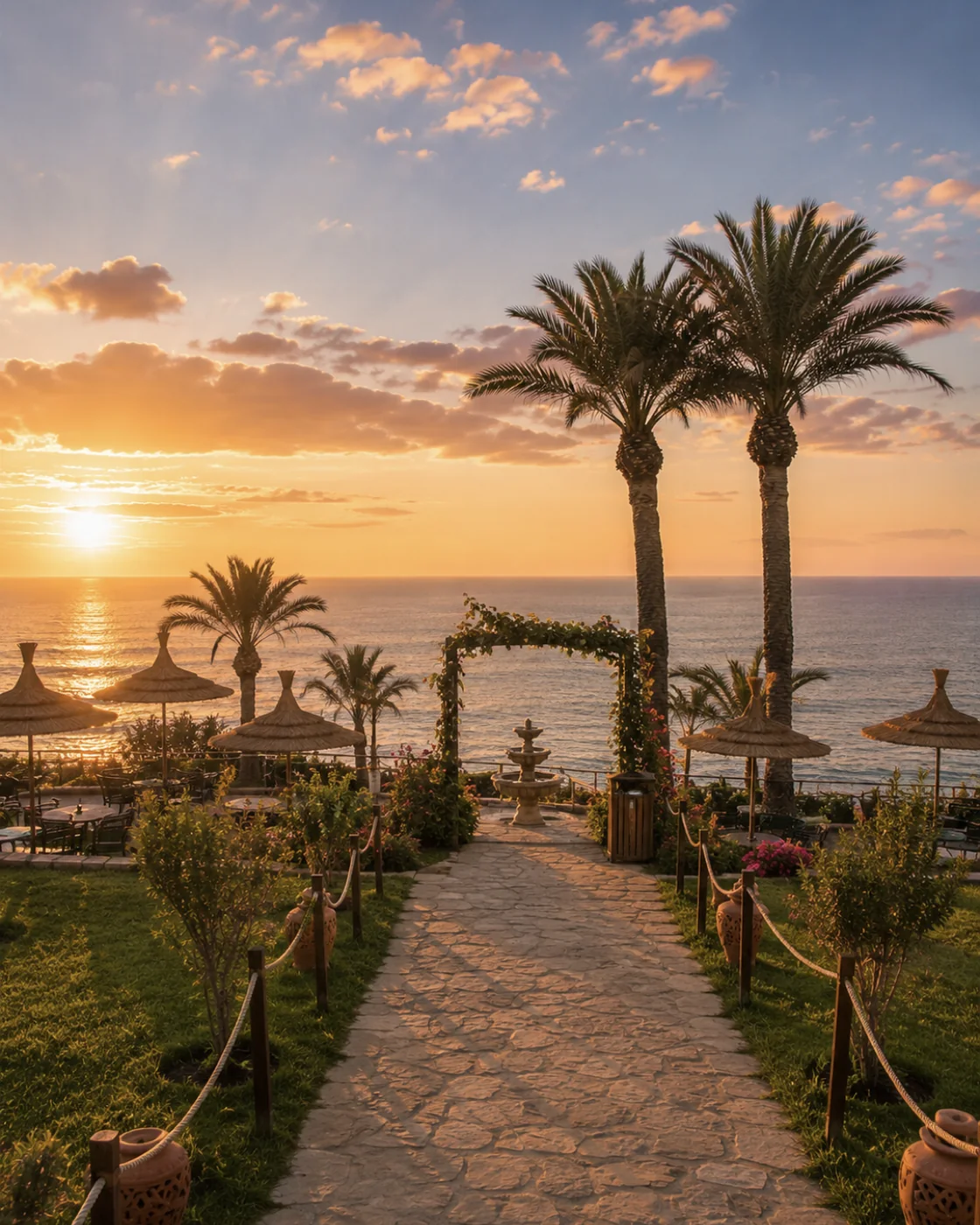 Tangier
 Marrakech
 Tafraout
 Zagora & the Drâa
 Tangier
 Marrakech
Look for the relationships that make each place distinct.
A close view can reveal texture while hiding use and setting. Make a wider observation as well, even if you do not publish it. Understanding what lies outside the chosen frame helps prevent a visually persuasive but misleading account.
Notice how light meets a surface and where reflected light enters a shaded space. Early or late light can be useful, but it is not automatically the best answer for every subject. An overcast sky or shaded interior may reveal detail more clearly.
Ask before making an identifiable person the subject and respect a refusal immediately. Permission for one photograph does not imply permission for every use. Explain the intended context plainly, especially when an image may be shared publicly or commercially.
Record the actual place, date and what you know about the subject. Distinguish observation from an explanation supplied by someone else. A precise caption can preserve local difference where a dramatic image alone might encourage a generic story about Morocco.
Explore light, architecture, landscape and ethical image-making through Tangier, Marrakech, Tafraout and the Drâa around Zagora.
Frame the relationship with the horizon
Work with light inside enclosure
Find a measure for the rock
Photograph a relationship, not a contrast alone
These practices are editorial guidance for attentive travel photography, not a statement of local law or a substitute for site-specific rules.
Begin with the setting. A street, skyline or wider landscape gives later details a place to belong. Look for a clear relationship rather than trying to include everything in one view; context can be built across several images.
Move closer only where access is appropriate. A doorway or workshop entrance is not an invitation to enter. A useful photograph can be made from a public position, and sometimes the better decision is to remain an observer without taking it.
Photograph a related subject at two scales or times. The comparison may reveal changing light, different uses or a material relationship. A pair of considered images can communicate more than several nearly identical versions of a famous viewpoint.
Put the camera away and watch how a space works. Where do deliveries pass, where do people stop, and which routes should remain clear? This attention improves both the encounter and any later decision about where to stand.
Keep a small record of names and explanations offered during the visit. Ask how a person wishes to be credited if relevant. Do not add a dramatic cultural claim later merely because it seems to suit the atmosphere of the image.
Choose images for what they communicate together. Avoid a sequence that turns every inhabited place into an empty stage or every person into a symbol. Include enough context to make the visual story accurate, and retain uncertainty where the evidence is incomplete.
A sea view becomes more specific when the city remains in it.
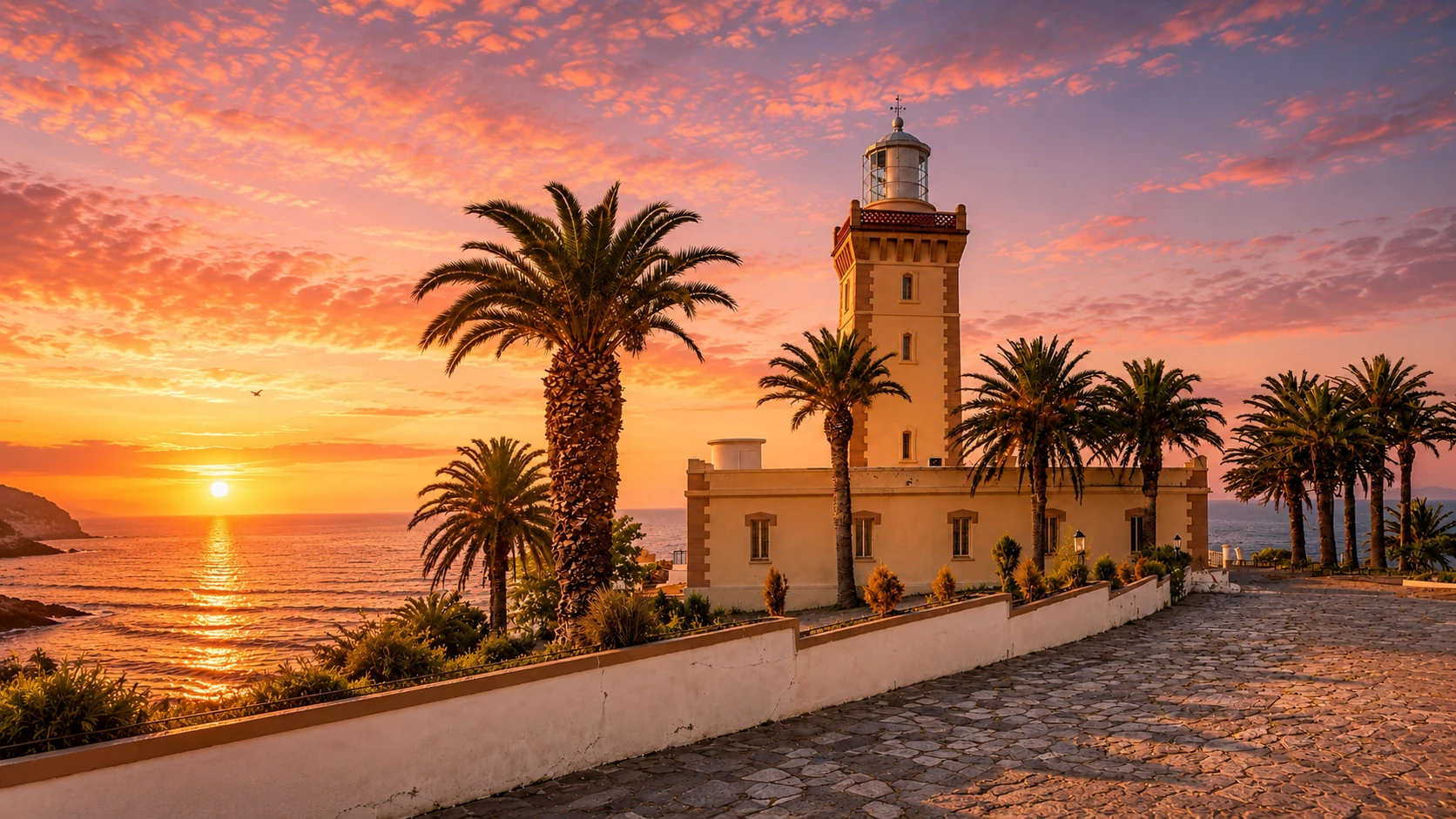
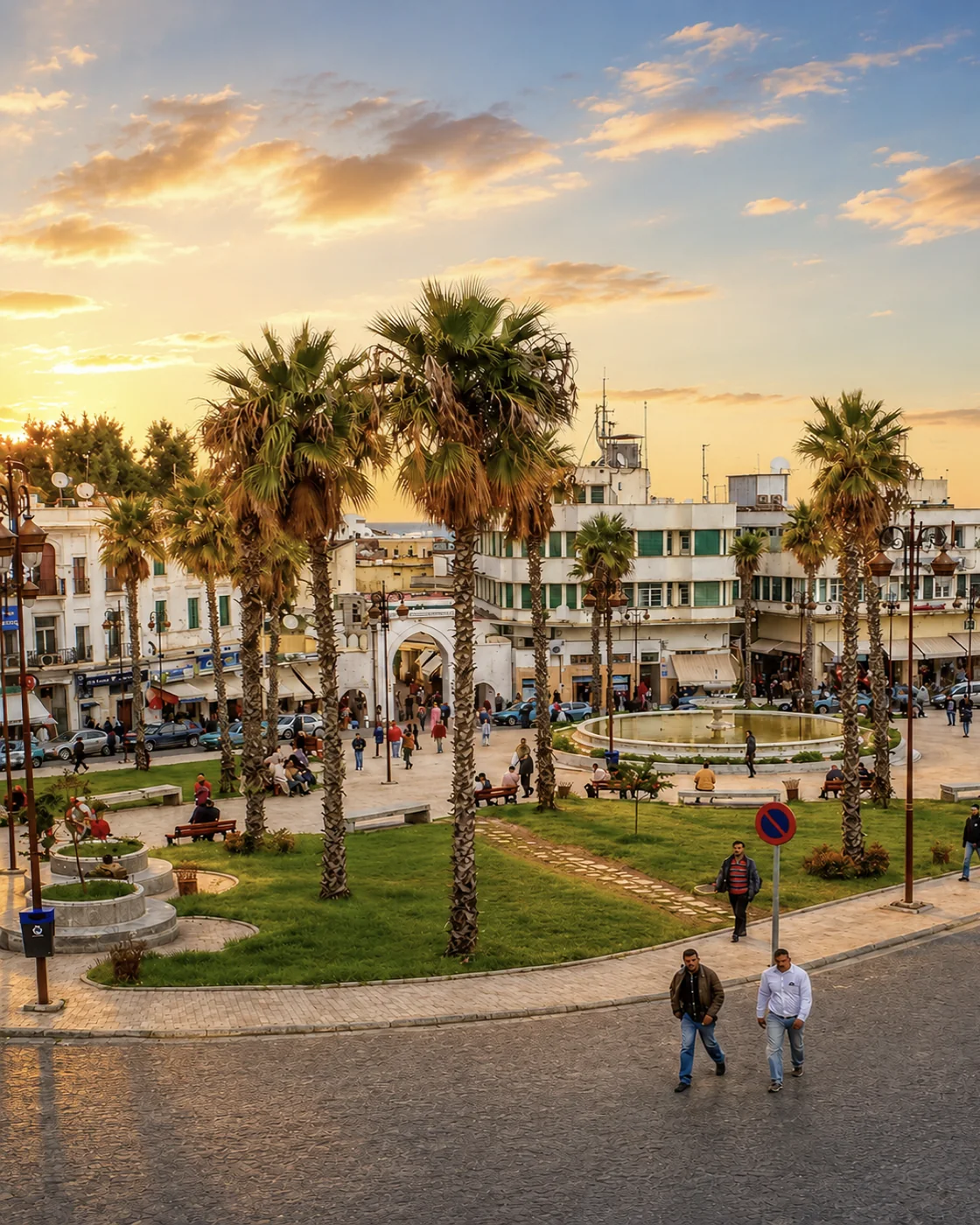
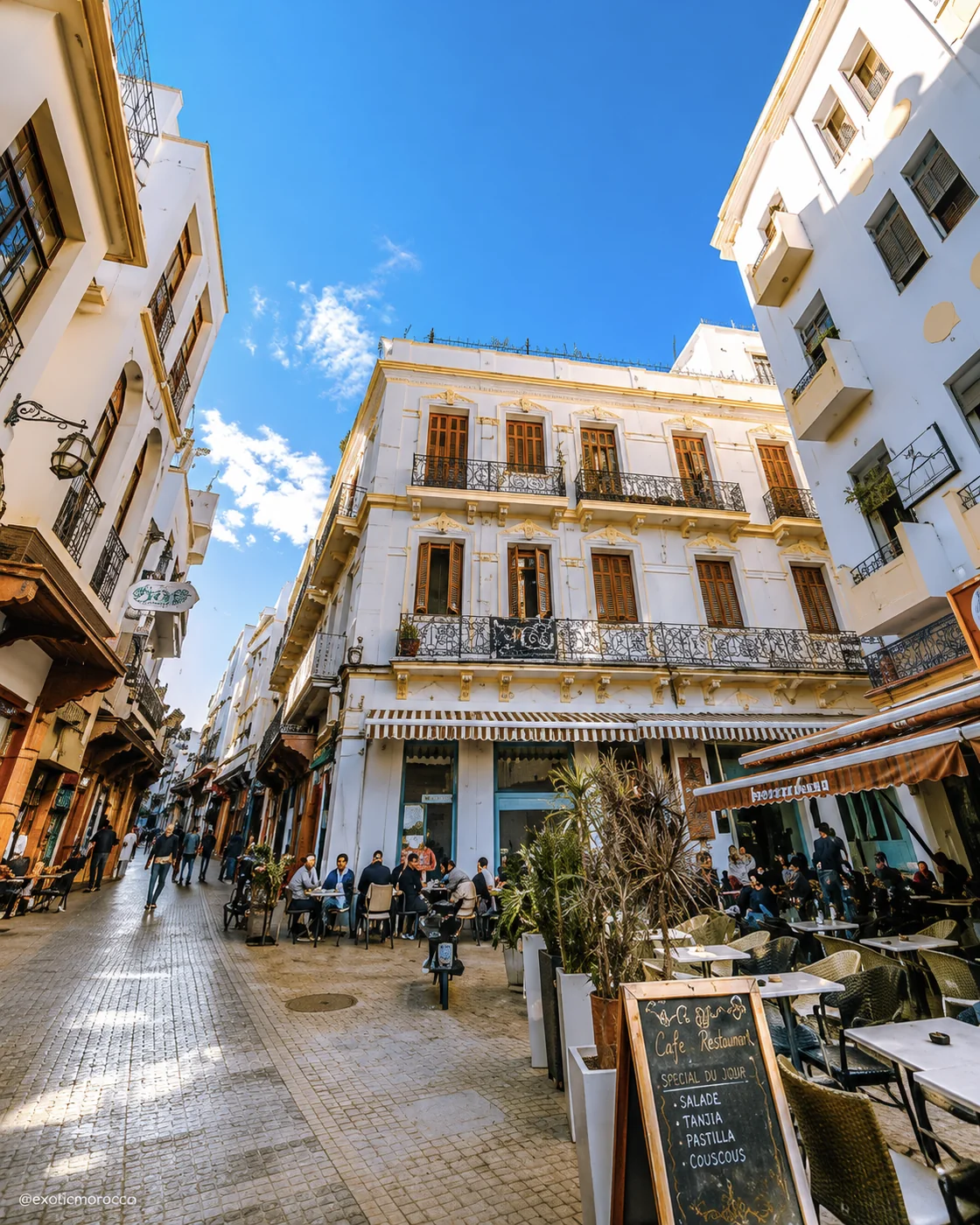
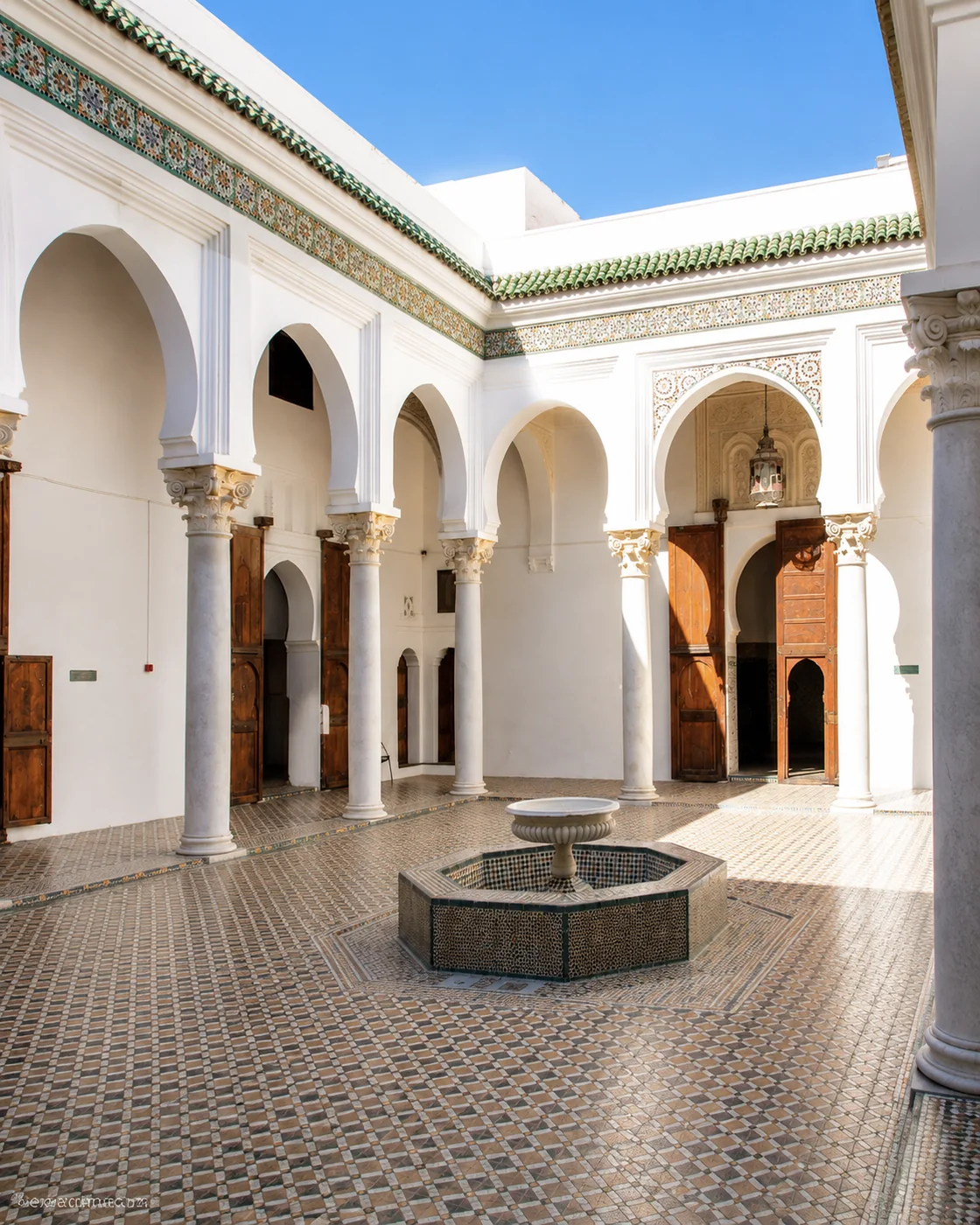
Tangier offers opportunities to study how a street, wall or public viewpoint frames the wider maritime setting. Start by orienting yourself rather than assuming every blue horizon is the same waterway. The relation between built foreground and distant view can tell a stronger story than a panorama with no identifiable setting. Let street scale and changes of level guide the sequence of images.
The city's layered history should not become a licence for vague captions about mystery or timelessness. Record the actual neighbourhood or place and use a reliable source for historical claims. In inhabited streets, avoid blocking passage while waiting for a composition. If a person becomes the main subject, seek permission and make the purpose clear. A return walk without the pressure to produce a new frame can reveal details that a first visit, dominated by expectation, left unseen.
Tangier rooftopsCap SpartelCaves of Hercules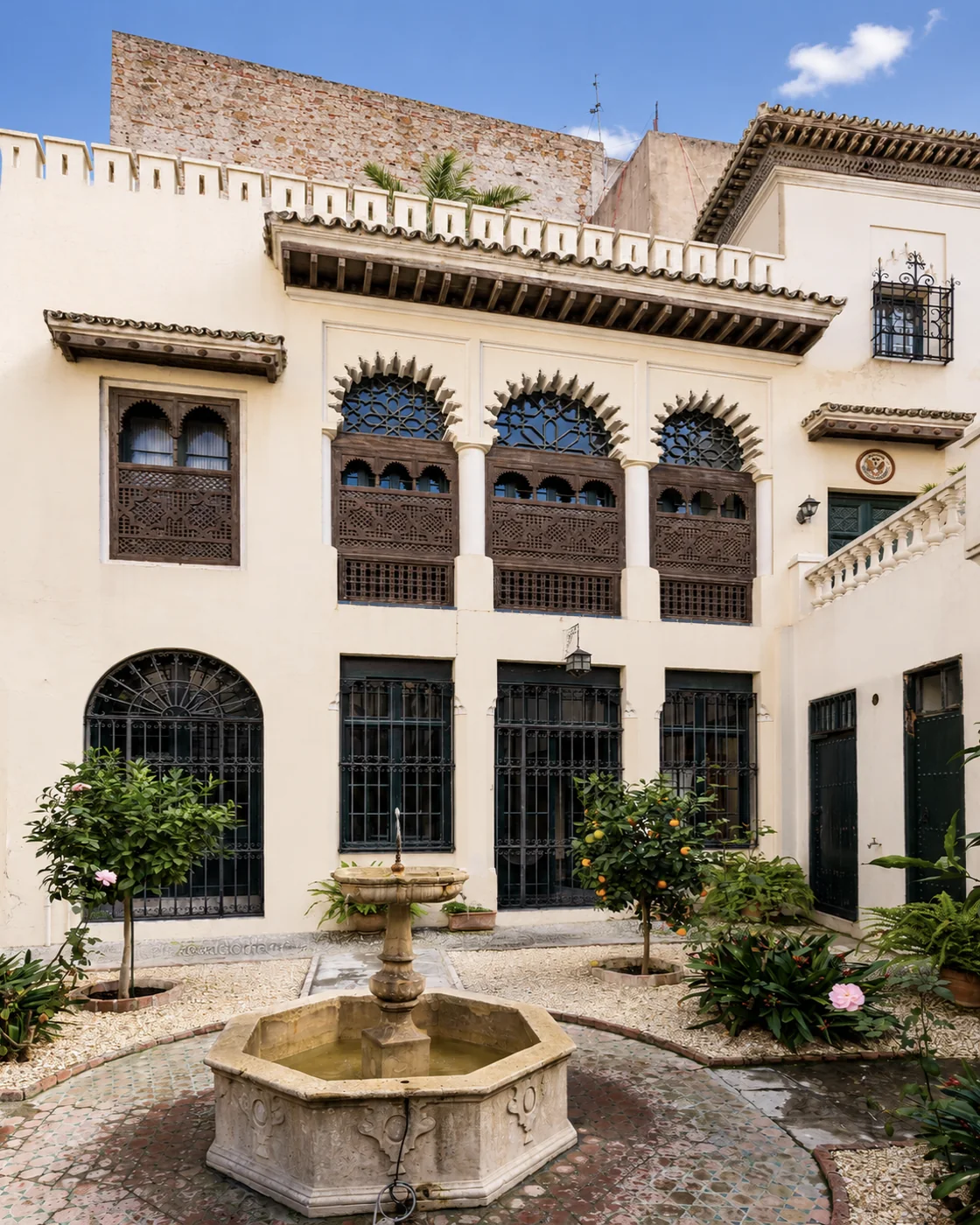 American Legation
 Grand Socco
 Petit Socco
 Dar el MakhzenKoutoubiaJemaa el-FnaMenara
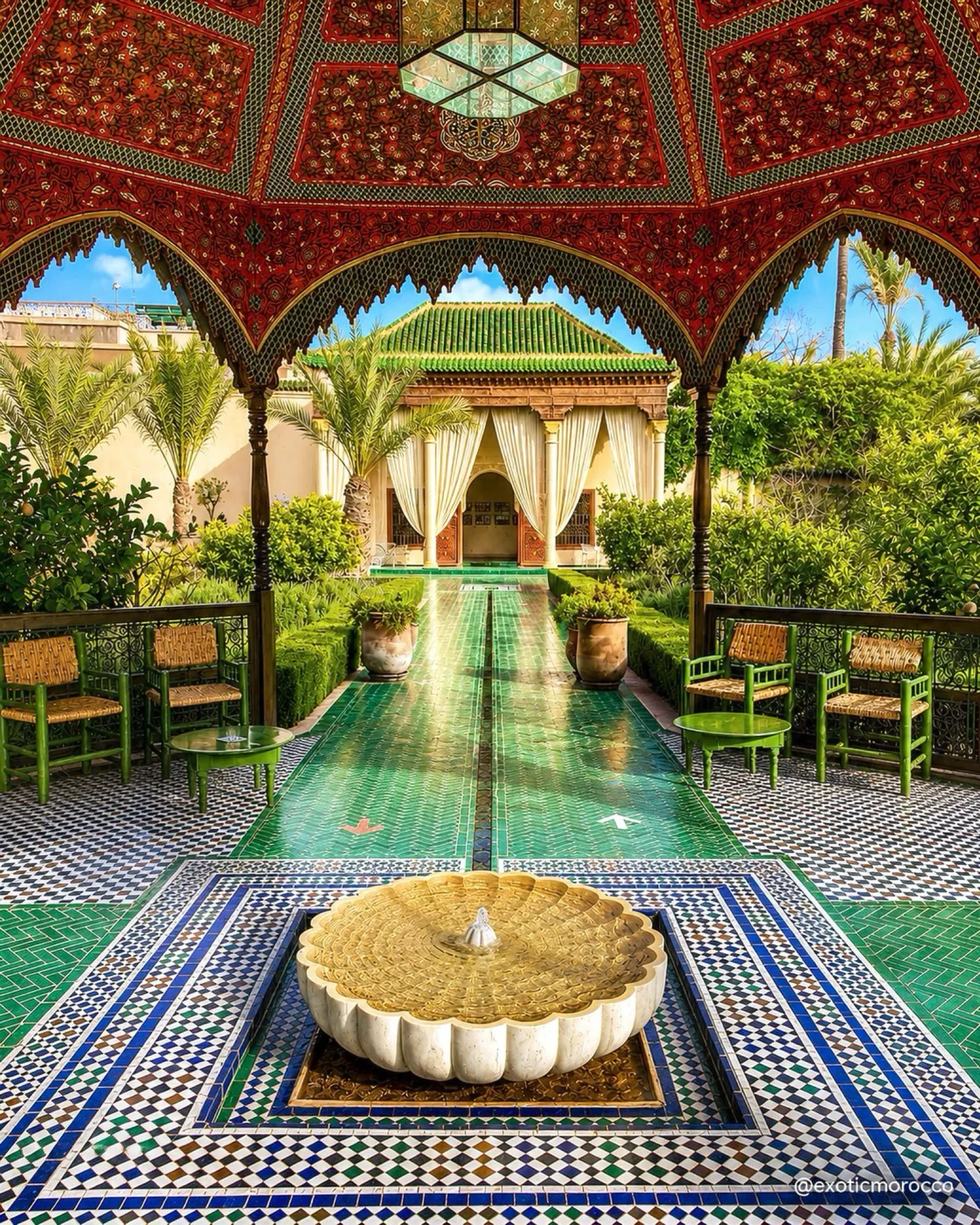 Secret Garden
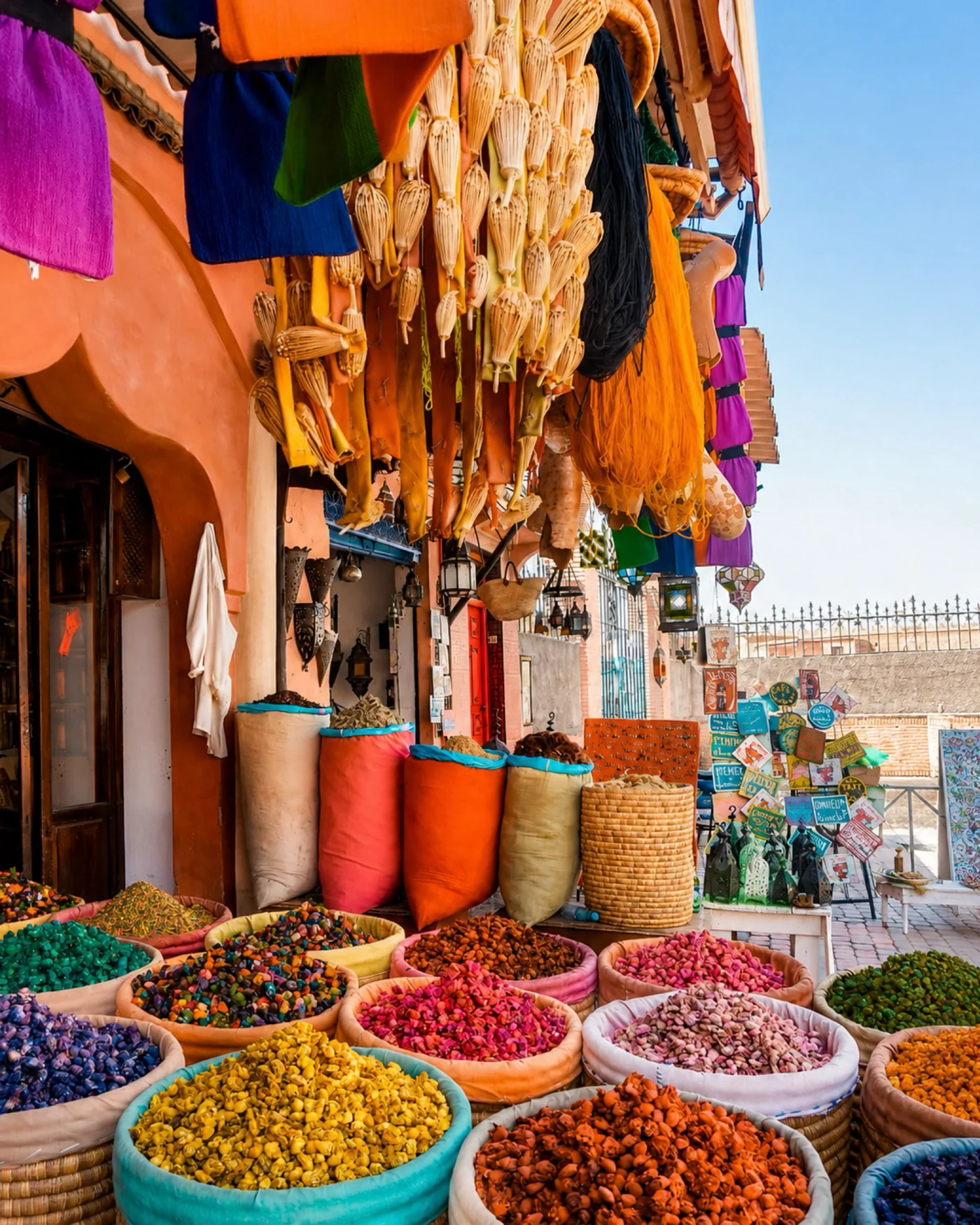 Spice colours
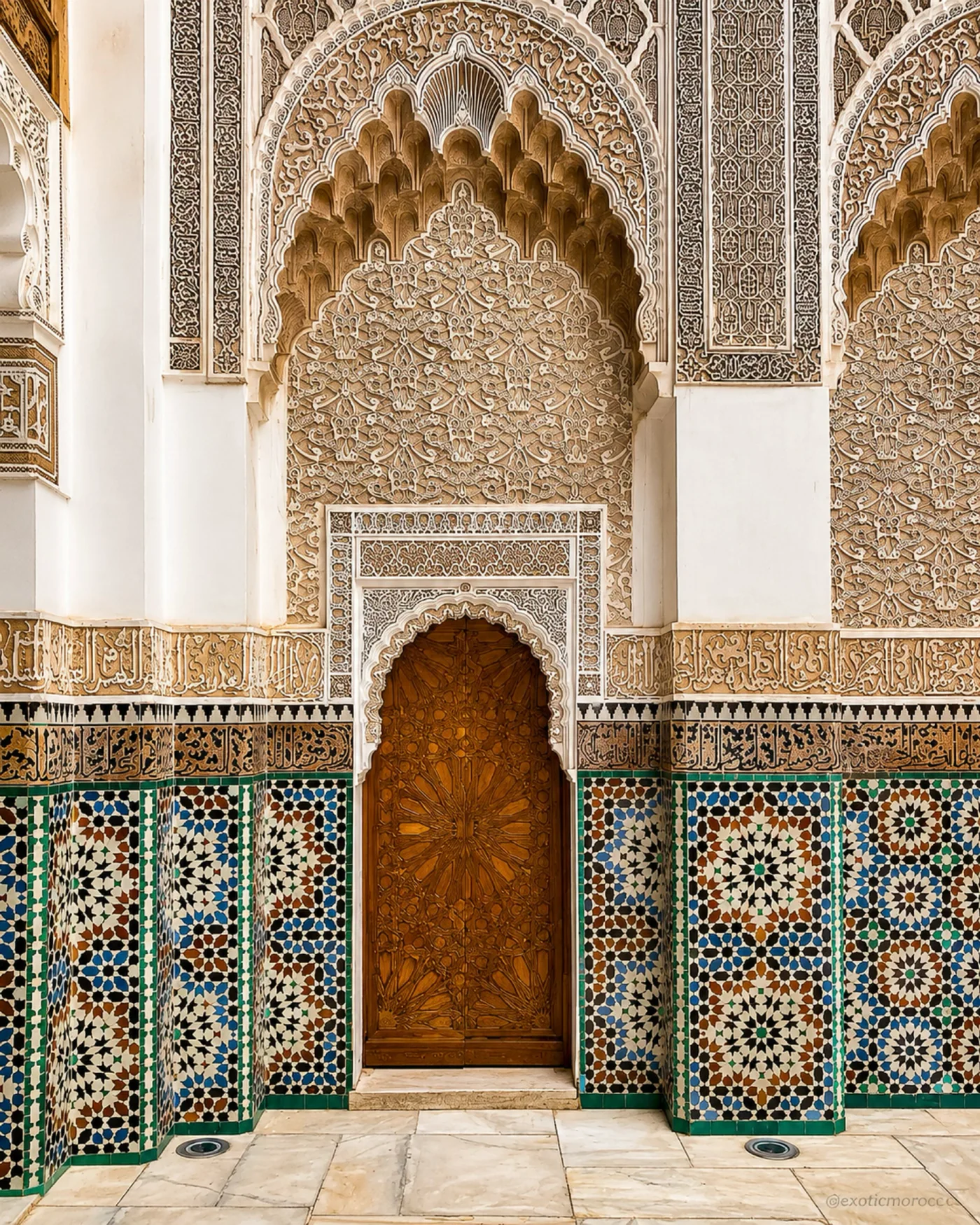 Ben Youssef Madrasa
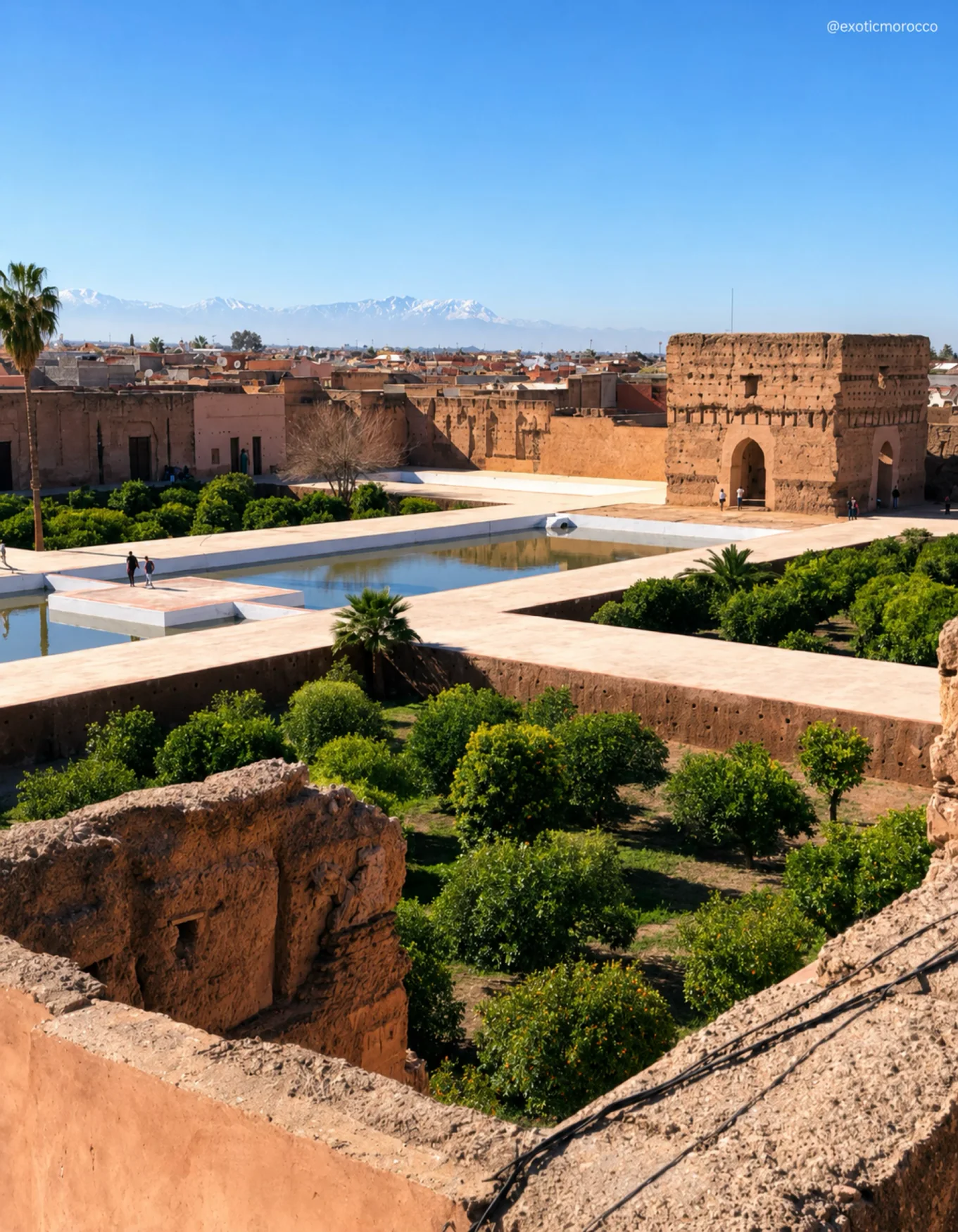 Badi Palace
A courtyard can be studied through proportion, shadow and material.
An accessible courtyard in Marrakech provides a concentrated visual study. Observe the overall arrangement before moving to detail: where light enters, which surfaces reflect it and how a shaded threshold changes the view. A symmetrical composition is one possibility, but an oblique view may explain depth or use more clearly. Keep the building's identity and rules attached to the experience rather than treating every decorated space as an interchangeable backdrop.
Outside, public life follows a different rhythm. A busy square or commercial street needs attention to people, work and movement, not just exposure settings. Agree any requested fee or arrangement before a portrait or performance photograph, and do not assume that being in a public place makes every interaction welcome. The contrast between a carefully measured interior and a changing street can form a useful series when both are described accurately. Leave space in the edit for the contemporary city beyond its most recognisable motifs.
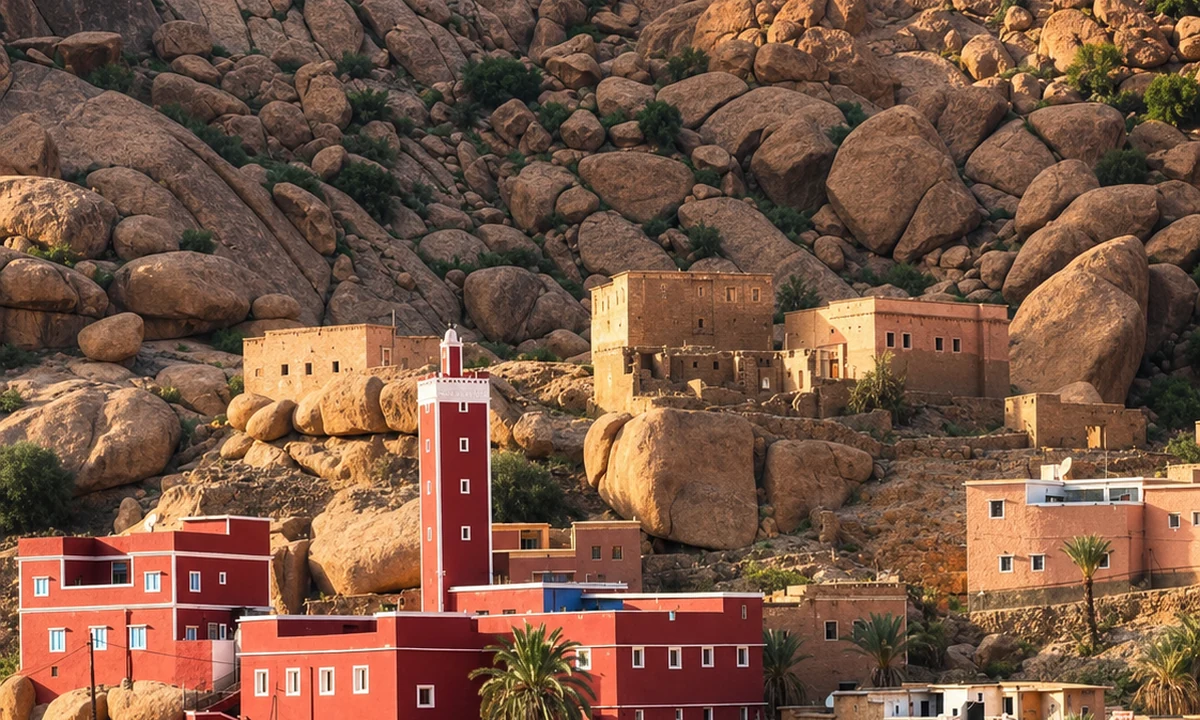
Scale makes a landscape legible without turning people into props.
The granite setting around Tafraout invites attention to form and scale. A tree, building or existing path can give an outcrop a readable dimension. Work from appropriate positions and notice the negative spaces between rocks as well as the largest shapes. The relationship between settlement and landform can make the series more specific than a collection of abstract textures.
Do not move people, objects or vegetation simply to make the scene match an expectation. If you want a human subject, make it a consensual encounter with that person rather than using an unsuspecting figure as a convenient scale marker. Plan any walk with the return and changing conditions in mind; a promising view does not establish safe or permitted access. Time in the town can add context through architecture, work and ordinary movement, preventing the surrounding landscape from appearing detached from contemporary life.
TafraoutAnti-Atlas granite landscapesAit Mansour Valley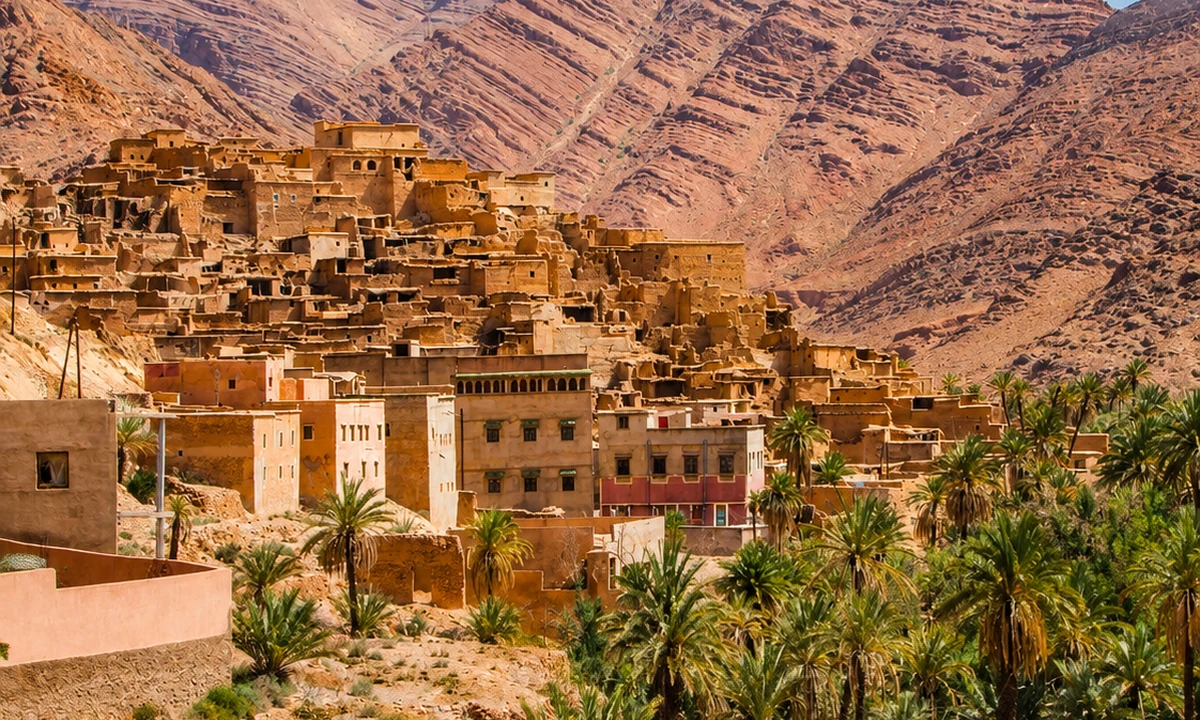 Ameln Valley
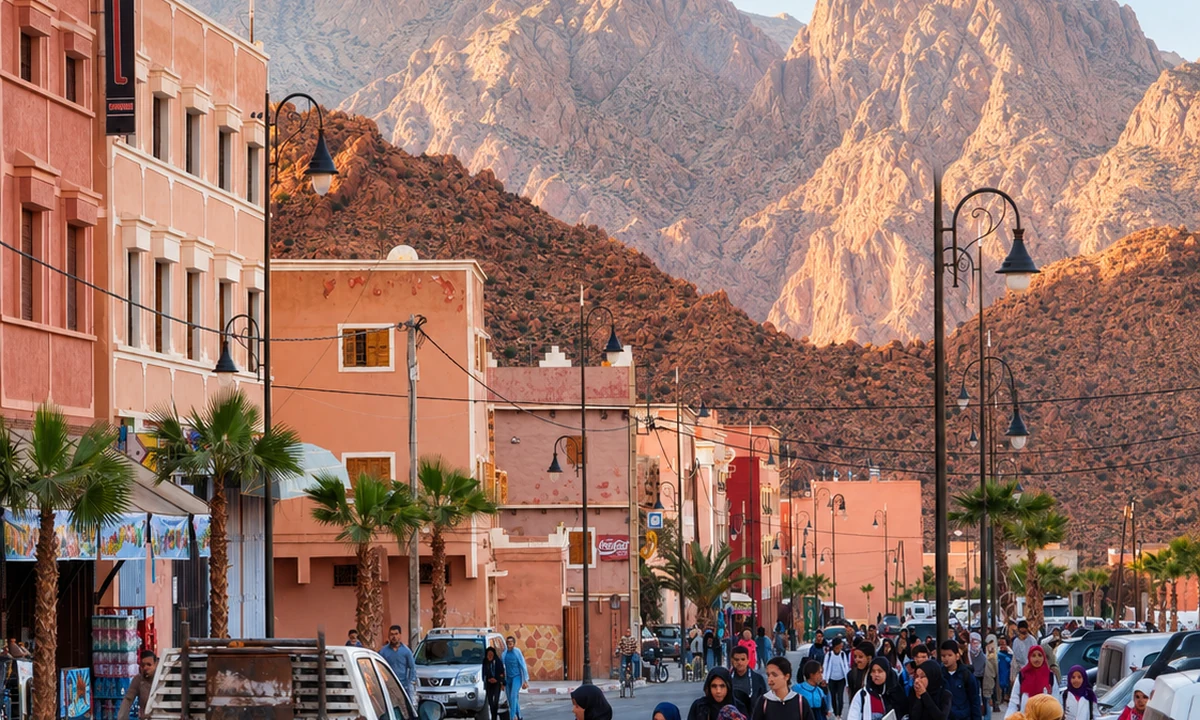 Jbel Lkest
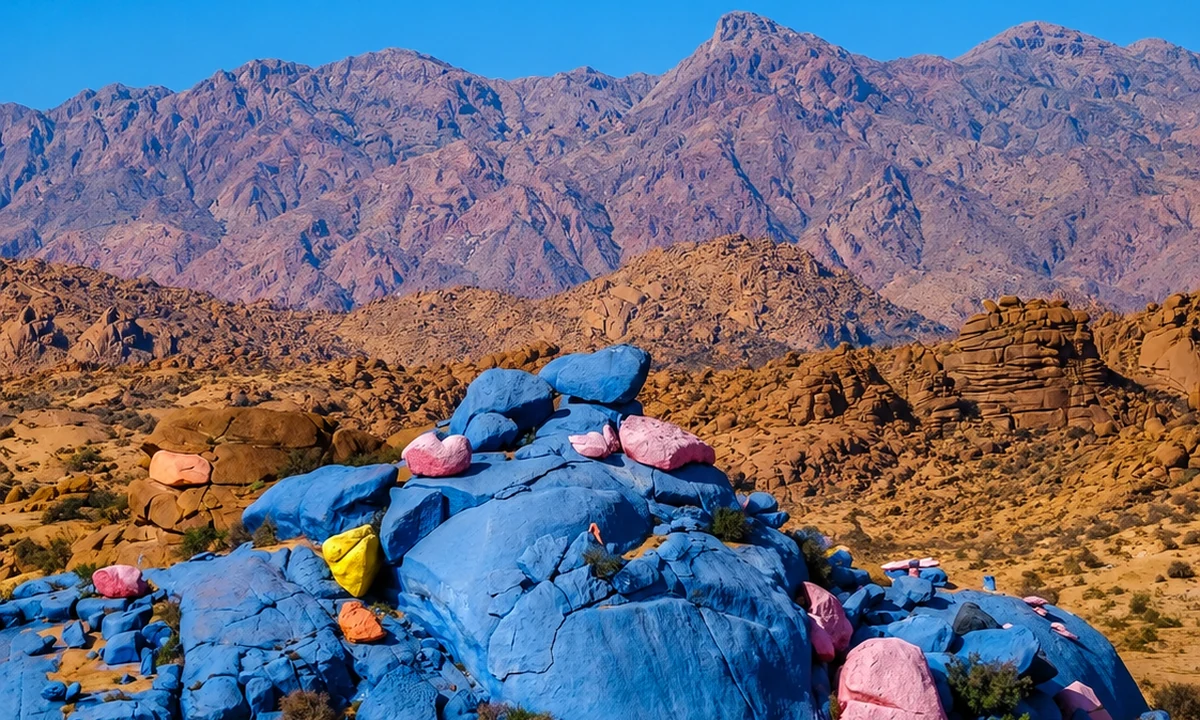 Painted Rocks
 Almond and argan landscapesDrâa gatewayDrâa ValleyPalm oases
 Zagora sign
 Tamgroute
 Tinfou dunes
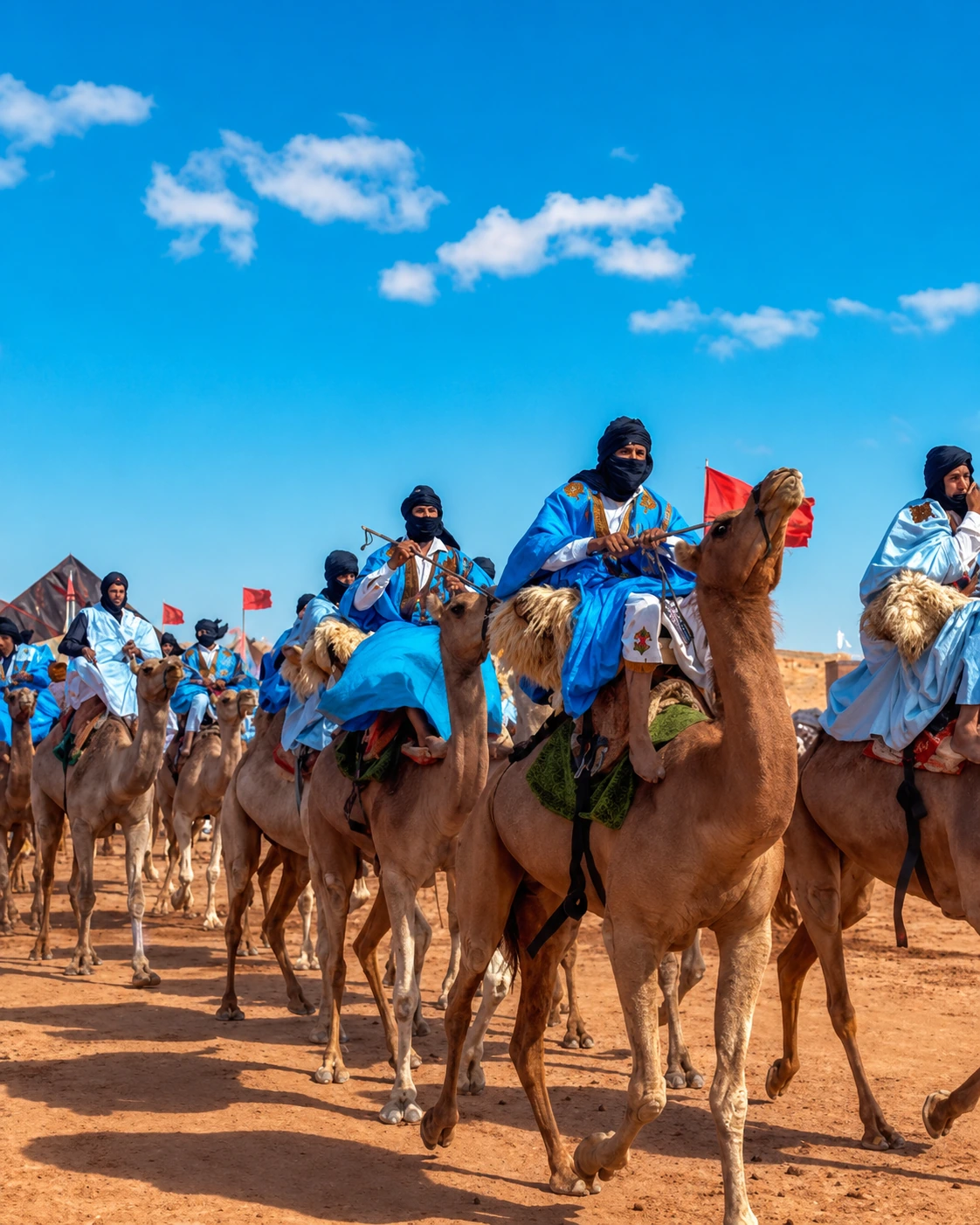 Caravan route
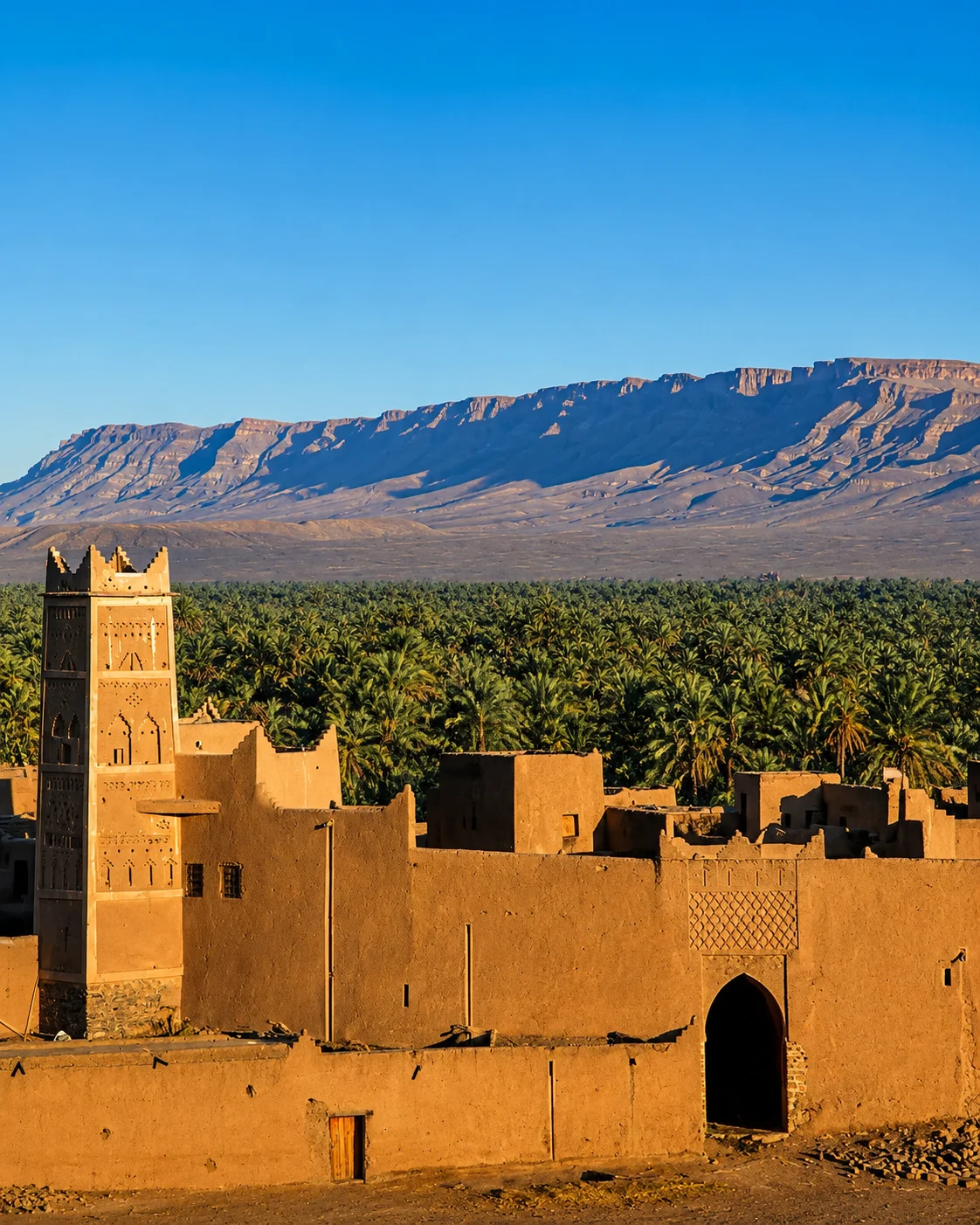
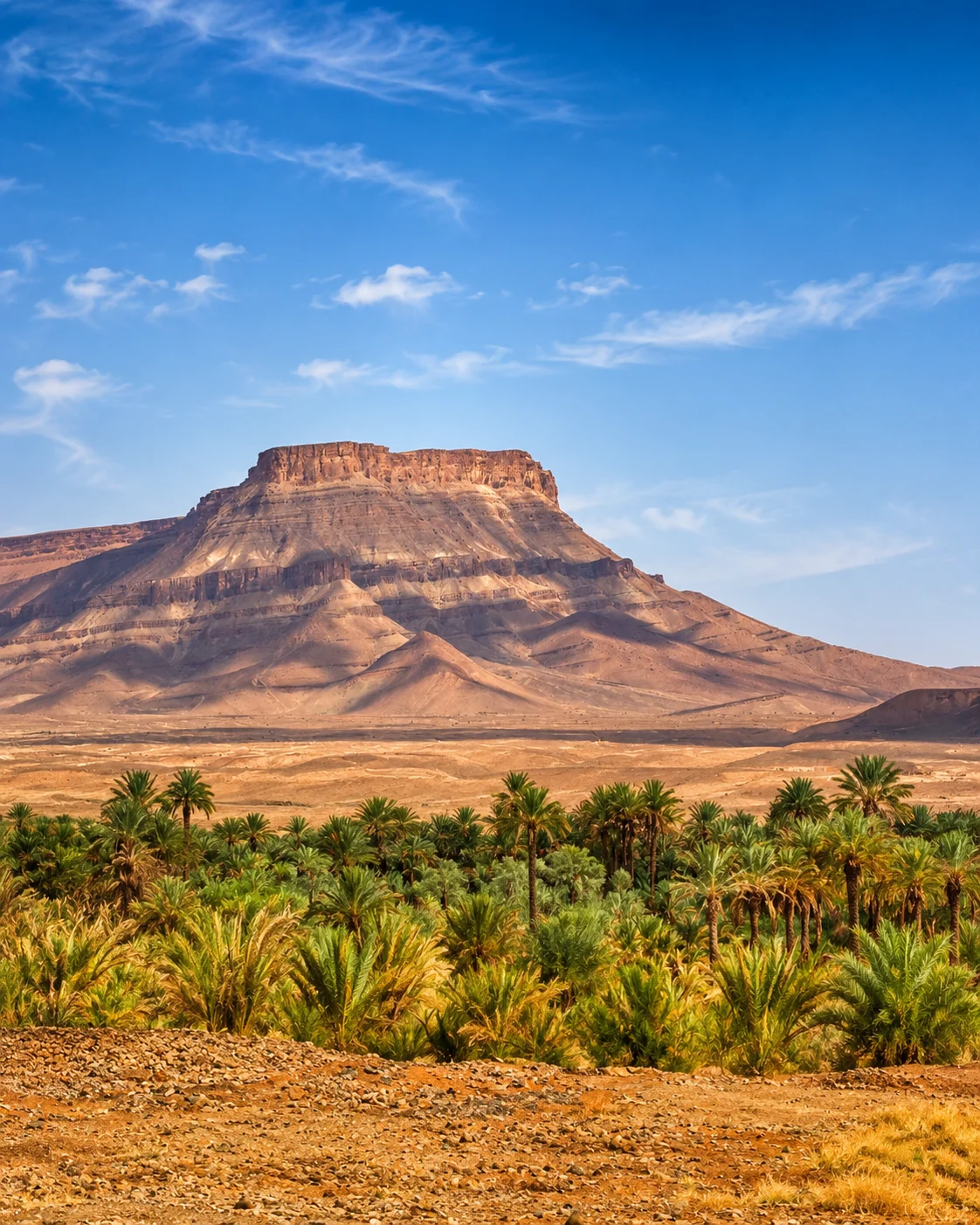
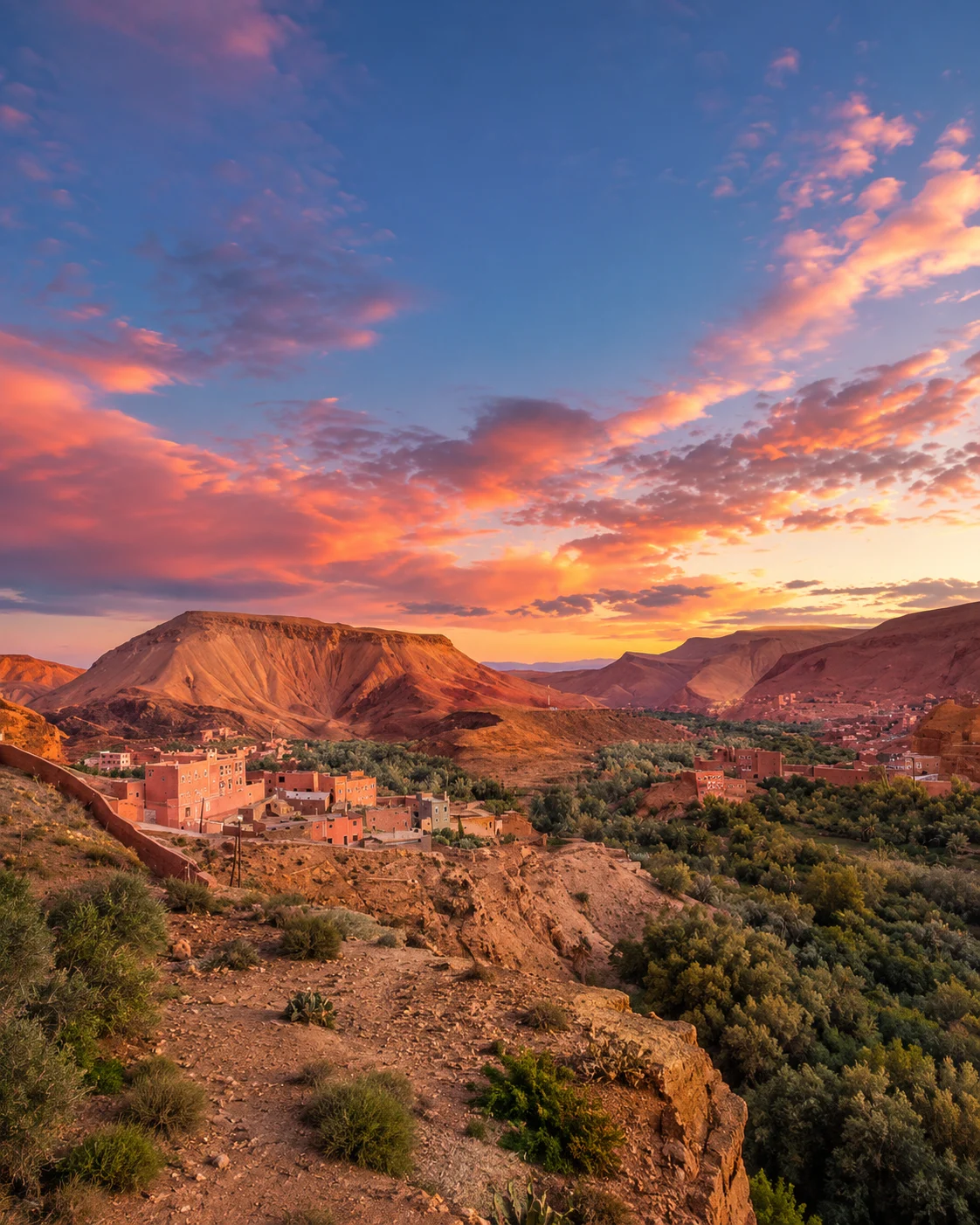
Cultivation and dry ground belong to a managed, inhabited valley.
The visual contrast between cultivated ground and a drier surrounding landscape can be striking, but it is only a beginning. Look for a route, settlement or visible water feature that helps explain how the scene is organised. Ask a local guide about what is active and what has changed. A photograph becomes more informative when its caption can distinguish an observed feature from an assumed story of abundance or scarcity.
Productive land and work deserve the same respect as a home or workshop. Use appropriate paths, ask before photographing people and avoid interrupting activity for a composition. A wider valley image, a carefully explained detail and an urban scene from Zagora can form a balanced account. Keep the place name specific: the Drâa is not a generic stand-in for every Moroccan oasis, and a photograph taken here should not be presented as evidence of conditions across the entire south.
Tangier · American LegationMarrakech · Secret GardenTafraout · Ameln ValleyZagora & the Drâa · Zagora signTangier · Grand SoccoMarrakech · Spice coloursTafraout · Jbel LkestZagora & the Drâa · TamgrouteTangier · Petit SoccoMarrakech · Ben Youssef MadrasaTafraout · Painted RocksZagora & the Drâa · Tinfou dunesWhen you photograph a door, tile panel or carved ceiling, also look at the room or street it belongs to. The relationship can explain scale, function and access. Avoid enhancing colour or removing context in ways that materially misrepresent the place when the image is presented as documentary. An interpretation can be visually expressive while remaining honest about what was photographed and how it is being shown.
Frames, levels, public viewpoints
Courts, thresholds, public space
Forms, settlement, intervals
Valley, water clues, work
The four portraits connect different photographic questions across Morocco. Choose one setting for sustained work, or join selected places within a realistic longer itinerary. Build in time for a second encounter and for days when conditions do not match expectations. The schematic suggests relationships; actual access, travel time and site rules need separate verification.
TangierCity and maritime horizonMarrakechEnclosure and changing lightTafraoutRock and scaleZagora & the DrâaCultivation and settlementA few considered choices make the connections between these places more useful.
Decide in advance how you will ask, explain and accept a refusal. Avoid photographing children as identifiable subjects without appropriate guardian permission and the child's willingness. Do not make a person's circumstances into a dramatic story you have not established. Courtesy should shape the whole interaction, including what is later published.
Museums, religious places, private properties, transport facilities and other sites can have their own restrictions. Confirm what is allowed where you are working, including equipment and publication arrangements. A casual handheld visit does not establish permission for a larger shoot. This page offers a way of looking, not blanket authorisation to photograph.
Before sharing a series, ask whether the captions are accurate, consent covers the intended use and the selection preserves the place's complexity. Remove unsupported claims about identity, age or tradition. A quieter image with clear context may communicate more than the most dramatic frame in the folder.
Historical and geographical references reviewed in September 2026. Route pairings and looking suggestions are Exotic Morocco editorial guidance. Check current access and transport arrangements before travelling. Existing regional library imagery is retained; photographs and illustrations do not establish present-day access or conditions.
Open the individual place guides for local context and a more detailed visit. Return to Regions to compare other landscapes and cultural connections.
A sea view becomes more specific when the city remains in it.
A courtyard can be studied through proportion, shadow and material.
Scale makes a landscape legible without turning people into props.
Cultivation and dry ground belong to a managed, inhabited valley.