

01 · Begin with the ingredients
A pantry is
a way of cooking.
Good ingredients are useful because they do different jobs.
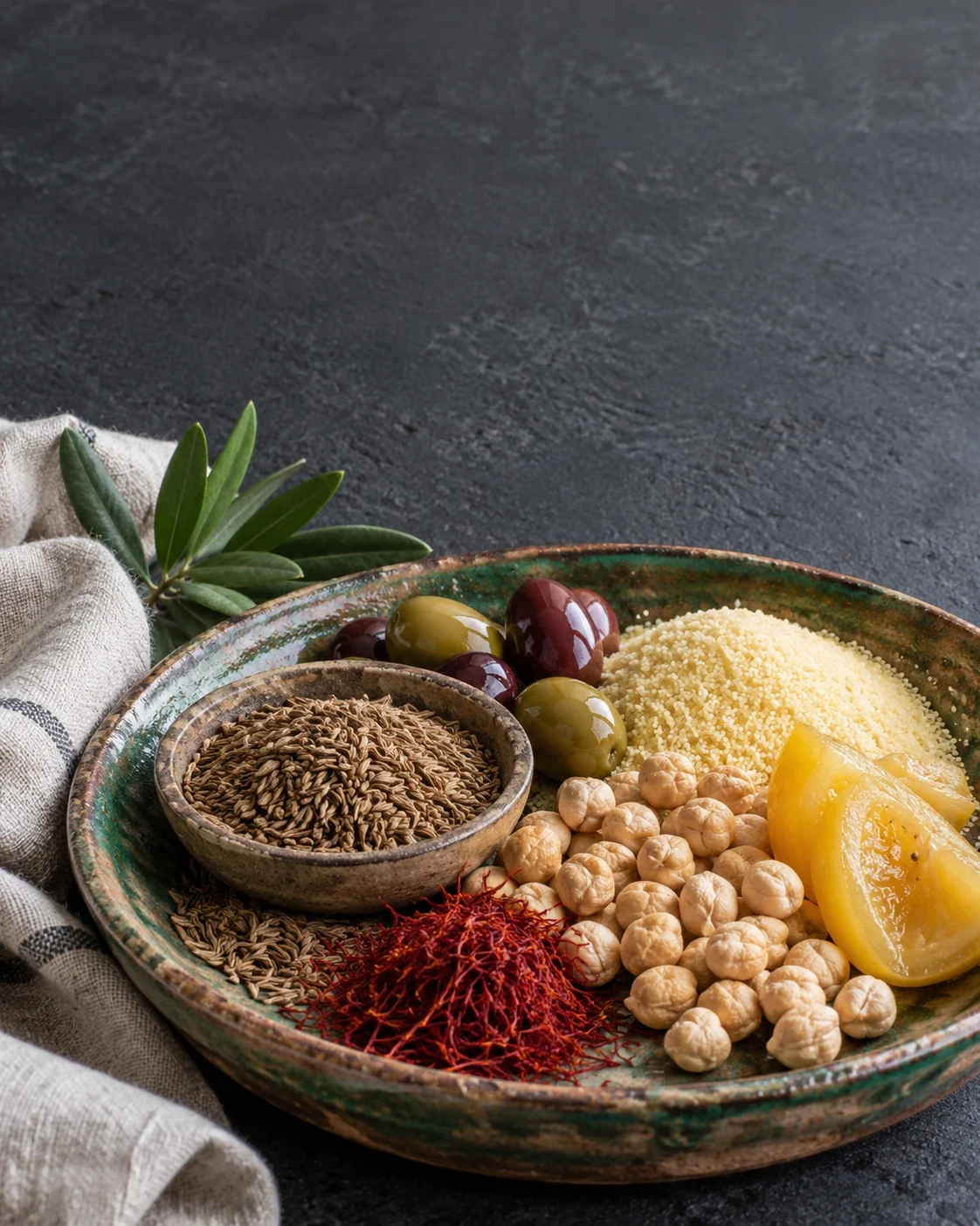
Olive oil carries flavour into a pan. Onion builds sweetness. Cumin gives depth; fresh coriander lifts the finish. A salted lemon brings a citrus note that fresh juice cannot quite replace. Together these choices explain more about Moroccan cooking than a single catch-all spice blend.
There is no fixed national shopping list. A coastal household, a family baking bread every day and a cook making a festive pastilla will stock different shelves. Start with ingredients you can use repeatedly, then add specialised ones for dishes you actually plan to make.
Think in three groups: the dry shelf for grains, pulses and spices; preserved flavour for olives, lemons and oils; and fresh purchases for herbs, vegetables and bread. This page shows what each contributes and where it belongs.
Explore Moroccan food culture ↗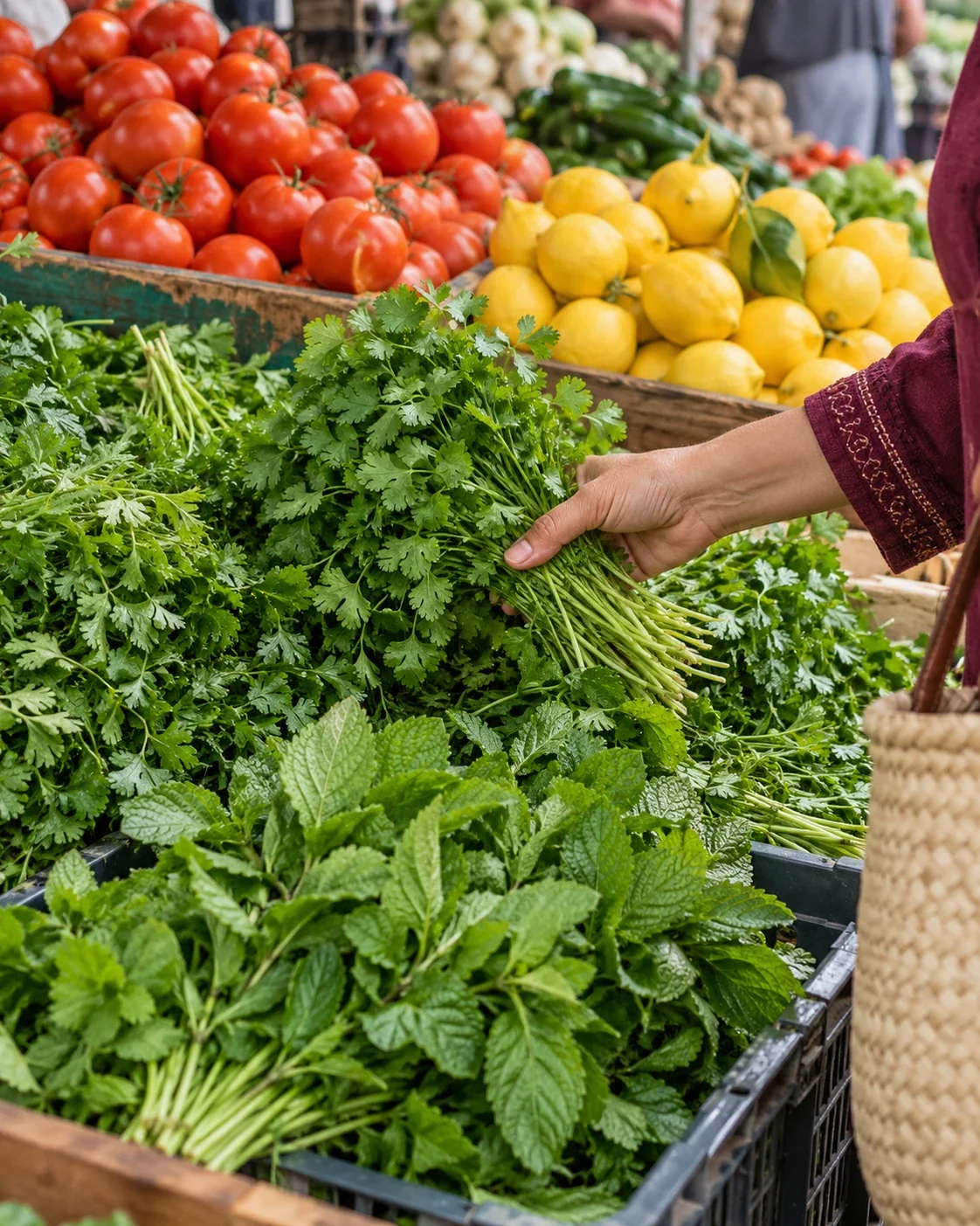
Semolina, chickpeas and lentils provide body, not just seasoning.
Olives, preserved lemon and oil shape the finish.
Buy for the dish and use while lively.
02 · The working pantry
What is kept.
What is renewed.
A shelf reflects cooking habits, seasons and access to the market.
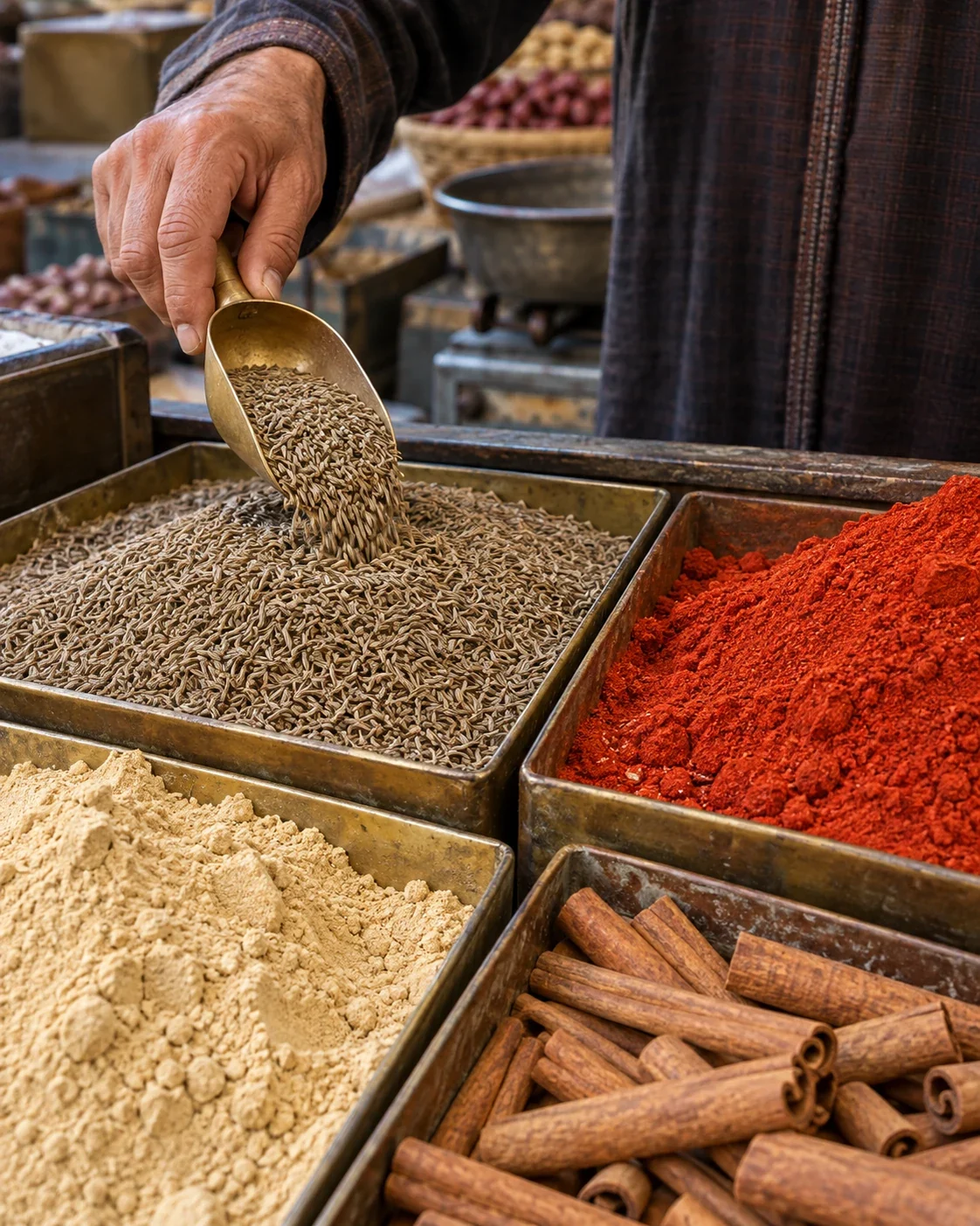
Moroccan cooking has never depended on one universal collection of jars. Regional products matter, but ingredients and habits also travel with families. The same cumin can season a cooked salad, a lentil soup or a grilled preparation; the cook changes the balance each time.
Spices are not the entire story. Bread and semolina, olive oil, legumes, onions, fresh herbs and seasonal vegetables make many everyday meals possible. The most aromatic leaves and the best produce are often bought close to use, while the dry cupboard gives the cook a dependable base.
Keep the base
Store dry staples in sealed, clearly identified containers away from heat and moisture.
Buy fresh deliberately
Parsley and coriander often work together in savoury cooking; mint has its own place in tea and other uses.
Add the particular
Saffron, culinary argan oil or a blend such as ras el hanout is chosen for a recipe, not assumed in every dish.
03 · The substantial shelf
Grain and pulse.
Structure and comfort.
These ingredients feed a household in different ways. Keep their forms and uses distinct.
Coarse and fine durum semolina behave differently in dough, porridge and couscous. Dried chickpeas and lentils need their own cooking treatment. The pantry label should tell you what is actually inside, rather than reduce everything to “grain”.
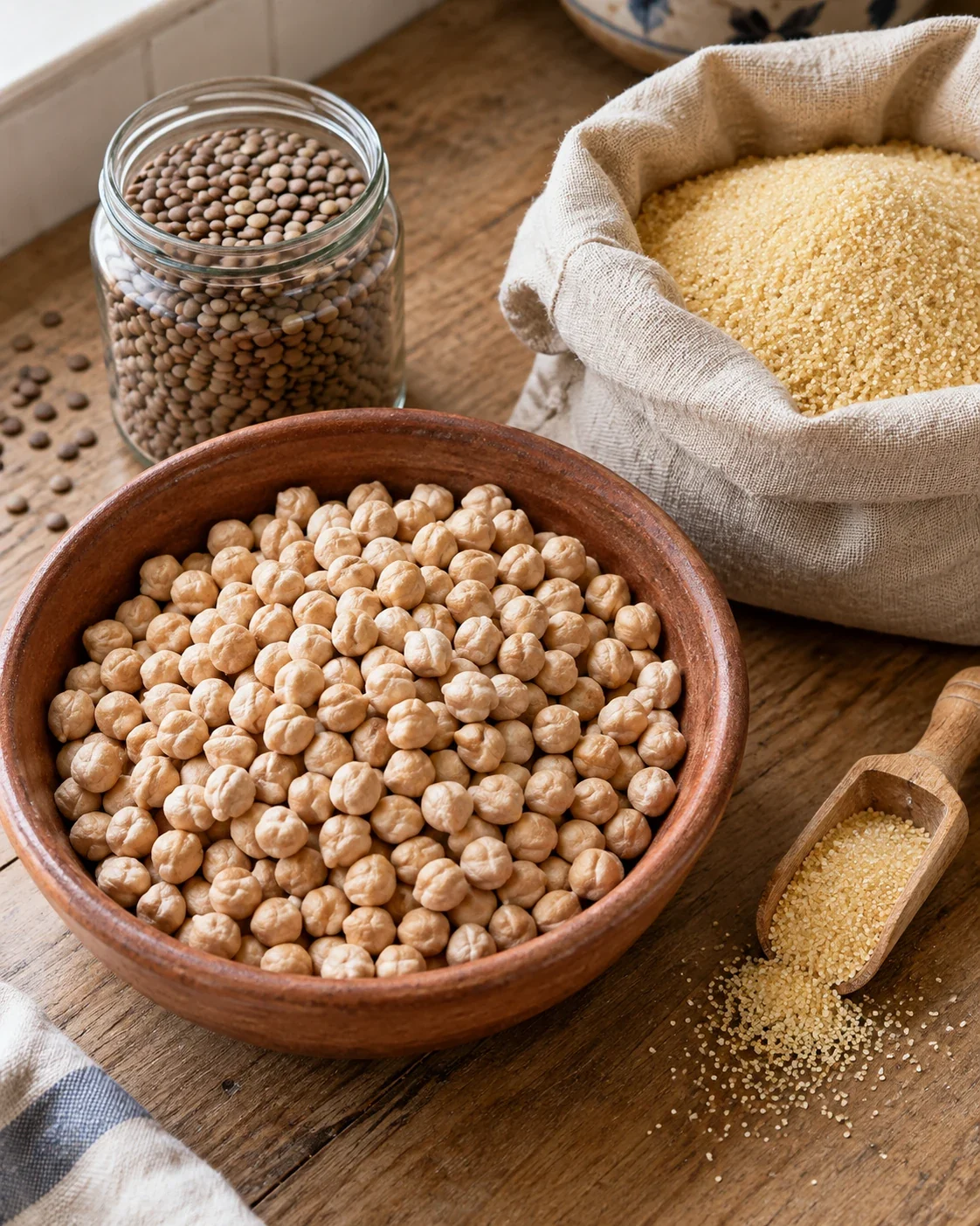
Durum semolina
A wheat product central to many breads, griddle cakes and couscous. Granulation matters: the coarse grains used for one preparation cannot always replace fine semolina used for another.
Chickpeas
They bring substance to harira, couscous and many home dishes. Dry and cooked chickpeas are useful pantry forms, but their preparation and seasoning differ.
Lentils & other pulses
Brown or green lentils can build a modest soup or support a richer dish. Keep old and new stock separate so cooking results remain predictable.
The pantry is more useful when every container has a purpose you understand.
04 · Five ingredient families
Know the role.
Choose the ingredient.
The pantry becomes clearer when you ask what a product contributes: body, aroma, fat, acidity, sweetness or salt.
These are examples rather than a mandatory list for every home or every recipe.
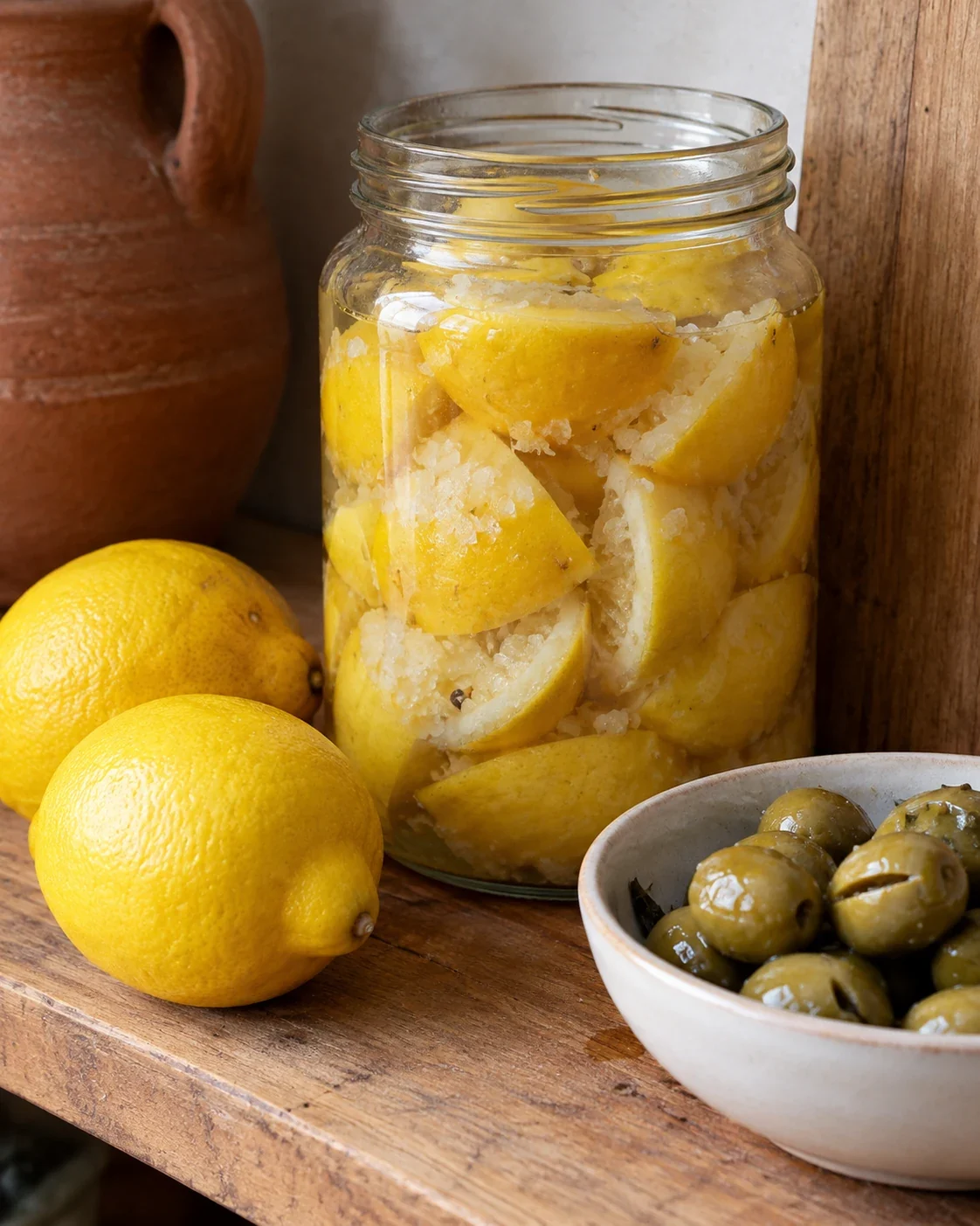
Preserved lemon
Salt curing changes the peel: it becomes tender, aromatic and distinctly savoury. Use it where that flavour is needed; fresh lemon juice brings another kind of brightness.
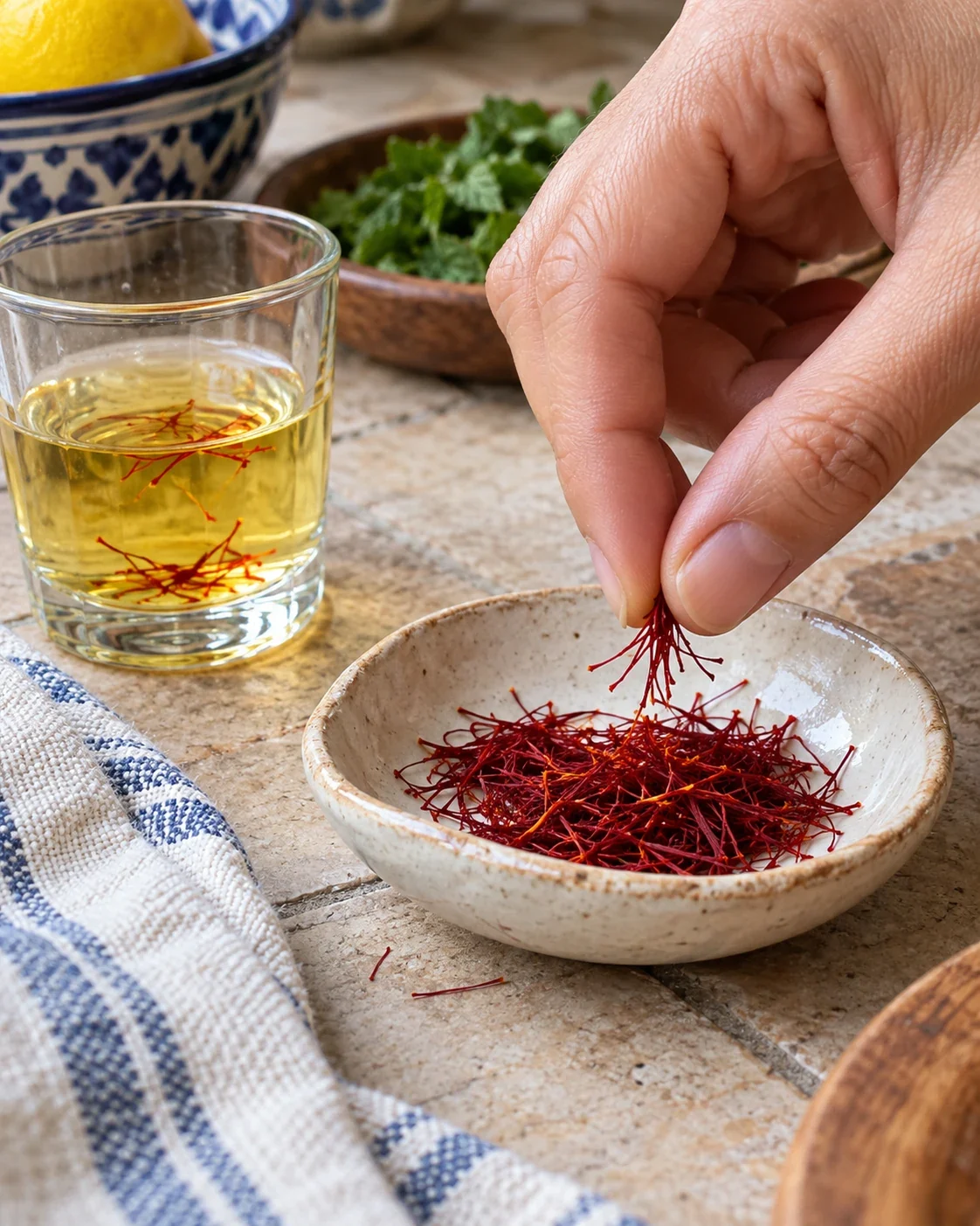
Saffron threads
A small amount can perfume a broth or sauce. Choose real threads and use the ingredient intentionally. A bright yellow powder is not proof of saffron.
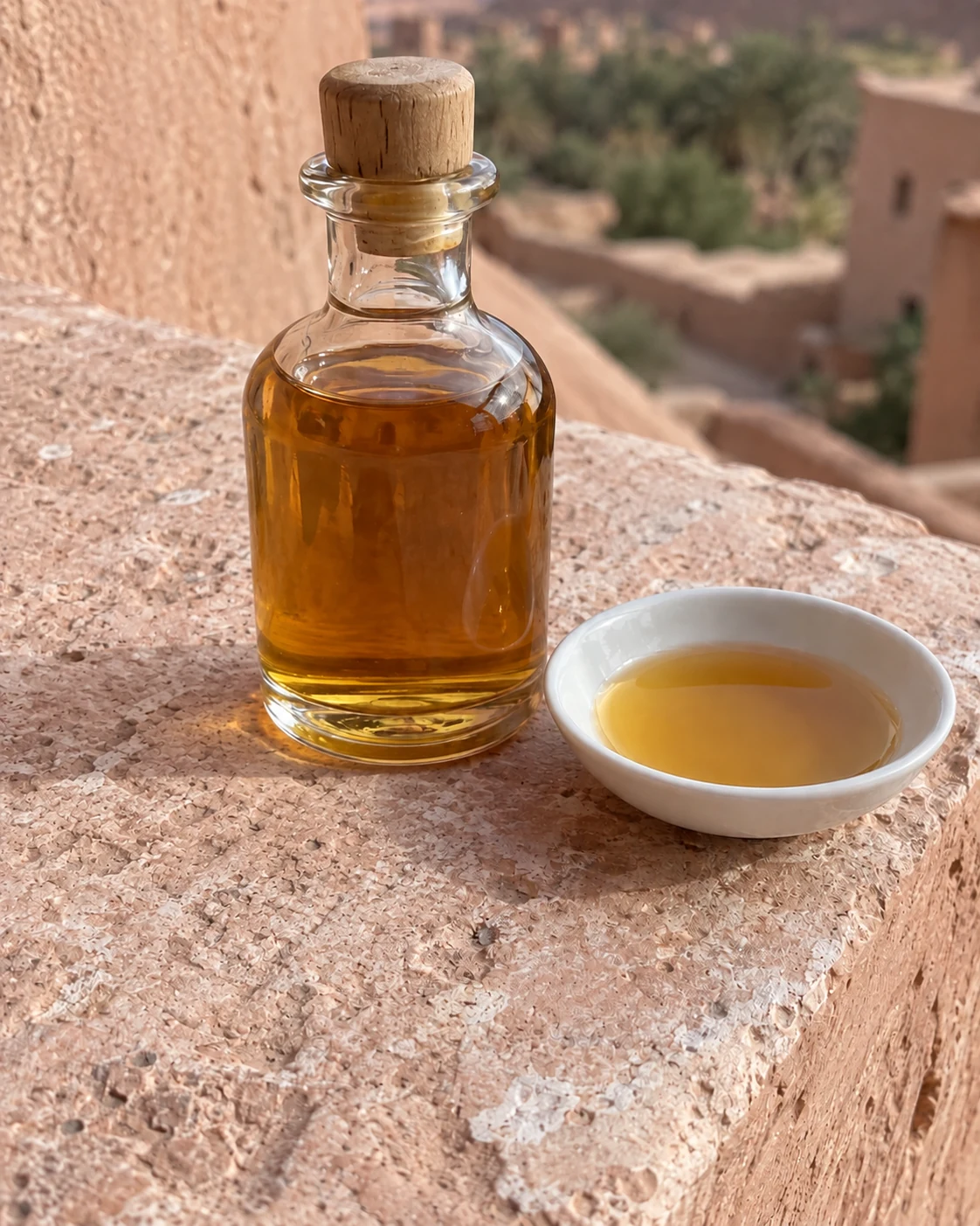
Culinary argan oil
Roasted-kernel culinary oil has a nutty character. It is associated with southwestern Morocco and amlou; it is not a blanket substitute for olive oil in every hot pan. Butter and aged, salted smen have separate uses.
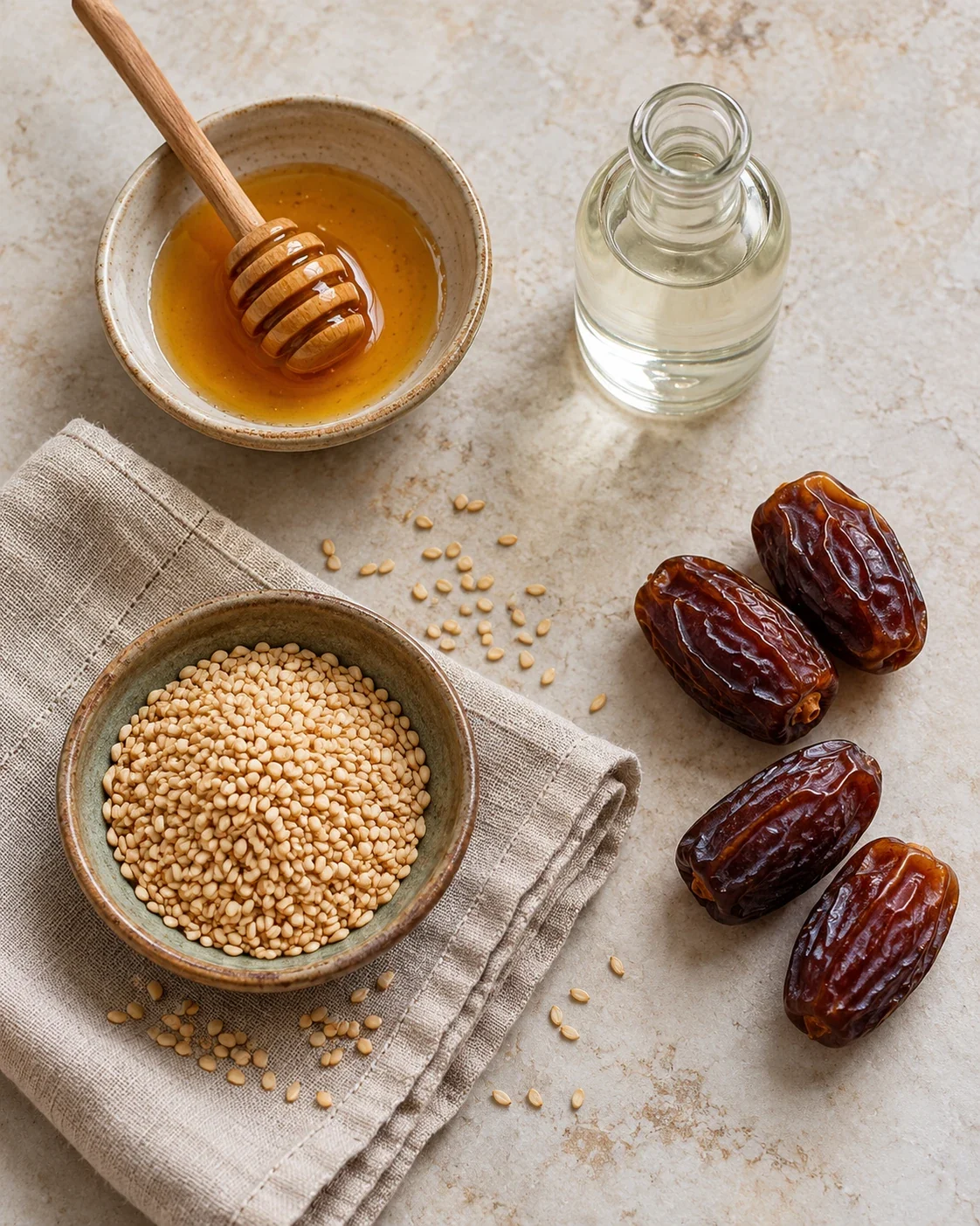
Honey & orange blossom
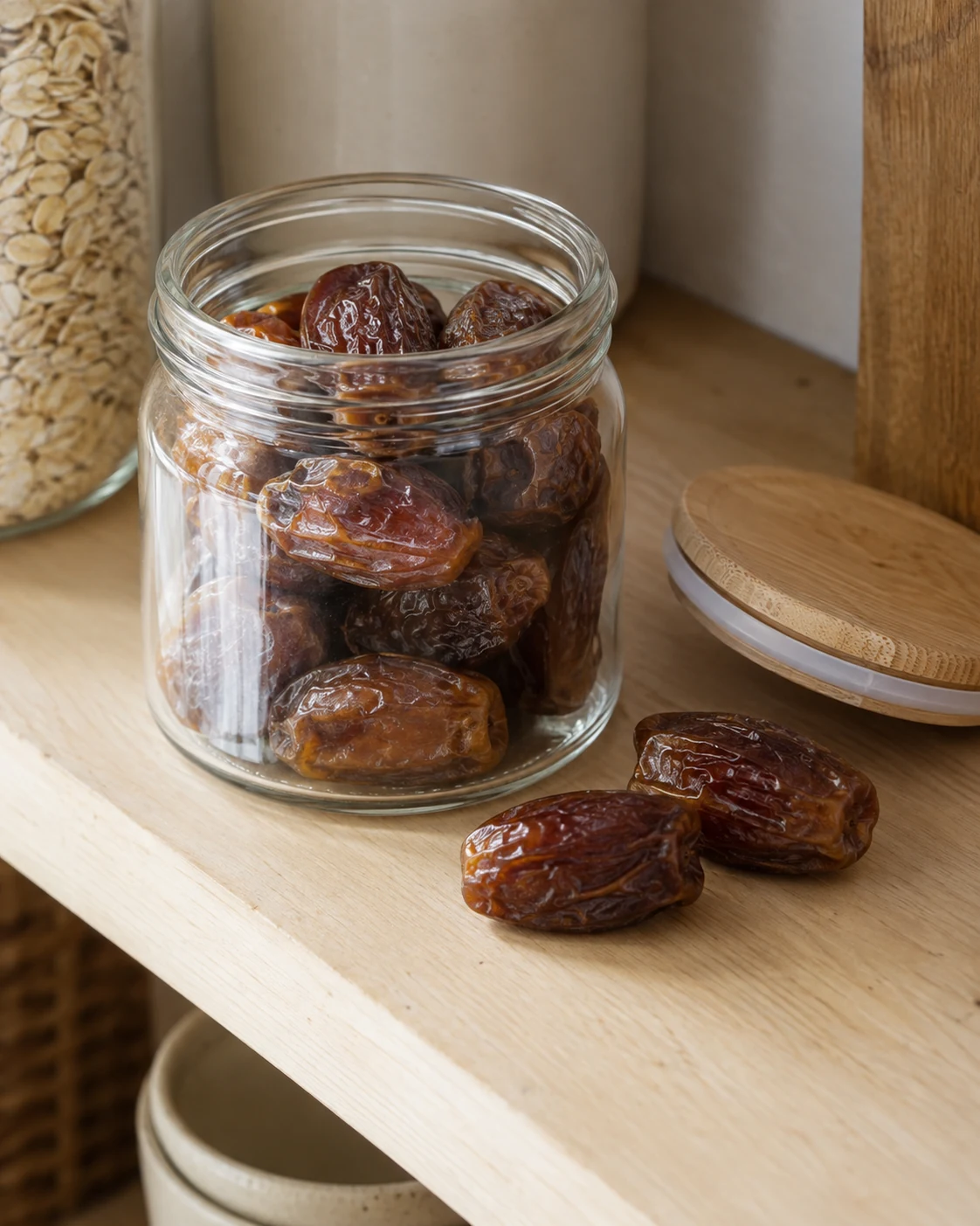
Honey, dates, sesame and orange blossom water have different roles in pastries, spreads and some savoury contrasts. Use each for its particular aroma or texture.
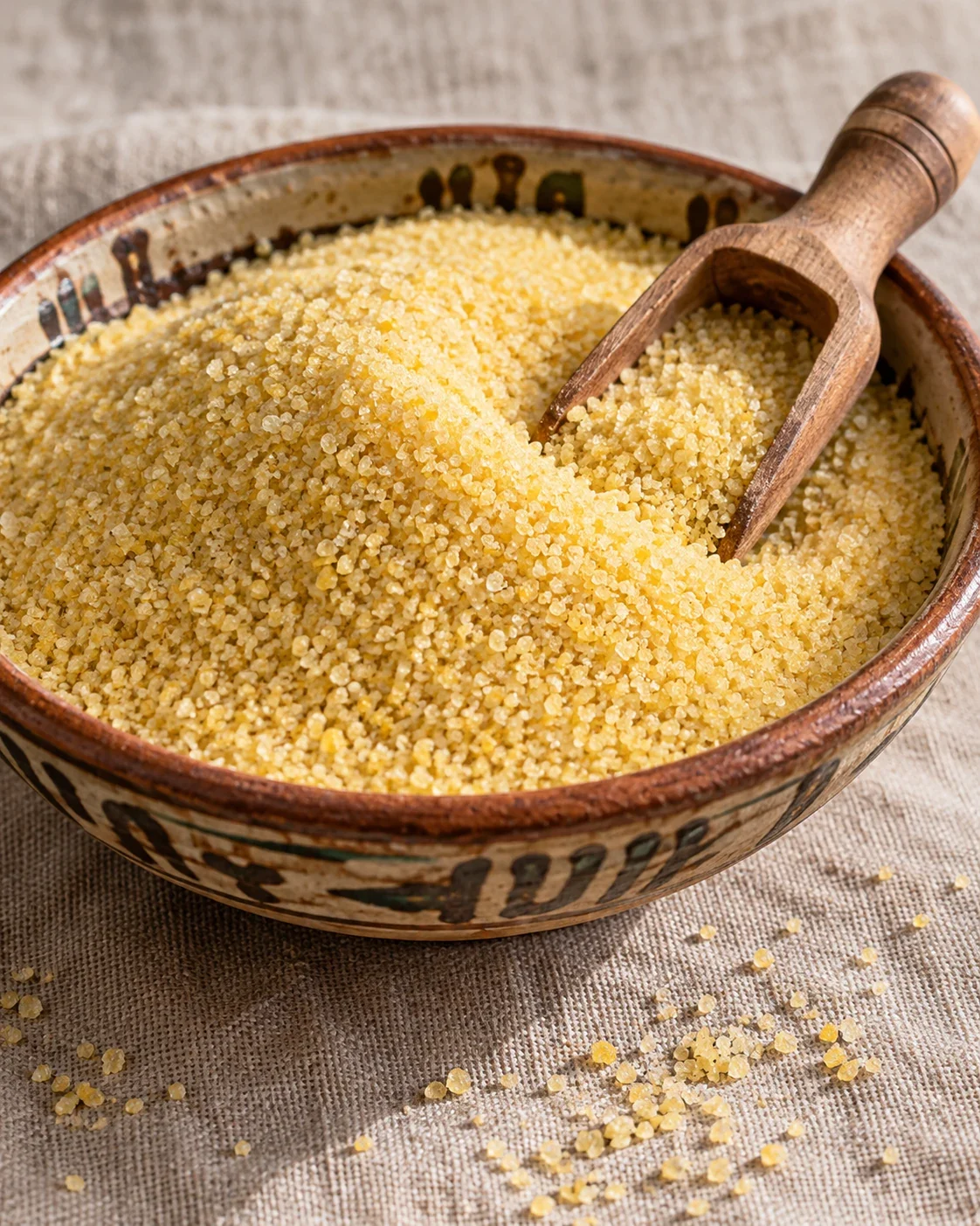
Semolina in many forms
The size of the grain changes what it can do: bread, harcha, porridge and couscous ask for distinct handling. Read the grind before you choose a recipe.
Ras el hanout is a blend.
Its contents vary by maker and seller. Buy a version you can smell and identify, then use it in a dish that actually calls for it. Cumin, ginger or paprika often do more precise work on their own. Fenugreek has a more specific place, including some rfissa preparations.
Harissa is a choice.
Chilli heat has a place in some kitchens and condiments, but it does not define Moroccan cooking. A fragrant dish can be entirely mild. Dried fruit and nuts are likewise selected for a particular dish, not added to every savoury pot.
05 · The everyday essentials
Small amounts.
Clear purpose.
These four ingredients appear in different corners of the Moroccan table. None belongs automatically in every dish.
Buy enough for your own cooking rhythm. Freshness and the right type matter more than a crowded shelf.
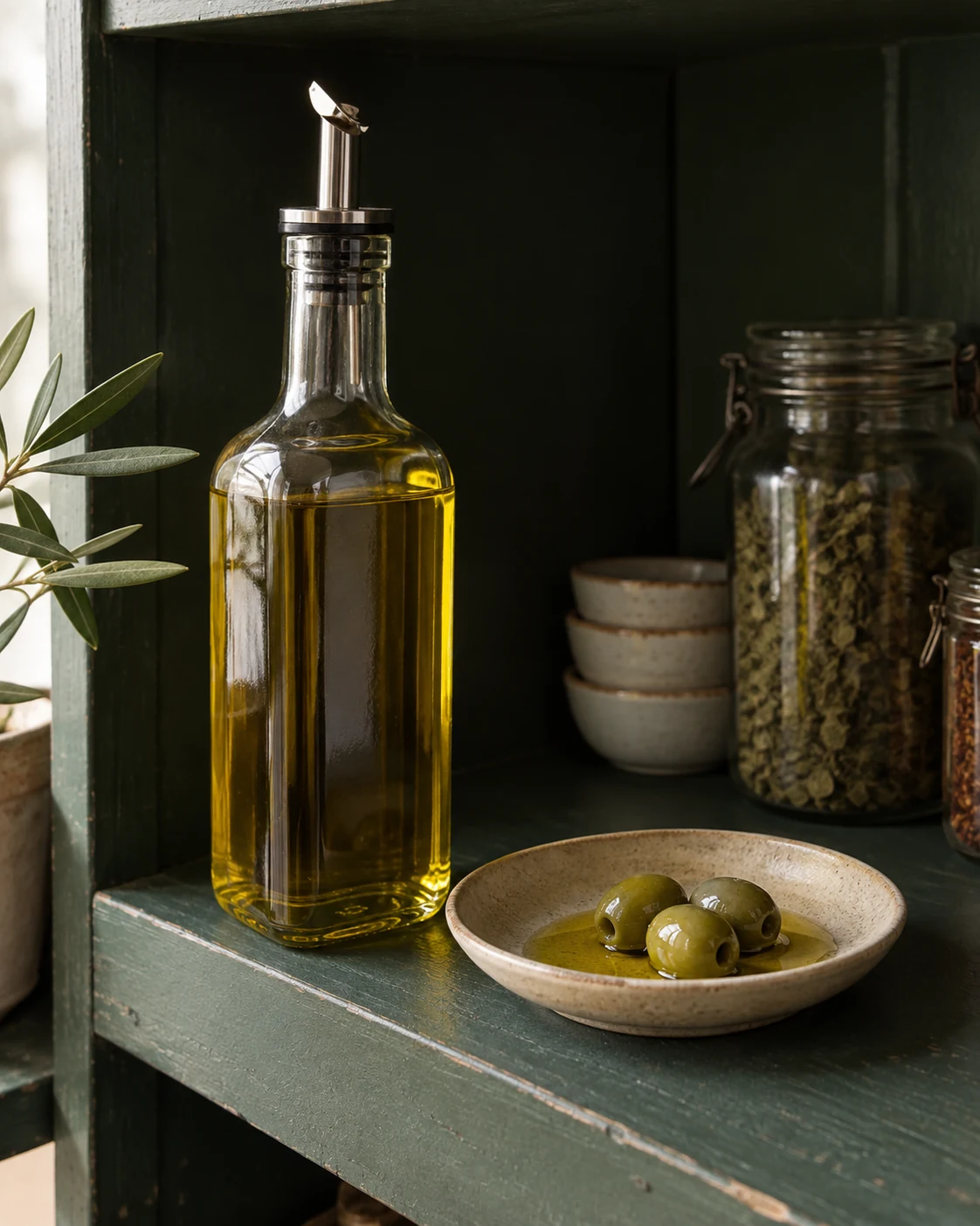
Olive oil & olives
Fat, salt and bite.
Oil carries aromatics through cooking and at the table; olives bring brine and texture. Taste their salt before adjusting a dish.
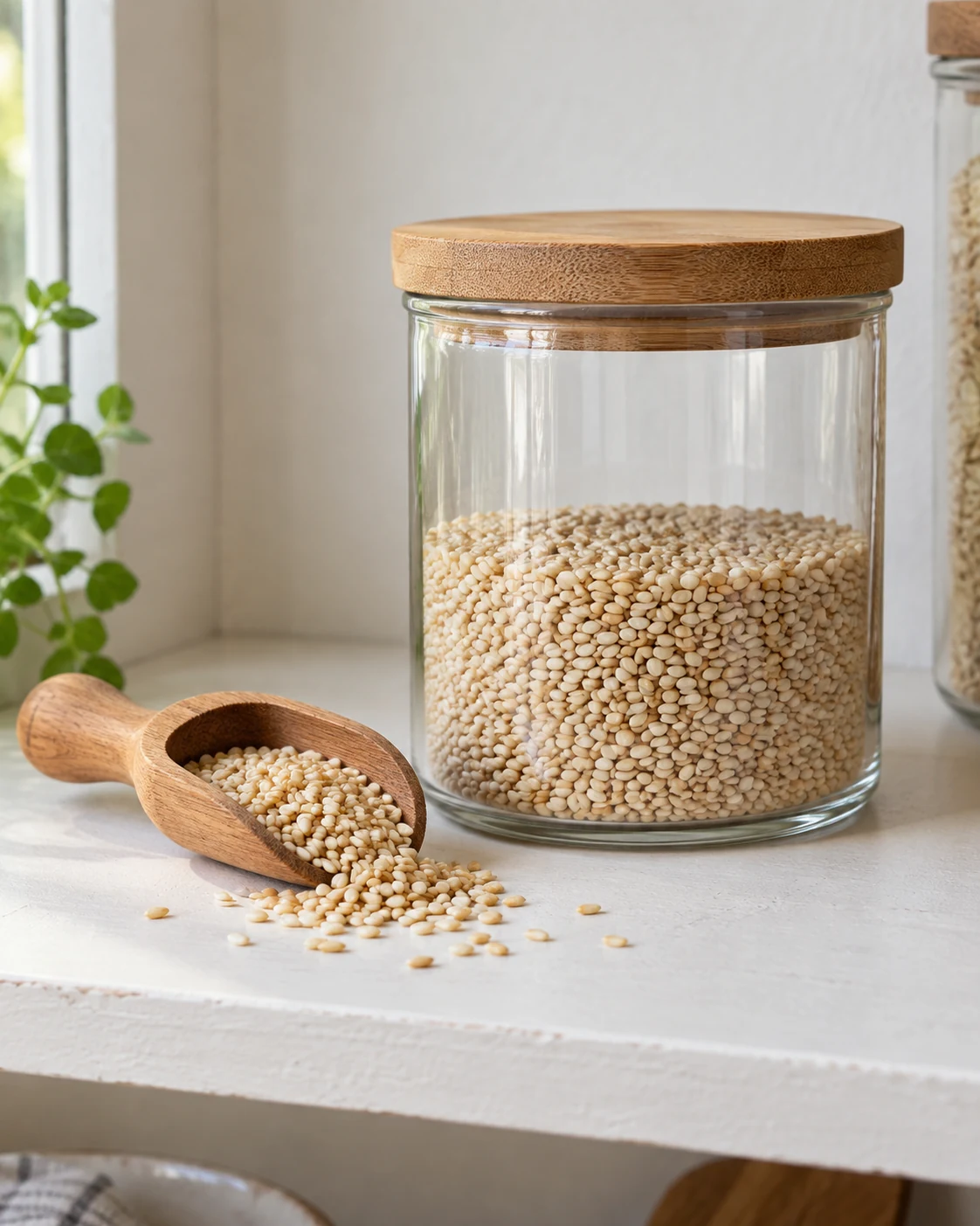
Sesame
Toast, crunch and fragrance.
Whole seeds can finish bread and sweets, while toasted sesame brings a different character to a preparation such as sellou.
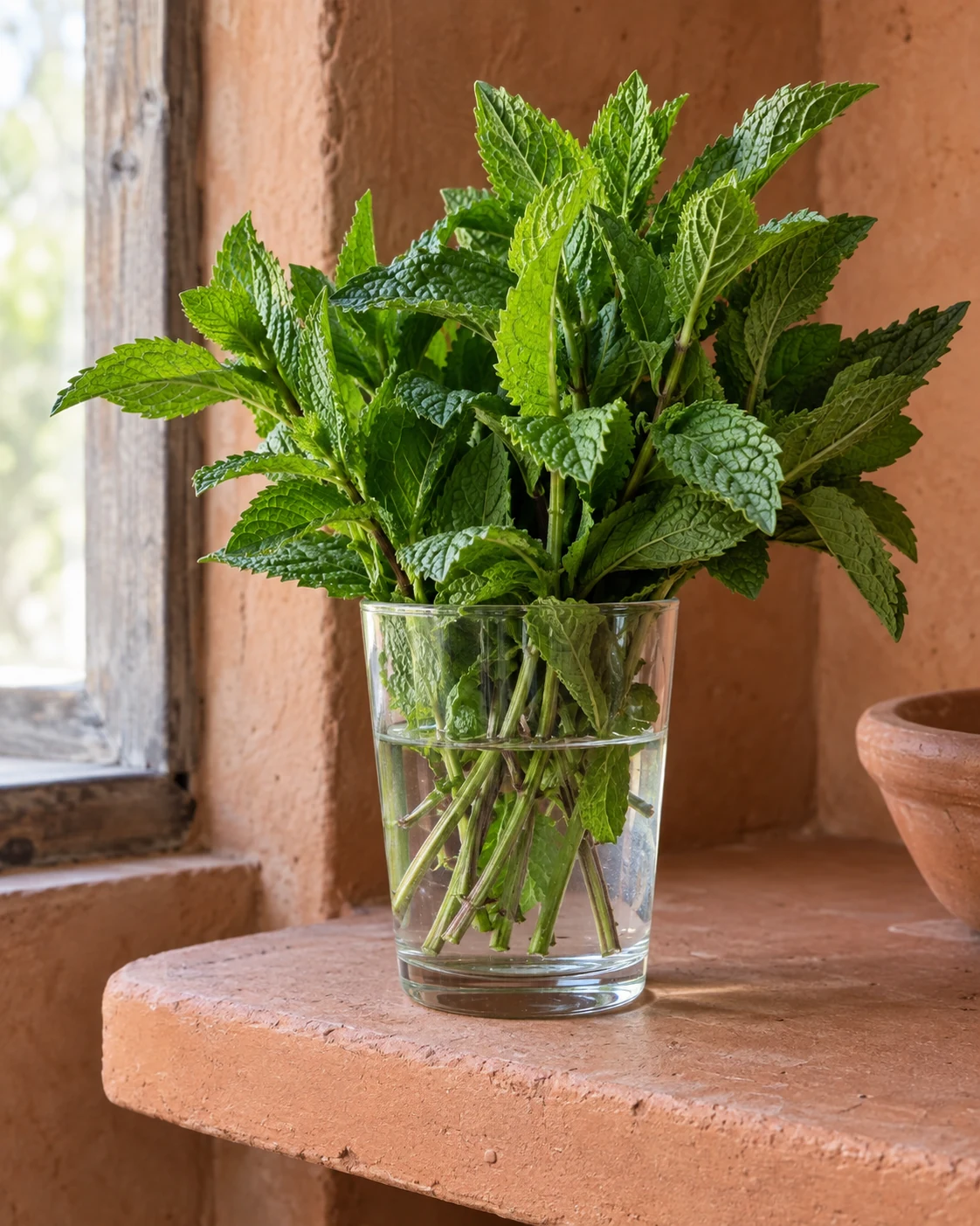
Mint & fresh herbs
Choose by use.
Fresh mint is strongly associated with tea. Parsley and coriander do much of the savoury work in sauces, marinades and cooked dishes.
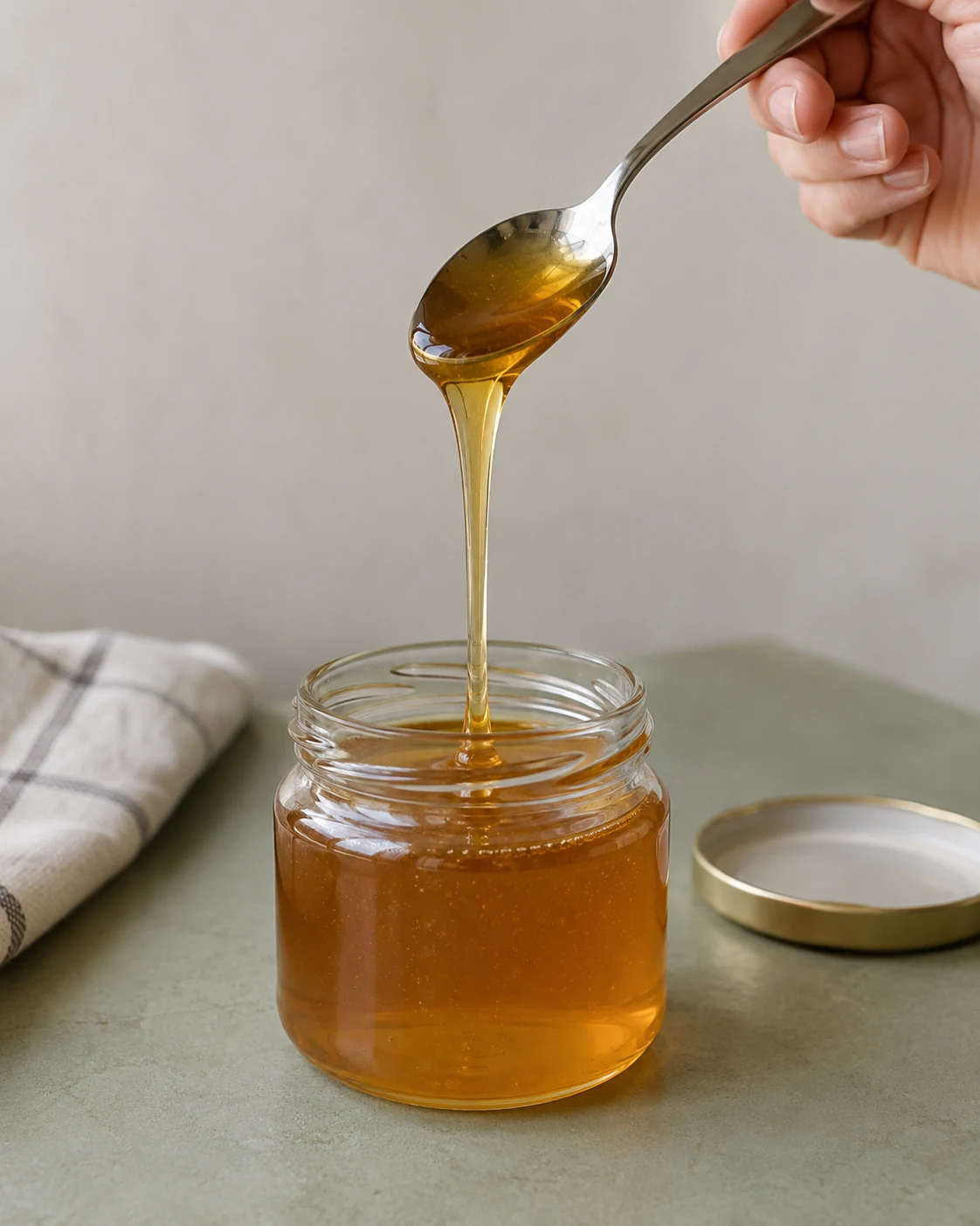
Honey
Sweetness with character.
Honey can finish bread or enter a pastry. Its flavour and strength vary; it should support a dish rather than cover its other ingredients.
A useful balance
Build flavour in layers.
Start from the dish: onion or garlic for a savoury base, a chosen spice for warmth, an oil to carry aroma and a fresh or preserved finish.
Ginger, cumin, paprika, turmeric, cinnamon and pepper have distinct tasks; they are not one inseparable formula.
Fresh herbs, tomato and fresh lemon offer immediate lift. Preserved lemon is saltier, rounder and more concentrated.
Olives, nuts, sesame or a little sweetness may make sense for a specific preparation. Taste before adding more.

06 · Place and season
Where it grows.
What arrives today.
A market changes the menu before a recipe begins.
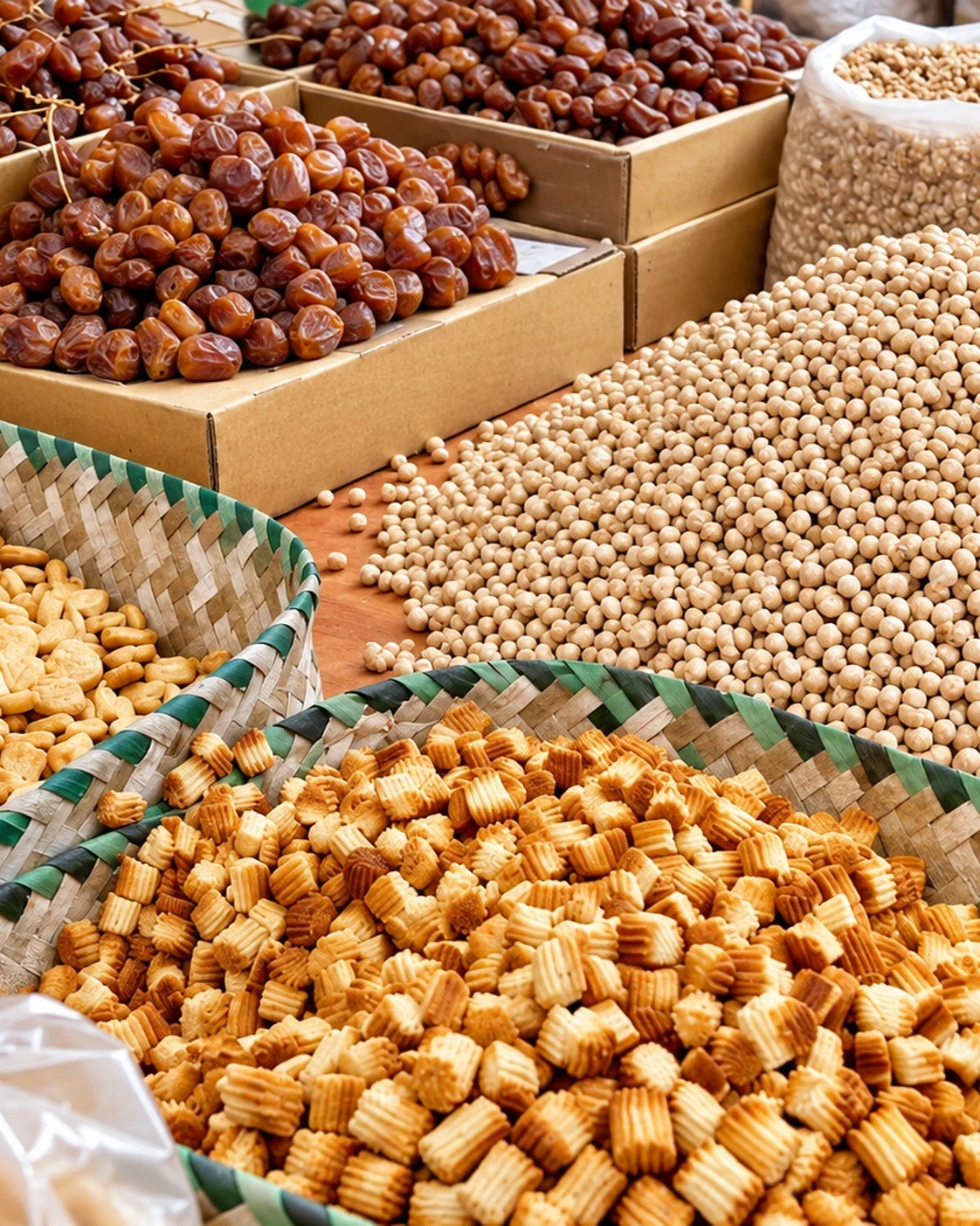
The pantry includes products with identifiable places of production, but no one region owns the whole Moroccan kitchen. Saffron is produced around Taliouine; argan practices belong to communities in the southwest. Dates, olives, grain and fresh produce travel through markets and families in many forms. [2]
Ask the useful questions: Is the herb lively? Is the olive cured the way this dish needs? Are the dates soft enough for the intended use? Ingredient quality is concrete, not a romantic claim about an “authentic” market.
Saffron country
Taliouine is one documented centre of Moroccan saffron production. Its provenance is meaningful, but saffron remains a specialist ingredient.
Argan knowledge
Harvesting and processing argan fruit involve skilled local knowledge recognised by UNESCO. Choose edible culinary oil for the table.
Daily produce
Tomatoes, onions, herbs and seasonal vegetables should be chosen for freshness, price and the dish being cooked.
07 · From shelf to meal
A few good choices.
Many different dishes.
The same ingredient changes character with its companions.
Cumin beside tomato and cooked aubergine helps shape zaalouk; chickpeas and lentils give body to harira; semolina becomes bread or couscous through entirely different handling. A pantry works when it helps you see these relationships rather than promising one “Moroccan” taste.
Think about contrast before quantity. Salty olives can make extra salt unnecessary. Preserved lemon can take the place of a little acidity and seasoning, while a fresh herb at the end can wake up a rich sauce. These are judgments to make for a particular pot.
Choose one dish. Check the grain or pulse, the fat, the key spice and the fresh finish it genuinely needs. Add new ingredients as your cooking grows.
08 · Knowledge behind the ingredient
Before the shelf,
many skilled hands.
A product carries a method, not only a label.
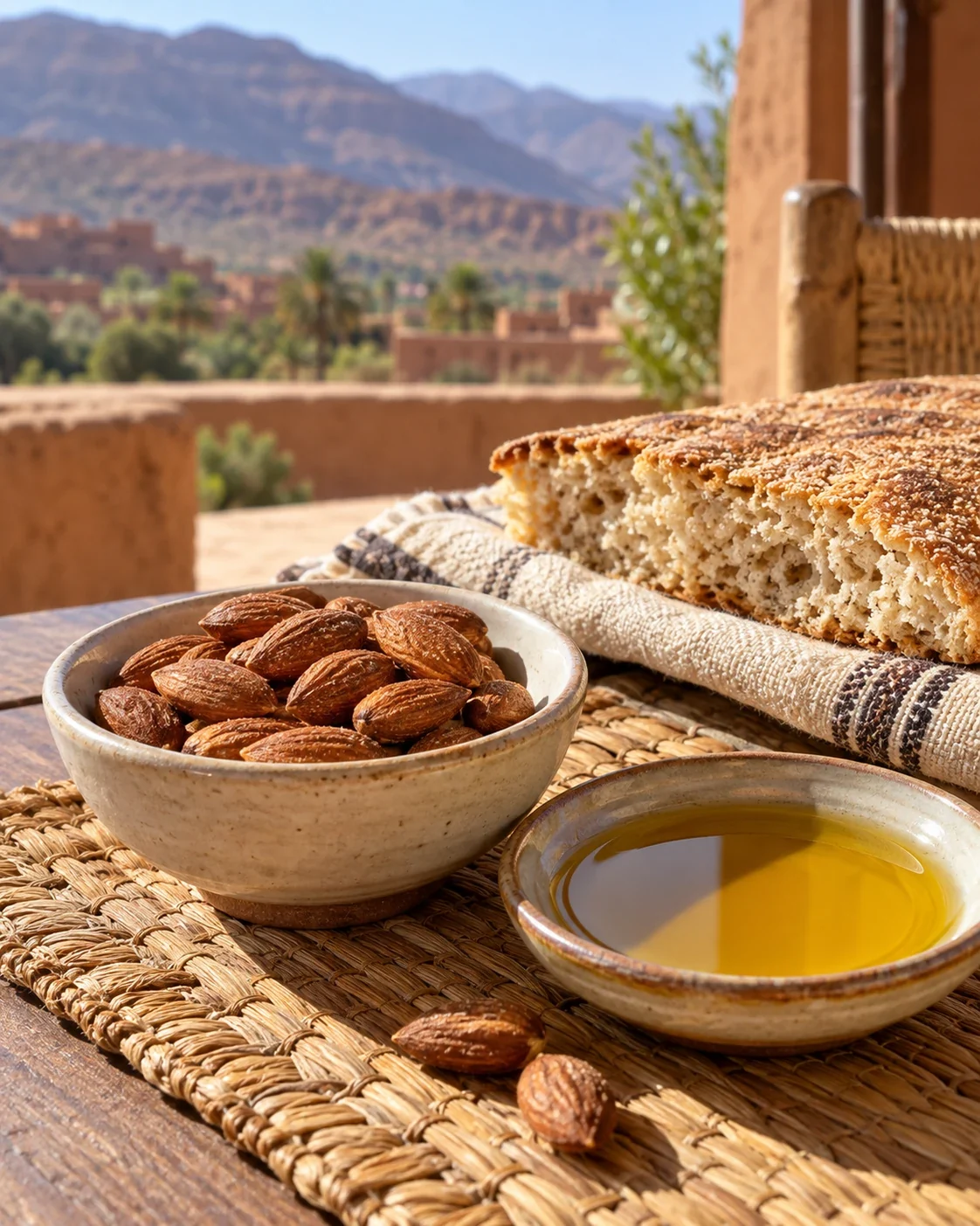
Argan is a useful example. The tree and the knowledge around gathering and processing its fruit belong to a particular landscape and communities. UNESCO recognises practices including harvesting, drying, pulping, grinding and milling. Culinary argan oil is a food product; cosmetic oil is not an ingredient for the pan. [3]
Other pantry goods ask their own questions. Cured olives vary in salt and texture. Preserved lemons gain their character through salt and time. Spices lose aroma if they linger too long near heat and light. Buying well means paying attention to process and condition.
Continue exploring Taste ↗09 · A closer look
Good questions.
Useful answers.
Build a pantry you will actually cook from.
Do I need ras el hanout to cook Moroccan food?
No. It is a variable blend, useful in particular dishes. Many Moroccan preparations rely on a more focused choice of cumin, ginger, paprika, turmeric, pepper or another individual spice.
Can fresh lemon replace preserved lemon?
It brings acidity but a different flavour. Salt-preserved peel is tender, salty and aromatic. Use fresh lemon when the dish calls for fresh brightness, not as an identical replacement.
Is Moroccan cooking always spicy-hot?
No. Fragrance and chilli heat are different things. Many dishes are warm with spice yet mild; hot condiments can be offered separately or used in a particular preparation.
Is cosmetic argan oil suitable for cooking?
No. Buy a food-grade culinary product for eating. Cosmetic products may be processed or labelled for external use rather than food.
What should I buy fresh rather than stock for months?
Parsley, coriander, mint and most vegetables are best chosen for the meals you plan to cook. Dry grains, pulses and whole spices can form the shelf base when kept appropriately.
How do I start without buying everything?
Begin with a dish you want to make and a small versatile set: an appropriate grain or pulse, olive oil, onion, a few specific spices and fresh herbs. Add olives, preserved lemon or specialist products when the recipe genuinely needs them.
 EXOTIC MOROCCOTASTE · THE GUIDE COLLECTIONThe Moroccan PantryIngredients, technique
and the Moroccan table
From the story to your kitchen
Keep the flavour.
Go a little deeper.
Get to know the ingredients before choosing a dish.
Explore the Exotic Morocco guide collection for a closer look at ingredients, kitchen knowledge and the culture around the table.
- Understand the ingredients and their roles
- Recognise the techniques and textures that matter
- Bring context and confidence to the way you cook and serve
Continue tasting Morocco
Follow the
table outward.
Another dish, another technique, another way into the Moroccan kitchen.
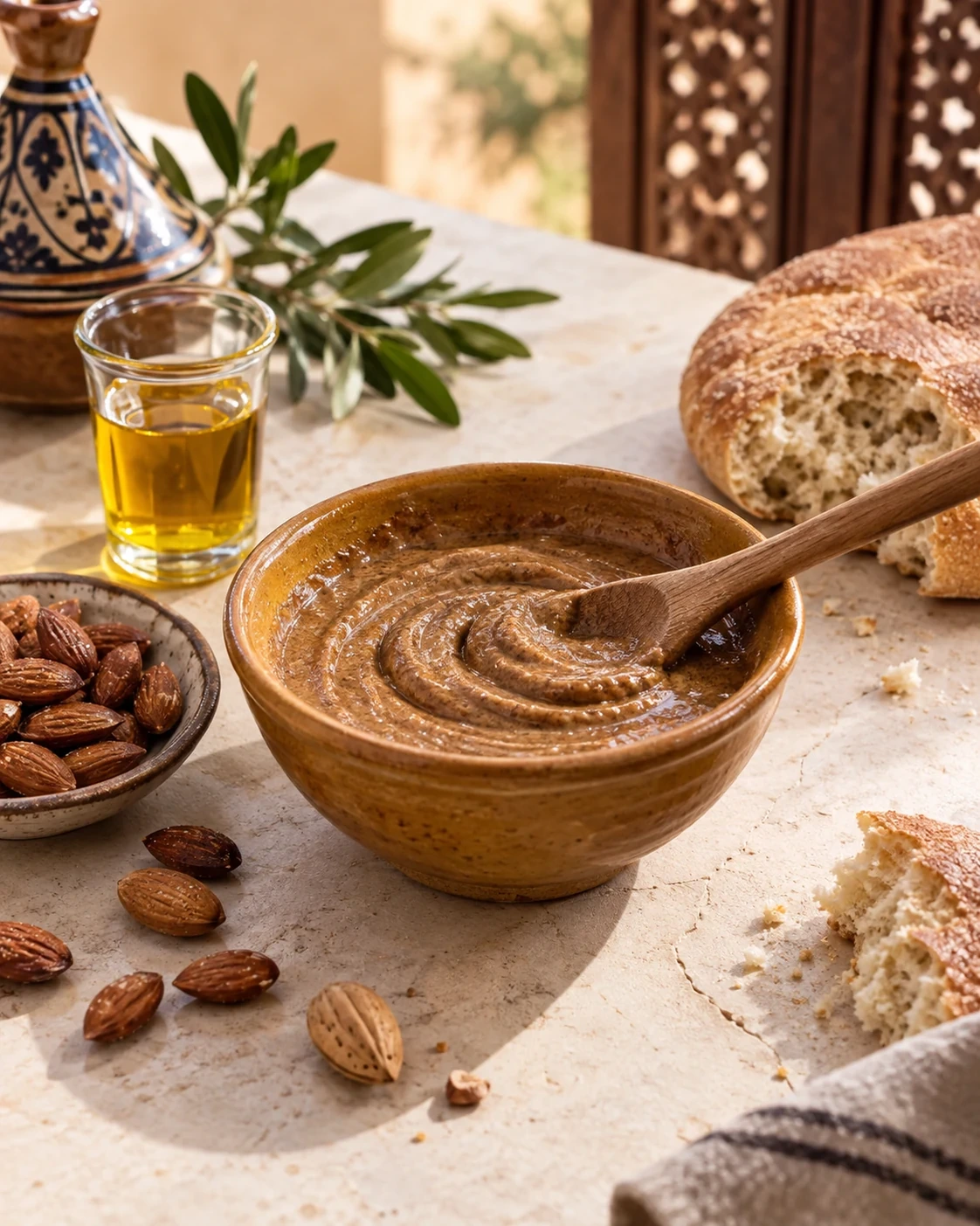
Amlou
Roasted almonds, culinary argan oil and honey from the southwest.
Explore the story ↗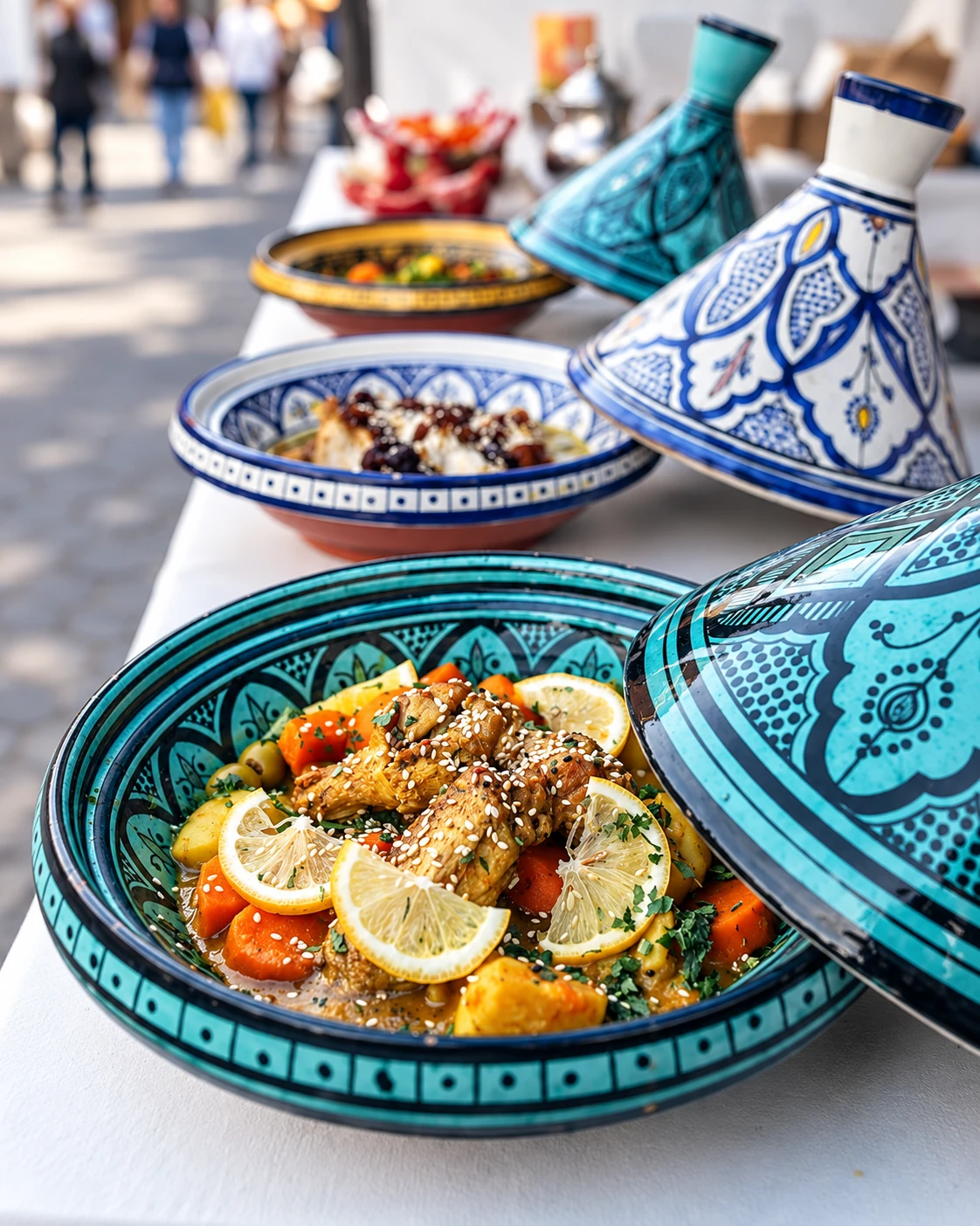
Tagine
Gentle heat, clay pots and the balance of a slow-cooked sauce.
Explore the story ↗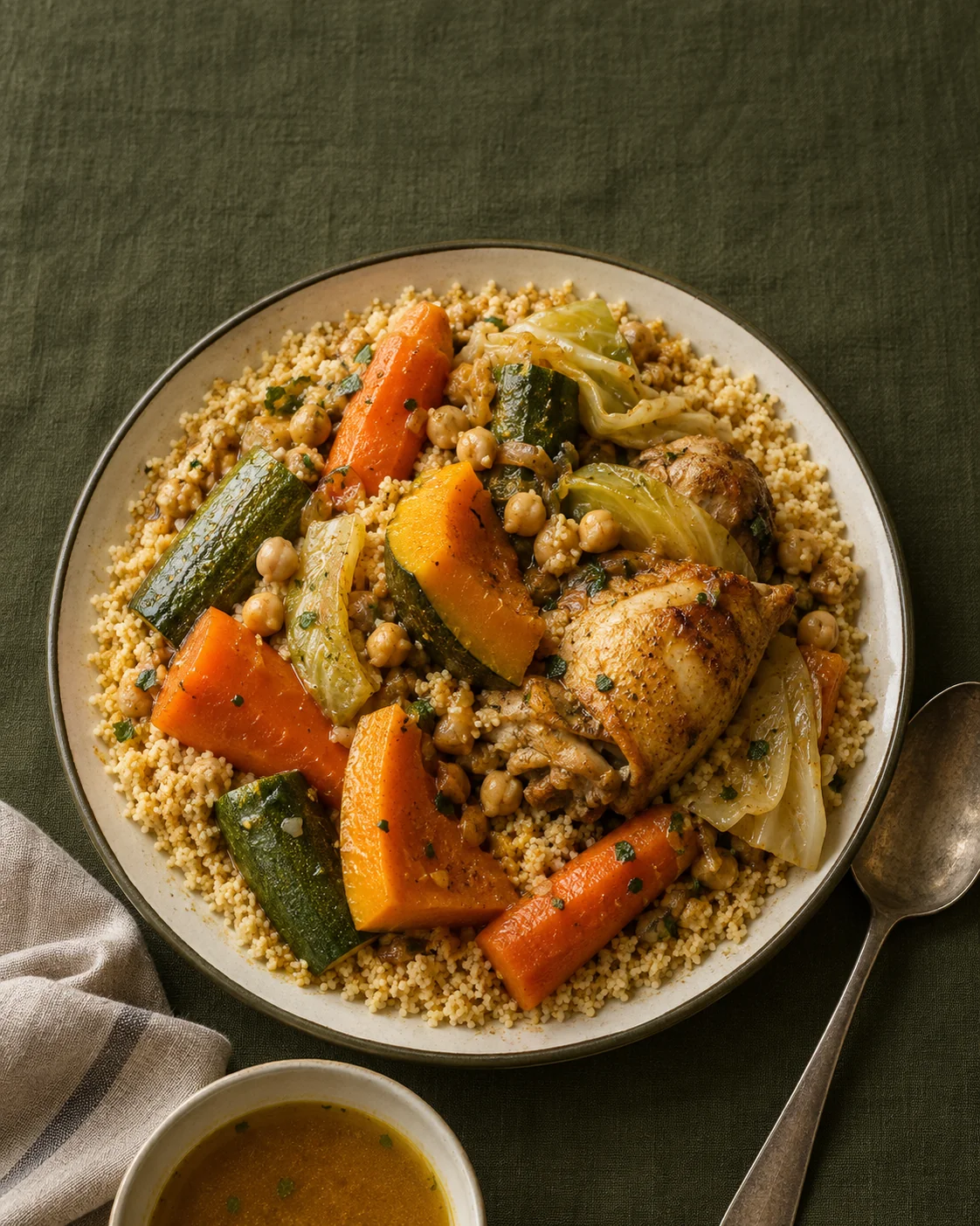
Couscous
Grains, steam and the many ways a shared platter comes together.
Explore the story ↗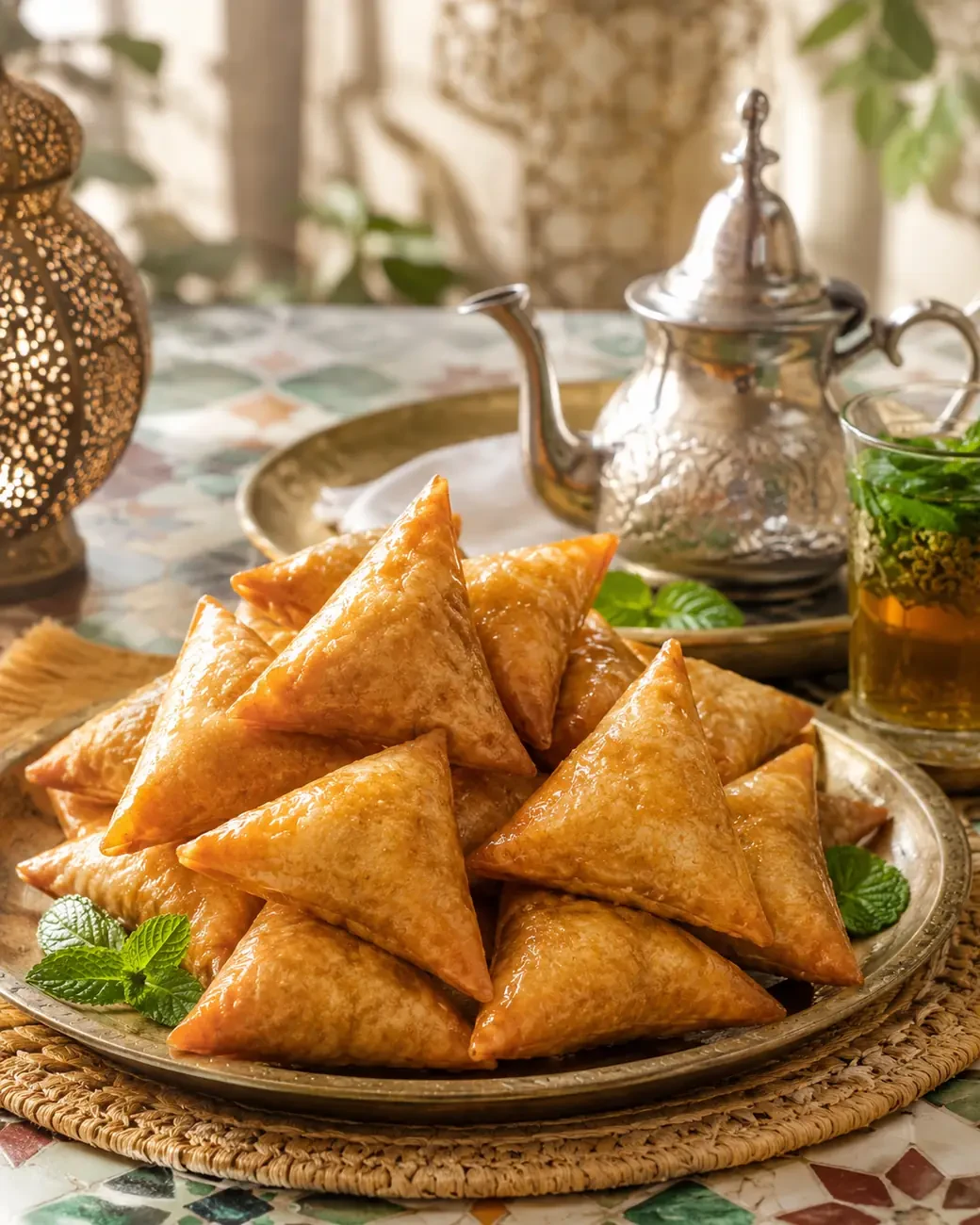
Briouats
Small folded pastries, with both savoury and sweet possibilities.
Explore the story ↗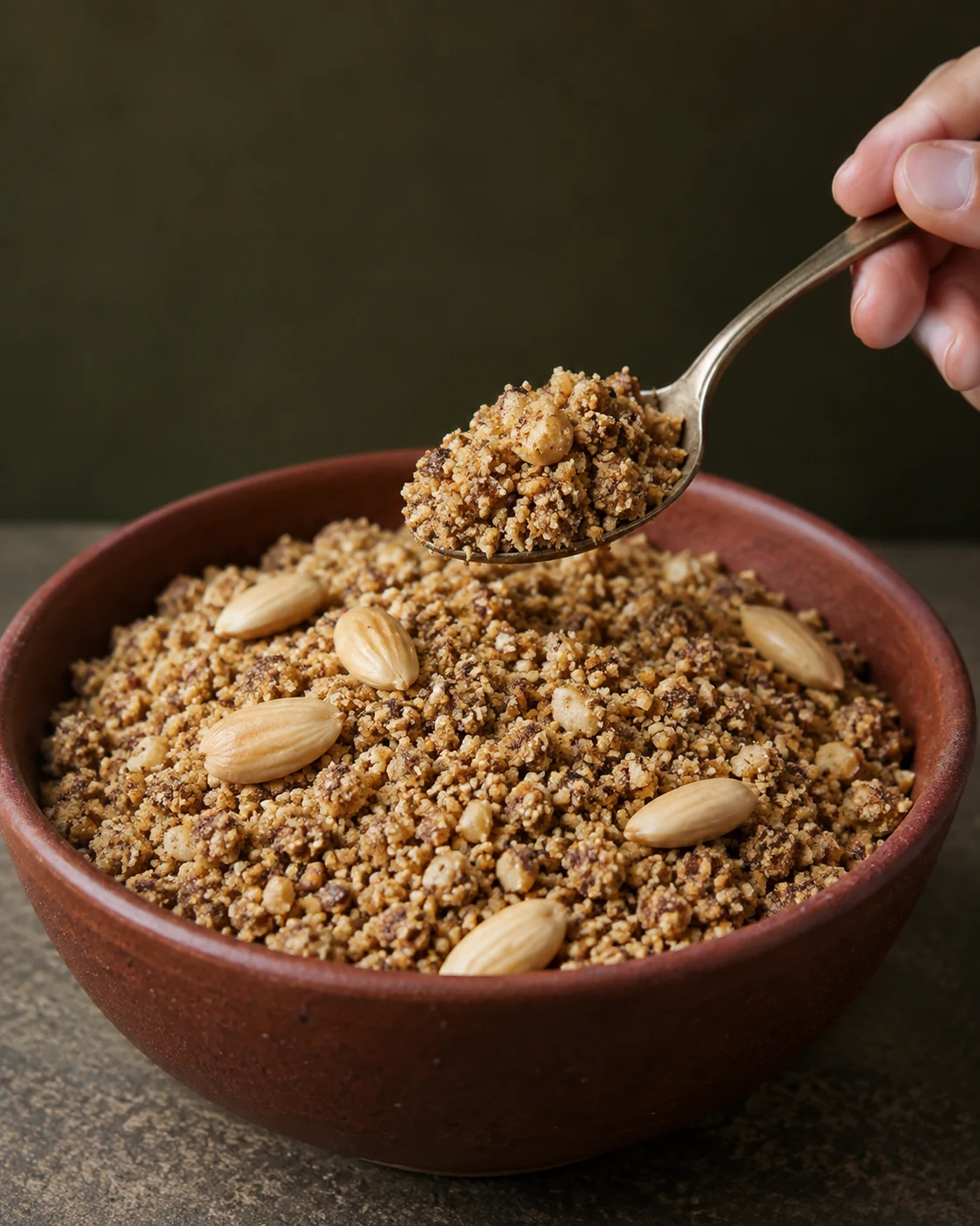
Sellou
Toasted flour, sesame and almonds in a distinctive sweet mixture.
Explore the story ↗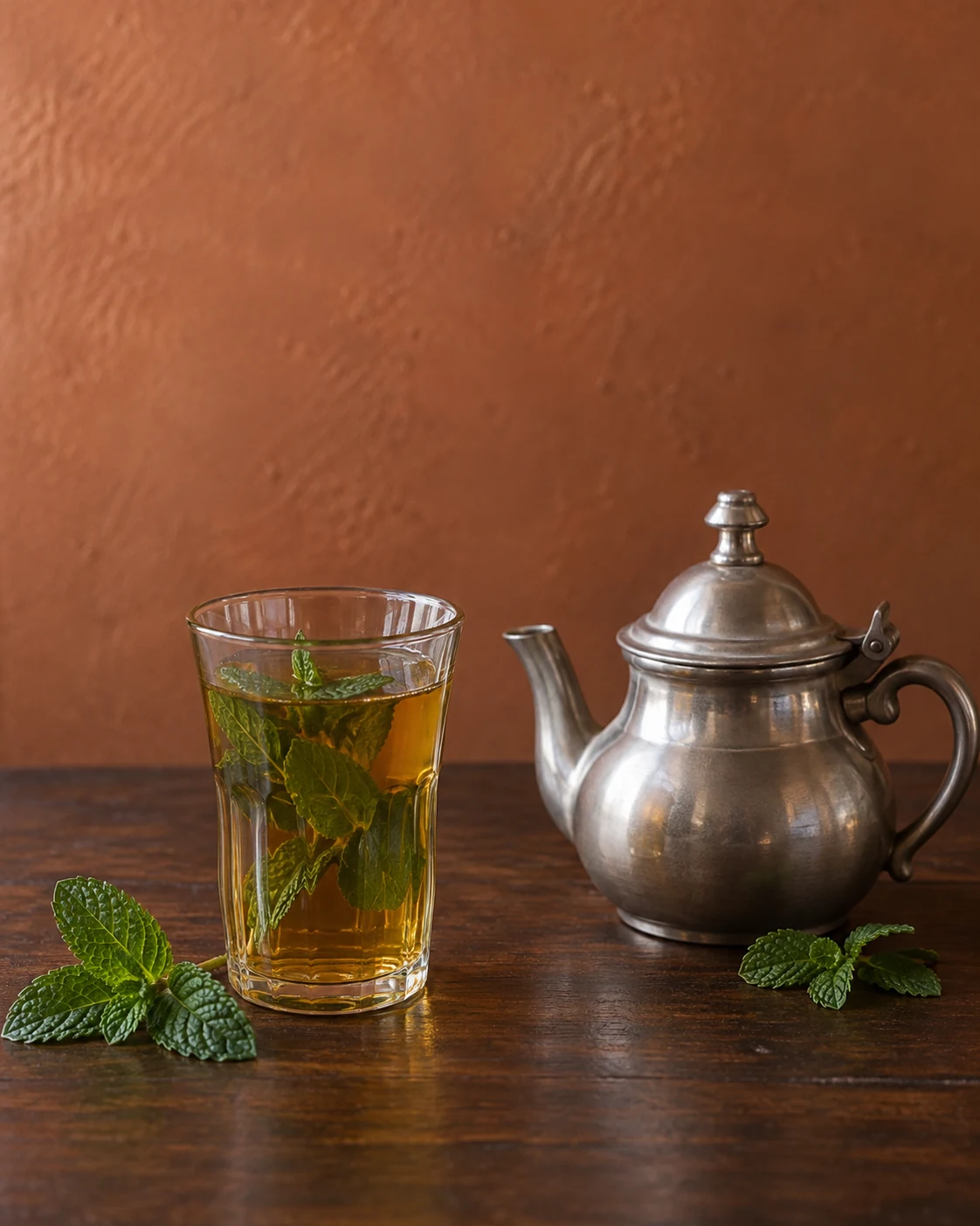
Moroccan Mint Tea
Green tea, fresh herbs and the time given to a guest.
Explore the story ↗Sources & editorial notes
This is an editorial introduction to pantry ingredients, not a complete recipe. Household and regional practice varies. Generated imagery illustrates plausible ingredients and situations; it is not documentary evidence of a named household, producer or market.
- Moroccan National Tourist Office · Gastronomy — culinary ingredients, dishes and regional context.
- Moroccan National Tourist Office · Local products — saffron around Taliouine and argan oil.
- UNESCO · Argan practices and know-how — community knowledge and production stages.
- Serious Eats · How to Stock a Moroccan Pantry — ingredient categories and the role of spices and preserved goods.
- Nargisse Benkabbou · Madaq — contemporary Moroccan cooking and named ingredients.
EXOTIC MOROCCO Places. People. The pleasure of knowing more.Back to top ↑