
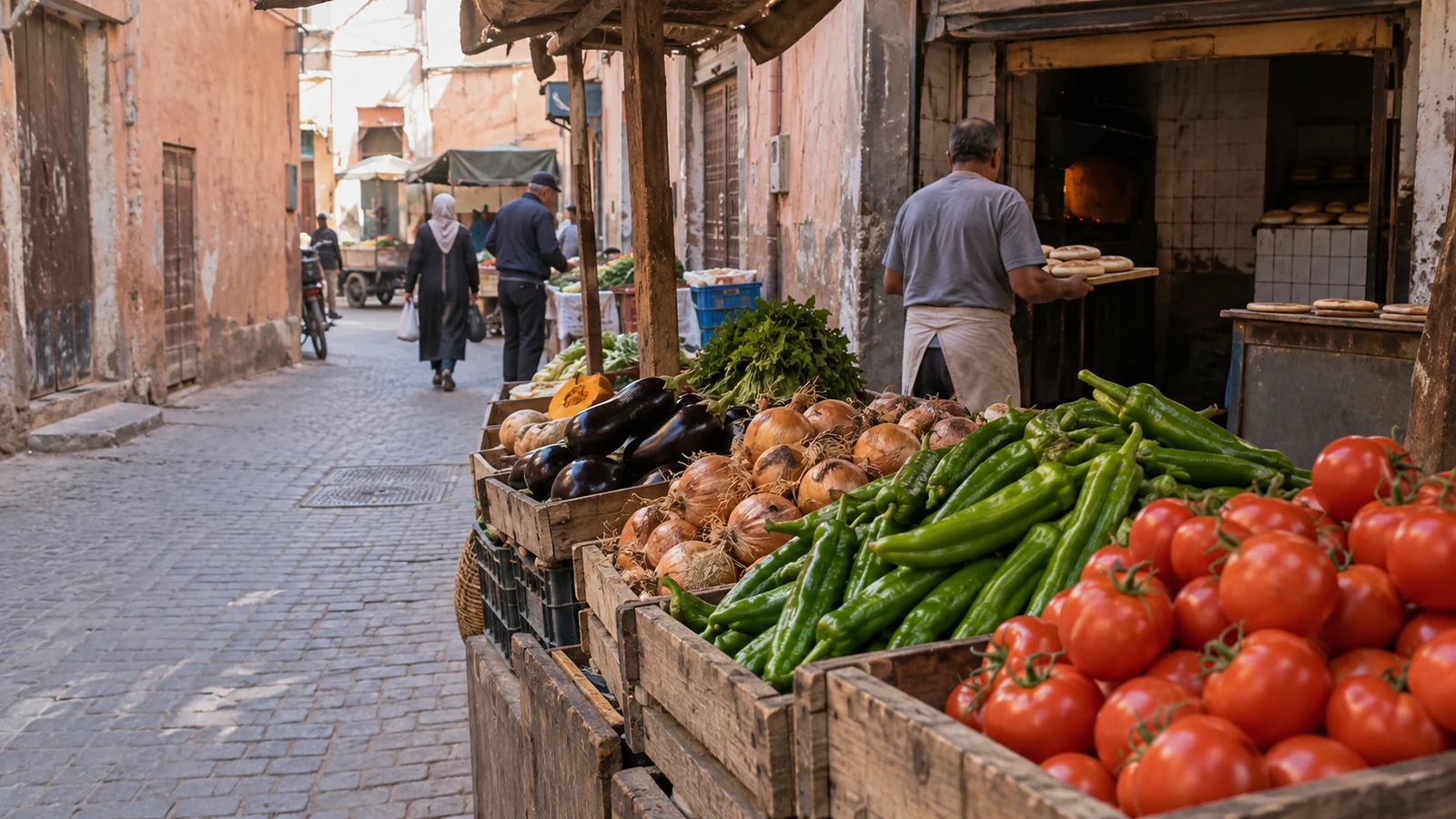
01 · Read the table, not only the menu
A route made
of everyday choices.
The story begins before a dish reaches the table.
Moroccan food culture lives in repeated actions: choosing produce, buying bread, grinding spices, rolling couscous, steeping tea, preserving lemons, tending heat and deciding what a meal needs today.
There is no single national table that erases place or household. Coastal ingredients, mountain agriculture, city markets, oasis produce and family habits overlap and travel. The route is therefore thematic rather than rigid: it follows the relationships between ingredients, hands, craft, place and sharing.
Couscous makes that relationship especially visible. UNESCO describes its knowledge and practices as including the cereal, hand-rolling of semolina, steaming, tools, circumstances of consumption and informal transmission through observation and imitation. [1]
Enter Moroccan food culture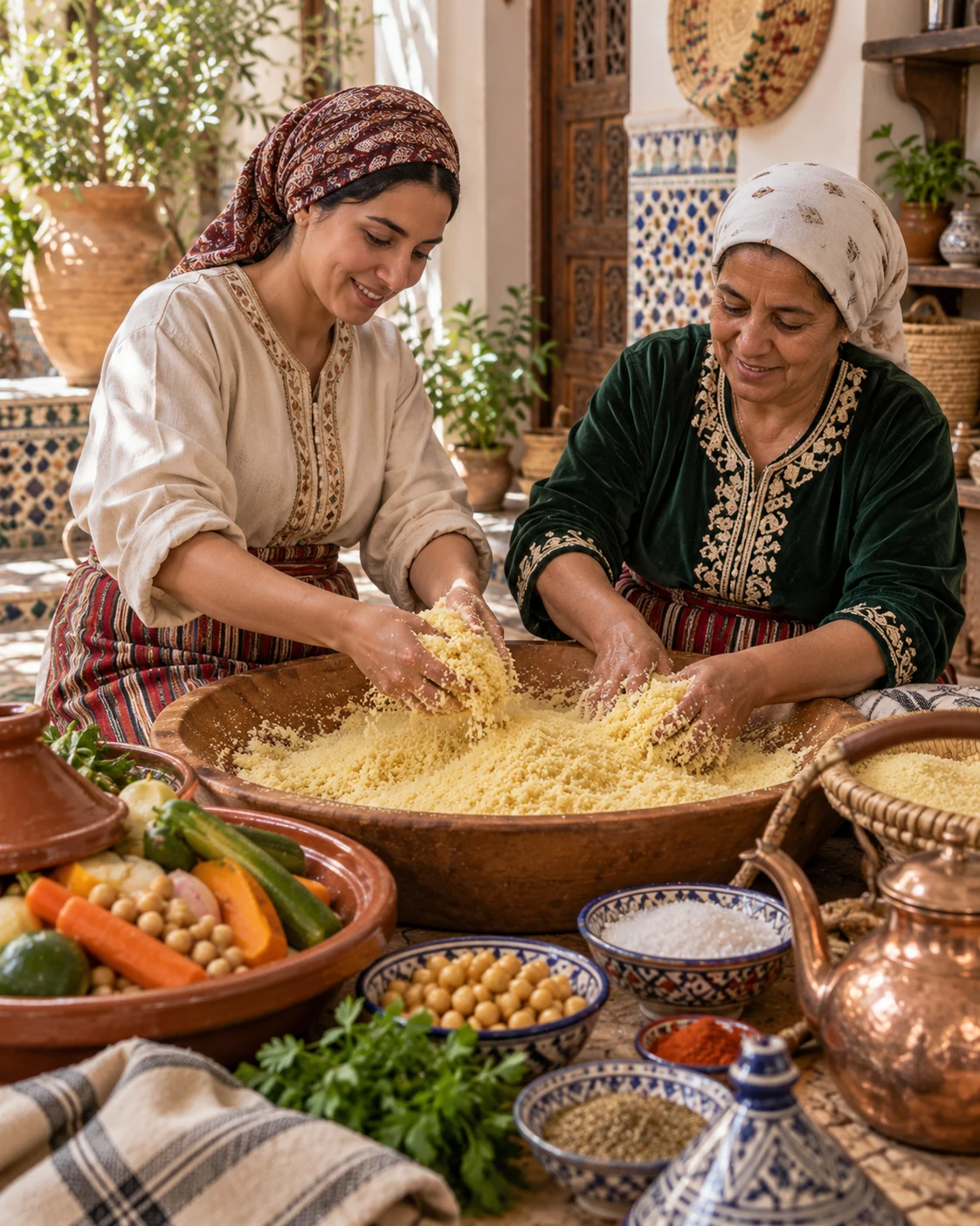
Food culture connects sourcing, making and sharing.
Patterns exist, but families continually adapt them.
A dish rarely belongs to only one simple story.
02 · Living roots, not a frozen tradition
Many histories.
One living cuisine.
Influence matters. So does everyday continuity.
Moroccan cuisine is often described through Amazigh, Arab-Andalusian and Jewish culinary traditions, among others. The Moroccan National Tourist Office uses that language to explain the country’s culinary variety. [3] It is useful context, but it should not turn every recipe into a neat historical equation.
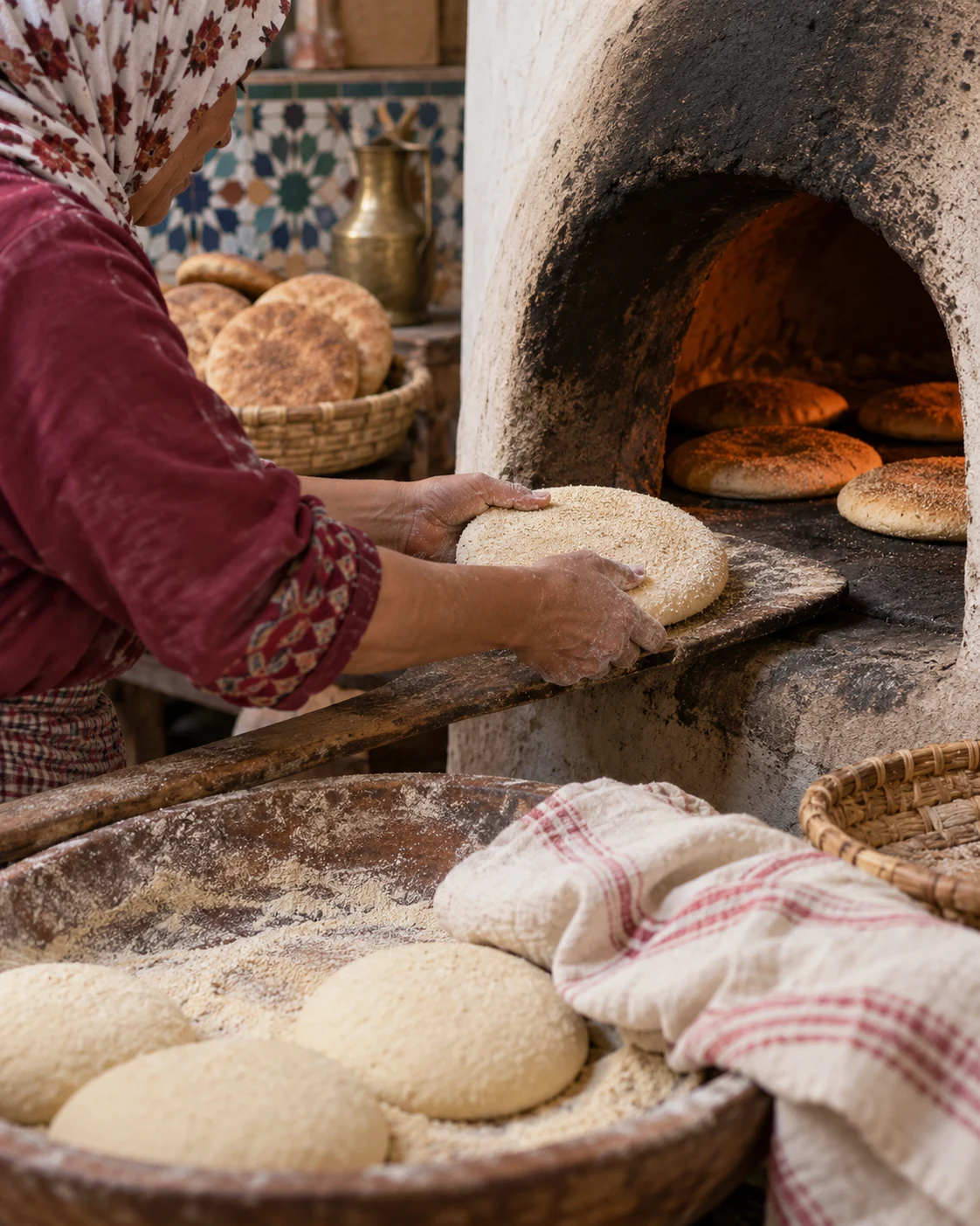
Food knowledge survives because people keep using it: a baker learns the oven, a household recognises the right couscous grain by touch, a tea pour becomes instinctive, and a spice seller understands how aroma changes with freshness and storage.
Transmission
Observation, repetition and family practice often carry knowledge more effectively than written recipes.
Adaptation
Gas burners, modern ovens and new shopping habits change technique without automatically erasing culinary identity.
Continuity
Bread, tea, grains, vegetables, pulses, oils, herbs and preserved foods connect very different meals.
03 · Technique before recipe
Hands, heat
and patient timing.
Moroccan cooking is not defined by one spice blend or one pot. Texture often comes from what happens before seasoning is even tasted.
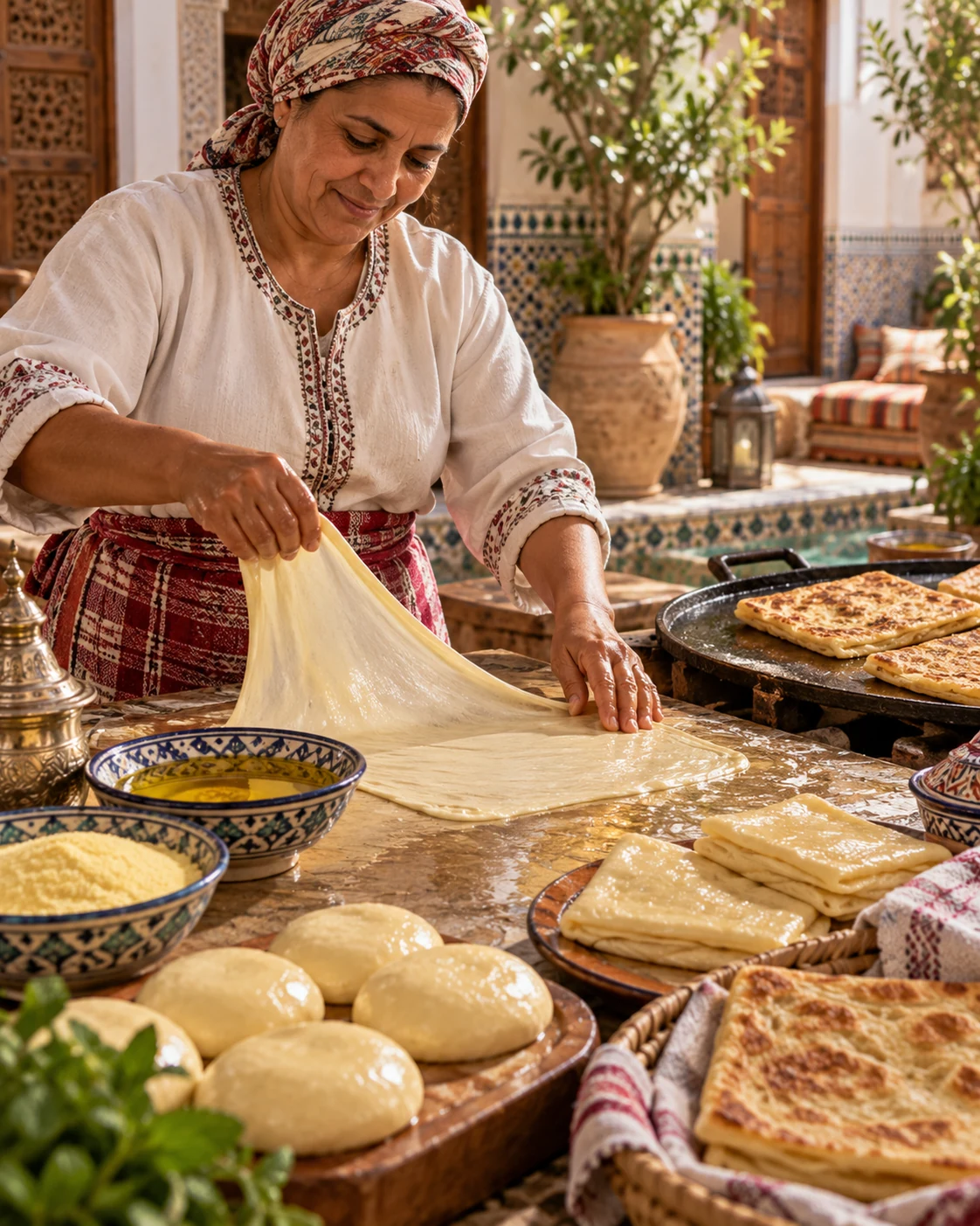
Stretching dough, steaming grain and controlling moisture are forms of practical knowledge. They change the food at a structural level.
Work the texture
Dough can be kneaded, rested, stretched and folded; couscous grains are rolled and separated; salads may be cooked down rather than simply chopped raw.
Match heat to the food
A griddle, oven, charcoal brazier, couscoussier and tagine do different jobs. The point is not theatrical equipment but controlled heat and the right cooking environment.
Preserve deliberately
Salt, drying, oil and sugar can extend ingredients while creating new flavours. Preserved lemon is not merely fresh lemon stored longer; curing transforms the peel.
Watch the hands and the heat. They often explain more than a long ingredient list.
04 · Five ways into the food culture
Change the setting.
The table changes too.
These are editorial stops, not borders. Foods move with people, trade and family life.
Use each stop to notice a different relationship between ingredients and place.
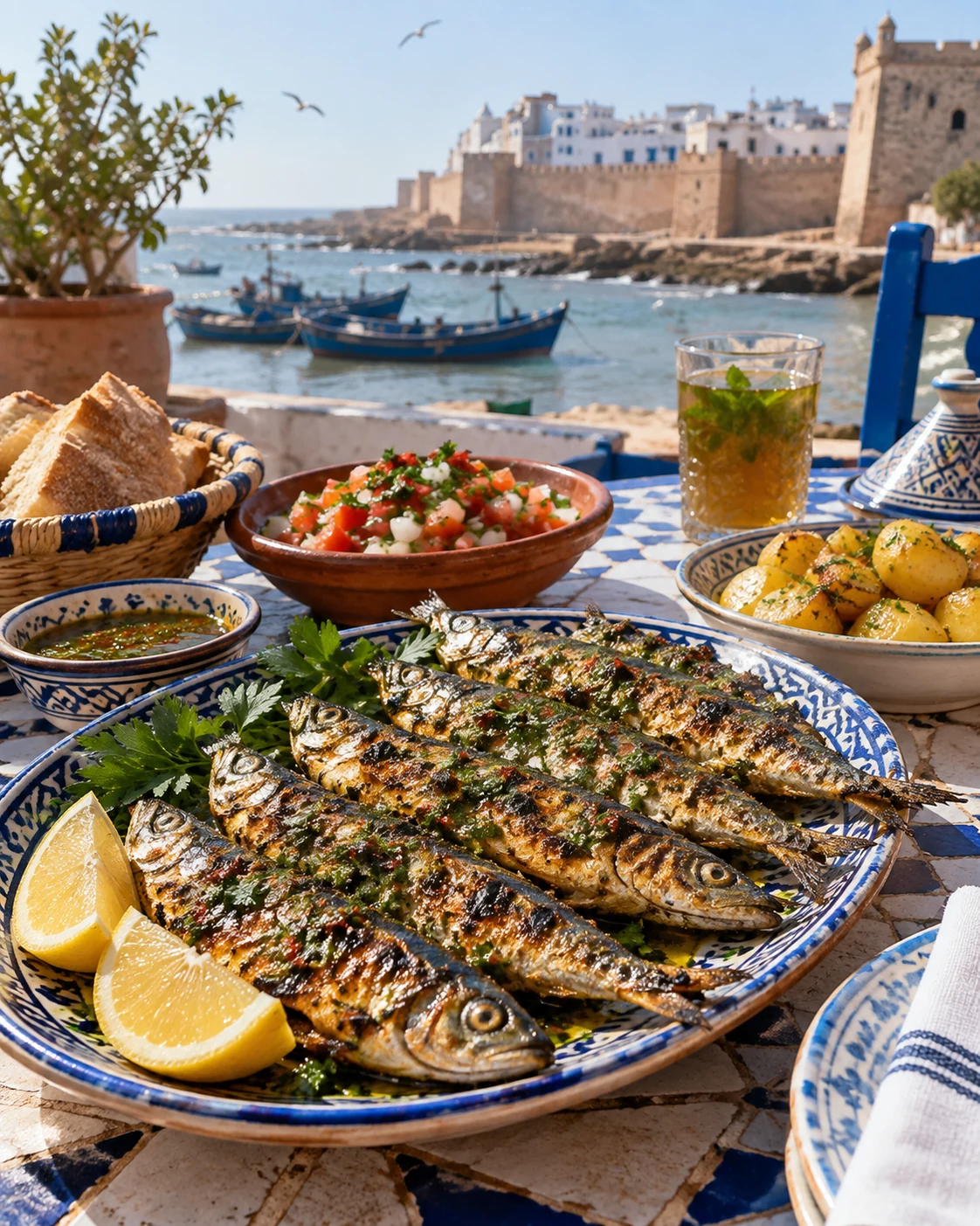
Fish, herbs & immediate freshness
Sardines and other fish connect harbour, market and kitchen quickly. Chermoula, herbs, garlic and citrus may enter the picture, but preparation changes with the fish and the cook.
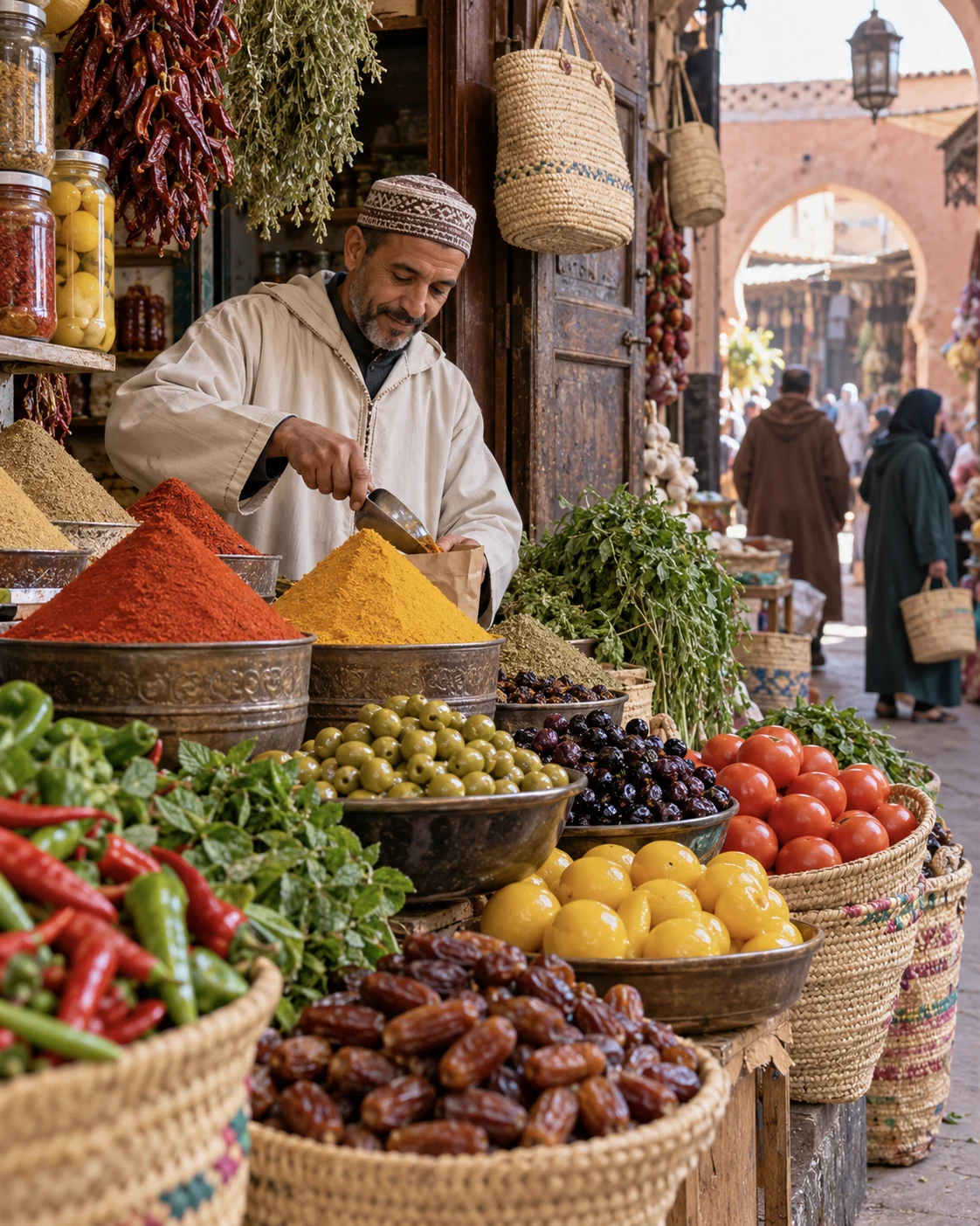
Buy by aroma, season and use
Spices are only part of the market story. Herbs, olives, legumes, vegetables, preserved foods and dried fruit make the stall a practical extension of the kitchen.
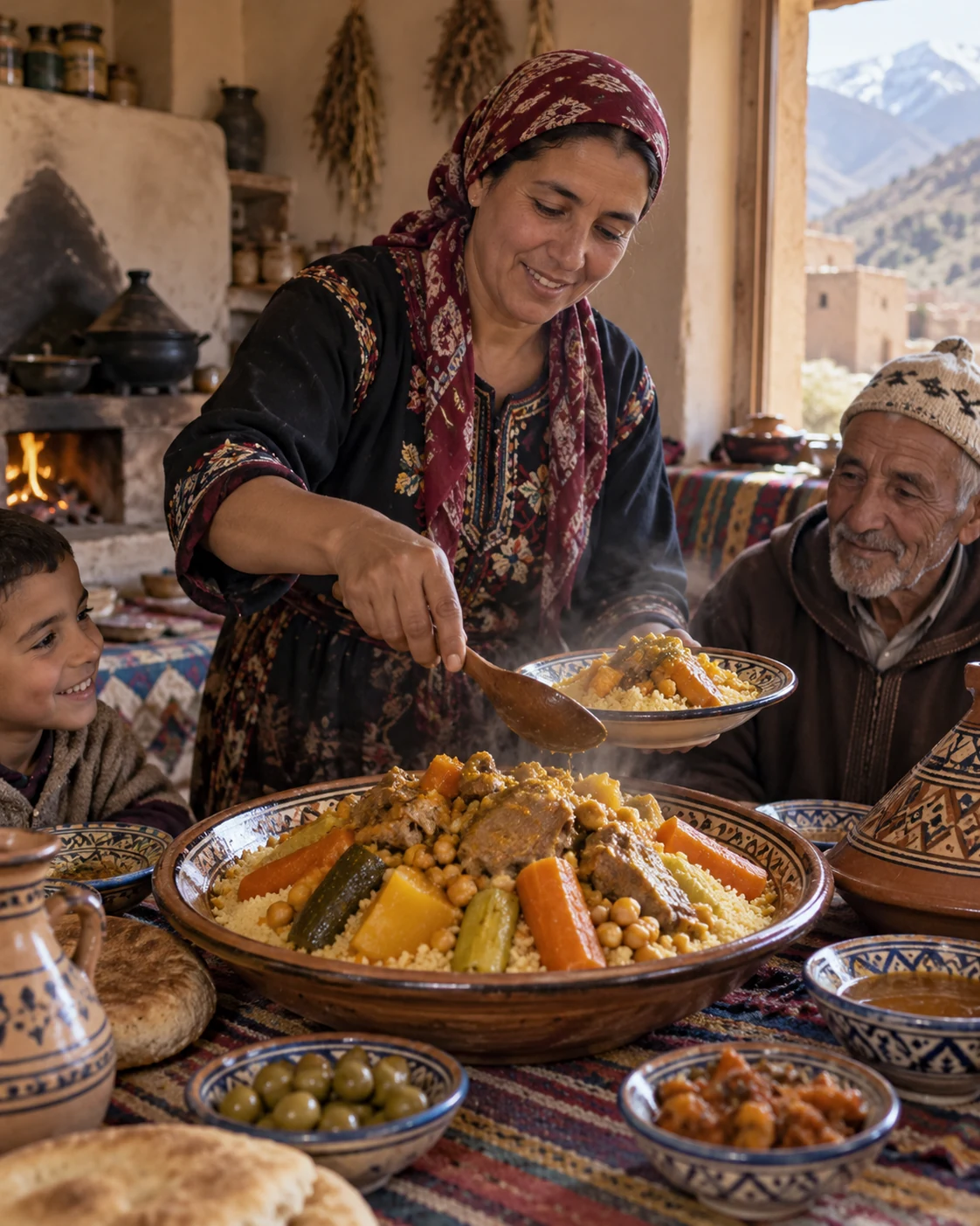
Grain, vegetables & shared serving
Couscous makes season and household preference visible through grain, broth, vegetables and accompaniments. UNESCO explicitly links it with togetherness and sharing meals. [1]
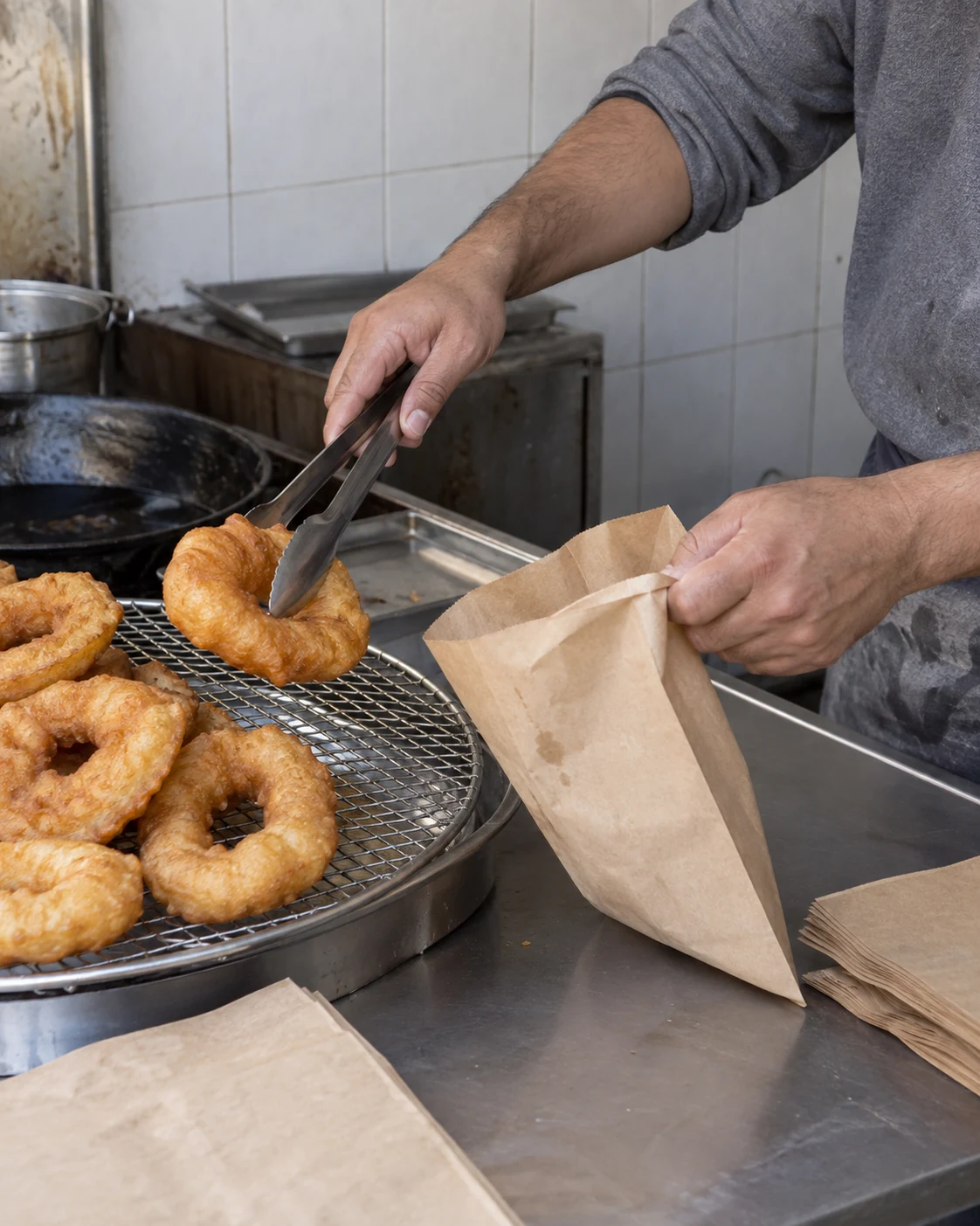
Heat, repetition & a specialist hand
Street food can be fast for the customer because the seller repeats the same motions all day: frying, grilling, seasoning, shaping and serving at exactly the right moment.
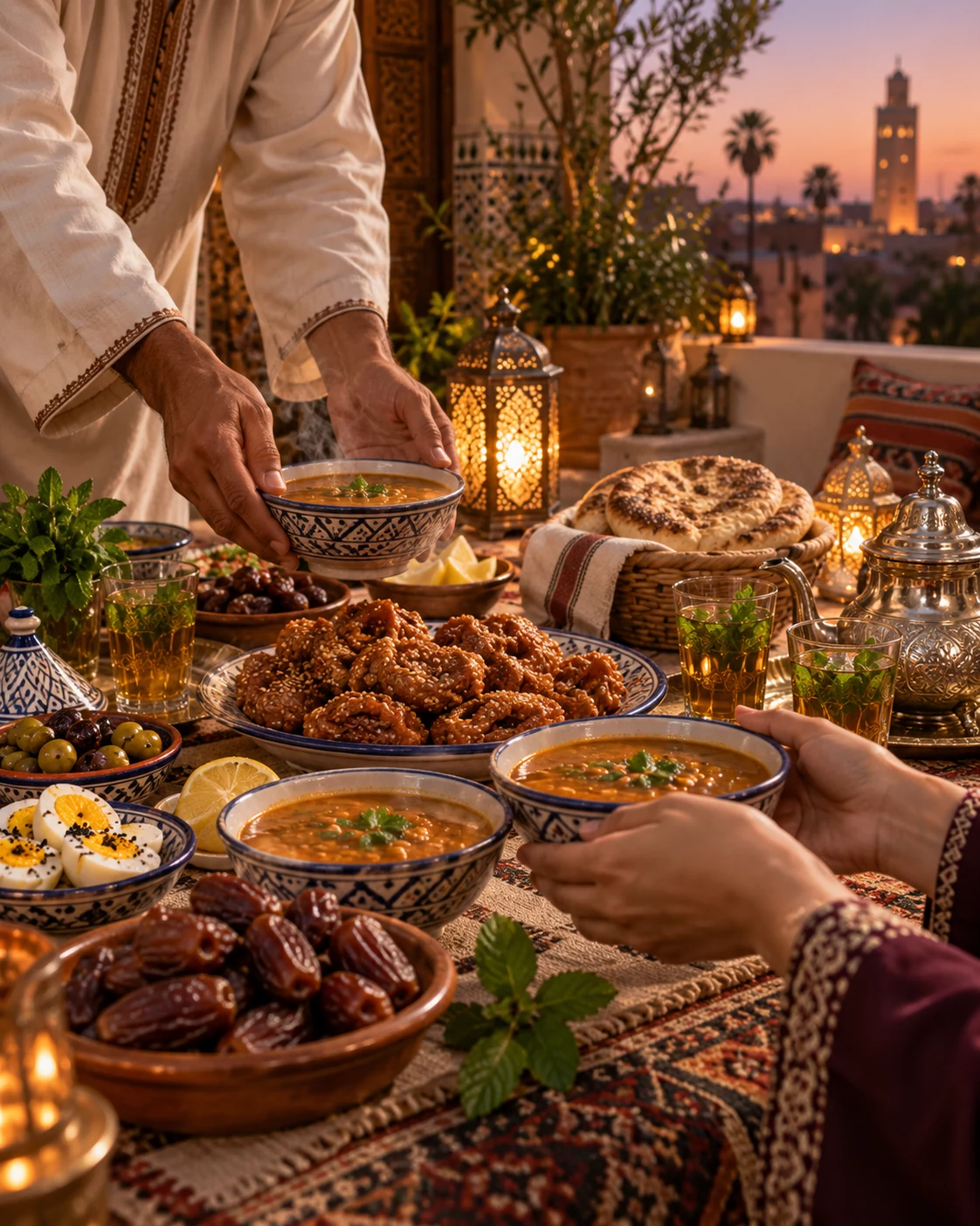
A meal shaped by timing
Harira, dates, sweets, eggs, bread and drinks can gather at the iftar table. The exact spread varies, but the transition from fasting to eating gives the meal a distinctive rhythm.
No single map explains the cuisine.
Ingredients, migration, trade, celebration and household habit overlap. Regional context is useful when it clarifies availability or technique, not when it turns food into rigid territory.
Follow the ingredient twice.
First ask where it comes from. Then ask what the cook does to it. The second question often reveals the culinary identity.
05 · Pantry as memory
Four ingredients.
Four kinds of knowledge.
A pantry is a record of climate, preservation, trade and taste.
These four examples show why ingredients should be understood by function, not treated as decorative signs of “Moroccan flavour”.
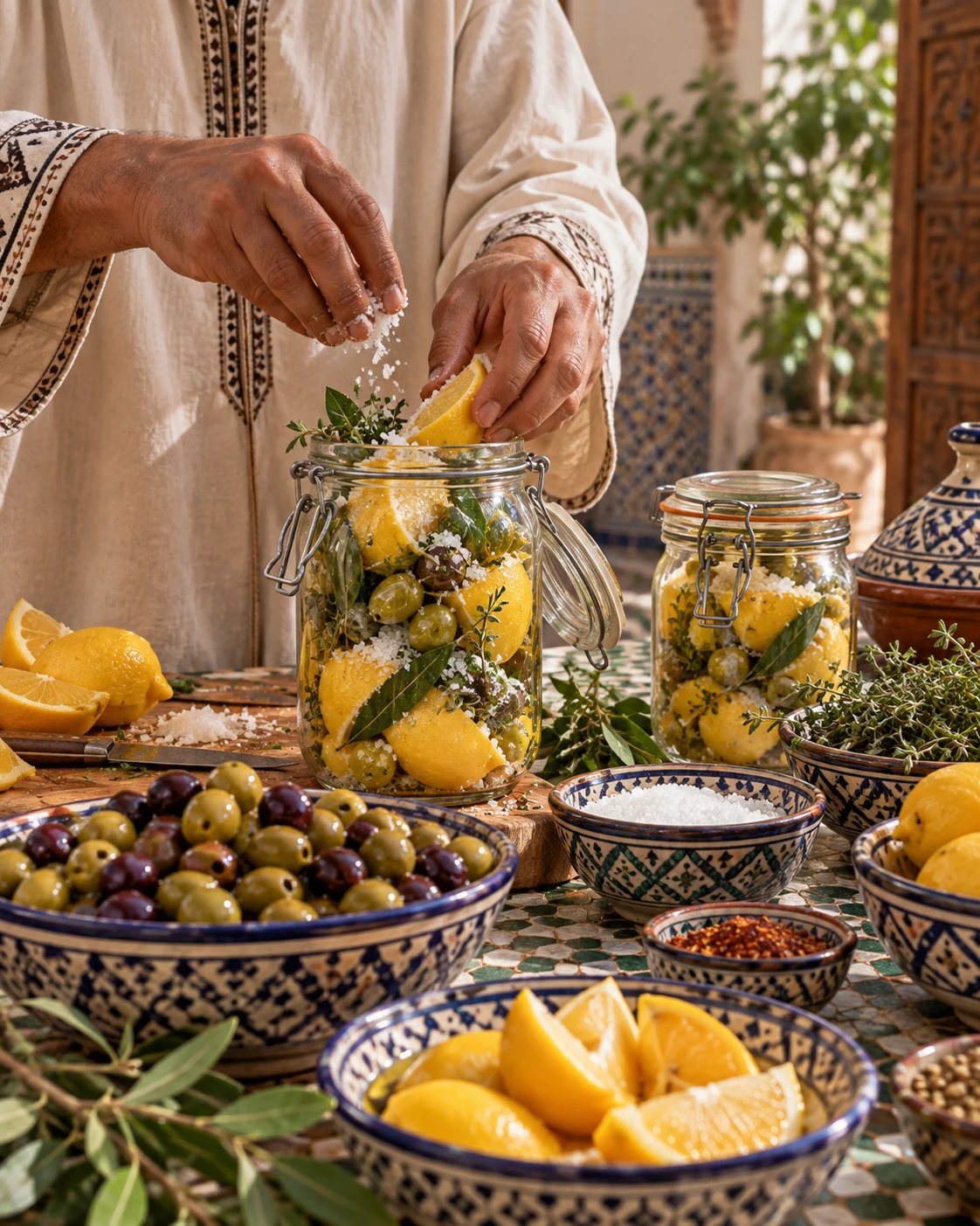
Preserved lemon
Salt changes the ingredient.
Curing softens the peel and concentrates its aroma. It is a transformed ingredient with a role distinct from a squeeze of fresh lemon.
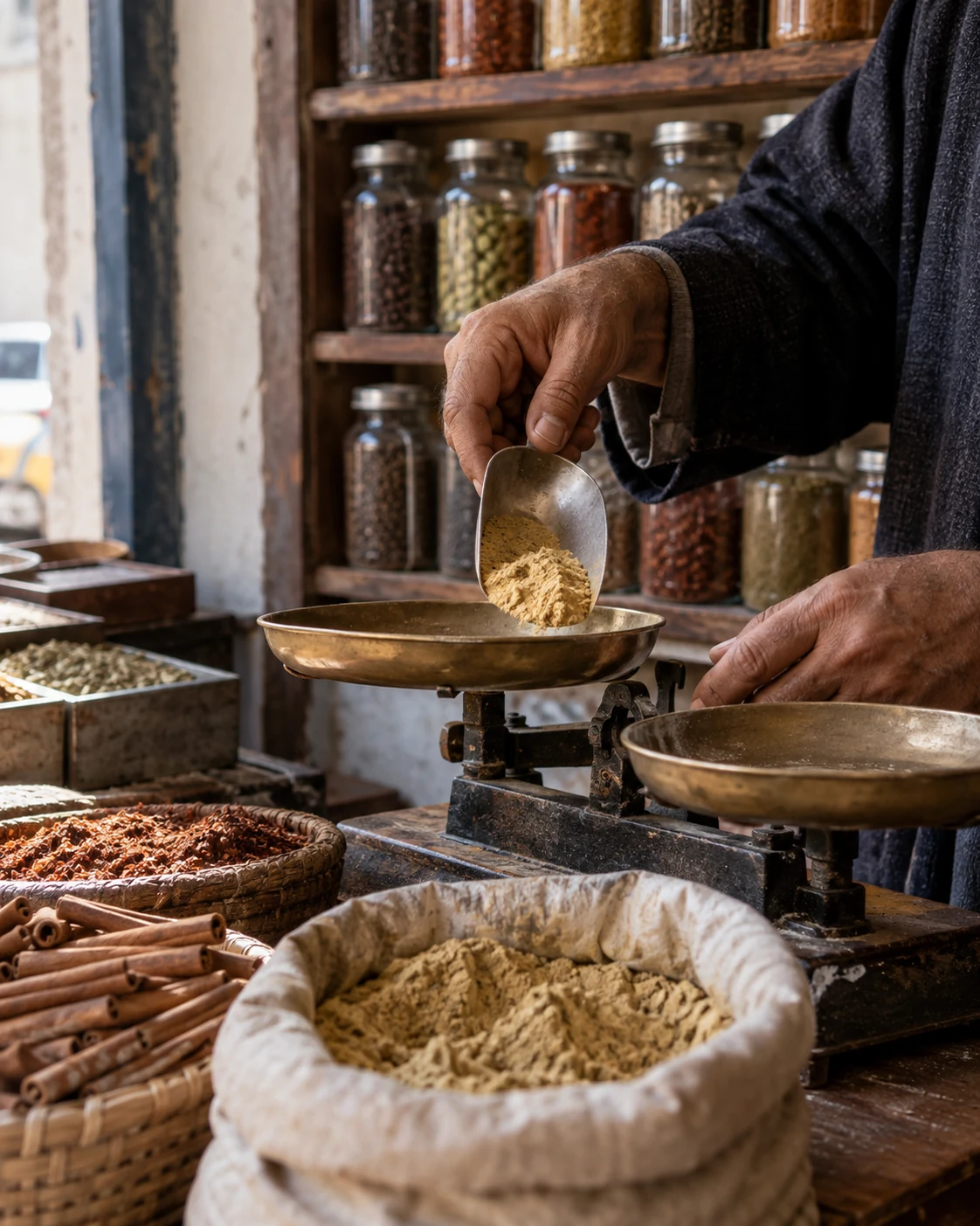
Spice
Composition, not overload.
Cumin, ginger, turmeric, pepper, cinnamon, saffron and blends each have contexts. A dish does not become more Moroccan by using all of them at once.
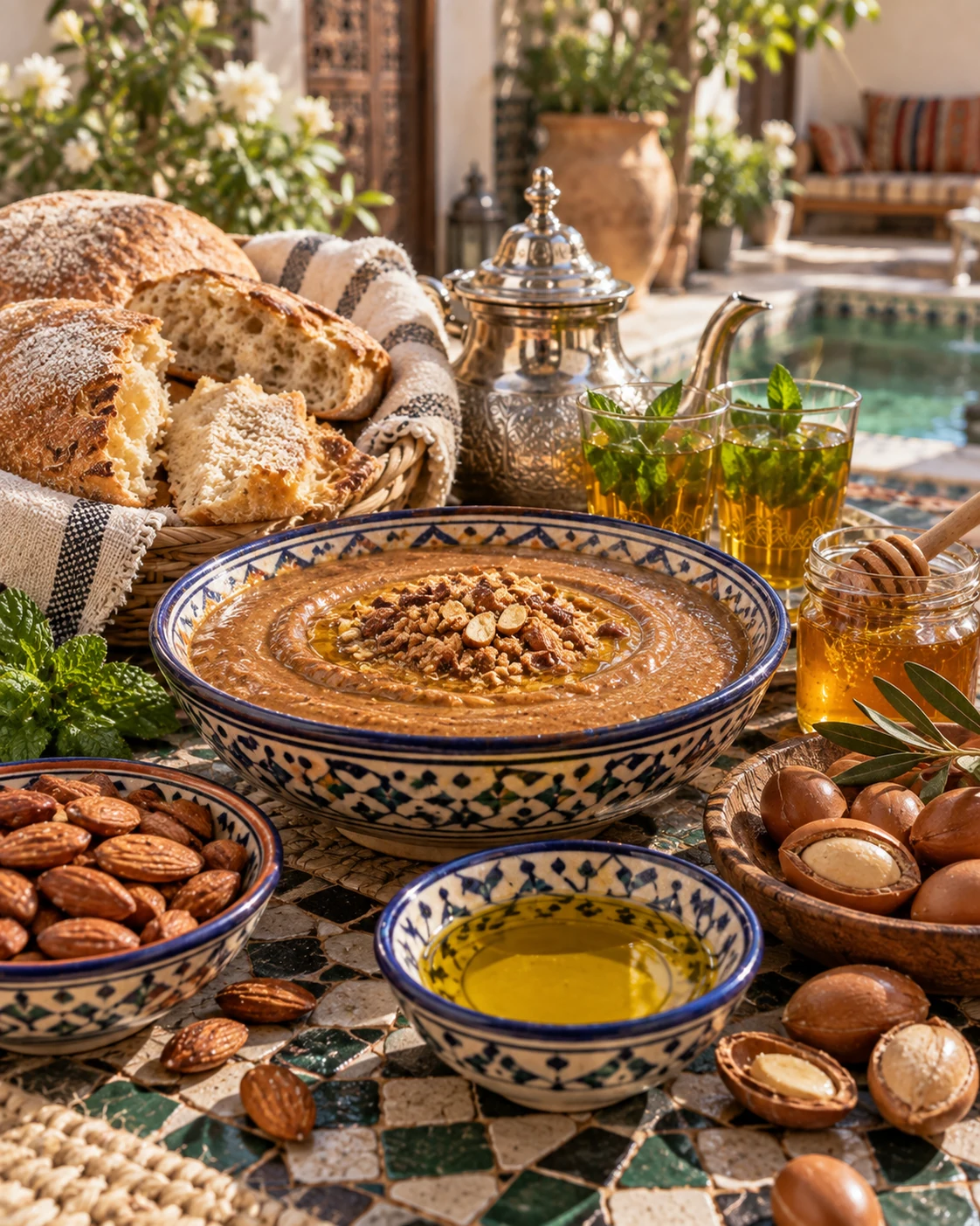
Argan & amlou
South-western knowledge in a bowl.
UNESCO recognises practices and know-how concerning the argan tree in south-west Morocco, including extraction and culinary uses of the oil. [2]
Olives & oil
Fruit, fat, brine and season.
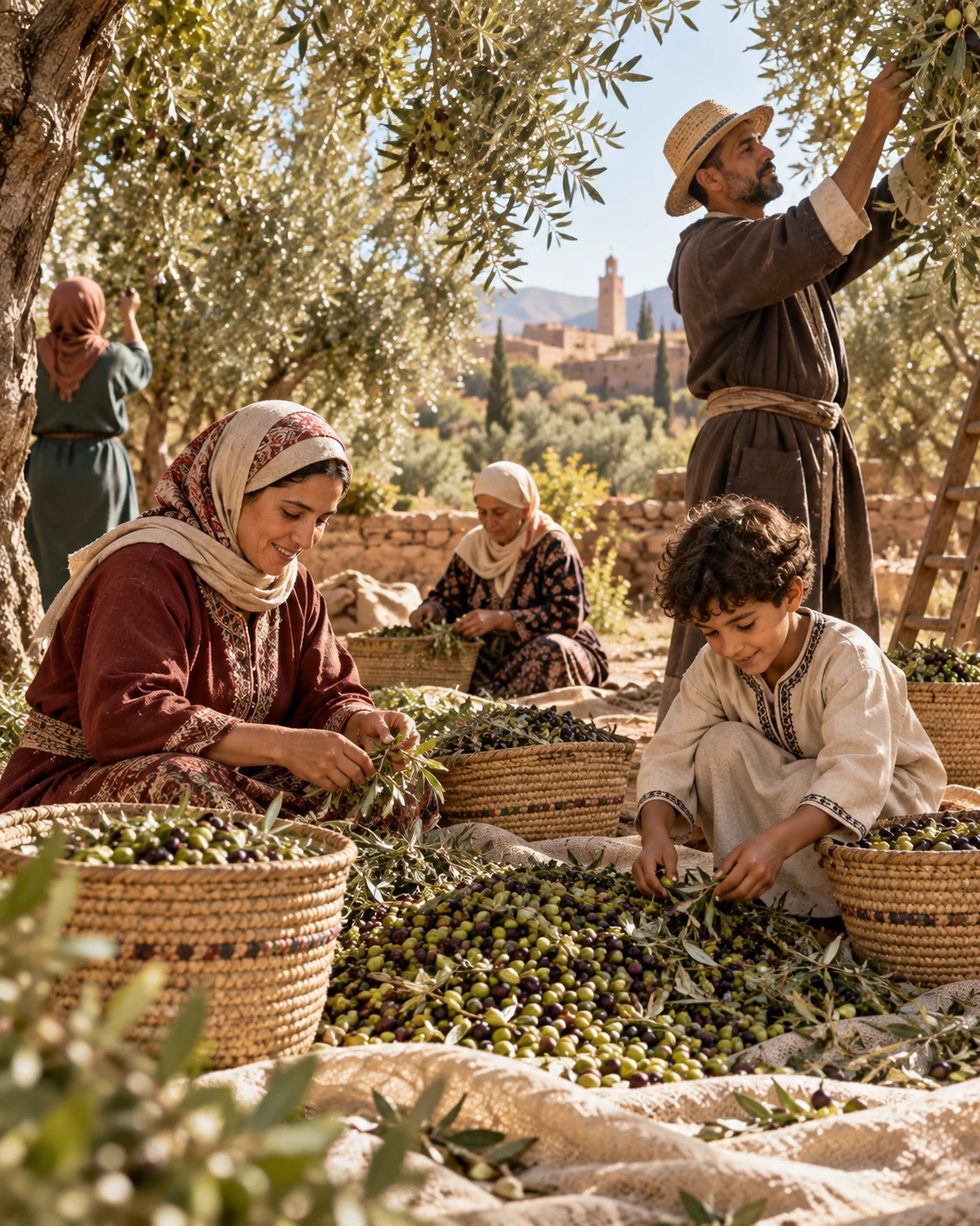
Olives can appear cured at the table, cooked into dishes or pressed into oil. Variety, ripeness and treatment change their flavour and purpose.
Explore the four pantry themes
FLAVOUR IS A SYSTEM
Not a spice list.
A balance.
A memorable dish usually has structure: something savoury, something aromatic, a source of freshness or acidity, and a texture worth returning to.
That balance can come from very different ingredients. The cook chooses what belongs together.
The same pantry can produce radically different meals.
Build depth
Onion, browned surfaces, broth, pulses or slowly cooked vegetables can create a base before any garnish is added.
Create contrast
Olive brine, preserved lemon, fresh herbs, dried fruit or toasted nuts can sharpen or soften the centre of a dish.
Finish with purpose
A final herb, drizzle, nut or spice should change aroma, texture or balance—not simply decorate the plate.

06 · Place enters through availability
Follow the source.
Then follow the cook.
A harbour, grove or market changes what can become everyday food.
Geography matters most when it explains access. Coastal cities can receive fish differently from inland towns; argan knowledge is rooted in south-west Morocco; oasis and agricultural zones bring their own crops and preservation needs.
But food moves. A family relocates, a market imports, a restaurant adapts and a recipe travels. Place is context, not a fence.
Atlantic & Mediterranean ports
Fish markets make freshness, species and daily catch part of the cooking decision.
Explore Essaouira ↗South-west argan country
Argan oil connects ecology, labour, craft and food in a highly specific regional knowledge system.
Explore Atlantic Morocco ↗Urban medinas & markets
Bakers, spice sellers, produce stalls and small specialists compress many food systems into walkable neighbourhoods.
Discover Taste Morocco ↗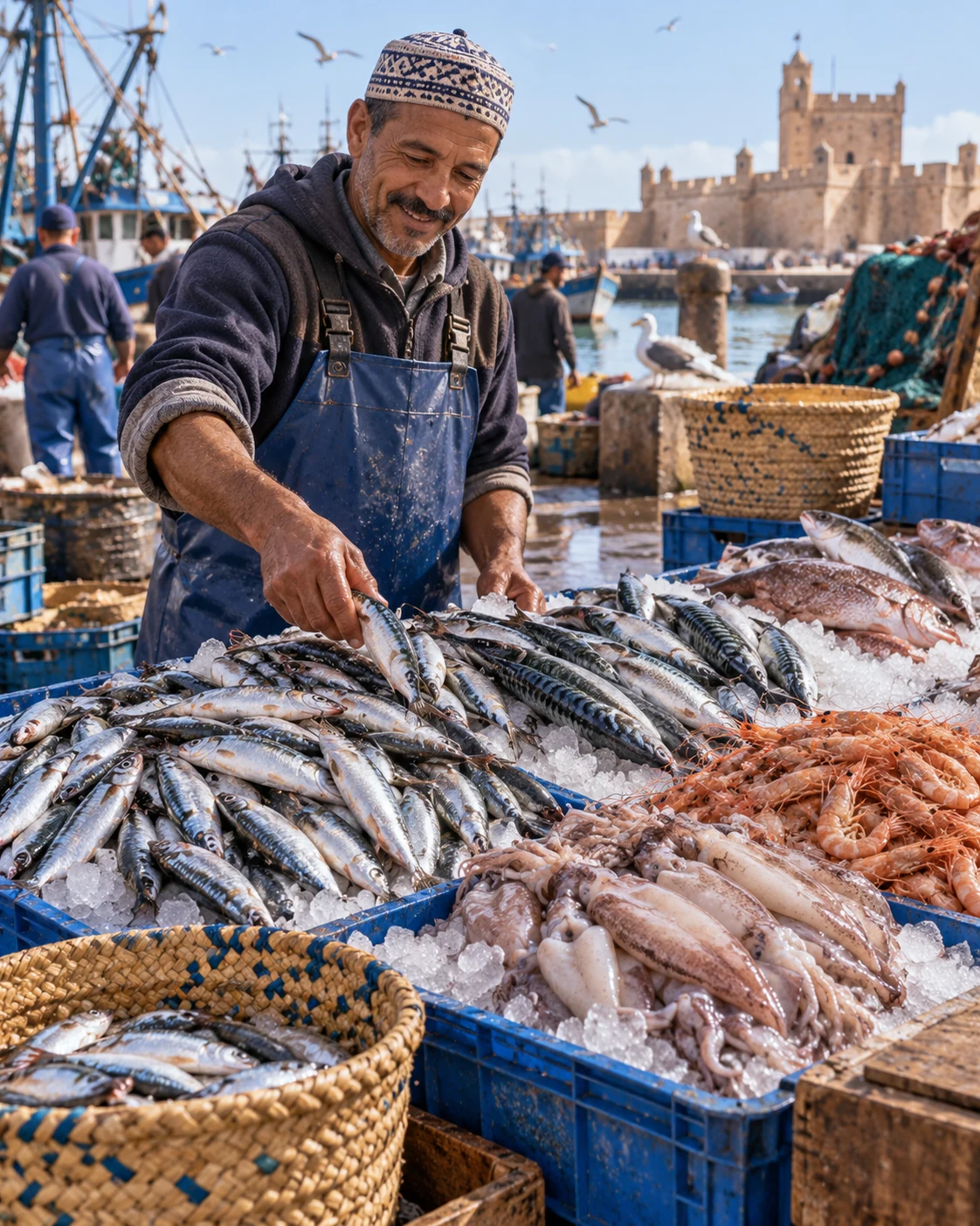
07 · The table is a social space
Serving tells
its own story.
Hospitality is visible in gestures as much as dishes.
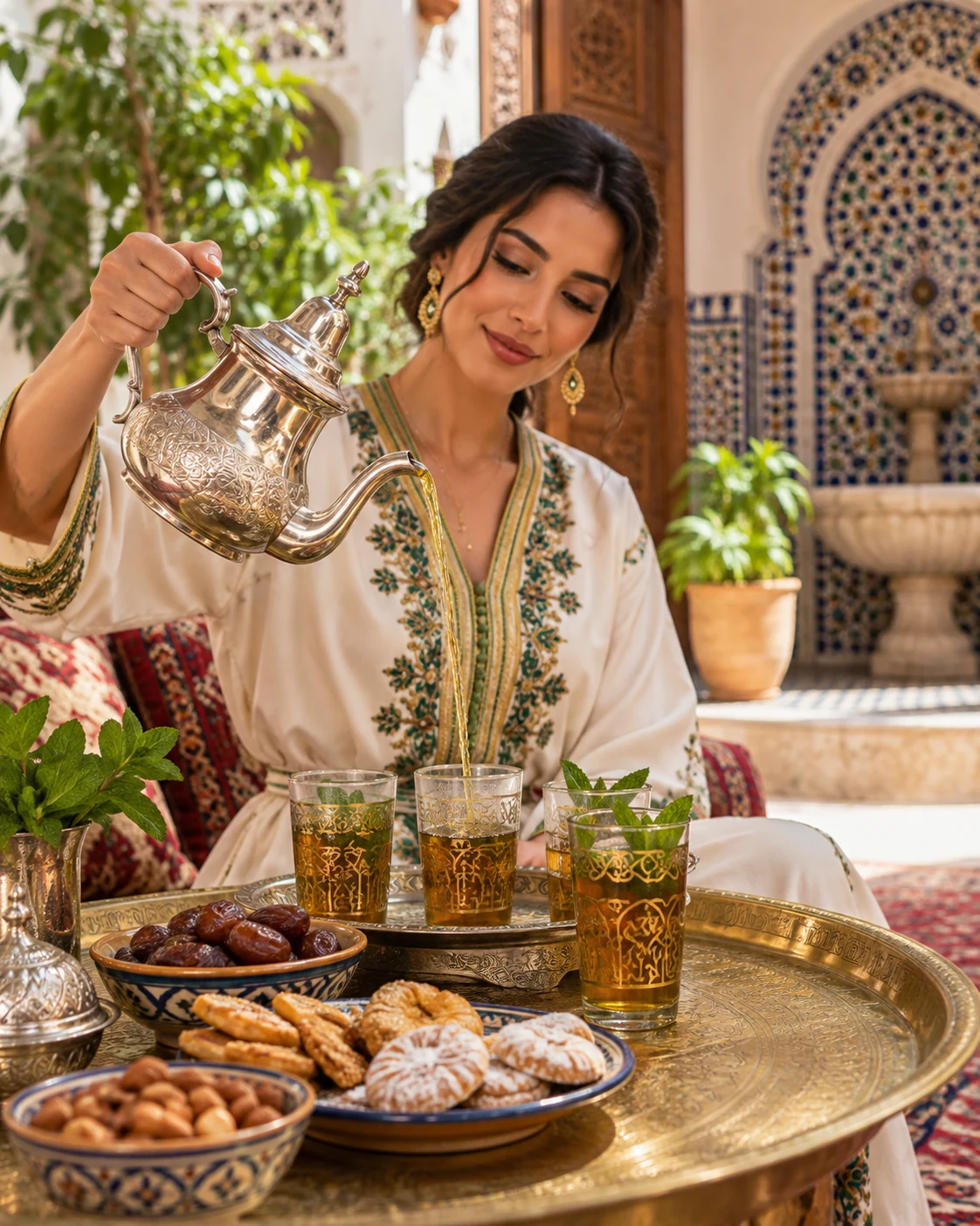
Moroccan food culture includes how bread is placed, tea is poured, portions are offered and people gather around a shared centre. The Moroccan National Tourist Office describes conviviality and mint tea as recurring parts of hospitality. [4]
The details vary by home, generation and occasion. The useful question is not “What do Moroccans always do?” but “What is this table communicating here?”
Bread reaches across dishes
Khobz can accompany salads, sauces, tagines and small plates. Its role is practical as well as symbolic: it helps turn separate dishes into one meal.
Shared does not mean identical
Couscous, tagine or a spread of small dishes may occupy a shared centre, while serving customs and individual plates vary by household and setting.
Time changes the table
Breakfast, midday meals, afternoon tea, festive meals and Ramadan evenings organise foods differently. The same ingredient can appear in another role at another hour.
Tea is both drink
and gesture.
Green tea with mint is widely associated with welcome and sociability. Strength, sweetness and herbs can vary; the act of offering matters as much as any single formula.
Who pours, when bread arrives, what is shared first and which dish is saved for later can reveal the rhythm of the meal.
Occasion reorganises
the pantry.
Ramadan, weddings, family visits and ordinary weekdays do not require the same scale or selection. Festive foods gain meaning because they are not simply everyday defaults.
08 · Material culture around the meal
Before serving,
someone made the object.
Clay, metal, wood and fibre enter the food story before ingredients do.
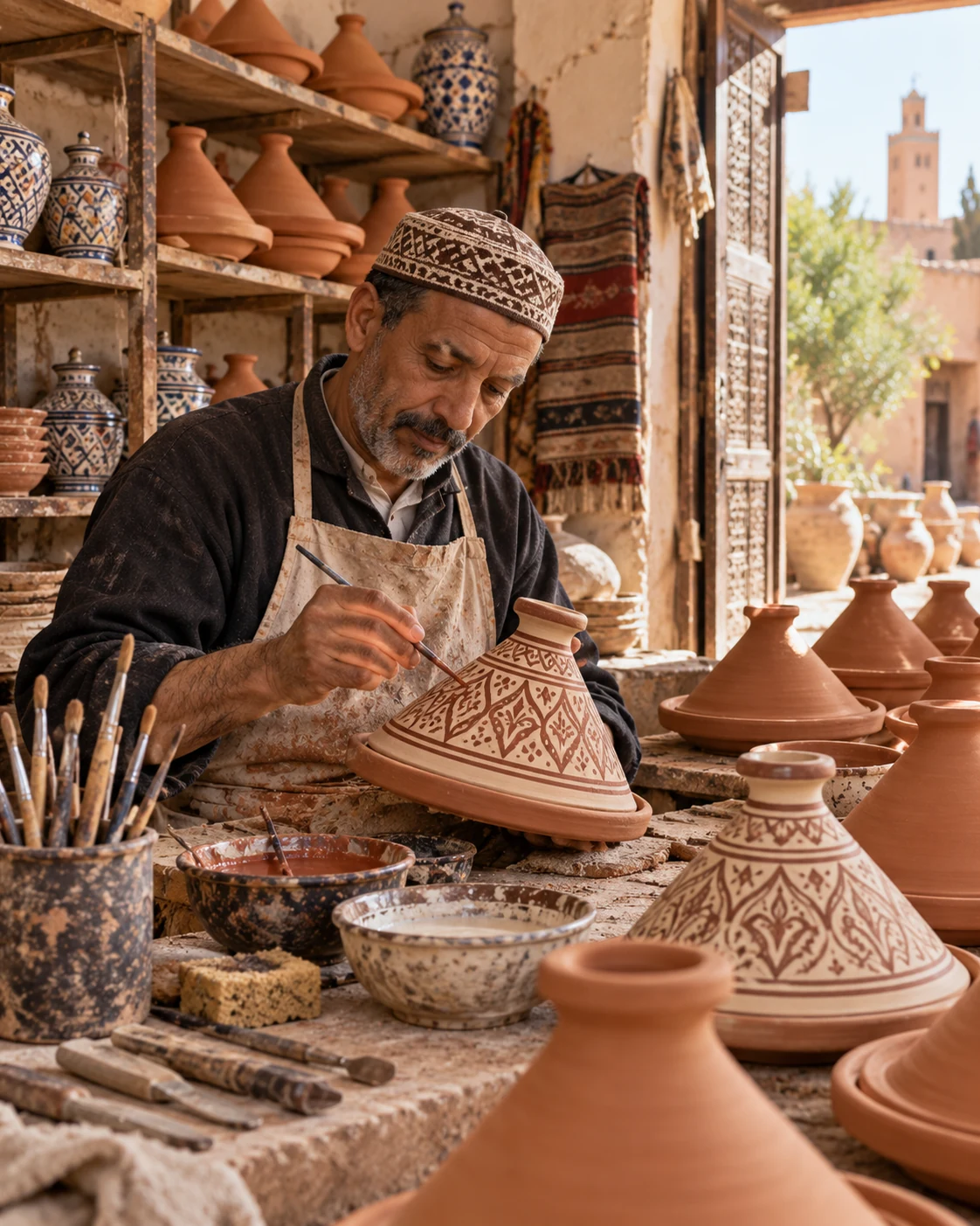
Tagines and bowls, couscous vessels, bread baskets, tea trays, glasses and wooden work bowls are not neutral scenery. Shape affects use: a wide bowl gives hands room to work grain; a woven basket carries bread; a teapot must pour cleanly.
Decoration can carry regional style and workshop identity, but function matters. A painted serving tagine is not automatically suitable for cooking, and a beautiful object should not be treated as a generic prop.
Food culture becomes more complete when the vessel is credited as part of the knowledge system.
Explore Moroccan crafts & design ↗09 · A closer look
Good questions.
Better than clichés.
Food culture becomes clearer when broad claims are replaced by specific questions.
Is there one “authentic” Moroccan cuisine?
No single menu can represent every Moroccan household, region or community. There are shared techniques and widely recognised dishes, but variation is normal and meaningful.
Is Moroccan food always heavily spiced?
No. Fragrance can come from a restrained combination of spices, herbs, preserved ingredients, onions, broth or cooking technique. Heat from chilli is not the defining feature.
Why is couscous culturally important beyond the dish?
UNESCO’s inscription covers knowledge, hand-rolling, steaming, tools, transmission and circumstances of consumption, and specifically links couscous practices with solidarity, conviviality and sharing meals. [1]
Why does argan belong in a food-culture route?
Because the oil is connected to a wider system of harvesting, processing, tools and transmitted knowledge in south-west Morocco. UNESCO inscribed these practices in 2014. [2]
Are markets only about spices?
No. Spices are visually striking, but everyday food markets also organise access to vegetables, herbs, olives, pulses, meat, fish, preserved foods, bread and seasonal produce.
Does sharing from one dish happen everywhere?
Shared dishes are common and important, but table practice varies by family, generation, restaurant, occasion and personal preference. Avoid turning one observed meal into a universal rule.
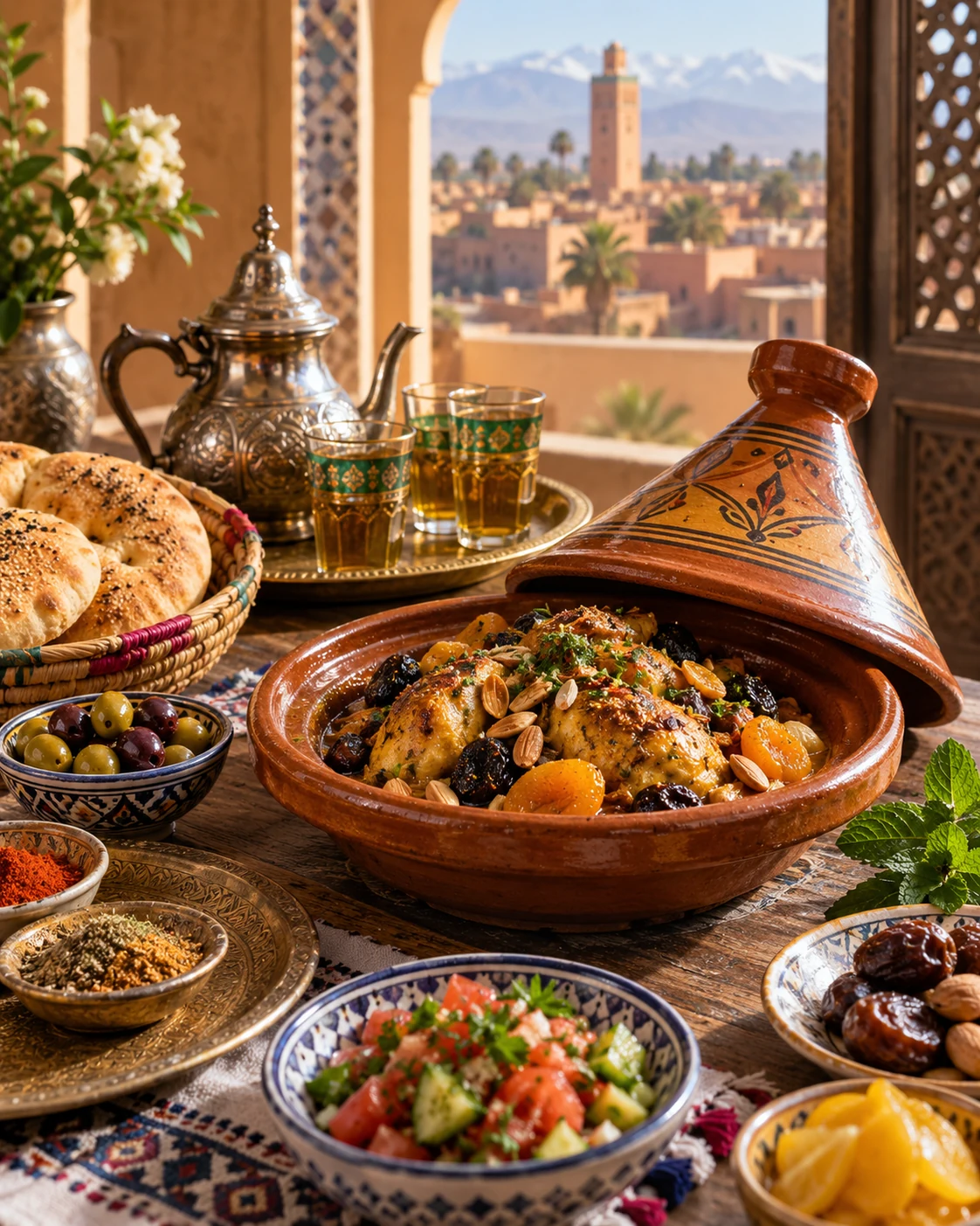 EXOTIC MOROCCOTASTE · THE GUIDE COLLECTIONFood Culture RouteIngredients, technique
and the Moroccan table
From the story to your kitchen
Keep the flavour.
Go a little deeper.
Follow culinary connections between kitchens, markets and makers.
Explore the Exotic Morocco guide collection for a closer look at ingredients, kitchen knowledge and the culture around the table.
- Understand the ingredients and their roles
- Recognise the techniques and textures that matter
- Bring context and confidence to the way you cook and serve
Continue tasting Morocco
Follow the
table outward.
Another dish, another technique, another way into the Moroccan kitchen.
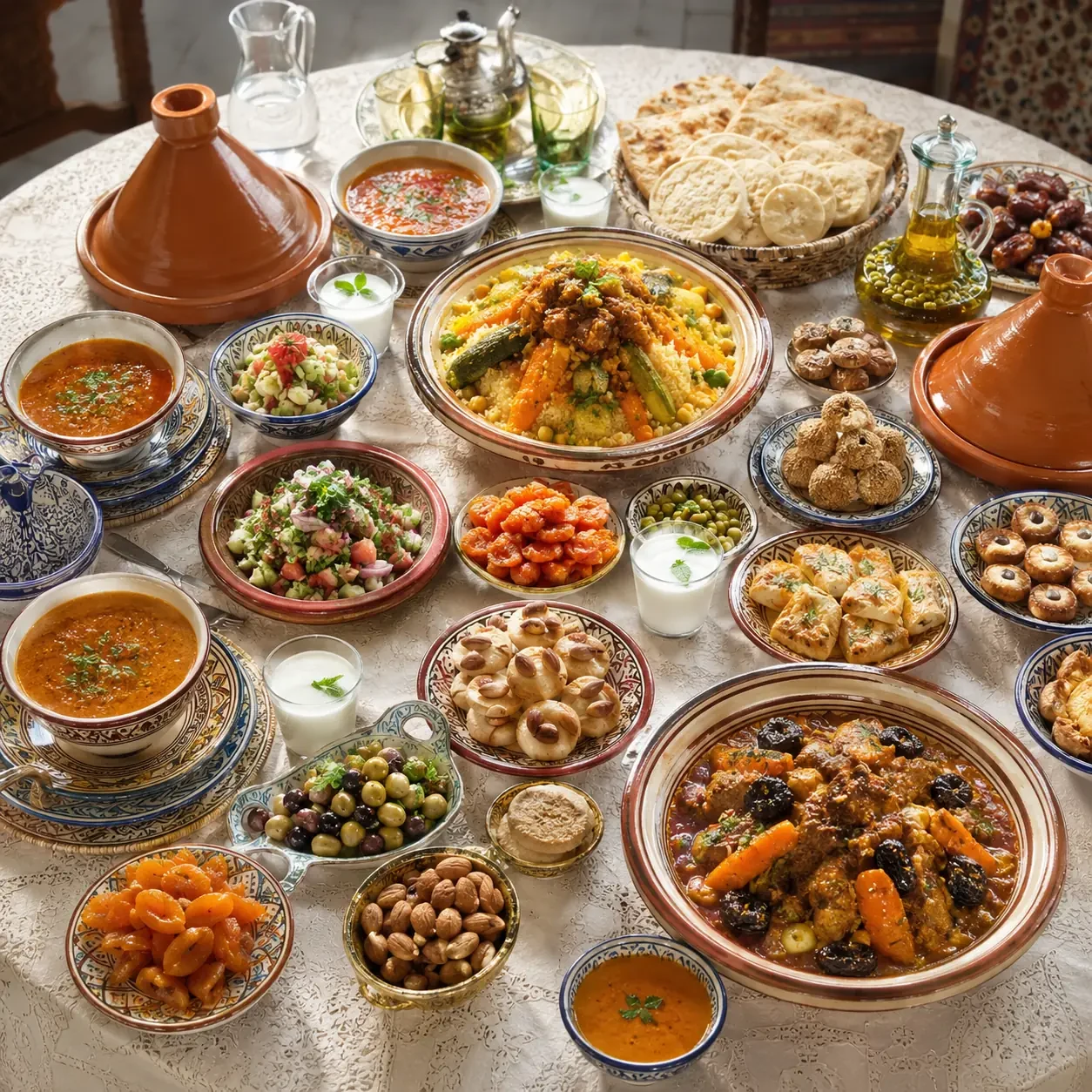
Moroccan Food Culture
The people, gestures and knowledge around the meal.
Explore the story ↗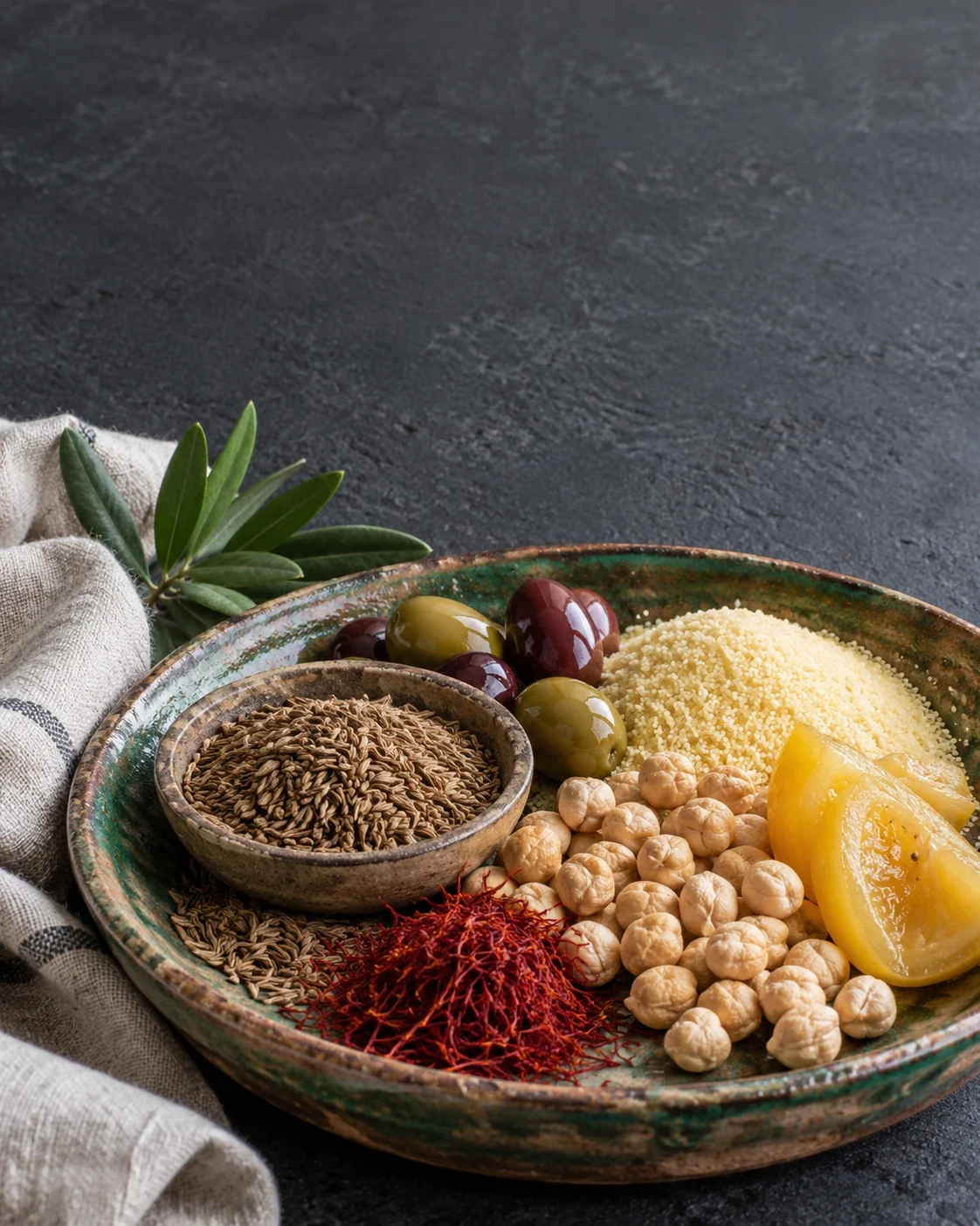
Moroccan Ingredients & Pantry
Get to know the ingredients before choosing a dish.
Explore the story ↗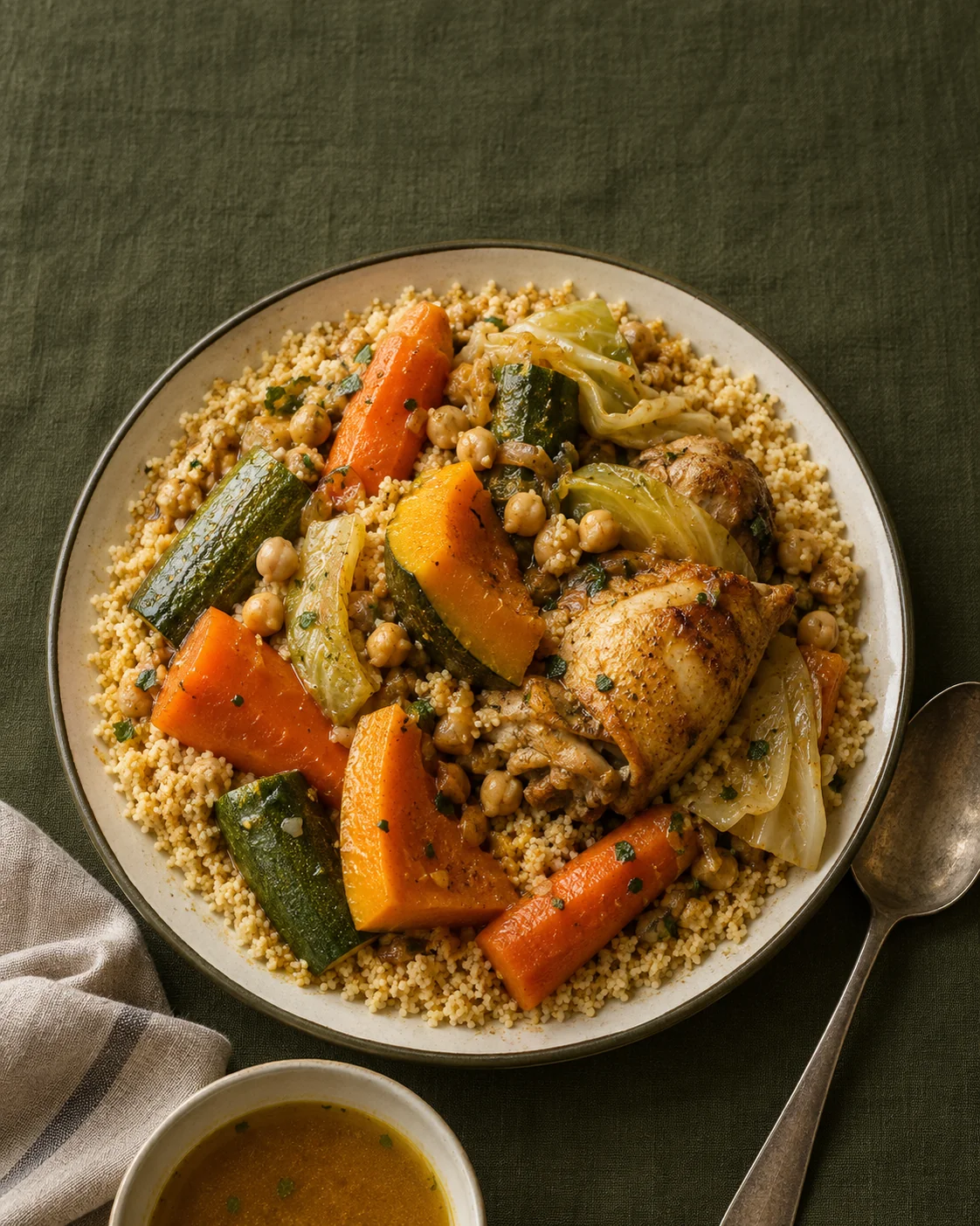
Couscous
Grains, steam and the many ways a shared platter comes together.
Explore the story ↗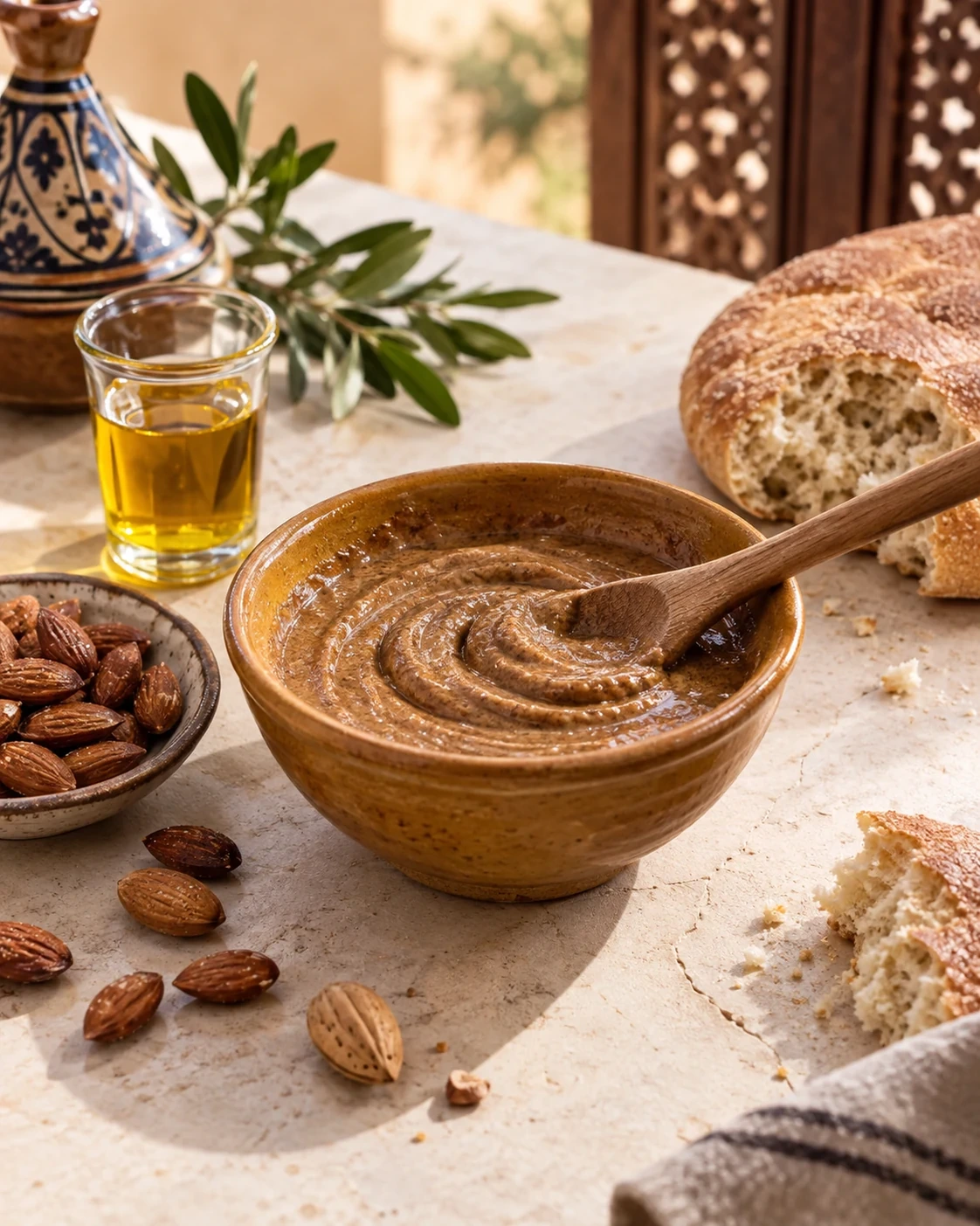
Amlou
Roasted almonds, culinary argan oil and honey from the southwest.
Explore the story ↗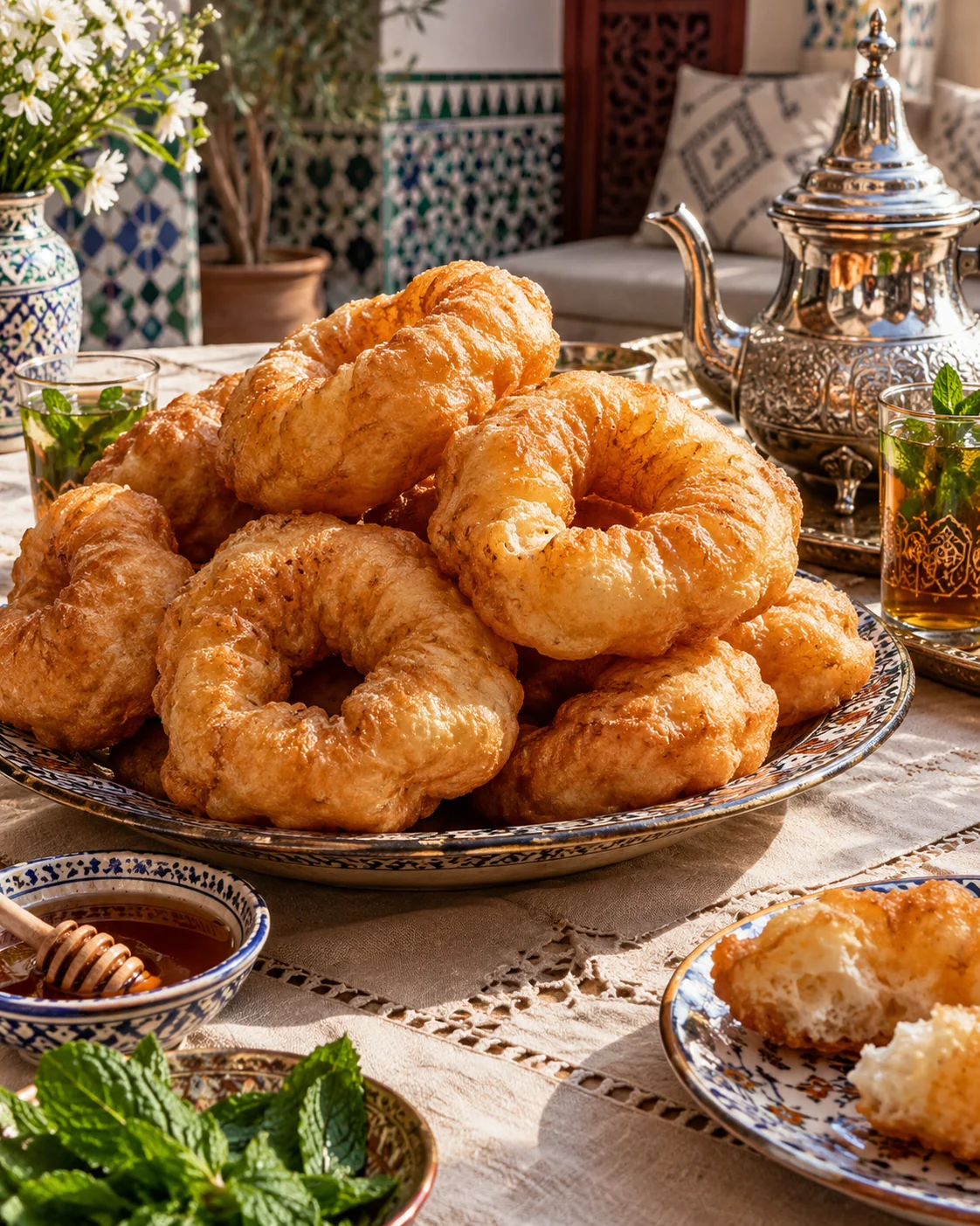
Street Food
Counters, griddles and food made to eat on the move.
Explore the story ↗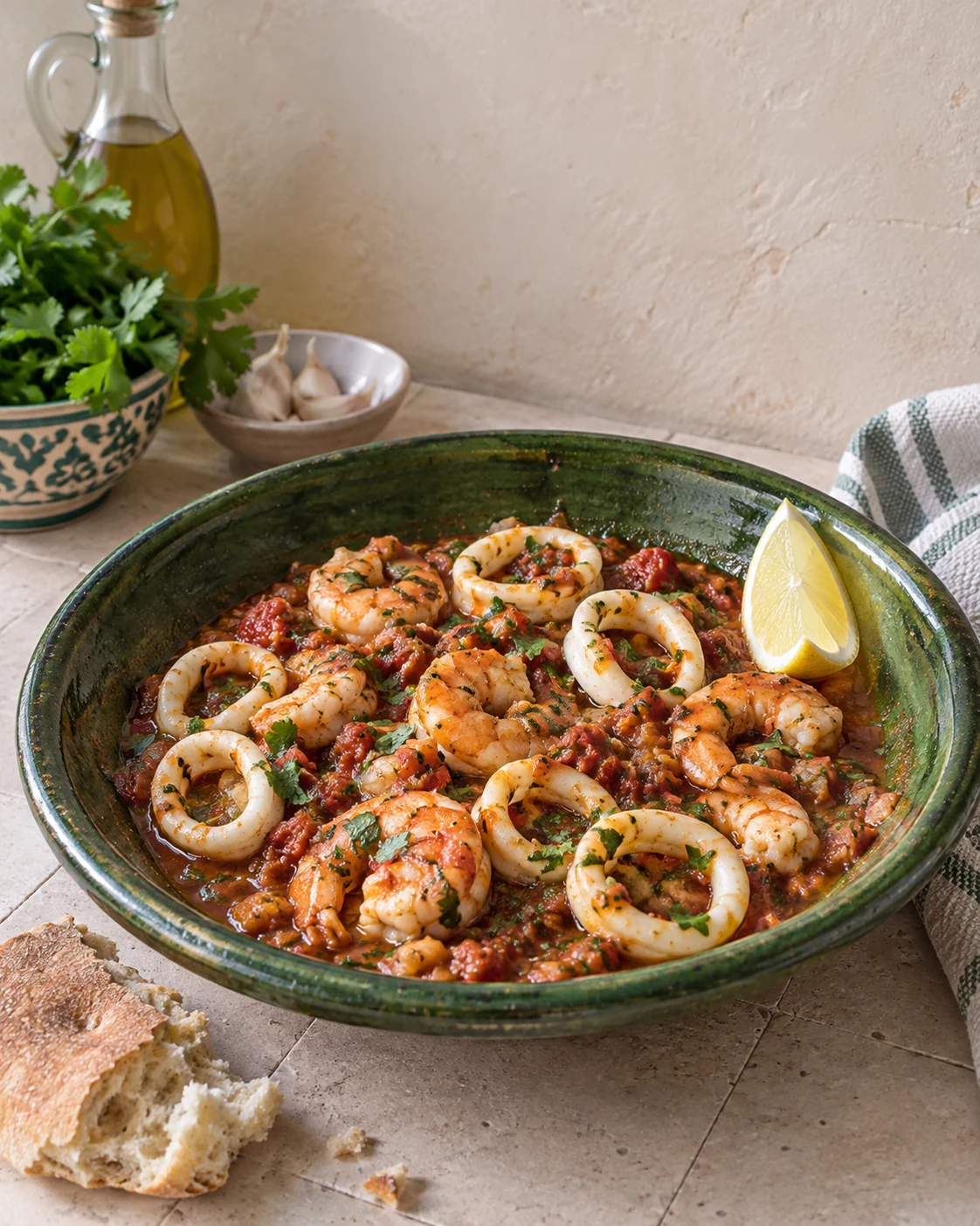
Seafood & Coastal Cooking
Fish markets, chermoula and the kitchens of the coast.
Explore the story ↗Sources & editorial notes
Photography combines existing Exotic Morocco assets and generated editorial illustrations. These images do not document a named person, household or historical event.
- UNESCO · Knowledge, know-how and practices pertaining to the production and consumption of couscous — production, hand-rolling, steaming, tools, transmission, conviviality and shared meals.
- UNESCO · Argan, practices and know-how concerning the argan tree — south-west Morocco, extraction practices, culinary uses, tools and transmission.
- Moroccan National Tourist Office · Gastronomy — culinary diversity, emblematic dishes, market and conviviality context.
- Moroccan National Tourist Office · Food & drinks — mint tea, hospitality and selected regional food examples.
EXOTIC MOROCCO Places. People. The pleasure of knowing more.Back to top ↑