

01 · A place at the table
The heart of
a Moroccan meal.
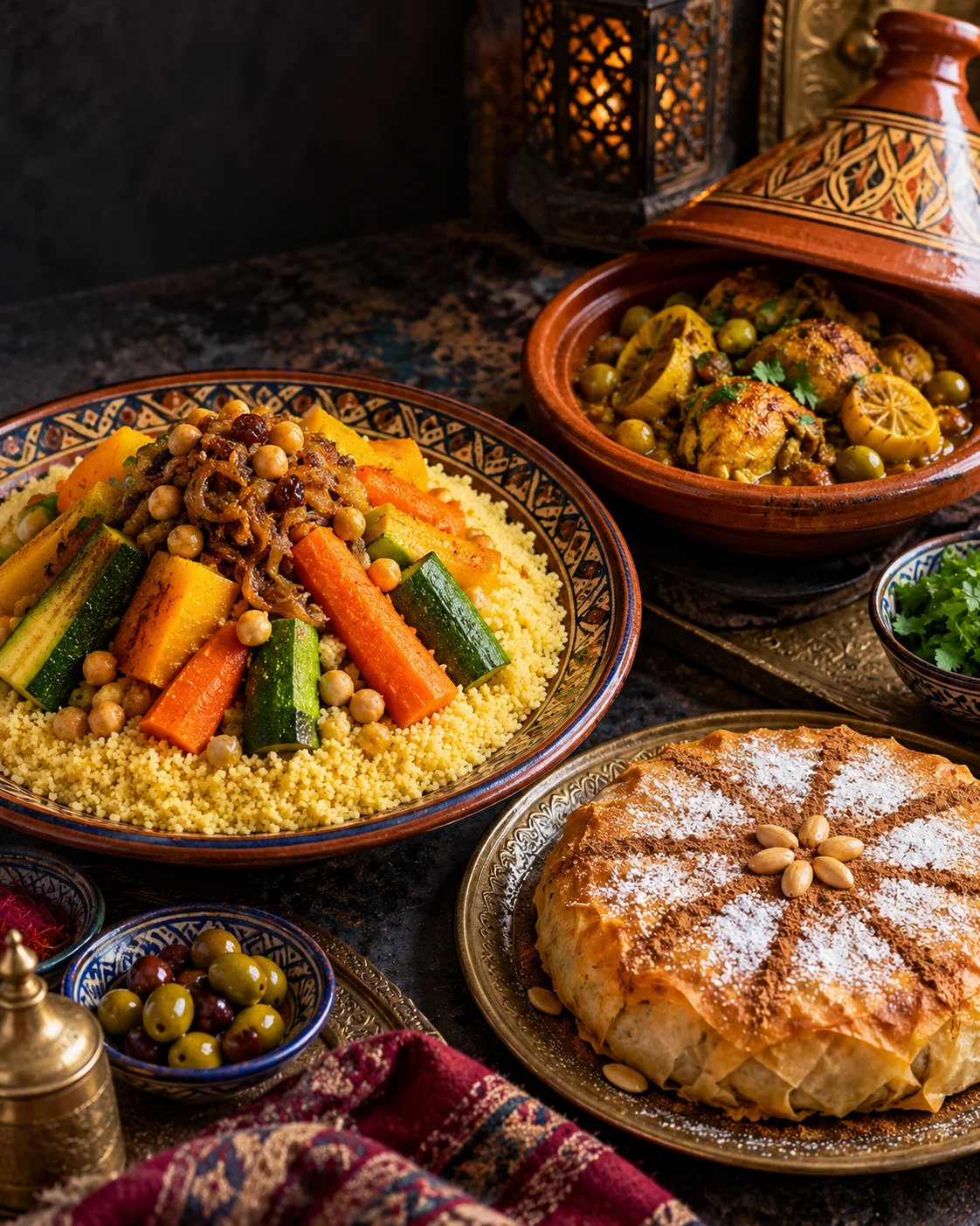
There is no single main dish that speaks for every Moroccan table.
A mound of carefully steamed couscous, a covered tagine brought to the centre, a layered pastilla carried out for guests: each asks for a different kind of attention. The cook chooses a method, seasons a sauce, and makes room for people to eat together.
This collection follows the architecture of the meal—grains, bread, broth, pastry and slow cooking—rather than treating Moroccan cuisine as one fixed menu. Everyday and celebratory dishes sit side by side; family versions vary.
Explore Moroccan food culture ↗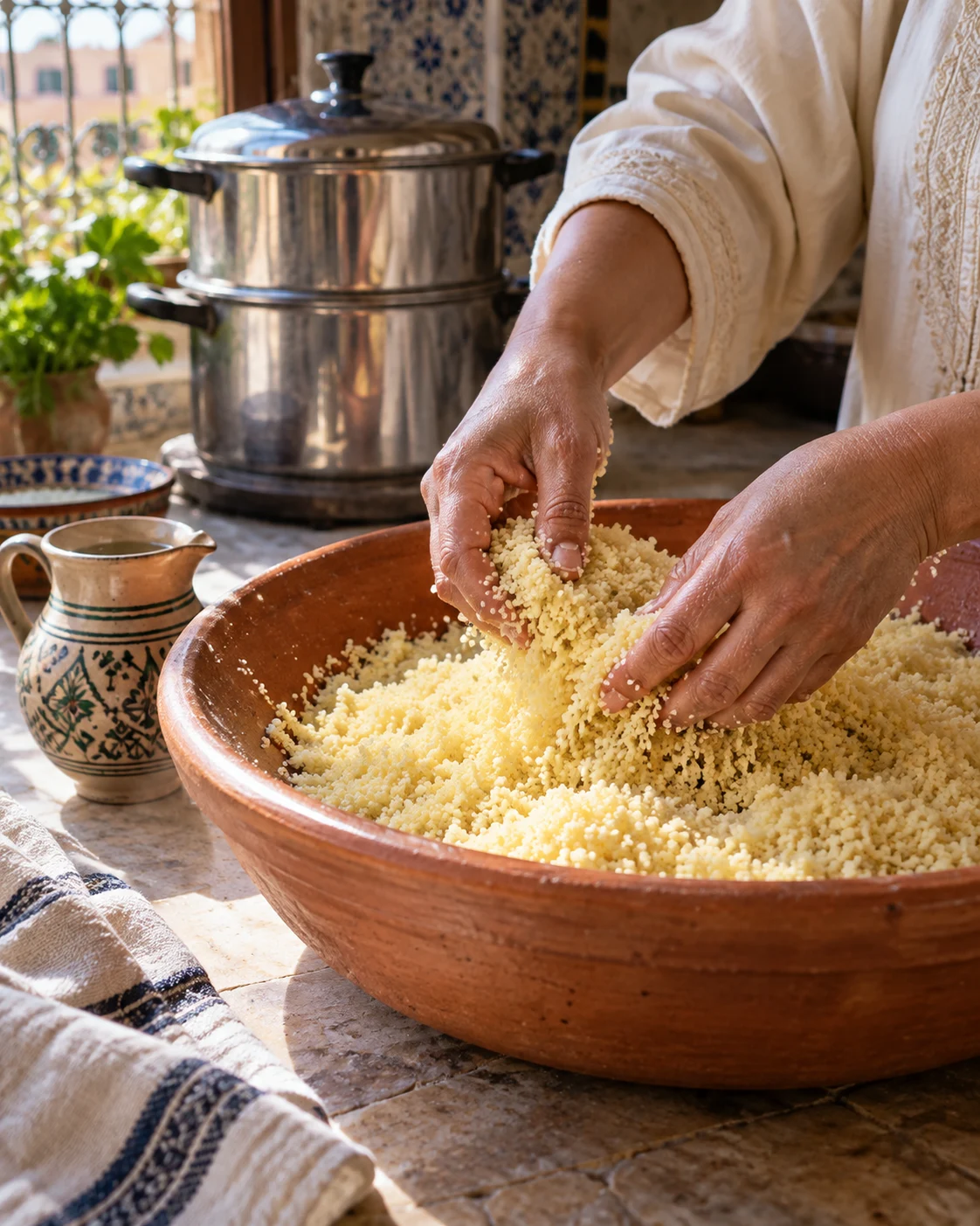
Couscous develops lightness through careful handling.
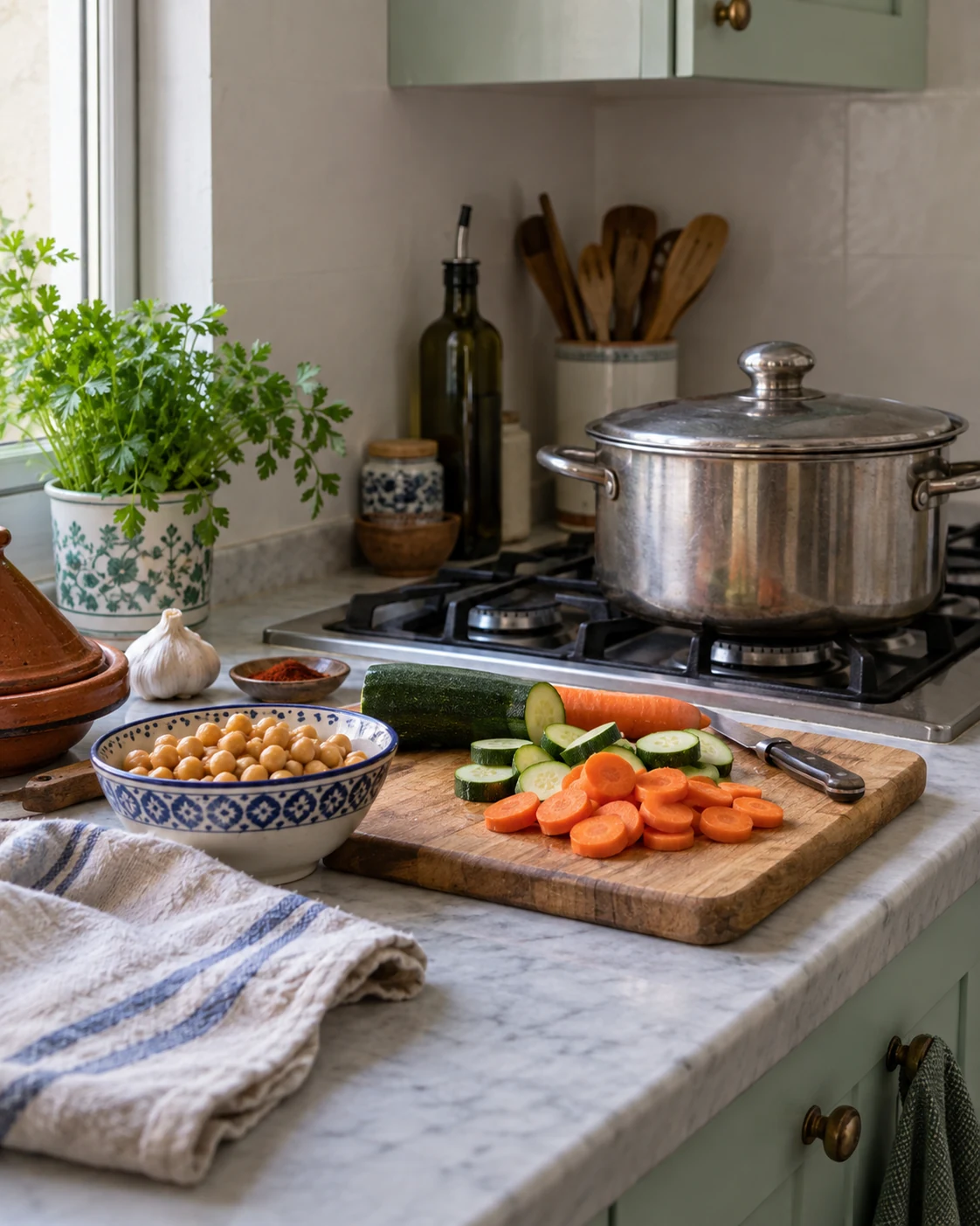
Vegetables, aromatics and broth shape the final balance.
The dish often arrives ready for the table to gather.
02 · A living culinary inheritance
Many histories.
Still in motion.
These dishes carry skill across households and generations.
Moroccan cooking reflects Amazigh, Arab-Andalusian, Jewish and other intertwined histories. No single origin tale explains every dish. The methods changed as ingredients, towns, homes and cooks met one another. [1]
Knowledge of making and sharing couscous is recognised on UNESCO’s intangible heritage list through a joint nomination from Algeria, Mauritania, Morocco and Tunisia. The inscription concerns practices and people, rather than exclusive ownership of a recipe. [2]
Hand and tool
Grain is moistened, separated and steamed; good texture comes from practice.
Home and occasion
A family lunch and a large gathering can call for different scales of the same dish.
Living change
Contemporary kitchens adapt equipment while carrying techniques forward.
03 · Technique shapes the plate
Four ways
to make a meal.
The cooking method matters as much as the ingredient list. A steamer, covered vessel, pot of broth and delicate pastry create different textures and rhythms.
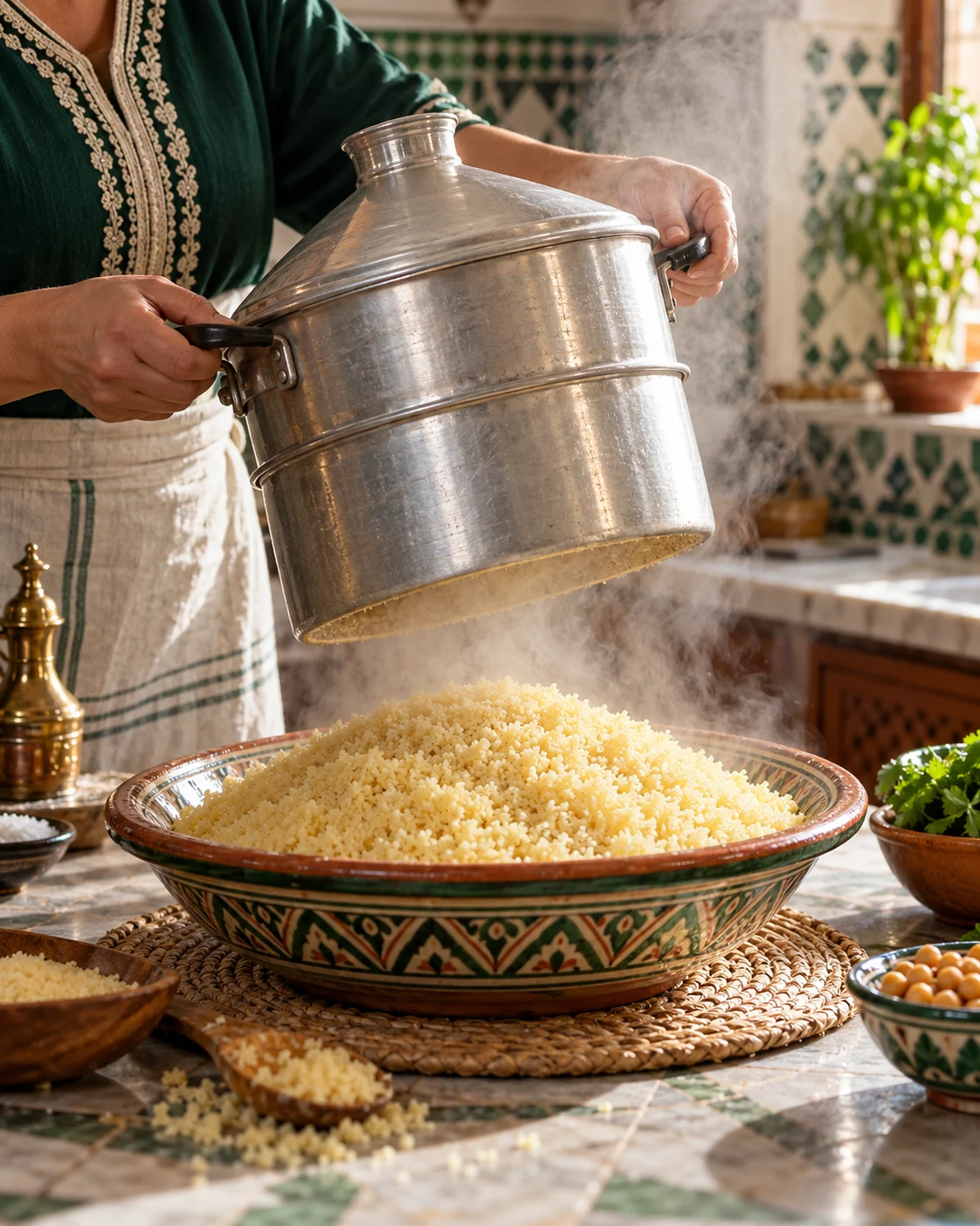
Steam the grain
Semolina couscous is worked and steamed in stages, then served with broth and vegetables.
Braise gently
Tagines and other covered dishes bring ingredients together slowly; the sauce should suit the food, not drown it.
Layer and absorb
Rfissa places chicken, lentils and fragrant broth over torn flatbread so the bread takes on flavour.
Enclose and crisp
Pastilla sets a savoury filling inside fine pastry; the crisp outer layer contrasts with the soft centre.
A practical cook chooses heat, moisture and timing for the specific dish—there is no universal Moroccan main-dish method.
04 · Distinct dishes, distinct character
Follow the dish.
Find its method.
A main course is more than a protein. Grain, bread, vegetables, pastry and sauce each make a different promise to the table.
These are representative families, never an exhaustive or rigid catalogue.
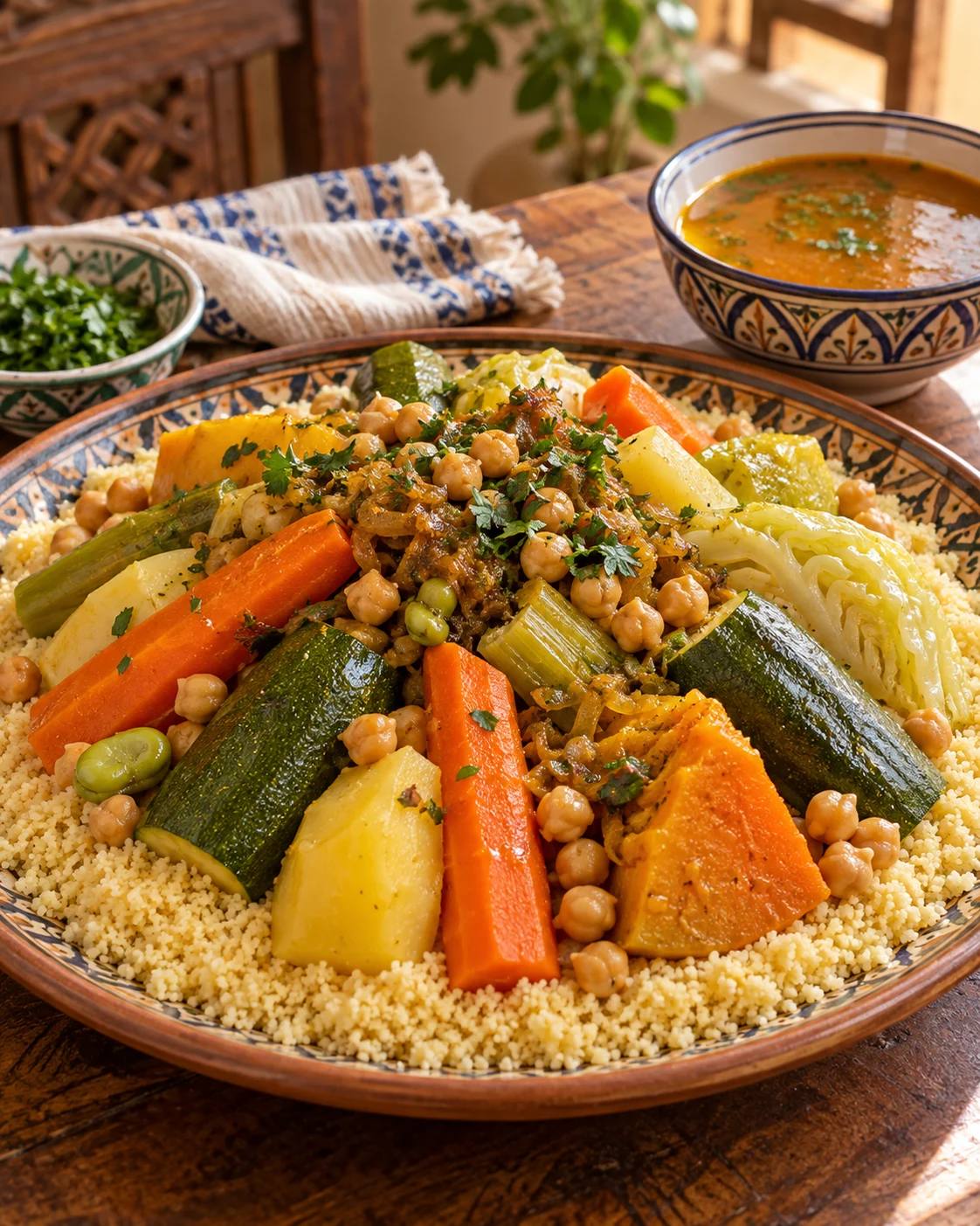
Couscous with vegetables
Separate, light grains carry a vegetable-rich broth. Meat may be added, but the vegetables and the careful steaming deserve attention.
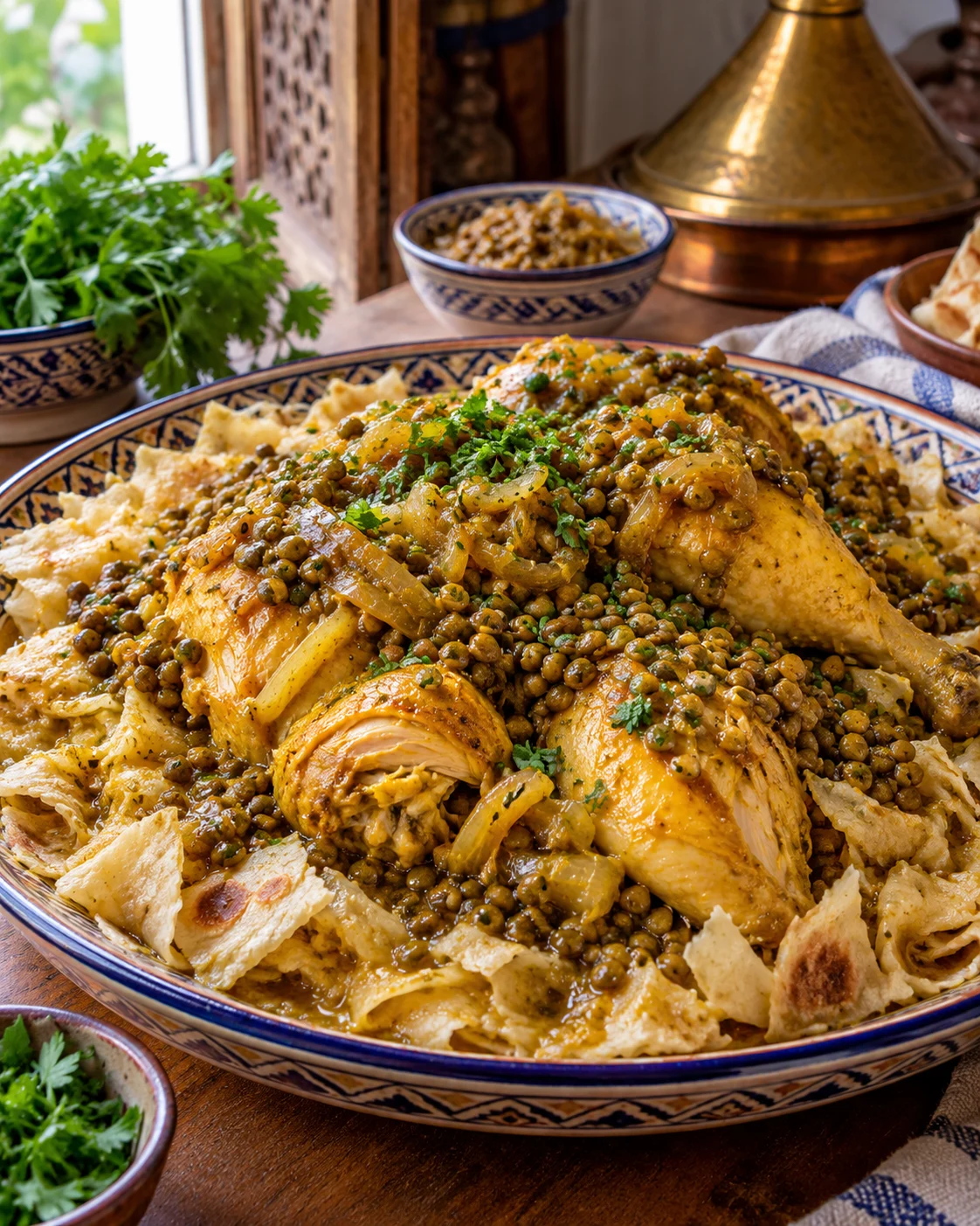
Rfissa
Torn trid or msemen catches the broth beneath chicken and lentils; fenugreek can give the dish its characteristic aroma.
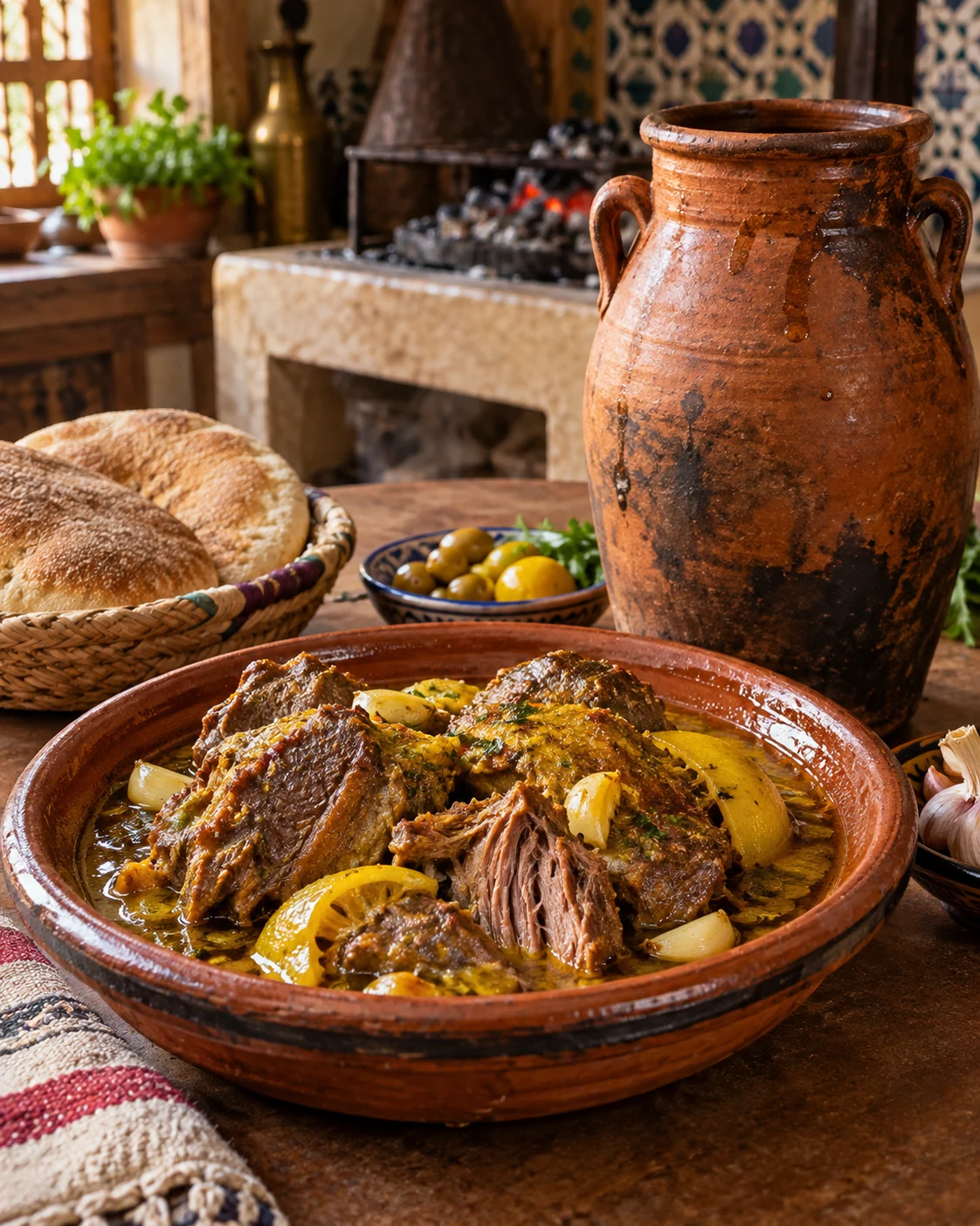
Tanjia Marrakchia
Marrakech’s meat dish takes its name from the tall earthenware jar associated with its preparation. It is distinct from a conical tagine.
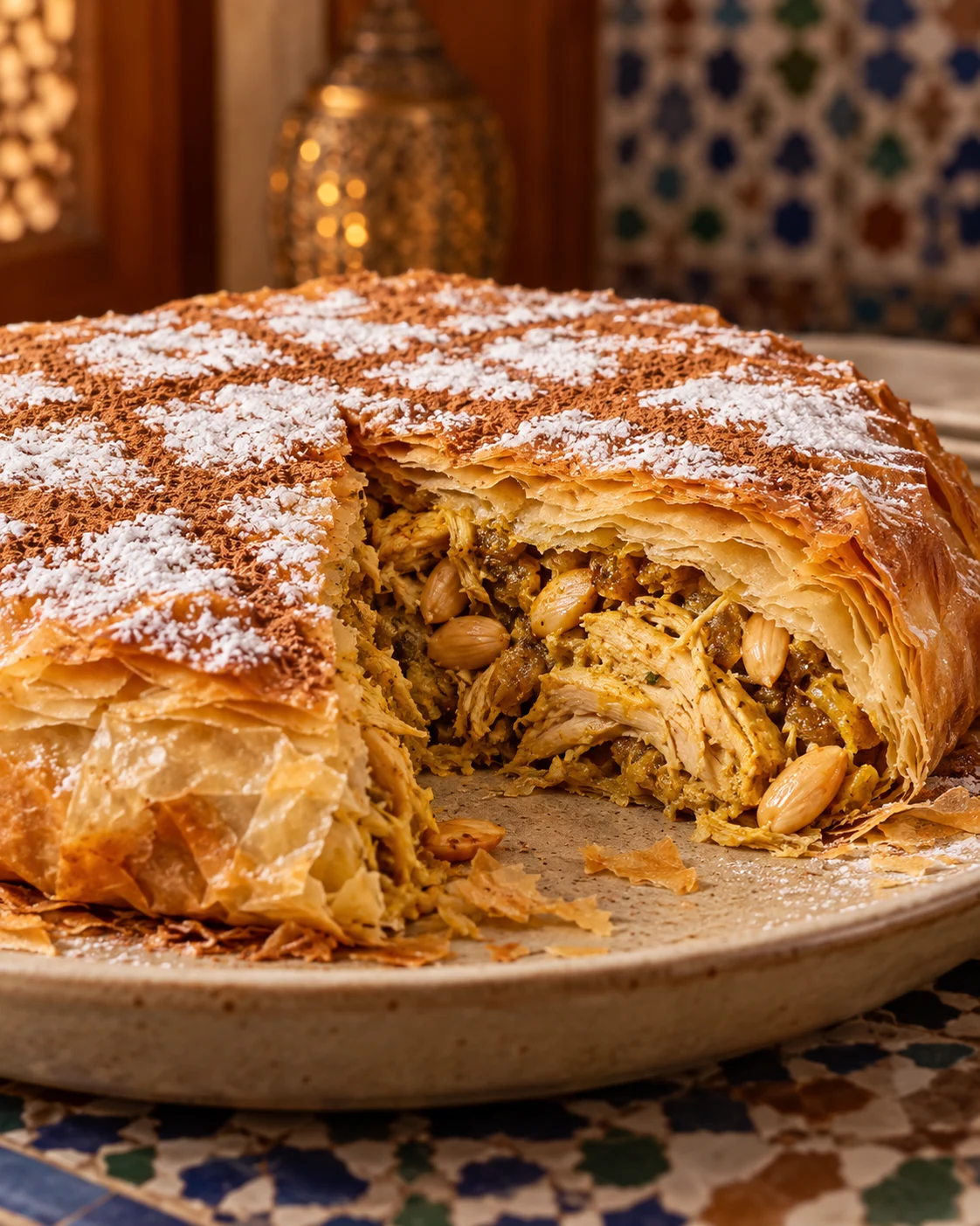
Chicken & almond pastilla
Crisp warqa encloses spiced chicken and almond layers. A light sugar-and-cinnamon finish is one familiar expression.
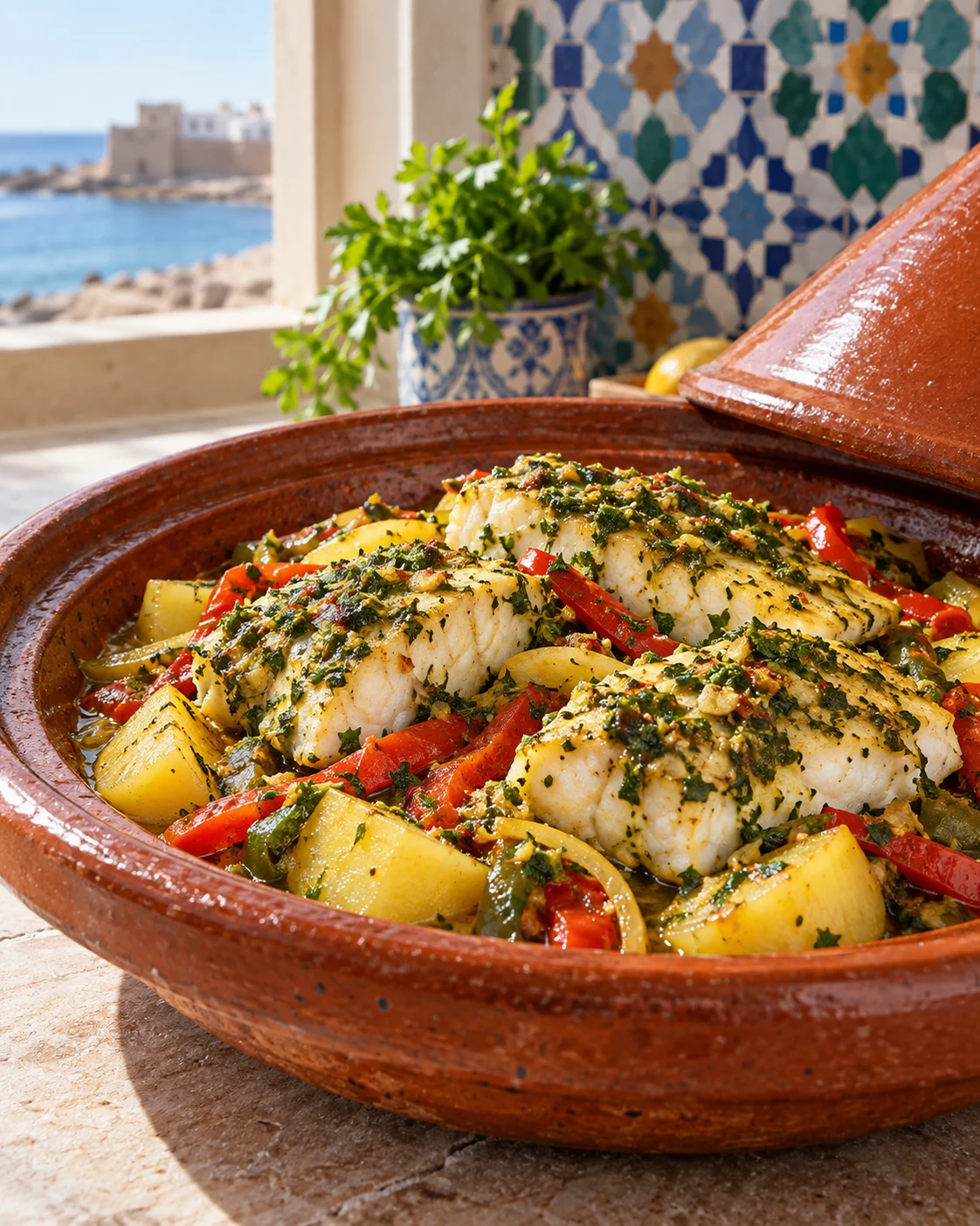
Fish tagine with chermoula
Herbs, garlic, spice and citrus season fish; its shorter cooking time asks for a different pace from a meat braise.
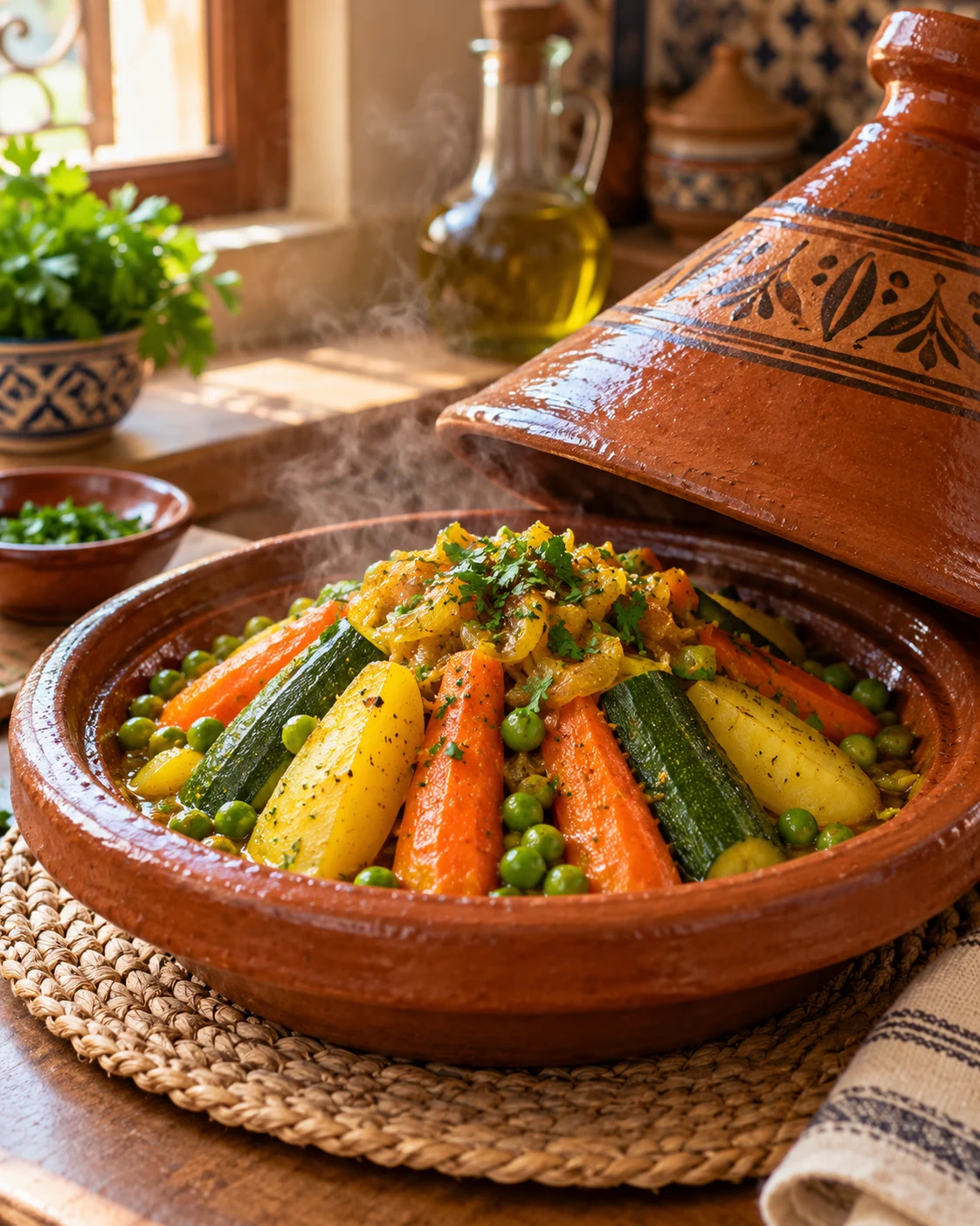
Vegetable tagine
Seasonal vegetables can be the centre of the dish, taking on a carefully reduced onion and spice sauce.
One name, many homes.
A household may alter seasonings, vegetables, cuts and serving customs without losing the identity of a dish.
Respect the distinctions.
Couscous is not a bed for every tagine. Tanjia is not a tagine, and pastilla is not simply a sweet pastry.
05 · Ingredients with a purpose
Flavour has
a structure.
Ingredients do different jobs. Some carry broth, some brighten a rich sauce, and some give a dish its defining texture.
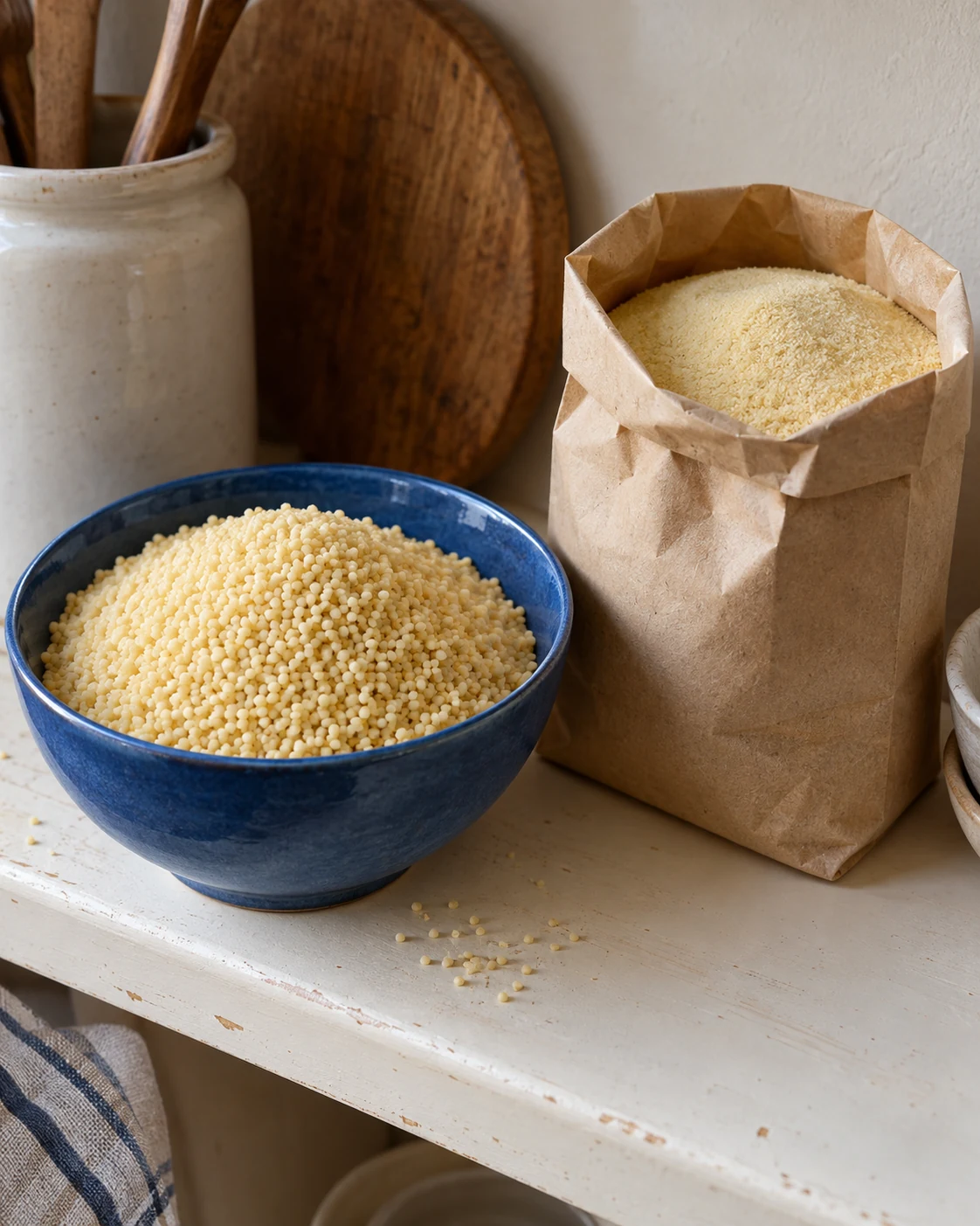
Durum semolina
The grain.
Moistening and steaming produce a light texture; the grain is not simply boiled as a side.
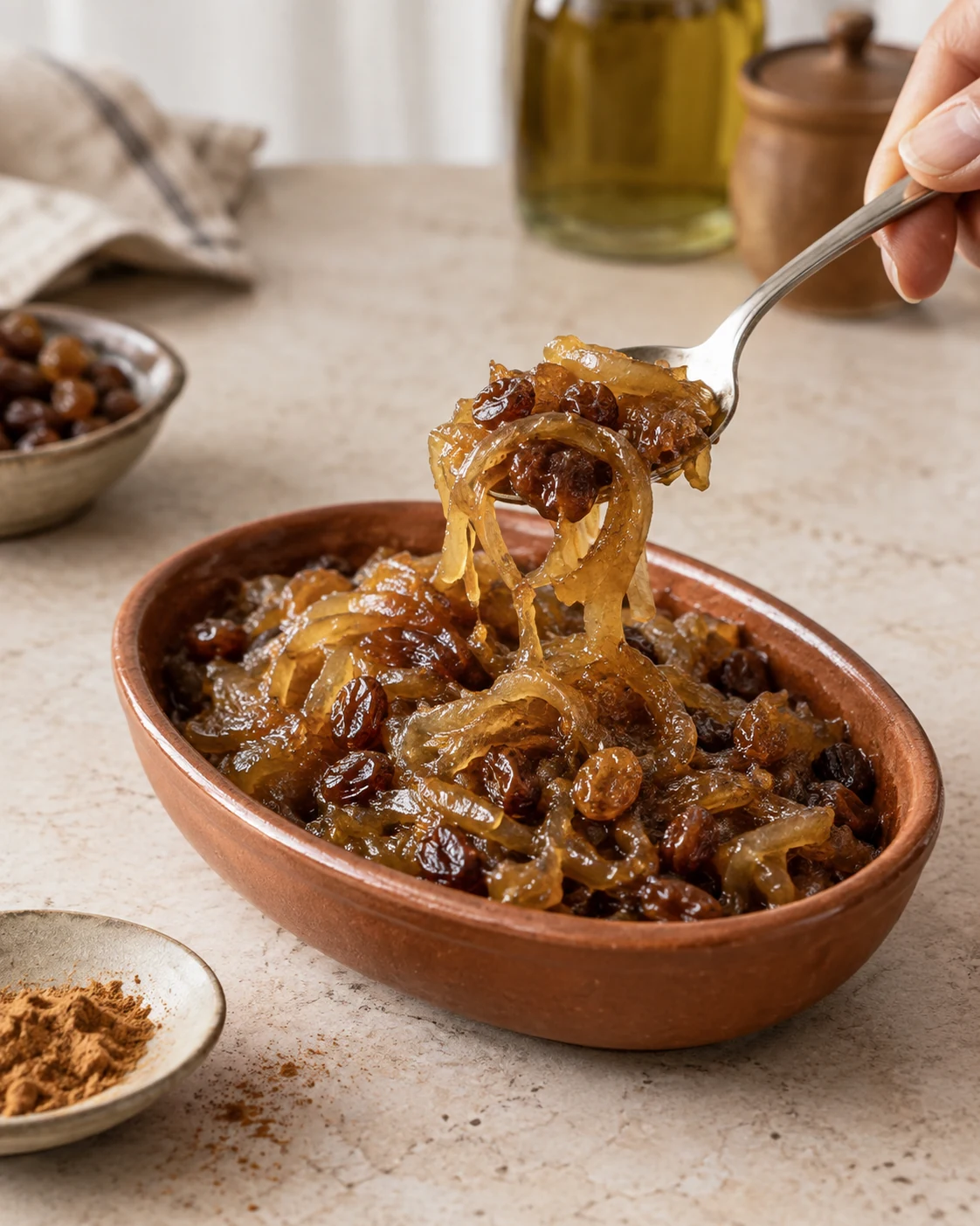
Onion & sweetness
A measured contrast.
Slow-cooked onion, sometimes with raisins and cinnamon, can accompany certain couscous preparations.
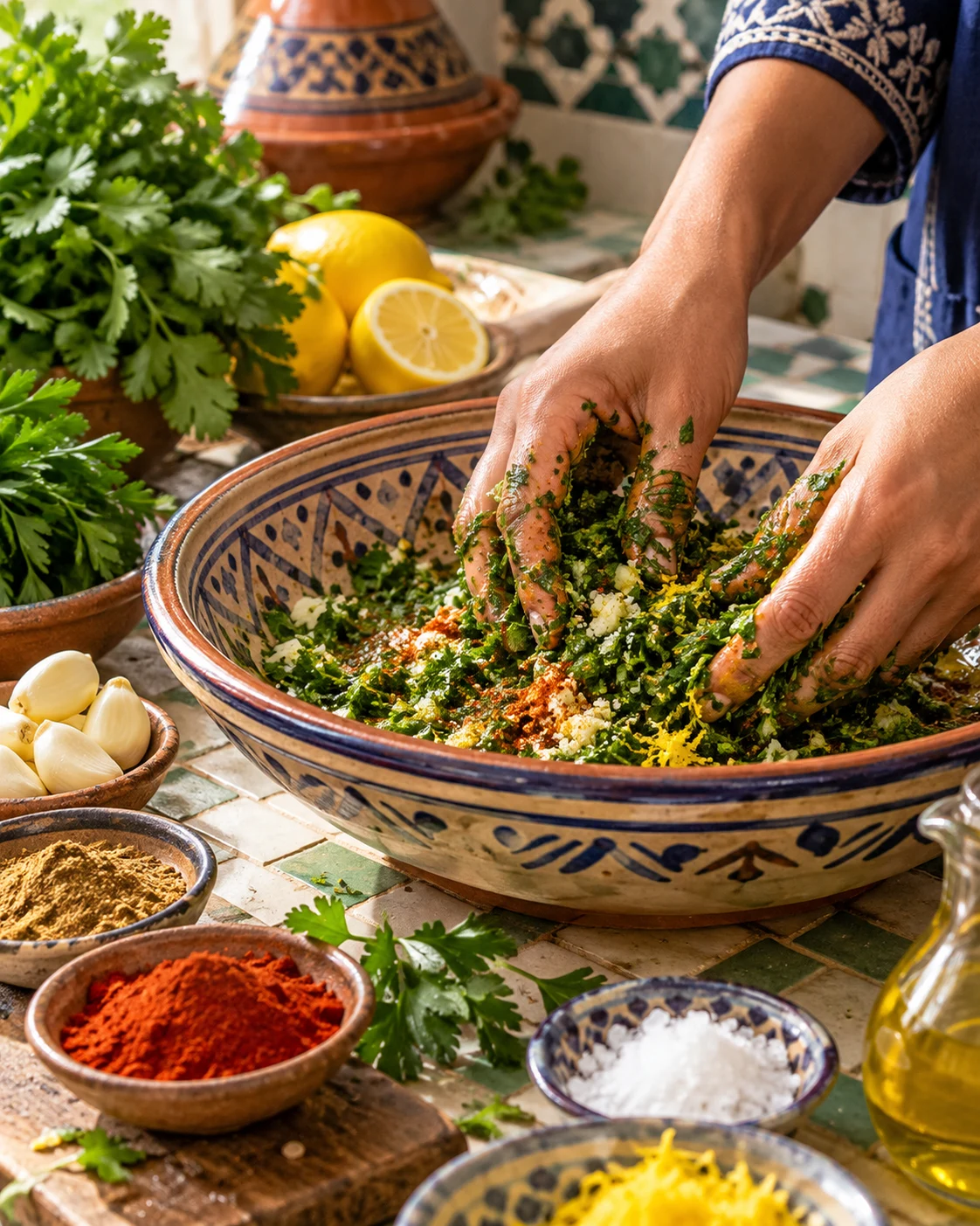
Herbs & citrus
A vivid seasoning.
Fresh herbs, garlic, spice and lemon lend direction to fish and some vegetables.
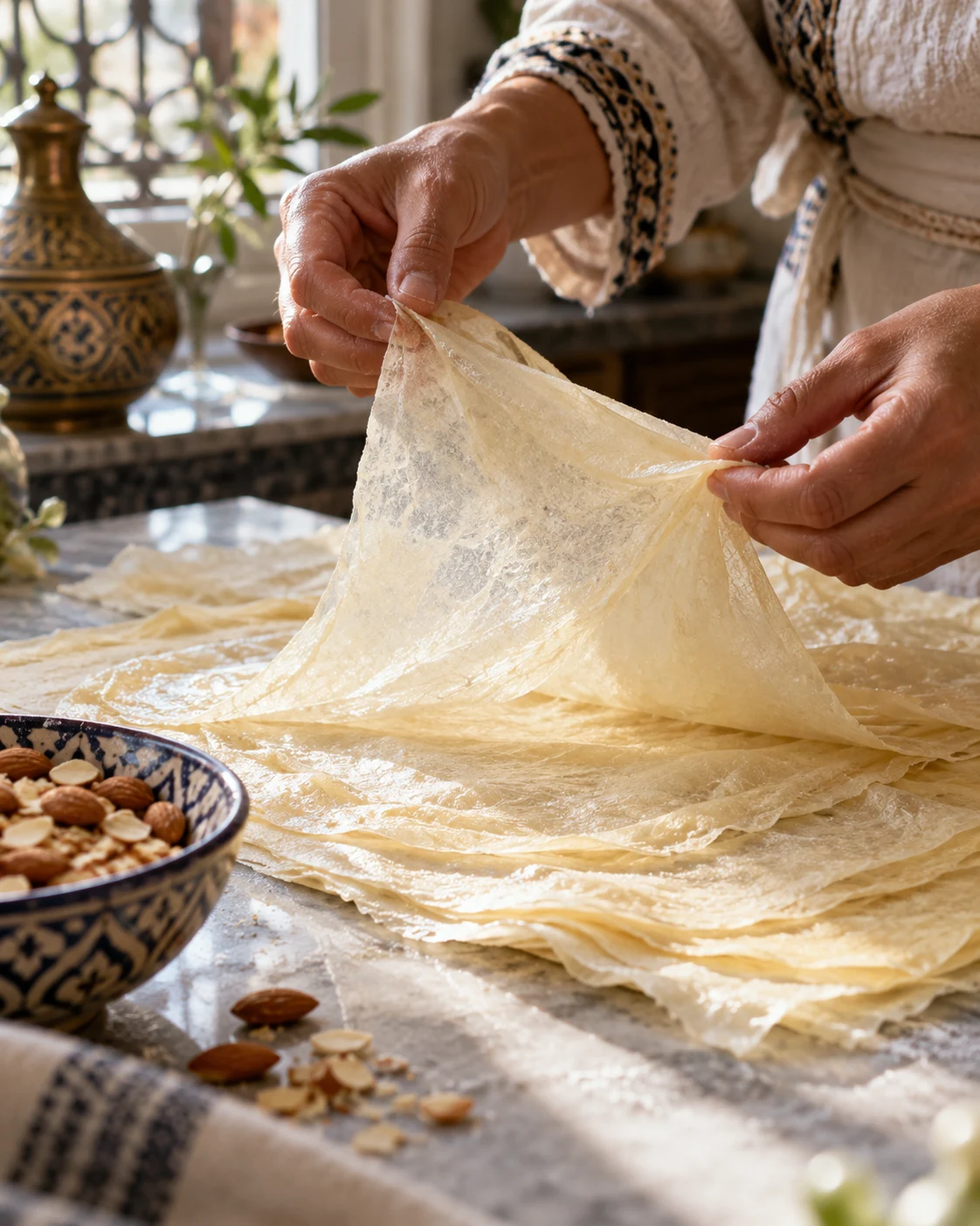
Fine pastry
A delicate shell.
Thin sheets create the crisp structure that makes a pastilla recognisable.
Explore the four foundations
The quiet
foundations.
Onion and good broth are not glamorous, but they join the parts of a meal. Salt and acidity should be considered with preserved lemon and olives already in the pan.
Spices are chosen to suit a dish: ginger, saffron, cinnamon, cumin or paprika may be relevant in different combinations. A single blend is not a rule for every pot.

06 · Market and household
Place changes
the possibilities.
Season, coast, city and family taste shape the meal.
Produce, fish and meat arrive with different local rhythms. A market choice can redirect the vegetables around couscous or the herbs in a fish dish. A household’s equipment, budget and habits matter just as much.
Marrakech is particularly associated with tanjia, while coastal kitchens have easy access to fish. These associations invite exploration; they do not fence recipes inside city limits. [3]
The market
Seasonal vegetables suggest the next platter.
Explore Taste Morocco ↗The city
Marrakech offers a context for tanjia’s distinctive vessel.
Explore Marrakech ↗The coast
Fresh fish changes the time and texture of a main dish.
Explore Essaouira ↗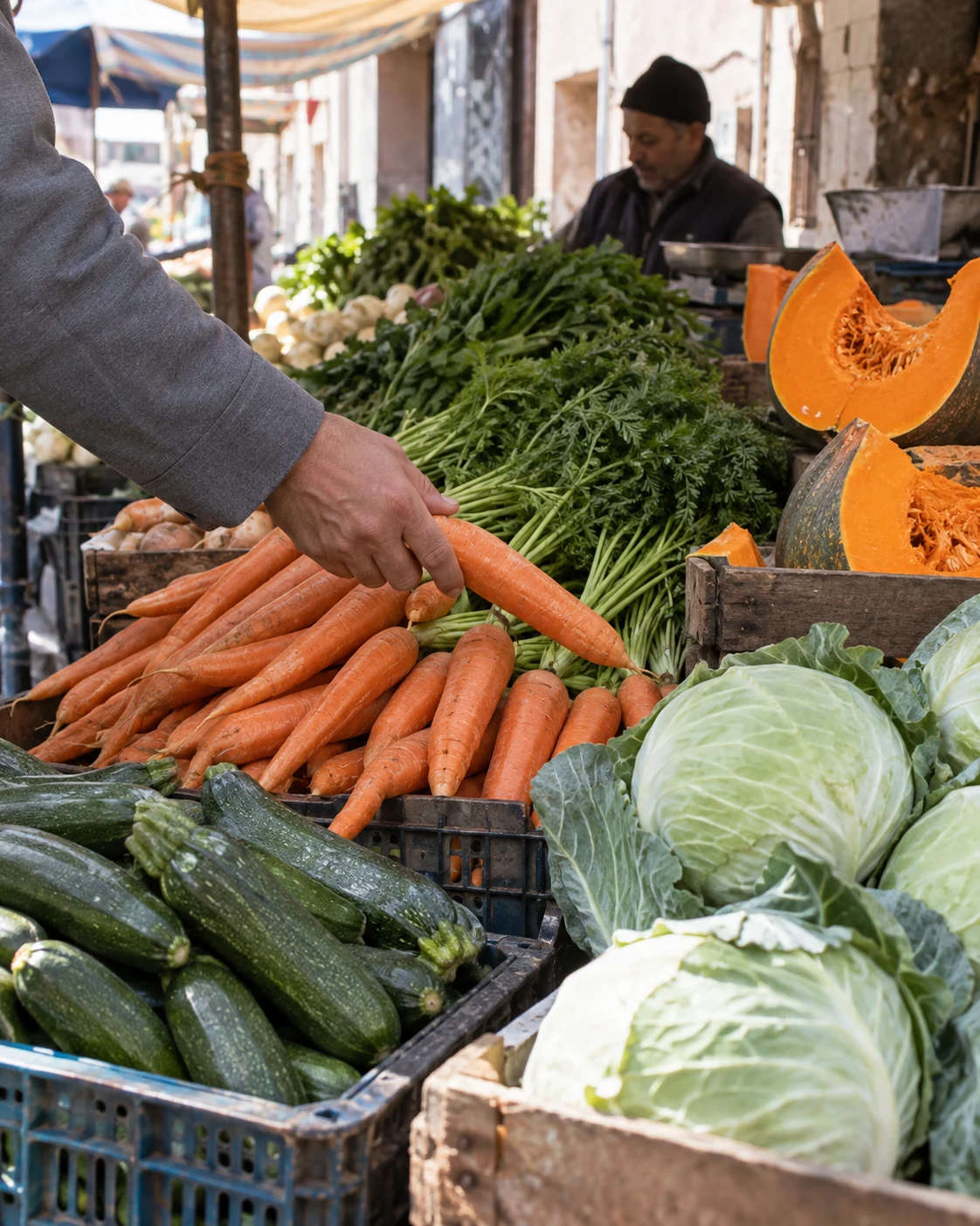
07 · How the meal arrives
Put the platter
in the centre.
The presentation makes space for people.
The vessel can come straight to the table, or a platter can be assembled just before serving. Hot broth, crisp pastry and tender bread each ask for their own timing.
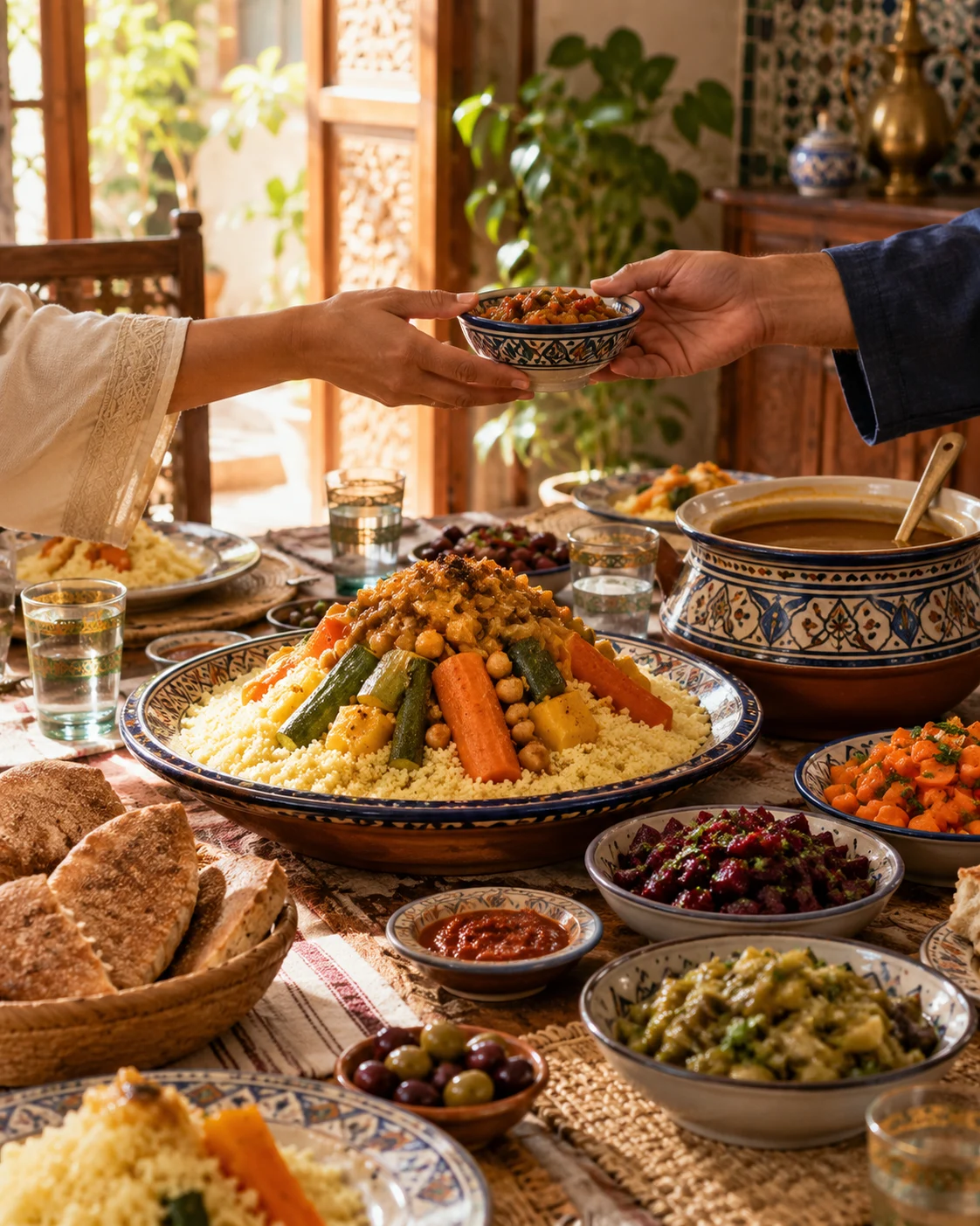
Serve at the right moment.
Couscous benefits from fluffy grains and hot broth; pastilla is most striking when its crust still has bite.
Keep the accompaniments relevant.
Bread is natural beside many saucy tagines. A small cooked salad can add contrast, but no fixed set of side dishes is required.
Let hospitality be flexible.
The table may be modest or celebratory. What changes is the scale, not the care in preparing and offering the food.
08 · Knowledge in the hands
Technique is
passed on.
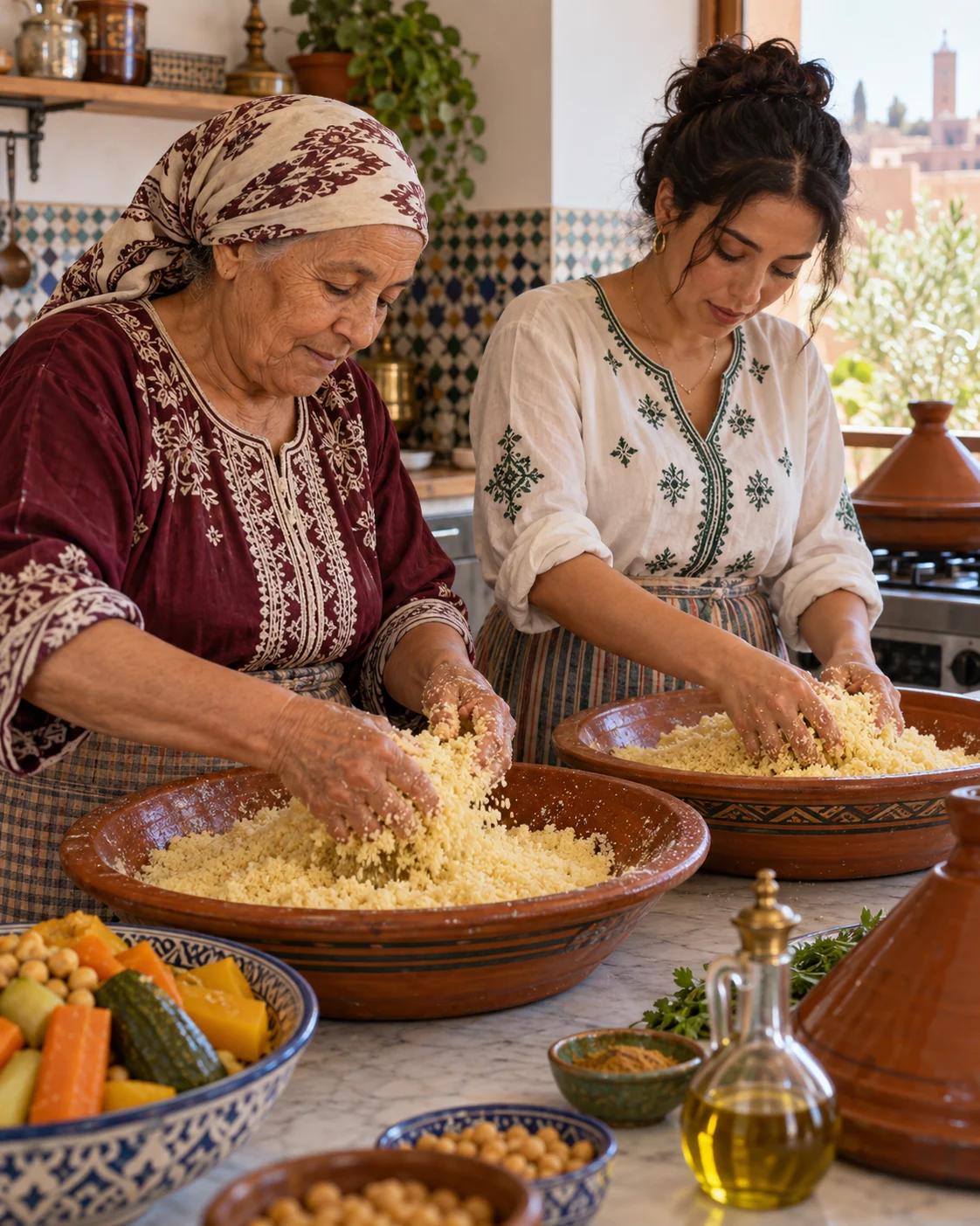
Recipes record ingredients; cooks teach judgment.
Feeling when grains need a little water, judging how much broth the bread will absorb, or knowing when a filling is cool enough for pastry are skills acquired through practice. Written directions help, but observation matters.
UNESCO describes couscous knowledge as including preparation methods, tools and the circumstances of consumption. That wider view gives credit to the people who keep it alive. [2]
09 · A closer look
Good questions.
Clear distinctions.
A few details make the whole table easier to understand.
Is every Moroccan main dish cooked in a tagine?
No. Couscous is steamed, rfissa is assembled over bread, pastilla is baked in pastry, and tanjia is associated with a tall earthenware jar.
Is couscous always served with meat?
No. Vegetable-led versions are substantial in their own right. Ingredients and serving choices vary among households.
Are pastilla and tanjia only for special occasions?
Pastilla is often associated with gatherings, while tanjia has a strong Marrakech identity. Everyday practice and occasions vary by household.
Can these dishes be made in modern kitchen equipment?
Yes. The key is to preserve the relevant cooking principle—steam, gentle braise, careful layering or crisp pastry—and adjust timing to the equipment.
 EXOTIC MOROCCOTASTE · THE GUIDE COLLECTIONMain DishesIngredients, technique
and the Moroccan table
From the story to your kitchen
Keep the flavour.
Go a little deeper.
Shared platters and the decisions behind a satisfying meal.
Explore the Exotic Morocco guide collection for a closer look at ingredients, kitchen knowledge and the culture around the table.
- Understand the ingredients and their roles
- Recognise the techniques and textures that matter
- Bring context and confidence to the way you cook and serve
Continue tasting Morocco
Follow the
table outward.
Another dish, another technique, another way into the Moroccan kitchen.
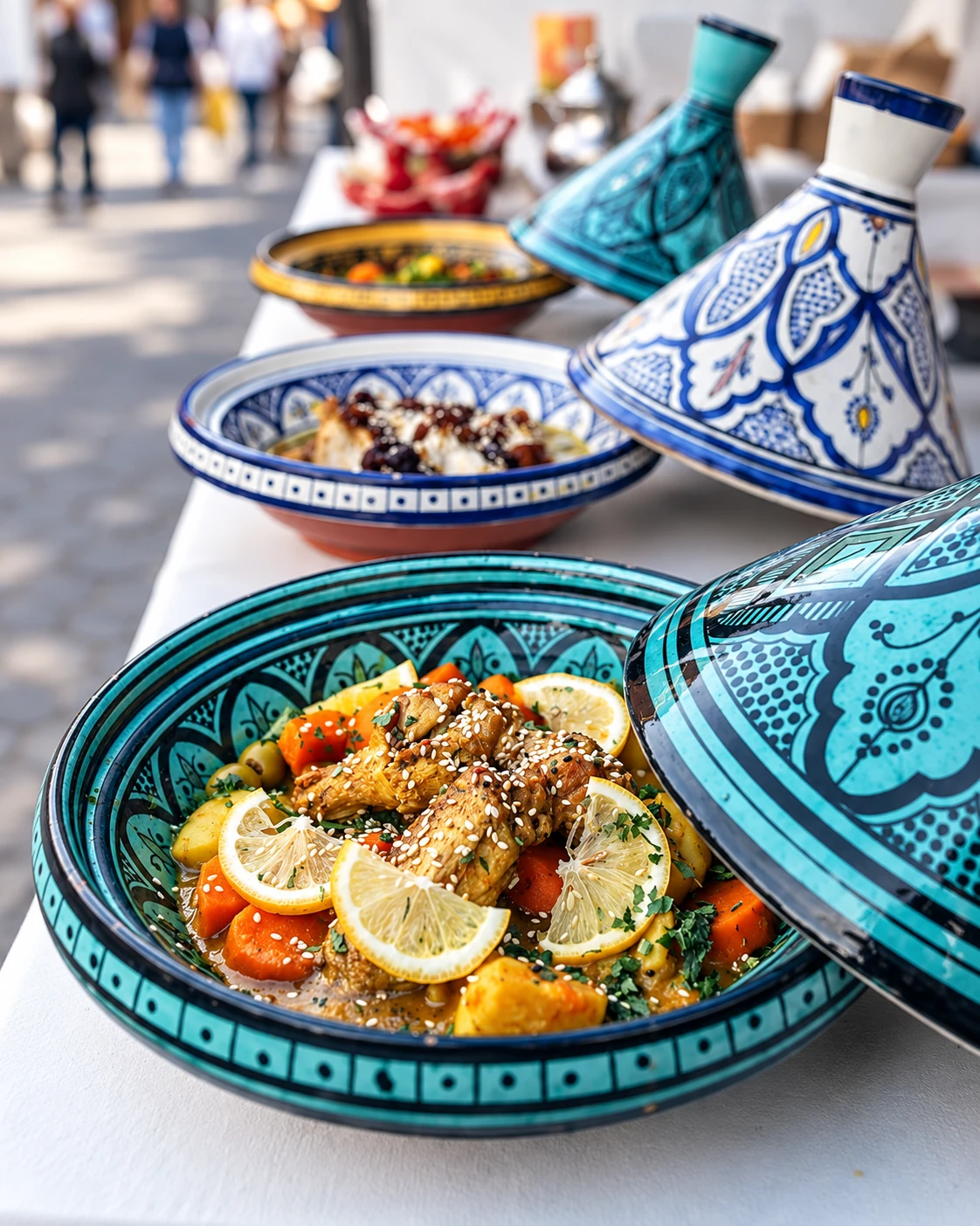
Tagine
Gentle heat, clay pots and the balance of a slow-cooked sauce.
Explore the story ↗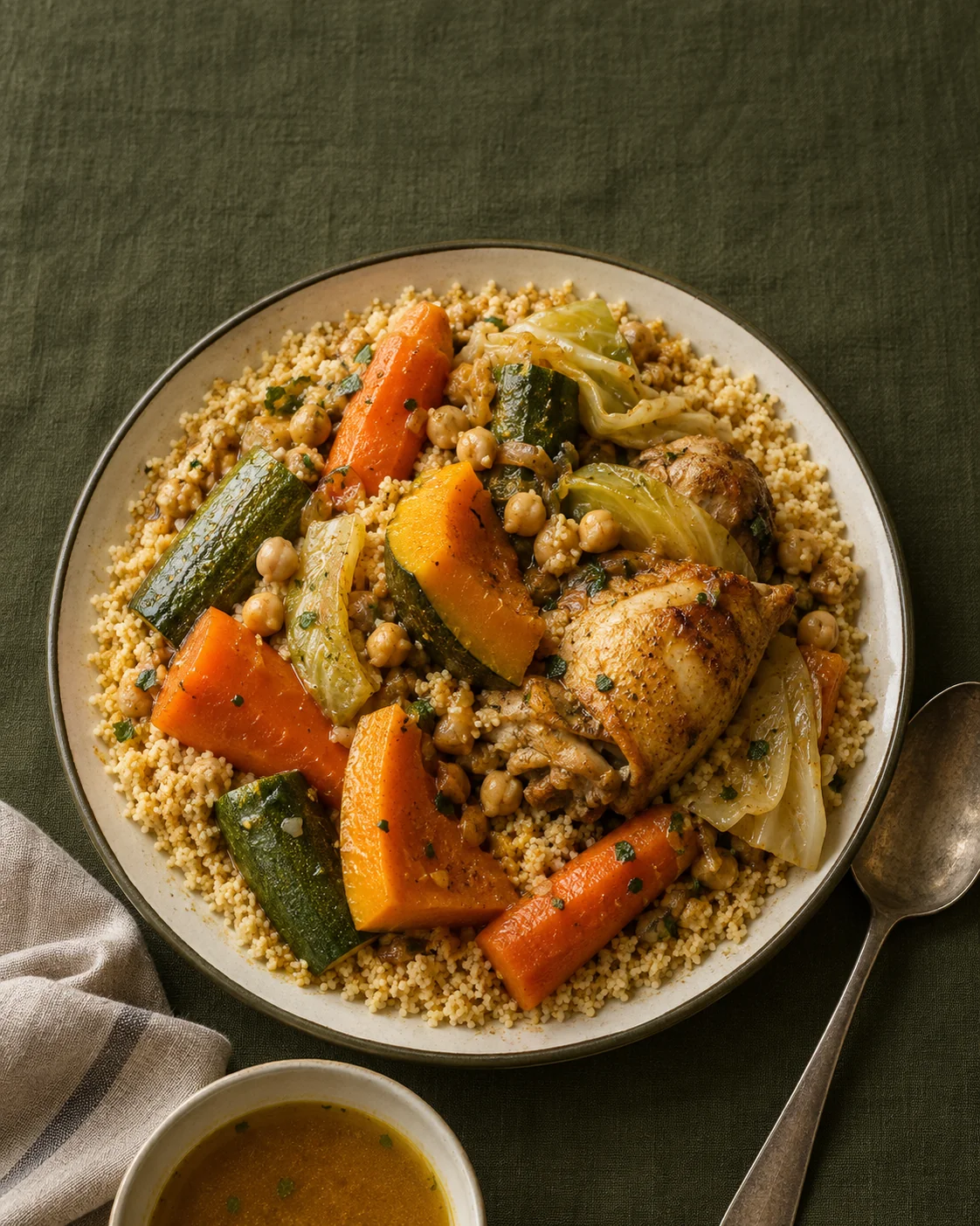
Couscous
Grains, steam and the many ways a shared platter comes together.
Explore the story ↗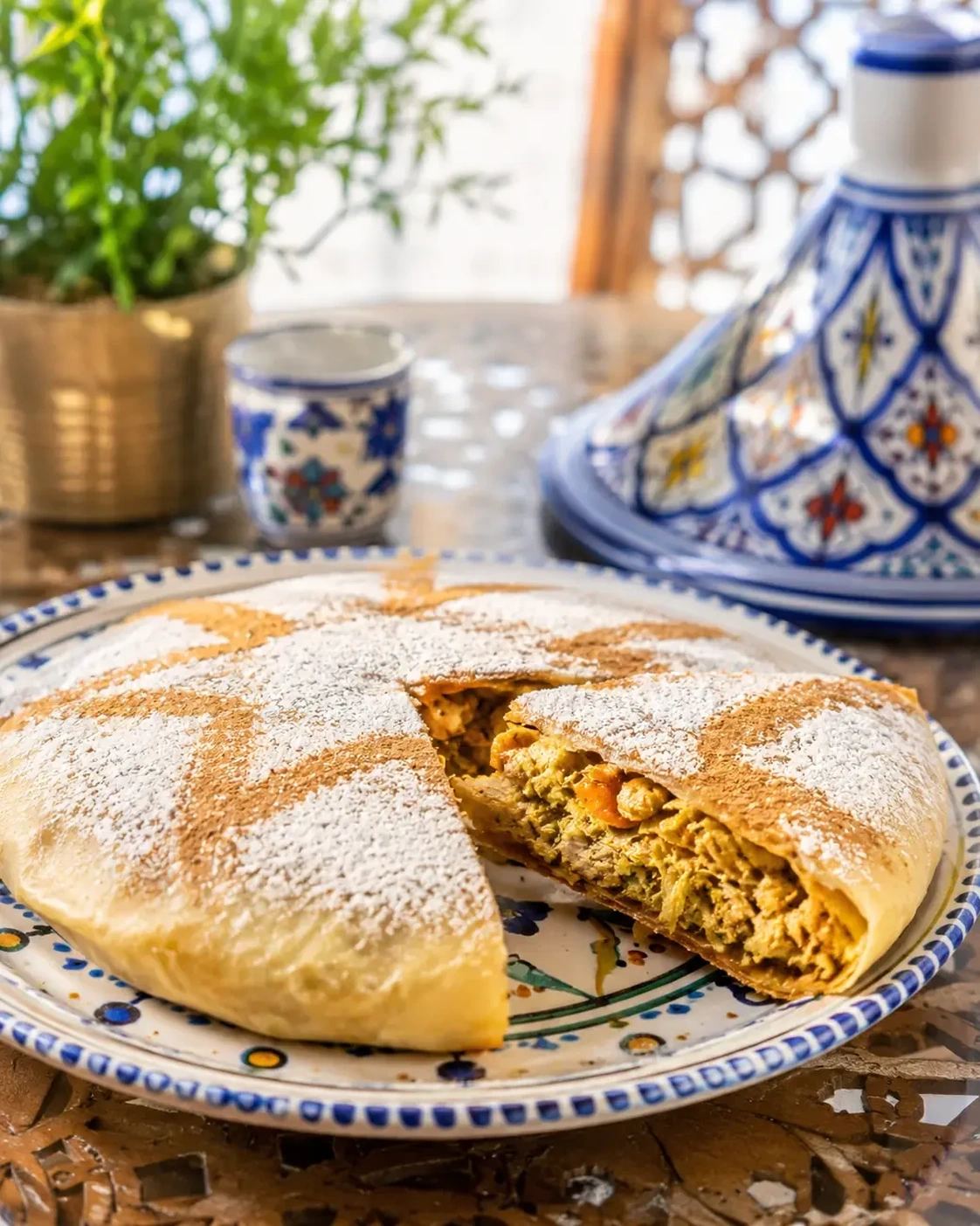
Pastilla
Fine pastry, layered fillings and the pleasure of contrasting textures.
Explore the story ↗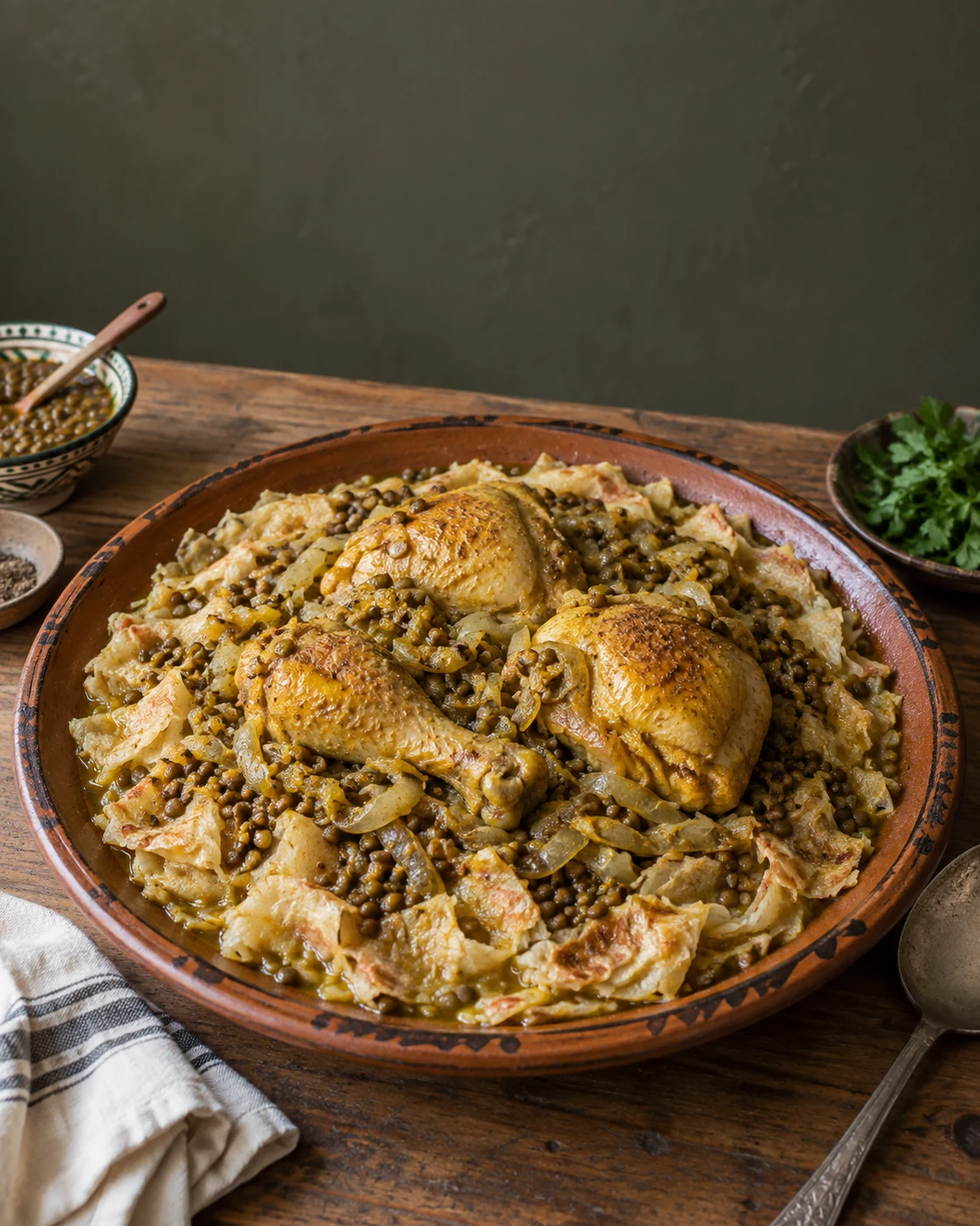
Rfissa
Chicken, lentils and fragrant broth finding their way through torn bread.
Explore the story ↗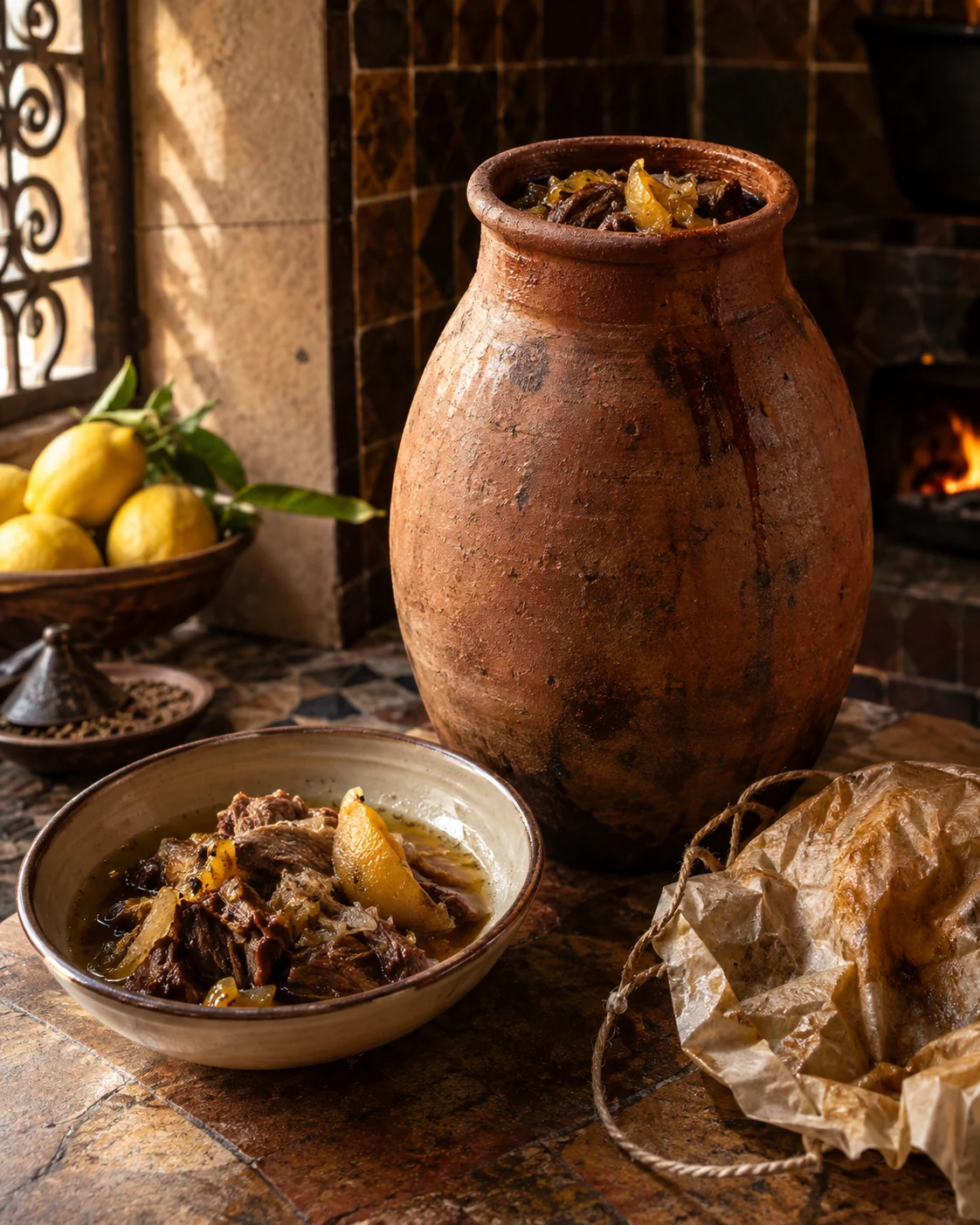
Tanjia
The earthenware pot and patient cooking associated with Marrakech.
Explore the story ↗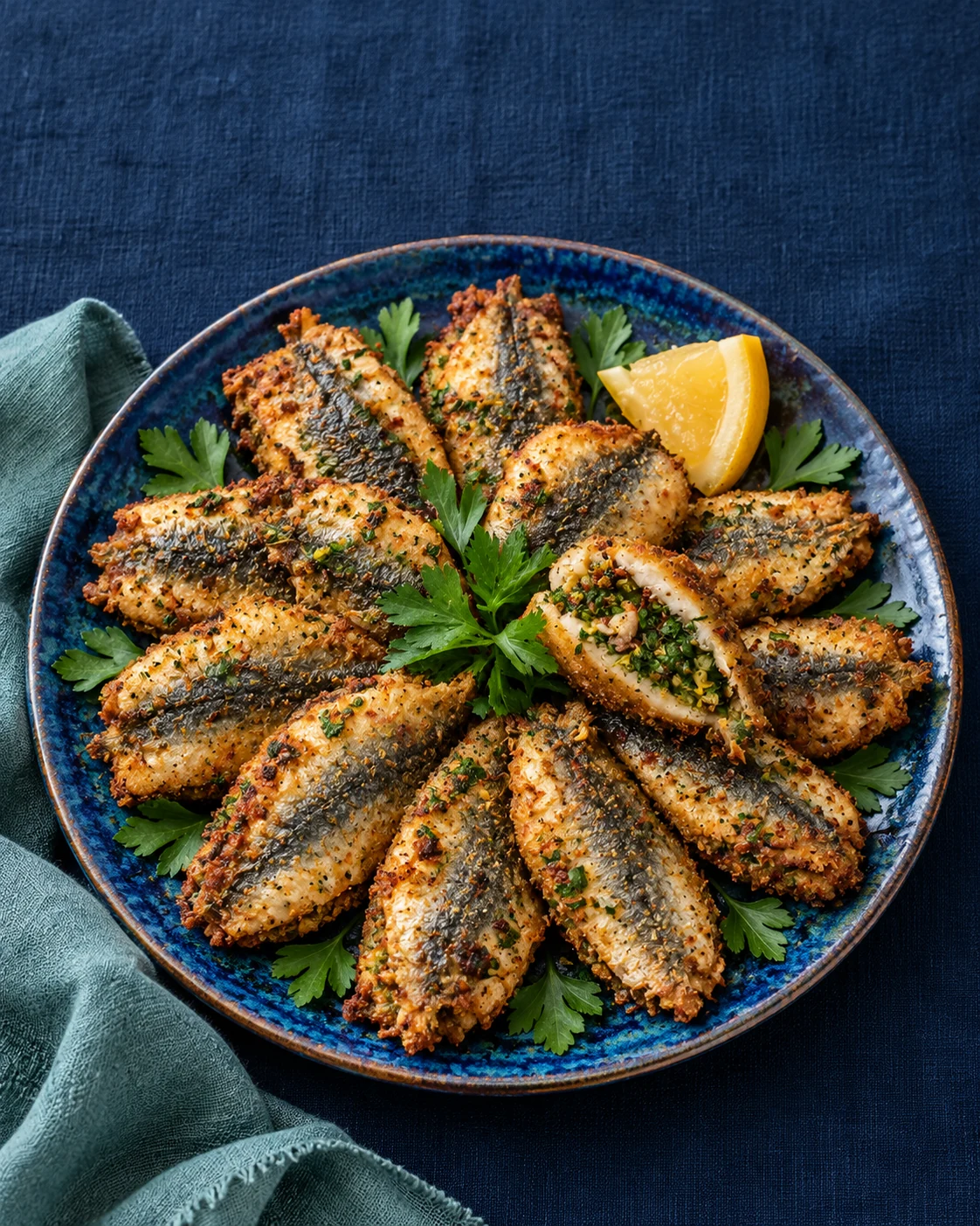
Sardines with Chermoula
Small fish, fragrant herbs and the details of preparation.
Explore the story ↗Sources & editorial notes
Photography combines existing Exotic Morocco assets and generated editorial illustrations. These images do not document a named person, household or historical event.
- Moroccan National Tourist Office · Gastronomy — range of Moroccan dishes and culinary influences.
- UNESCO · Couscous knowledge, know-how and practices — 2020 multinational inscription and its scope.
- Moroccan National Tourist Office · Food & drinks — descriptions of couscous, pastilla, rfissa and Marrakech tanjia.
EXOTIC MOROCCO Places. People. The pleasure of knowing more.Back to top ↑