
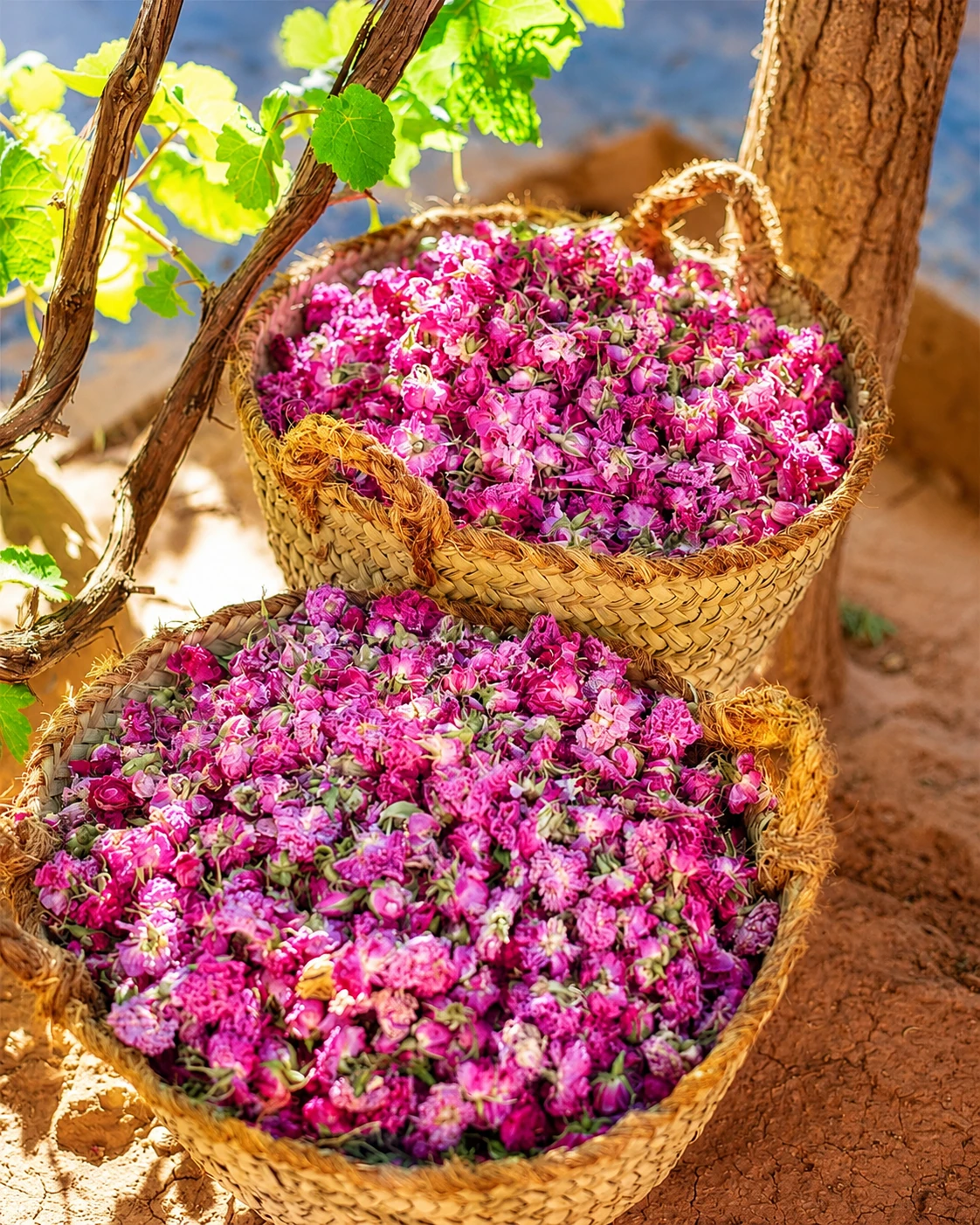
One flower.
Three different rhythms.
Typical seasonTypically spring / May · No forthcoming dates verified
The Rose Festival is associated with Kalaat M’Gouna and the perfume-rose economy of the surrounding valley. Spring, often May, is the useful seasonal context. However, the harvest, town festivities and professional rose salon should not be treated as one identical schedule.
An official Moroccan government report documents the sixtieth International Perfume Rose Salon on 5–8 May 2025. It is evidence for that past salon, not a future festival announcement. No forthcoming exact dates were verified in the checked official source on 29 September 2026.
Decide what you hope to encounter before choosing travel dates: a public celebration, a professional exhibition, products and makers, or the landscape in rose season. Each requires a different kind of confirmation.
The harvest
is somebody’s working day.
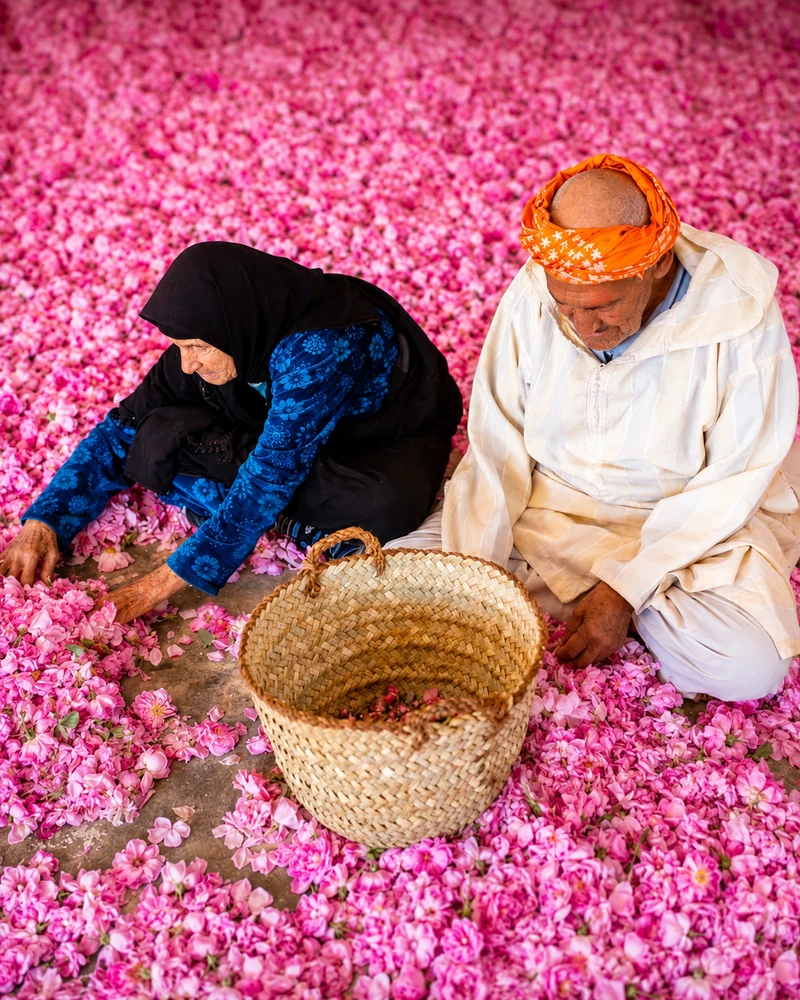
A valley in flower can look like an open invitation, but cultivated land has owners and workers. Do not enter a field or pick flowers without permission. If a host offers a visit, agree on its purpose, duration and any payment before joining the work.
Watch how people handle the crop and organize collection. Ask at a convenient moment rather than interrupting a task to request a pose. A photograph of a basket can be beautiful while still leaving the hardest parts of production outside the frame.
Avoid assuming that every person gathering or selling roses has the same role. Growing, collecting, processing and retailing can involve different people and organizations. A specific question about one stage is more useful than asking someone to explain the entire industry.
Choose the encounter
that interests you.
A valley visit
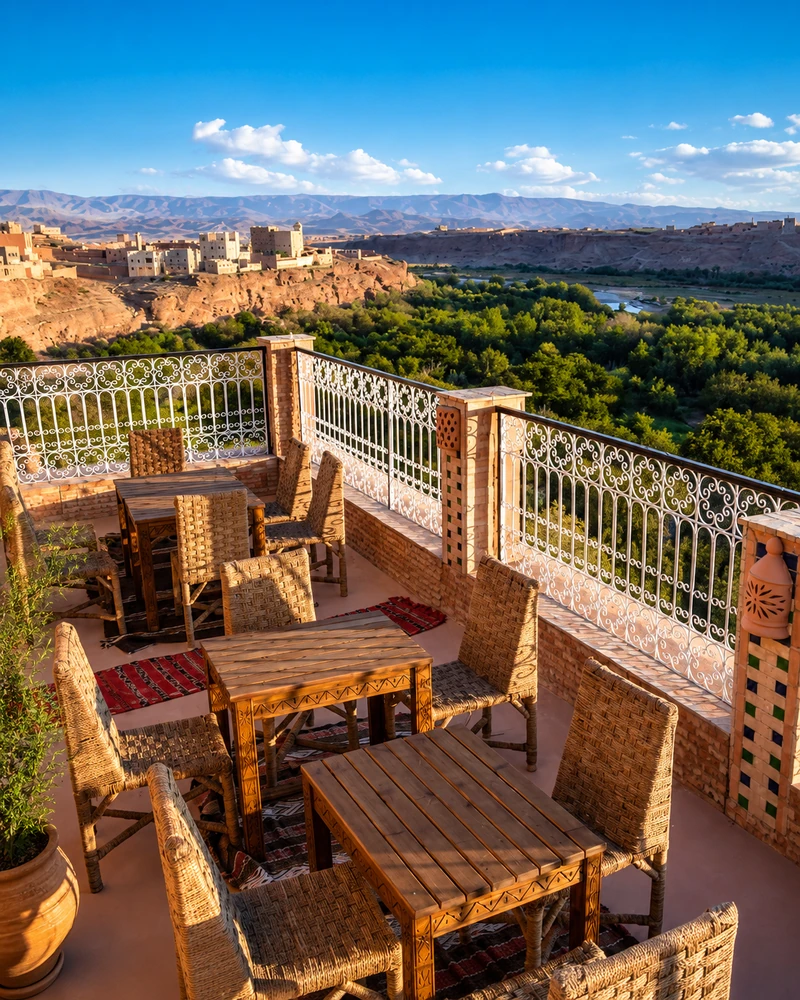
Choose a host or route that makes access clear. The landscape can be rewarding even when a public celebration is not taking place. Ask what can actually be visited and avoid expecting flowering conditions to match an old photograph.
Explore the valley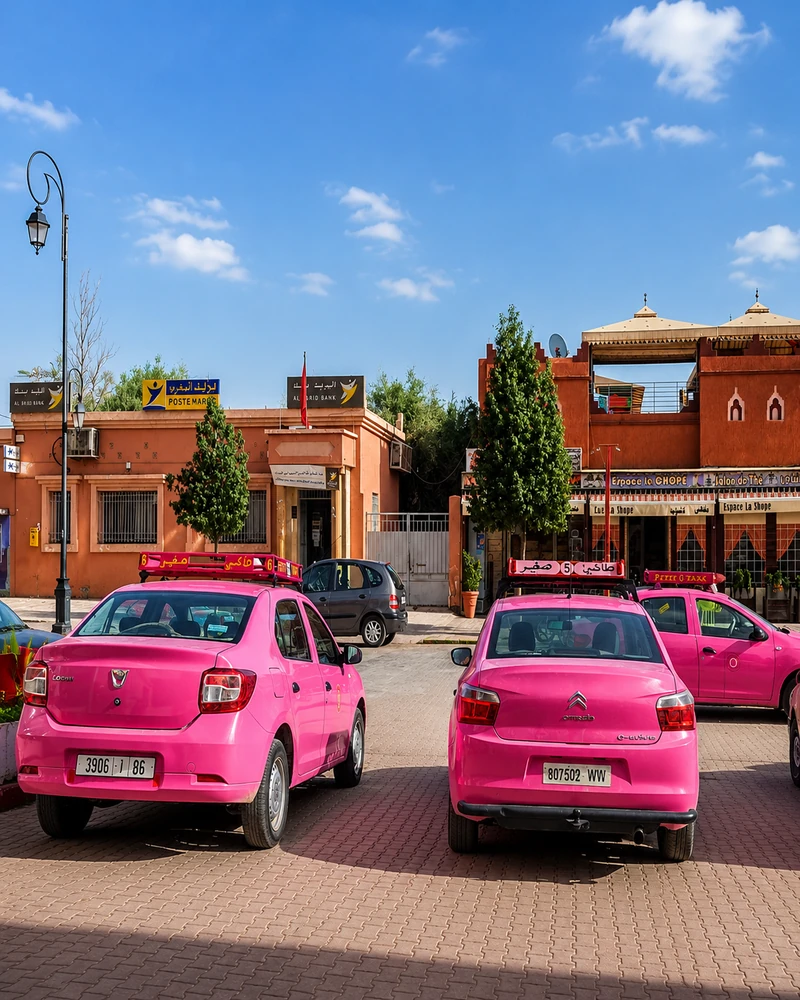
A town celebration
Use the current public programme for performances, processions or other festivities. These are civic occasions with their own timings and access routes, not a guarantee of entry to farms or production spaces.
Explore Kalaat M’Gouna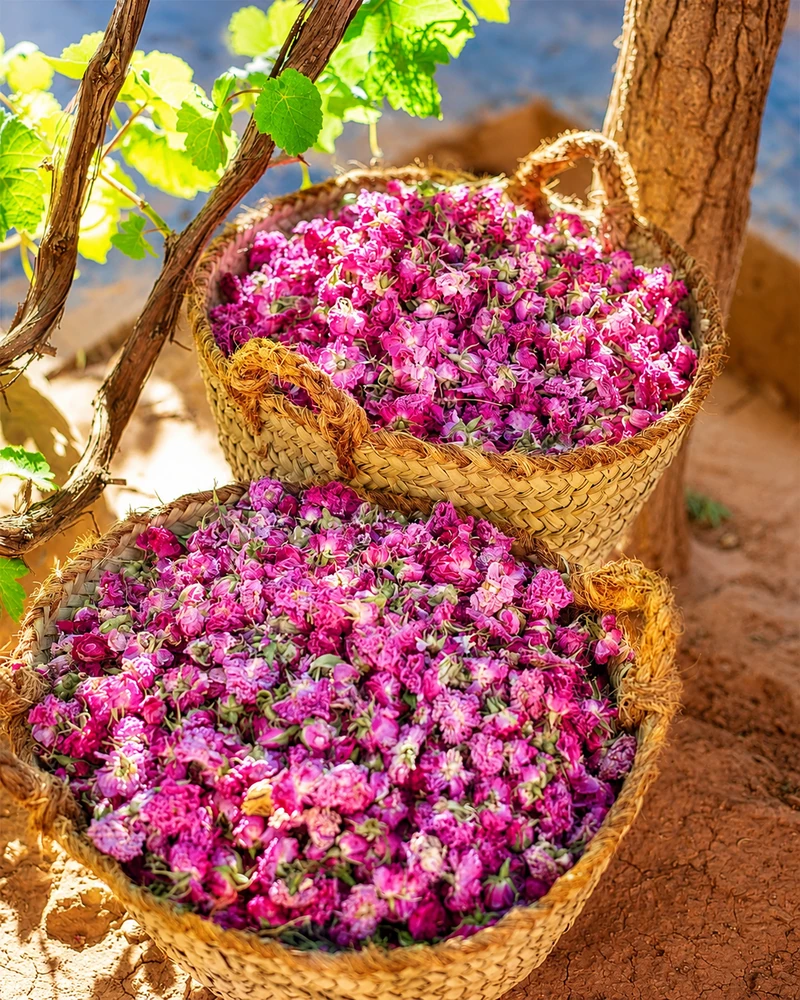
The perfume-rose salon
A professional salon brings products and sector activity into an exhibition setting. Check the edition’s public and professional arrangements, and read the date attached to the actual announcement.
Compare agricultural exhibitionsA product
should have a clear story.
Rose-labelled products can differ in ingredients, concentration, processing and intended use. Read the label and ask the seller what the product actually contains. A fragrant bottle is not enough to establish that it is a pure oil, a distillate or a particular kind of cosmetic preparation.
Ask who made it, where the processing took place and how it should be stored. If the answer matters to your purchase, look for written information rather than relying only on a verbal description. Do not assume that a cooperative label proves every claim made about a product.
Choose manageable quantities and suitable packaging for the journey. A thoughtful purchase supports the work more effectively when the buyer understands what is being sold and the seller can stand behind the description.
Read the landscape
at its own scale.
The appeal of the M’Goun valley includes the relationship between cultivated areas, settlements and the surrounding terrain. A short visit should not turn that landscape into an empty backdrop. Paths may be working routes, and a quiet-looking place may still be someone’s daily space.
Ask locally about an appropriate walking route and the conditions on the day. Keep to agreed paths, close any gate as instructed and avoid stepping into planted areas for a better camera angle. When travelling with a guide, make sure the visit’s arrangements are clear to the people whose land or work is involved.
Allow the landscape to be interesting outside the peak of flowering. A valley’s agricultural life extends beyond the few images that become its seasonal symbol.
Read the wider seasonal contextKalaat M’Gouna
and the valley around it.
Kalaat M’Gouna
The town is the practical focus for rose-related commerce and public announcements. Confirm the exact location of a salon or celebration rather than treating the town centre as a single event venue.
Explore Kalaat M’GounaThe Rose Valley
A valley visit requires its own route, access agreement and timing. A festival ticket or public programme does not grant permission to enter cultivated land or a processing workplace.
Explore The Rose ValleyThe southern route
Connect the rose country with a realistic wider journey through southern Morocco. Leave room for road travel and a change of pace between town activity and a valley walk.
Explore The southern routePlan around
what is confirmed.
If a specific public programme is your priority, wait for its current announcement and then match transport and accommodation to it. If the landscape is the main interest, ask a local host about likely conditions while accepting that growing seasons do not offer guarantees.
Keep those two kinds of information separate in your notes. An organizer can confirm an event date; a grower may offer an informed view of the crop. Neither should be stretched into certainty about the other.
For a day combining town and valley, choose a modest route. Allow time for the actual visit, not just the driving. A workshop conversation or walk loses much of its value when everyone is watching the clock for the next stop.
Colourful moments.
Ordinary boundaries.
At work
Ask before photographing workers closely. Explain where an image may be shared, especially if the person is its main subject. Avoid treating a working task as an unlimited demonstration for visitors.
At a public celebration
Follow the spectator route and any announced recording rules. Give people room to prepare and move. Participation in a public programme does not mean someone must pose afterwards.
At a shop or cooperative
Ask before recording a production process or interviewing staff. A sales visit, a paid workshop and a private workplace tour are different arrangements. Agree on what is being offered before expecting access.
Questions about
the rose season.
Is the festival always on the same dates?
Do not assume so. Spring and May are typical context, but harvest, festivities and the professional salon have distinct schedules. Confirm the current announcement for the experience you want.
Are forthcoming dates verified here?
No. The checked official report concerns the salon on 5–8 May 2025. This page does not present that past date as a future edition.
Can I pick roses during a visit?
Only if the landholder or host clearly permits it as part of an agreed visit. A field beside a public route is not automatically open for picking.
Are all rose products the same?
No. Read ingredients, intended use and producer information. Ask the seller to explain the product rather than judging it only by scent, packaging or a general rose label.
A flower can lead
to a larger understanding.
The most useful memory may be a connection between a material and the people who work with it. A basket of petals, a labelled bottle and a public celebration show different stages of a rose economy; none tells the whole story alone.
Keep the details you learned attached to their source. A grower’s explanation of one harvest, a maker’s description of a process and an organizer’s programme are each valuable within their own scope. Together they offer a richer understanding than a single romantic image of a valley in bloom.
Follow the crop.
Meet the wider season.
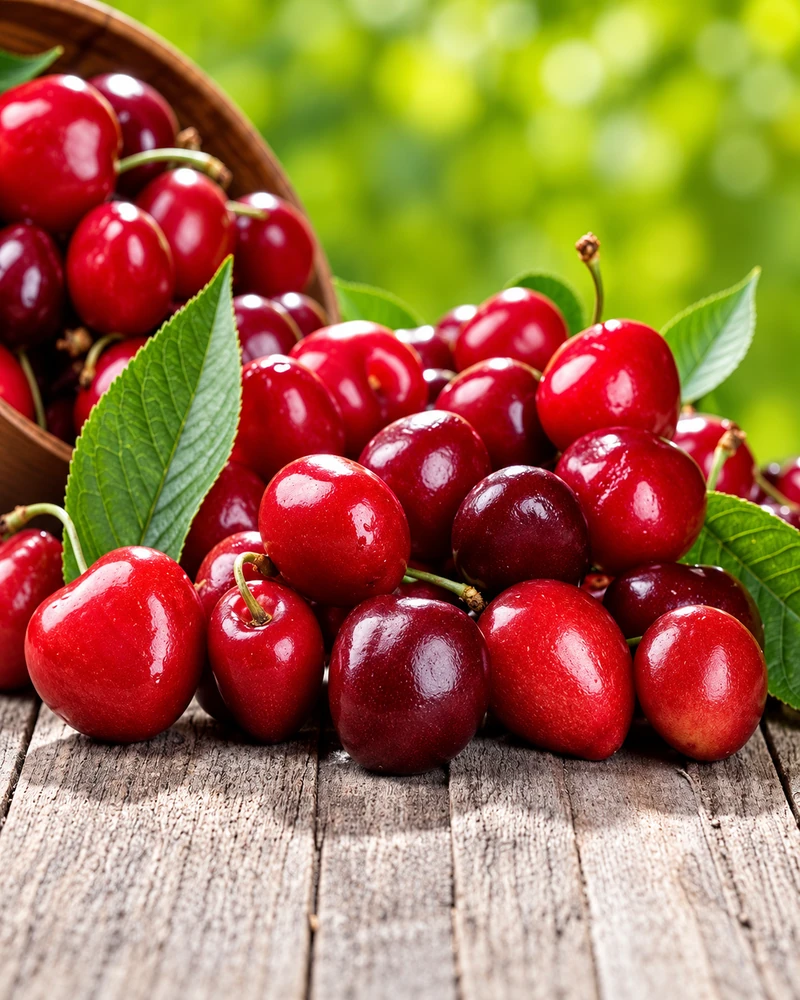
Sefrou cherries
A civic celebration rooted in community participation.
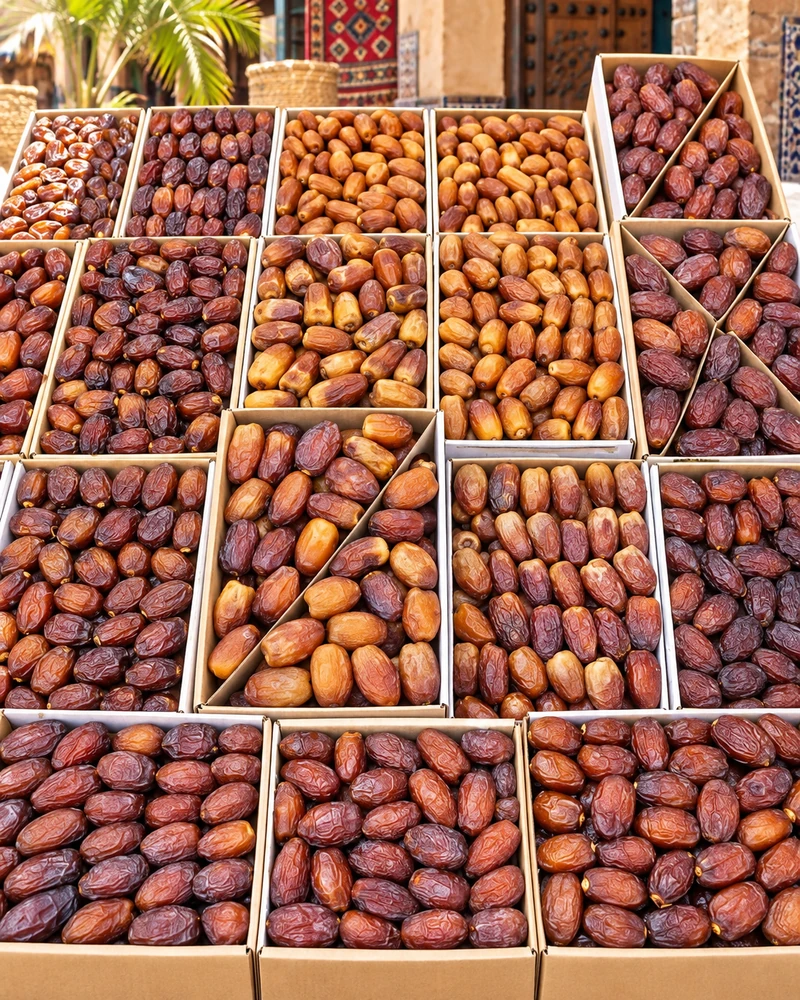
Erfoud dates
An oasis crop and a professional exhibition.
Spring gatherings
Plan through landscapes and seasonal work.
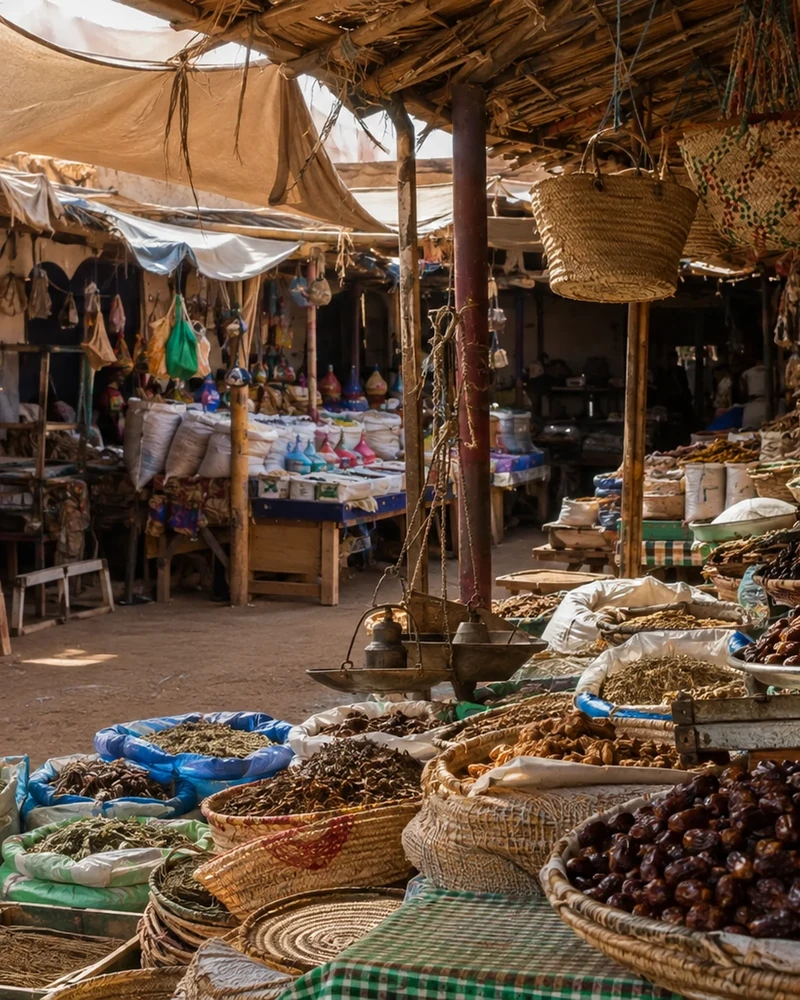
Food seasons
Read the people and processes behind a harvest.
Sources, date checks & image context
Event information checked on 29 September 2026. Dates marked typical describe a seasonal pattern, not an announced booking date. Recheck the linked organizer before committing to travel.
Library images illustrate the host place, materials and cultural context. They are not presented as documentary records of a particular festival edition.